


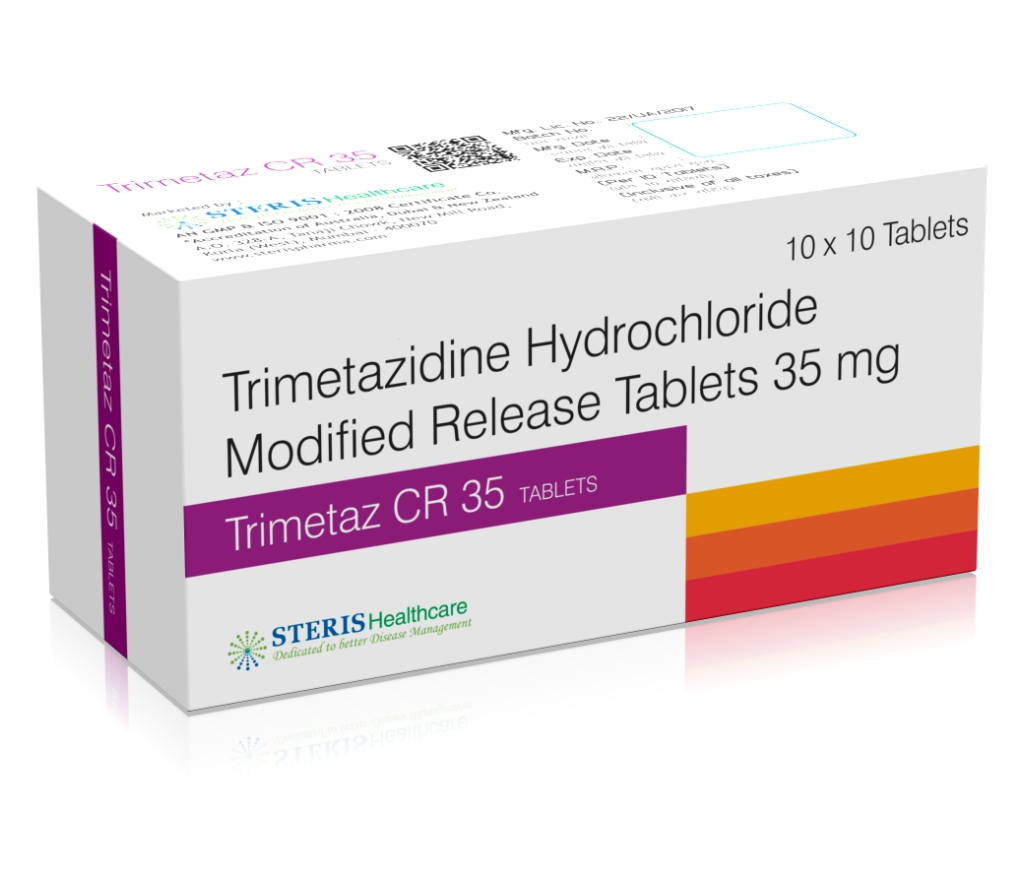
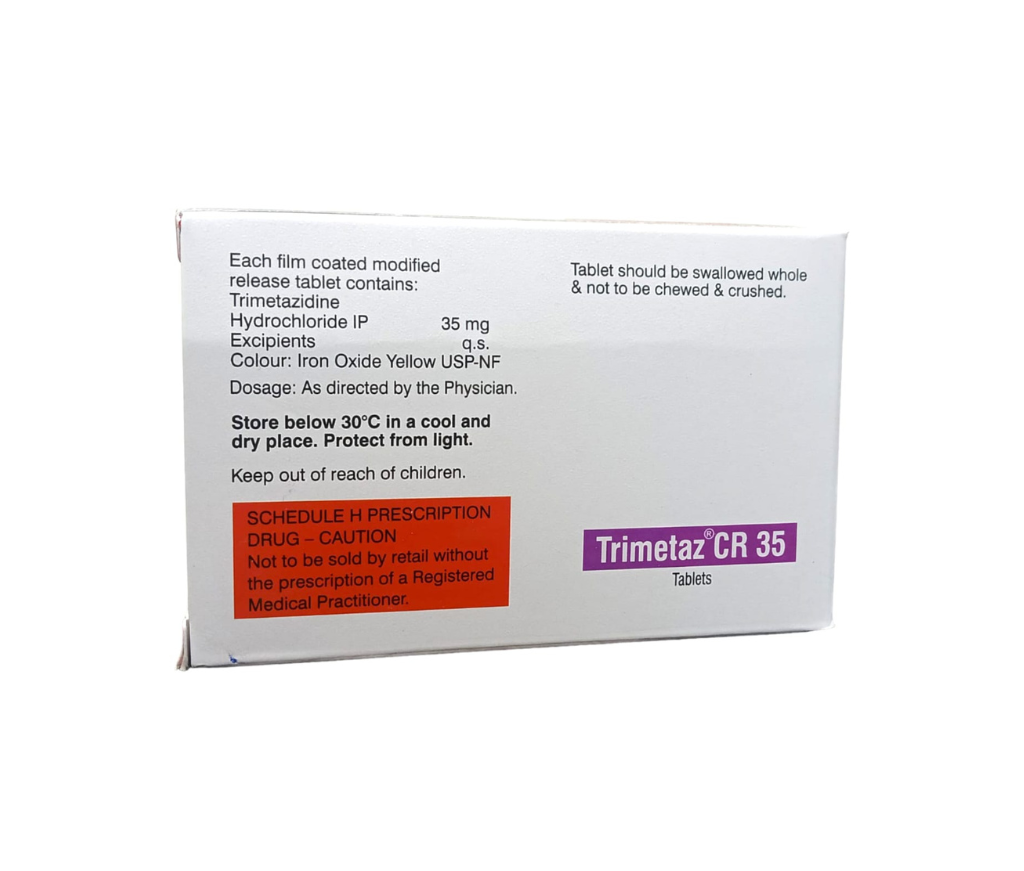
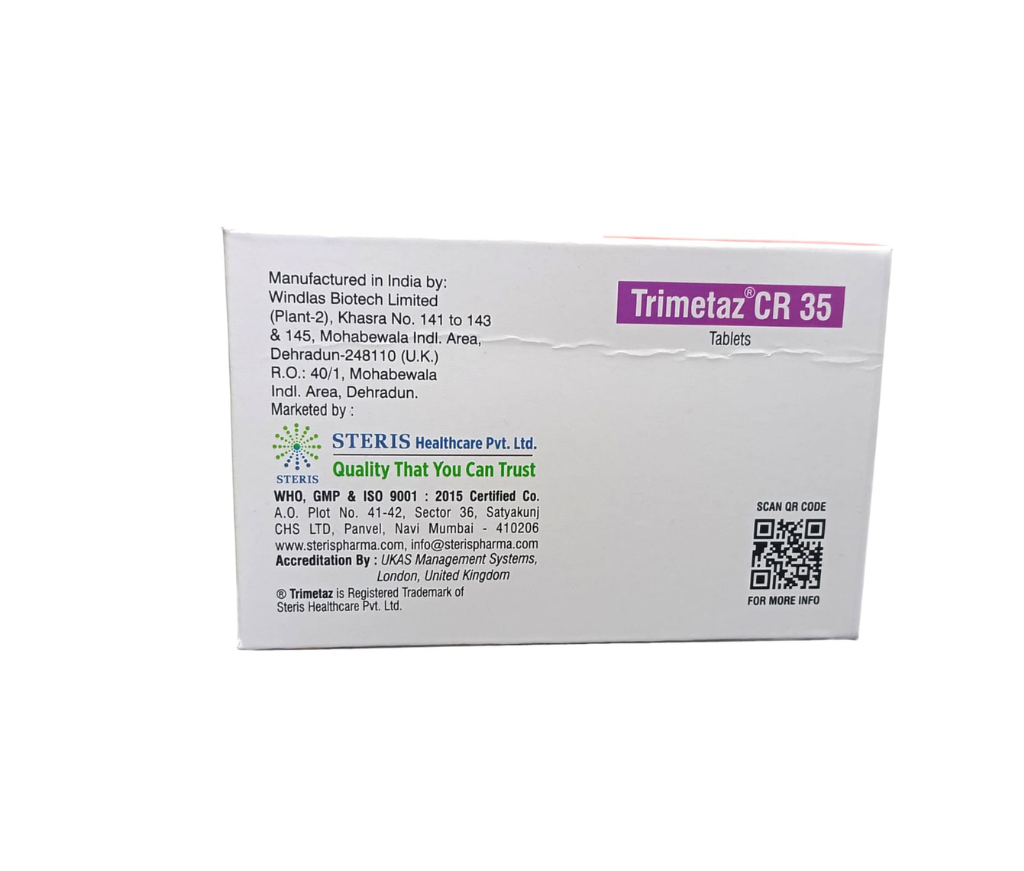
TRIMETAZ CR 35
 Item requires a valid prescription
Manufactured By Steris Healthcare Pvt Ltd
Composition Trimetazidine Hydrochloride Modified Release Tablets 35 mg
Rs 60.00
MRP Rs 164.06
(63% OFF)
Includes all taxes
Package SIZE
( For 10 Tablet )

100% Authentic
Products

Free
Shipping*

Products
Return Policy
Description:
Trimetazidine hydrochloride modified release tablets 35 mg are prescription medicines used as an add-on treatment for adults with stable angina pectoris when first-line anti-anginal medicines do not adequately control symptoms or cannot be tolerated. The medicine is designed as a modified-release formulation to provide sustained exposure to trimetazidine.
Trimetazidine is a metabolic anti-anginal medicine. Rather than primarily lowering heart rate or blood pressure, it helps the heart use energy more efficiently during reduced oxygen availability. Its approved role is therefore different from medicines used for the immediate treatment of an acute angina attack.
Current regulatory product information lists 35 mg trimetazidine modified-release tablets as an add-on therapy for stable angina and provides specific restrictions for people with Parkinson's disease, movement disorders, and severe renal impairment.
Product Information
|
Product Information |
Details |
|---|---|
|
Brand Name |
TRIMETAZ CR 35 |
|
Generic Name |
Trimetazidine Hydrochloride |
|
Composition |
Trimetazidine Hydrochloride Modified Release 35 mg per tablet* |
|
Manufacturer/Marketer |
Steris Healthcare Pvt. Ltd. |
|
Product Form |
Modified-Release Tablet |
|
Pack Size |
10 Tablets |
|
Therapeutic Category |
Cardiovascular Medicine |
|
Drug Class |
Anti-anginal Agent |
|
Route of Administration |
Oral |
|
Target Market |
India |
|
Primary Use |
Used as an add-on treatment for certain patients with stable angina, as prescribed by a healthcare professional |
|
Prescription Requirement |
Prescription required |
|
Storage |
Store according to the product label and keep out of reach of children |
What Are Trimetazidine Hydrochloride Modified-Release Tablets 35 mg?
Trimetazidine hydrochloride modified-release tablets 35 mg contain 35 mg of trimetazidine in a modified-release tablet formulation.
The modified-release design allows the active ingredient to be released over time rather than behaving like an immediate-release tablet. Current product information identifies the dosage form as a film-coated extended-release tablet and classifies the medicine as prescription-only in the relevant regulatory market.
The medicine belongs to the anti-anginal/metabolic therapy group. Its purpose is to support the energy metabolism of heart muscle under conditions of reduced oxygen availability.
Importantly, 35 mg modified-release trimetazidine is not simply a stronger version of every trimetazidine product. Immediate-release and modified-release formulations can have different dosing schedules. Patients should therefore follow the exact prescription and product information supplied with their medicine.
Trimetazidine Hydrochloride Modified Release Tablets 35 mg: Uses
1. Stable Angina Pectoris
The primary approved use is the symptomatic treatment of stable angina pectoris in adults, as add-on therapy when first-line anti-anginal treatments are insufficient or not tolerated.
Stable angina generally causes predictable chest discomfort or pressure during physical activity or emotional stress because the heart muscle does not receive enough oxygen relative to its demand.
Trimetazidine may be prescribed alongside other cardiovascular medicines to help control symptoms.
2. Add-On Anti-Anginal Treatment
Trimetazidine is generally not positioned as a first-line treatment for stable angina. The European Medicines Agency reviewed trimetazidine and concluded that its use for angina should be restricted to second-line, add-on treatment in patients inadequately controlled by or intolerant to first-line anti-anginal therapies.
This distinction is important when evaluating a product page or considering whether the medicine is appropriate.
3. Supporting Cardiac Energy Metabolism
Trimetazidine works differently from many conventional anti-anginal medicines. It modifies cardiac energy metabolism, helping cells favor glucose oxidation, which can produce ATP more efficiently in relation to oxygen availability.
This metabolic action is one reason trimetazidine may be useful as an additional therapy for stable angina.
Key Benefits of Trimetazidine 35 mg Modified Release
The potential benefits of Trimetazidine hydrochloride modified-release tablets 35 mg are primarily related to symptom control in appropriately selected patients.
Helps Control Stable Angina Symptoms
When prescribed as add-on therapy, trimetazidine can help reduce the symptoms associated with stable angina in patients who remain symptomatic despite first-line therapy or who cannot tolerate those treatments.
Works Through a Metabolic Mechanism
Unlike medicines that mainly work by reducing heart rate or blood pressure, trimetazidine acts on cellular energy metabolism. This gives it a different pharmacological role within anti-anginal treatment.
Modified-Release Formulation
The 35 mg modified-release formulation is designed for controlled drug release. Current prescribing information commonly specifies one 35 mg tablet in the morning and one in the evening with meals for patients for whom that regimen is appropriate.
Can Be Used Alongside Other Angina Medicines
Its approved indication is specifically as an add-on treatment, meaning it can form part of a broader anti-anginal treatment plan when prescribed by a healthcare professional.
How Does Trimetazidine 35 mg Work?
During reduced oxygen availability, heart cells must produce energy efficiently to maintain their function.
Trimetazidine alters myocardial energy metabolism by inhibiting fatty-acid oxidation and favoring glucose oxidation. Glucose oxidation requires less oxygen for a given amount of ATP production than fatty-acid oxidation.
In practical terms, this metabolic effect is intended to improve the efficiency of energy production in ischemic heart muscle.
This mechanism does not mean that trimetazidine physically opens blocked coronary arteries or immediately stops an angina attack.
Trimetazidine 35 mg Dosage and How to Take It
The dosage of a prescription medicine should always be individualized according to the patient's medical condition, kidney function, age, other medicines, and the specific product prescribed.
For the 35 mg modified-release formulation, current product information states a standard adult dose of one 35 mg tablet twice daily—one in the morning and one in the evening—during meals.
However, this should not be interpreted as a personal dosing recommendation.
Kidney Function Matters
Trimetazidine is substantially eliminated through the kidneys. Current product information recommends a reduced regimen in patients with moderate renal impairment, commonly one 35 mg tablet in the morning with breakfast. Severe renal impairment, defined in current product information as creatinine clearance below 30 mL/min, is a contraindication.
Older adults may also require particular caution because kidney function can decline with age, potentially increasing exposure to the medicine.
Do Not Change the Dose Yourself
Do not take extra tablets because chest discomfort continues, and do not double the next dose after a missed dose unless specifically instructed by your healthcare professional.
If you miss a dose, follow the instructions supplied with your product or ask your pharmacist what to do.
How Long Does Trimetazidine Take to Work?
Trimetazidine is intended for ongoing symptom management rather than immediate relief of an acute angina episode.
Current product information recommends assessing treatment benefit after approximately three months and discontinuing treatment if there is no response.
Individual responses vary, so the treating clinician should determine whether the medicine is providing meaningful benefit.
Trimetazidine 35 mg Side Effects
Like other prescription medicines, trimetazidine can cause adverse effects.
Possible side effects can include:
-
Dizziness
-
Headache
-
Nausea or other gastrointestinal discomfort
-
Abdominal discomfort
-
Weakness or fatigue
-
Rash or itching
-
Low blood pressure in some patients
-
Balance or gait problems
-
Movement-related symptoms
The most important safety concern is the potential for Parkinsonian or other movement-related symptoms. Regulatory authorities have specifically highlighted this risk.
Movement-Related Side Effects
Trimetazidine may cause or worsen symptoms such as the following:
-
Tremor
-
Slowness of movement
-
Muscle rigidity
-
Unsteady walking
-
Restless legs
-
Other Parkinsonian symptoms
Current regulatory information recommends stopping trimetazidine permanently if movement disorders develop and obtaining appropriate medical assessment. Such symptoms have generally been reported as reversible after discontinuation, although persistent symptoms require further evaluation.
If you notice a new tremor, difficulty walking, unusual stiffness, slowed movement, or similar symptoms after starting trimetazidine, contact your doctor promptly.
Who Should Not Take Trimetazidine 35 mg?
Current product information identifies several important contraindications.
Trimetazidine should not be used in patients with the following:
-
Parkinson's disease
-
Parkinsonian symptoms
-
Tremors
-
Restless leg syndrome
-
Other related movement disorders
-
Severe renal impairment, generally creatinine clearance below 30 mL/min
-
Known hypersensitivity to trimetazidine or relevant ingredients
This is one of the most important reasons why trimetazidine should be purchased and used only according to a valid prescription and professional advice.
Trimetazidine 35 mg and Kidney Disease
Kidney function is particularly important when using trimetazidine.
The medicine is predominantly eliminated through the kidneys, and exposure can increase when renal function decreases. Current product information therefore provides a lower regimen for moderate renal impairment and contraindicates use in severe renal impairment.
Patients with chronic kidney disease should not determine their own trimetazidine dose based only on age, body weight, or symptoms.
A healthcare professional may need to review kidney-function results before prescribing or continuing treatment.
Can Trimetazidine Treat a Sudden Angina Attack?
No.
Trimetazidine is not intended as an emergency medicine for an acute angina attack. Regulatory product information specifically states that it is not a curative treatment for angina attacks and is not indicated as initial treatment for unstable angina or myocardial infarction.
If chest pain is sudden, severe, unusual, persistent, or associated with symptoms such as breathlessness, sweating, fainting, or pain spreading to the arm, jaw, back, or shoulder, seek emergency medical care rather than relying on trimetazidine.
Trimetazidine 35 mg: Important Drug and Treatment Considerations
Tell your doctor or pharmacist about all prescription medicines, over-the-counter medicines, and supplements you use.
Although major pharmacokinetic interactions are not considered a defining problem with trimetazidine, the overall cardiovascular treatment plan still matters. Trimetazidine is generally used as part of an existing anti-anginal regimen rather than as a replacement for all other cardiovascular treatment.
Patients taking blood-pressure-lowering medicines should also be monitored if they experience dizziness, weakness, or falls, particularly in older age groups. Current product information highlights the possibility of falls associated with gait instability or hypotension.
Trimetazidine 35 mg for Vertigo or Tinnitus: What You Should Know
Older online articles may list vertigo, tinnitus, or visual disturbances as uses of trimetazidine.
This can create confusion for people researching the medicine online.
The European Medicines Agency concluded that the benefits did not outweigh the risks for these indications and recommended that these uses no longer be authorized in the EU. The agency retained trimetazidine for appropriately selected patients with stable angina as second-line add-on therapy.
Therefore, current content should not casually market trimetazidine 35 mg as a general treatment for tinnitus or vertigo.
Why Buy Trimetazidine Hydrochloride Modified Release Tablets 35 mg From a Licensed Pharmacy?
Because trimetazidine is a prescription cardiovascular medicine, purchasing from a legitimate, licensed pharmacy is important.
Before purchasing, verify:
-
Active ingredient: Trimetazidine hydrochloride/trimetazidine 35 mg, as stated on the product label.
-
Dosage form: Modified-release or extended-release tablet.
-
Prescription status: Follow the regulations applicable in your country.
-
Manufacturer: Confirm the licensed manufacturer shown on the package.
-
Expiry date and batch information: Check the original packaging.
-
Storage instructions: Follow the product label.
-
Prescription suitability: Make sure the product was prescribed for your specific condition.
A current National Drug Formulary listing, updated July 21, 2026, identifies a 35 mg trimetazidine modified-release tablet as prescription-only and lists stable angina as its therapeutic indication.
Frequently Asked Questions
1. What are Trimetazidine hydrochloride modified-release tablets 35 mg used for?
They are used as add-on treatment for symptomatic stable angina in adults who are inadequately controlled by or cannot tolerate first-line anti-anginal treatments.
2. What is trimetazidine 35 mg?
It is a modified-release cardiovascular medicine containing 35 mg of trimetazidine, used primarily as second-line add-on therapy for stable angina.
3. Is trimetazidine 35 mg used for angina?
Yes. Its approved indication includes symptomatic treatment of stable angina as add-on therapy in appropriately selected adults.
4. How does trimetazidine 35 mg work?
It modifies cardiac energy metabolism, helping heart cells use oxygen more efficiently during ischemic conditions.
5. What are the benefits of trimetazidine 35 mg?
Its principal benefit is helping control symptoms of stable angina when first-line treatment is inadequate or poorly tolerated.
6. How should Trimetazidine 35 mg modified-release tablets be taken?
Current product information commonly specifies one 35 mg tablet in the morning and one in the evening with meals for adults with normal renal function. Follow your own prescription because dosing may require adjustment.
7. Can trimetazidine 35 mg be taken once daily?
The standard 35 mg modified-release regimen in current product information is twice daily, but patients with moderate renal impairment may receive one 35 mg tablet in the morning. Do not change your regimen without medical advice.
8. What are the common side effects of trimetazidine 35 mg?
Possible adverse effects include dizziness, headache, gastrointestinal symptoms, weakness, and skin reactions. Movement-related symptoms are an important safety concern.
9. Can trimetazidine 35 mg cause Parkinson's symptoms?
Yes. Trimetazidine can cause or worsen Parkinsonian symptoms and other movement disorders, which is why it is contraindicated in patients with Parkinson's disease and related conditions.
10. Can people with kidney disease take trimetazidine 35 mg?
It depends on kidney function. Moderate renal impairment requires dose reduction in current product information, while severe renal impairment is a contraindication.