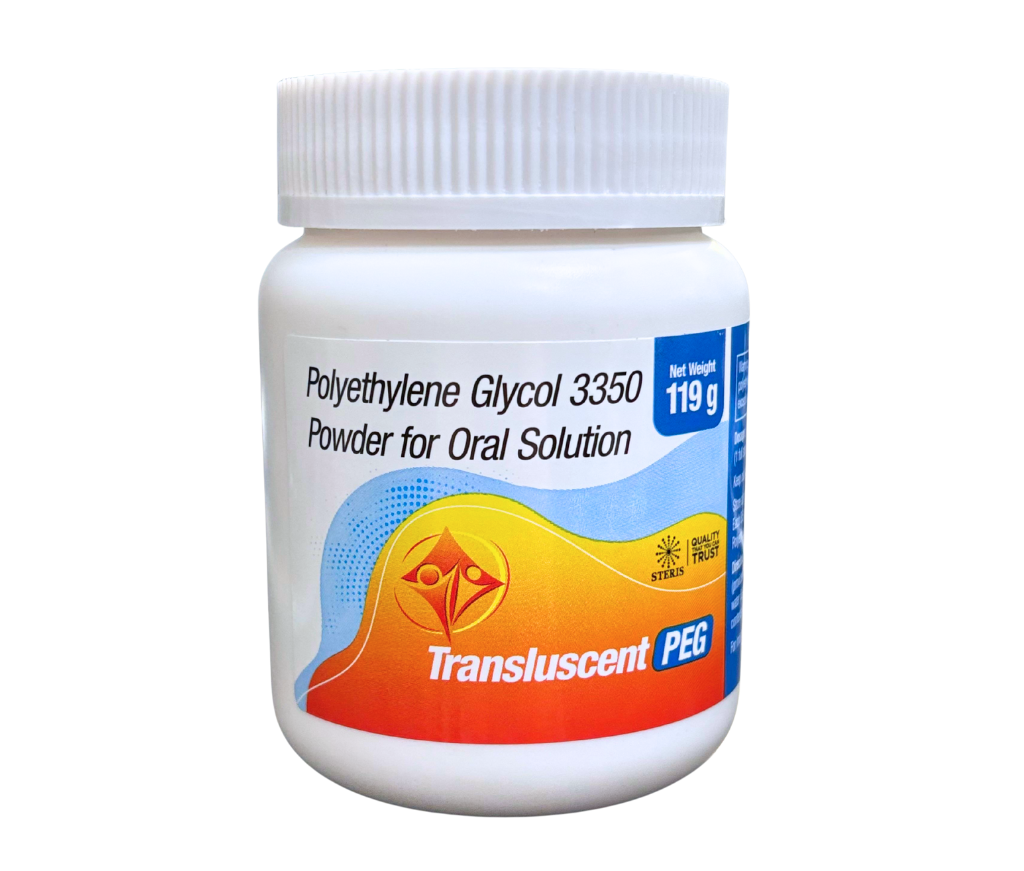


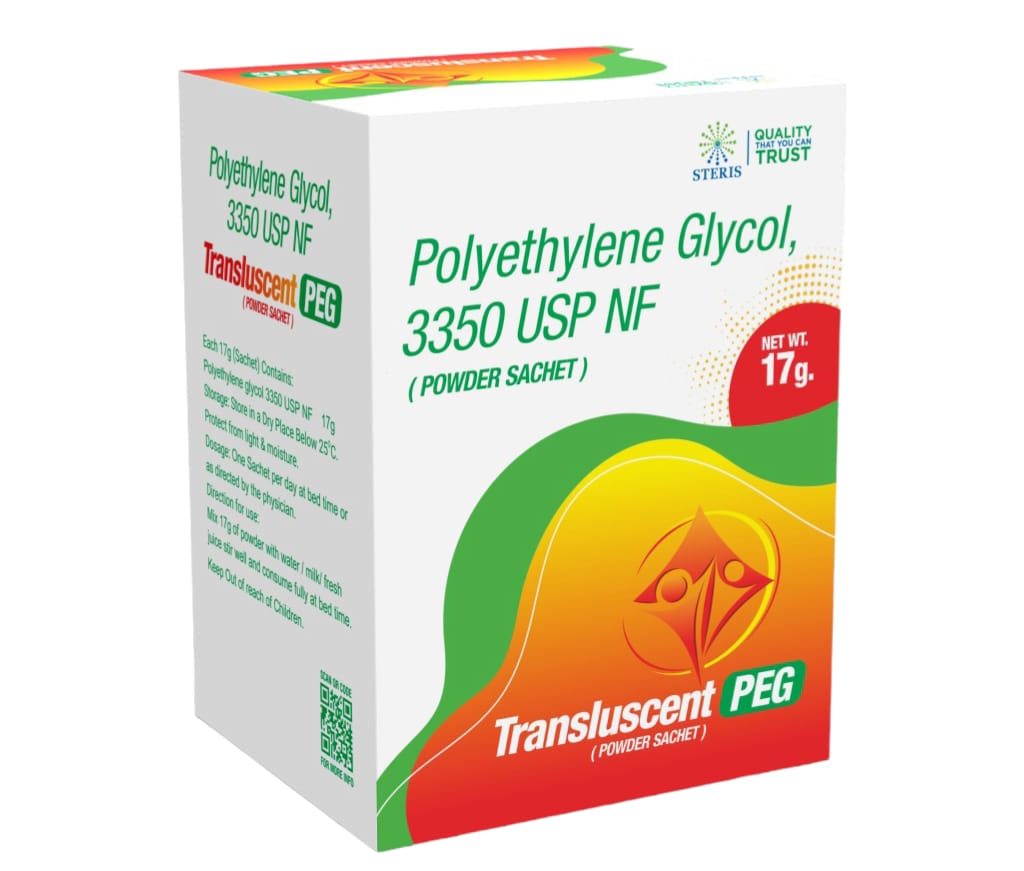
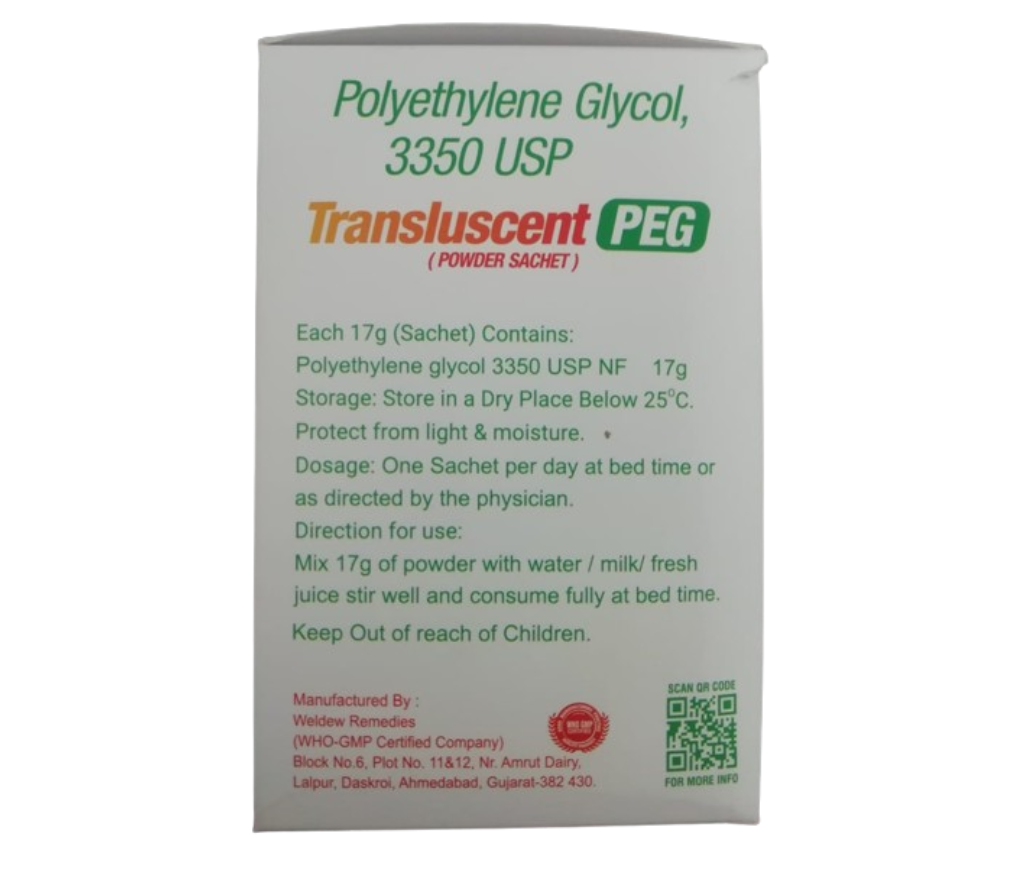
TRANSLUSCENT PEG POWDER SACHET
 Item requires a valid prescription
Manufactured By Steris Healthcare Pvt Ltd
Composition Polyethylene Glycol 3350
Rs 35.00
MRP Rs 50.00
(30% OFF)
Includes all taxes
Package SIZE
( For 17 Gram )

100% Authentic
Products

Free
Shipping*

Products
Return Policy
Description:
Polyethylene glycol 3350 is an osmotic laxative commonly used to relieve occasional constipation and irregular bowel movements. It works by retaining water in the stool, helping make bowel movements softer and easier to pass. It is commonly available as a tasteless or nearly tasteless powder that is mixed with a beverage before oral use. Current U.S. OTC product labels commonly contain 17 grams of polyethylene glycol 3350 per dose and state that the product generally produces a bowel movement within 1 to 3 days.
If you are searching for polyethylene glycol 3350 uses, benefits, dosage, side effects, how to take it, or where to buy polyethylene glycol 3350, this guide explains the medicine in straightforward, search-friendly terms.
What Is Polyethylene Glycol 3350?
Polyethylene glycol 3350 (PEG 3350) is an osmotic laxative used to treat occasional constipation. It is available as a powder for oral solution and is usually mixed into water or another beverage before drinking.
Unlike stimulant laxatives, PEG 3350 works primarily by drawing and retaining water in the stool. The additional water helps soften stool and can make it easier to pass. MedlinePlus explains that this action increases bowel movements and softens stool.
Many OTC products in the United States contain 17 g of polyethylene glycol 3350 in each labeled dose. However, the exact formulation, measuring instructions, package size and approved uses can vary by manufacturer and country.
Polyethylene Glycol 3350 vs. PEG With Electrolytes
It is important not to confuse plain polyethylene glycol 3350 powder with polyethylene glycol-electrolyte solutions used for bowel preparation.
Plain PEG 3350 is commonly used for constipation. PEG-electrolyte solutions are different formulations used under medical direction to empty the colon before procedures such as colonoscopy. PEG-electrolyte products contain electrolytes and have different dosing and preparation instructions.
What Is Polyethylene Glycol 3350 Used For?
The primary OTC use of polyethylene glycol 3350 is relief of occasional constipation or irregularity. Current 2026 DailyMed labeling for several PEG 3350 products states that they generally produce a bowel movement within 1 to 3 days.
Constipation can involve:
-
Infrequent bowel movements
-
Hard or dry stools
-
Difficulty passing stool
-
Straining during bowel movements
-
A feeling that stool has not completely passed
Constipation is common and often temporary. Lifestyle measures such as eating fiber-rich foods, drinking adequate fluids, staying physically active and responding to the urge to have a bowel movement can also help maintain regular bowel habits.
Chronic or Long-Term Constipation
Healthcare professionals may sometimes recommend PEG 3350 for longer-term constipation management, depending on the person's age, medical history and cause of constipation. However, OTC labels are generally intended for occasional constipation, and some products instruct consumers to consult a doctor if laxative use is needed for longer than the labeled period.
Do not automatically extend self-treatment simply because PEG 3350 is available without a prescription.
How Does Polyethylene Glycol 3350 Work?
Polyethylene glycol 3350 is an osmotic laxative.
After it is taken orally, PEG 3350 helps retain water in the stool. The increased water content makes stool softer and can help facilitate bowel movements. It does not work by directly stimulating intestinal contractions in the same way as stimulant laxatives.
This mechanism is particularly useful when constipation is associated with hard or difficult-to-pass stools.
The effect is gradual rather than immediate. MedlinePlus states that polyethylene glycol 3350 may take 2 to 4 days to produce a bowel movement, while current U.S. OTC labels commonly state that a bowel movement generally occurs within 1 to 3 days. Individual response can vary.
Key Benefits of Polyethylene Glycol 3350
1. Helps Relieve Occasional Constipation
The main benefit of polyethylene glycol 3350 is relief from occasional constipation. By increasing water in stool, it can make bowel movements easier to pass.
2. Softens Hard Stool
PEG 3350 increases the water content of stool, which can help with hard or dry bowel movements.
3. Gradual Action
Unlike some stimulant laxatives that may act more quickly, PEG 3350 generally works over one or more days. This makes it a convenient option for people looking for gradual constipation relief.
4. Easy-to-Mix Powder
PEG 3350 is commonly supplied as a powder that can be mixed with water or other beverages. MedlinePlus describes mixing a dose into approximately 8 ounces (240 mL) of liquid and drinking it after dissolving. Always follow the specific product's instructions because measuring devices and formulations can differ.
5. Generally Tasteless
Many PEG 3350 powder products are designed to dissolve in beverages without significantly changing their taste, which can make them convenient for regular use according to the product directions.
Polyethylene Glycol 3350 Dosage
The correct dose depends on the specific product, formulation, age, medical condition and healthcare professional's instructions.
For many U.S. OTC adult products, the labeled dose is 17 g once daily, measured according to the package directions. Current DailyMed labeling identifies 17 g as the active ingredient in each dose for several products.
However, do not assume that every PEG 3350 product has identical instructions.
How to Take Polyethylene Glycol 3350
For products labeled for occasional constipation:
-
Measure the recommended dose using the supplied measuring line or device.
-
Mix the powder into the recommended amount of liquid.
-
Stir until dissolved.
-
Drink the mixture according to the product instructions.
-
Do not exceed the labeled dose unless directed by a healthcare professional.
MedlinePlus describes mixing the powder with approximately 8 ounces (240 mL) of water, juice, soda, coffee or tea.
Do not take larger amounts or use PEG 3350 more frequently than directed.
How Long Does Polyethylene Glycol 3350 Take to Work?
PEG 3350 does not usually provide immediate constipation relief.
Current OTC labels commonly state that it generally produces a bowel movement within 1 to 3 days, while MedlinePlus notes that it may take 2 to 4 days. The exact timing can differ between individuals.
If you have taken the product according to its instructions and constipation does not improve, speak with a healthcare professional rather than repeatedly increasing the dose.
Polyethylene Glycol 3350 Side Effects
Most people tolerate PEG 3350 reasonably well when it is used according to directions, but side effects can occur.
Common or relatively mild effects may include:
-
Bloating
-
Gas
-
Nausea
-
Abdominal cramping
-
Loose stools or diarrhea
MedlinePlus specifically lists nausea, bloating, cramping and gas among possible side effects.
Diarrhea
Taking too much PEG 3350 can result in loose stools or diarrhea. If significant diarrhea develops, excessive fluid loss can become a concern.
Follow the recommended dose rather than increasing it to obtain faster results.
Abdominal Bloating and Gas
Some people may experience increased gas, abdominal fullness or bloating. These effects may be temporary, but persistent or severe abdominal symptoms should be evaluated.
Serious Side Effects and When to Seek Medical Advice
Serious reactions are uncommon, but certain symptoms should not be ignored.
Seek medical advice promptly if you develop:
-
Severe or persistent abdominal pain
-
Vomiting
-
Significant or persistent diarrhea
-
Signs of an allergic reaction such as hives or swelling
-
A significant or unexplained change in bowel habits
-
Symptoms suggesting intestinal obstruction
Current OTC labels advise consumers to consult a doctor before use when nausea, vomiting or abdominal pain is present, and when a sudden change in bowel habits lasts more than two weeks.
If you experience severe abdominal pain with vomiting or marked abdominal swelling, do not continue self-treating constipation without medical assessment.
Who Should Avoid or Use Caution With Polyethylene Glycol 3350?
Do not use PEG 3350 if you are allergic to polyethylene glycol.
Some current U.S. OTC labels advise against use in people with kidney disease unless directed and supervised by a doctor.
Ask a healthcare professional before using PEG 3350 if you:
-
Have kidney disease
-
Have abdominal pain, nausea or vomiting
-
Have a sudden change in bowel habits lasting more than two weeks
-
Have irritable bowel syndrome
-
Are taking prescription medicines
-
Are pregnant or breastfeeding
-
Have a history of bowel obstruction or suspected intestinal blockage
MedlinePlus specifically advises discussing PEG 3350 with a healthcare professional if there is a history or symptoms of bowel obstruction.
Polyethylene Glycol 3350 Drug Interactions
Although PEG 3350 has relatively limited systemic absorption, current OTC labeling advises consumers to ask a doctor or pharmacist before using it if they are taking prescription medicines.
This is particularly relevant when you take several medicines or have other medical conditions.
A pharmacist can review your complete medication list and advise whether PEG 3350 is appropriate and whether the timing of other oral medicines needs consideration.
Do not assume that a laxative is automatically suitable simply because it is available without a prescription.
Polyethylene Glycol 3350 and Pregnancy
If you are pregnant, planning pregnancy or breastfeeding, ask your healthcare professional before using polyethylene glycol 3350.
The appropriate treatment for constipation during pregnancy depends on your symptoms, medical history, diet, fluid intake and other medicines.
Rather than selecting a laxative based solely on online recommendations, discuss persistent constipation with your obstetrician, doctor or pharmacist.
Polyethylene Glycol 3350 for Children
Children should not automatically receive the same PEG 3350 dose used for adults.
The appropriate product, dose and duration can depend on the child's age and the reason for constipation. If a child has persistent constipation, abdominal pain, vomiting, blood in the stool or other concerning symptoms, professional evaluation is important.
Parents and caregivers should follow pediatric dosing instructions from a healthcare professional rather than measuring an adult OTC dose independently.
Lifestyle Tips for Better Bowel Regularity
Medication is only one part of constipation management.
Helpful habits can include:
-
Eating more fiber-rich foods such as fruits, vegetables and whole grains
-
Drinking adequate fluids
-
Staying physically active
-
Establishing a regular bathroom routine
-
Responding promptly to the urge to have a bowel movement
-
Reviewing medicines that may contribute to constipation with a healthcare professional
MedlinePlus recommends a balanced diet containing fiber-rich foods, adequate fluids and regular exercise as part of constipation management.
If constipation continues despite these measures, a healthcare professional can help identify possible underlying causes.
Buying Polyethylene Glycol 3350 Online
If you are searching for polyethylene glycol 3350 online, compare products carefully before purchasing.
Look for:
-
Clearly stated active ingredient
-
Correct strength, commonly 17 g per labeled dose for many U.S. OTC products
-
Manufacturer information
-
Expiry date
-
Clear directions for use
-
Appropriate storage information
-
A reputable, licensed pharmacy or retailer
Current DailyMed records show multiple polyethylene glycol 3350 OTC products with 17 g per dose and updated labeling during 2026, demonstrating why consumers should check the individual package rather than relying only on the generic product name.
Avoid purchasing products from sources that provide unclear ingredient information or make unsupported claims such as guaranteed or instant constipation relief.
Frequently Asked Questions
1. What is polyethylene glycol 3350 used for?
Polyethylene glycol 3350 is primarily used to relieve occasional constipation and irregular bowel movements. It is an osmotic laxative that helps retain water in stool.
2. How does polyethylene glycol 3350 work?
It retains water in the stool, increasing stool moisture and helping make bowel movements softer and easier to pass.
3. How much polyethylene glycol 3350 should I take?
Many U.S. OTC products contain 17 g per labeled dose, but dosing should always follow the specific product label or your healthcare professional's instructions.
4. How long does polyethylene glycol 3350 take to work?
It generally produces a bowel movement within 1 to 3 days according to current U.S. OTC labeling, although individual responses vary.
5. Can polyethylene glycol 3350 be taken every day?
Some people may use PEG 3350 for longer periods under healthcare supervision, but OTC self-treatment directions are intended for occasional constipation. Follow the duration specified on your product label or by your clinician.
6. What are the common side effects of polyethylene glycol 3350?
Common side effects can include gas, bloating, nausea, abdominal cramping and diarrhea.
7. Does polyethylene glycol 3350 cause diarrhea?
Yes. Diarrhea can occur, particularly if too much is taken. Do not increase the dose to try to make the medicine work faster.
8. Can polyethylene glycol 3350 cause stomach cramps?
Yes. Abdominal cramping or discomfort can occur. Severe or persistent abdominal pain should be medically evaluated rather than treated by repeatedly increasing the laxative dose.
9. Can polyethylene glycol 3350 be used for severe constipation?
PEG 3350 may be appropriate for some constipation, but severe, persistent or unusual constipation requires professional assessment. Abdominal pain, vomiting or suspected bowel obstruction should be evaluated before self-treatment.
10. Is polyethylene glycol 3350 a stimulant laxative?
No. PEG 3350 is an osmotic laxative. It works primarily by retaining water in stool rather than directly stimulating intestinal contractions.
11. Can I mix polyethylene glycol 3350 with water?
Yes. PEG 3350 powder is designed to be mixed with liquid. MedlinePlus describes mixing it with approximately 8 ounces (240 mL) of liquid. Follow your specific product's directions.
12. Can polyethylene glycol 3350 be mixed with juice?
Many PEG 3350 products can be mixed with beverages such as juice, but always follow the instructions supplied with your specific product. MedlinePlus lists water, juice, soda, coffee and tea as possible liquids for mixing.
13. Is polyethylene glycol 3350 safe during pregnancy?
Ask your healthcare professional before using PEG 3350 during pregnancy. Your clinician can determine whether it is appropriate based on your individual circumstances.
14. Can children take polyethylene glycol 3350?
PEG 3350 may be used in pediatric constipation in certain circumstances, but children should receive age-appropriate medical guidance rather than an adult dose selected independently.
15. Can polyethylene glycol 3350 be used for chronic constipation?
Healthcare professionals may recommend PEG 3350 for longer-term constipation management in selected patients. However, persistent constipation should be evaluated to identify its cause and determine the appropriate treatment.
16. What happens if I take too much polyethylene glycol 3350?
Taking more than directed may cause diarrhea, abdominal cramping, bloating or other gastrointestinal symptoms. If a large amount has been taken or significant symptoms develop, contact a healthcare professional or poison-control service for guidance.
17. Can polyethylene glycol 3350 cause gas and bloating?
Yes. Gas and bloating are recognized side effects. They may improve as the bowel adjusts, but persistent or severe symptoms should be discussed with a healthcare professional.
18. Can polyethylene glycol 3350 be taken with other medicines?
Ask a doctor or pharmacist if you take prescription medicines. Current OTC labeling specifically recommends professional advice for people taking prescription drugs.
19. Is polyethylene glycol 3350 the same as a colonoscopy preparation?
No. Plain PEG 3350 used for constipation is different from PEG-electrolyte solutions used to empty the colon before certain medical procedures.
20. Can I buy polyethylene glycol 3350 online?
In many markets, PEG 3350 constipation products are available without a prescription, but availability varies by country and product. When purchasing online, use a reputable pharmacy or retailer and verify the active ingredient, dose, manufacturer and expiry information.
21. When should I stop using polyethylene glycol 3350 and see a doctor?
Seek medical advice for severe or persistent abdominal pain, vomiting, significant diarrhea, suspected bowel obstruction, an allergic reaction, or a sudden change in bowel habits lasting more than two weeks.
22. Does polyethylene glycol 3350 work immediately?
No. It generally takes one or more days to produce a bowel movement. Current U.S. labels state that it generally works within 1 to 3 days.
Available Substitutes