


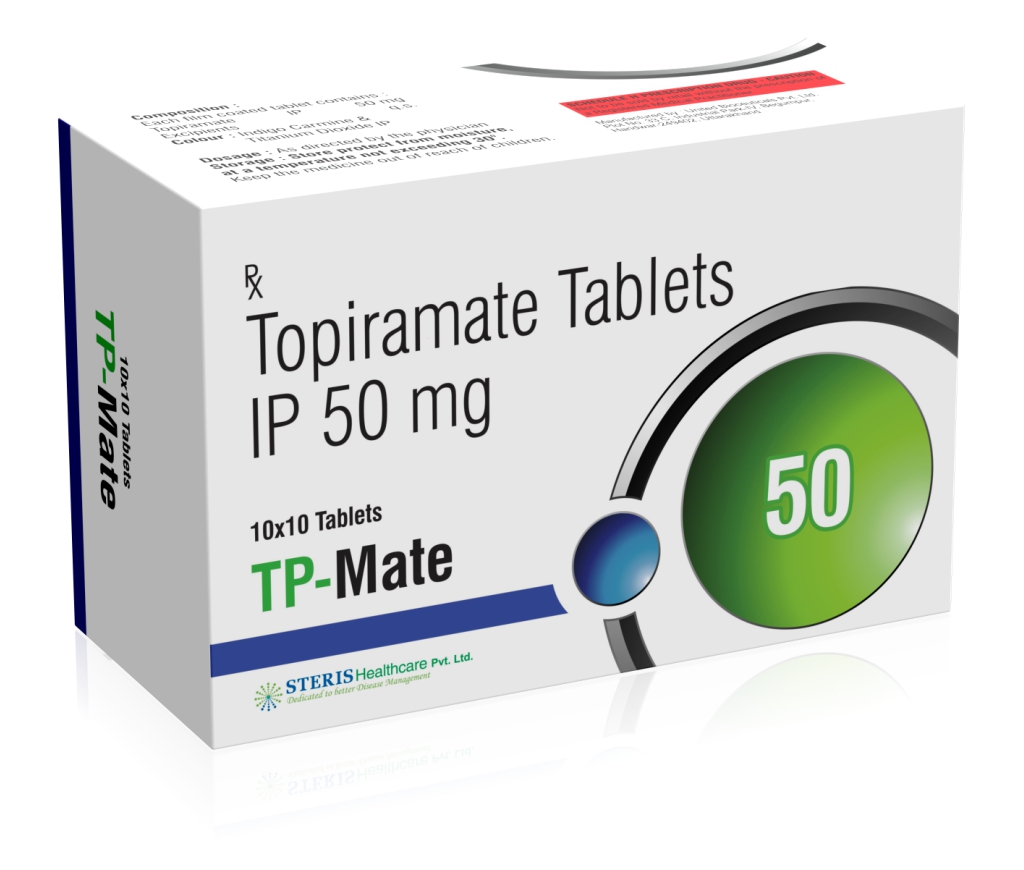
Topiramate 50mg |TP MATE 50
 Item requires a valid prescription
Manufactured By Steris Healthcare Pvt Ltd
Composition Topiramate 50mg
Rs 64.97
MRP Rs 92.81
(30% OFF)
Includes all taxes
Package SIZE
( For 10 Tablets )

100% Authentic
Products

Free
Shipping*

Products
Return Policy
Description:
Topiramate 50 mg is a prescription sulfamate-substituted monosaccharide anticonvulsant prescribed for epilepsy management and migraine prevention.It works by calming overactive electrical activity in the brain and affecting appetite-regulating pathways. Common side effects include tingling in the hands and feet, drowsiness, and reduced appetite; serious risks include kidney stones, metabolic acidosis, mood changes, and eye pressure changes that require prompt medical attention.
What Is Topiramate 50 mg?
Topiramate is a sulfamate-substituted monosaccharide derivative that belongs to the anticonvulsant (antiepileptic) class of medicines. Topiramate 50 mg tablets are commonly prescribed as part of a step-up dosing schedule for epilepsy and migraine prophylaxis, since topiramate therapy is almost always started at a low dose and gradually increased to reduce side effects.
Topiramate is manufactured and marketed by WHO-GMP-certified pharmaceutical companies across India, including through Steris Healthcare's prescription portfolio, for use under medical supervision in hospitals, neurology clinics, and retail pharmacies.
Clinical Indications
| Indication | Typical Use Case | Prescriber |
|---|---|---|
| Epilepsy (partial-onset and generalized seizures) | Monotherapy or adjunct therapy in adults and children | Neurologist |
| Migraine prophylaxis | Prevention of recurrent migraine episodes in adults | Neurologist / General Physician |
| Lennox-Gastaut Syndrome (adjunct) | Seizure control in this specific epilepsy syndrome | Pediatric Neurologist |
| Weight management (off-label, combination therapy) | Often combined with phentermine under specialist supervision | Endocrinologist / Bariatric Physician |
How Topiramate 50 mg Works
Topiramate acts through multiple complementary pathways in the central nervous system:
- Sodium channel blockade – reduces repetitive, high-frequency neuronal firing that triggers seizures.
- GABA-A receptor enhancement – increases the inhibitory (calming) activity of GABA, the brain's primary "brake" neurotransmitter.
- Glutamate receptor antagonism (AMPA/kainate) – dampens excitatory signaling that can otherwise overstimulate neurons.
- Carbonic anhydrase inhibition contributes to some side effects (like kidney stones and metabolic acidosis) but also plays a role in its therapeutic profile.
Key Benefits of Topiramate 50 mg
- Effective seizure control as monotherapy or add-on therapy for multiple epilepsy types
- Reduces migraine frequency in patients with chronic or recurrent migraine
- Supports gradual, medically supervised weight loss when prescribed for this purpose
- Flexible dosing—the 50 mg strength allows precise titration between lower starting doses and higher maintenance doses
- Once- or twice-daily dosing options depending on the formulation (immediate-release vs. extended-release)
- Well-studied safety profile with decades of clinical use across epilepsy and migraine populations
Dosage Guidelines
Dosing must always be individualized by the prescribing doctor based on indication, age, kidney function, and response. As a general reference:
- Epilepsy (adults): Often started at 25–50 mg/day, increased gradually by 25–50 mg per week until the target maintenance dose (commonly 200–400 mg/day in divided doses) is reached.
- Migraine prophylaxis (adults): Typically titrated to a target of 100 mg/day, split into two doses, often starting with a topiramate 50 mg dose as an intermediate step.
- Missed dose: Take as soon as remembered unless it is close to the next dose; never double the dose.
- Discontinuation: Must be tapered gradually under medical supervision — abrupt stopping can trigger rebound seizures even in patients without epilepsy.
Side Effects of Topiramate 50 mg
Common Side Effects
- Tingling or numbness in hands and feet (paraesthesia)
- Drowsiness or fatigue
- Dizziness
- Reduced appetite / weight loss
- Difficulty concentrating or word-finding difficulty ("topiramate fog")
- Nausea
Serious Side Effects (Seek Medical Attention)
- Kidney stones
- Metabolic acidosis (fatigue, rapid breathing, irregular heartbeat)
- Acute myopia and secondary angle-closure glaucoma (sudden vision changes, eye pain)
- Mood changes, depression, or suicidal thoughts
- Severe allergic reactions (rash, swelling, difficulty breathing)
- Decreased sweating and increased body temperature, especially in children
Substitutes & Comparable Anticonvulsants
| Medicine | Class | Common Use | Key Difference from Topiramate |
|---|---|---|---|
| Sodium Valproate | Anticonvulsant | Epilepsy, bipolar disorder | Higher teratogenic risk; different side-effect profile |
| Levetiracetam | Anticonvulsant | Epilepsy | Fewer cognitive side effects; no significant weight change |
| Lamotrigine | Anticonvulsant | Epilepsy, bipolar disorder | Slower titration required; risk of serious skin rash |
| Propranolol | Beta-blocker | Migraine prophylaxis | Non-anticonvulsant alternative for migraine prevention |
Precautions
- Not recommended during pregnancy unless clearly necessary (risk of cleft lip/palate and low birth weight) — discuss contraception planning with your doctor.
- Use caution in patients with a history of kidney stones, glaucoma, or metabolic acidosis.
- Avoid alcohol, which can intensify drowsiness and dizziness.
- Inform your doctor about all other medicines, including oral contraceptives, as topiramate can reduce their effectiveness at higher doses.
- Stay well hydrated to reduce kidney stone risk.
- Regular monitoring of mood, vision, and metabolic parameters is recommended during long-term therapy.
Conclusion
Topiramate 50 mg is a versatile, well-established anticonvulsant used for epilepsy management, migraine prevention, and, in select cases, medically supervised weight management. Its multi-pathway mechanism makes it effective across these indications, but it also carries a distinct side-effect profile—from common issues like tingling and drowsiness to serious risks like kidney stones and mood changes—that requires careful medical supervision. Anyone considering or currently taking topiramate should work closely with their doctor to determine the right dose, monitor for side effects, and taper off safely if therapy is ever discontinued.
Frequently Asked Questions
1. What is topiramate 50 mg used for?
Topiramate 50 mg is used to treat epilepsy (as monotherapy or add-on therapy) and to prevent recurrent migraine headaches in adults. It is also used off-label, under specialist supervision, to support weight management.
2. How much weight can you lose on topiramate?
Weight loss with topiramate varies widely by individual, dose, and duration of use, and depends on whether it is combined with other weight-management therapies. There is no fixed or guaranteed amount, and any weight-loss use should be discussed with and monitored by a doctor.
3. What are the worst side effects of topiramate?
The most serious side effects include metabolic acidosis, kidney stones, sudden vision changes from acute glaucoma, and mood changes including suicidal thoughts. These require immediate medical attention.
4. Does topiramate 50 mg make you sleepy?
Yes, drowsiness and fatigue are among the most commonly reported side effects, especially during the initial dose-titration period. Doctors often advise caution with driving or operating machinery until the individual response is known.
5. Is topiramate a high-risk drug?
Topiramate is generally considered safe when used as prescribed and monitored by a doctor, but it does carry risks that classify it as a medicine requiring careful supervision — including pregnancy-related risks, metabolic effects, and mood-related side effects. It is not an over-the-counter medicine and is dispensed only against a valid prescription.
6. What are three common side effects of topiramate?
Three commonly reported side effects are tingling in the hands and feet (paraesthesia), drowsiness, and reduced appetite.
7. What are the most serious side effects of topiramate?
The most serious side effects include metabolic acidosis, kidney stones, acute angle-closure glaucoma, and mood or behavioral changes such as depression or suicidal ideation.
8. How long does it take for topiramate 50 mg to start working?
Because topiramate is typically titrated slowly, it can take several weeks to reach a therapeutic maintenance dose. Migraine-prevention benefits are often assessed after 8–12 weeks of consistent use, while seizure control is evaluated as the dose is gradually increased. Individual responses should always be reviewed with the prescribing doctor.
9. Are there harmful side effects of topiramate?
Yes. Alongside common, generally manageable side effects, topiramate can cause harmful effects such as kidney stones, metabolic acidosis, vision problems, and mood changes, which is why regular monitoring by a doctor is important.
10. What are the two types of side effects?
Side effects are generally categorized as common (mild-to-moderate) side effects, such as tingling, drowsiness, and appetite changes, and serious (rare but significant) side effects, such as kidney stones, metabolic acidosis, and mood changes, which need prompt medical evaluation.
11. How can side effects of medicine be reduced naturally?
General supportive measures — such as staying well hydrated, maintaining a balanced diet, taking doses at consistent times, avoiding alcohol, and getting adequate rest — may help reduce the intensity of some mild side effects. However, no natural remedy should replace medical advice, and any side effect should be reported to the prescribing doctor rather than self-managed.
12. What are the positive side effects of topiramate?
Some patients experience appetite suppression and modest weight loss as a secondary benefit, which is why topiramate is sometimes used off-label as part of medically supervised weight-management plans.
13. What are 5 common side effects of medications like topiramate?
Commonly reported side effects include drowsiness, dizziness, tingling in the extremities, reduced appetite, and difficulty concentrating.
14. Which medicines are associated with serious side effects similar to topiramate?
Other anticonvulsants such as sodium valproate, phenytoin, and carbamazepine also carry notable serious side-effect profiles, including liver toxicity, blood disorders, and skin reactions, which is why all anticonvulsants require medical supervision and regular monitoring.
15. What are considered high-risk medication categories?
High-risk medication categories generally include anticonvulsants, anticoagulants (blood thinners), opioids, insulin and other antidiabetic agents, and chemotherapy drugs — all of which require careful dosing, monitoring, and medical supervision due to their narrow safety margins or potential for serious adverse effects.
If You Need More Information About TP MATE 50 Click here

