


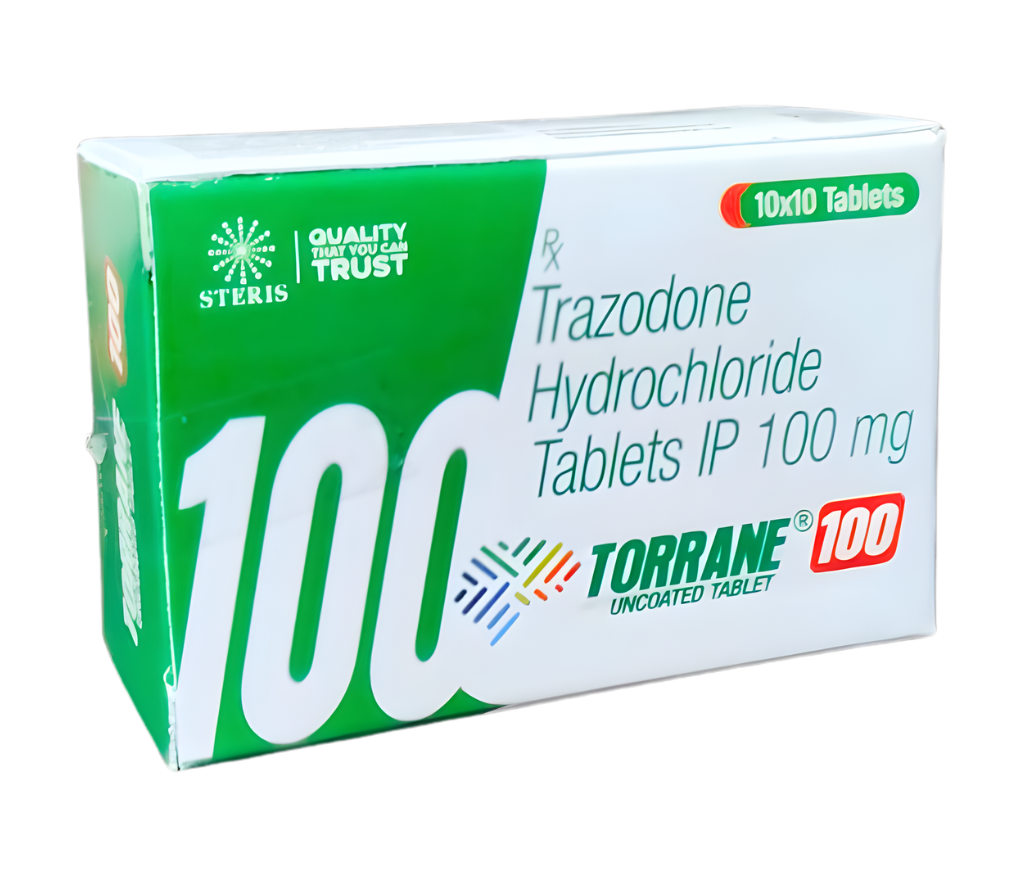
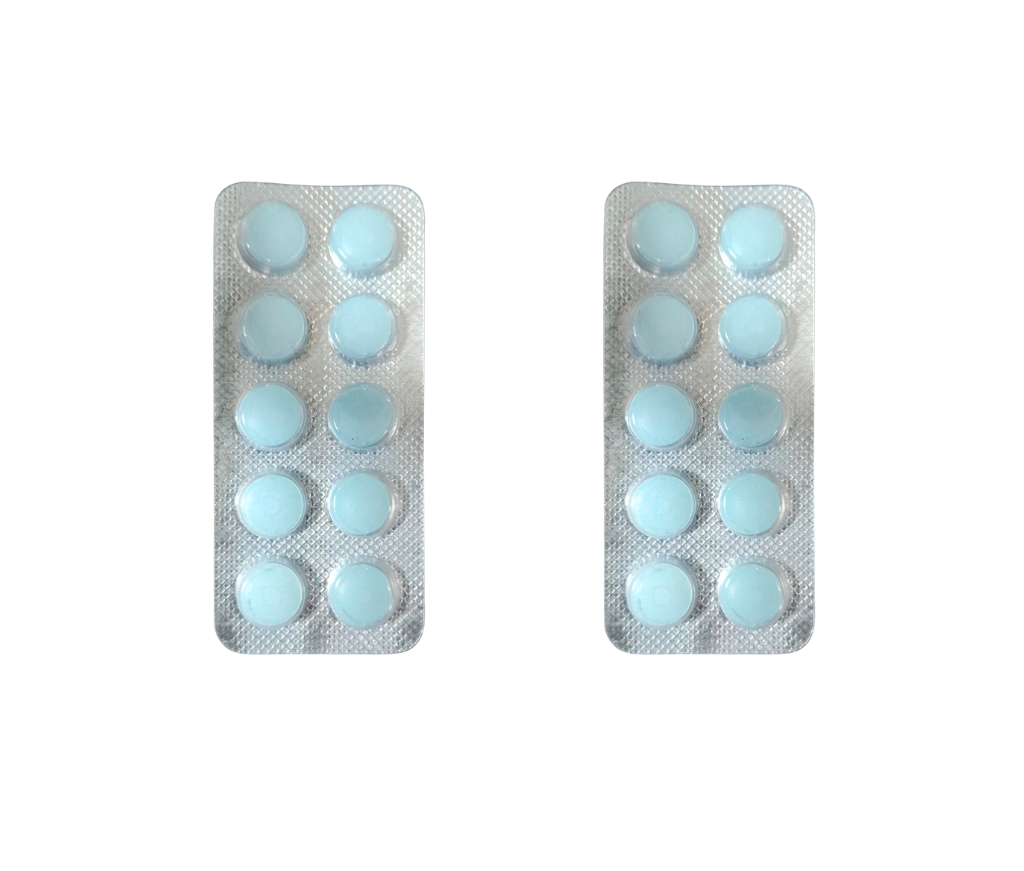
TORRANE 100
 Item requires a valid prescription
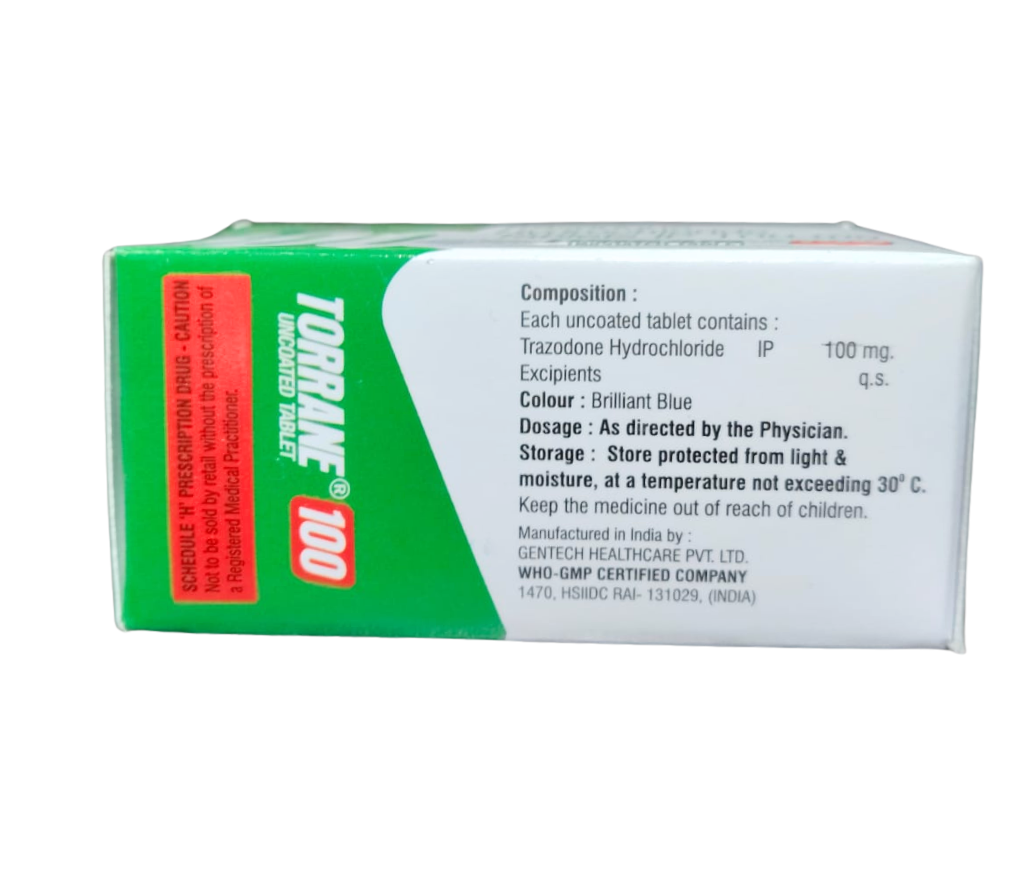
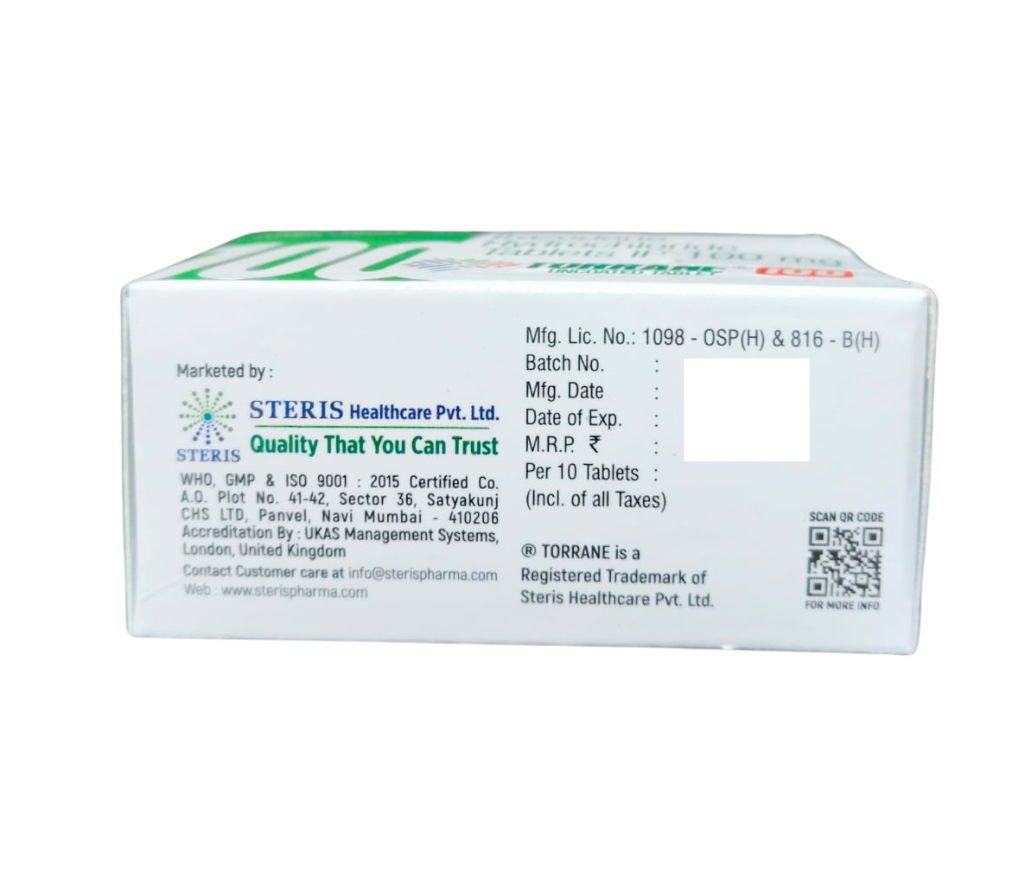
Manufactured By Steris Healthcare Pvt Ltd
Composition Trazodone Hydrochloride 100 mg
Rs 73.50
MRP Rs 105.00
(30% OFF)
Includes all taxes
Package SIZE
( For 10 Tablets )

100% Authentic
Products

Free
Shipping*

Products
Return Policy
Description:
Trazodone hydrochloride 100mg is a prescription antidepressant medicine used primarily for the treatment of major depressive disorder (MDD) in adults. Trazodone belongs to a group of medicines that affect serotonin signaling in the brain. Because it can also cause drowsiness, healthcare professionals may sometimes prescribe trazodone for sleep-related problems or other conditions, although such uses may be off-label and depend on the patient's individual circumstances.
If you are searching for trazodone hydrochloride 100mg uses, benefits, dosage, side effects, precautions, interactions, or how to take it, this guide provides medically sourced information in a straightforward format.
What Is Trazodone Hydrochloride 100mg?
Trazodone hydrochloride 100mg is a tablet containing 100mg of the active ingredient trazodone hydrochloride. It is an antidepressant indicated in U.S. prescribing information for the treatment of major depressive disorder in adults. Current U.S. labeling lists 50mg, 100mg, 150mg and 300mg functionally scored tablets, depending on the specific product.
Trazodone affects serotonin pathways in the central nervous system. It is commonly described as a serotonin modulator and is associated with antidepressant effects. Its sedating properties can also occur, which is important when considering the time of administration and activities such as driving.
A 100mg tablet is a strength, not necessarily the dose that every patient should take. The appropriate dose depends on the condition being treated, treatment response, other medicines, age, medical history and the prescribing clinician's instructions.
Trazodone Hydrochloride 100mg Uses
1. Major Depressive Disorder
The primary FDA-labeled use of trazodone hydrochloride tablets is the treatment of major depressive disorder (MDD) in adults. Depression can involve persistent sadness, loss of interest, changes in sleep or appetite, low energy, difficulty concentrating and other emotional or physical symptoms.
Trazodone works by modifying serotonin activity, which can help manage depressive symptoms in appropriately selected patients. Current DailyMed labeling specifically identifies major depressive disorder as the approved indication.
2. Sleep Problems and Insomnia
Trazodone is also commonly encountered in clinical practice as a treatment for insomnia. However, this use is generally off-label, meaning it is not the primary FDA-approved indication for trazodone hydrochloride tablets.
Because trazodone may cause sleepiness or sedation, a healthcare professional may consider it for selected patients with sleep difficulties. MedlinePlus also notes that trazodone is sometimes used for insomnia and certain other conditions.
Patients should not use trazodone solely as a self-treatment for insomnia without discussing the cause of sleep problems with a healthcare professional.
Key Benefits of Trazodone Hydrochloride 100mg
Supports Depression Treatment
For adults with major depressive disorder, trazodone can help reduce depressive symptoms when prescribed appropriately. It is intended as part of a broader treatment plan that may also include psychotherapy, lifestyle measures and regular clinical follow-up.
May Improve Sleep Disturbances Associated With Depression
Trazodone can cause drowsiness, and this property may be useful for some patients whose depression is accompanied by difficulty sleeping. The balance between antidepressant effects and sedation varies between individuals.
Available in Multiple Tablet Strengths
Trazodone hydrochloride is available in different strengths, including 100mg tablets. This allows prescribers to adjust treatment according to the patient's response and tolerability. Current U.S. labeling lists 50mg, 100mg, 150mg and 300mg functionally scored tablets for certain products.
May Be Adjusted Gradually
Trazodone treatment is generally started at a clinician-selected dose and adjusted according to response and tolerability. Current U.S. prescribing information recommends gradual dose adjustment rather than unsupervised changes.
How Does Trazodone Hydrochloride Work?
Trazodone affects serotonin signaling in the brain. Serotonin is involved in mood, sleep and other neurological functions.
Its pharmacological activity is more complex than simply increasing serotonin. Trazodone interacts with several serotonin receptors and also affects serotonin reuptake. These combined actions contribute to its antidepressant and sedating properties.
The precise clinical response varies from person to person. Trazodone is therefore prescribed according to an individual's symptoms, medical history and treatment response rather than simply according to tablet strength.
Trazodone Hydrochloride 100mg Dosage
The correct trazodone hydrochloride 100mg dosage must be determined by the prescribing healthcare professional.
Importantly, a 100mg tablet does not mean that 100mg is automatically the correct daily dose. Current U.S. prescribing information for immediate-release trazodone hydrochloride tablets lists an initial adult dose of 150mg per day in divided doses for major depressive disorder. The dose may be increased by 50mg per day every three to four days according to clinical response and tolerability. The usual maximum for outpatients is 400mg per day in divided doses.
The dosage may be different when trazodone is prescribed for an off-label condition such as insomnia.
How to Take Trazodone Hydrochloride
Current prescribing information recommends taking trazodone hydrochloride shortly after a meal or light snack. Tablets should generally be swallowed whole or broken along the score line when appropriate, rather than chewed or crushed.
Follow the instructions on your prescription and the specific product packaging.
Do not take an additional tablet to compensate for a missed dose unless specifically instructed by your healthcare professional.
How Long Does Trazodone Take to Work?
Trazodone does not necessarily provide its full antidepressant effect immediately. MedlinePlus notes that it may take two weeks or longer before patients experience the full benefit for depression.
Some people may notice sedation earlier, but sleepiness should not be interpreted as proof that the underlying depressive disorder has been fully treated.
Continue treatment according to your prescription unless your doctor recommends a change.
Trazodone Hydrochloride 100mg Side Effects
Like other prescription medicines, trazodone can cause side effects. Not everyone experiences them, and severity can vary.
Reported adverse effects include:
-
Drowsiness or sedation
-
Dizziness
-
Fatigue
-
Headache
-
Nausea
-
Diarrhea
-
Constipation
-
Blurred vision
-
Nasal congestion
-
Changes in appetite or weight
-
Swelling or edema
Current product labeling identifies several of these reactions among reported adverse effects.
Drowsiness and Dizziness
Trazodone can impair alertness, judgment and motor performance. Be cautious when driving, cycling, operating machinery or performing activities that require concentration until you know how the medicine affects you.
Alcohol and other central nervous system depressants may increase sedating effects.
Serious Side Effects
Although uncommon, some reactions require urgent medical attention.
Seek immediate medical help for symptoms such as:
-
Fainting or severe dizziness
-
Fast or irregular heartbeat
-
Chest pain or breathing difficulty
-
Severe confusion, agitation, fever or muscle rigidity
-
Seizures
-
Severe allergic reactions
-
An erection lasting longer than four hours
-
Symptoms suggesting serious bleeding
Trazodone labeling specifically warns about serotonin syndrome, QT prolongation and cardiac arrhythmias, orthostatic hypotension, bleeding, priapism and other potentially serious reactions.
Important Trazodone Safety Warning
Antidepressants, including trazodone, carry a boxed warning regarding an increased risk of suicidal thoughts and behaviors in pediatric and young adult patients. Current U.S. labeling states that trazodone hydrochloride tablets are not approved for pediatric patients.
Any new or worsening depression, suicidal thoughts, unusual behavioral changes, severe agitation or other concerning mental-health symptoms should be discussed with a healthcare professional immediately.
Trazodone and Serotonin Syndrome
Trazodone can contribute to serotonin syndrome, particularly when combined with other medicines that increase serotonin.
Potential symptoms include:
-
Agitation or confusion
-
Fever
-
Sweating
-
Rapid or irregular heartbeat
-
Muscle stiffness or twitching
-
Loss of coordination
-
Nausea, vomiting or diarrhea
The risk can increase when trazodone is combined with other serotonergic medicines, including certain antidepressants and triptans.
Serotonin syndrome can be serious and requires urgent medical assessment.
Trazodone and Heart Rhythm
Trazodone can prolong the QT/QTc interval, which can increase the risk of potentially serious cardiac rhythm abnormalities in susceptible patients.
The current label recommends avoiding trazodone in people with known QT prolongation and taking caution with medicines that can also prolong the QT interval or strongly affect CYP3A4.
Tell your doctor if you have a history of abnormal heart rhythm, fainting, heart disease or electrolyte abnormalities.
Trazodone Drug Interactions
Before taking trazodone hydrochloride 100mg, provide your doctor or pharmacist with a complete list of your medicines and supplements.
Important interactions include:
-
MAO inhibitors: Concurrent use is contraindicated, and appropriate separation is required when switching between these medicines.
-
Other serotonergic medicines: May increase the risk of serotonin syndrome.
-
Alcohol and CNS depressants: May increase sedation and impairment.
-
CYP3A4 inhibitors: May increase trazodone exposure and may require dose adjustment.
-
Anticoagulants and NSAIDs: May increase bleeding risk.
-
Certain QT-prolonging medicines: May increase the risk of abnormal heart rhythms.
Never add or discontinue a medicine simply because you read about an interaction online. Ask a qualified healthcare professional to assess the combination.
Who Should Be Careful With Trazodone?
Tell your doctor before treatment if you have:
-
Heart rhythm problems
-
Low blood pressure or a history of fainting
-
Bipolar disorder or previous manic episodes
-
Liver or kidney problems
-
Glaucoma or narrow-angle eye anatomy
-
A history of seizures
-
Bleeding disorders
-
A history of medication allergies
-
Current treatment with antidepressants or other serotonergic medicines
The prescribing information recommends screening for bipolar disorder and highlights risks including mania or hypomania, cognitive and motor impairment, angle-closure glaucoma and hyponatremia.
Can You Stop Trazodone Suddenly?
Stopping trazodone abruptly is generally not recommended after ongoing treatment.
Discontinuation can cause symptoms such as dizziness, nausea, headache, anxiety, agitation, sleep disturbances and other withdrawal-like effects. MedlinePlus advises that doctors will usually reduce the dose gradually rather than stopping treatment suddenly.
If you want to discontinue trazodone hydrochloride 100mg, ask your prescriber for an appropriate tapering plan.
Buying Trazodone Hydrochloride 100mg Online
If you are searching for trazodone hydrochloride 100mg online, verify that the medicine is supplied by a legitimate, appropriately licensed pharmacy and that a prescription is required where applicable.
Before ordering, check:
-
The active ingredient and strength.
-
Manufacturer and product information.
-
Expiry date and packaging.
-
Whether the pharmacy requires a valid prescription.
-
Storage and delivery conditions.
-
Pharmacist availability for medicine-related questions.
Avoid websites that promise prescription medicines without appropriate medical oversight or make unrealistic claims about guaranteed results.
Frequently Asked Questions
1. What is trazodone hydrochloride 100mg used for?
Trazodone hydrochloride is primarily approved for treating major depressive disorder in adults. It may also be prescribed off-label for conditions such as insomnia.
2. Is trazodone hydrochloride 100mg a sleeping pill?
No. Trazodone is an antidepressant. Its sedating properties mean that doctors sometimes prescribe it off-label for sleep problems.
3. Does trazodone 100mg make you sleepy?
Yes, trazodone can cause drowsiness or sedation. Avoid driving or operating machinery until you know how it affects you.
4. How long does trazodone 100mg take to work?
For depression, the full therapeutic benefit may take two weeks or longer. Sedation may occur sooner.
5. Can I take trazodone 100mg every night?
Only take trazodone according to your doctor's instructions. Whether it should be taken nightly depends on the condition being treated and the prescribed regimen.
6. What are the common side effects of trazodone 100mg?
Commonly reported effects include drowsiness, dizziness, fatigue, diarrhea, blurred vision, constipation, nasal congestion and weight changes.
7. Can trazodone 100mg cause dizziness?
Yes. Dizziness and low blood pressure, including orthostatic hypotension, can occur. Rising slowly from sitting or lying down may help reduce the risk of falls.
8. Can I drink alcohol while taking trazodone 100mg?
Alcohol can increase the sedating and impairing effects of trazodone. Discuss alcohol use with your doctor or pharmacist before combining them.
9. Can trazodone 100mg be used for anxiety?
Trazodone may be prescribed off-label in some circumstances, but whether it is appropriate for anxiety depends on the individual's diagnosis and treatment plan. It should not be self-prescribed.
10. Does trazodone 100mg treat depression?
Yes. Trazodone hydrochloride tablets are indicated for the treatment of major depressive disorder in adults.
11. Can trazodone 100mg cause weight gain?
Changes in appetite or weight can occur with trazodone. Individual responses vary. If significant or unexplained weight changes occur, speak with your healthcare professional.
12. Can trazodone 100mg cause sexual side effects?
Yes. Sexual side effects can occur, including changes in sexual desire or sexual function. Discuss persistent or troublesome symptoms with your doctor.
13. Can trazodone 100mg cause serotonin syndrome?
Yes. Trazodone can contribute to serotonin syndrome, particularly when combined with other serotonergic medicines. Symptoms such as agitation, fever, sweating, muscle rigidity or abnormal heart rate require urgent medical attention.
14. Can trazodone affect heart rhythm?
Yes. Trazodone can prolong the QT/QTc interval and may increase the risk of cardiac arrhythmias in susceptible patients.
15. Can I take trazodone 100mg with antidepressants?
It depends on the antidepressant. Combining serotonergic medicines can increase the risk of serotonin syndrome, while some combinations may have additional interaction risks. Always consult your prescriber.
16. Can trazodone 100mg be stopped suddenly?
It is generally better to taper trazodone under medical supervision rather than stop it abruptly, because discontinuation symptoms can occur.
17. What happens if I miss a trazodone dose?
Take the missed dose when remembered unless it is nearly time for the next dose. Do not double the next dose. Follow the instructions supplied with your prescription or ask your pharmacist.
18. Is trazodone hydrochloride 100mg available by prescription?
Yes. Trazodone hydrochloride is a prescription medicine. The availability and dispensing requirements can vary by country and jurisdiction.
19. Can trazodone 100mg cause low blood pressure?
Yes. Orthostatic hypotension and fainting have been reported. This risk may be important when trazodone is combined with medicines that lower blood pressure.
20. What should I avoid while taking trazodone 100mg?
Avoid taking medicines or supplements that may interact with trazodone without professional advice. Be particularly cautious with alcohol, other sedating medicines, serotonergic drugs, anticoagulants and medicines that affect heart rhythm