


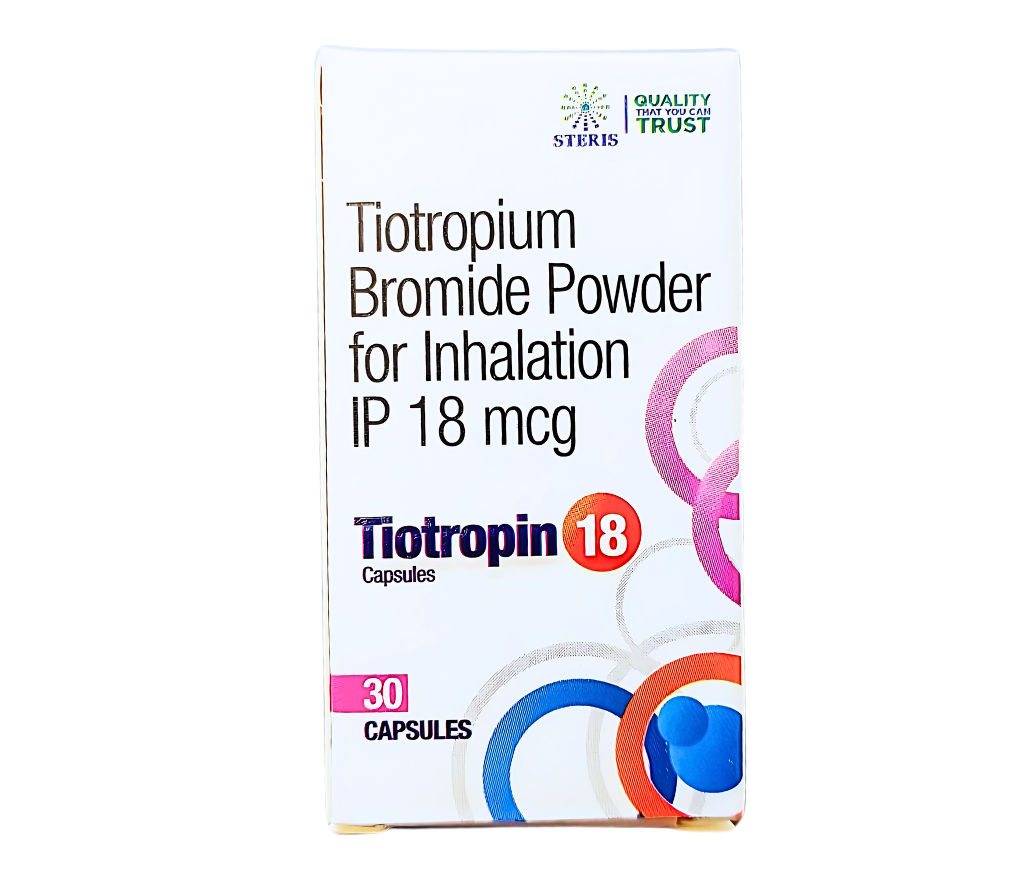
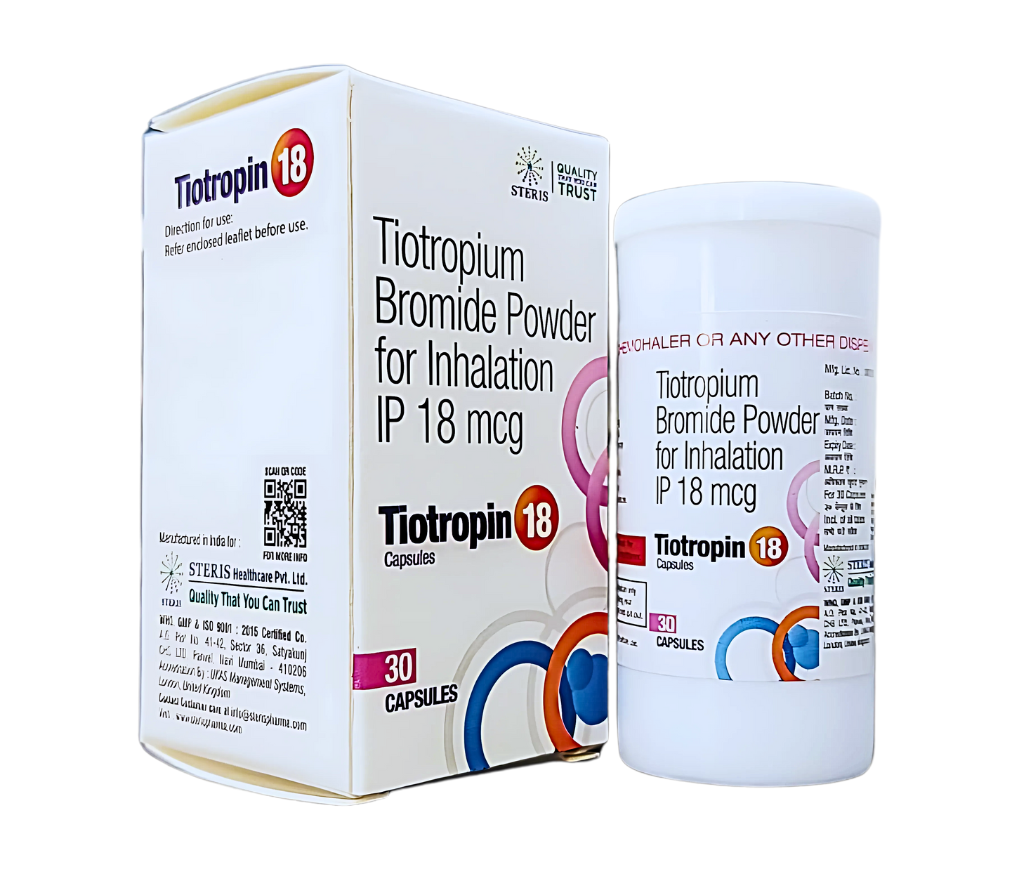
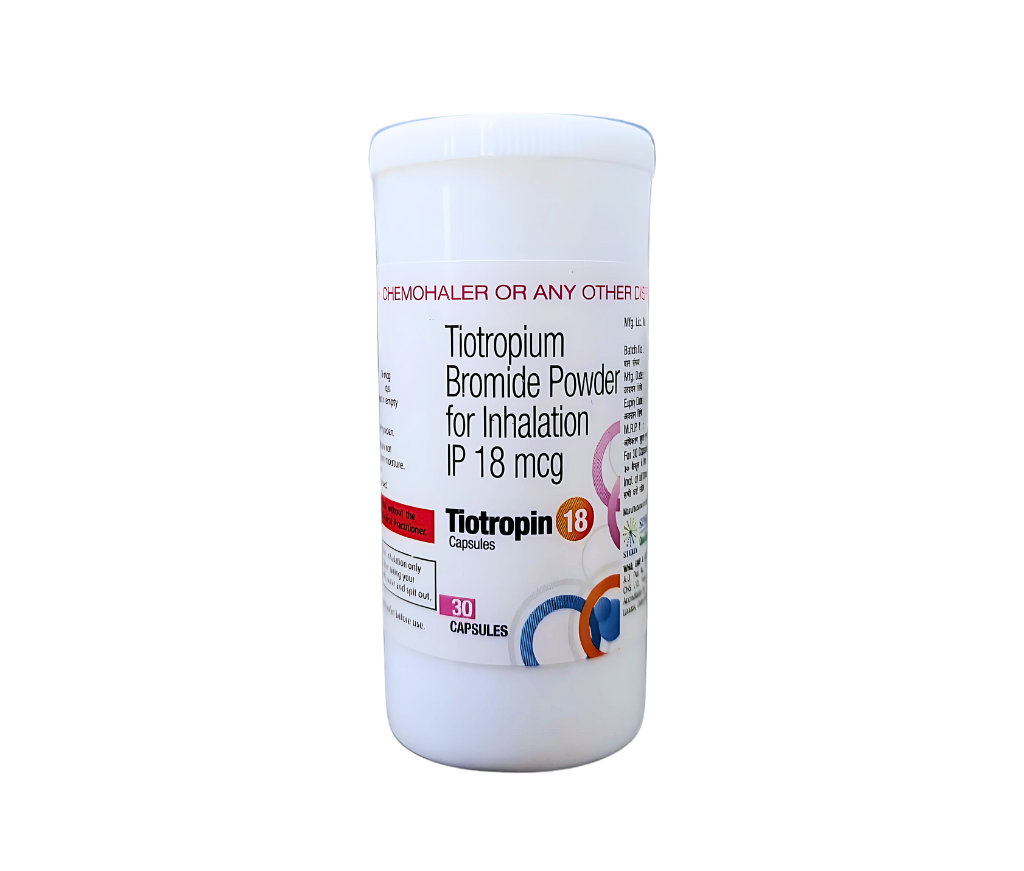
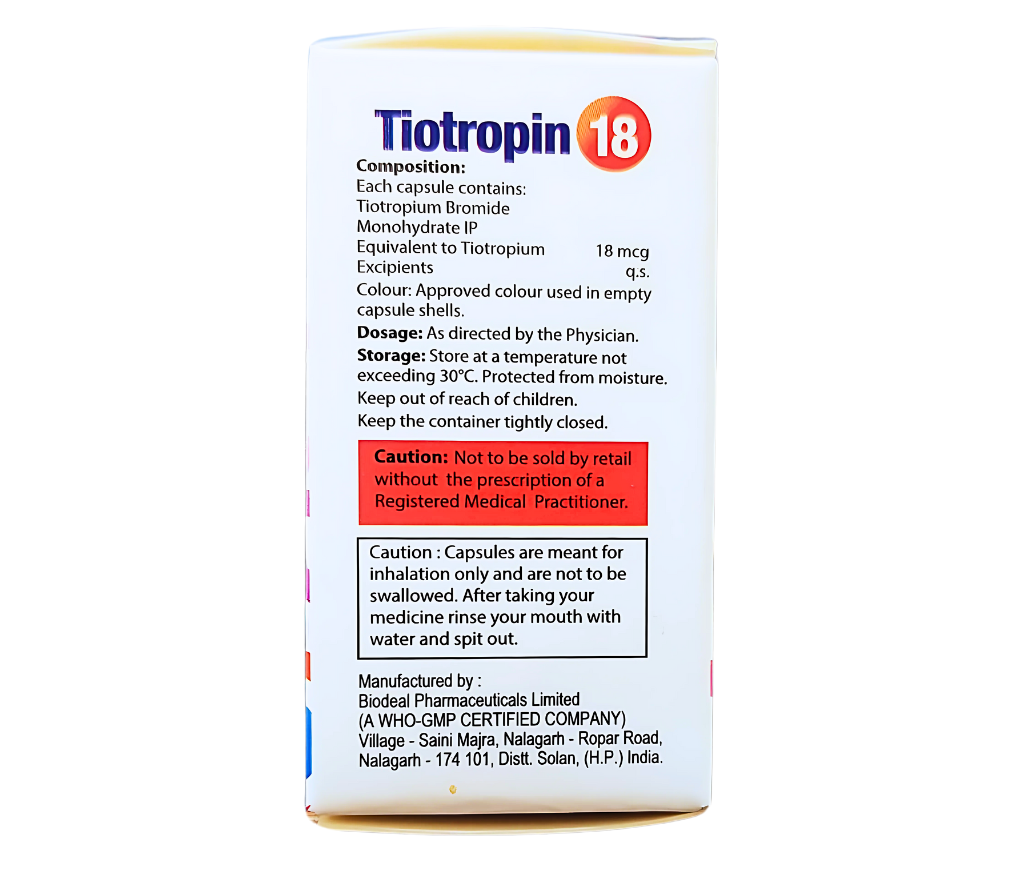
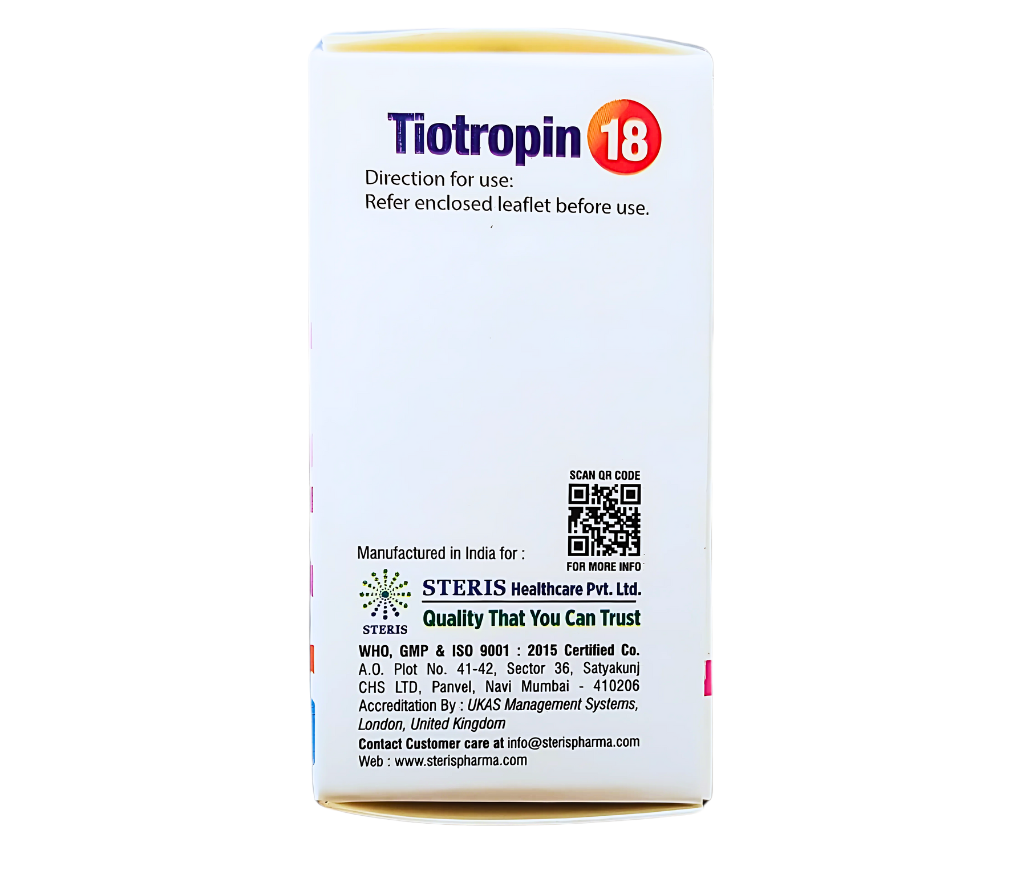
R/C TIOTROPIN 18
 Item requires a valid prescription
Manufactured By Steris Healthcare Pvt Ltd
Composition Tiotropium Bromide 18 mcg Inhalation
Rs 204.15
MRP Rs 291.65
(30% OFF)
Includes all taxes
Package SIZE
( 30 Capsules )

100% Authentic
Products

Free
Shipping*

Products
Return Policy
Description:
Tiotropium bromide 18mcg is a long-acting anticholinergic bronchodilator (LAMA) inhalation capsule used as once-daily maintenance therapy for chronic obstructive pulmonary disease (COPD). Taken via a HandiHaler device, it relaxes the muscles around the airways, improves lung function, and significantly reduces the frequency of COPD exacerbations. It is not a rescue inhaler and must never be swallowed.
What Is Tiotropium Bromide 18mcg?
Tiotropium bromide 18mcg is an inhalation powder capsule belonging to a class of drugs called long-acting muscarinic antagonists (LAMA), also known as anticholinergic bronchodilators. It is widely recognised under the brand name Spiriva HandiHaler and has been a global standard in COPD management since its U.S. approval in 2004.
Each capsule contains 18 mcg of tiotropium bromide in powder form. Unlike tablets, this medication is never swallowed — it is designed exclusively for oral inhalation using a specific device called the HandiHaler. The capsule is pierced inside the device, and the patient inhales the fine powder directly into the lungs, where it acts locally on the airway muscles.
Tiotropium bromide is a maintenance medication, not a rescue treatment. This is one of the most important distinctions patients must understand — it is taken once daily, every day, regardless of symptoms, to keep the airways open over the long term. It does not provide immediate relief during a sudden breathing attack, and a fast-acting reliever inhaler should always be kept separately for emergency use.
How Does Tiotropium Bromide 18mcg Work?
Tiotropium bromide works by blocking specific receptors in the airway muscles called muscarinic receptors (M1, M2, and M3). Here is what happens mechanically inside the lungs:
Blocking Acetylcholine Action: In COPD, the nerve chemical acetylcholine binds to muscarinic receptors in the bronchial smooth muscle, causing the airway muscles to tighten and constrict — making breathing difficult. Tiotropium bromide binds to these same receptors first, blocking acetylcholine from attaching and preventing this constriction.
Long-Acting Bronchodilation: Unlike short-acting anticholinergics, tiotropium has a notably long duration of action, which is why it only needs to be inhaled once every 24 hours. It binds tightly to the M3 receptor subtype and dissociates very slowly, providing sustained airway relaxation throughout the day and night.
Improved Airflow (FEV1): Clinical trials, including the SAFE-Portugal study and multiple Phase IV investigations, have consistently demonstrated that tiotropium bromide produces a measurable improvement in trough forced expiratory volume in one second (FEV1) — the key lung function marker used to assess COPD severity and treatment response.
Reduced Exacerbations: Beyond symptom relief, tiotropium bromide has a well-documented effect on reducing the frequency and severity of acute COPD exacerbations — the flare-ups that are responsible for hospitalisations and accelerated disease progression in COPD patients.
Local, Not Systemic, Action: Tiotropium bromide demonstrates poor absorption across the pulmonary capillaries into systemic circulation, meaning it acts predominantly within the lungs rather than circulating throughout the body — which contributes to its relatively favourable safety profile compared to oral bronchodilator medications.
Tiotropium Bromide 18mcg Uses — Clinical Applications
Maintenance Treatment of COPD: This is the primary, FDA-approved indication. Tiotropium bromide 18mcg is indicated for the long-term, once-daily maintenance treatment of bronchospasm associated with chronic obstructive pulmonary disease, including chronic bronchitis and emphysema. It is typically prescribed for patients with moderate to severe COPD whose symptoms are not adequately controlled by short-acting bronchodilators alone.
Reducing COPD Exacerbations: Tiotropium bromide is specifically indicated to reduce the frequency of COPD exacerbations in patients with a documented history of such episodes. This is a critical clinical goal, as repeated exacerbations are strongly linked to faster lung function decline and increased mortality risk in COPD patients.
Chronic Bronchitis and Emphysema: As subtypes of COPD, both chronic bronchitis (characterised by persistent cough and mucus production) and emphysema (characterised by damaged alveoli and reduced gas exchange) respond to tiotropium's bronchodilatory action, helping patients breathe more easily on a sustained basis.
Asthma Maintenance (Add-On Therapy): While tiotropium is best known for COPD, certain formulations are also approved as add-on maintenance treatment to prevent asthma attacks in adults and children aged 6 years and above, particularly when symptoms remain uncontrolled on inhaled corticosteroids alone.
Combination Therapy Settings: Tiotropium bromide is frequently used alongside inhaled corticosteroids like budesonide, especially in elderly COPD patients. Clinical research has shown that combining tiotropium with budesonide produces better improvement in lung function and symptom control compared to tiotropium alone, without a meaningfully increased rate of adverse reactions.
How to Use Tiotropium Bromide 18mcg Capsule Correctly
Correct technique is essential — tiotropium bromide delivers no therapeutic benefit if swallowed, and incorrect inhaler use significantly reduces the amount of medication reaching the lungs.
Step-by-step inhalation technique with the HandiHaler device:
- Open the dust cap, then open the mouthpiece of the HandiHaler
- Place one capsule into the central chamber — never store capsules loose inside the device
- Close the mouthpiece firmly until you hear a click, leaving the dust cap open
- Press the green piercing button once, fully, then release — this pierces the capsule and releases the powder
- Breathe out completely (away from the device, never into it)
- Place lips tightly around the mouthpiece and inhale slowly and deeply until your lungs feel full
- Hold your breath for as long as comfortable, then breathe out normally
- Repeat the inhalation a second time to ensure the full capsule dose is delivered
- Discard the empty capsule and close the device
Each capsule is for single use only and should never be reused. Capsules must always remain in their sealed blister packaging until immediately before use, as exposure to moisture can degrade the powder.
Recommended Dosage of Tiotropium Bromide 18mcg
| Patient Group | Dosage |
|---|---|
| Adults with COPD | 1 capsule (18 mcg) inhaled once daily, same time each day |
| Asthma add-on (adults & children 6+) | As prescribed, typically once daily |
| Renal impairment (CrCl <60 mL/min) | Use with caution; close monitoring required |
Two inhalations per capsule: Each capsule contains a single 18 mcg dose, but patients must inhale twice through the device to ensure the entire powder content is fully delivered from the capsule chamber into the lungs.
Missed dose: If a dose is missed, take it as soon as remembered the same day, but never take two doses on the same day to make up for a missed one. Skip the missed dose entirely if it is almost time for the next scheduled dose.
Important: Tiotropium bromide capsules must never be swallowed. They are for oral inhalation only, used exclusively with the HandiHaler device.
Benefits of Tiotropium Bromide 18mcg
- Provides 24-hour bronchodilation with a single once-daily dose
- Clinically proven to improve lung function (FEV1) in COPD patients
- Significantly reduces the frequency of COPD exacerbations
- Reduces breathlessness and improves exercise tolerance
- Long-term safety established through large studies, including the 4-year UPLIFT trial involving approximately 6,000 patients
- Acts locally in the lungs with minimal systemic absorption
- Effective as monotherapy or in combination with inhaled corticosteroids
- Improves overall quality of life for patients with moderate to severe COPD
Side Effects of Tiotropium Bromide 18mcg
Common side effects (more than 5% incidence):
- Dry mouth (most frequently reported)
- Sore throat and pharyngitis
- Cough
- Headache
- Sinusitis
- Upper respiratory tract infection
- Non-specific chest pain
- Urinary tract infection
- Dyspepsia (indigestion)
Serious side effects requiring immediate medical attention:
Urinary Retention: Difficulty or pain passing urine. This occurs because tiotropium's anticholinergic action can affect bladder muscle function, particularly in men with pre-existing prostate enlargement.
Acute Narrow-Angle Glaucoma: Eye pain, blurred vision, redness, or seeing halos around lights. This is a medical emergency requiring immediate ophthalmological attention, as it can result in permanent vision damage if untreated.
Paradoxical Bronchospasm: Sudden worsening of wheezing or breathing difficulty immediately after inhalation — though rare, this requires the medication to be stopped and alternative therapy considered.
Allergic Reaction: Hives, itching, difficulty breathing, or swelling of the face, lips, tongue, or throat requires emergency medical care immediately.
Cardiovascular Risk: Pooled analysis of safety data from multiple clinical studies has identified a small increased risk of stroke associated with tiotropium bromide treatment (approximately 2 cases per 1,000 patients), prompting further long-term safety monitoring in patients with cardiovascular risk factors.
Precautions Before Using Tiotropium Bromide 18mcg
- Do not use if you have a known hypersensitivity to tiotropium, ipratropium, atropine, or any related anticholinergic compound
- Inform your doctor if you have glaucoma, prostate enlargement, or bladder neck obstruction before starting therapy
- Patients with moderate to severe renal impairment require close monitoring for anticholinergic side effects, as tiotropium is predominantly excreted renally
- Avoid contact with eyes — accidental exposure to the powder can trigger acute glaucoma symptoms
- Use during pregnancy only if the potential benefit clearly outweighs the potential risk, as adequate controlled studies in pregnant women are lacking
- Never use as a rescue inhaler during a sudden asthma or COPD attack — keep a fast-acting bronchodilator separately for emergencies
- Capsules must never be swallowed under any circumstance
Frequently Asked Questions
Q1. What is tiotropium bromide 18mcg used for?
Ans. Long-term maintenance treatment for COPD and asthma.
Q2. How often should tiotropium bromide 18mcg be taken?
Ans. Once daily, at the same time each day.
Q3. Can tiotropium bromide capsules be swallowed?
Ans. No, they are for inhalation only via HandiHaler.
Q4. Is tiotropium bromide a rescue inhaler?
Ans. No, it's a maintenance drug, not for sudden attacks.
Q5. What are common side effects of tiotropium bromide?
Ans. Dry mouth, sore throat, headache, and cough.
Q6. How many inhalations needed per capsule dose?
Ans. Two inhalations are needed per single capsule.