


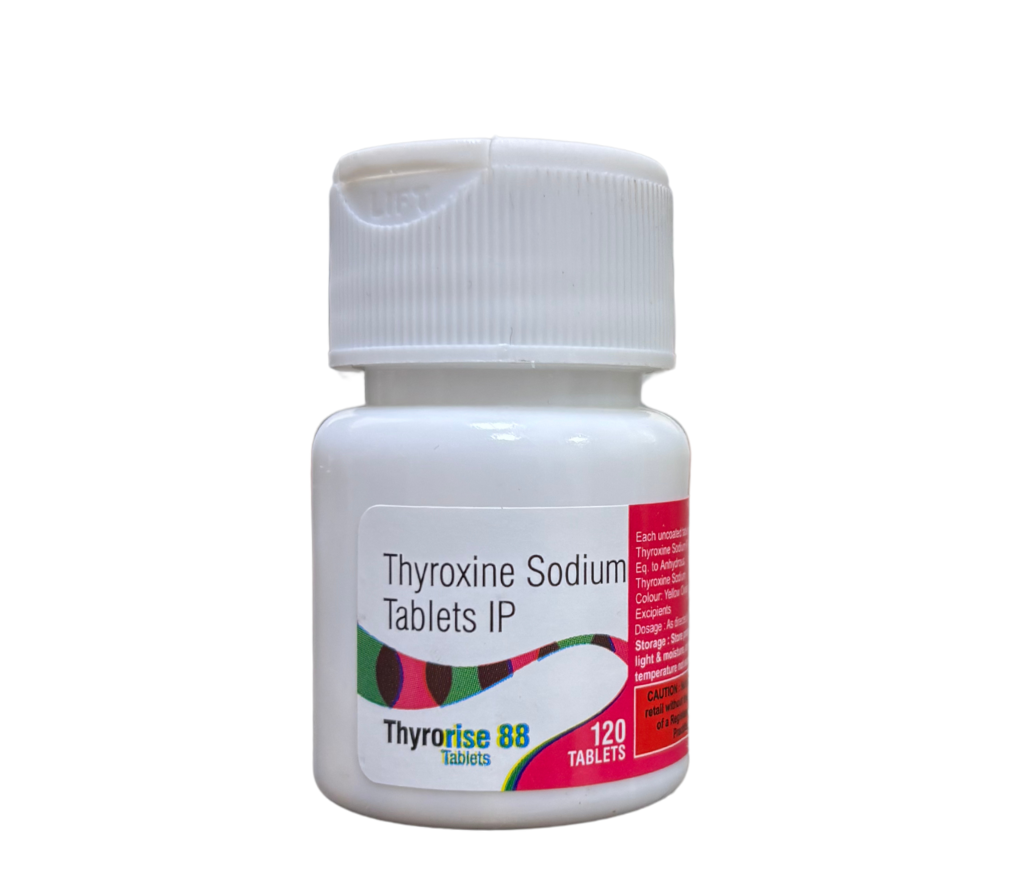
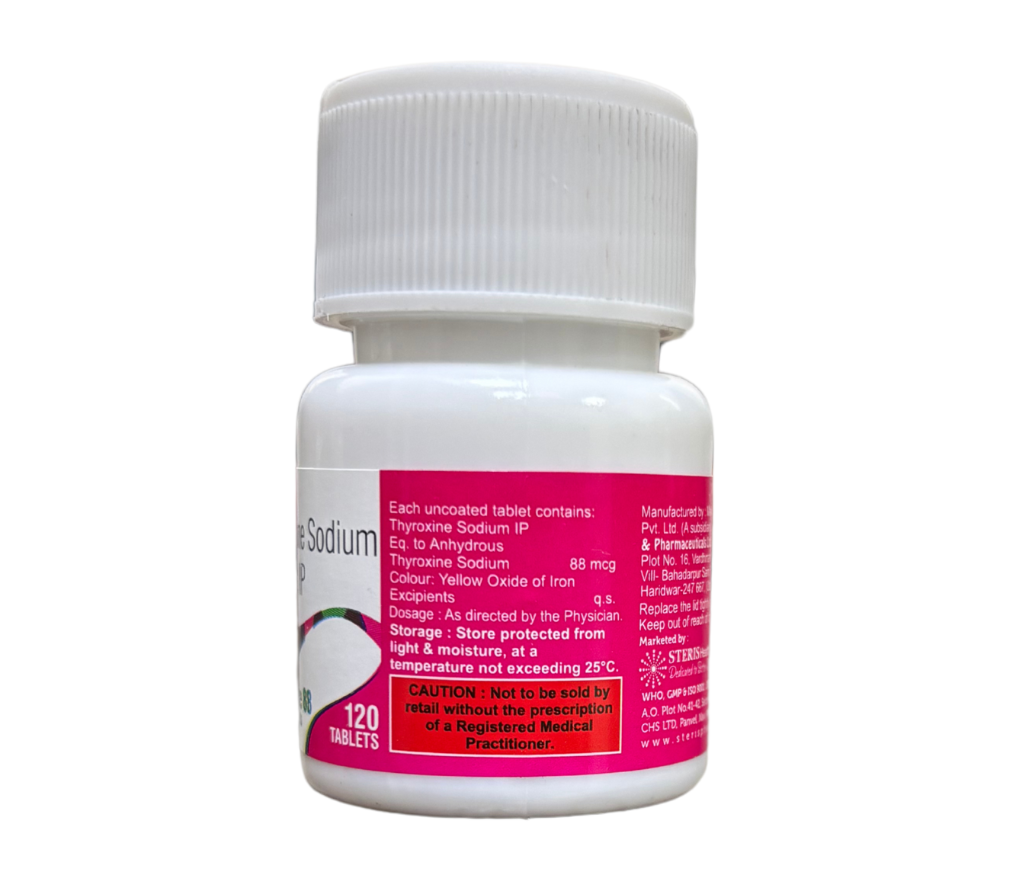
THYRORISE 88
 Item requires a valid prescription
Manufactured By Steris Healthcare Pvt Ltd
Composition Thyroxine Sodium (88mcg)
Rs 154.00
MRP Rs 220.00
(30% OFF)
Includes all taxes
Package SIZE
( 120 Tabs Pack )

100% Authentic
Products

Free
Shipping*

Products
Return Policy
Description:
Thyroxine sodium tablets are oral thyroid hormone replacement medicines containing levothyroxine sodium, a synthetic form of thyroxine (T4), the hormone naturally produced by the thyroid gland. They are primarily prescribed to treat hypothyroidism, a condition in which the thyroid does not produce enough thyroid hormone for the body's needs.
Thyroid hormones influence metabolism, energy use, body temperature, heart function, muscles, and the nervous system. When thyroid hormone production is too low, body processes can slow down. Common symptoms can include tiredness, feeling cold, constipation, dry skin, low mood, and difficulty concentrating. A blood test, rather than symptoms alone, is used to confirm hypothyroidism.
For people researching thyroxine sodium tablets uses, benefits, side effects, dosage, or purchasing information, the key point is that this is a thyroid hormone replacement medicine, not a nutritional supplement or general energy tablet.
What Are Thyroxine Sodium Tablets Used For?
The main use of thyroxine sodium tablets is replacement therapy for hypothyroidism. Levothyroxine replaces the T4 hormone that the thyroid gland cannot produce adequately. The American Thyroid Association describes levothyroxine as the standard thyroid hormone replacement treatment for most people with hypothyroidism.
Depending on the patient's diagnosis, levothyroxine may be prescribed for:
-
Primary hypothyroidism
-
Hashimoto's-related hypothyroidism
-
Hypothyroidism following thyroid surgery
-
Hypothyroidism after certain radiation treatments
-
Congenital hypothyroidism
-
Some forms of central hypothyroidism
-
Thyroid hormone replacement after loss of normal thyroid function
-
TSH suppression in selected patients with thyroid cancer
Thyroid hormone may also be used as suppression therapy in selected thyroid cancer patients to reduce stimulation of thyroid tissue.
The exact reason for treatment should be established by a healthcare professional based on symptoms, medical history, physical examination, and thyroid laboratory results.
How Do Thyroxine Sodium Tablets Work?
Thyroxine sodium tablets supply synthetic T4, which is biologically equivalent to the thyroxine produced naturally by the thyroid gland. T4 circulates in the bloodstream and can be converted by body tissues into T3, the more biologically active thyroid hormone.
The purpose of treatment is not to stimulate the thyroid gland artificially. Instead, levothyroxine replaces the hormone that is missing.
This distinction is important when considering the benefits of thyroxine sodium tablets. The medicine works by bringing thyroid hormone availability closer to the level required for normal physiological function.
The American Thyroid Association explains that thyroid hormone is necessary for the health and normal operation of cells throughout the body, including the brain, heart, muscles, and other organs.
Key Benefits of Thyroxine Sodium Tablets
1. Replaces deficient thyroid hormone
The primary benefit is reliable replacement of T4 in people whose thyroid does not make enough hormone.
For appropriately diagnosed hypothyroidism, restoring thyroid hormone levels can help return thyroid function toward the target range.
2. Helps control hypothyroidism symptoms
When symptoms are caused by inadequate thyroid hormone, effective treatment can improve problems such as fatigue, cold intolerance, constipation, dry skin, and slowed thinking. However, these symptoms can have many causes, so thyroid hormone should not be used without an appropriate diagnosis.
3. Supports normal metabolism
Thyroid hormone helps the body use energy and regulate metabolism. Replacing deficient hormone supports these normal physiological processes.
4. Provides stable, long-term hormone replacement
Levothyroxine has a long duration of action and is generally administered once daily. Consistent daily treatment helps maintain relatively stable thyroid hormone exposure.
5. Supports long-term thyroid management
Many causes of hypothyroidism are chronic. In these situations, ongoing thyroid hormone replacement may be necessary, with periodic monitoring and dose adjustments when appropriate. The ATA advises patients not to stop thyroid hormone treatment without discussing it with their doctor.
How Should Thyroxine Sodium Tablets Be Taken?
Correct administration is important because food, supplements, and some medicines can affect levothyroxine absorption.
A commonly recommended approach is to:
-
Take the prescribed dose once daily.
-
Take it on an empty stomach.
-
Take it with water, generally 30–60 minutes before breakfast.
-
Take it consistently in the same manner every day.
-
Separate it from medicines or supplements that interfere with absorption according to your healthcare professional's instructions.
The American Thyroid Association notes that taking thyroid hormone consistently is particularly important. Morning administration on an empty stomach is common, although some patients may use a bedtime regimen when it can be taken consistently away from food and interacting medicines.
Do not change your schedule frequently because inconsistent administration can make thyroid test results and dose adjustment more difficult.
Thyroxine Sodium Tablets Dosage
There is no universal thyroxine sodium tablets dosage that is suitable for everyone.
The dose is individualized based on factors such as:
-
Age
-
Body weight
-
Severity of hypothyroidism
-
Duration of thyroid disease
-
Remaining thyroid function
-
Heart health
-
Pregnancy
-
Other medical conditions
-
Other medicines
-
TSH and free T4 results
Current levothyroxine prescribing information emphasizes individualized dosing and monitoring. Older adults and people with cardiovascular disease may require more cautious initiation and adjustment.
Different tablet strengths are available, so patients should purchase only the strength prescribed for them.
Never increase or decrease your thyroxine dose simply because you feel tired, have gained weight, or want faster results. Too much thyroid hormone can cause medically significant complications.
How Long Does Thyroxine Sodium Take to Work?
Thyroxine sodium does not generally produce its complete therapeutic effect immediately.
Because levothyroxine has a long duration of action, clinicians usually allow several weeks for the full effect of a dose change to become apparent. Current prescribing information indicates that peak therapeutic effect may take approximately 4–6 weeks.
Some symptoms may improve earlier, while others may take longer. Your healthcare professional may use TSH and other thyroid tests to determine whether your current dose is appropriate.
Thyroxine Sodium Tablets Side Effects
When the dose is appropriate, levothyroxine is generally well tolerated. Most adverse effects are associated with excessive thyroid hormone exposure, meaning the dose may be too high for the individual.
Possible symptoms include:
-
Fast heartbeat
-
Irregular heartbeat
-
Palpitations
-
Nervousness
-
Anxiety
-
Tremors
-
Difficulty sleeping
-
Increased sweating
-
Heat intolerance
-
Increased appetite
-
Unintended weight loss
-
Muscle weakness
-
Headache
-
Diarrhea
-
Menstrual changes
The American Thyroid Association explains that taking too much thyroxine can produce symptoms resembling hyperthyroidism, including nervousness, shakiness, heat intolerance, sleep problems, weakness, shortness of breath, and a racing or irregular heartbeat.
Serious cardiovascular effects can occur with excessive thyroid hormone exposure, particularly in susceptible patients.
If you experience severe chest pain, fainting, significant breathing difficulty, or a severe or irregular heartbeat, seek urgent medical attention.
Thyroxine Sodium Tablets and Weight Loss
One of the most important safety points for anyone searching to buy thyroxine sodium tablets is that levothyroxine should not be used as a weight-loss medicine.
Current prescribing information contains a warning that thyroid hormones, including levothyroxine sodium tablets, should not be used to treat obesity or promote weight loss. Excessive doses can cause serious or potentially life-threatening toxicity.
If hypothyroidism has contributed to weight gain, appropriate treatment may help restore metabolic function and can result in some weight change. That is very different from taking thyroid hormone when thyroid function is normal.
Food, Supplements and Drug Interactions
Several products can reduce or alter levothyroxine absorption.
Important examples include:
-
Calcium supplements
-
Iron supplements
-
Some antacids
-
Certain cholesterol-lowering medicines
-
Some acid-reducing medicines
-
Other prescription medicines
-
Certain foods or dietary products
Calcium and iron are particularly important because taking them too close to levothyroxine can reduce absorption.
Tell your doctor or pharmacist about all prescription medicines, over-the-counter medicines, vitamins, minerals, and supplements you take.
What About Biotin?
Biotin is commonly included in hair, skin, and nail supplements. It can interfere with certain laboratory tests, including thyroid tests.
Current prescribing information recommends discussing biotin use with your healthcare professional and stopping biotin-containing supplements before certain thyroid laboratory assessments according to medical instructions.
Thyroxine Sodium Tablets During Pregnancy
Pregnancy can change thyroid hormone requirements. Adequate thyroid hormone replacement is important during pregnancy, so people who are pregnant or planning pregnancy should inform their healthcare professional if they take levothyroxine.
Do not stop thyroxine sodium tablets because of pregnancy unless your doctor specifically instructs you to do so.
Thyroid function may need more frequent monitoring during pregnancy, with dose adjustments made by the treating clinician.
Can Thyroxine Sodium Tablets Be Taken Long Term?
Yes. For many people with permanent hypothyroidism, thyroid hormone replacement is a long-term or lifelong treatment.
The American Thyroid Association states that most patients with permanent thyroid problems require ongoing thyroid hormone replacement and should have thyroid hormone levels monitored periodically.
The need for long-term treatment depends on the underlying cause. Some temporary thyroid conditions may resolve, while thyroid removal or permanent thyroid gland damage generally requires ongoing replacement.
Never stop treatment solely because you feel better.
Buying Thyroxine Sodium Tablets: A Safe Purchasing Guide
If you are searching for thyroxine sodium tablets for sale or considering an online purchase, product authenticity and correct strength are more important than simply finding the lowest price.
Before purchasing, check:
-
Active ingredient: levothyroxine sodium
-
Prescribed strength: verify the exact microgram strength
-
Dosage form: tablet
-
Manufacturer: use a legitimate pharmaceutical manufacturer
-
Batch or lot number: packaging should be traceable
-
Expiry date: never use expired tablets
-
Packaging: avoid damaged, opened, or suspicious packaging
-
Storage requirements: follow the manufacturer's instructions
-
Pharmacy credentials: use a legitimate pharmacy
-
Prescription requirements: follow the rules applicable in your country
Because thyroxine is a prescription hormone replacement medicine, purchasing an unknown product from an unverified online seller can create unnecessary risks, including incorrect strength, counterfeit medicine, improper storage, or unclear manufacturing origin.
Should You Switch Thyroxine Brands?
Do not switch brands or manufacturers casually.
The American Thyroid Association notes that consistency in thyroid hormone treatment is important. If the product or manufacturer changes, your healthcare professional may recommend thyroid-function testing to confirm that your dose remains appropriate.
Who Needs Extra Caution With Thyroxine Sodium Tablets?
Extra caution and medical supervision may be needed in people with:
-
Coronary artery disease
-
Heart rhythm disorders
-
Older age
-
Long-standing severe hypothyroidism
-
Adrenal insufficiency
-
Pregnancy
-
Diabetes
-
Other endocrine disorders
Current prescribing information lists untreated adrenal insufficiency as a contraindication and emphasizes careful dosing in patients with cardiovascular risk.
What Happens If You Miss a Dose?
If you miss a dose, follow the instructions provided with your prescription or contact your pharmacist or doctor.
Avoid routinely taking extra tablets to compensate unless your healthcare professional has specifically told you how to manage missed doses.
If missed doses happen regularly, discuss adherence with your healthcare professional rather than changing the prescribed schedule yourself.
Why Regular Thyroid Testing Matters
Taking the right amount of thyroxine is a balance: too little may leave hypothyroidism inadequately treated, while too much can produce symptoms and complications associated with excessive thyroid hormone.
TSH is commonly used to monitor treatment in primary hypothyroidism. Depending on the underlying condition, free T4 and other tests may also be relevant.
Regular testing is particularly important after starting treatment, changing the dose, changing products, becoming pregnant, or beginning medicines that may affect thyroid hormone requirements.
Thyroxine Sodium Tablets: Key Takeaway
Thyroxine sodium tablets contain levothyroxine, a synthetic form of thyroid hormone T4 used primarily to treat hypothyroidism. The major benefits are replacement of deficient thyroid hormone, restoration of thyroid function toward the target range, and improvement of symptoms caused by inadequate hormone levels.
The medicine is generally taken once daily, with consistent administration helping maintain predictable treatment. However, the correct dose is highly individualized and should be guided by thyroid-function testing and clinical assessment.
For consumers looking to buy thyroxine sodium tablets, the safest approach is to use a legitimate pharmacy and obtain the exact strength prescribed by a qualified healthcare professional. Avoid purchasing thyroid hormone for self-directed weight loss, and do not change your dose or discontinue treatment without medical advice.
Frequently Asked Questions
1. What are thyroxine sodium tablets used for?
Thyroxine sodium tablets are primarily used to treat hypothyroidism by replacing the thyroid hormone T4 that the body is not producing adequately.
2. What is thyroxine sodium?
Thyroxine sodium refers to levothyroxine sodium, the synthetic form of the natural thyroid hormone thyroxine, also called T4.
3. Are thyroxine sodium tablets the same as levothyroxine?
Yes. Levothyroxine sodium is the active thyroid hormone replacement ingredient commonly called synthetic thyroxine or T4.
4. What are the main benefits of thyroxine sodium tablets?
The main benefit is replacement of deficient thyroid hormone. Appropriate treatment can help restore thyroid hormone levels and improve symptoms associated with hypothyroidism.
5. How should I take thyroxine sodium tablets?
They are commonly taken once daily on an empty stomach, generally 30–60 minutes before breakfast with water. Follow your own prescription and product instructions.
6. Can I take thyroxine sodium tablets after eating?
Food can affect levothyroxine absorption. Taking the medicine consistently away from meals, according to your prescribed schedule, helps maintain predictable absorption.
7. Can I take calcium with thyroxine sodium tablets?
Calcium can interfere with levothyroxine absorption. Ask your pharmacist or doctor how far apart to take calcium and thyroxine.
8. Can I take iron supplements with thyroxine sodium?
Iron can reduce levothyroxine absorption when taken too close together. Your healthcare professional can provide the appropriate separation interval.
9. What are the side effects of thyroxine sodium tablets?
Side effects are often related to excessive thyroid hormone and may include palpitations, rapid heartbeat, anxiety, tremor, sweating, heat intolerance, insomnia, diarrhea, muscle weakness, and weight loss.
10. Can thyroxine sodium tablets cause weight loss?
They may help reverse some weight changes caused by untreated hypothyroidism, but thyroxine should not be used as a weight-loss drug in people with normal thyroid function.
11. How long does thyroxine sodium take to work?
The full therapeutic effect of a dose change may take approximately 4–6 weeks. Thyroid blood tests are commonly used to determine whether the dose is appropriate.
12. Do I need blood tests while taking thyroxine?
Yes. TSH and, when appropriate, other thyroid-function tests help determine whether your treatment is adequately replacing thyroid hormone.
13. Can I stop taking thyroxine when I feel better?
Do not stop prescribed thyroxine without consulting your healthcare professional. Many forms of hypothyroidism require long-term treatment.
14. Can I take thyroxine sodium tablets during pregnancy?
Levothyroxine is used to treat hypothyroidism during pregnancy, but thyroid hormone requirements can change. Tell your healthcare professional promptly if you become pregnant or plan to become pregnant.
15. Is thyroxine sodium safe for older adults?
It can be used when appropriately prescribed, but older adults and people with heart disease may need cautious dosing and monitoring because excessive thyroid hormone can increase cardiovascular risks.
16. Can I buy thyroxine sodium tablets without a prescription?
Requirements differ by country and product. Because levothyroxine requires individualized dosing and monitoring, it should be obtained through a legitimate healthcare and pharmacy channel.
17. What strength of thyroxine sodium tablets should I buy?
Buy only the strength prescribed by your healthcare professional. Do not select a strength based on symptoms, online recommendations, or another person's prescription.
18. Can I switch between different thyroxine brands?
Ask your doctor or pharmacist before changing products. Maintaining consistent thyroid hormone treatment is important, and additional monitoring may sometimes be recommended after a product change.
19. Is thyroxine sodium T3 or T4?
Thyroxine sodium contains synthetic T4, or levothyroxine. Some T4 is naturally converted into T3 within body tissues.
20. Can thyroxine sodium tablets be used for thyroid cancer?
Levothyroxine may be used for TSH suppression in selected thyroid cancer patients under specialist supervision.
21. Does thyroxine sodium contain iodine?
The medicine itself is synthetic thyroid hormone rather than an iodine supplement. Do not use thyroxine as a substitute for iodine supplementation.
22. Can vitamins interfere with thyroxine sodium tablets?
Yes. Mineral supplements containing calcium or iron can interfere with levothyroxine absorption. Tell your healthcare professional about all vitamins and supplements you take.
23. Can biotin affect thyroid tests?
Yes. Biotin can interfere with certain laboratory tests. Tell your doctor if you take biotin or hair, skin, and nail supplements before thyroid testing.
24. What should I do if I experience a racing heartbeat after taking thyroxine?
Contact your healthcare professional because a racing or irregular heartbeat can be a sign of excessive thyroid hormone or another medical problem. Severe chest pain, fainting, or serious breathing difficulty requires urgent medical evaluation.
25. Is thyroxine sodium a vitamin?
No. Thyroxine sodium is a thyroid hormone replacement medicine, not a vitamin or dietary supplement.
26. Can thyroxine sodium tablets be taken for tiredness?
Only when tiredness is associated with diagnosed thyroid hormone deficiency. Fatigue has many possible causes, so thyroxine should not be started solely because you feel tired.
27. How long do people take thyroxine sodium tablets?
Treatment duration depends on the cause of hypothyroidism. Permanent thyroid hormone deficiency often requires long-term or lifelong replacement.
28. What is the most important safety advice for thyroxine sodium tablets?
Take exactly the prescribed dose, take it consistently, attend recommended thyroid-function tests, and never use thyroid hormone for self-directed weight loss. Excessive doses can cause serious complications.