


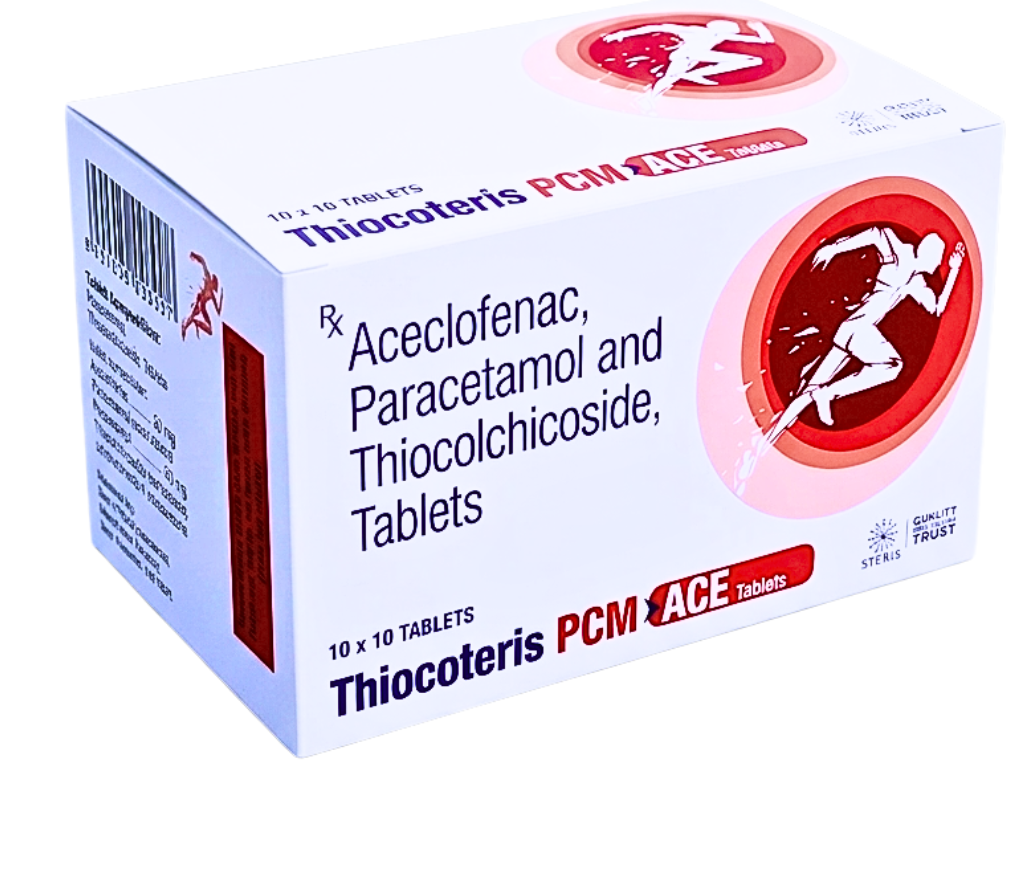
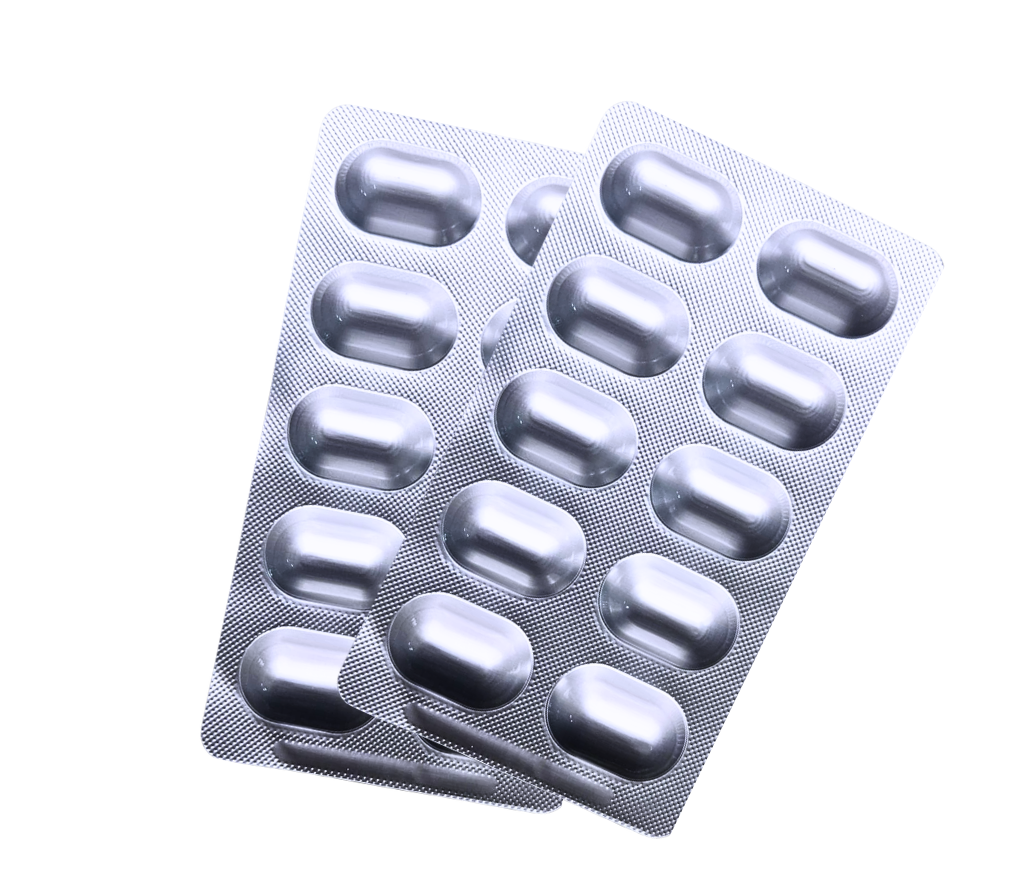
THIOCOTERIS PCM ACE
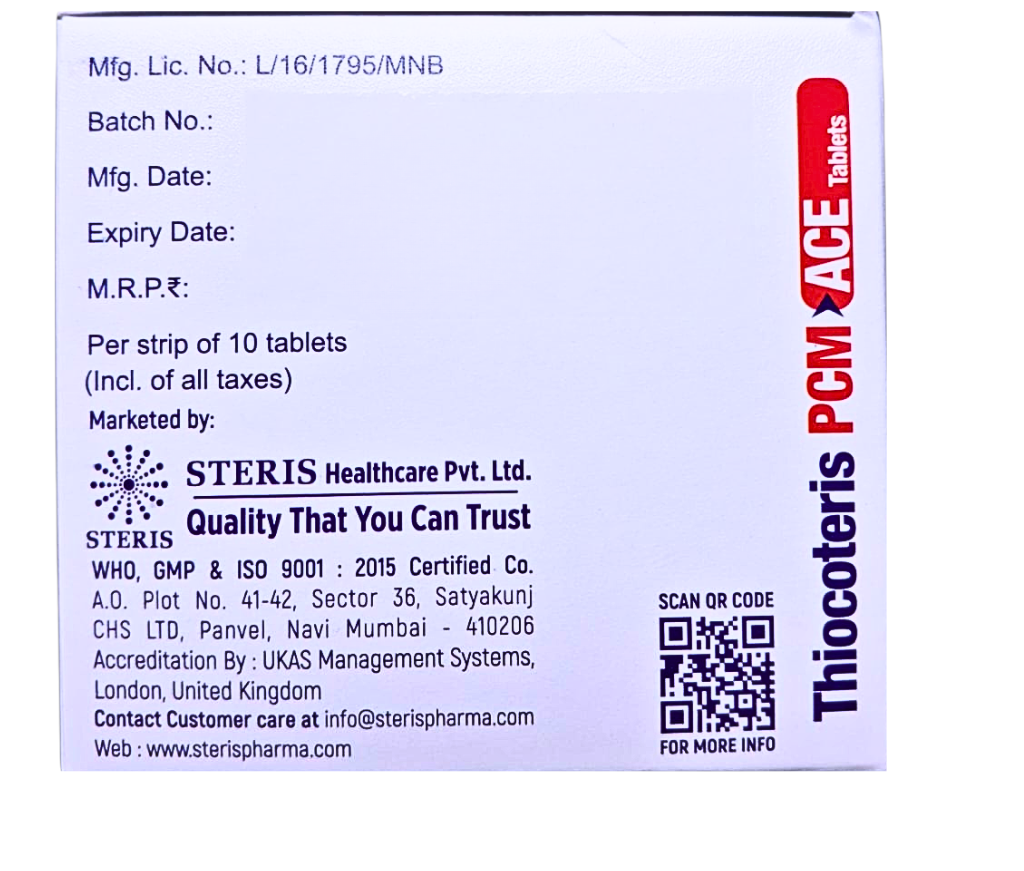
Manufactured By Steris Healthcare Pvt Ltd
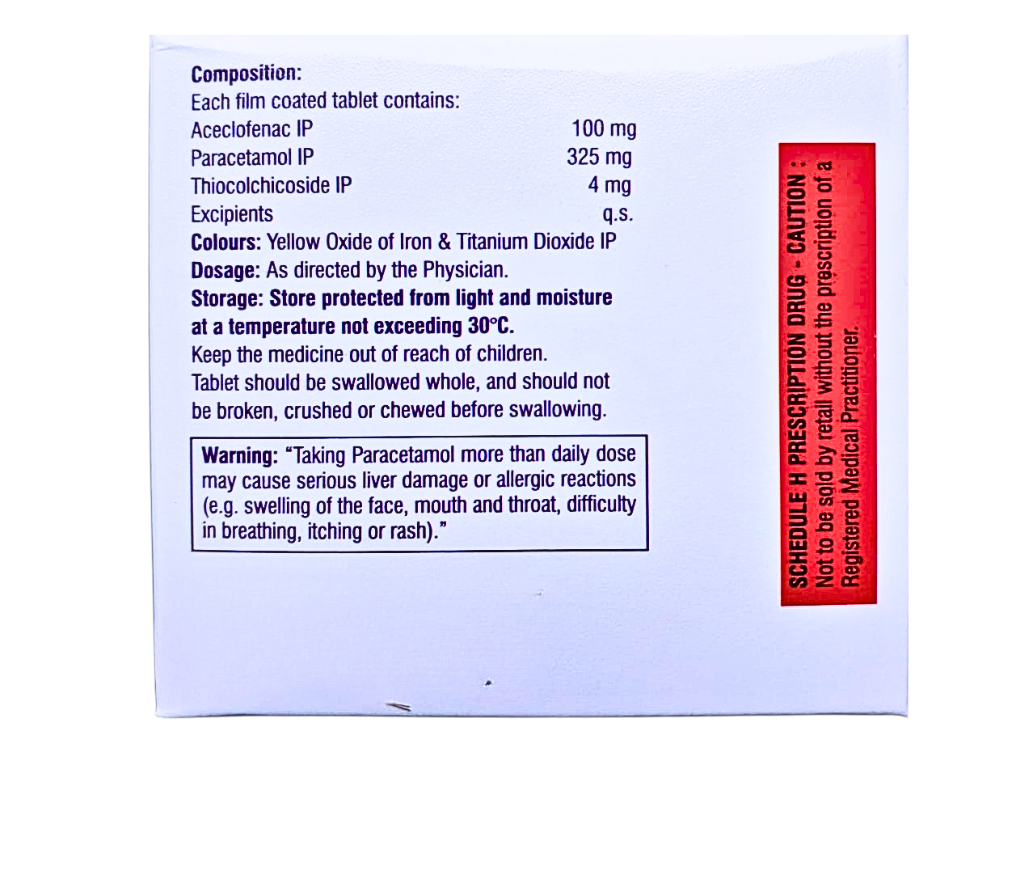
Composition Thiocolchicoside 4mg Aceclofenac 100mg & Paracetamol 352mg)
Rs 127.97
MRP Rs 182.81
(30% OFF)
Includes all taxes
Package SIZE
( FOR 10 TABLET )

100% Authentic
Products

Free
Shipping*

Products
Return Policy
Description:
Thiocolchicoside tablet A prescription muscle relaxant tablet designed to help relieve muscle spasms, stiffness, pain, and related discomfort. It works by calming overactive nerve signals to skeletal muscles, easing tightness without heavily sedating the central nervous system the way some older relaxants do. It is typically prescribed for short courses of 5–7 days, often alongside an NSAID or analgesic, and is not a standalone painkiller — it treats the muscle spasm component of pain, not the underlying inflammation. Common side effects include drowsiness, diarrhea, and nausea; it should be avoided during pregnancy, breastfeeding, and in people with a history of seizures.
What Is Thiocolchicoside Tablet?
If you've searched for "thiocolchicoside tablet uses", you're likely dealing with sudden muscle stiffness, spasm, or lower back pain that's limiting your movement. Thiocolchicoside is a semi-synthetic muscle relaxant derived from colchicoside, commonly prescribed by orthopedists, physiotherapists, neurologists, and general physicians across India for musculoskeletal conditions involving painful muscle contractions.
Unlike general painkillers that only mask pain signals, thiocolchicoside specifically targets the spasm-pain cycle — the vicious loop where an injured or strained muscle spasms, which causes pain, which causes further spasm. By interrupting this cycle at the muscle-nerve junction, it allows the affected area to relax, improving mobility and comfort faster than analgesics alone.
Clinical Indications
| Condition | How Thiocolchicoside Helps |
|---|---|
| Acute lower back pain (lumbago) | Relaxes paraspinal muscle spasm contributing to pain |
| Cervical pain / stiff neck (torticollis) | Reduces neck muscle rigidity and improves range of motion |
| Sciatica-related muscle spasm | Eases secondary muscle guarding around the sciatic nerve |
| Post-traumatic muscle spasm | Used after sprains, strains, or soft-tissue injury |
| Post-operative muscle stiffness | Adjunct therapy following orthopedic procedures |
| Chronic musculoskeletal spasm | Used in select long-term rehabilitation protocols under supervision |
How Does Thiocolchicoside Work?
Thiocolchicoside acts primarily as a GABA-A receptor agonist and glycine receptor agonist at the spinal cord level. In simple terms, it enhances the inhibitory signals that naturally "tell" an overactive muscle to relax. This selective action on the spinal reflex arc means it reduces muscle tone and spasm without producing the heavy sedation associated with older centrally-acting muscle relaxants.
Key Benefits of Thiocolchicoside Tablet
- Rapid spasm relief — targets the nerve-muscle spasm cycle directly, often improving mobility within the first few doses
- Non-narcotic muscle relaxant — no dependency risk associated with opioid-based muscle relaxants
- Complements pain management—works well when combined with NSAIDs (e.g., aceclofenac) for comprehensive spasm-plus-pain relief
- Improves functional mobility — helps patients return to daily activity and physiotherapy faster
- Short-course therapy — designed for acute use (typically 5–7 days), reducing long-term medication burden
- Widely prescribed across specialties—used by orthopedists, physiotherapists, neurologists, and general physicians for musculoskeletal spasm
Thiocolchicoside Tablet Dosage
The following is general information. Your doctor's prescription always takes precedence over generic dosage guidance.
- Available strengths: typically 4mg and 8mg tablets
- Usual adult dose: as directed by the physician, generally taken twice daily
- Course duration: most commonly prescribed for 5 to 7 days for acute muscle spasm
- Can be taken with or after food to minimize stomach upset
- Should not be self-extended beyond the prescribed course without medical review
- Not recommended for children unless specifically directed by a pediatric specialist
Side Effects of Thiocolchicoside Tablet
Common Side Effects
- Drowsiness or mild sedation
- Diarrhea or loose motions
- Nausea
- Abdominal discomfort
- Dizziness
Less Common / Serious Side Effects
- Allergic skin reactions (rash, itching)
- Muscle weakness (if overused beyond prescribed duration)
- Signs of hypersensitivity—swelling, breathing difficulty (seek immediate medical attention)
Precautions Before Taking Thiocolchicoside
-
Pregnancy & breastfeeding: Not recommended due to potential risk to the fetus/infant — inform your doctor if pregnant, planning pregnancy, or breastfeeding
- Seizure disorders: Use with caution in patients with a history of epilepsy or seizures
- Driving/operating machinery: May cause drowsiness — avoid activities requiring alertness until you know how the tablet affects you
- Alcohol: Avoid alcohol, as it can intensify drowsiness and dizziness
- Liver/kidney conditions: Inform your doctor of any existing liver or kidney conditions before starting therapy
- Drug interactions: Inform your doctor about all other medications, including OTC drugs and supplements, to avoid interaction risk
Thiocolchicoside vs. Common Alternatives
| Medicine | Primary Action | Best For | Sedation Level |
|---|---|---|---|
| Thiocolchicoside | Muscle relaxant (spasm relief) | Muscle spasm + spasm-related pain | Mild |
| Paracetamol | Analgesic/antipyretic | General pain and fever, not spasm | None |
| Aceclofenac | NSAID (anti-inflammatory) | Pain and inflammation, not spasm directly | None |
| Chlorzoxazone | Muscle relaxant | Muscle spasm, often combined with analgesics | Mild–Moderate |
| Tizanidine | Centrally-acting muscle relaxant | Spasticity and chronic spasm | Moderate–High |
Buyer's Guide: What to Check Before You Purchase
If you're comparing options online, look for:
- Valid prescription requirement—a genuine seller will always ask for a doctor's prescription for this Schedule H medicine
- Manufacturing standards — prefer WHO-GMP and ISO-certified manufacturers
- Batch details and expiry — visible on packaging and product listing
- Strip vs. bottle pricing — compare per-tablet cost across pack sizes
- Genuine pharmacy verification — check for a licensed drug seller registration number
Conclusion
Thiocolchicoside tablet is a targeted, short-course muscle relaxant widely used across India for acute lower back pain, neck stiffness, sciatica-related spasm, and post-injury muscle tightness. Its selective mechanism offers effective spasm relief with comparatively mild sedation, making it a commonly prescribed adjunct alongside analgesics and NSAIDs for musculoskeletal pain management. However, it remains a prescription-only medicine — self-medicating or extending the course beyond your doctor's advice is not recommended, especially given contraindications around pregnancy, seizure history, and drowsiness-related activities. If you're experiencing persistent muscle spasm or back pain, consult a qualified physician to confirm whether thiocolchicoside is the right fit for your condition and to get the correct dosage and duration for your specific case.
Frequently Asked Questions
1. What is thiocolchicoside tablet used for?
Thiocolchicoside tablet is used to relieve painful muscle spasms linked to acute lower back pain, neck stiffness, sciatica, and post-injury or post-surgical muscle tightness.
2. Is Thiocolchicoside safe for kidneys?
Thiocolchicoside should be used with caution in patients with existing kidney conditions. Always inform your doctor about any kidney-related history before starting the tablet, as dosage adjustment or closer monitoring may be needed.
3. Will Thiocolchicoside make you sleepy?
It can cause mild drowsiness in some people, though it's generally less sedating than older muscle relaxants. Avoid driving or operating machinery until you know how it affects you.
4. What are the common side effects of Thiocolchicoside?
Common side effects include drowsiness, diarrhea, nausea, mild abdominal discomfort, and dizziness. Most are mild and resolve as the course completes.
5. What is the difference between paracetamol and Thiocolchicoside?
Paracetamol relieves general pain and fever but does not act on muscle spasm. Thiocolchicoside specifically targets and relaxes spasming muscles. They are often prescribed together for combined pain-and-spasm relief.
6. Is Thiocolchicoside a pain killer?
Not exactly — it is a muscle relaxant, not a primary analgesic. It relieves pain that is caused by muscle spasm, but it doesn't treat pain from inflammation or other sources the way an NSAID or paracetamol does.
7. How many days can you take Thiocolchicoside?
It is typically prescribed for short courses of 5 to 7 days for acute muscle spasm. Longer use should only be under a doctor's continued supervision.
8. Who should not take Thiocolchicoside?
Pregnant or breastfeeding women, individuals with a history of seizures, and those with known hypersensitivity to the drug should avoid it unless specifically advised otherwise by a physician.
9. Which is the best muscle relaxant medicine?
There is no single "best" muscle relaxant — the right choice depends on the condition, severity, and patient history. Thiocolchicoside is commonly preferred for acute spasm due to its targeted action and comparatively mild sedation; your doctor will determine the best option for your case.
10. Is Thiocolchicoside safe to use?
When taken exactly as prescribed and for the recommended duration, it is considered safe for most adults. As with any prescription medicine, it should only be used under medical supervision.
11. How to use Thiocolchicoside Tablet?
Take the tablet as prescribed by your doctor, usually twice daily, with or after food. Do not exceed the prescribed dose or duration without medical advice.
12. Can Thiocolchicoside be taken on an empty stomach? It's generally advised to take it with or after food to reduce the chance of stomach upset, though your doctor's specific instructions should always be followed.
13. Does Thiocolchicoside interact with alcohol? Yes, alcohol can increase drowsiness and dizziness when combined with thiocolchicoside. It's best avoided during the course of treatment.
14. Can Thiocolchicoside be taken with NSAIDs like aceclofenac? Yes, it is commonly prescribed alongside NSAIDs to address both the muscle spasm and the associated inflammation/pain, but this combination should be doctor-directed.
15. Is Thiocolchicoside available without a prescription?
No. Thiocolchicoside is a Schedule H prescription medicine in India and legally requires a valid doctor's prescription for purchase.
16. How quickly does Thiocolchicoside start working?
Many patients notice reduced muscle stiffness within the first few doses, though full relief typically builds over the course of treatment as prescribed.
17. Can Thiocolchicoside be used for neck pain and stiffness?
Yes, it is commonly prescribed for cervical muscle spasm and stiff neck (torticollis) in addition to lower back spasm.
If You Need More Information About THIOCOTERIS PCM ACE Click here