


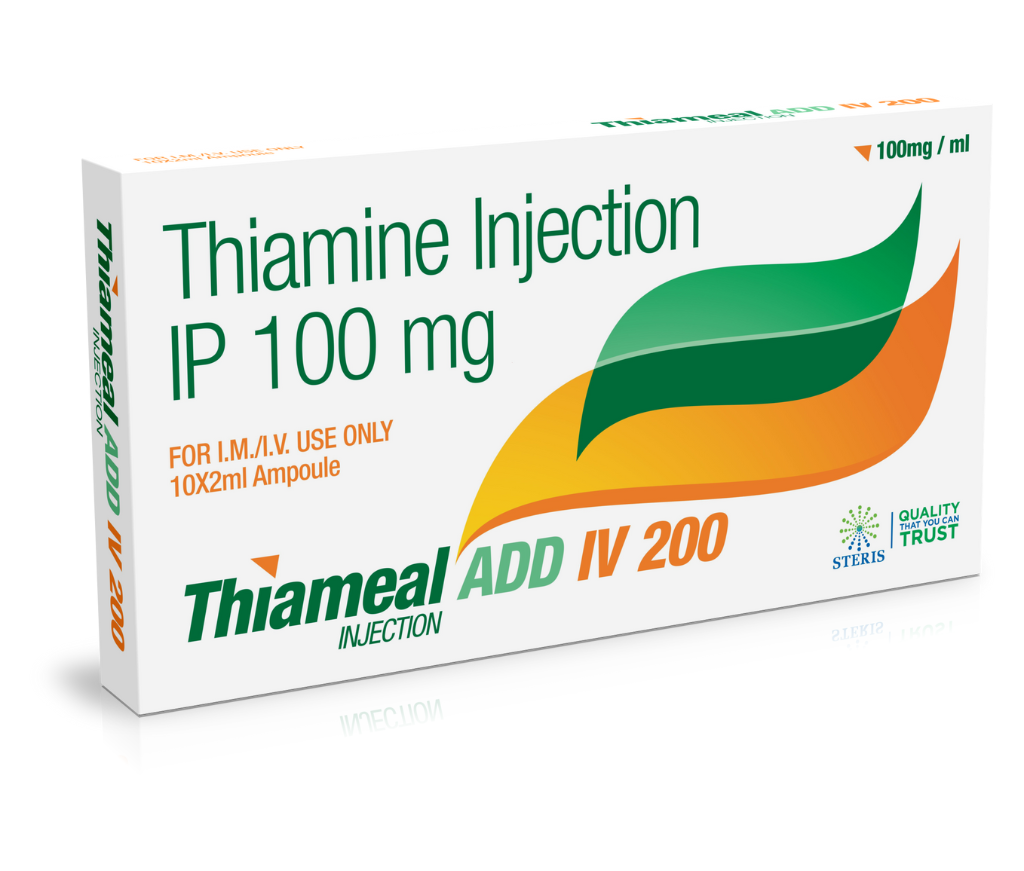
THIAMEAL ADD IV 200
 Item requires a valid prescription
Manufactured By Steris Healthcare Pvt Ltd
Composition Thiamine Injection IP (100mg)
Rs 29.61
MRP Rs 42.30
(30% OFF)
Includes all taxes
Package SIZE
( For 100 ml Injection )

100% Authentic
Products

Free
Shipping*

Products
Return Policy
Description:
Thiamine injection is an injectable form of thiamine, also known as vitamin B1, used to prevent or treat clinically significant thiamine deficiency when rapid replacement is needed or when oral thiamine cannot be adequately taken or absorbed. Thiamine plays an essential role in carbohydrate metabolism, energy production, and normal nervous-system function.
Thiamine injection may be administered intravenously (IV) or intramuscularly (IM), depending on the clinical situation and the specific product. It is primarily used under medical supervision because injectable thiamine can, rarely, cause serious hypersensitivity reactions.
For people searching for thiamine injection uses and benefits, the most important point is that this product is not simply a general-purpose “energy injection.” Its principal medical role is correcting or preventing vitamin B1 deficiency, particularly when deficiency is severe, suspected, or associated with an urgent neurological or cardiovascular condition.
What Is Thiamine Injection Used For?
Thiamine injection is used when a clinician determines that rapid or parenteral vitamin B1 replacement is appropriate. Official prescribing information lists treatment of thiamine deficiency and beriberi, including neurological (“dry”) and cardiovascular (“wet”) forms. It can also be used when rapid restoration is required in conditions such as Wernicke’s encephalopathy, severe deficiency-related cardiovascular disease, and certain situations involving severe vomiting or inability to take thiamine orally.
Common clinical situations include:
-
Confirmed or suspected severe thiamine deficiency
-
Wernicke’s encephalopathy, a potentially life-threatening neurological emergency
-
Beriberi, including neurological or cardiovascular manifestations
-
Severe vomiting, anorexia, or malabsorption that prevents adequate oral vitamin B1 intake
-
Certain patients at high risk of deficiency during nutritional rehabilitation or refeeding
-
Selected situations in which clinicians administer glucose or nutritional support to a person who may have marginal thiamine status
The exact indication and route should be determined by a healthcare professional rather than by symptoms alone.
Key Benefits of Thiamine Injection
1. Rapid vitamin B1 replacement
The major advantage of injectable thiamine is that it provides vitamin B1 through a parenteral route, which can be particularly useful when rapid replacement is clinically important or gastrointestinal absorption is unreliable. This is especially relevant in severe deficiency and suspected Wernicke’s encephalopathy.
2. Supports normal energy metabolism
Thiamine is required for enzymes involved in carbohydrate metabolism and cellular energy production. Correcting a deficiency therefore supports the body's normal metabolic processes.
3. Helps protect neurological function when deficiency is present
Severe thiamine deficiency can cause neurological complications, including Wernicke’s encephalopathy. Prompt parenteral treatment is an important part of managing suspected cases because delayed treatment can result in permanent neurological injury.
4. Useful when oral treatment is unsuitable
People experiencing severe nausea, vomiting, anorexia, or malabsorption may not be able to obtain adequate thiamine from oral supplementation. Injectable thiamine provides an alternative route when clinically indicated.
5. Can be important during nutritional rehabilitation
Thiamine requirements and clinical considerations become particularly important when nutrition is restarted in severely malnourished or high-risk patients. Recent clinical guidance supports thiamine supplementation around the initiation of nutritional support in patients at risk of refeeding syndrome, although the appropriate dose and route depend on the clinical situation.
How Does Thiamine Injection Work?
After administration, thiamine is converted into biologically active forms that participate in several enzyme reactions involved in carbohydrate and amino-acid metabolism. In practical terms, vitamin B1 is essential for converting nutrients into usable cellular energy and for maintaining normal neurological function.
When thiamine stores are severely depleted, metabolic pathways can become impaired. This helps explain why deficiency may produce symptoms affecting the nervous system, muscles, heart, and overall energy metabolism.
The goal of thiamine injection is therefore to correct a deficiency or prevent deficiency-related complications, not to provide an instant stimulant effect in someone with normal vitamin B1 status.
Thiamine Injection Dosage: What You Should Know
There is no single universal thiamine injection dose for every patient. Dose, frequency, duration, concentration, and route depend on the indication, severity of deficiency, age, nutritional status, clinical setting, and the specific injectable product.
For example, clinical recommendations for suspected Wernicke’s encephalopathy commonly use substantially higher parenteral doses than those used for uncomplicated deficiency. Published guidance includes regimens such as 200 mg IV three times daily or, in some protocols, 500 mg IV two to three times daily for an initial period.
For refeeding-risk patients, more conservative supplementation regimens may be used. Recent consensus guidance, for example, describes 100 mg IV supplementation in relevant clinical circumstances, while other guidelines use different doses and routes.
Do not use these examples to determine your own dose. Injectable medicines should be administered according to a qualified healthcare professional's prescription and the product's approved labeling.
How Is Thiamine Injection Given?
Depending on the product and clinical indication, thiamine may be given by intravenous or intramuscular injection. IV administration may be preferred in some acute neurological conditions because it provides rapid systemic delivery.
Administration should be performed by appropriately trained healthcare personnel. Patients should not attempt to self-inject prescription-strength thiamine unless a qualified clinician has specifically instructed them and provided appropriate training.
Thiamine Injection Side Effects
Most people tolerate thiamine well, but injectable administration can cause adverse effects. The most important safety issue is the possibility of a rare but serious hypersensitivity or anaphylactic reaction. Official prescribing information specifically warns that serious reactions can occur, including after IV or IM administration.
Possible side effects include:
-
Pain, tenderness, or induration at an intramuscular injection site
-
Temporary irritation at the injection site
-
Itching or pruritus
-
Skin rash or urticaria
-
Feeling of warmth
-
Sweating
-
Nausea
-
Restlessness
-
Weakness
-
Tightness of the throat
-
Angioedema or other signs of severe allergic reaction
Severe breathing difficulty, facial or throat swelling, widespread hives, dizziness, collapse, or other signs of anaphylaxis require immediate emergency medical attention.
A clinical review of parenteral thiamine found adverse reactions to be uncommon; however, the potential for serious hypersensitivity means injectable thiamine should still be administered with appropriate precautions.
Who May Need Extra Caution?
Tell your healthcare professional if you:
-
Have previously experienced an allergic reaction to thiamine
-
Have reacted to an injectable vitamin preparation
-
Have kidney impairment
-
Are pregnant or breastfeeding
-
Are receiving parenteral nutrition or multiple injectable medicines
-
Have severe malnutrition or a history of prolonged vomiting
-
Have undergone bariatric surgery or have significant malabsorption
Some thiamine injection formulations contain aluminum, and prolonged parenteral administration can present additional concerns in people with impaired kidney function and in premature neonates. Product-specific labeling should therefore be reviewed before administration.
Thiamine Injection vs. Oral Thiamine
Thiamine injection is not automatically better than oral thiamine. The injectable route is generally considered when rapid replacement is needed, deficiency is severe, neurological complications are suspected, or oral administration is impossible or unreliable.
For mild deficiency or routine supplementation, oral thiamine may be sufficient. Recent clinical reviews emphasize that route and dose should be selected according to the patient's clinical presentation rather than assuming that injections are required for every deficiency.
When Should You Seek Medical Help?
Seek urgent medical attention for symptoms that could indicate severe thiamine deficiency or Wernicke’s encephalopathy, such as new confusion, significant difficulty walking or coordination problems, abnormal eye movements or double vision, or unexplained neurological deterioration, particularly in a person with severe malnutrition, prolonged vomiting, or other major risk factors.
Wernicke’s encephalopathy is considered a medical emergency, and treatment should not be delayed while waiting for laboratory confirmation when clinical suspicion is high.
Buying Thiamine Injection: What Should You Check?
If you are researching a thiamine injection product, focus on more than price. Check the following:
-
Active ingredient: thiamine or thiamine hydrochloride, as specified on the label.
-
Strength: verify the amount of thiamine per mL or per ampoule/vial.
-
Dosage form: injection intended for the labeled route of administration.
-
Manufacturer and regulatory information: purchase only from a legitimate, authorized pharmaceutical source.
-
Batch and expiry details: never use an expired, damaged, cloudy, or improperly stored injectable product.
-
Prescription requirements: follow the regulations applicable in your country and the product's labeling.
-
Healthcare supervision: confirm that the product is appropriate for the intended indication and patient.
A legitimate product should have clear labeling, traceability, storage instructions, and manufacturer information.
Expert Takeaway
Thiamine injection is an important medical treatment for clinically significant vitamin B1 deficiency and selected urgent conditions where rapid parenteral replacement is necessary. Its key benefits are rapid delivery, usefulness when oral absorption is inadequate, and an important role in preventing or treating serious deficiency-related neurological and cardiovascular complications.
However, it should not be marketed as a routine energy booster or used simply because someone feels tired. The correct dose and route vary considerably by indication, and rare but potentially life-threatening allergic reactions can occur. For these reasons, thiamine injection should be used under appropriate medical supervision.
Frequently Asked Questions
1. What is thiamine injection used for?
Thiamine injection is primarily used to treat or prevent vitamin B1 deficiency when rapid replacement is required or when oral thiamine cannot be adequately taken or absorbed. It is also used in conditions such as beriberi and suspected Wernicke’s encephalopathy.
2. What are the main benefits of thiamine injection?
The main benefits are rapid parenteral vitamin B1 replacement, correction of significant deficiency, support for normal energy metabolism, and treatment of serious neurological or cardiovascular complications caused by deficiency.
3. Is thiamine injection vitamin B1?
Yes. Thiamine is the scientific name for vitamin B1, and many injectable products contain thiamine hydrochloride.
4. Is thiamine injection good for weakness and tiredness?
It may help when weakness or fatigue is caused by genuine thiamine deficiency. It is not a general treatment for unexplained tiredness when vitamin B1 deficiency is not present.
5. Can thiamine injection be used for Wernicke’s encephalopathy?
Yes. Parenteral thiamine is a key treatment for suspected Wernicke’s encephalopathy, which requires urgent medical management.
6. How quickly does thiamine injection work?
The response depends on the underlying condition and severity of deficiency. In Wernicke’s encephalopathy, some neurological symptoms may begin improving within 24–48 hours, although recovery varies and treatment may need to continue for several days.
7. Can thiamine injection be given intramuscularly?
Some thiamine injection products can be administered intramuscularly, while others may be intended for specific routes. Always follow the individual product's approved labeling and a clinician's instructions.
8. Can thiamine injection be given intravenously?
Yes, certain thiamine injection products are administered intravenously. IV treatment is commonly used in urgent clinical situations such as suspected Wernicke’s encephalopathy.
9. What are the common side effects of thiamine injection?
Potential adverse effects include injection-site irritation or tenderness, itching, rash, nausea, warmth, sweating, and weakness. Serious allergic reactions are rare but can occur.
10. Can thiamine injection cause an allergic reaction?
Yes. Although uncommon, injectable thiamine can cause serious hypersensitivity or anaphylaxis. Healthcare professionals should be prepared to manage an allergic emergency when administering it.
11. Is thiamine injection safe during pregnancy?
Thiamine may be used during pregnancy when clinically indicated, but the decision should be made by a healthcare professional based on the patient's nutritional status and medical condition. Severe vomiting and deficiency may require treatment.
12. Can thiamine injection be used during breastfeeding?
Thiamine is an essential vitamin, but injectable treatment during breastfeeding should be guided by a healthcare professional who can determine whether injection is actually necessary.
13. Is thiamine injection better than tablets?
Not necessarily. Injection is particularly useful for severe deficiency, urgent neurological conditions, or when oral absorption or intake is unreliable. Oral thiamine may be appropriate for less severe situations.
14. Can I take oral thiamine after thiamine injection?
Often, oral thiamine is used as a continuation treatment after the initial parenteral phase, depending on the underlying condition and clinical response. The transition should be determined by the treating clinician.
15. Can thiamine injection be used for alcohol-related vitamin deficiency?
Thiamine deficiency is a recognized concern in people with alcohol use disorder, particularly when nutritional intake is poor. Clinicians may use parenteral thiamine when deficiency is suspected or when neurological complications are present.
16. Does thiamine injection give instant energy?
No. Thiamine is involved in energy metabolism, but the injection should not be considered a stimulant. Its primary purpose is to correct or prevent vitamin B1 deficiency.
17. Who should not receive thiamine injection?
People with a known hypersensitivity to thiamine or an ingredient in the specific product should not receive it. Product labeling should also be reviewed carefully in patients with kidney impairment and other special populations.
18. Can thiamine injection be self-administered?
Self-administration is not appropriate unless a qualified healthcare professional has specifically prescribed the product for that purpose and provided proper instructions. Injectable medicines carry risks that require appropriate handling and administration.
19. What happens if severe thiamine deficiency is not treated?
Severe deficiency can progress to serious neurological and cardiovascular complications. Wernicke’s encephalopathy can become life-threatening and may lead to permanent neurological problems if treatment is delayed.
20. Is thiamine injection available without a prescription?
Availability and prescription requirements vary by country, product, strength, and regulatory status. Always purchase injectable medicines through a legitimate pharmaceutical or healthcare channel and follow local regulations.
21. What should I check before buying thiamine injection?
Check the active ingredient, strength, dosage form, manufacturer, batch number, expiry date, storage requirements, and regulatory information. Most importantly, confirm that the product and dose have been recommended for the specific medical indication.
22. Can thiamine injection be used for refeeding syndrome?
Thiamine supplementation is commonly considered before and during nutritional rehabilitation in patients at risk of refeeding syndrome. The appropriate dose and route vary according to the patient's risk and clinical condition.
23. Does thiamine injection contain vitamin B12?
No. Thiamine is vitamin B1, whereas vitamin B12 is a different vitamin. A product containing thiamine alone should not be assumed to contain B12 or other B vitamins.
24. What is the most important safety warning for thiamine injection?
The most important warning is the possibility of a rare but serious hypersensitivity or anaphylactic reaction. Injectable thiamine should therefore be administered with appropriate medical precautions.