


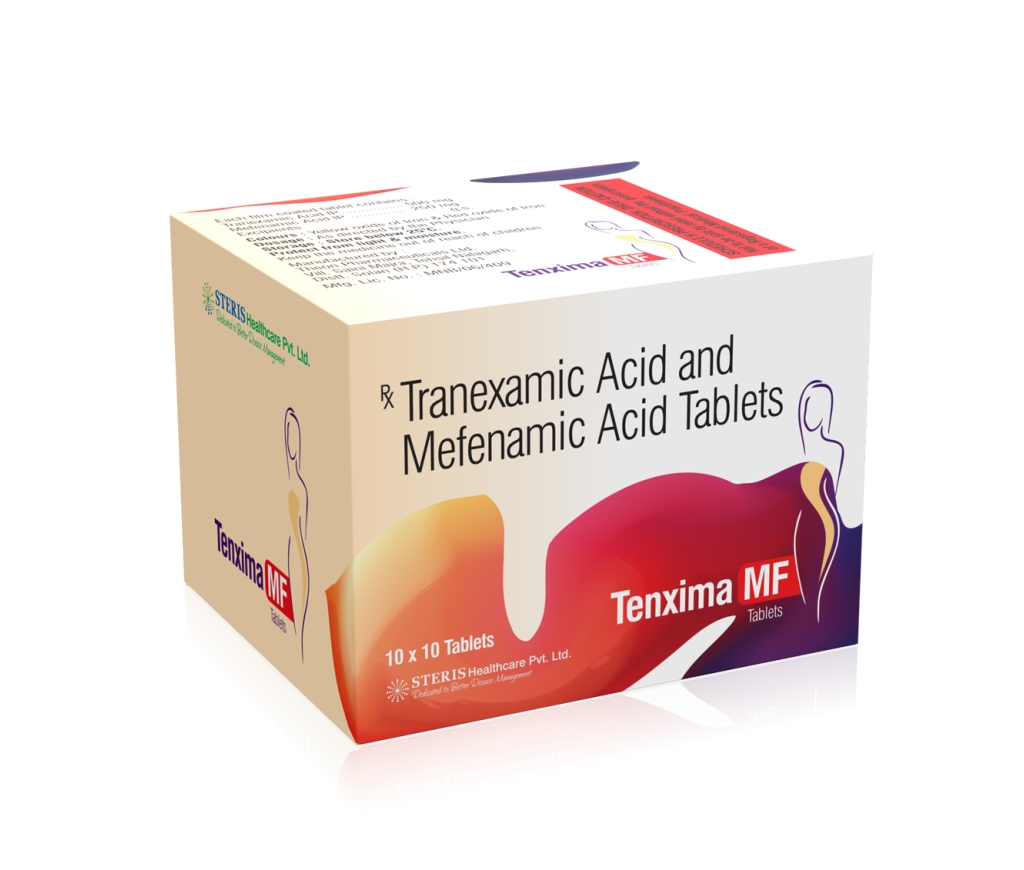
TENXIMA MF
 Item requires a valid prescription
Manufactured By Steris Healthcare Pvt Ltd
Composition Tranexamic Acid (500mg), and Mefenamic Acid (250mg) Tablet
Rs 127.97
MRP Rs 182.81
(30% OFF)
Includes all taxes
Package SIZE
( For 10 Tablets )

100% Authentic
Products

Free
Shipping*

Products
Return Policy
Description:
Tranexamic Acid (500mg) and Mefenamic Acid (250mg) Tablet is a combination medicine commonly prescribed for women experiencing heavy menstrual bleeding and painful periods. It combines two medicines with different actions: tranexamic acid helps reduce excessive menstrual blood loss, while mefenamic acid is a non-steroidal anti-inflammatory drug (NSAID) that helps relieve menstrual pain and inflammation.
This combination can therefore address two common period-related concerns at the same time: excessive bleeding and menstrual cramps. However, it is not appropriate for everyone, and it should be taken according to a healthcare professional's instructions.
What Are Tranexamic Acid 500 mg and Mefenamic Acid 250 mg Tablets?
Tranexamic Acid (500mg) and Mefenamic Acid (250mg) Tablet contains:
- Tranexamic acid 500 mg – an antifibrinolytic medicine that helps reduce bleeding by slowing the breakdown of blood clots.
- Mefenamic acid 250 mg – an NSAID used to relieve pain and inflammation.
Tranexamic acid works on the body's clot-preserving process. During heavy menstrual bleeding, it can reduce the breakdown of fibrin and help decrease menstrual blood loss. The FDA prescribing information for oral tranexamic acid describes its approved use for cyclic heavy menstrual bleeding and explains its antifibrinolytic mechanism. FDA Access Data+1
Mefenamic acid belongs to the NSAID family. NSAIDs are commonly used for painful periods because they reduce substances involved in pain and inflammation. Mefenamic acid is a prescription NSAID in the UK and is specifically recognized for its use in conditions including painful periods.
Tranexamic Acid 500mg and Mefenamic Acid 250mgTablet Uses
The primary use of this combination is generally associated with heavy and painful menstrual periods.
1. Heavy Menstrual Bleeding
Tranexamic acid is the bleeding-control component of the combination. It helps prevent the premature breakdown of fibrin clots, which can reduce menstrual blood loss.
Clinical information for oral tranexamic acid supports its use for cyclic heavy menstrual bleeding. FDA Access Data
2. Menstrual Pain and Cramps
Mefenamic acid helps relieve menstrual pain by reducing prostaglandin-related inflammation and pain. NSAIDs are widely used for painful periods.
This makes the combination particularly relevant when heavy bleeding and menstrual cramps occur together.
3. Combined Management of Period Symptoms
One practical reason doctors may prescribe a combination product is convenience: instead of taking separate medicines for bleeding and pain, the prescribed combination provides both active ingredients in one tablet.
Importantly, the fact that two medicines are combined does not mean the product is suitable for every person with heavy periods. The cause of heavy menstrual bleeding should also be considered.
Key Benefits of Tranexamic Acid 500mg and Mefenamic Acid 250mg Tablet
Helps Reduce Excessive Menstrual Blood Loss
Tranexamic acid is specifically designed to reduce bleeding by inhibiting fibrinolysis, the process responsible for breaking down fibrin clots. This can help reduce menstrual blood loss in people with heavy periods. FDA Access Data+1
Helps Relieve Period Pain
Mefenamic acid is an NSAID that can relieve menstrual pain and inflammation. NHS guidance identifies NSAIDs as medicines commonly used for painful periods.
Addresses Two Symptoms in One Medicine
For patients who experience both heavy bleeding and period pain, a combination tablet can provide a convenient treatment option when prescribed appropriately.
May Improve Day-to-Day Comfort During Menstruation
Reducing excessive bleeding and menstrual cramps may make routine activities more manageable during menstruation. However, individual response varies, and the medicine should be used only as directed.
How Does Tranexamic Acid Work?
Tranexamic acid is an antifibrinolytic medicine.
In simple terms, it helps prevent the body from breaking down fibrin too quickly. Fibrin forms part of the structure of a blood clot. By reducing fibrin breakdown, tranexamic acid can help stabilize clots and reduce excessive bleeding.
The FDA's pharmacology information describes tranexamic acid as interacting with plasminogen and inhibiting fibrinolysis. FDA Access Data
This is different from a conventional painkiller: tranexamic acid is primarily responsible for controlling excessive bleeding, not relieving menstrual cramps.
How Does Mefenamic Acid Work?
Mefenamic acid is an NSAID (non-steroidal anti-inflammatory drug).
NSAIDs work by reducing the production of substances involved in pain and inflammation. This is why medicines in this class can be useful for menstrual cramps.
Mefenamic acid should not be confused with tranexamic acid: mefenamic acid is the pain-relieving component, whereas tranexamic acid is the bleeding-reducing component.
Tranexamic Acid 500mg and Mefenamic Acid 250mg Side Effects
Like all medicines, this combination can cause side effects, although not everyone experiences them.
Because it contains an NSAID, possible side effects associated with mefenamic acid can include the following:
- Indigestion
- Stomach pain or discomfort
- Nausea
- Vomiting
- Diarrhoea
- Dizziness
- Headache
- Skin rash
NHS information on NSAIDs notes that indigestion, stomach pain, nausea, diarrhea, dizziness, rash, and headaches can occur.
More serious NSAID-related complications can include stomach ulcers or gastrointestinal bleeding, kidney problems, and serious allergic reactions, although these are uncommon.
Tranexamic acid also has important safety considerations. Seek urgent medical attention for symptoms that could indicate a serious allergic reaction or a blood clot, such as sudden chest pain, difficulty breathing, or unexplained swelling and pain in a limb.
Who Should Be Careful With This Medicine?
Before taking the Tranexamic Acid (500 mg) and Mefenamic Acid (250 mg) tablets, tell your doctor if you have a history of:
- Blood clots or conditions that increase clotting risk
- Kidney disease
- Stomach ulcers or gastrointestinal bleeding
- Asthma triggered or worsened by NSAIDs
- Liver or heart problems
- Allergy to tranexamic acid, mefenamic acid, aspirin or other NSAIDs
- Problems with blood clotting
- Use of anticoagulant or blood-thinning medicines
NSAIDs can interact with other medicines, including anticoagulants, steroids, and some blood-pressure medicines.
People with kidney impairment may also require special consideration with tranexamic acid because its concentration can increase when kidney function is reduced. FDA Access Data
Can You Take It During Pregnancy?
Do not self-medicate with this combination if you are pregnant or think you may be pregnant.
Mefenamic acid belongs to the NSAID class, for which pregnancy-related precautions are important. NHS guidance advises people who are pregnant or breastfeeding to discuss NSAID use with a doctor or pharmacist.
If your menstrual bleeding is unusual because pregnancy is possible, obtain medical advice rather than treating the bleeding yourself.
Important Drug Interactions
Before using this medicine, tell your healthcare professional about all medicines, supplements, and herbal products you take.
Particular attention is required if you use:
- Other NSAIDs such as ibuprofen, diclofenac or naproxen
- Aspirin
- Anticoagulants or blood thinners
- Corticosteroids
- Certain blood-pressure medicines
- Medicines that can affect kidney function
Taking multiple NSAIDs together can increase the risk of adverse effects. NHS guidance specifically advises checking before combining NSAIDs with other medicines.
How to Buy Tranexamic Acid 500mg and Mefenamic Acid 250 mg Tablets Safely
If you're searching online for Tranexamic Acid (500 mg) and Mefenamic Acid (250 mg) tablets, buyer intent should focus on authenticity, correct strength, and safe dispensing, rather than simply finding the lowest price.
Before purchasing, check:
- Exact composition: Confirm that the tablet contains tranexamic acid 500 mg and mefenamic acid 250 mg.
- Manufacturer: Purchase from a legitimate, regulated pharmacy or authorized seller.
- Packaging: Check batch number, expiry date, manufacturer information, and packaging integrity.
- Prescription requirements: Follow local pharmacy and prescription rules.
- Dosage instructions: Use only the dose and duration prescribed for you.
- Interactions: Tell your doctor or pharmacist about other medicines you take.
- Medical history: Mention previous blood clots, kidney disease, ulcers, NSAID allergies, or other relevant conditions.
Avoid purchasing medicines from websites that cannot establish their pharmacy credentials or product authenticity.
Is the Tranexamic Acid 500 mg and Mefenamic Acid 250 mg Tablet Right for Heavy Periods?
It may be appropriate when heavy menstrual bleeding occurs together with menstrual pain, but the correct treatment depends on why the bleeding is happening.
Heavy periods can have several causes, including hormonal problems, fibroids, adenomyosis, endometriosis, bleeding disorders, and other gynecological conditions. A medicine that reduces bleeding may control the symptom without treating the underlying cause.
If your periods suddenly become much heavier than usual, last unusually long, occur between periods, happen after menopause, or are associated with severe weakness, fainting, or significant pain, seek medical assessment rather than repeatedly self-treating.
Frequently Asked Questions
1. What are Tranexamic Acid (500 mg) and Mefenamic Acid (250 mg) tablets used for?
It is commonly prescribed to help manage heavy menstrual bleeding and menstrual pain. Tranexamic acid helps reduce excessive bleeding, while mefenamic acid, an NSAID, helps relieve menstrual pain and inflammation. India, +1
2. How does tranexamic acid 500 mg reduce heavy bleeding?
Tranexamic acid is an antifibrinolytic. It reduces the breakdown of fibrin, helping stabilize blood clots and thereby reduce excessive menstrual blood loss. FDA Access Data+1
3. Do Tranexamic Acid and Mefenamic Acid help with period pain?
Yes. The mefenamic acid component is an NSAID that is used to relieve painful periods, while tranexamic acid primarily addresses excessive bleeding.
4. What are the side effects of tranexamic acid and mefenamic acid tablets?
Possible side effects include stomach discomfort, indigestion, nausea, vomiting, diarrhea, dizziness, headache, and rash. NSAIDs can rarely cause serious gastrointestinal bleeding, kidney problems, or severe allergic reactions.
5. Can I take this medicine without a doctor's prescription?
You should not self-medicate with this combination. Whether it is appropriate depends on your symptoms, medical history, other medicines, and the cause of your bleeding. Follow the prescription or advice provided by your healthcare professional.
6. Can I take ibuprofen with tranexamic acid and mefenamic acid?
Do not add ibuprofen or another NSAID unless your doctor or pharmacist specifically tells you to. Mefenamic acid is already an NSAID, and combining NSAIDs can increase the risk of adverse effects.
7. Are Tranexamic Acid and Mefenamic Acid safe during pregnancy
This combination should not be taken during pregnancy without medical advice. Mefenamic acid is an NSAID with pregnancy-related precautions. Speak with your doctor if pregnancy is possible.
8. Can tranexamic acid stop periods completely?
Tranexamic acid is intended to reduce excessive menstrual bleeding, not normally to stop menstruation completely. Its effect is to reduce blood loss rather than function as a medicine that deliberately stops the menstrual cycle. FDA Access Data
9. When should I seek medical help for heavy periods?
Seek medical evaluation if bleeding is unusually heavy or prolonged; repeatedly interferes with normal activities; occurs between periods or after menopause; or is accompanied by severe pain, dizziness, fainting, breathlessness, or significant weakness. The underlying cause may require investigation.
10. How should I choose a genuine Tranexamic Acid (500 mg) and Mefenamic Acid (250 mg) tablet?
Choose a product from a legitimate pharmacy or authorized medicine supplier, verify the 500 mg tranexamic acid + 250 mg mefenamic acid composition, check the expiry and batch information, and use it only according to a valid prescription or healthcare professional's instructions.
Conclusion
Tranexamic Acid (500mg) and Mefenamic Acid (250mg) Tablet is a targeted combination for situations where heavy menstrual bleeding and menstrual pain occur together. Tranexamic acid helps control excessive bleeding through its antifibrinolytic action, while mefenamic acid provides NSAID-based pain relief. From a buyer's perspective, the most important factors are correct composition, authentic sourcing, appropriate medical use, potential drug interactions, and awareness of side effects. It should not be treated as a routine painkiller or taken simply because heavy periods occur. Persistent or unusually heavy menstrual bleeding deserves medical evaluation to identify its underlying cause.