


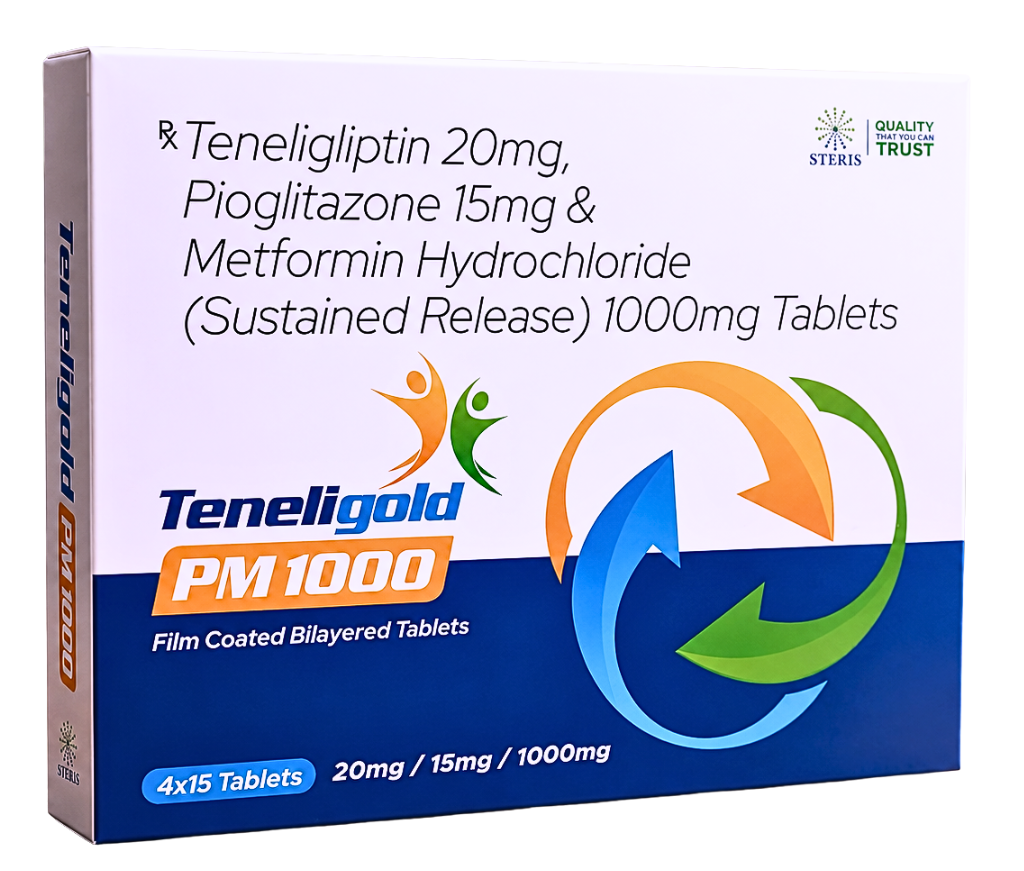
TENELIGOLD PM 1000
 Item requires a valid prescription
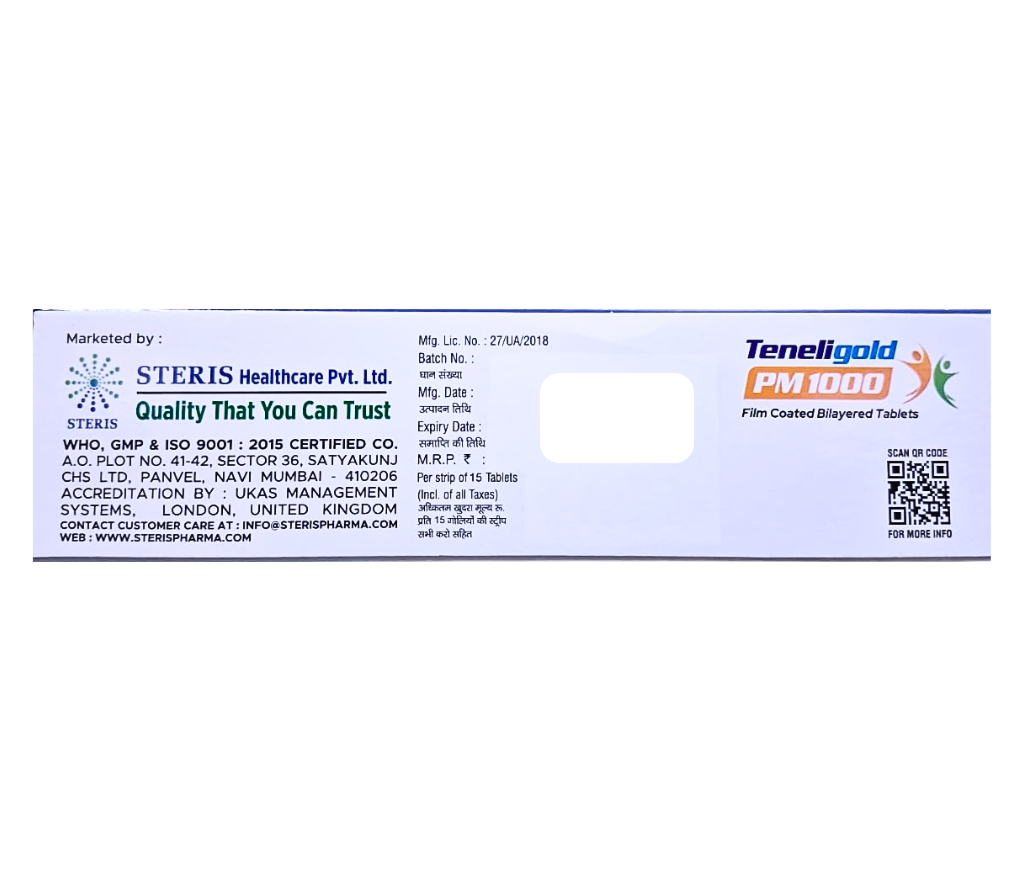
Manufactured By Steris Healthcare Pvt Ltd
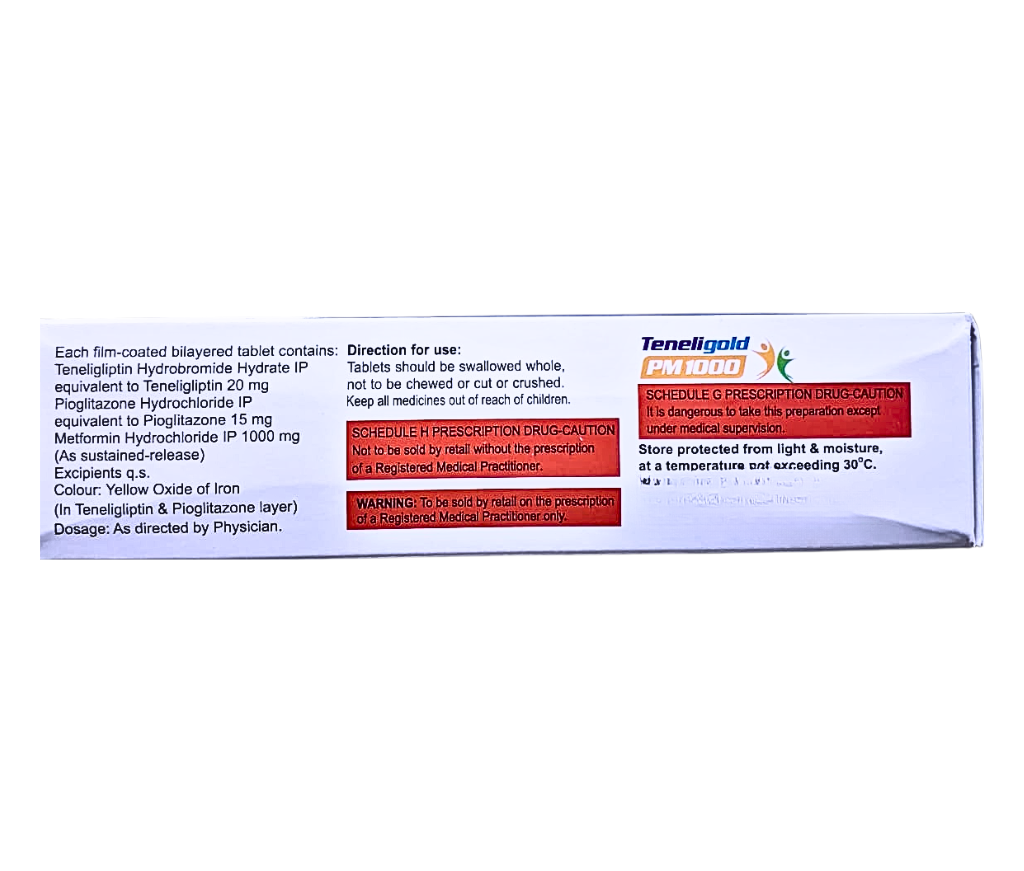
Composition Teneligliptin 20mg,Pioglitazone 15mg & Metformin Hydrochloride (Sustained Release) 1000mg Tablets
Rs 269.50
MRP Rs 385.00
(30% OFF)
Includes all taxes
Package SIZE
( For 15 Tablets )

100% Authentic
Products

Free
Shipping*

Products
Return Policy
Description:
TENELIGOLD PM 1000 is a fixed-dose triple combination for adults with type 2 diabetes, used along with diet and exercise. Each ingredient works in a different way:
- Teneligliptin (20mg) is a DPP-4 (dipeptidyl peptidase-4) inhibitor. It slows the breakdown of incretin hormones, which helps the body release insulin when blood sugar rises after meals and reduces the glucose released by the liver. Because it works mainly when glucose is high, it has a low risk of causing hypoglycaemia on its own.
- Pioglitazone (15mg) is a thiazolidinedione. It improves insulin sensitivity in muscle, fat and liver, so the body uses its own insulin more effectively.
- Metformin hydrochloride SR (1000mg) is a biguanide. It lowers the glucose the liver produces and improves insulin response. The sustained-release form releases the drug gradually and is generally gentler on the stomach.
Together they address three problems at once: insulin resistance, excess liver glucose output and the weak after-meal insulin response.
Product Information
| Detail | Information |
|---|---|
| Brand Name | TENELIGOLD PM 1000 |
| Composition | Teneligliptin 20mg + Pioglitazone 15mg + Metformin Hydrochloride (Sustained Release) 1000mg |
| Salt Class | DPP-4 inhibitor + Thiazolidinedione (glitazone) + Biguanide |
| Dosage Form | Tablet (metformin component in sustained-release form) |
| Pack Size | Strip of 15 tablets |
| Manufacturer / Marketer | Steris Healthcare Pvt. Ltd. |
| Therapeutic Use | Type 2 diabetes mellitus in adults |
| Prescription Status | Prescription required (Schedule H) |
| Storage | Store in a cool, dry place below 30°C, away from light and moisture. Follow the pack label. |
| Availability | India |
Why Is the Teneligliptin Pioglitazone Metformin Combination Important?
Persistently high blood sugar can damage the heart, kidneys, eyes, nerves and feet. When two medicines are no longer enough to reach the HbA1c target your doctor sets, adding a third with a different mechanism is a common next step. This combination matters for several reasons:
- It covers three mechanisms. Insulin resistance, liver glucose production and incretin response are all targeted, which can give stronger control than a two-drug tablet.
- It reduces pill burden. One tablet in place of three can make a daily routine easier, and consistent use is one of the strongest predictors of good control.
- It builds on a foundation drug. Metformin has decades of safety and effectiveness data and remains a cornerstone of type 2 diabetes care.
- It suits insulin resistance, which is common in India. Many Indian patients have marked insulin resistance, and pioglitazone targets it directly.
- It has a low hypoglycaemia profile on its own. None of the three ingredients typically causes dangerously low sugar when used without insulin or sulfonylureas.
- Sustained-release metformin supports tolerability. Slower release may reduce the stomach upset that leads some people to stop metformin.
A triple combination is also a stronger medicine, and pioglitazone carries specific cautions, particularly around heart failure, fluid retention and bones. That is why it is chosen only after a doctor reviews your heart, liver and kidney health.
Key Benefits
1. Stronger Blood Sugar Control: Three complementary mechanisms can lower fasting glucose, after-meal glucose and HbA1c more than a dual combination, when used with a healthy lifestyle.
2. Targets Insulin Resistance: Pioglitazone helps the body respond better to the insulin it already makes, which suits patients with marked insulin resistance.
3. Low Risk of Hypoglycaemia on Its Own: Teneligliptin acts mainly when glucose is high, metformin does not usually push sugar too low, and pioglitazone does not cause hypoglycaemia by itself. Risk rises if the tablet is combined with insulin or sulfonylureas, so your doctor may adjust those doses.
4. Convenient Single Tablet: One tablet replaces up to three, which simplifies the routine and can support adherence.
5. Gentler Metformin Release: The sustained-release form of metformin is designed to be easier on the stomach for many people. Taking it with food helps further.
6. Possible Lipid Benefits: Pioglitazone may modestly improve triglycerides and HDL cholesterol in some patients. Your doctor will judge whether this matters for you.
7. Easy to Carry and Track: A strip of 15 tablets is compact, and a fixed daily schedule makes adherence easier to monitor.
Who Should Take This Medicine?
Your doctor may consider it if:
- You are an adult with type 2 diabetes
- Your blood sugar is not controlled on two medicines with diet and exercise
- You already take teneligliptin, pioglitazone and metformin separately at matching doses
- Your heart, liver and kidney checks are suitable for pioglitazone and metformin
It is not for type 1 diabetes, diabetic ketoacidosis, or people with heart failure, and not for children unless a doctor specifically advises it.
How to Take TENELIGOLD PM 1000
- Take it exactly as prescribed. Do not change the dose or timing on your own.
- Take it with or just after a meal, as your doctor advises, to reduce stomach upset.
- Swallow the tablet whole with water. Do not crush, break or chew it, because this breaks the sustained-release action of metformin.
- You may occasionally notice an empty tablet shell in your stool. This is a known feature of some sustained-release tablets, but mention it to your doctor if you are worried.
- If you miss a dose, take it when you remember unless the next dose is nearly due. Never take a double dose.
- Weigh yourself regularly and report sudden weight gain or swelling.
- Keep up your diet, exercise and scheduled blood sugar, HbA1c, liver and kidney tests.
Precautions: What to Know Before and While Taking It
Do Not Use If You Have
- Heart failure, or a history of it. Pioglitazone can cause fluid retention and worsen heart failure.
- Type 1 diabetes or diabetic ketoacidosis
- Severe kidney impairment or are on dialysis
- Active liver disease or significantly raised liver enzymes
- Metabolic acidosis or a history of lactic acidosis
- Active bladder cancer, or unexplained blood in the urine that has not been investigated
- An allergy to teneligliptin, pioglitazone, metformin or any ingredient
Tell Your Doctor Before Starting If You
- Have heart, liver or kidney problems, or swelling in your legs or ankles
- Have a history of bladder cancer or have had blood in your urine
- Have had bone fractures or osteoporosis, especially if you are a woman after menopause
- Have diabetic eye disease or blurred vision, as pioglitazone has been linked to macular oedema
- Have a heart rhythm problem or a history of long QT, or take medicines that affect heart rhythm, since teneligliptin carries a QT-interval caution
- Have had pancreatitis or severe, persistent abdominal pain
- Drink alcohol regularly, which raises the risk of lactic acidosis
- Are dehydrated, or have ongoing vomiting or diarrhoea
- Are a woman who may become pregnant. Pioglitazone can restore ovulation in women with irregular cycles, and the medicine is generally not recommended in pregnancy or breastfeeding.
- Take insulin, sulfonylureas, gemfibrozil, rifampicin or any other medicine or supplement
Possible Side Effects
Not everyone gets side effects, and many mild ones settle within a few weeks.
Common
- Weight gain
- Swelling of the feet, ankles or hands (fluid retention)
- Nausea, diarrhoea, bloating or stomach discomfort
- Loss of appetite or a metallic taste
- Headache or dizziness
- Upper respiratory symptoms such as a sore throat or blocked nose
- Muscle aches
- Low blood sugar, especially if taken with insulin or sulfonylureas
Frequently Asked Questions
1. Can I take Teneligliptin, Pioglitazone and Metformin tablets with food?
Yes. This combination is generally taken with food to help reduce stomach-related side effects, particularly those associated with Metformin. Follow your doctor's instructions regarding the timing and dosage of your specific formulation.
2. Can I order Teneligliptin, Pioglitazone and Metformin tablets online?
Yes, this combination may be available through licensed online pharmacies and authorised pharmaceutical suppliers in India. Check the brand, strength, pack size, seller credentials, and prescription requirements before placing an order.
3. Is Teneligliptin, Pioglitazone and Metformin a prescription medicine in India?
Yes. This combination is used to manage type 2 diabetes and should be taken under the supervision of a qualified healthcare professional. Consult your doctor before starting treatment, changing the dose, or switching brands.
4. Is Teneligliptin, Pioglitazone and Metformin safe for kidney patients?
Safety depends on the patient's kidney function and overall health. Metformin may be unsuitable for people with severe kidney impairment, and kidney function should be assessed before and during treatment. Patients with kidney disease should consult their doctor before using this combination.
5. Is Teneligliptin, Pioglitazone and Metformin available in India?
Yes, combination products containing Teneligliptin, Pioglitazone and Metformin are available in India under various brand names and strengths. Availability can vary by pharmacy and location. Check with a licensed pharmacy for the specific product and formulation prescribed by your doctor.
6. Does Teneligliptin, Pioglitazone and Metformin cause weight loss?
Weight loss is not an expected benefit of this combination. Pioglitazone may cause weight gain due to fluid retention or changes in body fat, while individual weight changes can vary. Contact your doctor if you notice rapid weight gain or swelling in your legs or ankles.
7. Does Teneligliptin, Pioglitazone and Metformin cause frequent urination?
Frequent urination is not a typical direct effect of this combination. However, high blood sugar can cause increased urination and thirst. If these symptoms persist despite treatment, consult your doctor to check your blood glucose levels and identify the cause.
8. What are the side effects of Teneligliptin, Pioglitazone and Metformin?
Possible side effects include nausea, diarrhoea, abdominal discomfort, headache, and low blood sugar, particularly when used with insulin or certain other diabetes medicines. Pioglitazone may cause fluid retention, swelling, or weight gain.
Rare but serious complications include lactic acidosis associated with Metformin, liver problems, pancreatitis, and worsening heart failure in susceptible patients. Seek urgent medical attention for difficulty breathing, severe or persistent abdominal pain, unusual weakness, or rapid swelling of the legs.
9. What should I avoid while taking Teneligliptin, Pioglitazone and Metformin?
Avoid excessive alcohol consumption, as it can increase the risk of serious complications associated with Metformin. Do not skip meals if you are at risk of low blood sugar, change your dose without medical advice, or take additional diabetes medicines without informing your doctor.
Tell your healthcare professional about all medicines and supplements you use. Inform them before surgery, serious illness, or an imaging procedure involving contrast dye. Patients with heart failure, liver disease, or kidney impairment require particular medical assessment before using this combination.
10. How should I take Teneligliptin, Pioglitazone and Metformin safely?
Take the medicine exactly as prescribed, generally with food, and follow the instructions for your particular formulation. Monitor your blood glucose as advised, attend regular follow-up appointments, and follow your recommended diet and exercise plan. Do not stop or change treatment without consulting your doctor.