


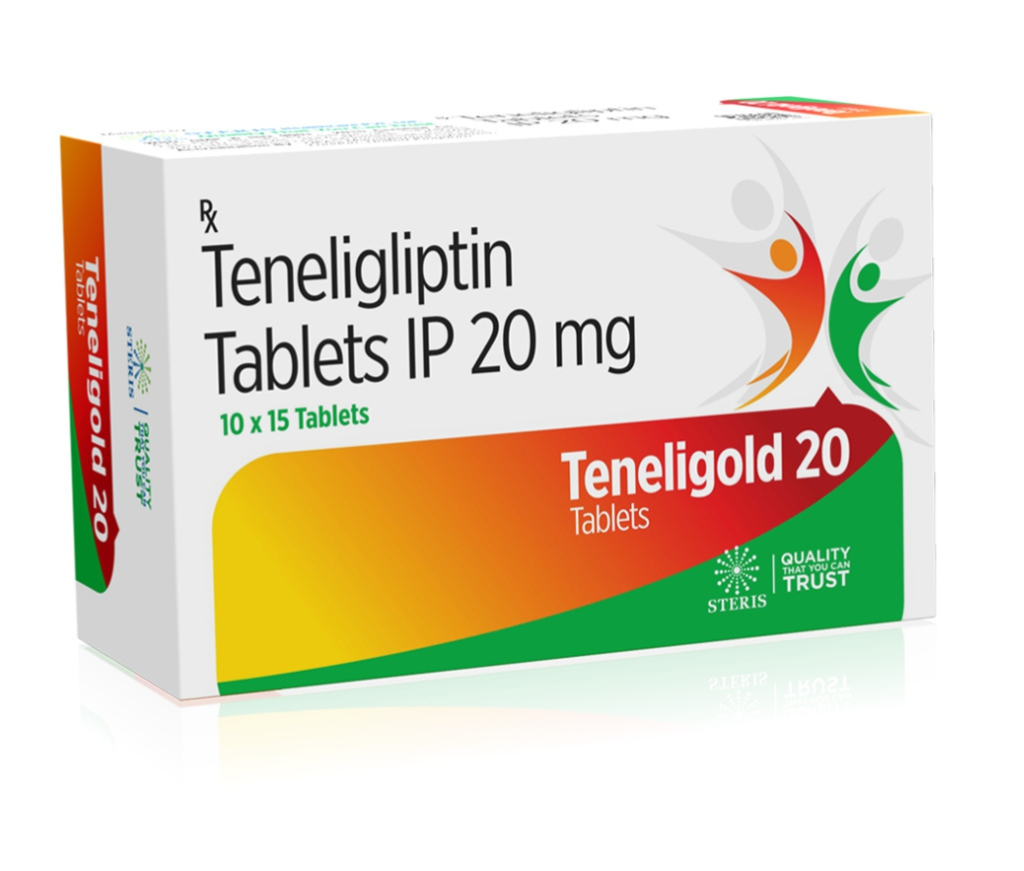
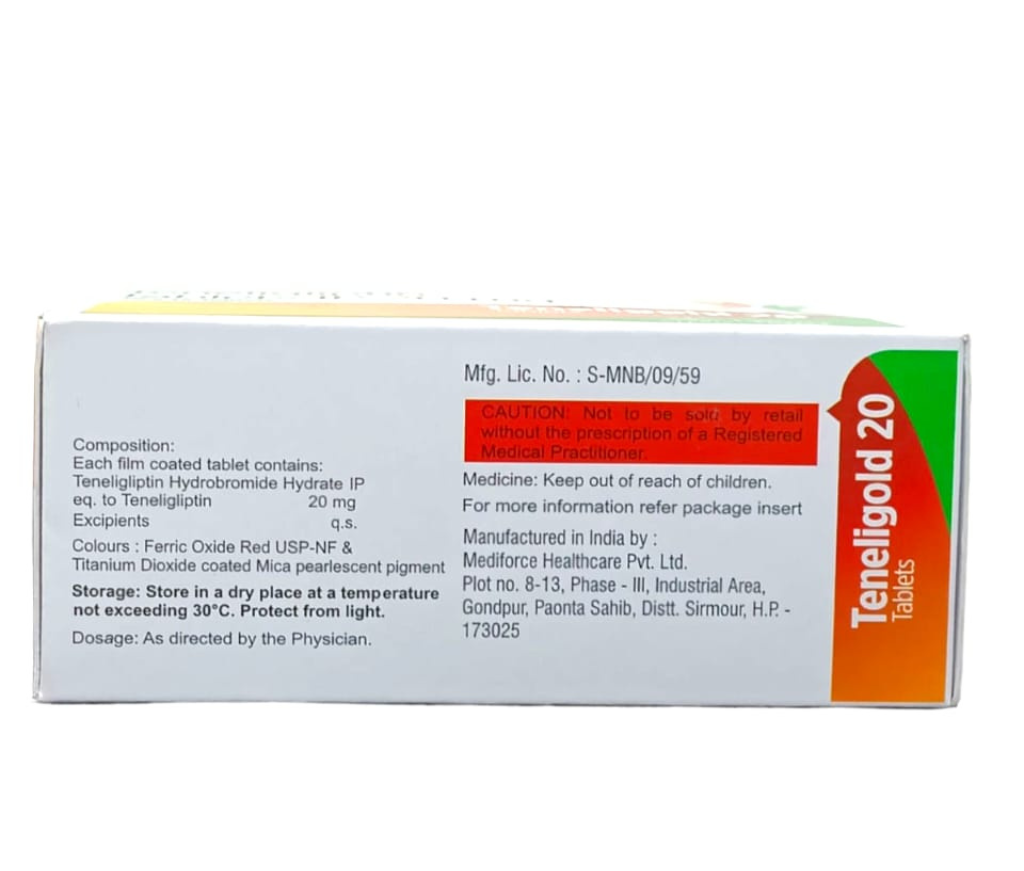
Teneligliptin 20 mg | TENELIGOLD 20
 Item requires a valid prescription
Manufactured By Steris Healthcare Pvt Ltd
Composition teneligliptin 20 mg
Rs 108.28
MRP Rs 154.69
(30% OFF)
Includes all taxes
Package SIZE
( For 15 Tablets )

100% Authentic
Products

Free
Shipping*

Products
Return Policy
Description:
Teneligliptin 20mg is a DPP-4 inhibitor is prescribed for managing Type 2 diabetes. It works by increasing the body's own incretin hormone levels, which boosts insulin release and reduces glucose production by the liver, especially after meals. It is typically taken once daily, with or without food, and can be used alone or alongside other antidiabetic medicines like metformin. Teneligliptin is generally well tolerated, carries a low risk of hypoglycemia when used alone, and is considered suitable for use even in patients with kidney impairment or the elderly, though dosing should always be individualized.
What Is Teneligliptin 20mg Used For?
Teneligliptin belongs to a class of oral antidiabetic medicines called DPP-4 inhibitors (dipeptidyl peptidase-4 inhibitors), often referred to as "gliptins." It is prescribed for:
- Type 2 Diabetes Mellitus – as monotherapy or combination therapy to improve glycemic control
- Add-on therapy with metformin – when metformin alone does not adequately control blood sugar
- Add-on therapy with sulfonylureas or insulin – in select cases under medical supervision
- Diabetes management in elderly patients – due to its favorable safety profile and low hypoglycemia risk
- Diabetes management in patients with mild-to-moderate kidney impairment – often requiring little to no dose adjustment compared to some other antidiabetic drugs
Key Clinical Indications Table
| Indication | Typical Use | Notes |
|---|---|---|
| Type 2 Diabetes (Monotherapy) | First-line or alternative when metformin is not tolerated | Once-daily dosing |
| Combination with Metformin | Add-on when HbA1c targets aren't met | Complementary mechanisms |
| Elderly Patients | Preferred due to low hypoglycemia risk | Requires periodic monitoring |
| Renal Impairment | Suitable with minimal dose adjustment in many cases | Doctor evaluates kidney function first |
Key Benefits of Teneligliptin 20mg
- Effective HbA1c Reduction – Helps lower long-term average blood glucose levels (HbA1c) when combined with diet, exercise, and other therapies.
- Low Risk of Hypoglycemia – Works in a glucose-dependent manner, meaning it stimulates insulin release mainly when blood sugar is high, reducing the risk of dangerously low blood sugar when used alone.
- Weight Neutral – Unlike some antidiabetic drugs, teneligliptin does not typically cause weight gain.
- Convenient Once-Daily Dosing – Simplifies treatment adherence compared to medicines requiring multiple daily doses.
- Suitable for Renal and Elderly Patients – Its pharmacokinetic profile (dual elimination via liver and kidney) makes it a practical option when kidney function is reduced.
- Cardiovascular Safety Profile – Generally considered neutral with respect to cardiovascular risk, making it a reasonable option for many patients with heart-related concerns, subject to physician assessment.
Mechanism of Action
Teneligliptin inhibits the DPP-4 enzyme, which is normally responsible for breaking down incretin hormones (GLP-1 and GIP) in the body. By blocking this enzyme, teneligliptin allows incretin hormone levels to stay elevated for longer after meals. This leads to:
- Increased glucose-dependent insulin secretion from the pancreas
- Reduced glucagon secretion, which lowers glucose production by the liver
- Better regulation of post-meal (postprandial) blood sugar spikes
Side Effects of Teneligliptin 20mg
Common Side Effects
- Mild headache
- Nausea
- Nasopharyngitis (common cold-like symptoms)
- Mild gastrointestinal discomfort
- Skin rash (uncommon but reported)
Serious Side Effects – Seek Medical Attention
- Hypoglycemia (especially when combined with sulfonylureas or insulin): sweating, shakiness, confusion, rapid heartbeat
- Pancreatitis (rare): severe abdominal pain, persistent vomiting
- Severe allergic reactions: swelling of face/throat, difficulty breathing, severe rash
- Liver function abnormalities (rare): yellowing of skin/eyes, dark urine
Dosage Guidelines
- The typical adult dose is 20mg once daily, taken with or without food.
- In some cases, the dose may be increased to 40mg once daily based on glycemic response and physician judgment.
- No specific timing restriction, but taking it at the same time each day supports consistent blood levels and adherence.
- Regular monitoring of blood glucose and HbA1c levels is required to assess treatment effectiveness.
- Dose adjustments are generally not required for mild-to-moderate renal or hepatic impairment, but a doctor should confirm suitability.
Precautions
- Not recommended for use in type 1 diabetes or diabetic ketoacidosis.
- Use with caution in patients with a history of pancreatitis.
- Inform your doctor of all other medications, especially insulin or sulfonylureas, due to increased hypoglycemia risk in combination.
- Regular monitoring of kidney and liver function may be advised, particularly with long-term use.
- Not established for use in pregnancy or breastfeeding; consult your doctor for alternatives if applicable.
- Should be combined with lifestyle measures — diet, physical activity, and weight management — for optimal blood sugar control.
Conclusion
Teneligliptin 20mg is a well-tolerated, once-daily DPP-4 inhibitor widely used in the management of type 2 diabetes, either alone or in combination with other antidiabetic medicines. Its glucose-dependent mechanism gives it a favorable safety profile with low hypoglycemia risk, weight neutrality, and suitability for elderly patients and those with reduced kidney function. As with all diabetes medications, teneligliptin works best as part of a comprehensive treatment plan that includes regular monitoring, a balanced diet, and physical activity, all under the guidance of a qualified healthcare provider.
Frequently Asked Questions
1. Does teneligliptin reduce HbA1c?
Yes, teneligliptin helps reduce HbA1c levels by improving insulin secretion and reducing glucose production, contributing to better long-term blood sugar control when combined with diet and lifestyle changes.
2. Is teneligliptin safe for heart patients?
Teneligliptin is generally considered to have a neutral cardiovascular safety profile, making it a reasonable option for many patients with heart-related conditions, but suitability should always be confirmed by a doctor.
3. How often should I take teneligliptin?
Teneligliptin is typically taken once daily, with or without food, at the same time each day for consistent blood sugar control.
4. How effective is teneligliptin in elderly patients?
Teneligliptin is considered effective and generally well-tolerated in elderly patients, largely due to its low hypoglycemia risk and suitability even with reduced kidney function.
5. What is teneligliptin 20mg used for?
It is used to manage blood sugar levels in adults with type 2 diabetes, either as a standalone treatment or combined with other antidiabetic medicines.
6. Can teneligliptin be taken with metformin?
Yes, teneligliptin is commonly prescribed alongside metformin when metformin alone doesn't achieve adequate blood sugar control.
7. Does teneligliptin cause weight gain?
No, teneligliptin is considered weight-neutral and does not typically cause weight gain, unlike some other antidiabetic medications.
8. What are the common side effects of teneligliptin?
Common side effects include mild headache, nausea, cold-like symptoms, and occasional gastrointestinal discomfort.
9. Can teneligliptin cause low blood sugar (hypoglycemia)?
When used alone, the hypoglycemia risk is low because its action is glucose-dependent; however, risk increases when combined with insulin or sulfonylureas.
10. Is teneligliptin safe for kidney patients?
Teneligliptin is often suitable for patients with mild-to-moderate kidney impairment with minimal dose adjustment, but a doctor should evaluate kidney function before prescribing.
11. How long does it take for teneligliptin to work? Blood sugar improvements can typically be observed within a few weeks, though full HbA1c benefits are usually assessed over 12 weeks of consistent use.
12. Can teneligliptin be used in type 1 diabetes?
No, teneligliptin is not recommended for type 1 diabetes or diabetic ketoacidosis; it is intended specifically for type 2 diabetes management.
13. What should I avoid while taking teneligliptin?
Avoid skipping doses, excessive alcohol consumption, and starting new medications without consulting your doctor, as some combinations may increase side effect risks.
14. Can teneligliptin be taken during pregnancy?
Teneligliptin's safety during pregnancy is not well established; pregnant or breastfeeding women should consult their doctor for suitable alternatives.
15. What is the maximum dose of teneligliptin?
The typical maximum dose is 40mg once daily, though this depends on individual glycemic response and should be determined by a physician.
16. Does teneligliptin interact with other diabetes medicines?
Yes, when combined with insulin or sulfonylureas, the risk of hypoglycemia increases, so dose adjustments may be needed under medical supervision.
Brand Name: TENELIGOLD 20 (STERIS HEALTHCARE PVT LTD)
Composition Name: Teneligliptin Tablets IP 20 mg
Formulation: Tablet
Strength: 20 mg
Pack Size: 10 × 15 Tablets
Marketed By: Steris Healthcare Pvt. Ltd.
Regulatory Standard: WHO-GMP Certified
Schedule: Valid Prescription Required (Prescription Only)

