


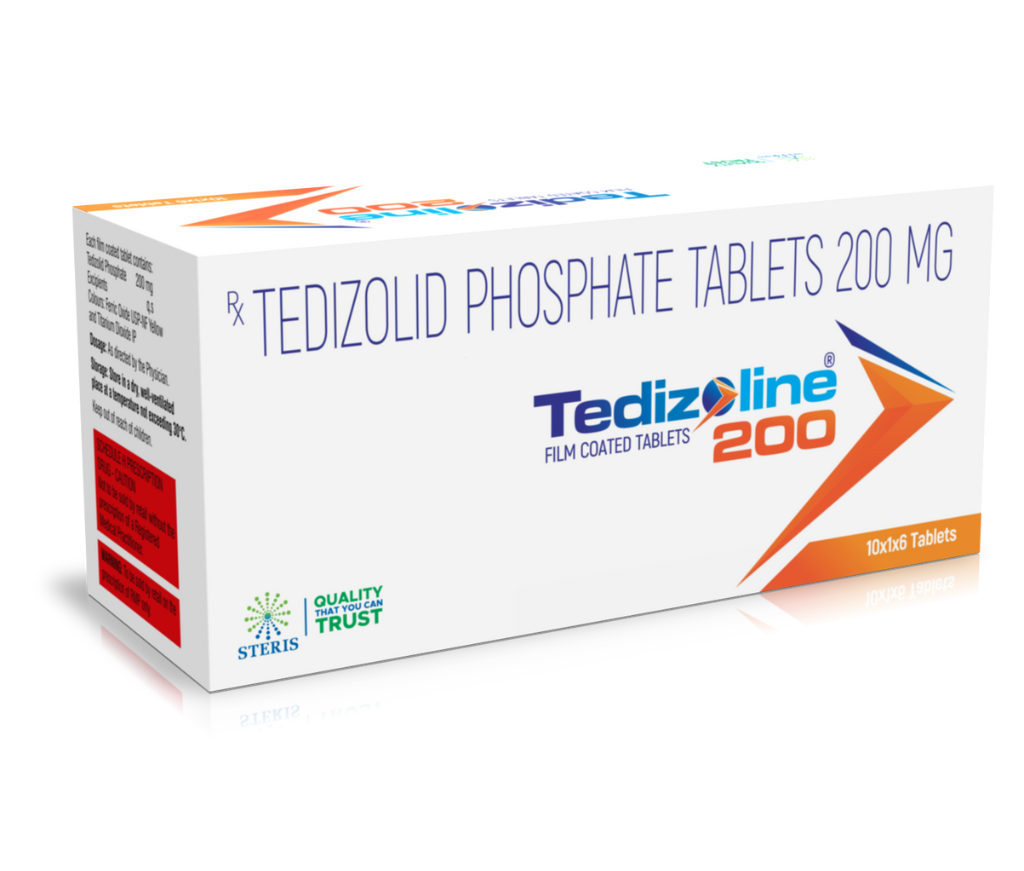
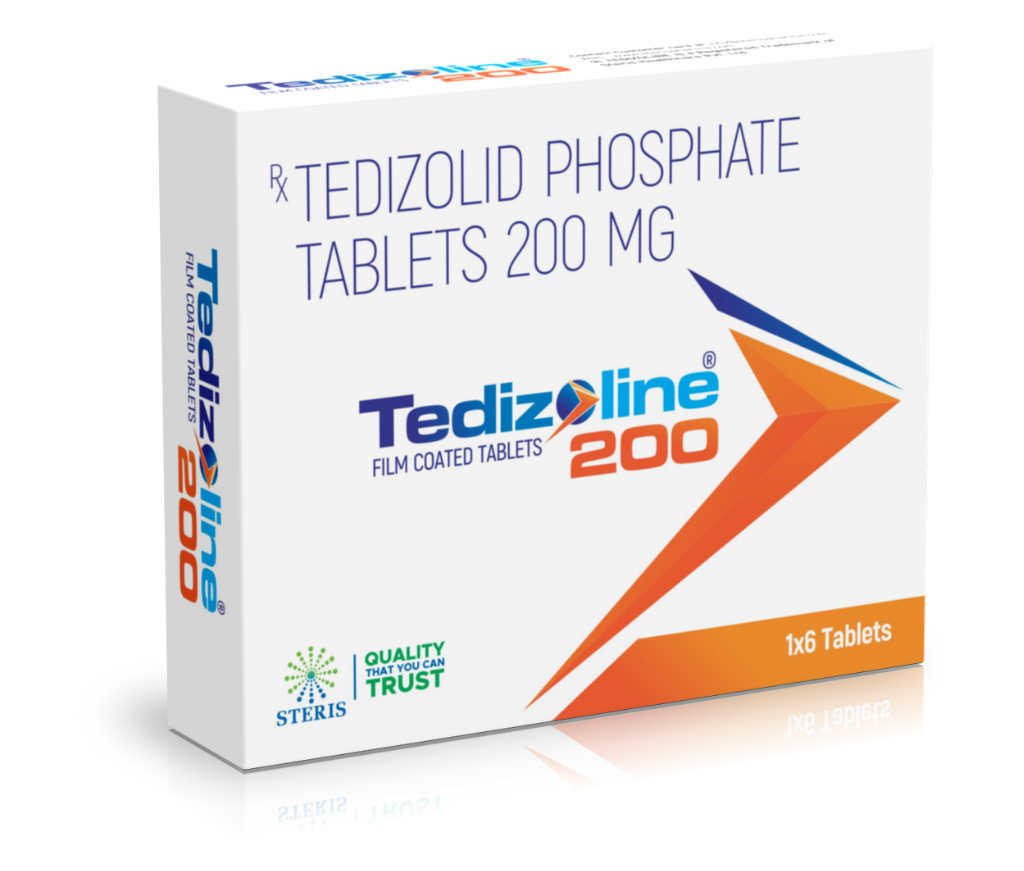
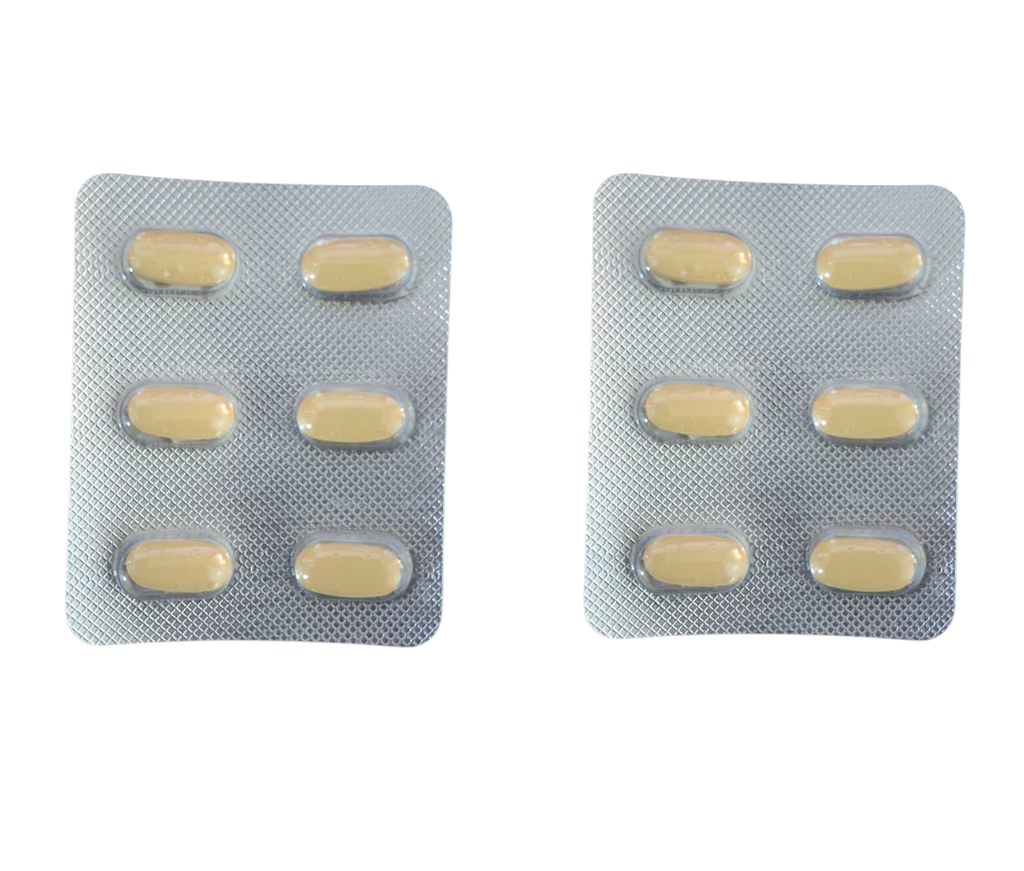
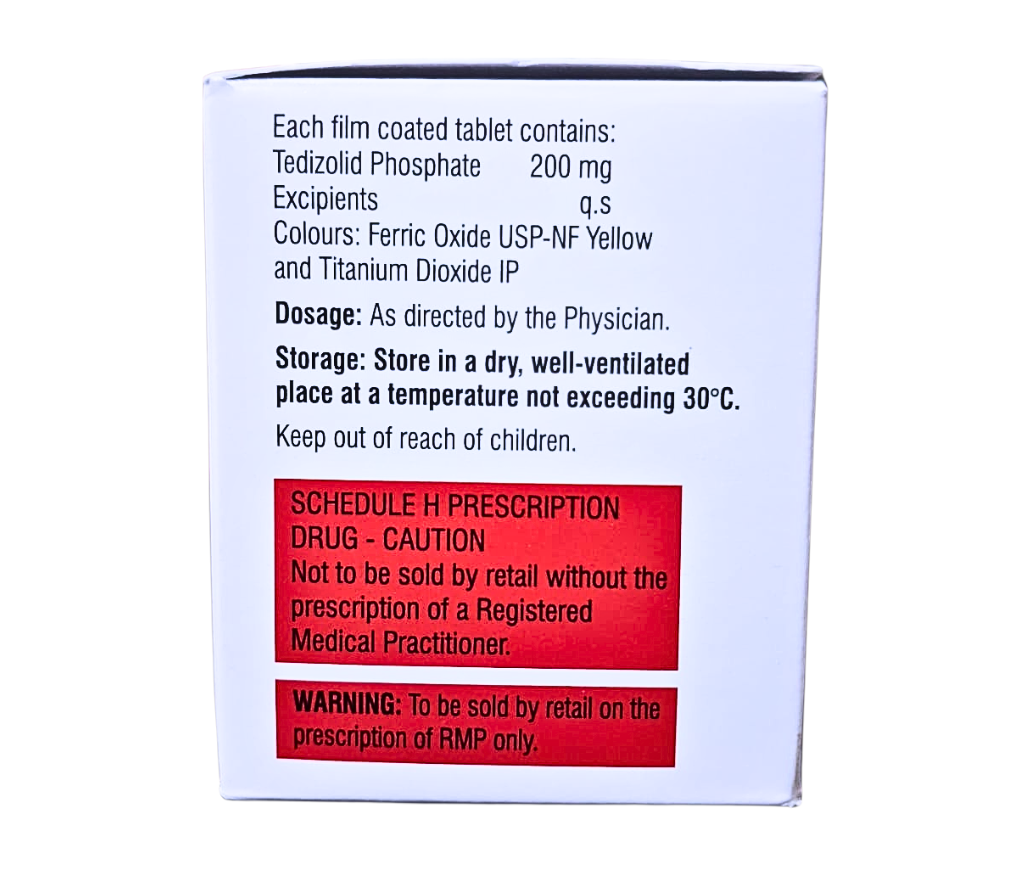
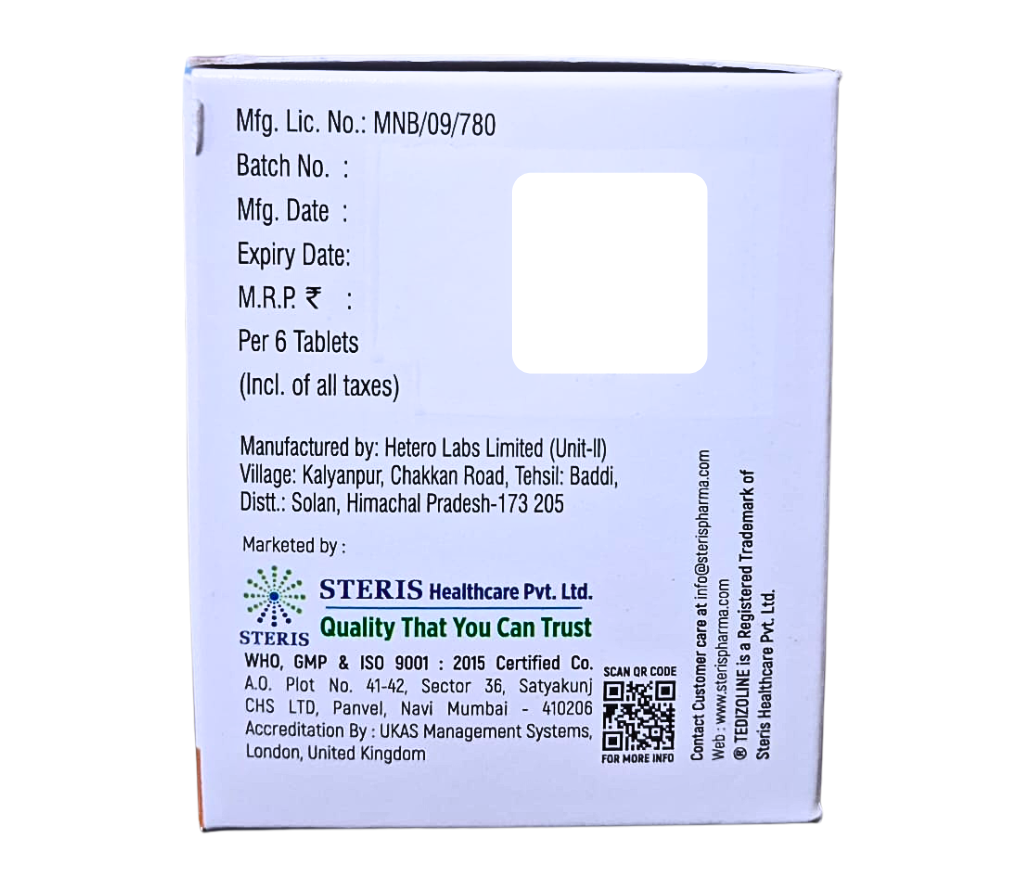
Tedizolid 200 | TEDIZOLINE 200
 Item requires a valid prescription
Manufactured By Steris Healthcare Pvt. Ltd.
Composition Tedizolid Phosphate 200 mg
Rs 805.00
MRP Rs 1150.00
(30% OFF)
Includes all taxes
Package SIZE
( For 6 Tablets )

100% Authentic
Products

Free
Shipping*

Products
Return Policy
Description:
Tedizolid 200 mg is a prescription-only oxazolidinone antibiotic prescribed for the treatment of acute bacterial skin and skin structure infections (ABSSSI). It works by binding to the bacterial ribosome and blocking protein synthesis, stopping bacteria from multiplying and allowing the immune system to clear the infection. A key advantage of tedizolid is its short treatment course — typically 6 days — compared to older antibiotics in its class. Common side effects include nausea, headache, diarrhea, and dizziness.
What Is Tedizolid 200 mg?
Tedizolid 200 mg is the standard once-daily dose of tedizolid phosphate, a second-generation oxazolidinone antibiotic. It is available in both oral (tablet) and intravenous formulations, allowing flexible step-down therapy from IV to oral dosing as a patient's condition improves. Tedizolid was developed to address certain resistance patterns and dosing limitations seen with earlier oxazolidinones, offering a simplified once-daily regimen with a shorter overall treatment duration.
As a prescription-only antibacterial, tedizolid is reserved for infections where susceptible gram-positive organisms have been identified or are strongly suspected, and its use should always be guided by a physician's clinical assessment and, where possible, culture and sensitivity results.
Key Uses of Tedizolid 200 mg
Tedizolid 200 mg is primarily indicated for:
- Acute Bacterial Skin and Skin Structure Infections (ABSSSI), including cellulitis, wound infections, and major cutaneous abscesses
- Infections caused by susceptible gram-positive bacteria, including methicillin-susceptible and methicillin-resistant Staphylococcus aureus (MRSA)
- Streptococcal skin infections, including those caused by Streptococcus pyogenes and Streptococcus agalactiae
- Step-down therapy from intravenous to oral treatment once the patient shows clinical improvement
Clinical Indications Table
| Indication | Tedizolid 200 mg (Once Daily) | Typical Duration |
|---|---|---|
| Acute bacterial skin & skin structure infections (ABSSSI) | Yes – first-line dosing strength | 6 days |
| MRSA-related skin infections | Yes, where susceptibility confirmed | 6 days |
| Streptococcal skin infections | Yes | 6 days |
| IV-to-oral step-down therapy | Yes | As advised by physician |
Mechanism of Action
Tedizolid works by:
- Binding to the 23S ribosomal RNA of the bacterial 50S ribosomal subunit
- Blocking the formation of the initiation complex needed for bacterial protein synthesis
- Halting bacterial growth and replication, which allows the body's immune defenses to clear the infection
- Retaining activity against certain resistant strains, including many MRSA isolates, due to its distinct binding affinity compared to older oxazolidinones
Key Benefits of Tedizolid 200 mg
- Once-daily dosing — simpler regimen compared to twice-daily alternatives in the same class
- Short 6-day treatment course for most ABSSSI cases, supporting better patient compliance
- Available in oral and IV forms, enabling smooth step-down therapy
- Effective against MRSA and other resistant gram-positive organisms
- Lower reported incidence of certain hematologic side effects compared to older oxazolidinones, though monitoring is still advised for extended use
- No dose adjustment typically required for mild-to-moderate renal or hepatic impairment, as advised by the prescribing physician
Dosage Guidelines
- Standard dose: Tedizolid 200 mg, taken orally or administered intravenously, once daily
- Administration: Oral tablets can be taken with or without food, as advised by the prescribing physician
- Duration: Typically a 6-day course for ABSSSI; duration should not be extended beyond what the physician prescribes
- Missed dose: Take as soon as remembered; contact your doctor if a dose is significantly delayed or missed
- Step-down therapy: Physicians may switch from IV to oral tedizolid once clinical stability is achieved, without requiring a dose change
Side Effects of Tedizolid 200 mg
Common Side Effects
- Nausea
- Headache
- Diarrhea
- Vomiting
- Dizziness
Less Common but Important Side Effects
- Elevated liver enzymes
- Mild decrease in blood cell counts with prolonged use
- Injection-site reactions (with IV administration)
- Taste disturbances
Serious Warnings
- Use with caution in patients with a history of significant hematologic abnormalities, especially if treatment is extended beyond the standard course
- Should be used cautiously in patients with known hypersensitivity to oxazolidinone-class antibiotics
- Not intended for use in infections caused by gram-negative bacteria, as it has no activity against this class of organisms
- Inform your doctor of any other medications being taken, as certain drug interactions may be clinically relevant
Precautions Before Taking Tedizolid 200 mg
- Inform your doctor of any known allergies to antibiotics, particularly oxazolidinones
- Disclose any history of blood disorders, low blood cell counts, or bone marrow suppression
- Share a complete list of current medications, including over-the-counter drugs and supplements
- Complete the full prescribed course even if symptoms improve early, to reduce the risk of antibiotic resistance
- Report any unusual bruising, bleeding, or persistent gastrointestinal symptoms to your doctor promptly
- Use during pregnancy or breastfeeding only if clearly advised by your physician, as data in these populations should be reviewed with your doctor
Substitutes / Alternative Therapies (Doctor-Guided Comparison)
| Therapy | Class | Typical Use Case |
|---|---|---|
| Tedizolid 200 mg | Oxazolidinone antibiotic | Once-daily, 6-day ABSSSI therapy |
| Linezolid 600 mg | Oxazolidinone antibiotic | Twice-daily alternative with longer typical course |
| Vancomycin | Glycopeptide antibiotic | IV therapy for MRSA and resistant infections |
| Clindamycin | Lincosamide antibiotic | Alternative for susceptible skin/soft tissue infections |
| Doxycycline | Tetracycline antibiotic | Oral option for certain skin infections |
Conclusion
Tedizolid 200 mg provides a modern, convenient option for treating acute bacterial skin and skin structure infections, including those caused by resistant organisms like MRSA. Its once-daily dosing and short 6-day treatment course make it an appealing choice for improving patient adherence, while its availability in both oral and IV forms supports smooth transitions between hospital and outpatient care. As with any antibiotic, tedizolid should only be used when prescribed by a qualified physician, with attention to completing the full course and monitoring for side effects. If you have a suspected or confirmed skin infection, consult your doctor to determine whether tedizolid 200 mg is the right treatment for your condition.
Frequently Asked Questions
1. What is tedizolid 200 mg used for?
Tedizolid 200 mg is used to treat acute bacterial skin and skin structure infections (ABSSSI), including infections caused by MRSA and other susceptible gram-positive bacteria.
2. What are the side effects of tedizolid?
Common side effects include nausea, headache, diarrhea, vomiting, and dizziness. Less common effects include elevated liver enzymes, mild reductions in blood cell counts, and taste disturbances, especially with extended use.
3. How effective is tedizolid?
Tedizolid is considered an effective option for treating acute skin and soft tissue infections caused by susceptible gram-positive bacteria, including MRSA, when used as prescribed for the full treatment course. Individual response can vary, so your doctor will monitor your progress.
4. How long is the treatment for tedizolid?
The standard treatment course for tedizolid is typically 6 days for acute bacterial skin and skin structure infections, shorter than many other antibiotics used for similar infections.
5. Is tedizolid effective against MRSA?
Yes, tedizolid has activity against methicillin-resistant Staphylococcus aureus (MRSA) and is often prescribed for skin infections where MRSA is confirmed or suspected.
6. Can tedizolid be taken with food?
Yes, oral tedizolid tablets can generally be taken with or without food, though you should follow your doctor's specific instructions.
7. Is tedizolid available in both oral and injectable forms?
Yes, tedizolid is available as both an oral tablet and an intravenous (IV) formulation, allowing doctors to switch from IV to oral therapy as a patient's condition improves.
8. What happens if I miss a dose of tedizolid?
Take the missed dose as soon as you remember. If it is significantly delayed, contact your doctor rather than doubling the next dose.
9. Can I stop taking tedizolid once I feel better?
No. You should complete the full prescribed course of tedizolid even if symptoms improve early, to help ensure the infection is fully treated and to reduce the risk of antibiotic resistance.
10. Is tedizolid safe for patients with liver or kidney problems? Tedizolid typically does not require dose adjustment for mild-to-moderate liver or kidney impairment, but your doctor will assess your specific case before prescribing.
11. Does tedizolid interact with other medications?
Tedizolid may have relevant interactions with certain medications. Always inform your doctor of all medicines, supplements, and over-the-counter drugs you are taking.
12. Can tedizolid cause blood-related side effects?
Mild decreases in blood cell counts have been reported, particularly with prolonged use. Your doctor may monitor blood counts if treatment is extended.
13. Is tedizolid safe during pregnancy or breastfeeding? Tedizolid should only be used during pregnancy or breastfeeding if specifically advised by your physician, who will weigh the potential benefits and risks for your situation.
14. How is tedizolid different from linezolid?
Tedizolid is dosed once daily for a shorter 6-day course, while linezolid is typically dosed twice daily for longer treatment durations. Both belong to the oxazolidinone antibiotic class but differ in dosing frequency and duration.
15. Is tedizolid effective against gram-negative bacteria?
No, tedizolid has no activity against gram-negative bacteria and is intended specifically for infections caused by susceptible gram-positive organisms.
16. Can tedizolid be used for infections other than skin infections?
Tedizolid 200 mg is specifically approved for acute bacterial skin and skin structure infections. Use for other types of infections should only be considered if specifically advised by your doctor.
17. Is tedizolid available without a prescription?
No. Tedizolid is a Schedule H prescription-only antibiotic and must only be used under the supervision and prescription of a licensed physician.
Product Information
Brand name: TEDIZOLINE 200 (STERIS HEALTHCARE PVT LTD)
Composition Name: Tedizolid Phosphate 200 mg
Pack size: Strip of 6 tablets
Marketed By: Steris Healthcare Pvt Ltd
Regulatory standard: WHO-GMP certified
Schedule: Valid Prescription Required (prescription only) please create in this manner.