


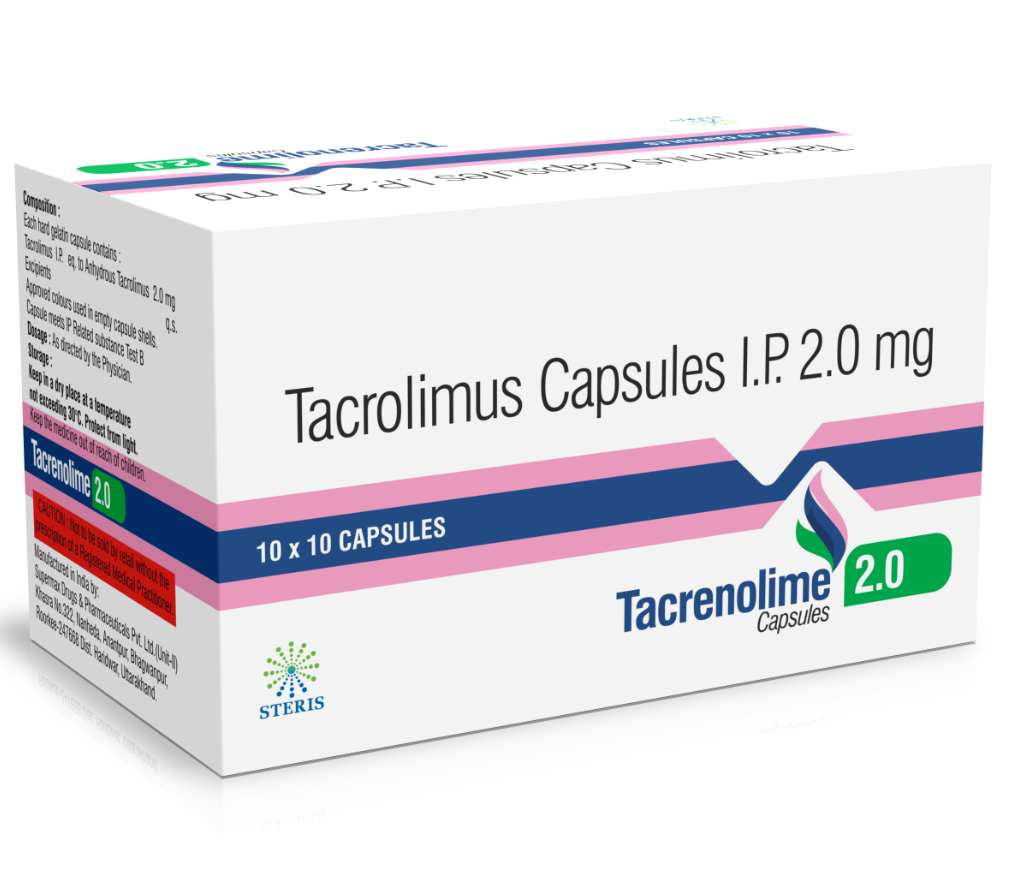
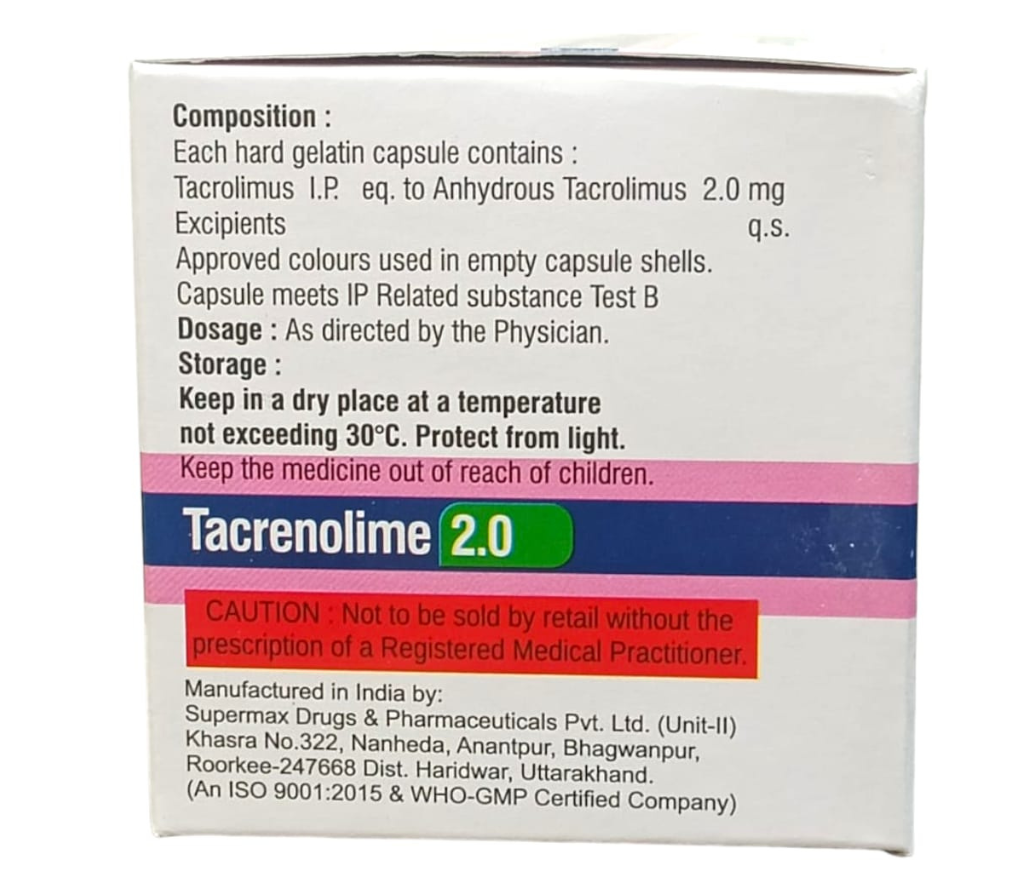
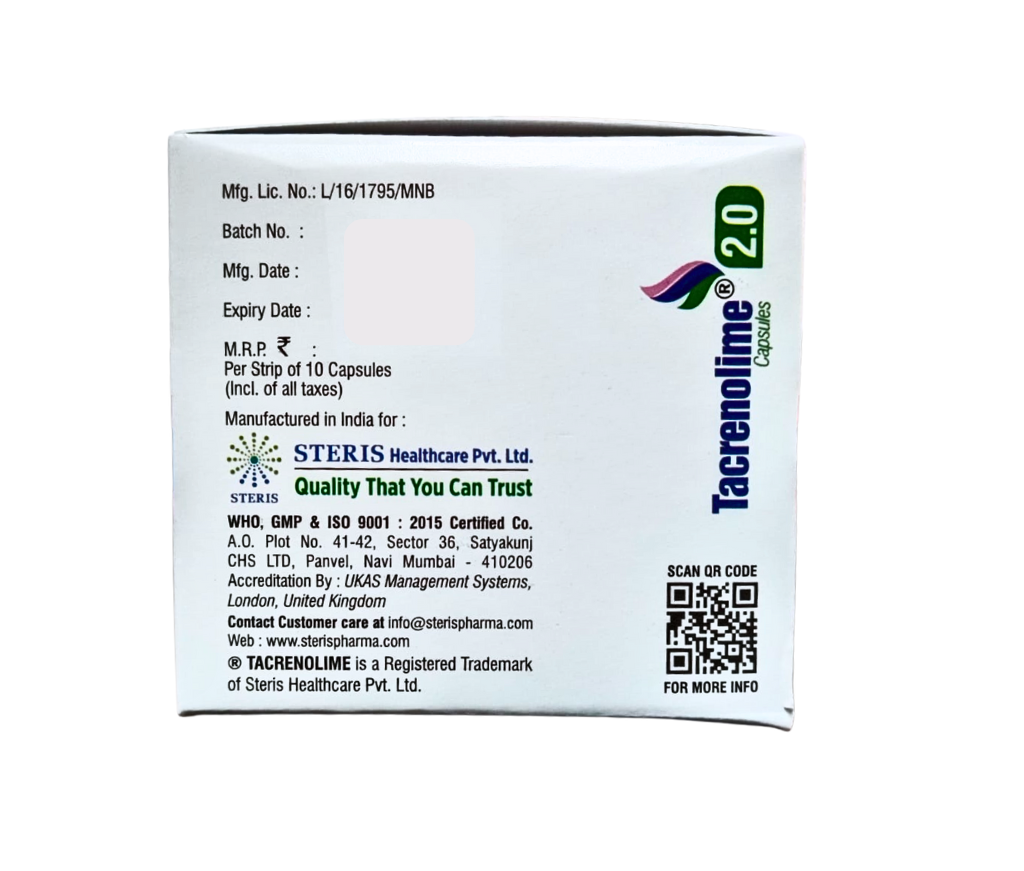
TACRENOLIME 2
 Item requires a valid prescription
Manufactured By Steris Healthcare Pvt Ltd
Composition Tacrolimus Capsules (2mg)
Rs 425.60
MRP Rs 608.00
(30% OFF)
Includes all taxes
Package SIZE
( For 10 Capsules )

100% Authentic
Products

Free
Shipping*

Products
Return Policy
Description:
Tacrolimus capsules 2 mg are prescription immunosuppressant medicines used primarily to help prevent organ rejection after certain solid-organ transplants. Tacrolimus belongs to a class of medicines called calcineurin inhibitors and works by reducing specific immune-system activity that can attack a transplanted organ.
If you are searching for tacrolimus capsules 2 mg, it is important to understand that this is not an ordinary medicine for pain, fever, or inflammation. Tacrolimus requires careful medical supervision because the amount of medicine in the blood must remain within an appropriate therapeutic range. Too little may increase the risk of transplant rejection, while too much can increase the risk of toxicity and serious side effects.
Current U.S. FDA information identifies immediate-release tacrolimus capsules such as Prograf for prevention of rejection in patients receiving allogeneic kidney, liver, or heart transplants, generally in combination with other immunosuppressive medicines.
What Are Tacrolimus Capsules 2 mg?
Tacrolimus 2 mg capsules contain 2 mg of tacrolimus, an immunosuppressive medicine. It is prescribed as part of an anti-rejection treatment plan following organ transplantation.
Tacrolimus works by inhibiting calcineurin, an enzyme involved in the activation of T-lymphocytes. By suppressing this immune response, tacrolimus helps reduce the body's ability to attack a transplanted organ.
The exact product formulation matters. Immediate-release tacrolimus capsules and extended-release tacrolimus products are not automatically interchangeable. FDA labeling specifically warns about medication errors between different tacrolimus formulations and recommends appropriate medical supervision when formulations are changed.
Therefore, when purchasing tacrolimus capsules 2 mg online, always confirm whether the product is immediate-release or extended-release and compare the exact product name, manufacturer, and prescription instructions.
Tacrolimus Capsules 2 mg Uses
The primary tacrolimus capsules 2 mg uses are related to preventing organ rejection after transplantation.
Depending on the prescribed formulation and local regulatory approval, oral tacrolimus may be used to help prevent rejection following:
-
Kidney transplantation
-
Liver transplantation
-
Heart transplantation
FDA information lists Prograf capsules for prophylaxis of organ rejection in patients receiving allogeneic kidney, liver, or heart transplants, together with other immunosuppressants.
Tacrolimus does not cure the underlying condition that led to transplantation. Instead, it suppresses the immune response so that the transplanted organ has a better chance of being accepted by the recipient's body.
How Does Tacrolimus 2 mg Work?
After transplantation, the immune system can recognize the new organ as foreign and attempt to attack it. This immune response can lead to organ rejection.
Tacrolimus suppresses certain immune pathways involved in T-cell activation. As a calcineurin inhibitor, it reduces the production of signaling molecules involved in immune activation.
This immunosuppressive effect is the reason tacrolimus can help prevent transplant rejection. It is also why patients taking tacrolimus have an increased susceptibility to certain infections and require ongoing medical monitoring. FDA labeling carries prominent warnings regarding malignancies and serious infections associated with immunosuppressive therapy.
Key Benefits of Tacrolimus Capsules 2 mg
1. Helps Prevent Organ Rejection
The primary benefit of tacrolimus is reducing the immune response that can cause rejection of a transplanted organ. This makes it an important component of immunosuppressive therapy after kidney, liver, or heart transplantation.
2. Supports Long-Term Transplant Management
Tacrolimus may be used as part of a longer-term immunosuppressive treatment plan. The treatment is individualized and commonly involves other medicines as well.
3. Oral Capsule Form
Tacrolimus capsules provide an oral treatment option for patients who are able to take medication by mouth.
4. Available in Multiple Strengths
Tacrolimus is manufactured in different strengths and formulations. A 2 mg capsule may be prescribed as part of an individualized regimen based on factors such as the transplanted organ, time since transplantation, blood tacrolimus concentration, other medicines, and kidney or liver function.
Tacrolimus Capsules 2 mg Dosage
Do not determine your tacrolimus dosage yourself.
Tacrolimus has a narrow therapeutic range, meaning the difference between an effective dose and a potentially toxic dose can be relatively small. Doctors adjust the dose according to individual response and blood concentration.
The FDA labeling recommends regular monitoring of tacrolimus whole-blood trough concentrations. Kidney or liver function, interactions with other medicines, and other patient-specific factors can also affect the appropriate dose.
A prescription for tacrolimus 2 mg does not necessarily mean that every patient should take one 2 mg capsule at the same frequency. Your transplant team determines the appropriate total daily dose and schedule.
Never change your dose, skip doses, or stop tacrolimus suddenly unless your transplant specialist instructs you to do so.
How to Take Tacrolimus Capsules 2 mg
Take tacrolimus exactly as prescribed.
Immediate-release tacrolimus capsules are generally taken consistently in relation to meals because food can affect absorption. FDA labeling for Prograf emphasizes maintaining consistency in how the medicine is taken in relation to food.
Swallow the capsules as directed and do not substitute one tacrolimus formulation for another without medical guidance.
Grapefruit and grapefruit juice can interact with tacrolimus and may increase drug concentrations. Patients should discuss diet and medication interactions with their transplant team.
If you forget a dose, follow the instructions provided by your transplant center rather than taking an extra dose on your own.
Tacrolimus Capsules 2 mg Side Effects
Tacrolimus can cause side effects, and some require medical attention.
Commonly reported adverse effects include:
-
Tremor
-
Headache
-
Diarrhoea
-
Nausea
-
Constipation
-
High blood pressure
-
Swelling or peripheral edema
-
Changes in kidney function
-
Increased blood glucose
-
Changes in electrolyte levels
-
Increased susceptibility to infections
FDA prescribing information reports adverse reactions including abnormal renal function, hypertension, tremor, headache, gastrointestinal symptoms, hyperglycemia, anemia, and electrolyte abnormalities.
Serious Tacrolimus Side Effects
Tacrolimus can cause serious adverse effects, particularly when blood concentrations become too high or when it interacts with other medicines.
Important risks include:
-
Kidney toxicity
-
Serious infections
-
Neurotoxicity
-
High potassium levels
-
High blood pressure
-
New-onset diabetes after transplantation
-
QT prolongation in susceptible patients
-
Increased risk of certain malignancies
The FDA labeling specifically warns about nephrotoxicity, neurotoxicity, hyperkalemia, hypertension, serious infections, and malignancies.
Seek urgent medical care for severe infection symptoms, significant changes in urination, severe headache or neurological symptoms, chest symptoms, unusual bleeding, or other serious or rapidly worsening symptoms.
Tacrolimus 2 mg and Blood Monitoring
One of the most important differences between tacrolimus and many routine medicines is the need for therapeutic drug monitoring.
Your doctor may regularly check:
-
Tacrolimus blood concentration
-
Kidney function
-
Liver function
-
Blood pressure
-
Blood glucose
-
Potassium and other electrolytes
-
Blood counts
Tacrolimus levels can be affected by other medicines, foods, organ function, and changes in the patient's condition. FDA prescribing information recommends monitoring tacrolimus concentrations and adjusting treatment when appropriate.
Tacrolimus Drug Interactions
Tacrolimus interacts with numerous medicines because certain drugs can significantly increase or decrease tacrolimus blood concentrations.
Important interaction categories include medicines that affect CYP3A enzymes, as well as other medicines that can affect kidney function or potassium levels.
The FDA label warns that strong CYP3A inhibitors can increase tacrolimus exposure, while strong CYP3A inducers can decrease exposure and potentially increase the risk of rejection.
Tell your doctor about all medicines, supplements, and herbal products you use before starting or changing tacrolimus.
What to Check Before Buying Tacrolimus Capsules 2 mg Online
If your search intent is buy tacrolimus capsules 2 mg online, safety and authenticity should come before price.
Before purchasing, check:
1. Exact medicine: Confirm that the active ingredient is tacrolimus and the strength is 2 mg.
2. Formulation: Verify whether the product is immediate-release or extended-release.
3. Manufacturer: Check the manufacturer and product registration details.
4. Prescription requirement: Tacrolimus is a prescription immunosuppressant and should be purchased through a legitimate pharmacy in accordance with local regulations.
5. Packaging: Check the batch number, expiry date, manufacturer information, and integrity of the packaging.
6. Storage: Follow the storage instructions provided with the specific product.
7. Seller reliability: Avoid products with unclear labeling or unusually low prices from unverified sellers.
Most importantly, do not change brands or formulations without consulting your transplant team. Different tacrolimus products can have different release characteristics and are not necessarily interchangeable.
Frequently Asked Questions
1. What are tacrolimus capsules 2 mg used for?
Tacrolimus capsules 2 mg are primarily used to help prevent organ rejection after kidney, liver, or heart transplantation. Tacrolimus suppresses specific immune-system activity and is generally used together with other immunosuppressive medicines.
2. Is tacrolimus 2 mg a steroid?
No. Tacrolimus is not a steroid. It is a calcineurin-inhibitor immunosuppressant that suppresses certain immune responses.
3. What are the common side effects of tacrolimus 2 mg capsules?
Common side effects can include tremor, headache, diarrhoea, nausea, constipation, high blood pressure, swelling, and changes in kidney function or blood glucose.
4. Does tacrolimus 2 mg affect the kidneys?
Yes. Tacrolimus can cause nephrotoxicity, meaning it can affect kidney function. This is one reason transplant patients require regular kidney-function testing and tacrolimus blood-level monitoring.
5. Can I stop tacrolimus 2 mg when I feel better?
No. Do not stop tacrolimus without instructions from your transplant specialist. It is used to suppress immune activity and help prevent rejection, and stopping or changing treatment without medical guidance can put the transplanted organ at risk.
6. Can tacrolimus 2 mg capsules be taken with food?
The timing of immediate-release tacrolimus in relation to food should be kept consistent because food can affect absorption. Follow the exact instructions from your transplant team and product labeling.
7. Can I take grapefruit with tacrolimus 2 mg?
Grapefruit and grapefruit juice can interact with tacrolimus and may increase its concentration. FDA labeling advises avoiding grapefruit or grapefruit juice with certain tacrolimus products.
8. Can I buy tacrolimus capsules 2 mg without a prescription?
Tacrolimus is a prescription immunosuppressant. It should be obtained from a legitimate pharmacy and used under specialist medical supervision. Do not purchase or use it for self-treatment.
9. Is tacrolimus 2 mg the same as extended-release tacrolimus?
No. Immediate-release tacrolimus capsules and extended-release formulations have different release characteristics. They should not be switched or substituted without medical direction.
Conclusion
Tacrolimus capsules, 2 mg, are prescription immunosuppressant medicines primarily used to help prevent organ rejection after transplantation. Their key benefit is suppression of specific immune responses that could otherwise attack a transplanted kidney, liver, or heart.
However, tacrolimus requires careful management because it can cause kidney toxicity, high blood pressure, infections, neurological effects, electrolyte abnormalities, and other serious complications. Regular blood-level and laboratory monitoring is an essential part of safe treatment.