


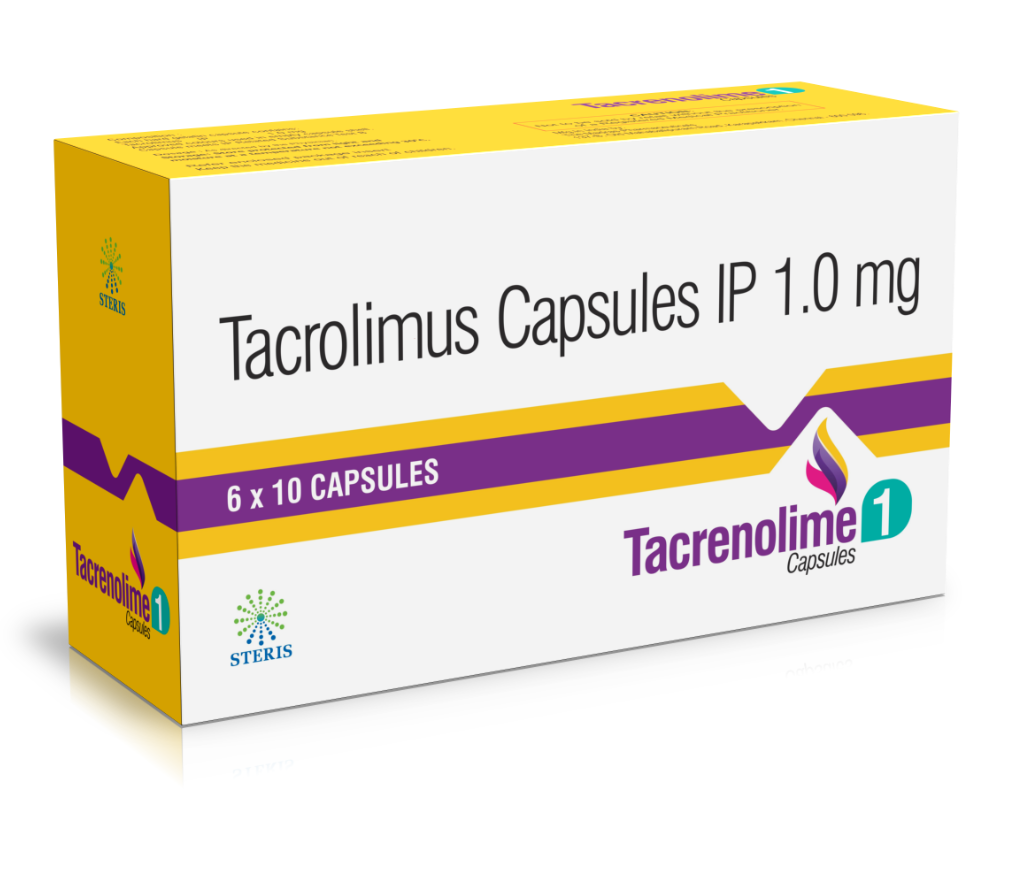
TACRENOLIME 1
 Item requires a valid prescription
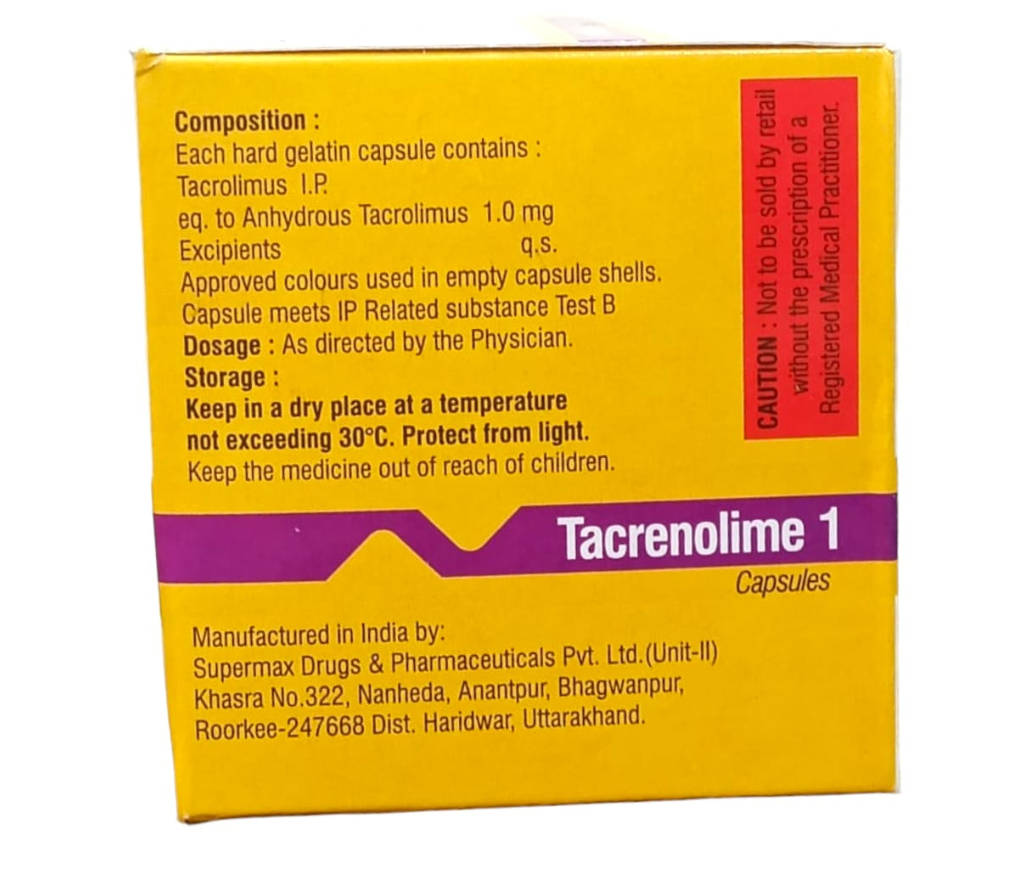
Manufactured By Steris Healthcare Pvt Ltd
Composition Tacrolimus Capsules (1mg)
Rs 260.56
MRP Rs 372.23
(30% OFF)
Includes all taxes
Package SIZE
( For 10 Capsules )

100% Authentic
Products

Free
Shipping*

Products
Return Policy
Description:
Tacrolimus capsules 1mg contain tacrolimus, a calcineurin-inhibitor immunosuppressant used primarily to help prevent organ rejection after transplantation. Current U.S. labeling identifies oral tacrolimus capsules for prevention of rejection in people receiving kidney, liver, or heart transplants, generally in combination with other immunosuppressive medicines.
The 1mg designation refers to the strength of each capsule, not a standard dose for every patient. Tacrolimus is available in different capsule strengths, and transplant teams may prescribe combinations of strengths or adjust the regimen according to therapeutic drug monitoring.
Because tacrolimus has a relatively narrow therapeutic range, taking the medicine consistently and having recommended blood tests are important parts of treatment. The official labeling recommends therapeutic drug monitoring to help maintain appropriate exposure while reducing the risk of toxicity or inadequate immunosuppression.
Tacrolimus Capsules 1mg Uses
The principal use of tacrolimus capsules is prevention of organ rejection following transplantation.
Depending on the prescribed treatment plan, tacrolimus may be used after:
-
Kidney transplantation
-
Liver transplantation
-
Heart transplantation
It works by suppressing specific immune-system activity that could otherwise attack a transplanted organ. Tacrolimus is normally used as part of a broader immunosuppressive regimen rather than as a stand-alone treatment.
How Does Tacrolimus Help Prevent Rejection?
After an organ transplant, the immune system can recognize the transplanted organ as foreign and mount an immune response against it. Tacrolimus suppresses T-cell activation by inhibiting calcineurin, thereby reducing immune activity involved in transplant rejection.
This immunosuppressive action is the central therapeutic benefit of tacrolimus. However, the same immune suppression can increase susceptibility to infections and certain malignancies, which is why long-term treatment requires ongoing medical monitoring.
Key Benefits of Tacrolimus Capsules 1mg
When prescribed appropriately, tacrolimus can provide important benefits for transplant recipients.
1. Helps Reduce the Risk of Organ Rejection
The primary benefit is prevention of rejection of a transplanted kidney, liver, or heart. Maintaining adequate immunosuppression is essential for protecting the transplanted organ.
2. Provides Adjustable Immunosuppression
The availability of different capsule strengths, including 1mg capsules, allows transplant specialists to tailor treatment more precisely. Dose adjustments may be needed as the patient's condition, interacting medicines, organ function, or tacrolimus blood concentration changes.
3. Supports Long-Term Transplant Management
Tacrolimus may form an important part of long-term anti-rejection therapy. The precise regimen varies between patients and can change over time under specialist supervision.
Important: These benefits apply when tacrolimus is appropriately prescribed and monitored. It should not be viewed as a general immune-boosting or wellness medicine.
How to Take Tacrolimus Capsules 1mg
Take tacrolimus exactly as prescribed by your transplant or specialist team. Immediate-release tacrolimus capsules are generally taken on a consistent schedule, and the prescribing information emphasizes consistent administration with or without food. Avoid grapefruit and grapefruit juice because they can affect tacrolimus exposure.
Practical precautions include:
-
Take each dose at the prescribed time.
-
Maintain the same relationship to meals unless your healthcare professional instructs otherwise.
-
Swallow capsules according to the product instructions.
-
Do not independently increase, decrease, or discontinue the dose.
-
Keep scheduled blood tests and medical appointments.
-
Tell your healthcare professional about every prescription medicine, OTC medicine, supplement, and herbal product you use.
Do not substitute immediate-release tacrolimus capsules with an extended-release tacrolimus product on your own. These formulations are not interchangeable because their absorption characteristics differ, and an inappropriate switch can cause underexposure or overexposure to tacrolimus.
Tacrolimus Capsules 1mg Side Effects
Tacrolimus can cause side effects, and some require prompt medical attention. Because it suppresses the immune system and can affect kidney function, blood pressure, blood glucose, electrolytes, and the nervous system, monitoring is an important part of treatment.
Potential side effects and important risks include:
-
Headache
-
Tremor
-
Nausea or digestive discomfort
-
Diarrhea
-
High blood pressure
-
Increased blood glucose or diabetes after transplantation
-
Increased potassium levels
-
Kidney toxicity or worsening kidney function
-
Neurological effects
-
Increased susceptibility to infections
-
Increased risk of certain malignancies
-
QT prolongation and other potentially serious cardiac effects in susceptible patients
The exact frequency and severity can vary according to the patient, dose, transplant type, other medicines, and tacrolimus blood concentration.
Serious Side Effects Requiring Medical Attention
Seek urgent medical advice for symptoms such as significant reduction in urine output, severe weakness, confusion, seizures, major neurological changes, severe infection symptoms, unusual bleeding, severe allergic symptoms, or other sudden or concerning changes.
The current prescribing information specifically warns about serious infections and malignancies and includes precautions concerning nephrotoxicity, neurotoxicity, hyperkalemia, hypertension, diabetes after transplantation, QT prolongation, and thrombotic microangiopathy.
Tacrolimus and Kidney Function
Kidney function deserves particular attention during tacrolimus treatment. Tacrolimus can cause acute or chronic nephrotoxicity, and clinicians may need to modify therapy when kidney function changes. Other medicines that can also affect the kidneys may increase concern about toxicity.
This does not mean that a kidney-transplant recipient should stop tacrolimus if kidney function changes. Stopping immunosuppression without medical direction can put the transplanted organ at risk. Instead, contact the transplant team promptly so they can assess blood tests, tacrolimus levels, other medicines, hydration, and possible causes.
Important Tacrolimus Drug Interactions
Tacrolimus is metabolized through pathways involving CYP3A enzymes, so numerous medicines and substances can change tacrolimus concentrations. The official labeling includes warnings about CYP3A4 inhibitors and inducers and specifically advises avoiding grapefruit. Cannabidiol interactions are also addressed in current labeling.
Before starting any new medicine, tell your healthcare professional that you take tacrolimus. This includes:
-
Antibiotics and antifungal medicines
-
Certain blood-pressure or heart medicines
-
Anticonvulsants
-
Herbal products and supplements
-
Cannabidiol-containing products
-
OTC medicines
-
Other immunosuppressants
Never assume that a medicine is safe to combine with tacrolimus simply because it is available without a prescription.
Who Should Use Tacrolimus Capsules 1mg?
Tacrolimus capsules should be used only when prescribed by an appropriately qualified healthcare professional familiar with immunosuppressive therapy. The medicine is intended for specific transplant-related indications and is not appropriate for self-treatment.
Tell your healthcare team if you have kidney or liver problems, high blood pressure, diabetes, electrolyte abnormalities, neurological conditions, or a history of medication reactions. These factors can influence monitoring and treatment decisions.
Why Tacrolimus Blood Tests Matter
Tacrolimus treatment is different from taking many routine medicines because the prescribed capsule strength alone does not tell you whether your dose is appropriate.
Doctors use therapeutic drug monitoring to assess tacrolimus exposure. Blood concentrations can be influenced by the prescribed dose, timing of the blood sample, food, other medicines, organ function, and individual metabolism.
Therefore, never increase a 1mg capsule dose simply because you believe a higher amount will provide greater protection. Too much tacrolimus can increase toxicity, while too little may provide inadequate immunosuppression..
Frequently Asked Questions
1. What are tacrolimus capsules 1mg used for?
Tacrolimus capsules 1mg are used as part of immunosuppressive treatment to help prevent rejection of transplanted organs, including kidney, liver, or heart transplants under current U.S. labeling.
2. Is tacrolimus 1mg a high dose?
No single capsule strength can be classified as a universally high or low dose. 1mg describes the capsule strength, while the appropriate total daily dose depends on the individual patient's transplant and clinical circumstances.
3. Can tacrolimus 1mg be taken without a prescription?
No. Tacrolimus is a potent prescription immunosuppressant requiring specialist supervision and monitoring.
4. Can I take tacrolimus 1mg every day?
Many transplant patients take tacrolimus regularly as prescribed, but the exact schedule and dose must come from the transplant team. Do not establish or change a daily regimen yourself.
5. What are the most common tacrolimus side effects?
Possible effects include headache, tremor, gastrointestinal symptoms, high blood pressure, increased blood glucose, and kidney-related toxicity. The risk profile varies between patients.
6. Does tacrolimus affect the kidneys?
Yes. Tacrolimus can cause acute or chronic nephrotoxicity, so kidney function is commonly monitored during treatment.
7. Does tacrolimus lower immunity?
Yes. Tacrolimus suppresses immune activity, which helps prevent transplant rejection but also increases susceptibility to serious infections and certain malignancies.
8. Can tacrolimus cause high blood pressure?
Yes. Hypertension is a recognized potential adverse effect and may require monitoring and treatment.
9. Can tacrolimus cause diabetes?
Tacrolimus can contribute to new-onset diabetes after transplantation, which is why blood glucose monitoring may be required.
10. Can I drink grapefruit juice while taking tacrolimus?
Grapefruit and grapefruit juice should be avoided because they can alter tacrolimus exposure.
11. Can I stop tacrolimus when I feel better?
No. Feeling well does not mean the risk of rejection has disappeared. Stopping tacrolimus without medical direction can seriously compromise transplant protection.
12. What happens if I miss a tacrolimus dose?
Follow the missed-dose instructions provided by your transplant team or pharmacist. Do not automatically double the next dose unless your healthcare professional specifically tells you to do so.
13. Can tacrolimus 1mg be switched with extended-release tacrolimus?
Not without medical supervision. Immediate-release and extended-release tacrolimus products are not interchangeable because their absorption profiles differ.
14. Why do doctors check tacrolimus blood levels?
Blood-level monitoring helps clinicians evaluate tacrolimus exposure and balance adequate immunosuppression against the risk of toxicity.
15. Can tacrolimus interact with other medicines?
Yes. Many medicines can change tacrolimus concentrations, including drugs affecting CYP3A pathways. Always disclose all medicines, supplements, and cannabidiol-containing products to your healthcare team.
16. Is tacrolimus safe for long-term use?
Tacrolimus may be used as part of long-term transplant management, but long-term therapy requires ongoing assessment because immunosuppression carries important risks, including infections, malignancies, kidney toxicity, and metabolic complications.
17. What should I do if I develop signs of infection while taking tacrolimus?
Contact your healthcare professional promptly. Because tacrolimus suppresses immune function, infections can become serious and may require rapid assessment.
18. Is tacrolimus 1mg suitable for everyone after a transplant?
No. Treatment is individualized according to the transplanted organ, patient characteristics, blood concentrations, organ function, interacting medicines, and the transplant team's treatment protocol.
19. Can I buy tacrolimus capsules 1mg without medical supervision?
Tacrolimus should be obtained and used according to a valid prescription and transplant-care plan. Purchasing or using it without appropriate monitoring can be dangerous.
20. What is the most important thing to remember about tacrolimus 1mg?
The most important point is that 1mg is a capsule strength, not a universal dose. Take tacrolimus exactly as prescribed, attend therapeutic drug monitoring and laboratory appointments, avoid grapefruit, and never change or stop treatment without consulting your transplant team.