


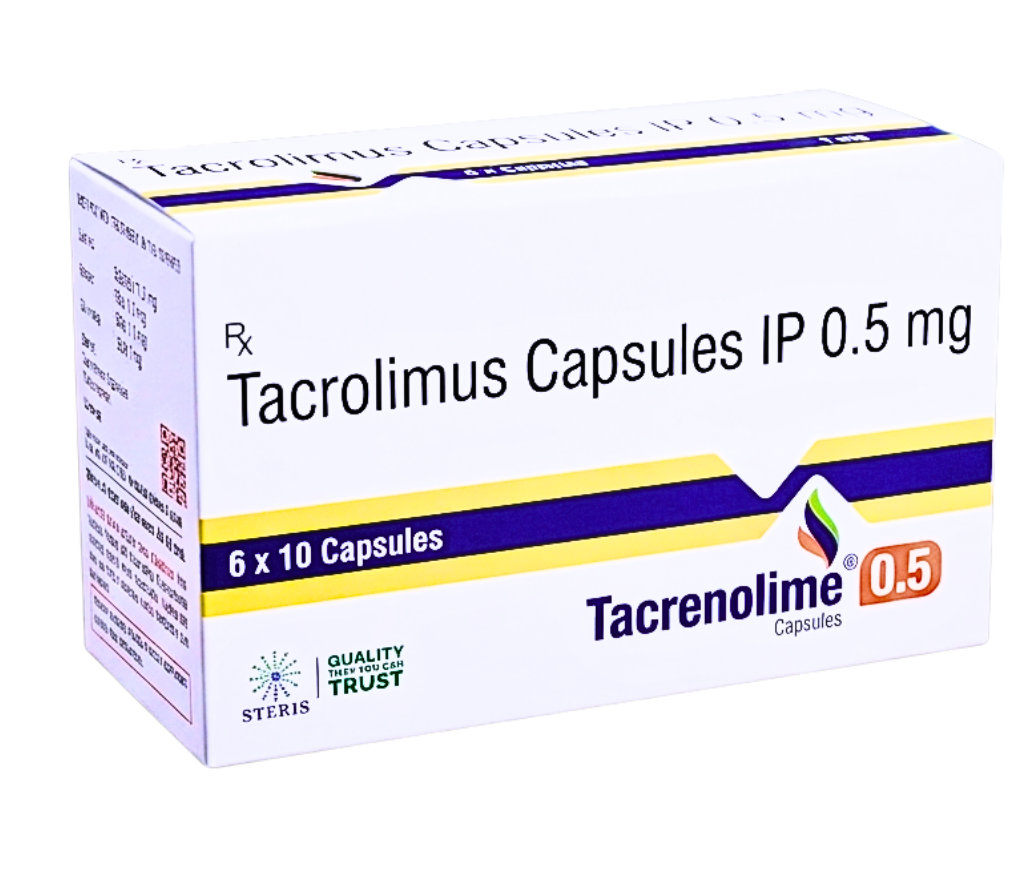
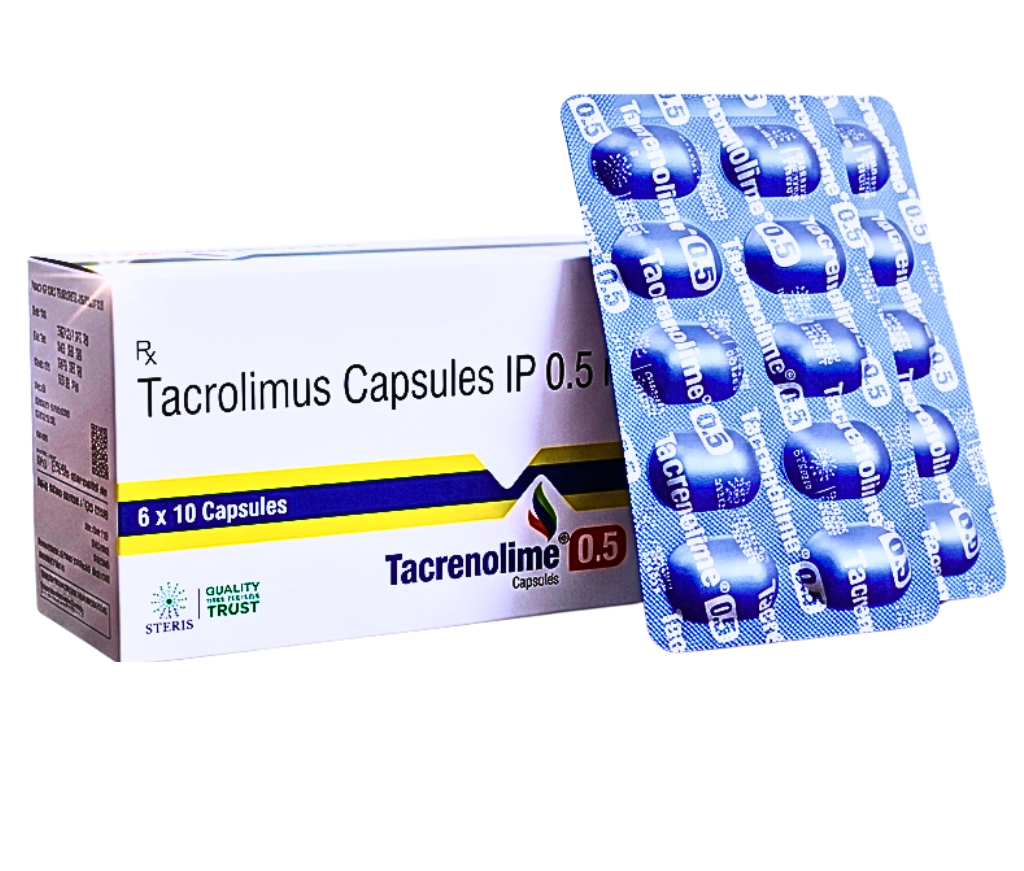
TACRENOLIME 0.5
 Item requires a valid prescription
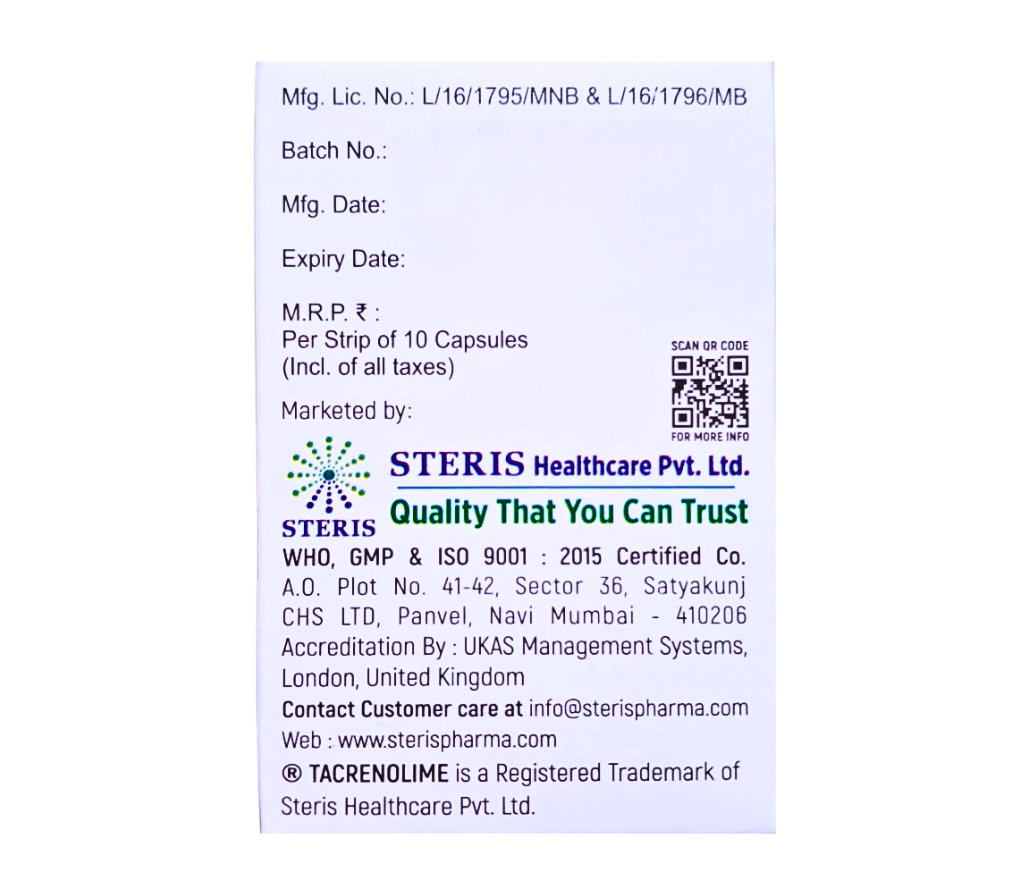
Manufactured By Steris Healthcare Pvt Ltd
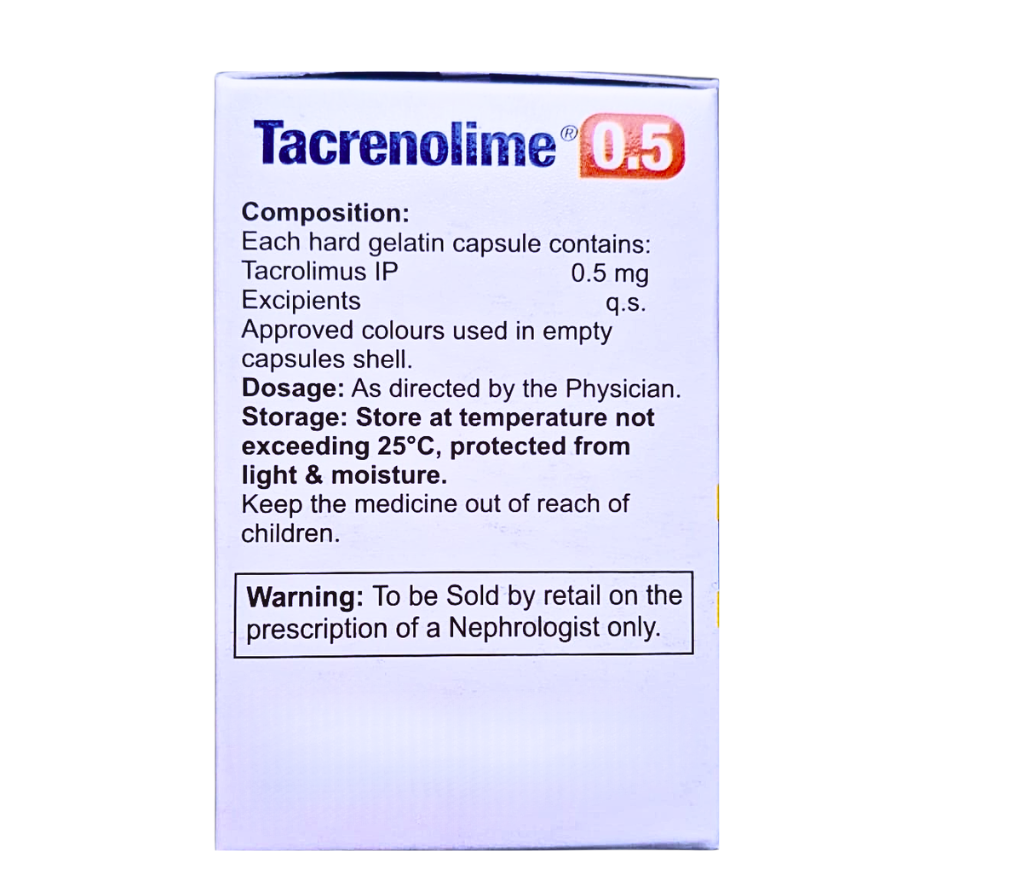
Composition Tacrolimus 0.5 mg
Rs 147.00
MRP Rs 210.00
(30% OFF)
Includes all taxes
Package SIZE
( For 10 Capsules )

100% Authentic
Products

Free
Shipping*

Products
Return Policy
Description:
Tacrolimus tablet is a prescription immunosuppressant used to prevent organ transplant rejection..It is also prescribed off-label for certain autoimmune conditions under specialist supervision. Tacrolimus works by blocking a protein called calcineurin, which reduces the production of immune cells that would otherwise attack a transplanted organ. It is classified as a high-risk, Narrow Therapeutic Index (NTI) drug, meaning blood levels must be closely monitored — too little increases rejection risk, too much increases toxicity risk (especially to kidneys and nerves). Tacrolimus is not a steroid; it belongs to a distinct drug class called calcineurin inhibitors.
What Is Tacrolimus Tablet?
Tacrolimus tablet is a prescription immunosuppressant medication derived originally from a soil bacterium, now manufactured as an oral tablet for daily use. It belongs to the calcineurin inhibitor class of drugs, sharing its therapeutic category with cyclosporine, though tacrolimus is generally considered more potent on a milligram basis. Since its introduction, tacrolimus has become a cornerstone maintenance therapy in solid organ transplantation worldwide, helping recipients of kidney, liver, and heart transplants avoid organ rejection.
Because the body's immune system is designed to identify and attack anything it perceives as "foreign" — including a transplanted organ — lifelong immune suppression is required to protect the new organ. Tacrolimus is one of the most widely prescribed drugs for this exact purpose, usually combined with other immunosuppressants like mycophenolate mofetil and corticosteroids as part of a multi-drug regimen.
Clinical Indications
| Indication | Details |
|---|---|
| Kidney transplant rejection prophylaxis | First-line maintenance immunosuppressant, typically combined with mycophenolate and steroids |
| Liver transplant rejection prophylaxis | Used in both initial and maintenance immunosuppression protocols |
| Heart transplant rejection prophylaxis | Used as part of combination immunosuppressive therapy |
| Autoimmune conditions (off-label, specialist use) | Certain cases of nephrotic syndrome, lupus nephritis, and severe atopic conditions under specialist supervision |
How Does Tacrolimus Work?
Tacrolimus works by binding to an intracellular protein called FKBP-12. This complex then inhibits calcineurin, an enzyme responsible for activating T-lymphocytes (a type of white blood cell central to the immune response). By blocking calcineurin, tacrolimus prevents the production of interleukin-2 and other cytokines that would normally trigger the immune system to attack transplanted tissue as a foreign invader.
Key Benefits of Tacrolimus Tablet
- Prevents organ transplant rejection, significantly improving long-term graft survival rates in kidney, liver, and heart transplant recipients
- Highly potent immunosuppression at relatively low doses compared to older-generation agents
- Steroid-sparing potential—many transplant protocols use tacrolimus to reduce long-term corticosteroid dependence
- Flexible dosing formulations available (immediate-release twice daily and extended-release once-daily options), allowing regimens tailored to patient adherence needs
- Decades of clinical use in transplant medicine, giving physicians extensive real-world experience in dose titration and monitoring
- Combination therapy compatibility—works effectively alongside mycophenolate mofetil, corticosteroids, and mTOR inhibitors for individualized immunosuppression protocols
Dosage Guidance
Tacrolimus dosing is highly individualized and must be determined solely by a transplant specialist based on:
- Type of organ transplanted
- Time since transplantation (initial vs. maintenance phase)
- Patient's body weight and kidney/liver function
- Concomitant medications (many drugs interact with tacrolimus levels)
- Regular trough blood level monitoring (a blood test done just before the next dose)
Side Effects of Tacrolimus Tablet
Common Side Effects
- Hand tremors
- Headache
- Insomnia or sleep disturbances
- Diarrhea, nausea, or stomach upset
- High blood pressure (hypertension)
- Elevated blood sugar (new-onset diabetes after transplant is a recognized risk)
- Numbness or tingling in hands/feet
- Increased hair thinning or, conversely, excessive hair growth in some patients
Serious Side Effects
- Signs of kidney impairment (reduced urine output, swelling, fatigue)
- Severe or persistent high blood pressure
- Signs of infection (fever, chills, sore throat) — since immune suppression raises infection risk
- Vision changes or severe headache (possible neurotoxicity)
- Irregular heartbeat
- Signs of allergic reaction (rash, swelling, difficulty breathing)
- Unusual bruising or bleeding
Precautions and Warnings
- Tacrolimus is a Narrow Therapeutic Index (NTI) / high-risk drug — regular blood level monitoring is mandatory throughout treatment
- Grapefruit and grapefruit juice can dangerously raise tacrolimus blood levels and must be avoided
- Live vaccines should generally be avoided during treatment due to immune suppression
- Regular monitoring of kidney function, blood pressure, and blood glucose is required
- Inform your doctor of all other medications, including OTC drugs and supplements, due to significant drug interaction potential
- Not recommended during pregnancy or breastfeeding without specialist guidance
- Avoid prolonged sun exposure — immunosuppressed patients have elevated skin cancer risk over long-term use
Substitutes/Alternative Immunosuppressants Comparison
| Drug | Class | Typical Use |
|---|---|---|
| Tacrolimus | Calcineurin inhibitor | First-line transplant maintenance therapy |
| Cyclosporine | Calcineurin inhibitor | Alternative first-line option, generally less potent |
| Sirolimus | mTOR inhibitor | Used when calcineurin inhibitors are not tolerated |
| Mycophenolate Mofetil | Antimetabolite | Usually combined with tacrolimus, not a standalone substitute |
Conclusion
Tacrolimus tablet remains one of the most important and widely prescribed medications in modern transplant medicine, playing a central role in helping organ transplant recipients live longer, healthier lives by preventing rejection. As a high-risk, narrow-therapeutic-index drug, it demands consistent daily dosing, regular blood monitoring, and close coordination with a transplant specialist. When used correctly, tacrolimus offers transplant patients a well-established, effective path to long-term graft survival — but it is not a medication to self-manage. Always follow your doctor's exact dosing instructions, attend all scheduled blood tests, and report any new symptoms promptly.
Frequently Asked Questions
1. What does tacrolimus do to your body?
Tacrolimus suppresses the immune system by blocking calcineurin, an enzyme needed to activate T-cells. This prevents the immune system from attacking a transplanted organ, allowing the body to accept the new organ instead of rejecting it.
2. Why is tacrolimus a high-risk drug?
Tacrolimus is classified as a high-risk, Narrow Therapeutic Index (NTI) drug because the difference between an effective dose and a toxic dose is very small. Blood levels must be regularly monitored, as too little can cause organ rejection while too much can cause serious kidney or nerve damage.
3. What does tacrolimus do to your body? (in simple terms)
In simple terms, tacrolimus "turns down" your immune system so it doesn't recognize a transplanted organ as foreign and attack it, helping protect the new organ long-term.
4. Is the tacrolimus capsule a steroid?
No. Tacrolimus is not a steroid. It belongs to a different drug class called calcineurin inhibitors, which work through an entirely different mechanism than corticosteroids, even though both are used as immunosuppressants.
5. What is the most common side effect of tacrolimus?
Hand tremors, headache, and gastrointestinal upset (like diarrhea or nausea) are among the most commonly reported side effects, along with elevated blood pressure and blood sugar levels.
6. How long can you take tacrolimus?
Most transplant patients take tacrolimus long-term, often for life, to continuously prevent organ rejection. Your transplant specialist will determine the exact duration based on your organ type and individual response.
7. Can tacrolimus be stopped suddenly?
No. Tacrolimus should never be stopped abruptly without medical supervision, as this can significantly increase the risk of organ rejection. Any changes to your regimen must be directed by your transplant physician.
8. Does tacrolimus weaken the immune system?
Yes, by design. Tacrolimus deliberately suppresses immune activity to prevent transplant rejection, which also means patients have a higher risk of infections and should take extra precautions against illness.
9. Can I drink alcohol while taking tacrolimus?
Alcohol is generally discouraged while on tacrolimus, as it can add strain to the liver and may worsen certain side effects. Always confirm with your transplant team based on your specific health status.
10. Why should tacrolimus not be taken with grapefruit?
Grapefruit and grapefruit juice interfere with the enzymes that break down tacrolimus in the body, which can cause blood levels to rise to dangerous, potentially toxic levels.
11. What blood tests are needed while on tacrolimus?
Patients typically need regular trough blood level tests, kidney function tests, blood glucose monitoring, and blood pressure checks throughout treatment to ensure the dose remains safe and effective.
12. Is tacrolimus used for anything other than transplants?
While primarily used for transplant rejection prevention, tacrolimus is sometimes used off-label for select autoimmune conditions, but only under specialist supervision.
13. What happens if I miss a dose of tacrolimus?
If a dose is missed, contact your transplant team for specific guidance rather than doubling the next dose, as tacrolimus's narrow therapeutic window makes self-adjustment risky.
14. Can tacrolimus affect kidney function?
Yes, tacrolimus can affect kidney function, especially at higher blood levels, which is why regular kidney function monitoring is a standard part of treatment.
15. Is tacrolimus safe during pregnancy?
Tacrolimus use during pregnancy requires careful specialist evaluation, as it is generally not recommended unless the benefits clearly outweigh potential risks. Always consult your doctor before planning a pregnancy while on this medication.
16. Does tacrolimus interact with other medications?
Yes, tacrolimus has significant interaction potential with many drugs, including certain antibiotics, antifungals, and blood pressure medications. Always inform every treating doctor that you are on tacrolimus.

