


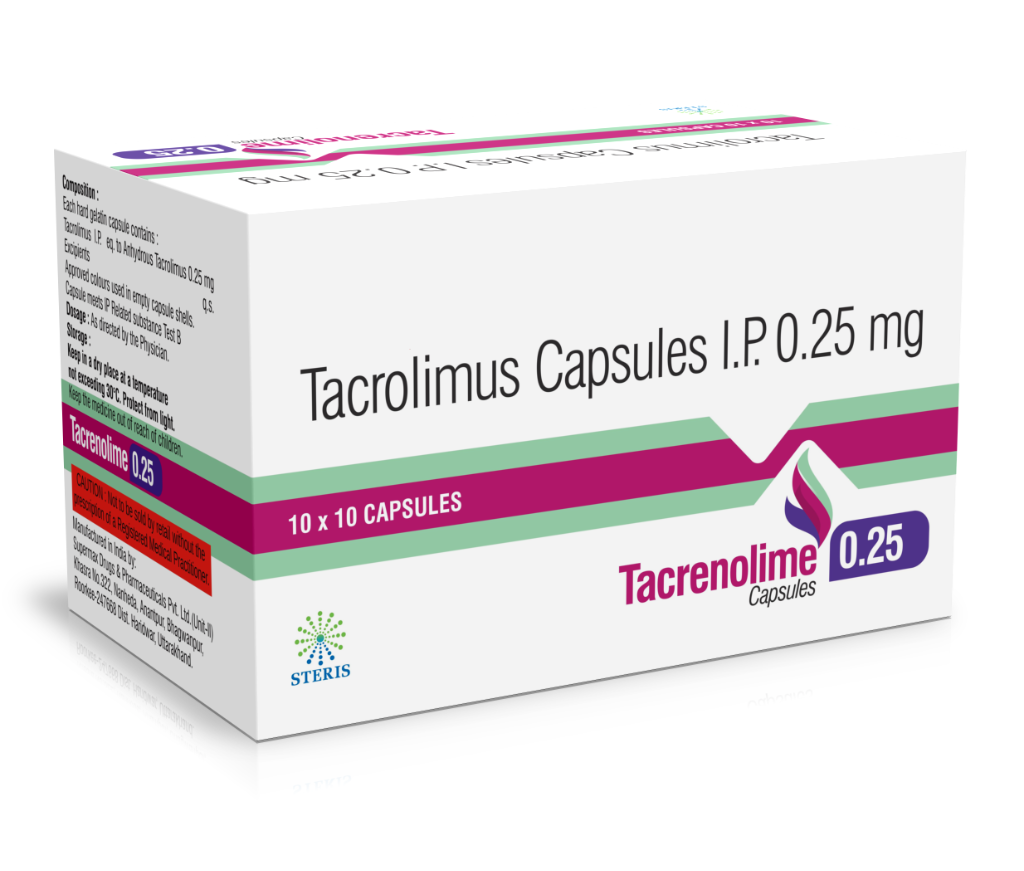
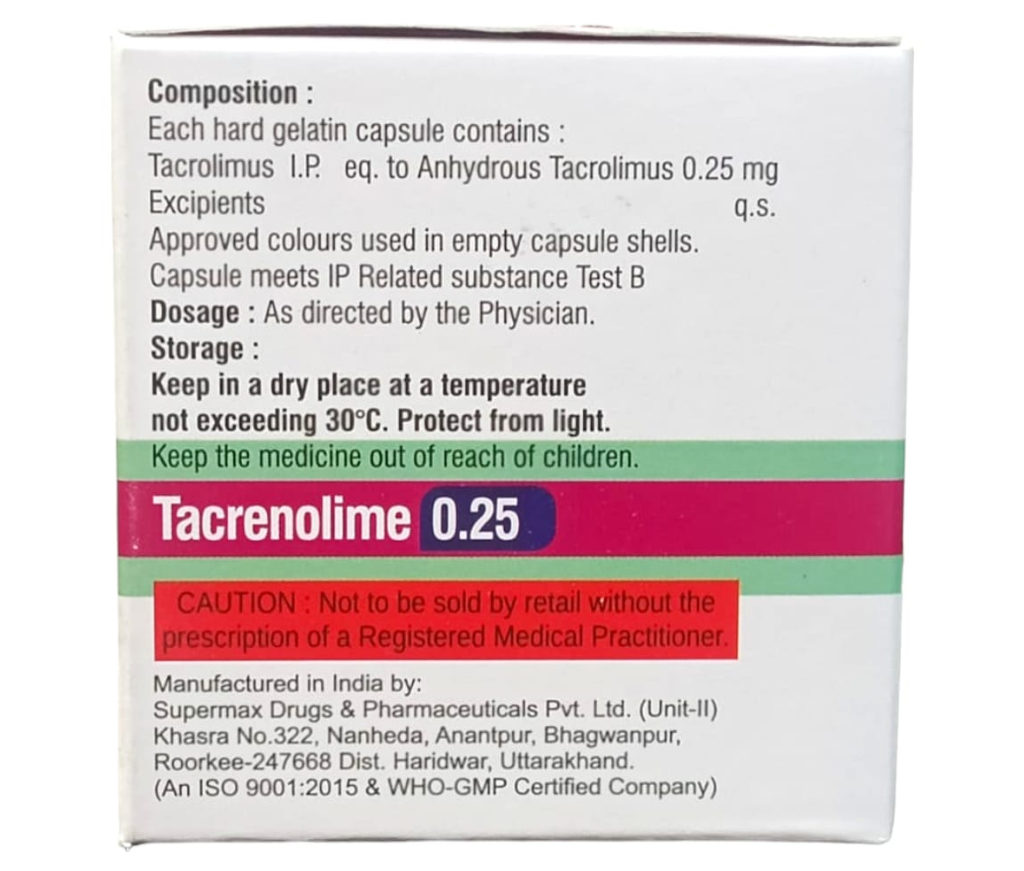
TACRENOLIME 0.25
 Item requires a valid prescription
Manufactured By STERIS HEALTHCARE PVT LTD
Composition Tacrolimus (0.25mg)
Rs 84.66
MRP Rs 120.94
(30% OFF)
Includes all taxes
Package SIZE
( For 10 Tablets )

100% Authentic
Products

Free
Shipping*

Products
Return Policy
Description:
Tacrolimus 0.25 mg is an immunosuppressant medicine prescribed primarily to help prevent rejection of a transplanted organ. It works by reducing certain immune-system responses that could otherwise attack a transplanted kidney, liver, heart, or other organ. Tacrolimus is generally used as part of a combination treatment plan and requires careful medical monitoring because the right dose can vary considerably between patients.
What Is Tacrolimus 0.25 mg?
Tacrolimus 0.25 mg contains 0.25 mg of tacrolimus, an immunosuppressive medicine belonging to the calcineurin-inhibitor class.
Its primary purpose is to suppress excessive immune activity. After an organ transplant, the immune system may recognize the transplanted organ as foreign and attack it. Tacrolimus helps reduce this immune response, thereby lowering the risk of organ rejection.
The FDA recognizes tacrolimus products such as Prograf for use with other immunosuppressants to prevent rejection following kidney, liver, and heart transplantation; tacrolimus has also received FDA approval for lung transplant rejection prevention. U.S. Food and Drug Administration +1
In India, currently listed tacrolimus 0.25 mg products include brands such as Tacromus 0.25, Takfa 0.25, Tacrograf 0.25, Fujigraf 0.25, and Pangraf 0.25. These listings identify the products as prescription medicines.
Tacrolimus 0.25 mg Uses
The principal tacrolimus 0.25 mg use is helping prevent organ rejection following transplantation.
Depending on the patient's transplant and treatment plan, tacrolimus may be prescribed to:
- Help prevent kidney transplant rejection.
- Help prevent liver transplant rejection.
- Help prevent heart transplant rejection.
- Help prevent rejection after certain other transplant procedures when specifically prescribed.
- Maintain adequate immunosuppression as part of a transplant-care regimen.
Tacrolimus is generally not used alone. Transplant recipients may receive it together with other immunosuppressive medicines selected by their specialist.
The exact dose is individualized according to factors such as the transplanted organ, body weight, other medicines, tacrolimus blood concentration, and clinical response.
How Does Tacrolimus 0.25 mg Work?
Tacrolimus suppresses immune-system activity by inhibiting calcineurin, an enzyme involved in T-cell activation.
T cells are an important part of the immune response. By reducing T-cell activation, tacrolimus decreases the immune response directed toward a transplanted organ.
This immunosuppressive action is beneficial for preventing rejection, but it also means the immune system becomes less capable of fighting certain infections. For this reason, tacrolimus treatment requires ongoing medical supervision.
Key Benefits of Tacrolimus 0.25 mg
1. Helps prevent transplant rejection
The primary benefit of tacrolimus is reducing the risk that the immune system will attack a transplanted organ.
2. Supports long-term transplant management
For eligible transplant recipients, tacrolimus can form an important part of long-term immunosuppressive therapy.
3. Provides targeted immune suppression
Tacrolimus reduces T-cell-mediated immune activity rather than simply producing a generalized reduction in all body functions.
4. Available in a low-strength formulation
The 0.25 mg strength allows doctors to make smaller dose adjustments when appropriate. This is particularly useful because tacrolimus dosing is individualized and therapeutic drug monitoring is commonly used.
5. Can be combined with other immunosuppressants
Tacrolimus is commonly incorporated into multidrug transplant regimens, with the combination selected according to the patient's transplant type, clinical condition, and specialist's treatment strategy.
Tacrolimus 0.25 mg Dosage: How Should You Take It?
There is no single standard tacrolimus 0.25 mg dosage that is appropriate for everyone.
Your doctor determines the dose based on your transplant type, body weight, other medicines, kidney and liver function, tacrolimus blood levels, and treatment response. Current product information similarly states that the amount and frequency depend on factors including transplant type, body weight, and concomitant medicines.
Take tacrolimus exactly as prescribed and at the same times each day.
Do not:
- Double the dose after missing a dose without medical advice.
- Stop tacrolimus because you feel well.
- Change between tacrolimus products or formulations without discussing it with your transplant team.
- Take more or less medicine than prescribed.
- Take herbal or nutritional supplements without checking for potential interactions.
Consistency is particularly important with tacrolimus because changes in exposure can affect both treatment effectiveness and toxicity risk.
Tacrolimus 0.25 mg Side Effects
Like other potent immunosuppressive medicines, tacrolimus can cause side effects.
Potential side effects include:
- Tremor or shaking
- Headache
- High blood pressure
- Increased blood glucose or diabetes
- Kidney-function problems
- Increased susceptibility to infections
- Sleep difficulties
- Gastrointestinal symptoms
- Electrolyte abnormalities
Current Indian product information specifically highlights possible kidney problems, diabetes, tremor, infections, high blood pressure, headache, and insomnia.
Not every patient experiences these effects, and their severity can vary.
When Should You Contact a Doctor?
Contact your healthcare professional promptly if you develop symptoms suggesting infection, significant changes in urination, unusual weakness, persistent vomiting or diarrhea, severe headache, marked tremors, confusion, swelling, or other concerning symptoms.
Because tacrolimus suppresses the immune system, infections can sometimes become more serious. Patients receiving tacrolimus should follow their transplant team's instructions about infection prevention and monitoring.
Tacrolimus 0.25 mg and Kidney Function
An important point for patients is that tacrolimus can affect kidney function. This does not mean the medicine should be stopped by yourself. In transplant medicine, doctors balance the benefits of preventing organ rejection against potential adverse effects.
Regular laboratory monitoring can help physicians identify changes early and adjust treatment when necessary.
Patients should tell their doctor if they already have kidney, liver, or heart problems, diabetes, or high blood pressure. Current Indian product information specifically recommends informing the doctor about these conditions.
Tacrolimus 0.25 mg Drug Interactions
Tacrolimus has clinically important interactions with a number of medicines and other substances because its blood concentration can change significantly when certain metabolic pathways are affected.
Always tell your doctor or pharmacist about:
- Antibiotics
- Antifungal medicines
- Antiviral medicines
- Blood-pressure medicines
- Pain medicines
- Other immunosuppressants
- Herbal products
- Vitamins and nutritional supplements
Do not begin a new medicine, including an OTC product, without checking whether it is appropriate with your tacrolimus treatment.
Buying Tacrolimus 0.25 mg Online: What Should You Check?
If you have a valid prescription and are looking to buy tacrolimus 0.25 mg online, purchasing from a reputable, licensed pharmacy is important.
Before ordering, check:
- Active ingredient: Confirm that the product contains tacrolimus 0.25 mg.
- Dosage form: Make sure you are purchasing the formulation prescribed by your doctor.
- Brand/manufacturer: Check the manufacturer and packaging details.
- Prescription requirement: Current Indian online pharmacy listings identify several tacrolimus 0.25 mg products as prescription medicines.
- Expiry date: Check the expiry date and batch information.
- Packaging: Do not use a product with damaged or suspicious packaging.
- Price: Compare the price only after confirming that the strength, formulation, and pack size are the same.
Current Indian online listings show that the price of tacrolimus 0.25 mg varies between brands. For example, listings updated in September 2026 show different prices for Tacromus 0.25, Takfa 0.25, and Pangraf 0.25, demonstrating why buyers should compare like-for-like products rather than choosing solely on price.
Who Should Use Tacrolimus 0.25 mg?
Tacrolimus 0.25 mg should be used only when prescribed by a qualified healthcare professional.
It may be appropriate for a transplant recipient when the doctor determines that this strength and dosing schedule are suitable. The 0.25 mg capsule should not be viewed as a general-purpose medicine for immunity or kidney health.
Because tacrolimus has a narrow therapeutic range and potentially serious adverse effects, regular follow-up and laboratory monitoring are important.
Frequently Asked Questions
1. What is tacrolimus 0.25 mg used for?
Tacrolimus 0.25 mg is an immunosuppressant used primarily to help prevent rejection of transplanted organs, including kidney, liver, and heart transplants. It is generally prescribed with other immunosuppressive medicines. U.S. Food and Drug Administration +1
2. What are the main benefits of tacrolimus 0.25 mg?
The main benefit is reducing immune-system activity that could attack a transplanted organ. It can therefore play an important role in maintaining successful transplant outcomes when used as prescribed.
3. What are the side effects of tacrolimus 0.25 mg?
Possible side effects include tremor, headache, high blood pressure, increased blood sugar, infections, kidney problems, and insomnia. The risk and severity depend on the individual patient and tacrolimus exposure.
4. Can tacrolimus 0.25 mg damage the kidneys?
Tacrolimus can affect kidney function in some patients. However, transplant patients should never stop tacrolimus on their own, because inadequate immunosuppression can increase the risk of organ rejection. Kidney function and tacrolimus levels should be monitored by the treating team.
5. Can I buy tacrolimus 0.25 mg online?
Yes, tacrolimus 0.25 mg is listed by Indian online pharmacies, but it is a prescription medicine. A valid prescription and a reliable pharmacy should be used when purchasing it.
6. What happens if I stop taking tacrolimus 0.25 mg?
Stopping tacrolimus without medical supervision can increase the risk of transplant rejection. If you have missed doses or cannot obtain your medicine, contact your transplant team as soon as possible for instructions.
7. Can tacrolimus 0.25 mg be taken with other medicines?
Yes, tacrolimus is commonly used as part of a combination immunosuppressive regimen. However, it has numerous potential drug interactions, so your doctor should review all prescription medicines, OTC medicines, and supplements you take.
8. Is tacrolimus 0.25 mg safe for long-term use?
Tacrolimus can be used long-term in appropriate transplant patients, but long-term treatment requires regular medical supervision. Doctors may monitor tacrolimus blood levels, kidney function, blood pressure, blood glucose, and other laboratory parameters.
9. Is tacrolimus 0.25 mg a steroid?
No. Tacrolimus is not a steroid. It is an immunosuppressant and calcineurin inhibitor that suppresses specific immune-system pathways.
10. Can I change from one tacrolimus brand to another?
Do not switch brands or formulations without speaking to your transplant specialist. Tacrolimus exposure can vary between formulations and products, and your doctor may want to monitor blood levels after a change.
Conclusion
Tacrolimus 0.25 mg is an important prescription immunosuppressant used to help prevent organ rejection after transplantation. Its key benefit is controlling the immune response against the transplanted organ, but the medicine requires careful dosing and monitoring because it can also increase infection risk and cause effects involving kidney function, blood pressure, blood sugar, and other systems.
For anyone intending to buy tacrolimus 0.25 mg online, the priority should be authenticity, the correct strength and formulation, prescription compliance, and a reliable pharmacy—not simply the lowest price. Current September 2026 Indian listings demonstrate that prices can vary between brands and sellers.