


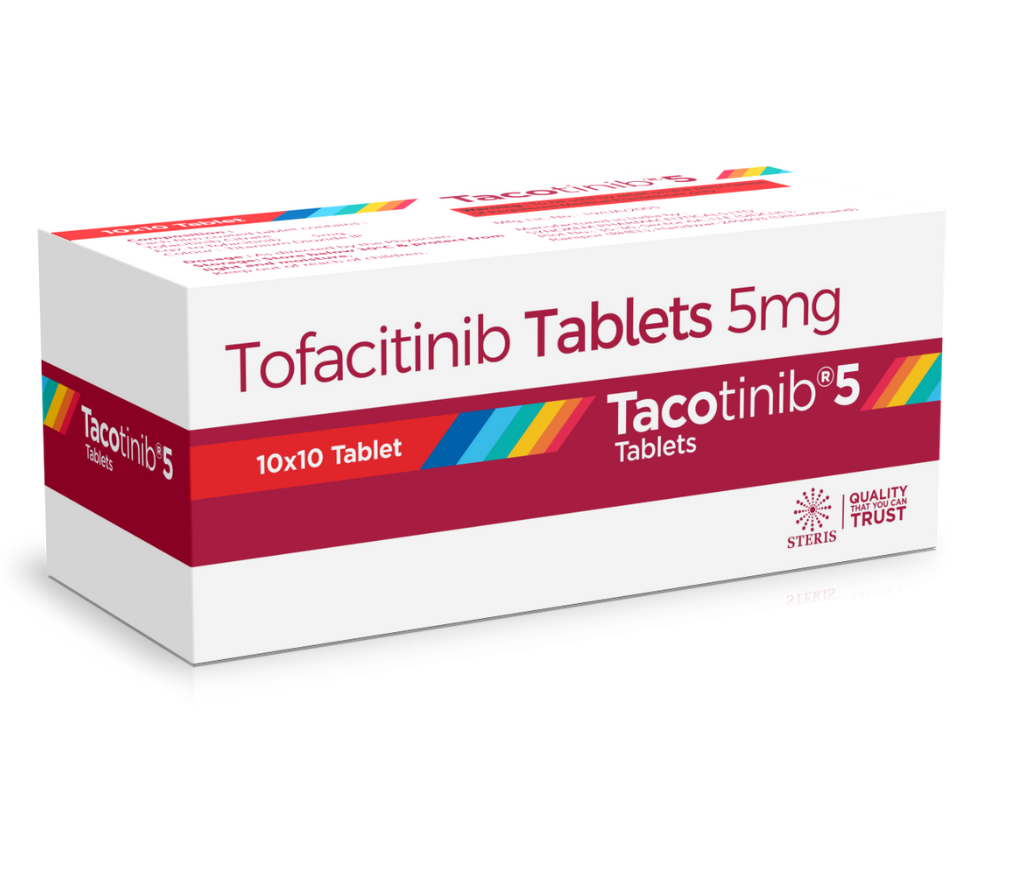
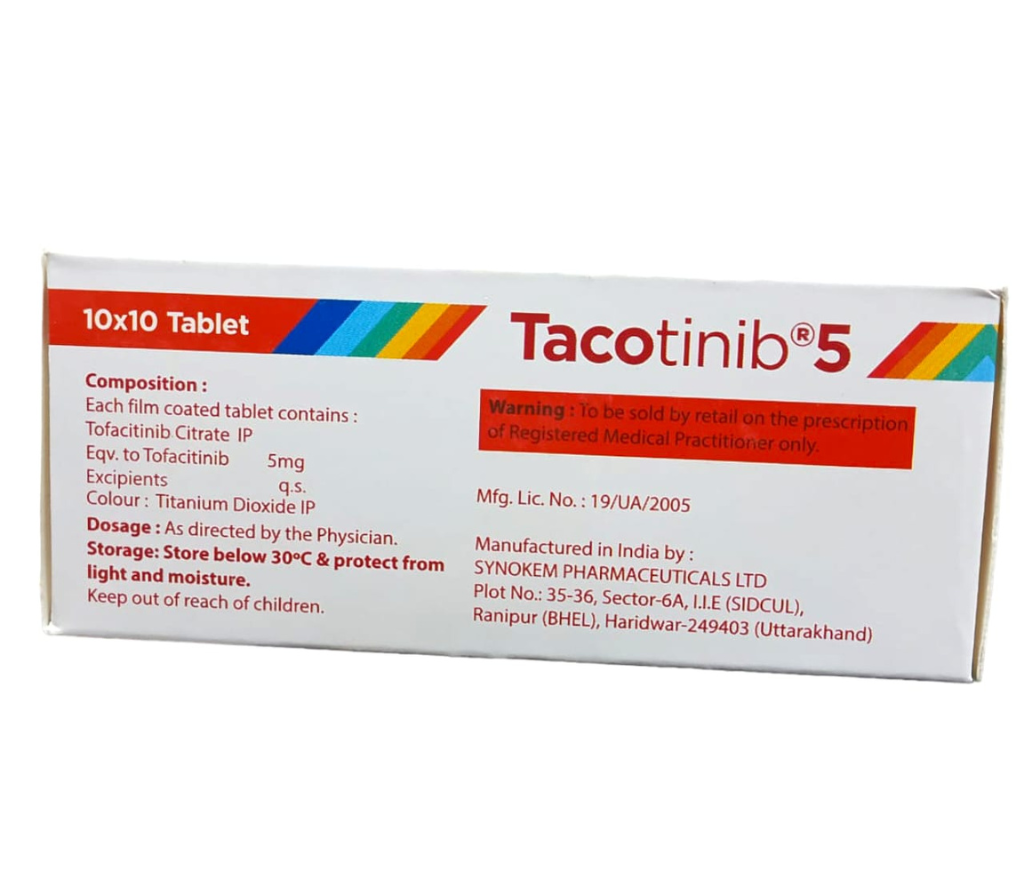
TACOTINIB 5
 Item requires a valid prescription
Manufactured By Steris Healthcare Pvt Ltd
Composition Tofacitinib Tab (5mg)
Rs 259.08
MRP Rs 370.11
(30% OFF)
Includes all taxes
Package SIZE
( For 10 Tablets )

100% Authentic
Products

Free
Shipping*

Products
Return Policy
Description:
Tofacitinib 5 mg is an oral medicine belonging to the Janus kinase (JAK) inhibitor class. It works by reducing signaling involved in immune and inflammatory responses. Depending on the country and approved product labeling, tofacitinib is used for certain inflammatory and autoimmune conditions.
The current U.S. DailyMed labeling for tofacitinib tablets lists indications including rheumatoid arthritis (RA), psoriatic arthritis (PsA), ankylosing spondylitis, polyarticular-course juvenile idiopathic arthritis, and ulcerative colitis. The label was revised in June 2026.
Because tofacitinib suppresses aspects of the immune response, its potential benefits need to be weighed against important risks. It carries prominent warnings concerning serious infections, malignancy, major cardiovascular events, thrombosis, and mortality.
Tofacitinib 5 mg Uses
The most important tofacitinib 5 mg uses are in inflammatory diseases where abnormal immune activity contributes to symptoms and tissue damage.
1. Rheumatoid Arthritis
Tofacitinib may be prescribed for adults with moderately to severely active rheumatoid arthritis when other treatment options have not worked adequately or have not been tolerated, according to applicable prescribing restrictions.
RA can cause persistent joint inflammation, pain, stiffness, swelling, and reduced physical function. By inhibiting JAK signaling, tofacitinib can reduce inflammatory activity and may help improve disease control.
2. Psoriatic Arthritis
Tofacitinib is also used for certain adults with active psoriatic arthritis. PsA can affect the joints as well as the skin and may cause pain, swelling, stiffness, and reduced mobility.
The potential treatment benefit is generally evaluated through changes in joint symptoms, physical function, and overall disease activity.
3. Ulcerative Colitis
Tofacitinib is an oral treatment option for certain adults with moderately to severely active ulcerative colitis. It can help control inflammation associated with the disease and may be used to induce or maintain remission under appropriate medical supervision.
Importantly, the dosage used for ulcerative colitis is not necessarily the same as the 5 mg dose used for some arthritis indications. Higher doses can be used for induction under specific prescribing instructions, so patients should never change the dose themselves.
4. Other Approved Uses
Current U.S. labeling also includes ankylosing spondylitis and polyarticular-course juvenile idiopathic arthritis. Approved uses vary by formulation, age group, country, and regulatory authority, so the local product information should always be checked.
Key Benefits of Tofacitinib 5 mg
The phrase “benefits of tofacitinib 5 mg” should be understood as potential treatment benefits rather than guaranteed results.
Potential benefits may include:
-
Reduction of inflammation associated with certain autoimmune conditions.
-
Improvement in joint pain, swelling, stiffness, and physical function in appropriate arthritis patients.
-
Better control of symptoms associated with active ulcerative colitis in eligible patients.
-
An oral treatment option that does not require an injection.
-
Potential maintenance of disease control when prescribed as part of an appropriate long-term treatment strategy.
Tofacitinib does not cure autoimmune disease, and it is not appropriate for everyone. Treatment decisions depend on disease severity, previous therapies, infection risk, cardiovascular risk, cancer history, laboratory findings, and other individual factors.
How Does Tofacitinib 5 mg Work?
Tofacitinib inhibits JAK enzymes involved in intracellular signaling from several cytokines. These signaling pathways help regulate immune and inflammatory responses.
By interfering with JAK signaling, tofacitinib can reduce certain inflammatory immune responses. This mechanism explains why it can be useful in conditions such as rheumatoid arthritis, psoriatic arthritis, ankylosing spondylitis, juvenile idiopathic arthritis, and ulcerative colitis.
At the same time, reducing immune activity can make it harder for the body to fight some infections. That is why appropriate screening and ongoing medical monitoring are important.
Tofacitinib 5 mg Dosage: What Patients Should Know
The correct tofacitinib 5 mg dosage depends on the condition being treated and individual patient factors.
For some adult inflammatory arthritis indications, the labeled immediate-release dose is 5 mg twice daily. However, this should not be interpreted as a universal dose for every person taking tofacitinib.
Ulcerative colitis has a different dosing strategy, and dosage adjustments may be necessary in people with certain kidney or liver problems or when interacting medicines are being used.
Patients should:
-
Take tofacitinib exactly as prescribed.
-
Avoid changing the dose without medical advice.
-
Tell the doctor about all prescription medicines, over-the-counter medicines, and supplements.
-
Ask what to do if a dose is missed.
-
Attend recommended laboratory and clinical follow-up appointments.
Common Tofacitinib 5 mg Side Effects
Possible tofacitinib 5 mg side effects include:
-
Upper respiratory tract infections
-
Headache
-
Diarrhea
-
Nausea
-
Cough
-
Increased cholesterol levels
-
Rash or acne
-
Shingles or other viral infections
-
Increased blood pressure
-
Changes in certain laboratory test results
Not every patient experiences these effects, and the severity can vary.
The FDA notes that common adverse effects associated with JAK inhibitors such as tofacitinib can include upper respiratory infections, sinus infections, bronchitis, headache, cough, increased cholesterol, increased blood pressure, rash, nausea, diarrhea, acne, and herpes-related infections.
Serious Risks and Tofacitinib Safety
This is the most important part of understanding tofacitinib.
Tofacitinib has a boxed warning for serious infections, mortality, malignancy, major adverse cardiovascular events (MACE), and thrombosis. Serious infections can include tuberculosis and bacterial, fungal, viral, or other opportunistic infections.
The FDA has also concluded from a large randomized safety trial that tofacitinib is associated with increased risks of serious cardiovascular events, cancer, blood clots, and death compared with TNF blockers in the studied rheumatoid arthritis population. The FDA subsequently required prominent warnings and advised clinicians to consider individual risk factors when prescribing these medicines.
Patients should seek urgent medical attention for symptoms such as:
-
Sudden chest pain or pressure
-
Sudden shortness of breath
-
Swelling or pain in an arm or leg
-
Sudden weakness or numbness
-
Difficulty speaking
-
Severe or unusual neurological symptoms
-
Signs of a serious infection
People with cardiovascular risk factors, a history of blood clots, current or previous smoking, or certain cancer risks may require particularly careful benefit-risk assessment.
Who Should Be Careful With Tofacitinib 5 mg?
Before treatment, patients should tell their healthcare professional about previous or current infections, tuberculosis exposure, cancer, heart disease, blood clots, liver or kidney disease, pregnancy plans, breastfeeding, and vaccination history.
Doctors may recommend screening for tuberculosis and other infections before treatment. Vaccination status may also need review before starting therapy.
Tofacitinib can interact with other medicines, including some drugs that affect its metabolism or also suppress the immune system. Combining medicines without medical supervision can increase risk.
The current patient information specifically emphasizes the risk of serious infections and recommends medical evaluation for symptoms suggestive of tuberculosis or other significant infections.
Tofacitinib 5 mg: Bottom Line
Tofacitinib 5 mg is a prescription JAK inhibitor used for selected inflammatory and autoimmune conditions. Its potential benefits include reducing inflammatory activity and improving symptoms or disease control in appropriately selected patients.
However, it is not a routine painkiller or general-purpose anti-inflammatory medicine. Because it can affect immune function and has important risks—including serious infection, cancer, cardiovascular events, blood clots, and death—it should be taken only under appropriate medical supervision.
For accurate treatment decisions, patients should use the prescribing information applicable to their country and discuss their personal medical history with a qualified healthcare professional. The current U.S. DailyMed label was updated in June 2026, making it an important reference for current prescribing and safety information.
Frequently Asked Questions
1. What is tofacitinib 5 mg used for?
Tofacitinib 5 mg is used for certain inflammatory conditions, including rheumatoid arthritis and psoriatic arthritis, and may be part of treatment for other approved conditions depending on the formulation and local labeling.
2. Is tofacitinib 5 mg a steroid?
No. Tofacitinib is a JAK inhibitor, not a corticosteroid. It works by modifying specific immune signaling pathways.
3. How does tofacitinib 5 mg work?
It inhibits Janus kinase enzymes involved in cytokine signaling. This reduces certain immune and inflammatory responses.
4. Can tofacitinib 5 mg treat rheumatoid arthritis?
Yes. Tofacitinib is an approved treatment for certain patients with rheumatoid arthritis, subject to applicable prescribing criteria and medical assessment.
5. Can tofacitinib 5 mg be used for psoriatic arthritis?
Yes. Tofacitinib is indicated for certain patients with active psoriatic arthritis under current U.S. labeling.
6. Is tofacitinib 5 mg used for ulcerative colitis?
Yes, tofacitinib is used for certain adults with moderately to severely active ulcerative colitis. However, ulcerative-colitis dosing can differ from the 5 mg twice-daily regimen used for some arthritis indications.
7. What are the common side effects of tofacitinib 5 mg?
Commonly reported effects can include upper respiratory infections, headache, diarrhea, nausea, cough, increased cholesterol, rash, acne, and certain viral infections.
8. Is tofacitinib 5 mg safe for long-term use?
Long-term use may be appropriate for selected patients, but it requires ongoing assessment. Serious infections, cardiovascular events, cancer, blood clots, and other risks need to be considered throughout treatment.
9. Does tofacitinib 5 mg weaken the immune system?
It modifies immune activity and can reduce the body's ability to fight certain infections. This is one reason infection screening and monitoring are important.
10. Can tofacitinib 5 mg cause infections?
Yes. Serious bacterial, fungal, viral, opportunistic infections, and tuberculosis have been reported. Patients should promptly report symptoms of significant infection.
11. Does tofacitinib 5 mg increase the risk of blood clots?
Tofacitinib carries a warning for thrombosis. The FDA has reported an increased risk of blood clots in its safety evaluation, making individual risk assessment particularly important.
12. Can tofacitinib 5 mg increase cholesterol?
Yes. Increased cholesterol levels can occur during treatment, so a healthcare professional may recommend laboratory monitoring.
13. Can I stop tofacitinib 5 mg suddenly?
Do not stop or change the medicine without speaking with your prescriber. Stopping treatment may allow the underlying inflammatory disease to become active again.
14. Should I take tofacitinib 5 mg with food?
Tofacitinib immediate-release tablets can generally be taken with or without food, but patients should follow the instructions provided with their specific prescription and formulation.
15. What should I do if I miss a tofacitinib 5 mg dose?
Follow the missed-dose instructions provided by your prescriber or pharmacist. Do not take extra doses unless specifically instructed by a healthcare professional.
16. Can tofacitinib 5 mg be taken with other medicines?
Sometimes, but interactions are possible. Tell your doctor about every prescription medicine, over-the-counter product, supplement, and immunosuppressive medicine you use.
17. Who should not take tofacitinib 5 mg?
Suitability depends on the person's condition and medical history. Active serious infections, tuberculosis, certain cancers, cardiovascular risks, blood-clot history, liver or kidney problems, pregnancy considerations, and interacting medicines may affect treatment decisions.
18. Is tofacitinib 5 mg available as an oral tablet?
Yes. Immediate-release tofacitinib is available as an oral tablet, while other formulations also exist. The formulation and strength should match the prescription.
19. Is tofacitinib 5 mg the same as Xeljanz?
Xeljanz is a brand name for tofacitinib. Generic tofacitinib tablets contain the same active ingredient, but approved indications, formulations, manufacturers, and regulatory requirements can vary by market.
20. What is the most important thing to know about tofacitinib 5 mg?
The key point is that tofacitinib 5 mg can provide meaningful control of certain inflammatory diseases but is not risk-free. It requires prescription-based selection, appropriate screening, monitoring, and individualized benefit-risk assessment.

