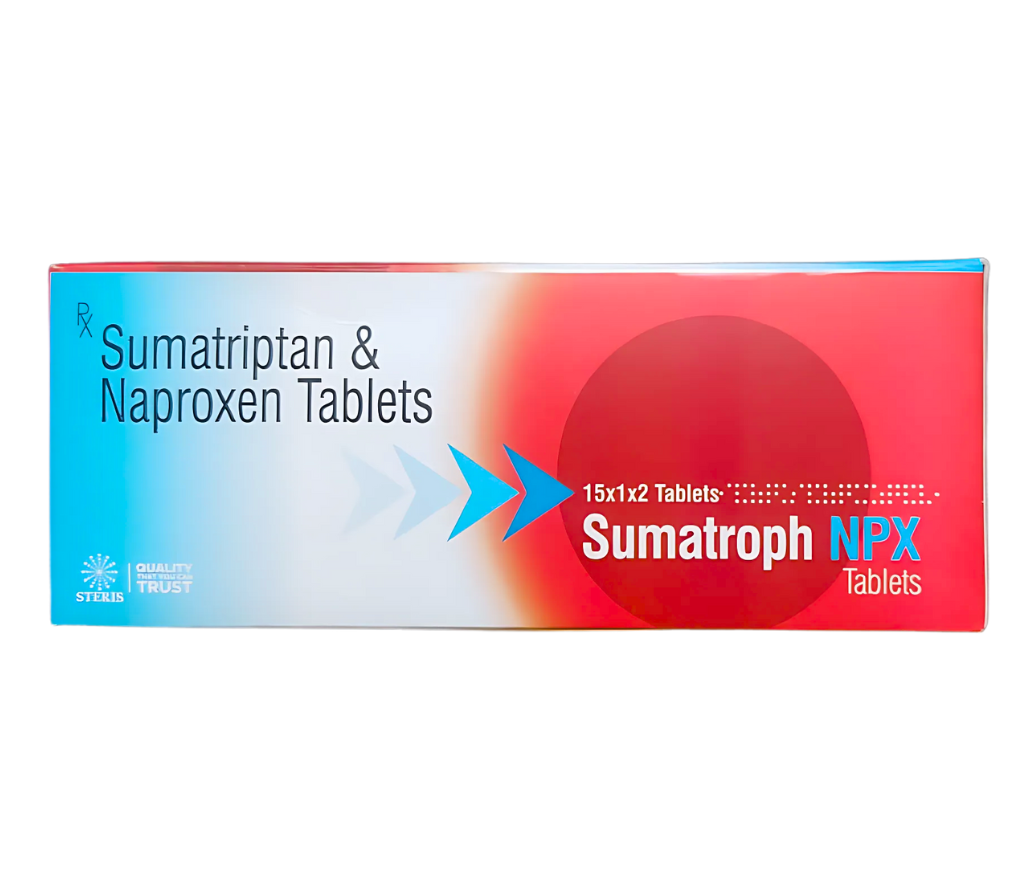


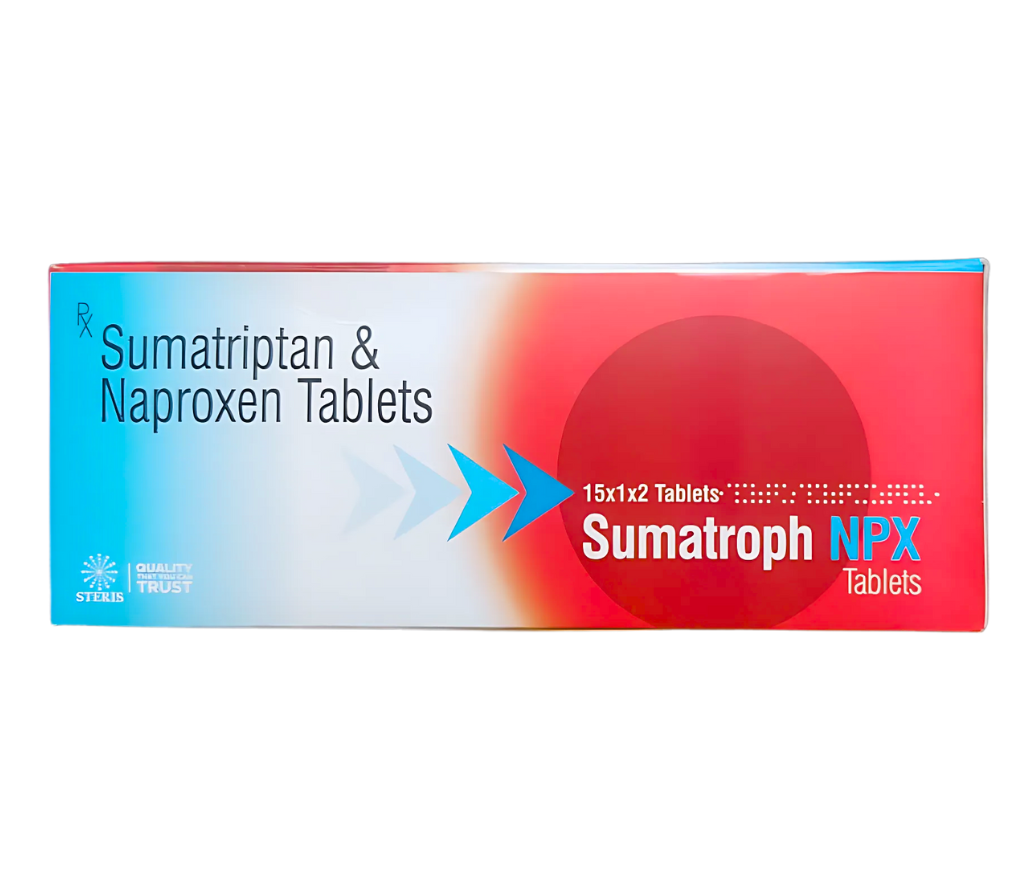



SUMATROPH NPX
 Item requires a valid prescription
Manufactured By Steris Healthcare Pvt Ltd
Composition sumatriptan and naproxen tablet
Rs 72.80
MRP Rs 104.00
(30% OFF)
Includes all taxes
Package SIZE
( For 2 TABLETS )

100% Authentic
Products

Free
Shipping*

Products
Return Policy
Description:
Sumatriptan and naproxen tablet uses primarily relate to the acute treatment of migraine attacks, including migraine with or without aura. This prescription combination brings together two medicines with different but complementary actions: sumatriptan, a triptan that targets migraine-related nerve and blood-vessel pathways, and naproxen sodium, a nonsteroidal anti-inflammatory drug (NSAID) that helps reduce pain and inflammation.
The combination is designed for people who have an established diagnosis of migraine and need treatment when an attack occurs. It is not intended to prevent future migraine attacks and is not a general-purpose treatment for every type of headache. Current U.S. prescribing information identifies sumatriptan/naproxen sodium tablets for the acute treatment of migraine with or without aura in adults and certain pediatric patients aged 12 years and older.
Because this medicine contains an NSAID and a triptan, it has important cardiovascular, gastrointestinal, neurological and drug-interaction precautions. Patients should use it only as prescribed and should not combine it with additional naproxen, other NSAIDs, or another triptan without medical advice.
What Are Sumatriptan and Naproxen Tablets Used For?
The primary sumatriptan and naproxen tablet uses are the treatment of an established acute migraine attack.
Migraine can cause moderate-to-severe throbbing or pulsating head pain, often accompanied by nausea, vomiting, and sensitivity to light or sound. Some people experience an aura before or during the headache, which can include visual disturbances or other temporary neurological symptoms.
The combination tablet addresses migraine through two different mechanisms:
-
Sumatriptan acts on serotonin 5-HT1B/1D receptors and helps interrupt migraine-related pain signaling.
-
Naproxen sodium is an NSAID that reduces the production of substances involved in pain and inflammation.
-
Using the two active ingredients together can provide both migraine-specific treatment and longer-lasting anti-inflammatory pain relief.
The official prescribing information states that the combination should be used only when a clear diagnosis of migraine has been established. It is not indicated for migraine prevention or cluster headache.
How Does Sumatriptan and Naproxen Work?
Understanding how the two ingredients work explains why they are combined in one tablet.
Sumatriptan
Sumatriptan is a triptan and selective serotonin receptor agonist. It acts on specific serotonin receptors involved in migraine. By affecting blood vessels and pain pathways associated with migraine, sumatriptan helps relieve the symptoms of an acute attack.
Naproxen Sodium
Naproxen sodium belongs to the NSAID class. It works by reducing the body's production of substances that contribute to pain and inflammation. Naproxen is widely used for pain and inflammatory conditions, but it also carries important NSAID-related cardiovascular and gastrointestinal risks.
Why Are They Combined?
A migraine attack can involve several mechanisms, including abnormal nerve signaling and inflammatory pain pathways. Combining a migraine-specific medicine with an NSAID can address different aspects of the attack.
The result is a prescription treatment specifically formulated for acute migraine relief, rather than a daily medicine designed to prevent migraines.
Key Benefits of Sumatriptan and Naproxen Tablets
1. Targets Acute Migraine Attacks
The most important benefit is that the combination is specifically designed to treat an ongoing migraine attack rather than ordinary headache pain. It may be prescribed for migraine with or without aura when appropriate.
2. Combines Two Pain-Relief Mechanisms
Sumatriptan provides migraine-specific activity, while naproxen contributes NSAID-based pain and inflammation relief. This dual approach can be useful for appropriately selected patients.
3. Convenient Combination Therapy
Instead of taking separate sumatriptan and naproxen tablets, a fixed-dose combination provides both active ingredients in one tablet.
4. Can Address Recurring Migraine Symptoms
Migraine may involve headache pain as well as nausea and sensitivity to light and sound. Sumatriptan is designed to treat migraine symptoms rather than simply acting as a general painkiller.
5. Useful When Prescribed for Established Migraine
The medicine is intended for people whose symptoms have been evaluated and diagnosed as migraine. This distinction is important because new, unusually severe, or unexplained headaches can have causes other than migraine.
Sumatriptan and Naproxen Tablet Dosage
The correct dose depends on the specific product strength, age, medical history, liver function, cardiovascular risk and prescribing instructions.
In the current U.S. labeling for one fixed-dose product, adult treatment uses an 85 mg sumatriptan/500 mg naproxen sodium tablet, while a lower-strength formulation is also available for certain patients. The label states that adults may take one 85/500 mg tablet for an acute migraine, with a maximum of two tablets in 24 hours separated by at least two hours.
However, these instructions are product- and patient-specific. Do not use the dosage from another brand or website as a substitute for your own prescription.
Use the lowest effective dose for the shortest appropriate duration, as directed by your healthcare professional.
How Should Sumatriptan and Naproxen Tablets Be Taken?
Follow the instructions supplied with your prescription.
The current U.S. prescribing information states that the combination may be taken with or without food and that tablets should not be split, crushed, or chewed.
Important points include:
-
Take the tablet exactly as prescribed.
-
Use it for an established migraine attack.
-
Do not exceed the prescribed daily maximum.
-
Do not take another triptan within the restricted interval specified by your prescriber or product labeling.
-
Do not add extra naproxen or another NSAID unless your healthcare professional specifically approves it.
-
Do not use it as a daily migraine-prevention medicine.
If your migraine does not respond as expected, contact your healthcare professional rather than repeatedly taking additional doses.
Common Side Effects of Sumatriptan and Naproxen
Side effects can occur because the tablet contains two active medicines.
Possible effects associated with sumatriptan include:
-
Tingling
-
Flushing
-
Warm or cold sensations
-
Dizziness
-
Drowsiness
-
Weakness or tiredness
-
Nausea
-
Upset stomach
MedlinePlus identifies these among possible adverse effects of sumatriptan.
Naproxen can also cause gastrointestinal symptoms, dizziness, headache, drowsiness and other adverse effects.
If symptoms are persistent, severe, or unusual, contact your healthcare professional.
Serious Side Effects and Safety Warnings
Although serious reactions are uncommon, the combination has important warnings.
Cardiovascular Risks
Sumatriptan can cause blood-vessel constriction and is contraindicated in people with certain cardiovascular conditions, including ischemic coronary artery disease and coronary vasospasm. The combination is also contraindicated in several other cardiovascular and cerebrovascular conditions.
Naproxen, like other NSAIDs, can increase the risk of serious cardiovascular thrombotic events such as heart attack and stroke. These risks may occur early in treatment and may increase with longer use.
Seek emergency medical attention for symptoms such as:
-
Severe or unusual chest pain
-
Chest pressure or tightness
-
Shortness of breath
-
Sudden weakness
-
Trouble speaking
-
Fainting
-
New severe neurological symptoms
Gastrointestinal Bleeding
Because naproxen is an NSAID, the combination can cause stomach or intestinal ulcers, bleeding, or perforation. These events can occur without warning and may be serious or life-threatening.
Contact a healthcare professional urgently if you develop:
-
Vomiting blood
-
Black or bloody stools
-
Severe or persistent stomach pain
-
Unexplained weakness or faintness
People with a history of ulcers or gastrointestinal bleeding may have a higher risk.
Serotonin Syndrome and Drug Interactions
Sumatriptan affects serotonin pathways. Serotonin syndrome is a rare but potentially serious reaction that can occur when triptans are combined with certain serotonergic medicines.
The prescribing information specifically identifies possible interactions with SSRIs, SNRIs, tricyclic antidepressants and MAO inhibitors. Symptoms can include agitation, hallucinations, rapid heartbeat, changes in blood pressure, high body temperature, muscle abnormalities, nausea, vomiting or diarrhea.
Tell your doctor about every prescription medicine, over-the-counter medicine, supplement and herbal product you take.
Avoid Combining Multiple NSAIDs
Because the combination tablet already contains naproxen, adding ibuprofen, additional naproxen, aspirin-containing pain medicines or another NSAID can increase the risk of adverse effects.
The product medication guide specifically advises patients to speak with their healthcare provider before using other pain or fever medicines because they may contain an NSAID.
Who Should Avoid Sumatriptan and Naproxen?
The medicine may not be appropriate for people with certain conditions.
Depending on the specific product and patient circumstances, contraindications include:
-
Coronary artery disease
-
Coronary artery vasospasm
-
Previous stroke or transient ischemic attack
-
Peripheral vascular disease
-
Uncontrolled hypertension
-
Certain cardiac conduction disorders
-
Ischemic bowel disease
-
Recent CABG surgery
-
Certain serious NSAID allergies
-
Severe hepatic impairment
-
Allergy to sumatriptan or naproxen
-
Recent use of another triptan or ergot-type medicine
-
Recent or current use of an MAO-A inhibitor
The exact contraindications should always be checked against the product's current prescribing information.
Pregnancy, Breastfeeding and Other Precautions
If you are pregnant, planning pregnancy, or breastfeeding, speak with your healthcare professional before using sumatriptan and naproxen.
Naproxen and other NSAIDs have pregnancy-related safety considerations, particularly later in pregnancy. Sumatriptan also requires individualized assessment during pregnancy. Your clinician can weigh potential benefits and risks based on your circumstances.
People with kidney disease, liver disease, hypertension, heart disease, asthma, stomach ulcers, gastrointestinal bleeding or medication allergies should tell their healthcare provider before treatment.
Can Sumatriptan and Naproxen Prevent Migraines?
No. Sumatriptan and naproxen tablets are intended for acute treatment, not migraine prevention. Current prescribing information specifically states that the combination is not indicated for prophylactic therapy.
If you experience frequent migraines, ask a healthcare professional about preventive treatment options. Preventive therapy can involve prescription medicines, lifestyle strategies and identification of individual migraine triggers.
Medication-Overuse Headache
Using acute migraine medicines too frequently can contribute to medication-overuse headache, in which headaches become more frequent or persistent.
The current combination-product labeling warns that overuse of acute migraine medicines, including triptans and combinations of acute headache medicines, can exacerbate headaches.
If you regularly need acute migraine medication on many days each month, discuss your treatment plan with a healthcare professional instead of increasing your dose independently.
Can You Buy Sumatriptan and Naproxen Tablets Online?
Sumatriptan and naproxen combination tablets are prescription medicines in markets where approved products are available.
For transactional searches such as “buy sumatriptan and naproxen tablets online,” use a licensed pharmacy or authorized dispensing service and provide a valid prescription when required. Verify the medicine's strength, manufacturer, expiry date and packaging before use.
Avoid websites that offer prescription migraine medicines without appropriate medical oversight or make claims that a medicine is guaranteed to cure migraine.
Sumatriptan and Naproxen Tablet Uses: Quick Summary
The main sumatriptan and naproxen tablet uses are the acute treatment of migraine with or without aura in appropriately diagnosed patients. Sumatriptan targets migraine-specific pathways, while naproxen provides NSAID-based pain relief.
The combination can offer convenient dual-mechanism treatment, but it is not suitable for everyone. Cardiovascular disease, uncontrolled hypertension, previous stroke, gastrointestinal ulcers or bleeding, NSAID allergies, liver problems and certain medication combinations can affect whether it is appropriate.
Use the medicine exactly as prescribed, avoid exceeding the recommended frequency, and seek urgent care for severe chest pain, signs of gastrointestinal bleeding, severe allergic reactions or other serious symptoms.
Conclusion
Sumatriptan and naproxen tablet uses center on treating an established acute migraine attack. The combination contains a migraine-specific triptan and an NSAID, allowing two complementary approaches to migraine pain.
The principal potential benefits include targeted migraine treatment, pain reduction and convenient combination dosing. However, the medicine also carries important risks, including cardiovascular events, gastrointestinal bleeding, medication-overuse headache, allergic reactions and possible serotonin syndrome with certain medicines.
For safe and effective treatment, obtain the medicine through a legitimate prescription channel, follow the exact strength and dosing instructions provided by your healthcare professional, and disclose your complete medication and medical history before treatment.
Frequently Asked Questions
1. What are sumatriptan and naproxen tablets used for?
They are used for the acute treatment of migraine attacks, including migraine with or without aura, when prescribed for an established migraine diagnosis.
2. What is the main use of sumatriptan and naproxen tablets?
The main use is to relieve symptoms during an acute migraine attack rather than prevent future migraines.
3. How do sumatriptan and naproxen work together?
Sumatriptan acts on migraine-related serotonin receptors, while naproxen reduces pain and inflammatory signaling as an NSAID.
4. Are sumatriptan and naproxen tablets used for regular headaches?
They are specifically intended for migraine and should not be used for unexplained or ordinary headaches without appropriate medical advice.
5. Can sumatriptan and naproxen stop a migraine?
They are designed to treat an acute migraine attack and can reduce migraine symptoms in appropriate patients.
6. Do sumatriptan and naproxen prevent migraines?
No. The combination is not indicated for migraine prevention.
7. What are the common side effects of sumatriptan and naproxen?
Possible effects include dizziness, drowsiness, tingling, flushing, nausea, stomach upset, weakness and other gastrointestinal symptoms.
8. Can sumatriptan and naproxen cause stomach problems?
Yes. Because the combination contains naproxen, it can cause stomach irritation, ulcers and gastrointestinal bleeding.
9. Can sumatriptan and naproxen cause chest pain?
Chest pressure, tightness or pain can occur with sumatriptan and may represent a serious cardiovascular reaction. Seek urgent medical evaluation for severe or unusual chest symptoms.
10. Can I take ibuprofen with sumatriptan and naproxen?
Do not add ibuprofen or another NSAID without medical advice because the combination already contains naproxen and additional NSAIDs can increase adverse-effect risks.
11. Can I take another triptan with sumatriptan and naproxen?
No. The product is contraindicated with another 5-HT1 agonist within the specified restricted period. Check your prescription and speak with your healthcare professional before combining migraine medicines.
12. Can sumatriptan and naproxen cause serotonin syndrome?
Serotonin syndrome is possible, particularly when sumatriptan is combined with certain serotonergic medicines such as SSRIs, SNRIs, TCAs or MAO inhibitors.
13. Can people with heart disease take sumatriptan and naproxen?
Some people with cardiovascular disease should not take this combination. It is contraindicated in conditions such as ischemic coronary artery disease and coronary vasospasm.
14. Can sumatriptan and naproxen be taken during pregnancy?
Pregnancy requires individualized medical assessment, particularly because naproxen is an NSAID. Speak with your healthcare professional before taking the combination during pregnancy.
15. Can sumatriptan and naproxen be taken with food?
The current U.S. prescribing information states that the combination may be administered with or without food.
16. How often can I take sumatriptan and naproxen?
The frequency depends on the exact product strength and your prescription. For the U.S. 85/500 mg adult product, the labeled maximum is two tablets in 24 hours, separated by at least two hours.
17. Can sumatriptan and naproxen cause medication-overuse headaches?
Yes. Frequent use of acute migraine medicines can worsen headache frequency and contribute to medication-overuse headache.
18. Is sumatriptan and naproxen a prescription medicine?
Yes, combination products are prescription medicines in markets where they are approved.
19. Can sumatriptan and naproxen treat cluster headaches?
No. The current U.S. labeling does not indicate the combination for cluster headache treatment.
20. What should I do if sumatriptan and naproxen do not relieve my migraine?
Do not repeatedly take extra doses beyond the prescribed limit. Contact your healthcare professional, particularly if the medicine repeatedly fails to control your attacks or your headache pattern changes.
21. Can I buy sumatriptan and naproxen tablets online?
Where legally available, they should be obtained through a legitimate, licensed pharmacy and with a prescription when required. Verify the product and strength before use.
22. Who should not take sumatriptan and naproxen?
People with certain cardiovascular or cerebrovascular diseases, uncontrolled hypertension, serious NSAID allergies, certain gastrointestinal conditions, severe liver impairment and particular drug interactions may need to avoid it.
23. Is sumatriptan and naproxen better than taking sumatriptan alone?
Not necessarily for everyone. The combination may be appropriate for some patients, but the choice depends on migraine characteristics, medical history, previous treatment response and the risks associated with naproxen.
24. What is the most important safety point about sumatriptan and naproxen?
Do not self-medicate or exceed the prescribed dose. Because the medicine contains both a triptan and an NSAID, it has important cardiovascular, gastrointestinal and drug-interaction warnings.
Available Substitutes