


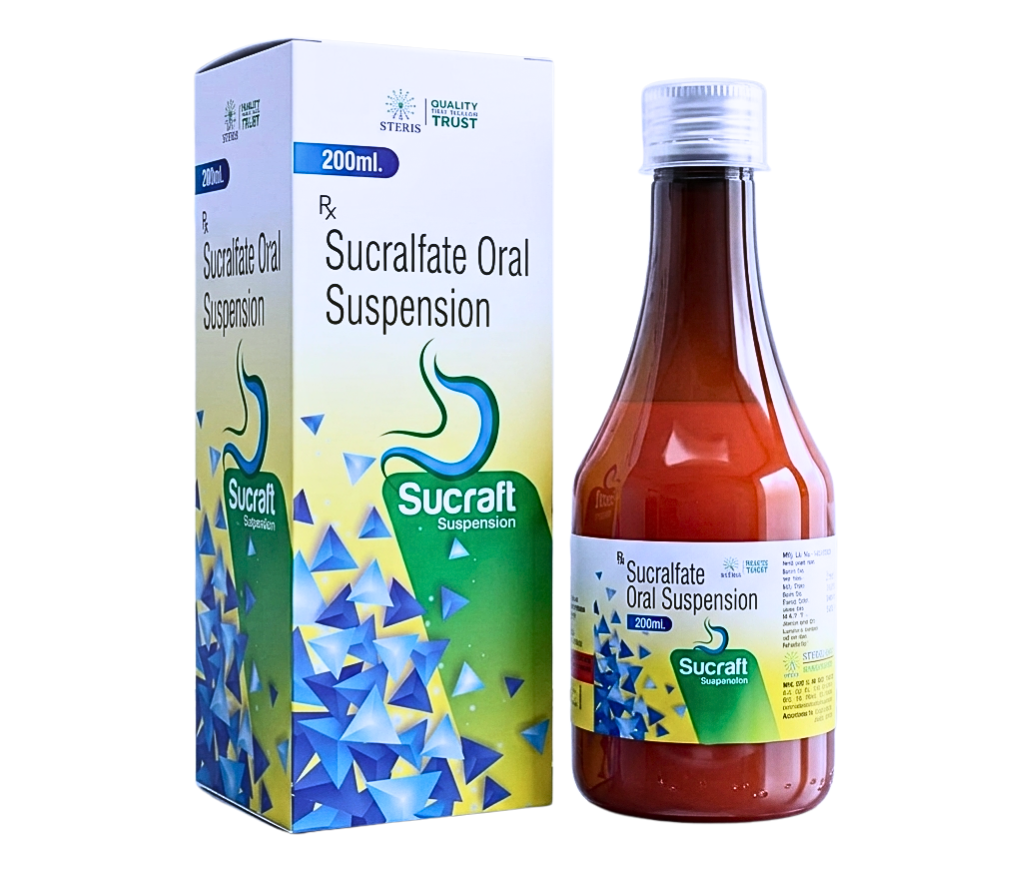
SUCRAFT PLAIN SUSP
 Item requires a valid prescription
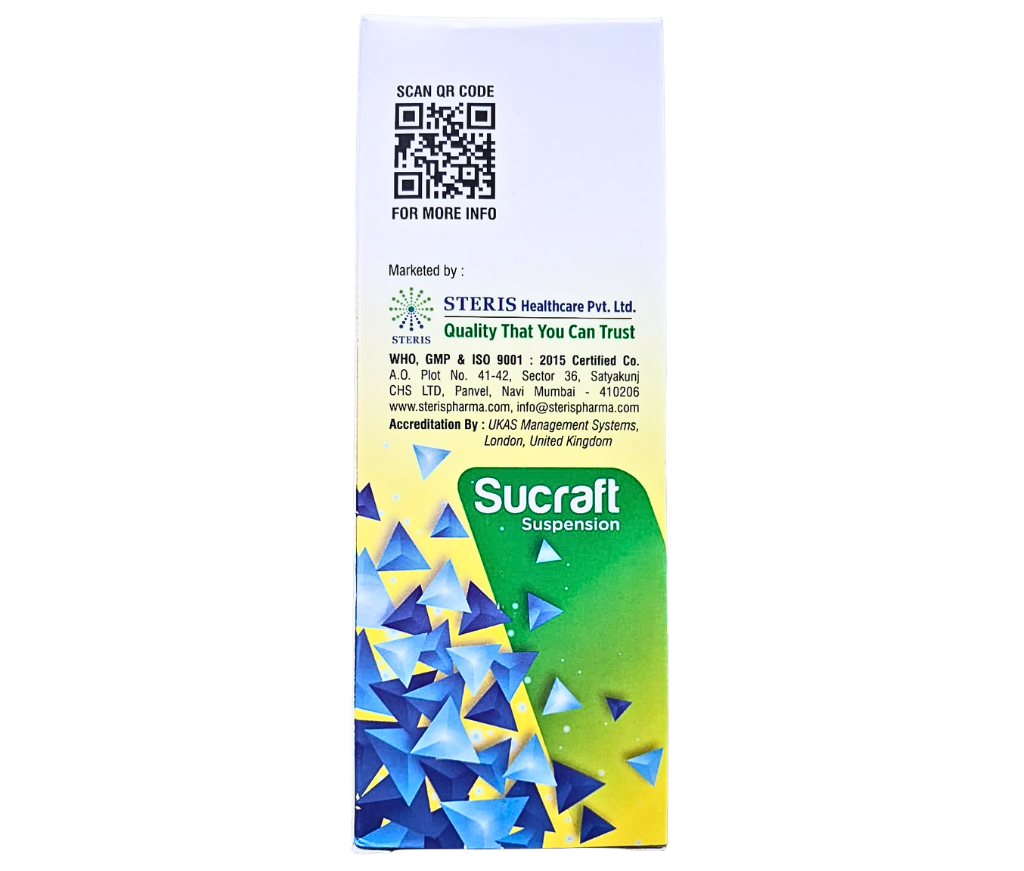
Manufactured By Steris Healthcare Pvt Ltd
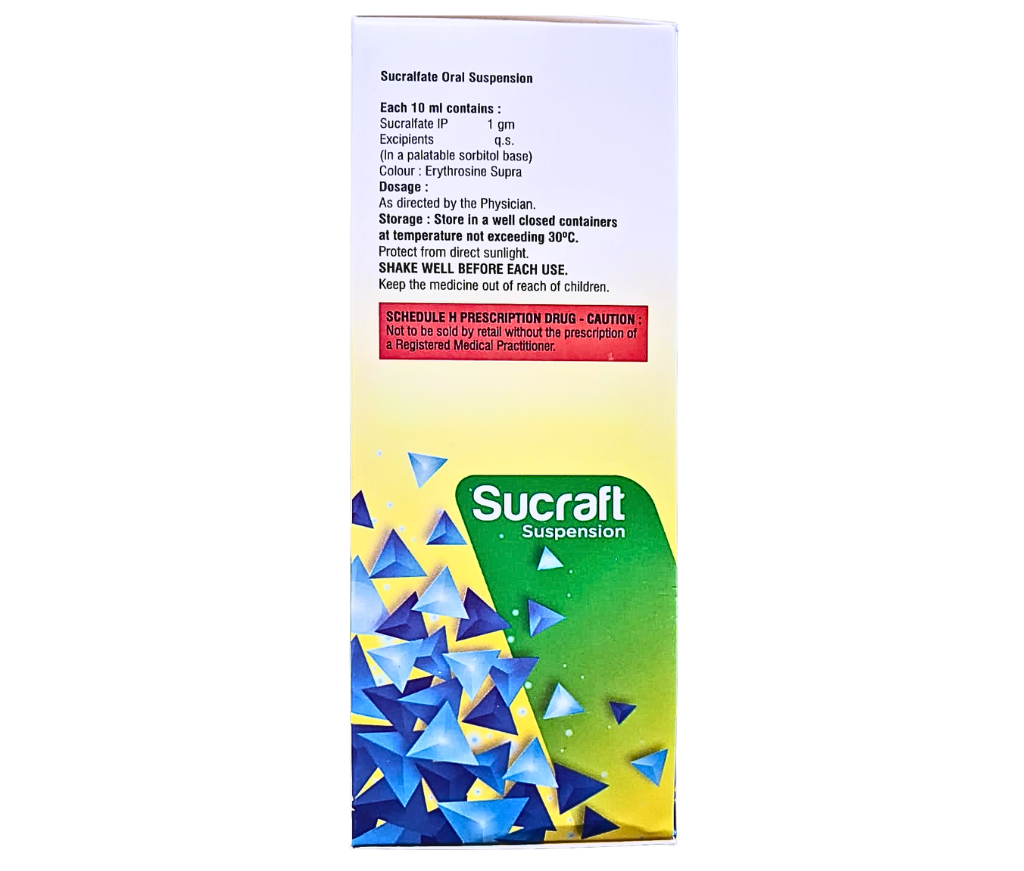
Composition sucralfate suspension
Rs 101.07
MRP Rs 144.38
(30% OFF)
Includes all taxes
Package SIZE
( 200 ml )

100% Authentic
Products

Free
Shipping*

Products
Return Policy
Description:
Sucralfate suspension is a prescription gastrointestinal medicine used to treat and prevent duodenal ulcers, gastric ulcers, and GERD-related mucosal irritation. It works by forming a protective, paste-like barrier over ulcerated stomach and intestinal tissue, shielding it from acid, pepsin, and bile so the lining can heal naturally. Unlike antacids or proton pump inhibitors, sucralfate suspension does not significantly neutralize stomach acid — it physically coats the wound site. It is typically taken on an empty stomach, 1 hour before meals and at bedtime, in liquid (suspension) form for easier swallowing and faster mucosal contact compared to tablets. Common side effects include constipation, dry mouth, and nausea; serious effects are rare.
What Is Sucralfate Suspension?
Sucralfate suspension is the liquid oral formulation of sucralfate, a locally acting cytoprotective agent derived from sucrose octasulfate complexed with aluminum hydroxide. It is widely prescribed by gastroenterologists and general physicians for patients suffering from peptic ulcer disease, stress-related mucosal damage, and gastroesophageal reflux disease (GERD)-associated erosions.
The suspension form is often preferred over tablets because it coats a larger surface area of the gastrointestinal (GI) tract more evenly and is easier to administer to patients who have difficulty swallowing tablets, including elderly patients and those in critical or post-surgical care.
Sucralfate suspension is available as a prescription-only medicine and should be taken strictly as advised by a registered medical practitioner.
Clinical Indications
| Condition | How Sucralfate Suspension Helps |
|---|---|
| Duodenal ulcers | Forms a protective coating over the ulcer base, accelerating healing |
| Gastric (stomach) ulcers | Shields eroded mucosa from acid and pepsin exposure |
| GERD / reflux esophagitis | Reduces mucosal irritation from acid reflux |
| Stress-induced gastric ulcers (ICU/critical care) | Used prophylactically in hospitalized, critically ill patients |
| NSAID-induced gastric erosions | Supports mucosal repair in patients on long-term NSAID therapy |
| Post-radiation or chemotherapy-induced mucositis | Sometimes used off-label to soothe oral/esophageal mucosal injury (under specialist guidance) |
Mechanism of Action
Sucralfate suspension works through a non-systemic, localized protective mechanism:
- In the acidic environment of the stomach, sucralfate reacts to form a viscous, paste-like gel.
- This gel binds selectively and preferentially to the proteinaceous exudate at the base of ulcers and erosions — essentially "seeking out" damaged tissue.
- The adherent barrier physically blocks acid, pepsin, and bile salts from further irritating the wound.
- It also stimulates local prostaglandin production and epidermal growth factor binding, both of which support mucosal repair and blood flow to the healing site.
- Because sucralfate is minimally absorbed into systemic circulation, its action remains largely confined to the GI lining, which contributes to its favorable safety profile.
Key Benefits of Sucralfate Suspension
- Targeted mucosal protection — adheres specifically to ulcerated or damaged tissue rather than coating healthy lining indiscriminately
- Minimal systemic absorption — reduces risk of body-wide side effects compared to some other GI medications
- Fast-acting liquid formulation — suspension form allows quicker and more even mucosal contact than tablets
- Low potential for acid-related rebound — unlike some acid-suppressing therapies, it does not significantly alter gastric pH
- Suitable for patients with swallowing difficulty — ideal for elderly, post-operative, or critically ill patients
- Complementary use — can be combined with acid-suppressing therapy (e.g., PPIs or H2 blockers) under medical guidance for comprehensive ulcer management
- Supports prevention of stress ulcers in hospitalized and ICU patients
Dosage Guidelines
- Standard adult dose: Typically taken 1 hour before meals and at bedtime, on an empty stomach, up to four times daily as prescribed
- Duration: Usually continued for 4–8 weeks for active ulcer healing, or as directed
- Administration tip: Shake the suspension well before use; avoid taking it within 2 hours of other oral medications, as sucralfate can interfere with the absorption of certain drugs (e.g., antibiotics like tetracyclines and fluoroquinolones, phenytoin, digoxin, and levothyroxine)
- Missed dose: Take as soon as remembered unless it is close to the next dose; do not double the dose
Side Effects
Common Side Effects
- Constipation (most frequently reported)
- Dry mouth
- Nausea
- Mild stomach discomfort or bloating
- Indigestion
Less Common / Serious Side Effects
- Dizziness
- Skin rash or itching (hypersensitivity)
- Back pain
- Aluminum accumulation with long-term use in patients with kidney impairment (requires medical monitoring)
- Bezoar formation (rare, typically in critically ill or tube-fed patients)
When to seek medical attention: Persistent constipation, signs of allergic reaction (rash, swelling, difficulty breathing), or unusual fatigue in patients with kidney disease should be reported to a doctor promptly.
Substitutes & Alternative Therapies Comparison
| Medicine | Class | Primary Mechanism | Best Suited For |
|---|---|---|---|
| Sucralfate Suspension | Mucosal protectant | Physical barrier over ulcer | Localized ulcer/erosion healing |
| Omeprazole / Pantoprazole | Proton Pump Inhibitor (PPI) | Reduces acid production | GERD, acid-driven ulcers |
| Ranitidine / Famotidine | H2 Receptor Blocker | Reduces histamine-driven acid secretion | Mild to moderate acid reflux |
| Antacids (Mg/Al hydroxide) | Acid neutralizer | Immediate acid neutralization | Quick, short-term symptom relief |
Precautions
- Not recommended for patients with severe kidney impairment without dose adjustment and monitoring, due to aluminum content
- Space out administration from other oral medicines by at least 2 hours to avoid absorption interference
- Use with caution in pregnant or breastfeeding women — only under medical supervision
- Inform your doctor about all current medications before starting sucralfate suspension
- Not a substitute for lifestyle and dietary modification in acid reflux management
- Keep out of reach of children; store as per label instructions
Conclusion
Sucralfate suspension remains a trusted, well-tolerated option for healing and protecting the gastrointestinal lining in patients with peptic ulcers, GERD-related mucosal damage, and stress-induced gastric erosions. Its localized, barrier-forming action offers a favorable safety profile with minimal systemic absorption, making it a valuable addition to ulcer management — often used alongside acid-suppressing therapies for faster, more complete healing. As with any prescription medicine, sucralfate suspension should only be used under the guidance of a qualified healthcare provider, who can determine the right dose, duration, and combination therapy based on individual patient needs.
Frequently Asked Questions
1. What is sucralfate suspension used for?
Sucralfate suspension is used to treat and heal duodenal and gastric ulcers, and to manage GERD-related mucosal irritation, by forming a protective coating over damaged stomach and intestinal tissue.
2. Is sucralfate good for gas?
Sucralfate is not specifically designed to treat gas or bloating. It works by protecting and healing ulcerated tissue rather than reducing intestinal gas. Patients experiencing gas should consult their doctor, as a different medication may be more appropriate.
3. What is sucralfate liquid used for? Sucralfate liquid (suspension) is used for the same purposes as the tablet form — healing peptic ulcers and protecting the GI lining — but offers easier swallowing and more even mucosal coating, especially for patients with difficulty taking tablets.
4. What is sucralfate O suspension used for? Sucralfate O suspension typically refers to a combination formulation of sucralfate with oxetacaine (a local anesthetic), used to relieve both the underlying ulcer/mucosal damage and the associated pain or burning sensation in the stomach and esophagus.
5. How does sucralfate suspension work? It forms a sticky, gel-like protective layer that adheres to ulcerated tissue, shielding it from stomach acid, pepsin, and bile until the tissue heals naturally.
6. When should I take sucralfate suspension — before or after food?
Sucralfate suspension is most effective when taken on an empty stomach, typically 1 hour before meals and at bedtime.
7. How long does it take for sucralfate suspension to work?
Some symptom relief may be felt within days, but full ulcer healing generally takes 4 to 8 weeks of consistent use as prescribed.
8. Can sucralfate suspension be taken with other medicines?
It should be spaced at least 2 hours apart from other oral medications, as it can reduce the absorption of certain drugs like antibiotics, thyroid medication, and phenytoin.
9. What are the common side effects of sucralfate suspension?
The most common side effect is constipation. Other effects may include dry mouth, nausea, and mild stomach discomfort.
10. Is sucralfate suspension safe for long-term use?
It is generally safe for the prescribed treatment duration, but long-term use in patients with kidney impairment requires medical monitoring due to potential aluminum accumulation.
11. Can sucralfate suspension be taken during pregnancy?
It should only be used during pregnancy or breastfeeding if specifically advised by a doctor, after weighing the benefits and risks.
12. Does sucralfate suspension reduce stomach acid?
No, sucralfate does not significantly neutralize or reduce stomach acid. It works by physically protecting the ulcerated lining rather than altering acid levels.
13. Can sucralfate suspension be used for acidity or heartburn?
It may help with GERD-related mucosal irritation, but it is not a first-line treatment for simple acidity or heartburn; antacids or PPIs are typically preferred for those symptoms.
14. What happens if I miss a dose of sucralfate suspension?
Take the missed dose as soon as you remember, unless it is almost time for the next dose. Do not double the dose to make up for a missed one.
15. Can children take sucralfate suspension?
Sucralfate suspension should only be given to children under strict medical supervision, as pediatric dosing and safety must be individually assessed by a doctor.
16. Is sucralfate suspension available without a prescription?
No, sucralfate suspension is a Schedule H prescription medicine in India and requires a valid doctor's prescription for purchase.
17. Does sucralfate suspension interact with antibiotics?
Yes, it can reduce the absorption of certain antibiotics like tetracyclines and fluoroquinolones if taken too close together. A 2-hour gap is recommended.
Brand name: SUCRAFT Suspension (STERIS HEALTHCARE PVT LTD)
Composition Name: Sucralfate Oral Suspension IP 1 g/10 mL
Formulation: Oral Suspension
Pack size: 200 mL Bottle
Marketed By: Steris Healthcare Pvt Ltd
Regulatory standard: WHO-GMP Certified
Schedule: Valid Prescription Required (Prescription Only)
If You Need More Information About SUCRAFT PLAIN SUSP Click here