


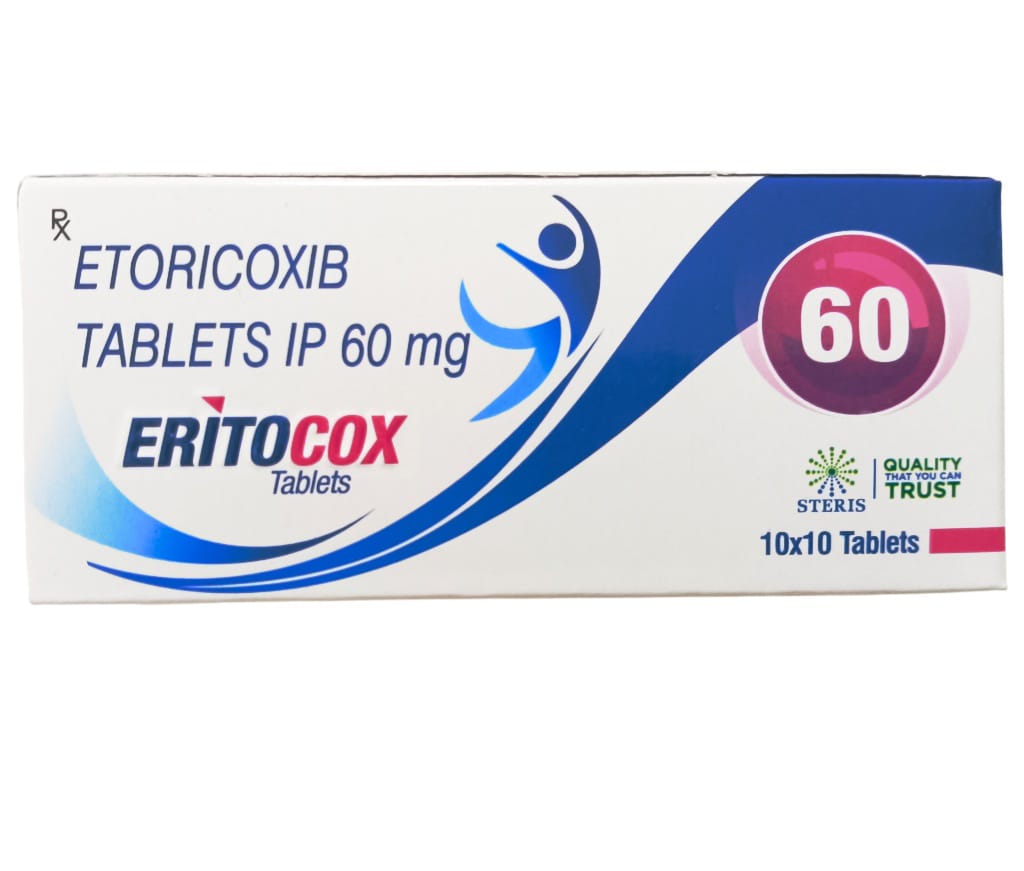
ERITOCOX 60
 Item requires a valid prescription
Manufactured By Steris Healthcare Pvt Ltd
Composition Etoricoxib Tablets (60mg)
Rs 101.85
MRP Rs 105.00
(3% OFF)
Includes all taxes
Package SIZE
( For 10 Tablet )

100% Authentic
Products

Free
Shipping*

Products
Return Policy
Description:
Etoricoxib tablets 60 mg contain 60 mg of etoricoxib, a selective COX-2 inhibitor belonging to the NSAID family. It works by reducing the production of prostaglandins involved in pain and inflammation. Current product information lists etoricoxib for conditions including osteoarthritis, rheumatoid arthritis and ankylosing spondylitis, while specific strengths and indications can vary by country.
Etoricoxib 60 mg is particularly relevant to patients looking for treatment for inflammatory joint pain and stiffness. However, the correct strength depends on the condition being treated. A 60 mg tablet is not automatically the appropriate dose for every type of pain.
For example, current UK product information recommends 60 mg once daily for rheumatoid arthritis and ankylosing spondylitis, while osteoarthritis generally starts at 30 mg daily and may be increased to 60 mg if necessary.
Etoricoxib Tablets 60 mg Uses
1. Osteoarthritis
Osteoarthritis causes gradual deterioration of joint cartilage and can lead to:
- Joint pain
- Stiffness
- Swelling
- Reduced mobility
- Difficulty performing everyday activities
Etoricoxib can help reduce pain and inflammation associated with osteoarthritis. For this condition, the prescribed dose may be lower than 60 mg, so patients should follow their individual prescription.
2. Rheumatoid Arthritis
Rheumatoid arthritis is an inflammatory autoimmune disease that can cause persistent joint swelling, pain and stiffness.
Etoricoxib may provide symptomatic relief of pain and inflammation, helping patients move more comfortably. It does not cure the underlying autoimmune disease, so it should not be considered a replacement for disease-modifying rheumatoid arthritis treatment.
3. Ankylosing Spondylitis
Etoricoxib is also used to relieve pain and inflammatory symptoms associated with ankylosing spondylitis, an inflammatory condition that primarily affects the spine and sacroiliac joints.
4. Acute Gout
Etoricoxib is used in some markets for the pain and inflammation associated with acute gouty arthritis. However, gout attacks may require a different strength and short treatment duration; the 60 mg tablet should not be substituted for the dose specifically prescribed for an acute attack.
5. Short-Term Dental Pain
Certain etoricoxib products are indicated for short-term treatment of moderate pain following dental surgery in patients aged 16 years and older.
How Does Etoricoxib 60 mg Work?
Etoricoxib selectively inhibits the cyclooxygenase-2 (COX-2) enzyme.
COX-2 contributes to the production of prostaglandins associated with pain and inflammation. By reducing COX-2 activity, etoricoxib can decrease:
- Pain
- Swelling
- Inflammation
- Joint stiffness
Because etoricoxib is selective for COX-2, its effects and safety profile differ from those of some traditional non-selective NSAIDs. However, COX-2 selectivity does not eliminate cardiovascular or gastrointestinal risks.
Key Benefits of Etoricoxib Tablets 60 mg
Effective pain and inflammation relief
Etoricoxib can provide symptomatic relief from inflammatory musculoskeletal and joint conditions when appropriately prescribed.
Helps reduce joint stiffness
By controlling inflammatory symptoms, treatment may make movement and everyday activities more comfortable.
Once-daily administration
Etoricoxib is generally taken once daily, which can make the treatment schedule convenient. It can be taken with or without food.
Targeted COX-2 inhibition
Its selective COX-2 mechanism provides an alternative to some traditional NSAIDs for patients who are appropriate candidates.
However, the decision to use etoricoxib should consider the patient's complete cardiovascular, gastrointestinal, kidney and liver risk profile.
Etoricoxib Tablets 60 mg Side Effects
Like other medicines, etoricoxib can cause side effects.
Possible side effects include:
- Stomach pain
- Indigestion
- Nausea
- Diarrhea
- Headache
- Dizziness
- Swelling of the legs or feet
- Increased blood pressure
- Palpitations
- Fatigue
- Changes in liver-function tests
- Constipation or gas
The frequency varies between adverse effects and patient populations.
Blood Pressure and Fluid Retention
Etoricoxib can increase blood pressure in some patients and may cause fluid retention or swelling. People with hypertension, heart disease or a history of fluid retention should discuss these risks with their doctor.
Serious Etoricoxib Side Effects
Although serious reactions are less common, they are important to understand.
Cardiovascular risks
Etoricoxib may increase the risk of cardiovascular events such as heart attack and stroke, particularly with higher doses and prolonged treatment. Patients with established ischemic heart disease, peripheral arterial disease, cerebrovascular disease or certain forms of heart failure should not use it according to the cited product information.
Seek urgent medical attention for:
- Chest pain
- Severe shortness of breath
- Sudden weakness
- Difficulty speaking
- Severe or unusual swelling
Gastrointestinal bleeding
Although etoricoxib is a COX-2 inhibitor, serious gastrointestinal complications, including ulcers and bleeding, can still occur. Risk may be higher in older adults and people with a history of ulcers or gastrointestinal bleeding.
Black stools or severe persistent abdominal pain should receive urgent medical assessment.
Liver problems
Etoricoxib can affect liver-function tests and, rarely, cause clinically significant liver injury.
Yellowing of the skin or eyes should be evaluated promptly.
Serious allergic reactions
Rare but serious hypersensitivity reactions, including facial, lip, tongue or throat swelling and breathing difficulty, require immediate medical attention.
Who Should Avoid Etoricoxib 60 mg?
Etoricoxib is not suitable for everyone.
Current product information lists contraindications including:
- Active stomach or intestinal ulcer or bleeding
- Serious liver disease
- Serious kidney disease
- Uncontrolled high blood pressure
- Certain types of heart failure
- Established ischemic heart disease
- Previous heart attack or stroke
- Peripheral arterial disease
- Inflammatory bowel disease
- Pregnancy and breastfeeding
- Allergy to etoricoxib, aspirin or certain NSAIDs
- Age under 16 years
People with diabetes, high cholesterol, smoking history, kidney disease, liver disease or cardiovascular risk factors should discuss these conditions with their healthcare professional before treatment.
Etoricoxib 60 mg and Pregnancy
Etoricoxib should not be taken during pregnancy.
It is also not recommended for women attempting to become pregnant. Current patient information states that women using etoricoxib should not breastfeed.
If pregnancy occurs while taking etoricoxib, contact your healthcare professional promptly.
Etoricoxib 60 mg Drug Interactions
Before using etoricoxib, tell your doctor or pharmacist about all medicines you take.
Particular attention may be required with:
- Warfarin and other oral anticoagulants
- Aspirin
- Other NSAIDs
- Blood-pressure medicines
- Diuretics
- Certain medicines affecting kidney function
- Lithium
- Methotrexate
- Ciclosporin or tacrolimus
- Hormonal medicines
Taking etoricoxib together with another NSAID without professional advice is generally inappropriate and can increase adverse-effect risks. The product information specifically recommends caution with anticoagulants and aspirin.
Buying Etoricoxib Tablets 60 mg: Buyer-Intent Guide
If you are searching for “buy etoricoxib tablets 60 mg,” “etoricoxib 60 mg price,” “buy etoricoxib 60 mg online,” or “etoricoxib 60 mg tablets online,” product authenticity should be more important than simply choosing the lowest price.
Before purchasing, verify:
- Active ingredient: Etoricoxib.
- Strength: 60 mg.
- Dosage form: Film-coated tablet or the formulation specified by your prescription.
- Manufacturer: Clearly identified.
- Batch number: Present and readable.
- Expiry date: Check before use.
- Packaging: Avoid damaged or tampered packaging.
- Pharmacy: Use a legitimate, appropriately licensed pharmacy.
- Prescription: Follow the strength and duration prescribed by your healthcare professional.
A reputable product page should also clearly display warnings rather than presenting etoricoxib as a universally safe painkiller.
E-E-A-T and Safe Medical Purchasing
For health-product content to demonstrate Experience, Expertise, Authoritativeness and Trustworthiness (E-E-A-T), it should provide balanced information rather than making exaggerated sales claims.
A reliable etoricoxib page should:
- Explain the medicine's active ingredient.
- Identify its approved or locally authorized uses.
- Explain that different conditions require different doses.
- Discuss cardiovascular and gastrointestinal risks.
- Mention important contraindications.
- Explain pregnancy restrictions.
- Avoid claims such as “zero side effects” or “100% safe.”
- Encourage appropriate medical supervision.
- Provide transparent purchasing information.
This is particularly important for NSAIDs because a medicine that effectively relieves pain may still be inappropriate for someone with particular cardiovascular, kidney, liver or gastrointestinal risks.
Frequently Asked Questions
1. What are etoricoxib tablets 60 mg used for?
Etoricoxib 60 mg is used for pain and inflammation associated with conditions such as osteoarthritis, rheumatoid arthritis and ankylosing spondylitis. In some approved product information, it is also used for certain acute pain conditions. The appropriate strength depends on the condition.
2. What are the main benefits of etoricoxib 60 mg?
The main benefit is relief of pain, inflammation and associated stiffness in appropriately selected patients. It works by selectively inhibiting COX-2, an enzyme involved in inflammatory pain pathways.
3. What are the side effects of etoricoxib 60 mg?
Possible side effects include stomach pain, indigestion, nausea, dizziness, headache, swelling of the legs or feet and increased blood pressure. More serious cardiovascular, gastrointestinal, liver and allergic reactions can occur.
4. Can I take etoricoxib 60 mg every day?
Etoricoxib is generally taken once daily when prescribed, but the duration depends on the medical condition and individual risk factors. The lowest effective dose should generally be used for the shortest appropriate period because cardiovascular risk can increase with dose and duration.
5. Is etoricoxib 60 mg a painkiller?
Yes. Etoricoxib is an NSAID used to reduce pain and inflammation. It is particularly used for inflammatory joint and musculoskeletal conditions.
6. Can etoricoxib 60 mg be taken for gout?
Etoricoxib can be used for acute gout in appropriate patients, but the recommended dose for acute gout is generally different from 60 mg and treatment is limited to the acute painful period. Follow the specific prescription provided by your clinician.
7. Can I buy etoricoxib 60 mg online?
Where online prescription purchasing is legally available, obtain etoricoxib from a legitimate pharmacy and verify the 60 mg strength, manufacturer, batch number and expiry date. Do not purchase solely because a website advertises the lowest price.
8. Can etoricoxib increase blood pressure?
Yes. Etoricoxib can increase blood pressure in some patients, particularly at higher doses. People with hypertension should have their blood pressure appropriately controlled and monitored during treatment.
Conclusion
Etoricoxib tablets 60 mg are prescription COX-2-selective NSAIDs used to relieve pain and inflammation associated with several musculoskeletal and inflammatory conditions. Depending on the indication and local product authorization, etoricoxib is used for conditions including osteoarthritis, rheumatoid arthritis and ankylosing spondylitis, with other strengths used for certain acute pain conditions.
The key benefits are pain relief, reduced inflammation and improved comfort and mobility. However, etoricoxib is not suitable for everyone. It can increase blood pressure and cardiovascular risk and can cause gastrointestinal, kidney, liver or allergic complications. The safest approach is to use the lowest effective dose for the shortest appropriate duration under professional guidance.