


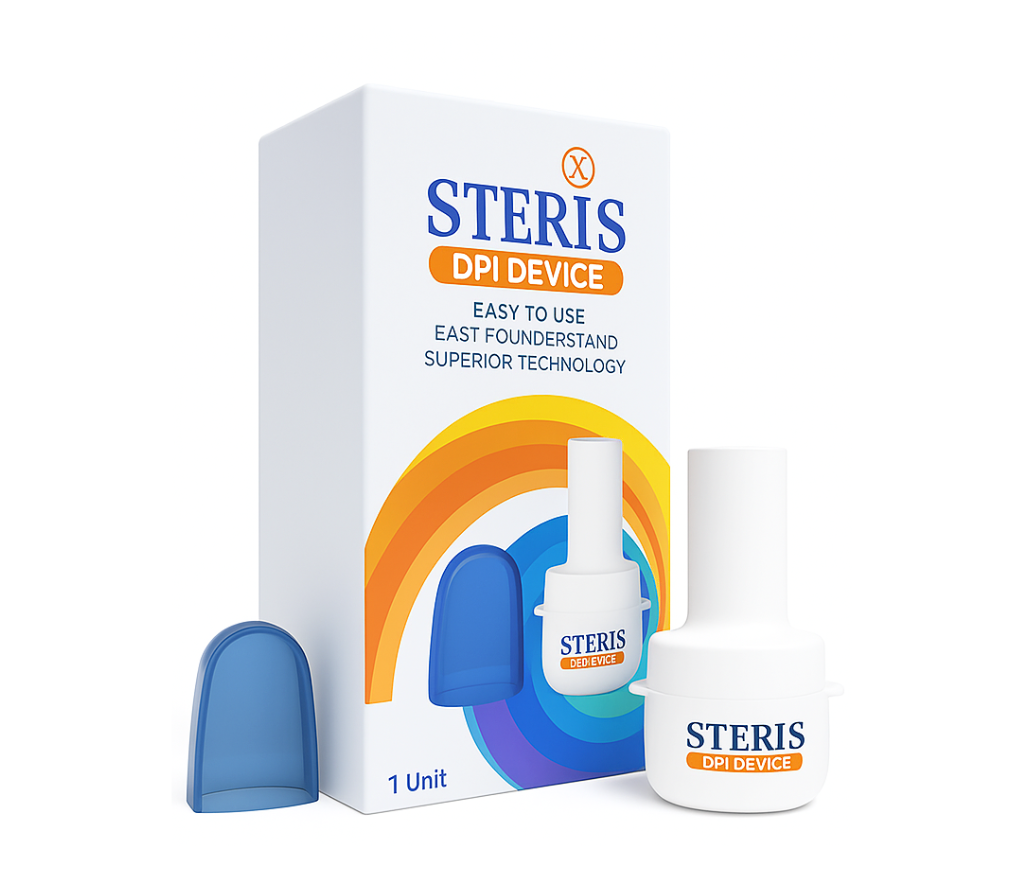
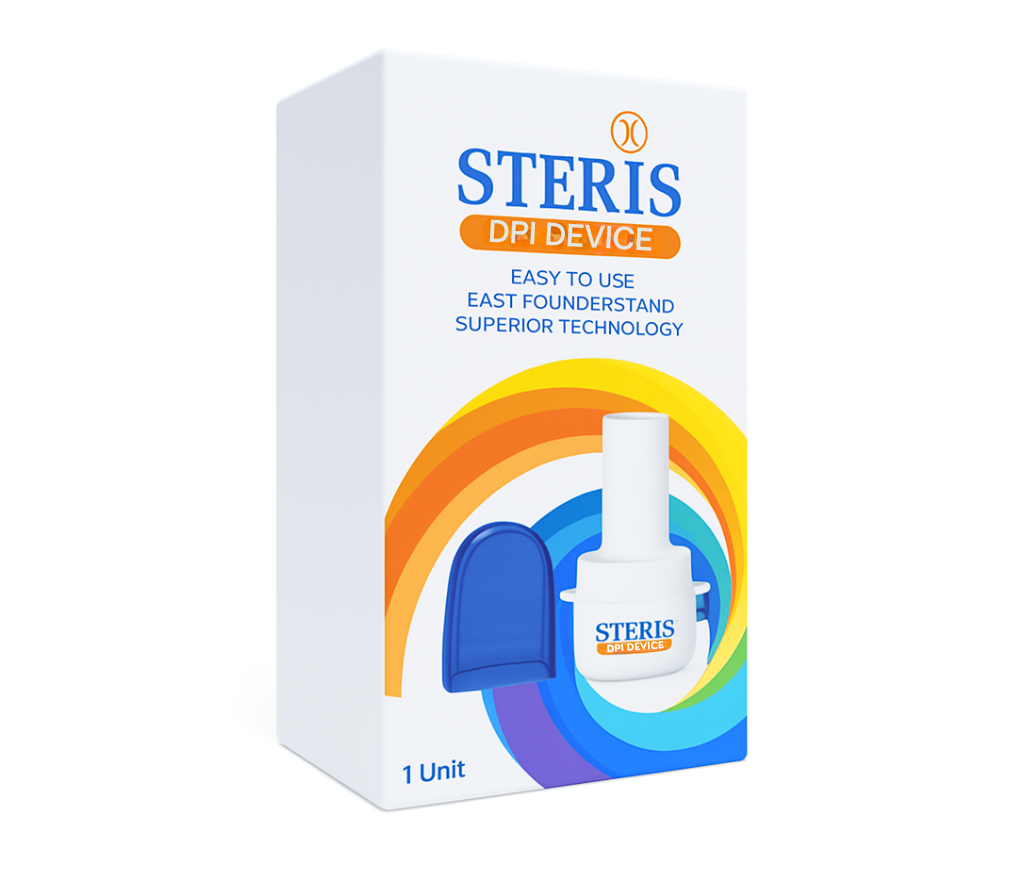
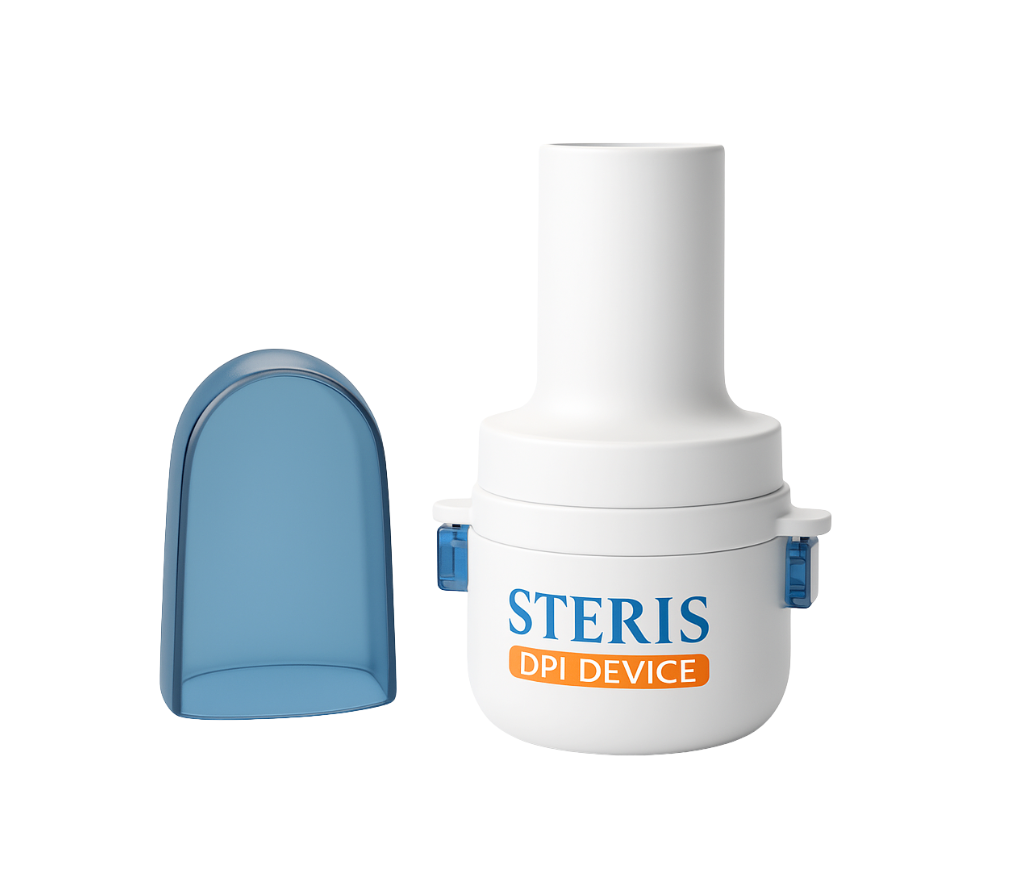

STERIS DPI DEVICE
 Item requires a valid prescription
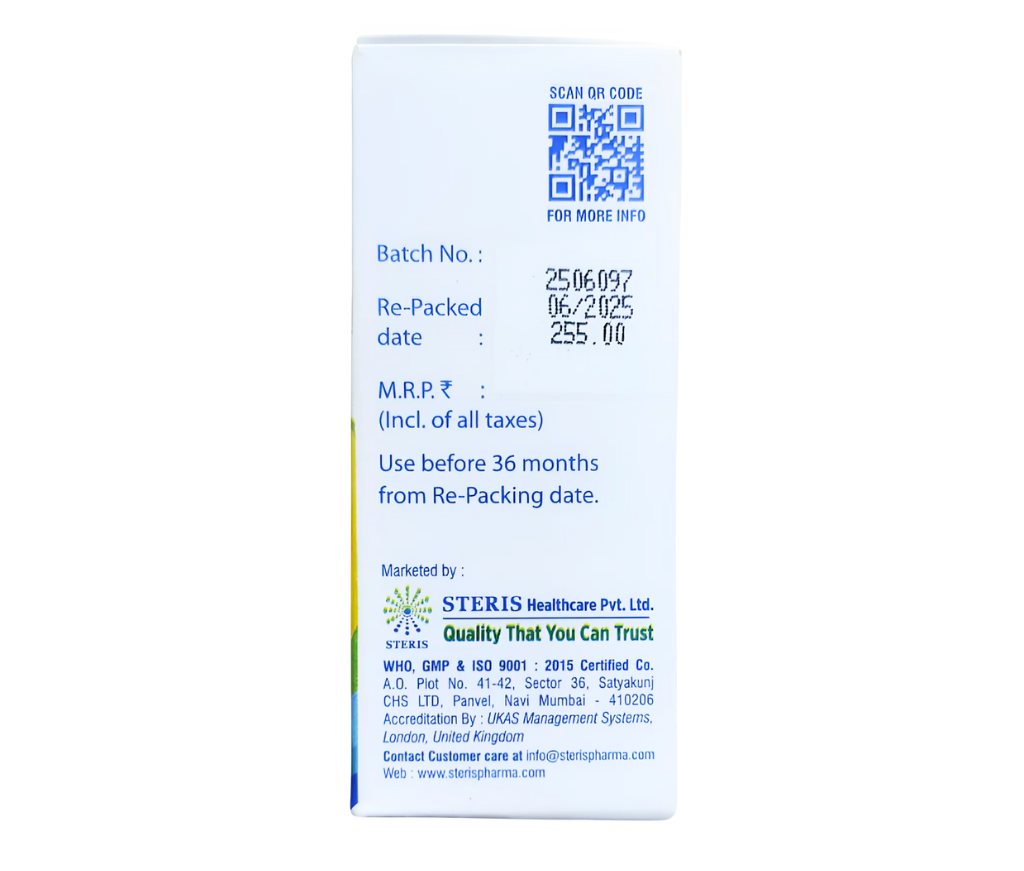
Manufactured By Steris Healthcare Pvt Ltd
Composition Dry powder inhaler capsule
Rs 167.30
MRP Rs 239.00
(30% OFF)
Includes all taxes
Package SIZE
( FOR 1 UNIT )

100% Authentic
Products

Free
Shipping*

Products
Return Policy
Description:
Introduction
A Dry powder inhaler capsule is a medicine delivery format in which medication is supplied as a dry powder inside a capsule and inhaled through a specially designed inhaler device. Unlike ordinary tablets or capsules that are swallowed, inhalation capsules are intended to deliver the powdered medicine directly into the airways. The capsule itself should not be swallowed. Specific instructions can vary according to the medicine and inhaler device, so patients should always follow the product leaflet and healthcare professional's instructions.
Dry powder inhaler capsules are commonly used with medicines prescribed for respiratory conditions such as asthma or chronic obstructive pulmonary disease (COPD). Depending on the active ingredient, they may help relax narrowed airways, reduce airway inflammation, or provide long-term control of respiratory symptoms.
For buyers searching for a dry powder inhaler capsule, the most important considerations are the prescribed medicine, capsule strength, compatible inhaler device, correct inhalation technique, storage requirements, and whether the product is intended for regular maintenance or another specific purpose.
What Is a Dry Powder Inhaler Capsule?
A dry powder inhaler capsule contains a measured amount of powdered medicine. The capsule is placed into a compatible inhaler, where the device pierces the capsule and allows the patient to inhale the powder through the mouthpiece. Some capsule inhalers require the patient to inhale more than once to empty the capsule completely.
This delivery method is different from a conventional inhaler containing a pressurised aerosol. A dry powder inhaler generally relies on the patient's inhalation effort to draw the powder into the lungs. Therefore, correct technique is particularly important.
Uses of Dry Powder Inhaler Capsules
The exact uses of a dry powder inhaler capsule depend entirely on its active ingredient. Different medicines are prescribed for different respiratory conditions.
Depending on the medicine prescribed, inhaled capsules may be used to:
-
Help control symptoms associated with asthma
-
Support long-term management of COPD
-
Relax constricted airways and improve airflow
-
Reduce wheezing, chest tightness, and breathlessness associated with certain airway conditions
-
Deliver maintenance respiratory medicines directly to the lungs
-
Provide targeted inhaled treatment while limiting unnecessary systemic exposure for some medicines
Some inhaled medicines are intended for regular maintenance and are not designed to treat sudden breathing attacks. For example, certain long-acting bronchodilators should not be relied upon as rescue medication during an acute attack.
Key Benefits
A major benefit of the dry powder inhaler capsule format is that the medicine is delivered through the respiratory tract, allowing the active ingredient to act directly in the lungs.
Potential benefits include:
-
Direct pulmonary delivery: Medicine is inhaled directly toward the airways.
-
Convenient dosing: Many capsule-based devices use a measured capsule for each prescribed dose.
-
No swallowing required: The medication is inhaled rather than taken as an oral capsule.
-
Portable treatment: Capsule inhalers can be convenient for patients who require regular respiratory medication.
-
Device-guided dosing: Compatible inhalers are designed to release the powder from the capsule during inhalation.
-
Targeted respiratory action: Depending on the active ingredient, inhaled medicine can help address airway narrowing or inflammation.
The clinical benefit depends on the particular medicine, prescribed dose, patient's condition, and ability to use the inhaler correctly. Proper inhaler technique is essential because incorrect use can reduce the amount of medicine reaching the lungs.
How to Use a Dry Powder Inhaler Capsule
Although device instructions differ, capsule-based dry powder inhalers generally involve the following process:
-
Remove the capsule from its blister or packaging immediately before use.
-
Place the capsule into the designated chamber of the compatible inhaler.
-
Close the device as instructed.
-
Use the device mechanism to pierce the capsule according to its instructions.
-
Sit or stand upright.
-
Breathe out fully away from the inhaler. Do not breathe into the device.
-
Seal your lips firmly around the mouthpiece.
-
Breathe in strongly and deeply through the mouthpiece.
-
Remove the inhaler and hold your breath for up to about 10 seconds if comfortable.
-
Repeat the inhalation if the specific device instructions require it to empty the capsule.
-
Remove and discard the empty capsule after use.
Side Effects
The side effects of a dry powder inhaler capsule depend primarily on the active medicine rather than the capsule format itself. Possible effects may include:
-
Dry or irritated throat
-
Cough
-
Headache
-
Dizziness
-
Hoarseness
-
Dry mouth
-
Nausea
-
Tremor or palpitations with certain bronchodilators
-
Oral fungal infection with some inhaled corticosteroids
Not every patient experiences these effects, and the expected side-effect profile varies significantly between medicines.
Seek urgent medical attention for severe breathing difficulty, facial or throat swelling, severe allergic reactions, chest pain, or rapidly worsening respiratory symptoms.
If the inhaled medicine contains a corticosteroid, mouth-rinsing after use may be recommended to reduce certain local side effects. Follow the instructions specific to your product.
Precautions and Warnings
Before using a dry powder inhaler capsule, tell your doctor or pharmacist about your medical history and all medicines you take. Patients with significant heart disease, high blood pressure, glaucoma, urinary problems, kidney or liver conditions, or other chronic illnesses may require additional precautions depending on the active ingredient.
Keep capsules in their original blister or container until immediately before use. Moisture can affect some dry powder medicines, so capsules should generally be handled with dry hands and stored according to the manufacturer's instructions. Some capsule inhalers specifically advise against storing capsules inside the inhaler.
Patients should also have their inhaler technique checked periodically by a doctor, pharmacist, or respiratory professional. If a person cannot generate sufficient inhalation flow for a particular device, another inhaler type may be more suitable.
Buyer Guide: What to Check Before Purchasing
If you are looking to buy a dry powder inhaler capsule, do not choose a product based only on the capsule appearance or strength. Check:
-
Active ingredient and strength
-
Number of capsules in the pack
-
Compatible inhaler device
-
Whether the inhaler is included or supplied separately
-
Prescription requirements
-
Expiry date and packaging integrity
-
Storage instructions
-
Manufacturer information
-
Whether the medicine is a maintenance or rescue treatment
Because inhalation capsules are device-specific, buying the correct compatible inhaler is just as important as selecting the correct medicine.
Conclusion
A Dry powder inhaler capsule is a specialised respiratory medicine format designed to deliver powdered medication through a compatible inhaler directly into the lungs. Its potential advantages include targeted pulmonary delivery, convenient dosing, and portability. However, the actual uses, benefits, dosage, and side effects depend on the active ingredient contained in the capsule.
Correct technique is one of the most important factors affecting treatment. Patients should breathe out away from the device, inhale the powder strongly and deeply as instructed, and never swallow capsules intended for inhalation.
For safe purchasing and effective treatment, always verify the medicine, strength, compatible inhaler, prescription instructions, and manufacturer packaging. A healthcare professional can confirm whether a particular dry powder inhaler capsule is appropriate for your respiratory condition.
Frequently Asked Questions
1. What is a dry powder inhaler capsule?
A dry powder inhaler capsule is a capsule containing powdered respiratory medicine that is inhaled through a compatible inhaler device. It is not intended to be swallowed.
2. Can I swallow a dry powder inhaler capsule?
No. Capsules specifically supplied for inhalation should be placed into their compatible inhaler and inhaled according to the product instructions. They should not be swallowed.
3. How do you use a dry powder inhaler capsule?
The capsule is generally placed in its compatible inhaler, pierced using the device mechanism, and inhaled through the mouthpiece with a strong, deep breath. The exact steps vary by device.
4. What are the benefits of a dry powder inhaler capsule?
It can provide direct delivery of powdered medicine to the lungs, convenient measured dosing, and a portable method of administering certain respiratory medicines. The benefits depend on the active ingredient.
5. What are the side effects of dry powder inhaler capsules?
Side effects vary according to the medicine. They may include cough, throat irritation, headache, dry mouth, dizziness, or hoarseness. Some medicines may have additional specific adverse effects.
6. Can dry powder inhaler capsules be used for asthma?
Some dry powder inhaler medicines are prescribed for asthma management, but suitability depends on the active ingredient, device, and patient's condition. A healthcare professional should determine the appropriate inhaler.
7. Can a dry powder inhaler capsule treat sudden breathing attacks?
Not necessarily. Some capsule-based inhaled medicines are intended for regular maintenance and are not rescue medicines for sudden breathing attacks. Always follow your prescribed asthma or COPD action plan.
8. Why is inhaler technique important?
Correct technique helps ensure that the prescribed medicine reaches the lungs effectively. Different inhaler types require different breathing techniques, so patients should have their technique checked by a healthcare professional when needed.