


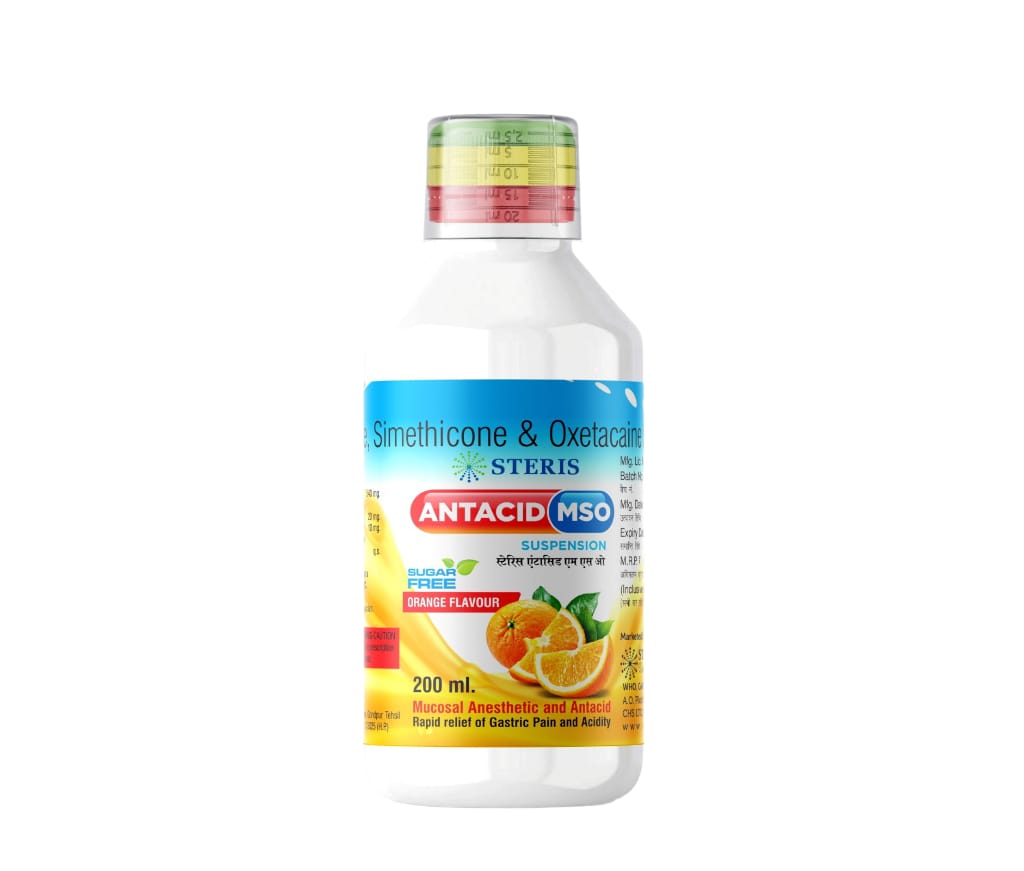
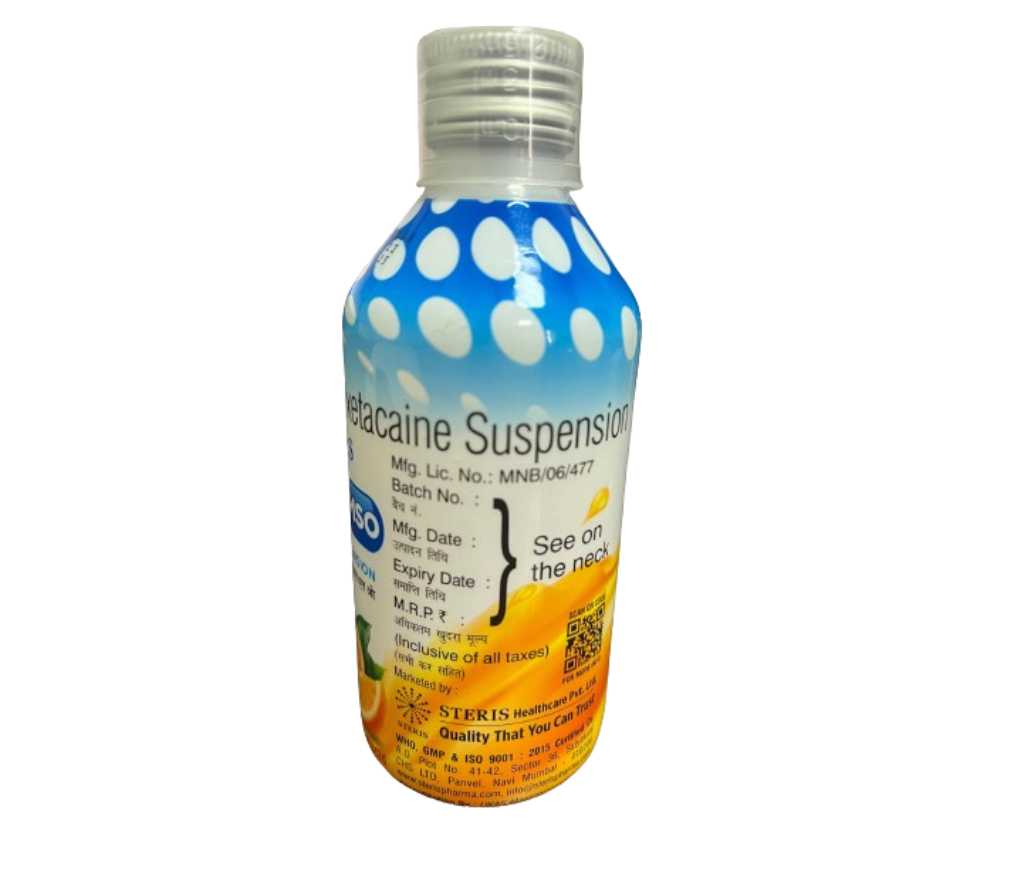
STERIS ANTACID MSO
 Item requires a valid prescription
Manufactured By Steris Healthcare Pvt Ltd
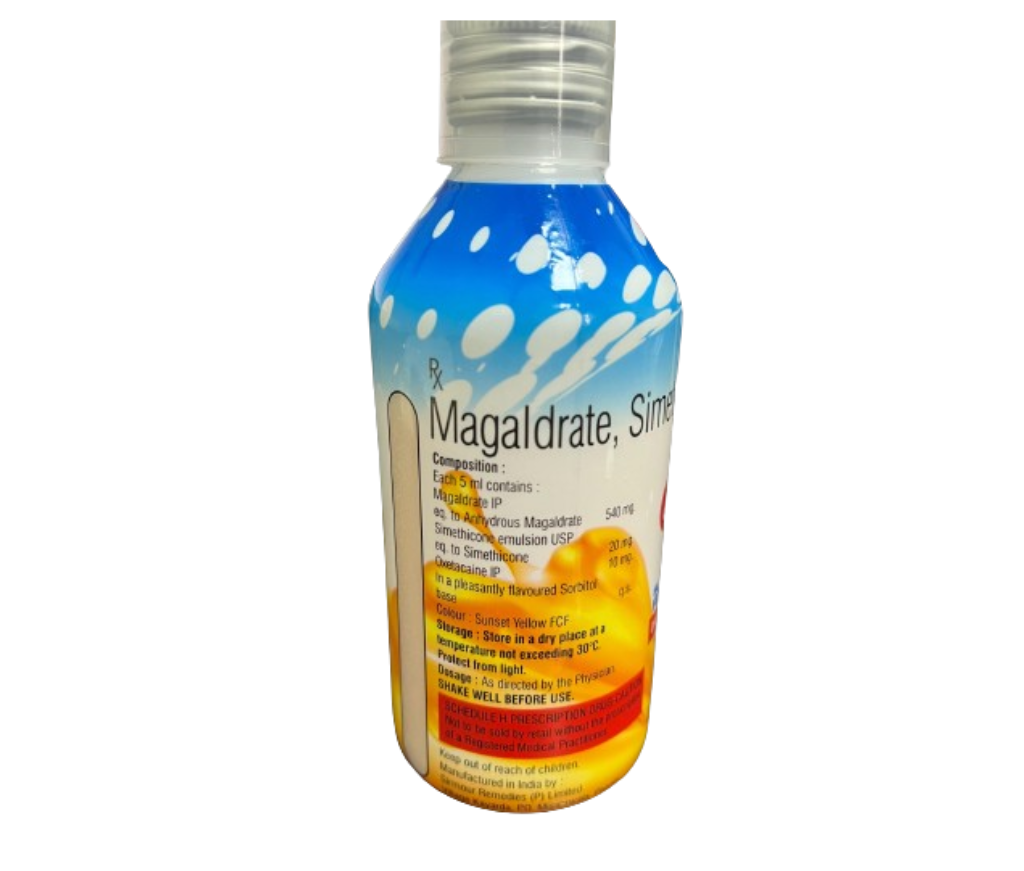
Composition Magaldrate , Simethicone , Oxetacaine Suspension
Rs 98.04
MRP Rs 140.06
(30% OFF)
Includes all taxes
Package SIZE
( 200 ml )

100% Authentic
Products

Free
Shipping*

Products
Return Policy
Description:
Magaldrate simethicone and oxetacaine suspension is a combination oral medicine used to provide symptomatic relief from acidity, heartburn, acid-related stomach irritation, gas, bloating, and pain associated with gastric or peptic ulcers. Its three ingredients work in different but complementary ways: magaldrate reduces excess stomach acid, simethicone helps disperse trapped gas, and oxetacaine provides a local numbing effect that can reduce pain caused by acid-irritated tissues.
Because formulations and strengths vary between brands, consumers should check the product label and follow the prescribed dose rather than assuming that every magaldrate, simethicone, and oxetacaine suspension contains the same quantity of each ingredient. For example, one currently listed product contains magaldrate 240 mg, simethicone 80 mg, and oxetacaine 10 mg, while other products have different formulations.
What Is Magaldrate, Simethicone, and Oxetacaine Suspension?
Magaldrate simethicone and oxetacaine suspension is a triple-action gastrointestinal medicine. It is generally formulated as a liquid suspension, making it easy to administer when a liquid dosage form is preferred.
The combination contains:
-
Magaldrate: an antacid that neutralizes excess gastric acid.
-
Simethicone: an antiflatulent that helps gas bubbles combine and pass more easily.
-
Oxetacaine: a local anesthetic that temporarily numbs irritated gastrointestinal tissue and can reduce acid-related pain.
The combination therefore targets several symptoms at once rather than relying only on acid neutralization. Antacids can provide relatively rapid symptom relief but generally do not address the underlying cause of recurrent reflux or other gastrointestinal disease.
Magaldrate Simethicone and Oxetacaine Suspension Uses
The most common magaldrate, simethicone, and oxetacaine suspension uses are related to acid and gas symptoms. Depending on the exact formulation and a healthcare professional's assessment, it may be prescribed for the following:
1. Acidity and heartburn
Magaldrate neutralizes excess acid in the stomach, helping reduce burning and discomfort associated with hyperacidity and heartburn. Antacids are commonly used for short-term relief of indigestion and heartburn.
2. Acid-related stomach pain
Oxetacaine provides a local numbing action that can help relieve painful sensations caused when acidic gastric contents irritate sensitive or damaged gastrointestinal tissue.
3. Gas and bloating
Simethicone acts on gas bubbles in the digestive tract. By reducing the surface tension of gas bubbles, it facilitates their coalescence and passage, which can decrease gas-related pressure and bloating.
4. Symptoms associated with stomach or peptic ulcers
The combination may be prescribed to provide symptomatic relief from burning and pain associated with acid irritation around gastric or peptic ulcers. However, symptom relief should not be confused with definitive ulcer treatment; persistent ulcers require medical evaluation and treatment of their underlying cause.
5. Acid reflux-related discomfort
The combination can help with symptoms such as burning and upper-abdominal discomfort associated with acid reflux. However, people with frequent or persistent reflux may require a different long-term treatment strategy after medical assessment. Antacids provide short-term relief but do not treat the underlying cause of recurrent reflux.
How Does Magaldrate Simethicone and Oxetacaine Suspension Work?
The effectiveness of this combination comes from the different roles of its three active ingredients.
Magaldrate works against acid. It is an aluminum-magnesium antacid that reacts with stomach acid and reduces its acidity. This can relieve acid-related burning and indigestion.
Simethicone works against gas. It reduces the surface tension of gas bubbles, allowing them to combine and move through the digestive tract more readily. This may reduce bloating and pressure caused by trapped gas.
Oxetacaine works against pain. As a local anesthetic, it produces a temporary numbing effect on irritated gastrointestinal surfaces, helping reduce pain associated with acid injury or ulcers.
Together, these actions can provide acid relief + gas relief + local pain relief.
Key Benefits of Magaldrate Simethicone and Oxetacaine Suspension
The main potential benefits are the following:
-
Relieves excess-acid symptoms such as acidity and heartburn.
-
Helps reduce gas-related discomfort and bloating.
-
Provides local pain relief from acid-irritated gastrointestinal tissue.
-
Offers triple-action symptomatic relief through three different mechanisms.
-
Liquid suspension format can be convenient for people who have difficulty swallowing tablets.
Importantly, these are primarily symptomatic benefits. Regularly needing an antacid can indicate an underlying condition that deserves assessment. NHS guidance recommends speaking with a healthcare professional if antacids are needed regularly.
How to Take Magaldrate Simethicone and Oxetacaine Suspension
The correct dose depends on the specific product, ingredient strengths, age, symptoms, and medical advice. Do not copy the dosage from another brand.
For oral suspension products:
-
Shake the bottle thoroughly before use.
-
Measure the prescribed quantity with the supplied measuring cup or dosing device.
-
Take it exactly according to the product label or your doctor's instructions.
-
Do not take extra doses because symptoms feel severe.
-
Do not continue treatment for an extended period without medical advice.
Antacids are commonly taken with or soon after meals and sometimes at bedtime, but the appropriate timing can differ according to the formulation.
Magaldrate, Simethicone, and Oxetacaine Suspension Side Effects
Most people tolerate antacid combinations when used appropriately, but side effects can occur.
Common or relatively mild side effects
Possible side effects include:
-
Constipation
-
Diarrhea
-
Stomach cramps or discomfort
-
Nausea
-
Altered or chalky taste
-
Temporary changes in bowel habits
The aluminum component of antacid therapy can contribute to constipation, while magnesium-containing products can contribute to diarrhea.
When to seek medical attention
Get prompt medical advice for severe or persistent abdominal pain, repeated vomiting, difficulty swallowing, unexplained weight loss, gastrointestinal bleeding or black stools, chest pain, shortness of breath, or symptoms that are getting worse rather than improving. These symptoms should not simply be masked with an antacid.
A serious allergic reaction is uncommon but requires urgent medical attention if symptoms such as facial or throat swelling or difficulty breathing occur.
Precautions and Drug Interactions
Antacids can interfere with the absorption or effectiveness of other medicines. Depending on the medication, a separation period may be necessary. General antacid guidance commonly recommends separating other medicines by 2–4 hours, but the exact interval should be checked for each medicine.
Tell your doctor or pharmacist about all prescription medicines, over-the-counter medicines, vitamins, and supplements you take.
Extra caution is appropriate if you have:
-
Kidney disease
-
Liver disease
-
Heart failure
-
A medically restricted-sodium diet
-
Recurrent or unexplained abdominal symptoms
-
Pregnancy or breastfeeding
People with kidney problems should not assume that an aluminum- or magnesium-containing antacid is automatically suitable. Medical advice is particularly important before use.
Is It Safe for Long-Term Use?
It should not be used continuously for prolonged periods unless a healthcare professional recommends it.
Antacids are intended mainly for short-term symptom relief. Regular or persistent heartburn may require investigation and potentially a different treatment approach.
If symptoms repeatedly return after the suspension wears off, treating the symptom repeatedly may delay diagnosis of conditions such as persistent reflux, gastritis, or ulcer disease.
Frequently Asked Questions
1. What is magaldrate simethicone and oxetacaine suspension used for?
It is used for symptomatic relief of acidity, heartburn, acid-related stomach irritation, gas, bloating, and pain associated with acid-irritated or ulcerated gastrointestinal tissue.
2. How does magaldrate simethicone and oxetacaine suspension work?
Magaldrate neutralizes excess stomach acid, simethicone helps relieve trapped gas, and oxetacaine temporarily numbs irritated tissue to reduce pain.
3. Does this suspension help with acidity?
Yes. Magaldrate is an antacid that reduces excess gastric acid and can provide short-term relief from acidity and heartburn.
4. Does magaldrate simethicone and oxetacaine help with gas?
Yes. Simethicone is included to help disperse gas bubbles and facilitate the passage of trapped gas, which can reduce bloating and pressure.
5. Can it relieve stomach pain?
It can relieve certain types of acid-related stomach pain because oxetacaine provides a local anesthetic effect. However, unexplained, severe, or persistent abdominal pain requires medical evaluation.
6. What are the common side effects?
Constipation, diarrhea, stomach cramps, nausea, altered taste, and temporary bowel changes may occur.
7. Can magaldrate simethicone and oxetacaine cause constipation?
Yes. Constipation is a possible side effect of antacid therapy, particularly with aluminum-containing ingredients.
8. Can it cause diarrhea?
Yes. Magnesium-containing antacid components may cause diarrhea in some people.
9. Can I take it after meals?
The appropriate timing depends on the specific product and prescription. Many antacids are taken with or soon after meals, but you should follow the instructions supplied with your particular suspension.
10. Should I shake the suspension before taking it?
Yes. Oral suspensions should generally be shaken well before each dose so the ingredients are distributed evenly.
11. Can I take other medicines with this suspension?
Potentially, but antacids can interfere with the absorption of other medicines. Ask a pharmacist or doctor about your specific medicines and whether doses need to be separated.
12. Is it safe during pregnancy?
Do not assume that every combination product is safe during pregnancy. Speak with your doctor or pharmacist before using it during pregnancy.
13. Can breastfeeding mothers take it?
Consult a healthcare professional before using the combination while breastfeeding, because suitability depends on the exact formulation and individual circumstances.
14. Can children take magaldrate simethicone and oxetacaine suspension?
Children should only receive this combination when specifically advised by an appropriate healthcare professional. Pediatric suitability and dosing depend on the product and the child's age and condition.
15. Can I take a higher dose for faster relief?
No. Taking more than the recommended dose does not necessarily produce better relief and may increase the risk of adverse effects. Use only the prescribed or labeled dose.
16. How long can I use this medicine?
It is generally intended for short-term symptomatic relief. If you need antacids regularly or symptoms persist, consult a healthcare professional rather than continuing self-treatment.
17. Does it cure stomach ulcers?
It can relieve symptoms associated with acid irritation and ulcers, but symptom relief is not the same as curing the underlying ulcer. A confirmed or persistent ulcer requires appropriate medical evaluation and treatment.
18. When should I see a doctor for acidity?
Seek medical advice if acidity is frequent, persistent, worsening, associated with difficulty swallowing, unexplained weight loss, vomiting, bleeding/black stools, chest pain, or shortness of breath.
Conclusion
Magaldrate simethicone and oxetacaine suspension provides a three-part approach to acid- and gas-related gastrointestinal discomfort: magaldrate neutralizes acid, simethicone helps relieve trapped gas, and oxetacaine temporarily reduces pain through local numbing. It may be useful for short-term relief of acidity, heartburn, bloating, and certain acid-related stomach pains.
However, the exact composition, dosage, and directions vary among products, so consumers should always check the specific label and follow professional advice. Because antacids can interact with other medicines and may not be appropriate for people with certain medical conditions, especially kidney disease, responsible use is important.