

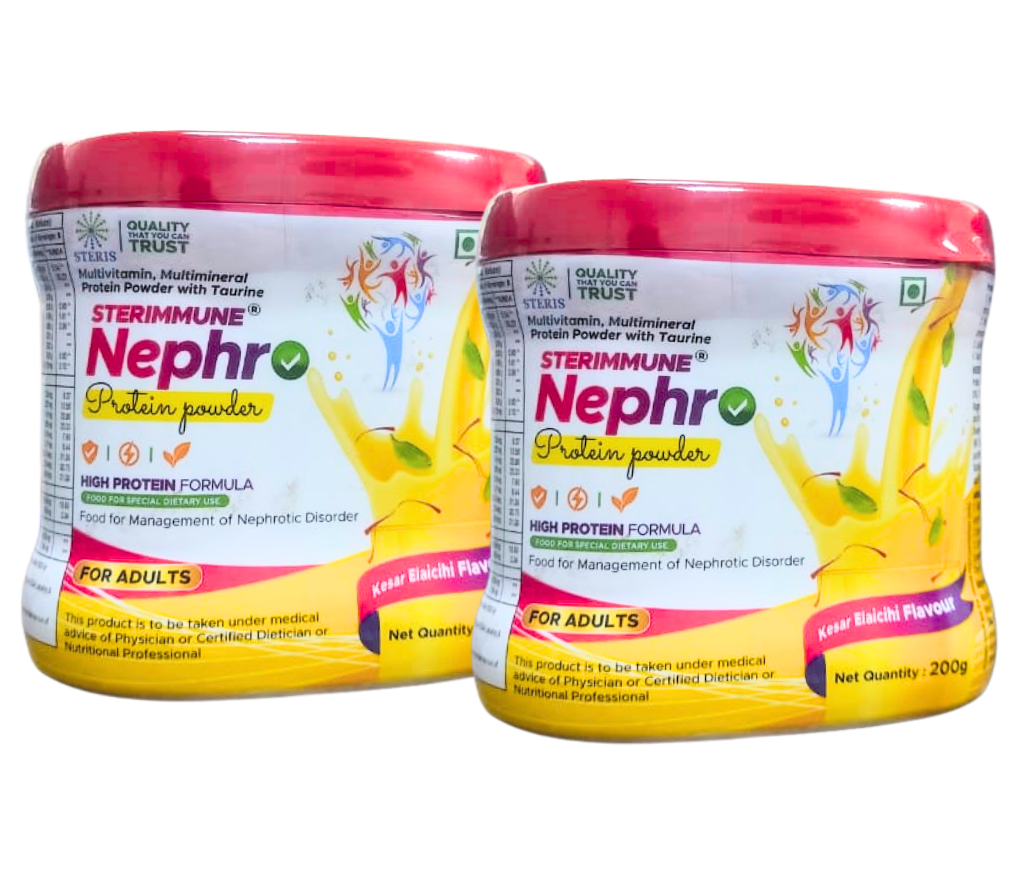
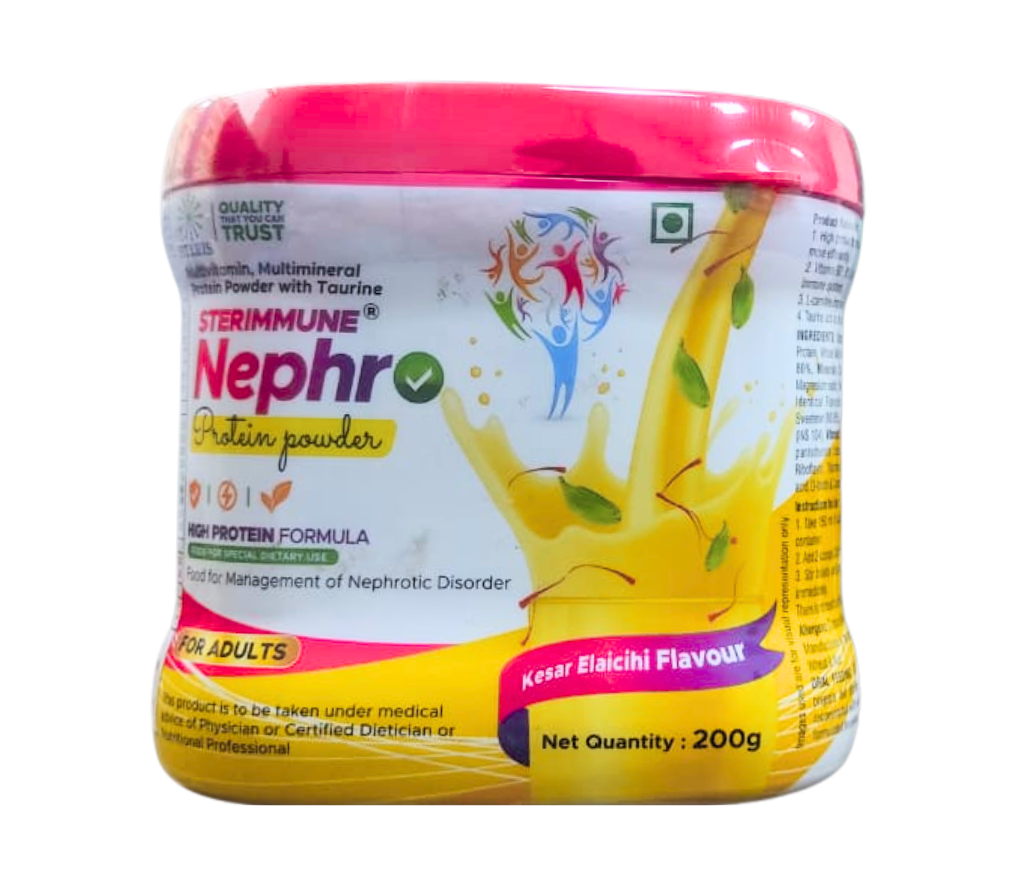
STERIMMUNE NEPHRO PROTEIN POWDER
 Item requires a valid prescription
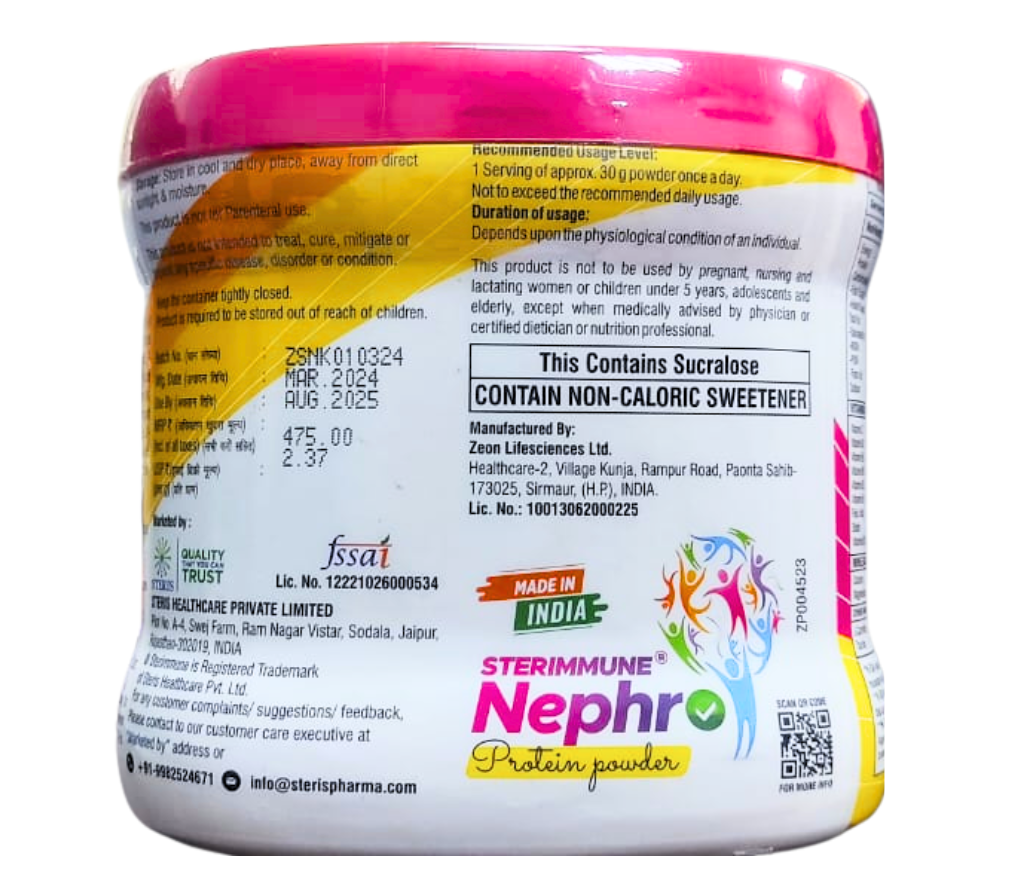
Manufactured By Steris Healthcare Pvt Ltd
Composition multivitamin protein powder
Rs 332.50
MRP Rs 475.00
(30% OFF)
Includes all taxes
Package SIZE
( FOR 200 Gram )

100% Authentic
Products

Free
Shipping*

Products
Return Policy
Description:
Maintaining good nutrition is essential for overall health, especially when the body requires additional protein, vitamins, and minerals. STERIMMUNE NEPHRO PROTEIN POWDER combines high-quality protein with essential vitamins and minerals to support muscle maintenance, promote energy metabolism, and help bridge nutritional gaps in the daily diet.
This nutritional supplement is suitable for individuals who need additional protein intake due to increased nutritional requirements or inadequate dietary intake, as advised by a healthcare professional. Regular use, along with a healthy diet and an active lifestyle, can help support energy metabolism, muscle maintenance, and general health.
STERIMMUNE NEPHRO PROTEIN POWDER is marketed by Steris Healthcare Pvt Ltd and manufactured under WHO-GMP certified quality standards to help ensure product quality and consistency.
Product Information
| Product Details | Information |
|---|---|
| Brand Name | STERIMMUNE NEPHRO PROTEIN POWDER |
| Product Type | Multivitamin Protein Powder |
| Formulation | Protein Powder |
| Pack Size | 200 Gram |
| Marketed By | Steris Healthcare Pvt Ltd |
| Quality Standard | WHO-GMP Certified |
| Usage | As directed by a healthcare professional |
What is multivitamin protein powder?
STERIMMUNE NEPHRO PROTEIN POWDER is a nutritional supplement formulated to provide protein along with essential vitamins and minerals. It is intended to supplement the diet when additional nutritional support is needed. Protein contributes to the maintenance of muscle mass, while vitamins and minerals help support normal body functions, including energy metabolism and immune function.
This product is intended to complement a balanced diet and should not be considered a substitute for varied food intake.
Uses of Multivitamin Protein Powder
STERIMMUNE NEPHRO PROTEIN POWDER may be recommended by healthcare professionals for nutritional support in individuals who require additional protein and micronutrients. Depending on individual nutritional needs, it may be used to:
-
Support daily nutritional intake
-
Help supplement dietary protein
-
Support muscle maintenance
-
Contribute to normal energy metabolism
-
Help meet increased nutritional requirements
-
Support overall health as part of a balanced diet
Use only as directed by your healthcare professional.
Benefits of multivitamin protein powder
Regular use as advised may offer the following nutritional benefits:
-
Provides quality protein for nutritional support
-
Contains essential vitamins and minerals
-
Supports daily nutritional requirements
-
Helps maintain muscle health
-
Supports normal immune function through essential nutrients
-
Contributes to healthy energy metabolism
-
Easy-to-mix powder formulation
-
WHO-GMP certified quality standards
The benefits may vary depending on individual dietary intake, health condition, and medical advice.
How Does Multivitamin Protein Powder Work?
Protein supplies amino acids that are required for normal growth and maintenance of body tissues. Vitamins and minerals support numerous physiological processes, including energy production, metabolism, and normal immune system function. When consumed as part of a balanced diet, a multivitamin protein powder can help bridge nutritional gaps where dietary intake may be insufficient.
Directions for Use
-
Use the product exactly as recommended by your healthcare professional.
-
Measure the recommended serving using the provided scoop, if available.
-
Mix with water or another suitable beverage as advised.
-
Stir or shake well until fully dissolved.
-
Consume immediately after preparation.
-
Do not exceed the recommended serving unless instructed by a healthcare professional.
Storage Instructions
-
Store in a cool and dry place.
-
Keep the container tightly closed after each use.
-
Protect from moisture and direct sunlight.
-
Keep out of the reach of children.
-
Use before the expiry date printed on the pack.
Precautions
Before using STERIMMUNE NEPHRO PROTEIN POWDER:
-
Read the product label carefully.
-
Consult your healthcare professional if you are pregnant or breastfeeding.
-
Inform your doctor if you have any underlying medical condition or food allergies.
-
Do not use if the safety seal is broken.
-
This product is intended to supplement the diet and should not replace balanced meals.
Frequently Asked Questions
1. What is multivitamin protein powder used for?
It is a multivitamin protein powder intended to provide additional protein, vitamins, and minerals as part of a balanced diet.
2. Who can use this multivitamin protein powder?
It may be suitable for adults who require additional nutritional support, as recommended by a healthcare professional.
3. Is multivitamin protein powder a nutritional supplement?
Yes. It is formulated as a nutritional supplement to complement a balanced diet.
4. What is the pack size?
It is available in a 200-gram pack.
5. Who markets this product?
STERIMMUNE NEPHRO PROTEIN POWDER is marketed by Steris Healthcare Pvt Ltd.
6. Is the product manufactured under quality standards?
Yes. It is produced under WHO-GMP certified manufacturing standards.
7. How should I prepare the powder?
Mix the recommended quantity with water or another suitable beverage as directed by your healthcare professional.
8. Can I take it every day?
Use it according to the advice of your healthcare professional or as directed on the product label.
9. Can this product replace regular meals?
No. It is intended to supplement the diet and should not replace balanced meals.
10. Does this product contain protein?
Yes. It is formulated to provide protein along with vitamins and minerals.
11. Does it support energy?
The vitamins and minerals it contains contribute to normal energy metabolism as part of a healthy diet.
12. Is it suitable for older adults?
It may be used if recommended by a healthcare professional based on individual nutritional needs.
13. Can pregnant or breastfeeding women use it?
They should consult their healthcare professional before using any nutritional supplement.
14. How should the product be stored?
Store it in a cool, dry place away from direct sunlight and moisture.
15. Is a healthy diet still necessary?
Yes. Nutritional supplements are intended to complement, not replace, a balanced and varied diet.