


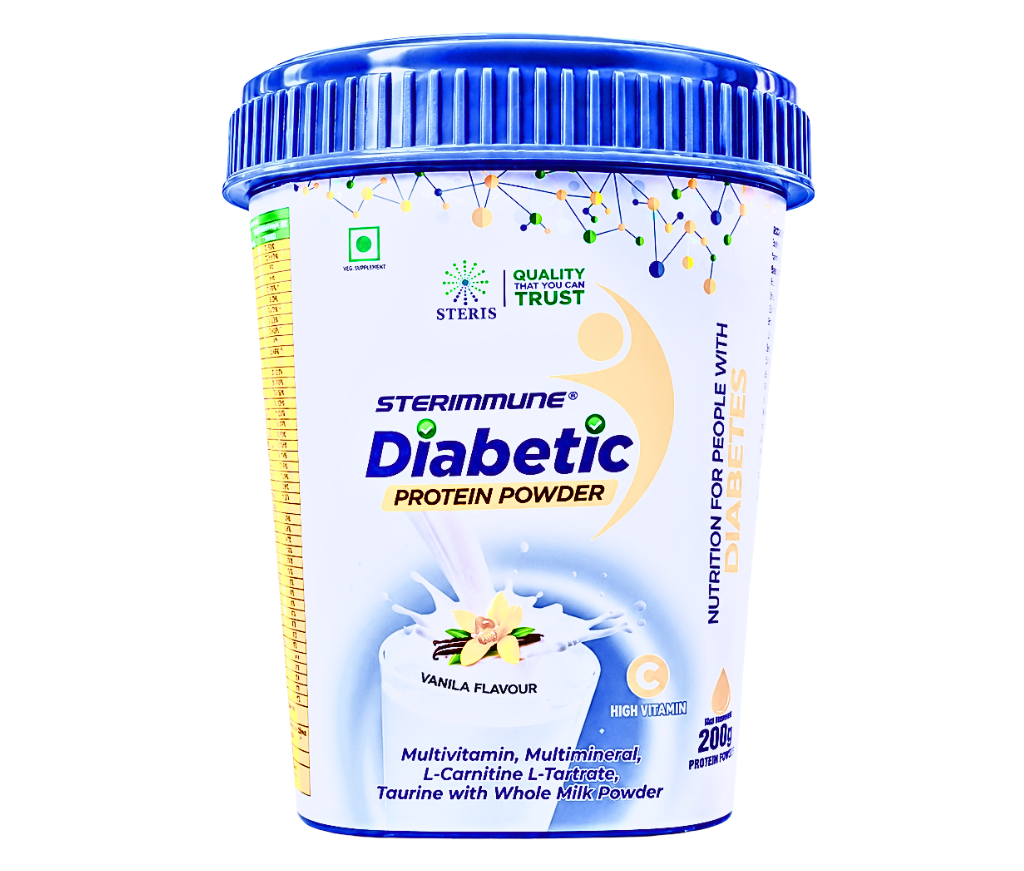
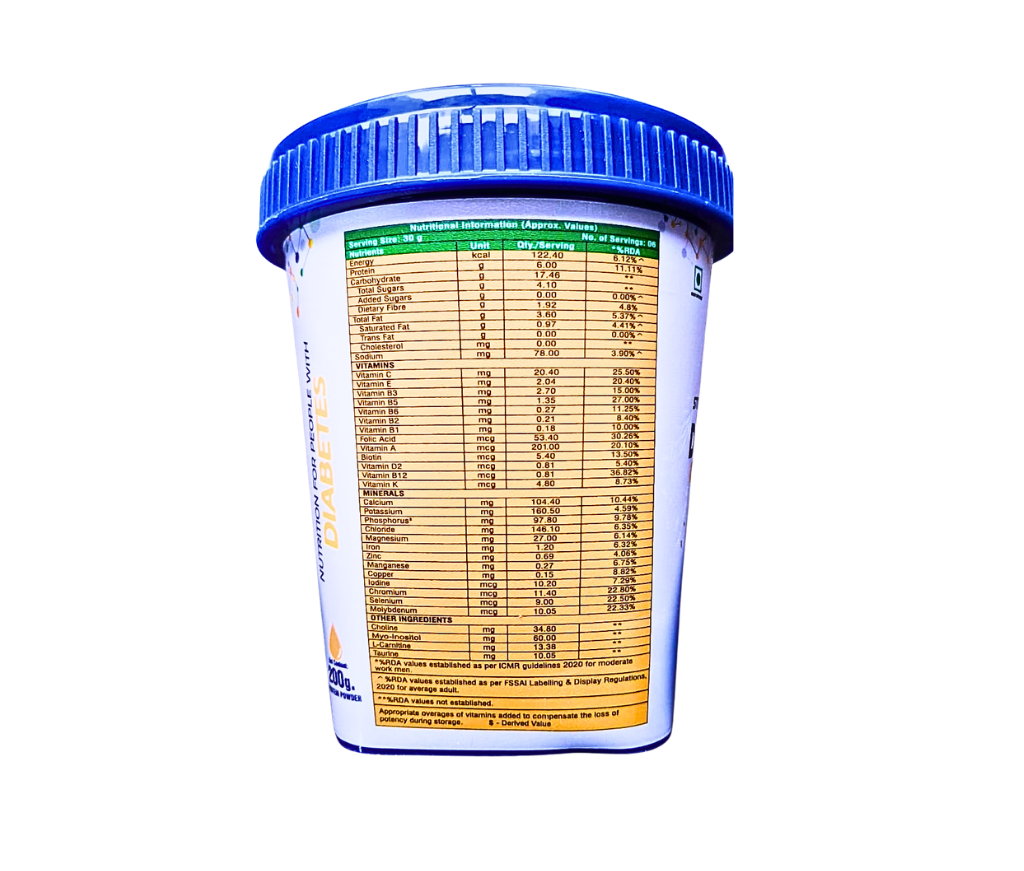
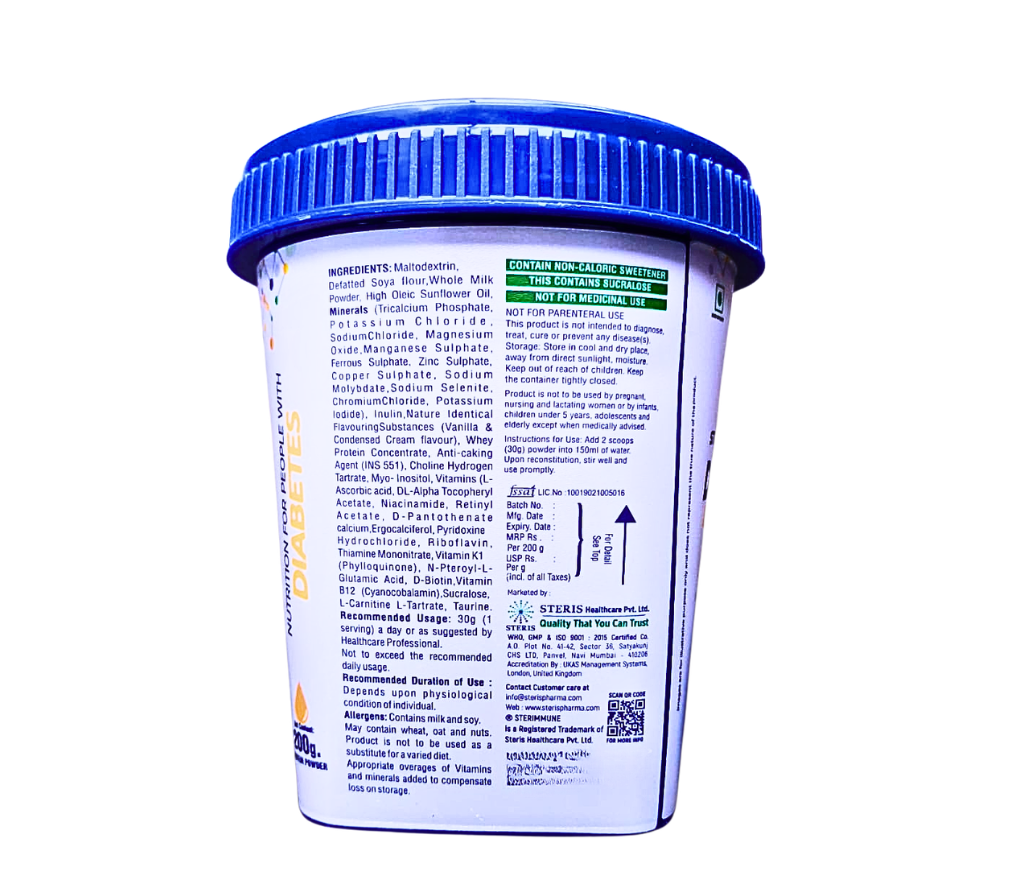
Sterimmune + Diabetic Protein powder
 Item requires a valid prescription
Manufactured By Steris Healthcare Pvt Ltd
Composition Multivitamin + Multimineral + l-Carnitine L-Tartrate + Taurine With Whole Milk Powder
Rs 200.00
MRP Rs 351.56
(43% OFF)
Includes all taxes
Package SIZE
( For 200 GM )

100% Authentic
Products

Free
Shipping*

Products
Return Policy
Description:
Multivitamin + Multimineral + L-Carnitine L-Tartrate + Taurine With Whole Milk Powder is a combination dietary supplement designed to provide a blend of essential vitamins, minerals, amino-acid-related nutrients, and whole milk powder in one formulation. Products in this category are generally used to complement daily nutritional intake when the diet may not consistently provide adequate amounts of certain nutrients.
For shoppers searching for the uses, benefits, side effects, ingredients, dosage, and buying information for a multivitamin, multimineral, L-Carnitine L-Tartrate, taurine, and whole milk powder supplement, the most important consideration is the product's actual Supplement Facts panel. Multivitamin/mineral products do not have one universal formula; manufacturers can select different nutrients and amounts.
What Is Multivitamin + Multimineral + L-Carnitine L-Tartrate + Taurine With Whole Milk Powder?
This type of nutritional supplement combines several ingredient categories:
-
Multivitamins provide vitamins needed for normal physiological functions.
-
Multiminerals supply minerals that contribute to processes such as energy metabolism, bone health, nerve function, and other normal body functions, depending on the nutrients included.
-
L-Carnitine L-Tartrate is a form of carnitine. Carnitine is involved in energy metabolism and is naturally present in foods such as meat and dairy products.
-
Taurine is an amino-acid-related compound naturally found in the body and in some foods.
-
Whole milk powder provides milk-derived nutritional components, depending on the amount and specification used by the manufacturer.
The combination is therefore positioned as a nutritional support supplement, rather than a medicine intended to diagnose, treat, cure, or prevent disease.
Importantly, dietary supplements should complement—not replace—a varied, nutritious diet. The NIH Office of Dietary Supplements notes that multivitamin/mineral supplements cannot substitute for the broader nutritional benefits of food.
Key Uses of This Nutritional Supplement
The practical use of Multivitamin + Multimineral + L-Carnitine L-Tartrate + Taurine With Whole Milk Powder depends on the product's exact formulation and the consumer's nutritional needs.
1. Daily nutritional supplementation
A multivitamin and multimineral formula can help supplement the diet with vitamins and minerals. This may be useful for people whose food intake does not consistently provide adequate quantities of particular nutrients.
However, taking more nutrients does not necessarily mean receiving greater health benefits. The appropriate amount depends on the individual nutrient, age, sex, diet, and health circumstances.
2. Nutritional support for active lifestyles
L-Carnitine is involved in transporting long-chain fatty acids into mitochondria, where they can be involved in energy production. However, this biological role should not automatically be interpreted as proof that every L-carnitine supplement improves athletic performance or causes weight loss. Evidence for specific outcomes varies by population and use.
3. Supporting normal energy metabolism
Several vitamins and minerals participate in normal energy metabolism. Consequently, a properly formulated multivitamin/mineral supplement can help maintain adequate nutrient intake.
That does not mean the product should be advertised as a treatment for chronic fatigue or a substitute for investigating unexplained tiredness.
4. Convenient combination nutrition
One potential advantage of a combined formulation is convenience. Instead of purchasing separate vitamin, mineral, and amino-acid-related supplements, consumers may prefer a single product containing multiple nutritional ingredients.
Potential Benefits
The potential benefits of this type of supplement should be understood as nutritional support, rather than guaranteed therapeutic outcomes.
Nutrient intake support
The primary benefit of a multivitamin/mineral product is helping provide selected nutrients in the diet. The actual nutritional contribution depends entirely on the amounts listed on the Supplement Facts label.
Support for normal body functions
Vitamins and minerals have different physiological roles. Depending on the formula, nutrients may contribute to normal immune function, metabolism, nervous-system function, formation of blood cells, or maintenance of bones and tissues.
A product should therefore be evaluated by its complete nutrient profile, not simply by the number of ingredients listed on the front label.
Carnitine-related nutritional support
L-Carnitine participates in energy metabolism. The body can produce carnitine, and dietary sources also contribute to intake. Supplementation is not automatically necessary for everyone.
Convenient nutritional formulation
Combining multiple nutrients can make supplementation simpler for consumers who have a legitimate reason to use a nutritional supplement.
L-Carnitine L-Tartrate: What You Should Know
L-Carnitine L-Tartrate is a commonly used supplemental form of carnitine. Carnitine has an important role in energy metabolism, particularly in the transport of fatty acids into mitochondria.
Consumers should avoid assuming that the presence of L-Carnitine means the product is a guaranteed fat burner, weight-loss supplement, or sports-performance enhancer. Those are outcome-specific claims that depend on the dose, population, diet, exercise program, and available clinical evidence.
Taurine: What Is Its Role?
Taurine is naturally present in the human body and in a variety of foods. In a combination nutritional supplement, taurine is included as an additional nutritional ingredient.
The presence of taurine does not mean that the product should be considered an energy drink or stimulant. The product's actual effects depend on its entire formulation and the amount of each ingredient.
Whole Milk Powder: Why Is It Included?
Whole milk powder is a milk-derived ingredient that can contribute nutritional components such as protein, carbohydrate, fat, and minerals, depending on its quantity and specifications.
People with milk allergy should pay particular attention to the ingredient list and allergen statement. Individuals with lactose intolerance may also need to consider their personal tolerance.
Possible Side Effects
Most dietary supplements can produce unwanted effects in some people, particularly when ingredients are taken in excessive amounts or combined with other supplements or medicines.
For carnitine supplements, reported adverse effects can include gastrointestinal symptoms such as nausea, vomiting, abdominal cramps, diarrhea, or a characteristic fishy body odor, particularly at higher intakes.
Potential issues with multivitamin/mineral products depend on the individual nutrients and their doses. Taking multiple supplements containing the same vitamins or minerals can unintentionally increase total intake. NIH guidance specifically notes safety concerns and potential interactions associated with multivitamin/mineral supplementation.
Stop using a supplement and seek medical advice if you experience a serious or unusual reaction. FDA identifies symptoms such as difficulty breathing, swelling of the throat or tongue, chest pain, severe vomiting or diarrhea, fainting, or abnormal bleeding as potentially serious adverse events requiring medical attention.
Who Should Consult a Healthcare Professional Before Using It?
Talk with a doctor, pharmacist, registered dietitian, or other qualified healthcare professional before using this type of supplement if you:
-
Take prescription or over-the-counter medicines.
-
Already use other multivitamins or mineral supplements.
-
Are pregnant or breastfeeding.
-
Have kidney, liver, metabolic, or other chronic health conditions.
-
Have a milk allergy or difficulty tolerating dairy ingredients.
-
Are preparing for surgery.
-
Are considering high-dose or long-term supplementation.
FDA emphasizes that dietary supplements can interact with medicines and may have important effects in certain health situations.
How to Choose the Right Product
Before purchasing Multivitamin + Multimineral + L-Carnitine L-Tartrate + Taurine With Whole Milk Powder, compare the following:
Check the Supplement Facts panel
Look at the amount of every vitamin, mineral, L-carnitine, taurine, and other active ingredient per serving. There is no single standard multivitamin/mineral formula.
Verify the serving size
A product may contain a large number of nutrients but require multiple tablets, capsules, or scoops per day. Always compare products based on the recommended serving rather than the amount displayed in marketing copy.
Check allergens
Because whole milk powder is included, review the allergen information carefully if you have milk-related dietary restrictions.
Avoid unsupported medical promises
Be cautious about products marketed as cures for diseases or guaranteed solutions for weight loss, fatigue, infertility, or other medical conditions. FDA states that dietary supplements are not FDA-approved to diagnose, treat, cure, or prevent disease.
Buy from a transparent manufacturer
Look for complete labeling, manufacturer information, batch/lot information where applicable, and clear directions for use. FDA places responsibility on dietary supplement companies to ensure their products meet applicable safety and labeling requirements, while FDA generally regulates supplements through post-market oversight rather than premarket approval.
How to Use It Safely
Use the product according to the manufacturer's labeled serving instructions. Do not exceed the recommended serving unless a qualified healthcare professional specifically advises you to do so.
Avoid stacking several products that contain the same vitamins, minerals, or other active ingredients without first checking the combined amounts.
Most importantly, do not use a supplement as a replacement for a balanced diet. A supplement is intended to supplement nutritional intake, not replace normal food.
Final Buying Takeaway
Multivitamin + Multimineral + L-Carnitine L-Tartrate + Taurine With Whole Milk Powder can be considered a convenient combination nutritional supplement for people looking to complement their daily nutrient intake. Its potential value depends on the exact formulation, serving size, nutrient quantities, dietary needs, and individual health circumstances.
For the best purchasing decision, compare the complete ingredient panel, serving instructions, allergen information, manufacturer details, and evidence behind any advertised benefit. Avoid assuming that more ingredients automatically mean a better product.
Because dietary supplements can interact with medications and are not FDA-approved for safety and effectiveness before marketing, consumers should make informed decisions and consult a healthcare professional when appropriate.
Frequently Asked Questions
1. What is Multivitamin + Multimineral + L-Carnitine L-Tartrate + Taurine With Whole Milk Powder?
It is a combination dietary supplement containing multiple vitamins and minerals along with L-Carnitine L-Tartrate, taurine, and whole milk powder. The exact nutritional composition varies by manufacturer.
2. What are the main uses of this supplement?
Its primary use is to supplement dietary intake with selected vitamins, minerals, carnitine, taurine, and milk-derived nutrients. It should not be considered a treatment for a disease.
3. What are the benefits of L-Carnitine L-Tartrate?
L-carnitine has a role in energy metabolism and fatty-acid transport. However, the presence of L-carnitine does not guarantee weight loss or improved athletic performance.
4. Does this supplement increase energy?
Some vitamins and minerals contribute to normal energy metabolism, but a supplement should not be considered a guaranteed energy booster. Persistent tiredness should be discussed with a healthcare professional.
5. Is this supplement good for daily use?
It may be appropriate for some people when used according to the product label, but daily use depends on the formulation, total nutrient intake, medications, and individual health needs.
6. Can L-Carnitine cause side effects?
Yes. L-carnitine supplementation can cause gastrointestinal symptoms such as nausea, abdominal cramps, vomiting, or diarrhea in some people. A fishy body odor can also occur.
7. Can multivitamins cause side effects?
Yes. Side effects depend on the ingredients and doses. Excessive intake of certain vitamins or minerals can be harmful, especially when multiple supplements are combined.
8. Does this product contain milk?
If the formulation specifically contains whole milk powder, it contains a milk-derived ingredient. People with milk allergies should review the product's allergen statement before use.
9. Can people with lactose intolerance take it?
That depends on the amount of milk-derived ingredients and the individual's tolerance. Check the label and consult a healthcare professional if uncertain.
10. Can I take this supplement with other vitamins?
Do not automatically combine it with another multivitamin or mineral supplement. Compare the Supplement Facts panels first to avoid unnecessarily high total intake of overlapping nutrients.
11. Is this supplement FDA approved?
In the United States, FDA does not approve dietary supplements for safety and effectiveness before they are marketed. Manufacturers are responsible for complying with applicable safety and labeling requirements, while FDA has post-market enforcement authority.
12. Does this supplement help with weight loss?
The presence of L-carnitine does not mean the product is a guaranteed weight-loss supplement. Weight-management outcomes depend on overall diet, physical activity, energy balance, and individual factors.
13. Can I take it during pregnancy?
Pregnant or breastfeeding individuals should consult a qualified healthcare professional before taking a multivitamin/mineral combination containing additional ingredients.
14. Can children take this supplement?
Do not give an adult-formulated supplement to a child unless it is specifically labeled for that age group or recommended by a healthcare professional.
15. What should I check before buying this supplement?
Check the Supplement Facts panel, serving size, ingredient amounts, allergen statement, directions, manufacturer information, and any quality or testing information provided by the manufacturer.
16. Can this supplement replace a healthy diet?
No. Multivitamin/mineral supplements are intended to supplement dietary intake and cannot replace the nutritional benefits of a varied diet.
17. Should I take this supplement before or after food?
Follow the manufacturer's directions. If the label does not specify timing, a pharmacist or healthcare professional can advise you based on the complete formulation and your individual circumstances.
18. What should I do if I experience side effects?
Stop using the product if you experience a concerning reaction and seek appropriate medical advice. Serious symptoms such as difficulty breathing, throat or tongue swelling, chest pain, fainting, or severe persistent vomiting require prompt medical attention.
19. Is more L-Carnitine always better?
No. Increasing the dose does not automatically produce greater benefits and may increase the likelihood of unwanted effects. Follow the labeled serving unless a healthcare professional recommends otherwise.
20. Who should I ask before taking this supplement?
A doctor, pharmacist, registered dietitian, or other qualified healthcare professional can help determine whether the product is appropriate, particularly if you take medicines, use other supplements, have a medical condition, or have dietary restrictions.