


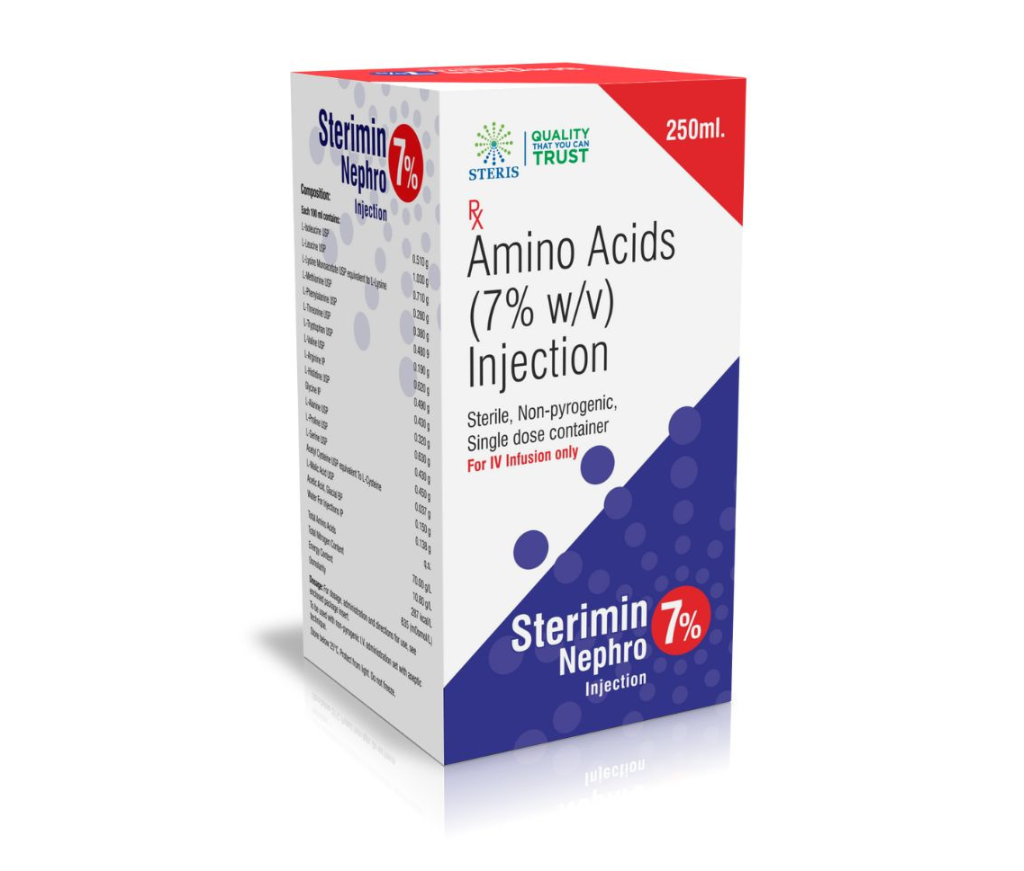
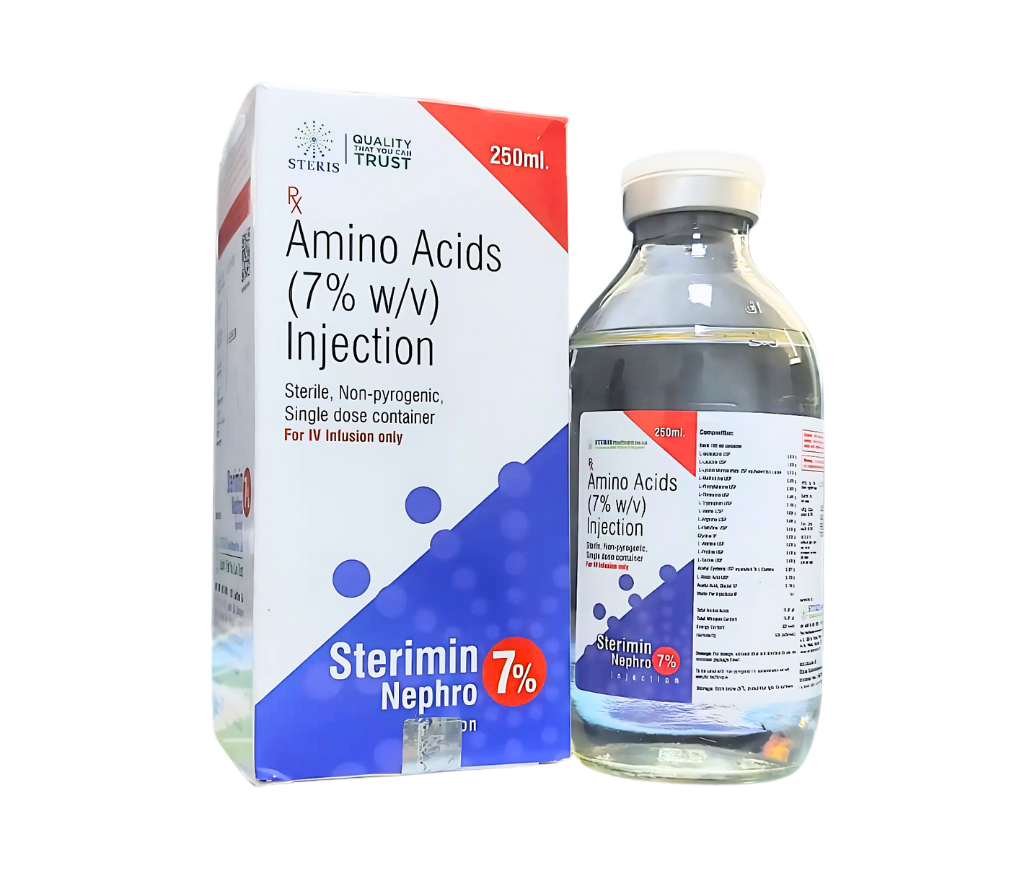
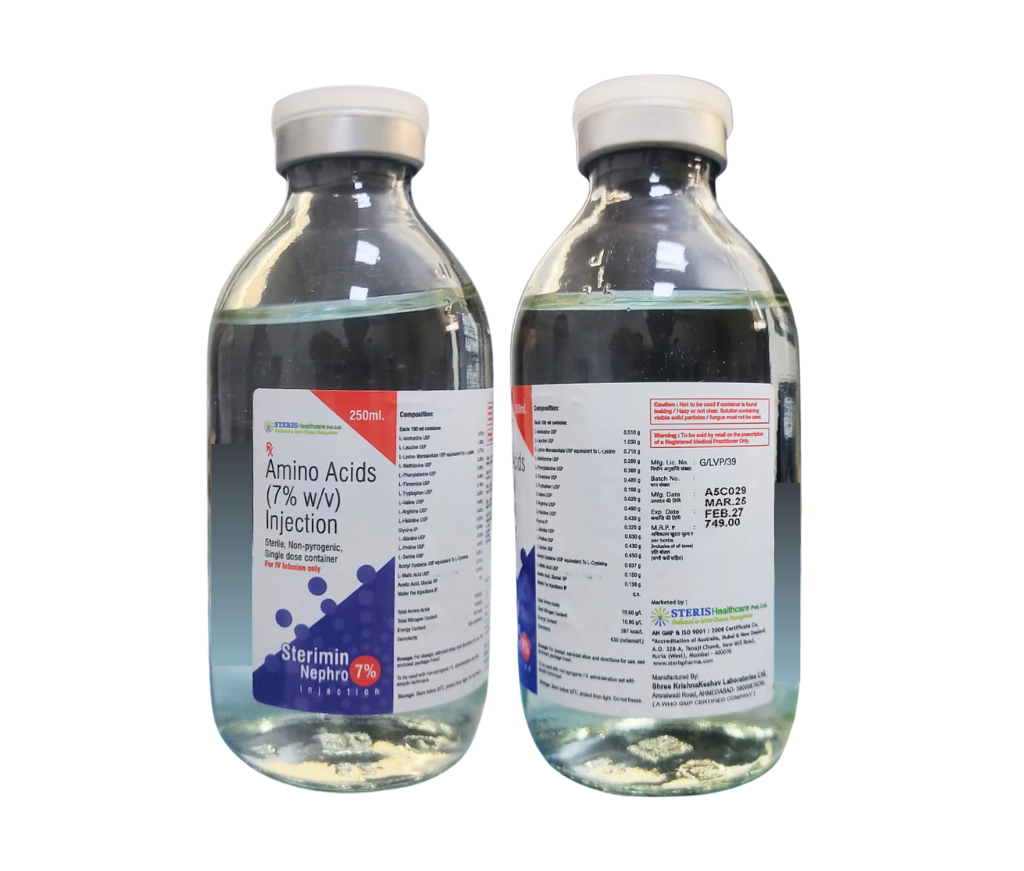
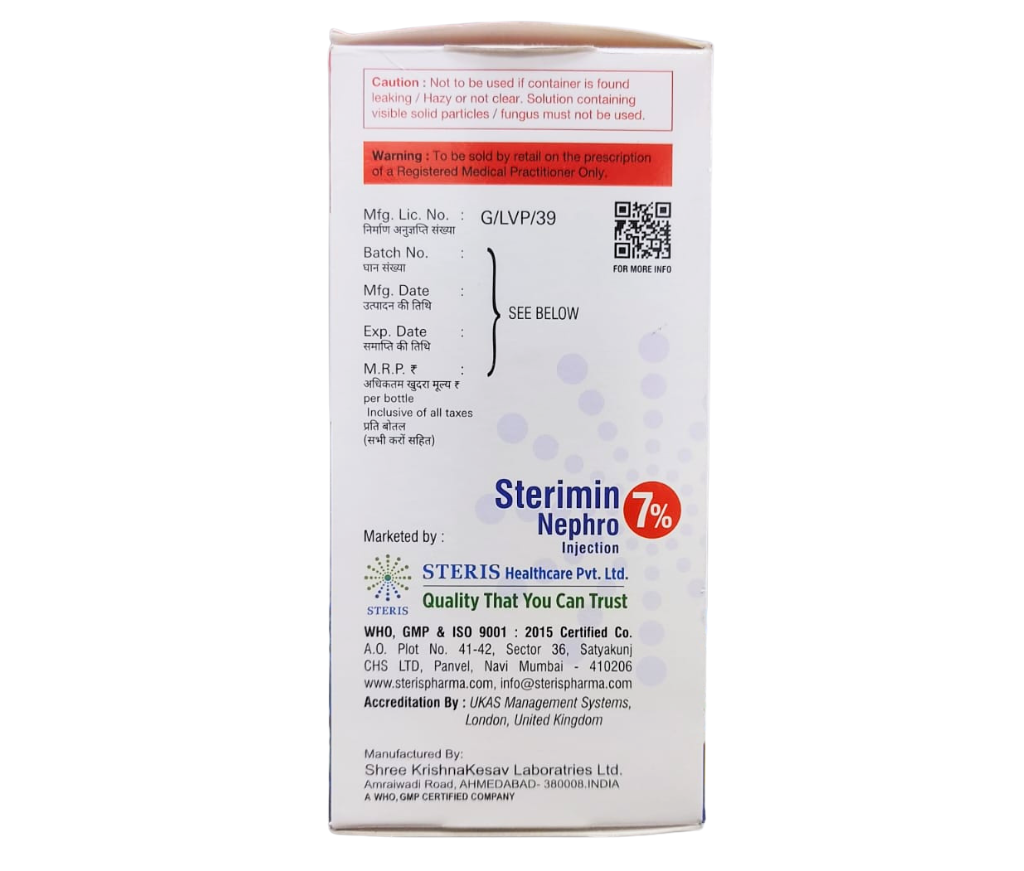
Amino Acid Injection
 Item requires a valid prescription
Manufactured By Steris Healthcare Pvt Ltd
Composition amino acids inj 7%
Rs 524.30
MRP Rs 749.00
(30% OFF)
Includes all taxes
Package SIZE
( For 250 ml Injection )

100% Authentic
Products

Free
Shipping*

Products
Return Policy
Description:
STERIMIN NEPHRO 7% is an amino acids injection marketed by Steris Healthcare Pvt. Ltd. and supplied in a convenient 250 ml injection pack. It is a sterile injectable nutritional formulation intended for use under appropriate medical supervision. If you are looking for information about amino acids inj, its composition, uses, availability, prescription requirements, and ordering options in India, this product page provides the key details you should know before purchasing.
STERIMIN NEPHRO 7% – Product Information
| Product Detail | Information |
|---|---|
| Brand Name | STERIMIN NEPHRO 7% |
| Composition | Amino acids injection |
| Product Form | Injection |
| Pack Size | 250 ml |
| Manufacturer/Marketer | Steris Healthcare Pvt. Ltd. |
| Target Market | India |
| Product Category | Injectable nutritional formulation |
| Primary Keyword | amino acids inj |
What is STERIMIN NEPHRO 7% Amino Acids Injection?
STERIMIN NEPHRO 7% is an injectable amino acids formulation designed for use when amino acid supplementation through an injectable route is considered medically appropriate. Amino acids are important building blocks involved in protein synthesis and several essential physiological processes.
Unlike oral nutritional products, an amino acids injection is administered through a medical route and therefore requires professional supervision. The decision to use an injectable nutritional formulation depends on factors such as the patient's nutritional status, underlying illness, ability to receive nutrition orally or through the gastrointestinal tract, kidney function, and other clinical considerations.
If your doctor has prescribed STERIMIN NEPHRO 7%, check the product label and prescription carefully before placing an order.
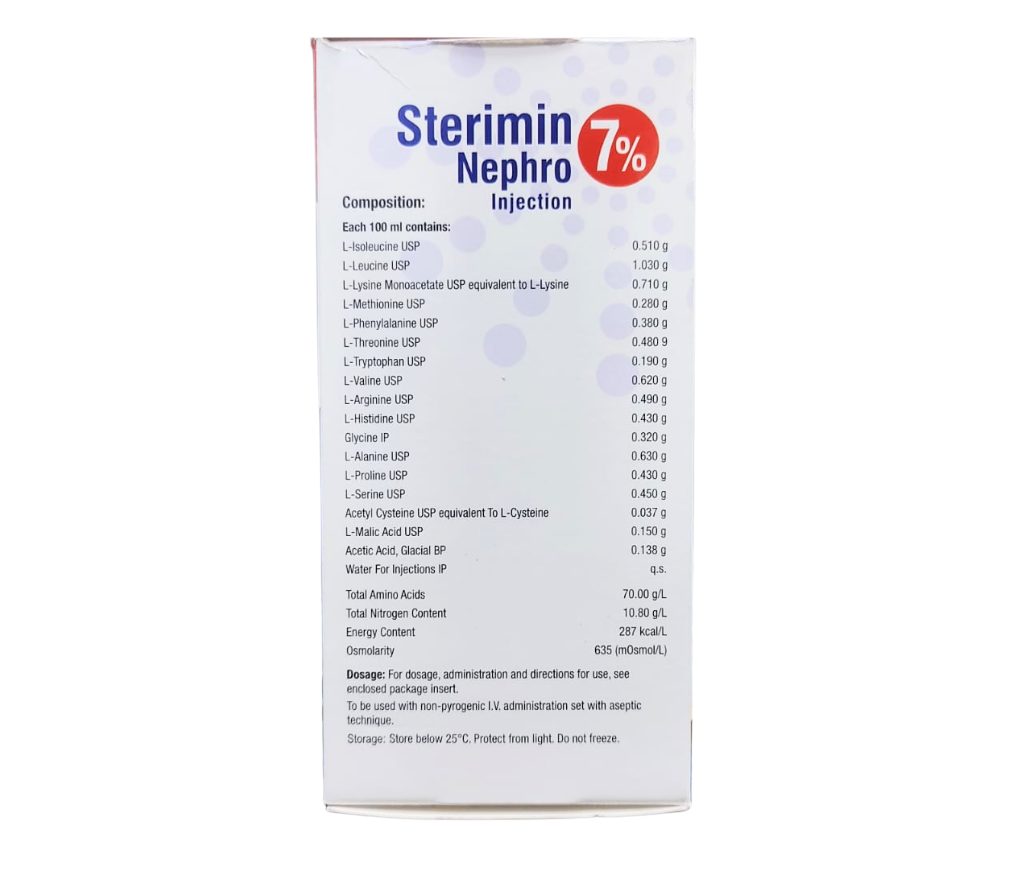
STERIMIN NEPHRO 7% Composition
The stated composition of this product is amino acids injection. The exact amino acid profile and concentration should always be confirmed from the manufacturer's current pack insert, label, or accompanying product literature before use.
Because injectable nutritional formulations can have specific clinical requirements, do not substitute this product with another amino acid injection simply because the product name or general composition appears similar. A healthcare professional should determine whether a particular formulation is suitable.
What is Amino Acids Injection Used For?
An amino acids injection may be used as part of medical nutritional management when supplementation with amino acids is clinically required. Injectable nutritional therapy can be considered in situations where nutritional requirements cannot be adequately met through normal oral intake or when a healthcare professional determines that parenteral nutritional support is appropriate.
For STERIMIN NEPHRO 7%, the appropriate indication should be confirmed with the prescribing doctor and the current manufacturer's product information. The product should not be self-administered or used solely on the basis of information found online.
Patients with kidney-related conditions, altered metabolism, fluid or electrolyte concerns, or other significant medical conditions may require particularly careful assessment before receiving injectable nutritional products.
Why Buy STERIMIN NEPHRO 7% Online in India?
If you have a valid prescription for STERIMIN NEPHRO 7% amino acids injection, purchasing from a legitimate online pharmacy or authorized healthcare supplier can make medicine procurement more convenient.
Before ordering, buyers should verify:
-
The exact brand name: STERIMIN NEPHRO 7%
-
Product form: Injection
-
Pack size: 250 ml
-
Manufacturer/marketer: Steris Healthcare Pvt. Ltd.
-
Batch number and expiry date
-
Packaging integrity
-
Storage instructions
-
Prescription requirements
-
Seller authenticity and licensing information
For injectable medicines, product authenticity and proper handling are especially important. Avoid purchasing from unknown sellers offering unusually low prices or products with damaged, opened, or unclear packaging.
STERIMIN NEPHRO 7% Price in India
The price of STERIMIN NEPHRO 7% 250 ml injection can vary depending on the seller, location, applicable taxes, discounts, availability, and current pricing. Online medicine prices can also change over time.
For the most accurate current price, check the listing provided by a licensed pharmacy or authorized supplier before completing your purchase. Always compare the brand, strength/concentration, pack size, and manufacturer/marketer rather than comparing price alone.
Can I Order Amino Acids Inj Online?
Yes, amino acids inj may be available through online pharmacy channels in India, subject to product availability and applicable prescription requirements.
When ordering an injectable product online, provide a valid prescription if requested by the pharmacy. Make sure the ordered product matches the prescription and verify the pack size before checkout.
If a website allows you to purchase a prescription product without appropriate verification, use caution and consider choosing a licensed and reputable pharmacy instead.
How Should Amino Acids Injection Be Taken?
An amino acids injection is not intended to be taken orally. Injectable amino acid formulations must be administered through the appropriate medical route by a qualified healthcare professional.
The doctor or healthcare team determines the appropriate dose, administration method, infusion rate, and duration according to the patient's clinical condition and nutritional requirements. Do not attempt to inject or infuse STERIMIN NEPHRO 7% yourself.
Do not change the prescribed quantity or administration schedule without consulting your doctor.
Important Information Before Buying Amino Acids Inj
Before purchasing amino acids inj, speak with your doctor or pharmacist about existing medical conditions, current medicines, allergies, nutritional status, and any relevant laboratory results.
You should also check the package for:
-
Correct product name and concentration.
-
Intact vial/bottle or container and packaging.
-
Valid expiry date.
-
Clear manufacturer information.
-
Appropriate storage conditions.
-
Any visible discoloration, particles, leakage, or damage.
Do not use an injectable product if its packaging appears compromised or if the product does not match the prescribed medicine. Contact the pharmacy or healthcare professional for clarification.
Prescription Requirement
Whether a prescription is required can depend on the product's classification, applicable Indian regulations, and the pharmacy's dispensing policy. Since STERIMIN NEPHRO 7% is an injectable medicinal product, patients should be prepared to provide a prescription where required.
A prescription also helps ensure that the product is being used for an appropriate clinical indication and under professional supervision.
Buy STERIMIN NEPHRO 7% 250 ml Online
Looking to buy amino acids inj online in India? STERIMIN NEPHRO 7% is available as a 250 ml injection, marketed by Steris Healthcare Pvt. Ltd.
Before placing an order, confirm that you are purchasing the exact product prescribed by your healthcare professional. Enter the correct delivery details, upload a prescription if required, and review the product information, price, expiry, and seller details before payment.
For hospital, clinic, institutional, or recurring requirements, buyers may also wish to confirm availability and applicable commercial terms directly with the authorized supplier or healthcare distributor.
Product Summary
STERIMIN NEPHRO 7% is an amino acids injection supplied in a 250 ml pack and marketed by Steris Healthcare Pvt. Ltd. It is intended for professional medical use where injectable amino acid supplementation is considered appropriate.
For safe purchasing, always verify the product name, composition, pack size, manufacturer/marketer, expiry date, packaging, and prescription requirements. Use the product only as directed by a qualified healthcare professional.
Frequently Asked Questions
1. Where can I buy amino acids inj online?
You can look for amino acids inj through licensed online pharmacies and authorized medicine suppliers operating in India. Before ordering, verify the seller, product details, packaging, expiry date, and prescription requirements.
2. What is the price of amino acids inj?
The price of amino acids inj varies by brand, formulation, pack size, seller, location, and applicable discounts or taxes. Check the current listing price before purchasing.
3. Can I order amino acids inj online?
Yes, amino acids injections may be ordered online in India when available, subject to applicable regulations and prescription requirements. Use a reputable pharmacy and ensure that the product matches your prescription.
4. Is amino acids inj available from Steris Healthcare?
STERIMIN NEPHRO 7% is marketed by Steris Healthcare Pvt. Ltd. and is described as an amino acids injection in a 250 ml pack. Confirm current stock and distribution availability with an authorized supplier.
5. What is amino acids inj used for?
Amino acids injections can be used as part of medically supervised nutritional support when amino acid supplementation is required. The specific use of STERIMIN NEPHRO 7% should be confirmed with the prescribing healthcare professional and current product information.
6. What is the composition of amino acids inj?
The stated composition of STERIMIN NEPHRO 7% is amino acids injection. For the complete ingredient profile and exact quantities, refer to the current product label or manufacturer's package insert.
7. Is a prescription required?
Prescription requirements depend on the applicable regulations and dispensing policy. As this is an injectable medicinal product, consult a healthcare professional and keep a valid prescription available when ordering.
8. How should amino acids inj be taken?
Amino acids injection should be administered by a qualified healthcare professional using the route, dose, and administration rate prescribed for the patient. It should not be self-injected.
9. What should I know before buying amino acids inj?
Check the brand, formulation, concentration, 250 ml pack size, manufacturer/marketer, expiry date, packaging condition, storage requirements, seller authenticity, and prescription requirements before buying.
10. How can I order amino acids inj online?
Select the exact prescribed product from a legitimate online pharmacy, verify STERIMIN NEPHRO 7% 250 ml, provide a prescription if required, review the seller and product information, and complete the pharmacy's checkout process.

