


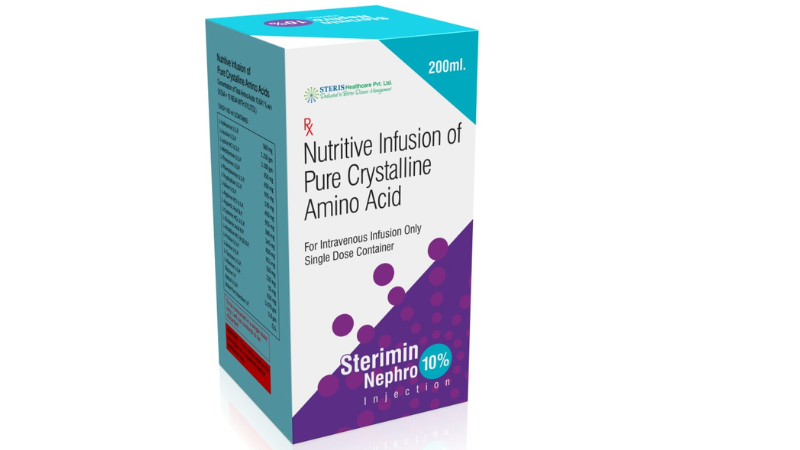
STERIMIN NEPHRO 10%
 Item requires a valid prescription
Manufactured By Steris Healthcare Pvt Ltd
Composition Amino Acids (10% ) IV Fluid
Rs 426.30
MRP Rs 609.00
(30% OFF)
Includes all taxes
Package SIZE
( For 200 ml Injection )

100% Authentic
Products

Free
Shipping*

Products
Return Policy
Description:
Nutritive infusion of pure crystalline amino acids is an intravenous nutritional formulation designed to provide amino acids when a patient's nutritional requirements cannot be adequately met through normal oral or enteral nutrition. Amino acids are the building blocks used by the body to synthesize proteins and support numerous metabolic processes.
These products are generally used as part of parenteral nutritional support, particularly in hospitalized or clinically monitored patients who cannot consume sufficient nutrition by mouth or through the gastrointestinal tract. Product formulations vary by manufacturer and may contain different concentrations of essential and non-essential amino acids, with some formulations also containing carbohydrates such as xylitol or sorbitol.
Current pharmaceutical product information describes pure crystalline amino acid infusions as a source of nitrogen for patients requiring nutritional support when oral nutrition is not tolerated, undesirable, or inadequate.
If you are searching for the nutritive infusion of pure crystalline amino acids, its uses, benefits, side effects, price, composition, or where to buy it, it is important to understand that this is not an ordinary nutritional supplement. It is a sterile intravenous product that should be selected, prepared, and administered by qualified healthcare professionals.
What Is Nutritive Infusion of Pure Crystalline Amino Acids?
Nutritive infusion of pure crystalline amino acids is a sterile solution containing a carefully formulated mixture of amino acids for intravenous nutritional support.
Depending on the specific product, the formulation may contain amino acids such as
- L-Leucine
- L-Isoleucine
- L-Valine
- L-Lysine
- L-Methionine
- L-Threonine
- L-Phenylalanine
- L-Tryptophan
- L-Arginine
- L-Histidine
- Glycine
- L-Alanine
- L-Proline
- L-Serine
- L-Tyrosine
Some commercial formulations also contain a carbohydrate component. For example, published product information for certain formulations lists xylitol or sorbitol alongside amino acids.
Because formulations are not identical, healthcare professionals should always verify the exact product composition, concentration, route of administration, and prescribing information before use.
Nutritive Infusion of Pure Crystalline Amino Acids Uses
The primary use of a nutritive infusion of pure crystalline amino acids is nutritional support when adequate protein or nitrogen intake cannot be achieved through normal feeding.
1. Parenteral nutritional support
Amino acid solutions can provide a source of nitrogen for patients who require intravenous nutritional support because oral or enteral nutrition is insufficient, not possible, or medically inappropriate.
FDA-approved amino-acid parenteral nutrition products similarly describe their role as providing amino acids when oral or enteral nutrition cannot meet nutritional requirements.
2. Supporting protein synthesis
Amino acids supplied through nutritional therapy provide substrates needed for protein synthesis. This is particularly relevant when a patient has increased nutritional requirements or cannot obtain sufficient protein through normal dietary intake.
3. Nutritional support during clinical recovery
Depending on the patient's condition and overall nutritional plan, amino-acid infusion may form part of nutritional support during periods when adequate oral feeding is not possible.
Some Indian product information specifically describes these formulations for patients who cannot meet nutritional needs through oral intake and identifies clinical nutritional support as the therapeutic purpose.
4. Use in specialized hospital nutrition
Parenteral nutrition is often individualized. Amino acids may be combined with other nutritional components such as glucose/dextrose, lipids, electrolytes, vitamins, and trace elements depending on the patient's nutritional requirements.
For example, current DailyMed information for KABIVEN describes a parenteral nutrition formulation providing calories, protein, electrolytes, and essential fatty acids when oral or enteral nutrition is not possible, insufficient, or contraindicated. D
How Does Pure Crystalline Amino Acid Infusion Work?
Amino acids are fundamental components of proteins. Once available to the body, they can be incorporated into proteins and participate in metabolic pathways.
The purpose of an intravenous amino acid solution is therefore nutritional rather than treating a specific infection or acting as a conventional drug for pain or fever.
When the gastrointestinal route cannot adequately supply nutrients, intravenous administration can deliver amino acids directly into the circulation. The healthcare team then determines how the amino-acid solution fits into the patient's complete nutritional prescription.
The exact infusion rate and quantity depend on factors such as nutritional requirements, age, body weight, renal function, hepatic function, and the patient's overall clinical status.
Key Benefits of Nutritive Infusion of Pure Crystalline Amino Acids
Provides amino acids intravenously
The principal benefit is providing amino acids when oral or enteral nutritional intake is inadequate or cannot be used.
Supports nitrogen and protein requirements
Amino acids provide nitrogen and substrates for protein synthesis. This can be important when nutritional support is medically required.
Can be incorporated into individualized parenteral nutrition
Amino-acid solutions can be used as part of a broader nutritional regimen designed around the patient's nutritional and metabolic requirements.
Useful when oral feeding is inadequate
Published product information specifically identifies pure crystalline amino acid infusion for patients in whom oral nutrition cannot be tolerated, is undesirable, or is inadequate.
Available in different formulations
The market includes several formulations with different amino acid concentrations, volumes, and additional ingredients. Current Indian pharmaceutical listings include products described as nutritive infusions of pure crystalline amino acids, with examples available in 100 mL and 200 mL presentations.
Nutritive Infusion of Pure Crystalline Amino Acid Composition
Composition varies considerably between brands.
One published formulation lists 18 amino acid components, including essential amino acids such as leucine, isoleucine, valine, lysine, methionine, threonine, phenylalanine, and tryptophan, together with non-essential or conditionally important amino acids. It also contains xylitol.
Another Indian product listing describes a formulation containing amino acids with sorbitol in a 200 mL infusion.
Therefore, consumers should not assume that every product marketed as a nutritive infusion of pure crystalline amino acids has exactly the same composition.
Always check the individual product label.
Dosage and Administration
There is no single universal dose for every amino acid infusion.
The healthcare professional determines the dosage according to the patient's:
- Age
- Body weight
- Nutritional requirements
- Kidney function
- Liver function
- Fluid requirements
- Metabolic status
- Overall clinical condition
- Other nutritional products being administered
Product information for pure crystalline amino-acid infusion states that dosage should be determined by the physician.
These products are intended for intravenous use only and should be administered using appropriate sterile technique. Published product information also specifies sterile, non-pyrogenic, single-dose containers for certain formulations.
Do not self-administer an amino-acid infusion or attempt to inject it outside a qualified clinical setting.
Nutritive Infusion of Pure Crystalline Amino Acids: Side Effects
Side effects can depend on the formulation, infusion rate, patient's medical condition, and other components of parenteral nutrition.
Potential problems associated with intravenous amino acid therapy may include:
- Nausea
- Vomiting
- Headache
- Flushing
- Changes in blood glucose
- Electrolyte abnormalities
- Fluid or electrolyte imbalance
- Infusion-site reactions
- Changes in nitrogen metabolism
- Metabolic disturbances
Some adverse effects may be related not only to the amino-acid solution itself but also to the patient's underlying condition or other components of nutritional therapy.
Because parenteral nutrition requires individualized monitoring, healthcare professionals may monitor laboratory parameters, including electrolytes, glucose, kidney function, liver function, and other nutritional or metabolic markers.
Serious Risks and Precautions
Although amino-acid infusions are used therapeutically, they are not risk-free.
Kidney impairment
Patients with impaired kidney function may require individualized nutritional management. Amino-acid dosing may need adjustment depending on the patient's clinical condition and renal function. FDA labeling for parenteral amino-acid products specifically includes dosage considerations for renal impairment.
Liver impairment
Patients with significant liver dysfunction may require careful monitoring because amino-acid metabolism can be affected.
Fluid and electrolyte balance
Intravenous nutritional therapy can affect fluid and electrolyte status. The complete nutritional prescription should therefore be individualized and monitored.
Infection risk
The risk of infection can be associated with intravenous access and administration procedures. Sterile technique and appropriate catheter care are essential.
Infusion reactions
Any unexpected reaction during intravenous administration should be reported immediately to the healthcare professional administering the infusion.
How to Buy Nutritive Infusion of Pure Crystalline Amino Acids
If your search is “buy nutritive infusion of pure crystalline amino acids," the safest approach is to purchase through a legitimate pharmaceutical supplier, hospital pharmacy, or authorized medical distributor.
Current Indian pharmaceutical listings show several products marketed under this generic description, including 100 mL and 200 mL presentations.
Before purchasing, verify:
- Exact product name
- Amino-acid concentration
- Bottle volume
- Complete composition
- Manufacturer
- Batch number
- Manufacturing and expiry dates
- Storage requirements
- Packaging integrity
- Prescription or institutional requirements
- Whether the product is intended for human intravenous use
Do not select a product solely because it has the lowest price.
Nutritive Infusion of Pure Crystalline Amino Acids Price
The price of nutritive infusion of pure crystalline amino acids varies according to brand, formulation, concentration, bottle size, manufacturer, supplier, and location.
Current Indian supplier listings demonstrate price variation between products and pack sizes. For example, one 200 mL product listing gives a quoted price of ₹590 per bottle, while another amino-acid infusion listing shows a different price. These are supplier-specific quotations and should not be treated as a universal market price.
For a transactional purchase, confirm the current price, stock availability, pack size, delivery conditions, and applicable medical requirements before ordering.
Frequently Asked Questions
1. What is the nutritive infusion of pure crystalline amino acids used for?
It is primarily used as a source of amino acids and nitrogen for parenteral nutritional support when oral or enteral nutrition cannot provide adequate nutritional intake.
2. What are the benefits of pure crystalline amino acid infusion?
The main benefit is supplying amino acids intravenously to support protein synthesis and nutritional requirements when adequate nutrition cannot be obtained through the gastrointestinal route.
3. Is nutritive infusion of pure crystalline amino acids safe?
It can be used safely when appropriately prescribed and administered, but it requires professional supervision. The risks depend on the formulation, infusion rate, and the patient's kidney, liver, metabolic, and nutritional status.
4. Can I administer an amino-acid infusion at home?
It should not be self-administered. Intravenous amino acid therapy requires appropriate clinical assessment, sterile administration, and monitoring by qualified healthcare professionals.
5. What is the composition of pure crystalline amino acid infusion?
Composition varies by manufacturer. Many formulations contain a mixture of essential and non-essential amino acids, while some also contain ingredients such as xylitol or sorbitol. Always check the specific product label before use. Pharma India +1
6. What are the side effects of amino acid infusion?
Possible problems include nausea, vomiting, metabolic or electrolyte abnormalities, infusion-related reactions, and complications associated with intravenous administration. Individual risk depends on the product and patient's condition.
7. Who needs amino acid infusion?
It may be prescribed for patients who require parenteral nutritional support because they cannot tolerate, cannot receive, or cannot obtain adequate nutrition through oral or enteral feeding.
8. How much does nutritive infusion of pure crystalline amino acids cost?
The price depends on the brand, concentration, bottle size, and supplier. Current Indian listings show that prices can differ substantially, so buyers should obtain a current quotation rather than relying on an old online price.
9. Is pure crystalline amino acid infusion the same as a protein supplement?
No. An intravenous amino acid formulation is a medical nutritional product administered directly into the bloodstream. It is not equivalent to an oral protein powder or dietary supplement.
10. Can amino acid infusion be used for weight gain or bodybuilding?
It should not be used independently for bodybuilding, routine weight gain, or general wellness. Intravenous nutritional therapy should be reserved for appropriate medical indications and administered under professional supervision.
Conclusion
Nutritive infusion of pure crystalline amino acids is a specialized intravenous nutritional product used to provide amino acids and nitrogen when adequate nutrition cannot be achieved through oral or enteral feeding. Its primary role is parenteral nutritional support, rather than treating a specific infection or functioning as an ordinary dietary supplement.
The key benefits include supplying essential and non-essential amino acids, supporting protein synthesis, and helping meet nutritional requirements when conventional feeding is inadequate. However, the product must be selected according to the patient's nutritional and metabolic needs, and its administration requires professional medical supervision.

