


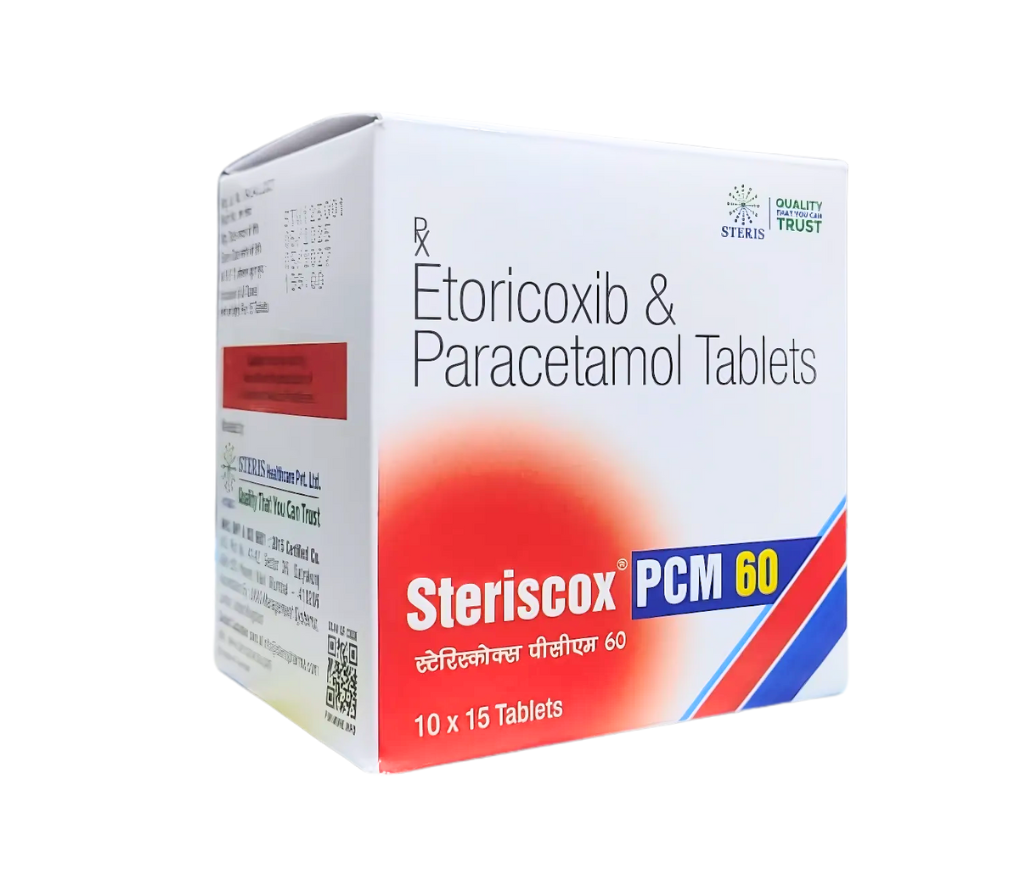
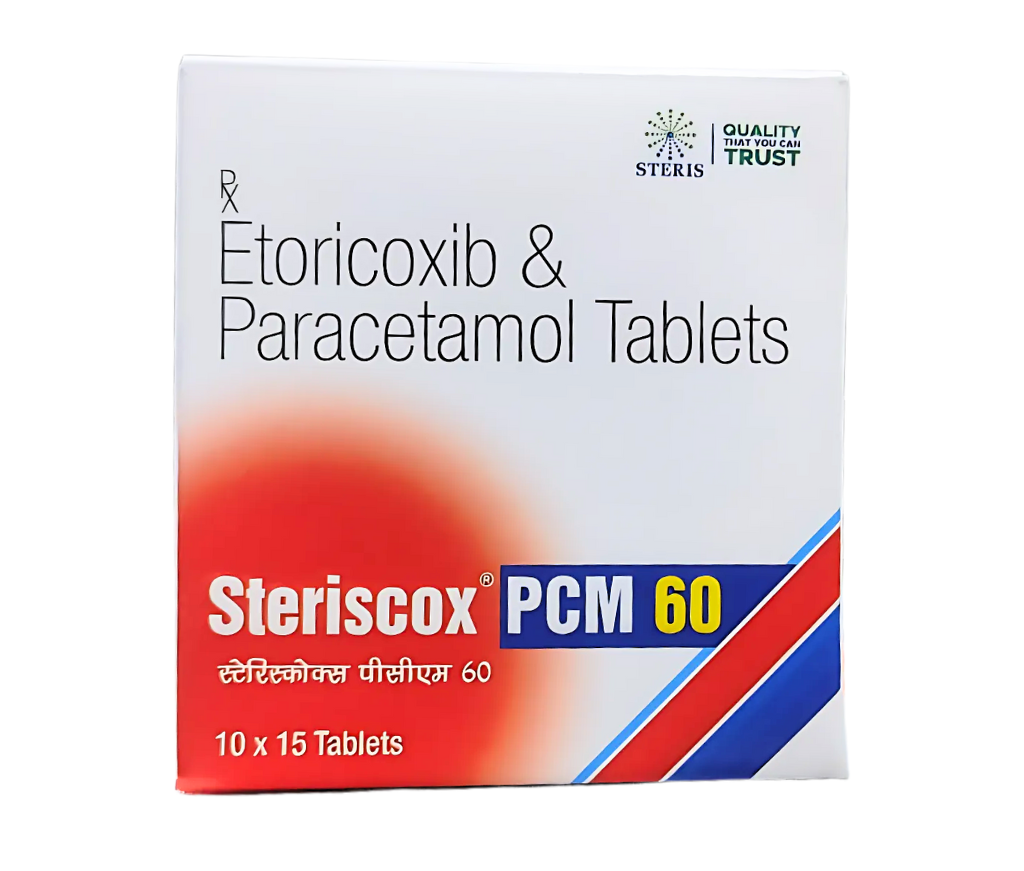
STERISCOX PCM 60
 Item requires a valid prescription
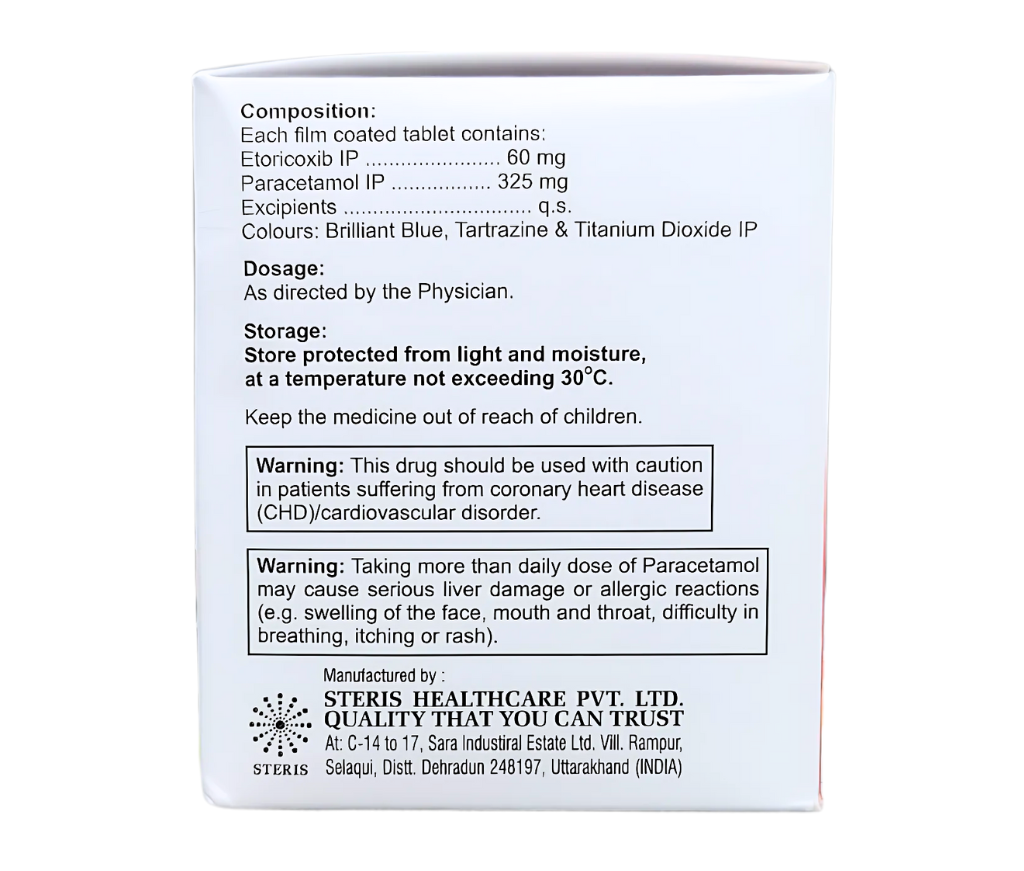
Manufactured By Steris Healthcare Pvt Ltd
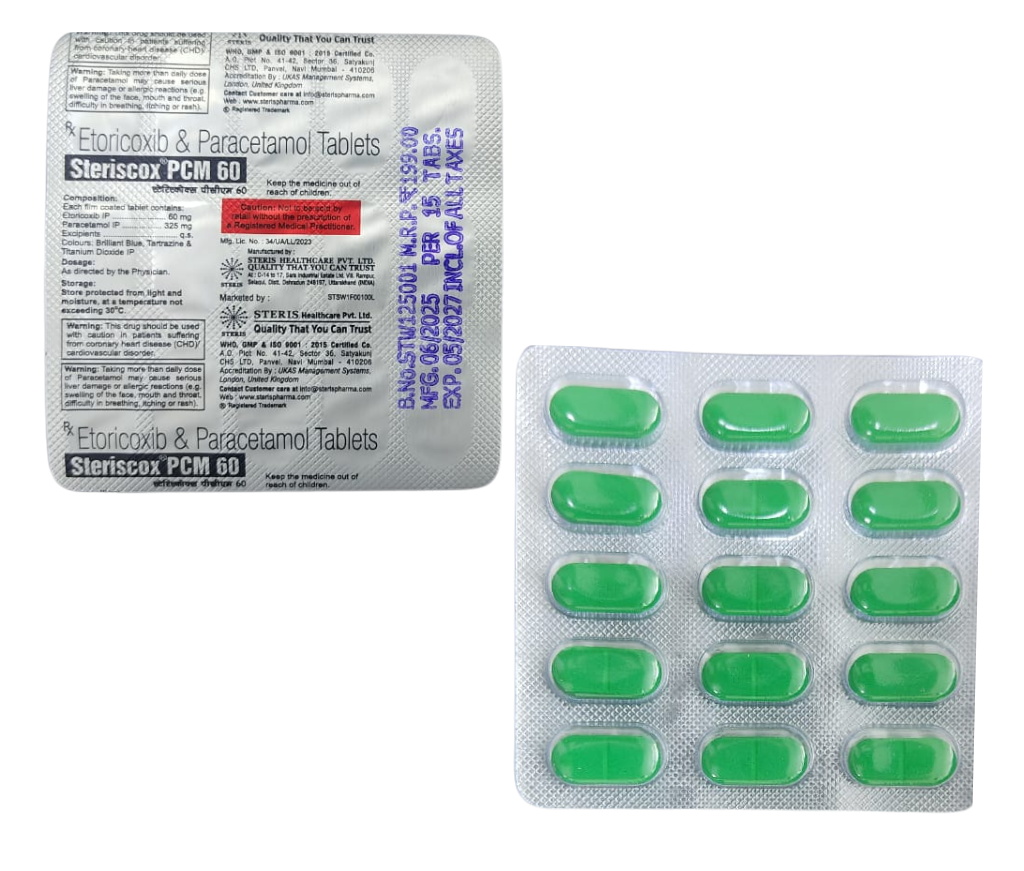
Composition etoricoxib and paracetamol tablet
Rs 193.03
MRP Rs 199.00
(3% OFF)
Includes all taxes
Package SIZE
( For 15 Tablet )

100% Authentic
Products

Free
Shipping*

Products
Return Policy
Description:
Etoricoxib and paracetamol tablet uses are primarily associated with the management of pain and, where appropriate, inflammatory symptoms. This combination brings together etoricoxib, a selective COX-2 non-steroidal anti-inflammatory drug (NSAID), and paracetamol, a pain-relieving and fever-reducing medicine. Because the two medicines work differently, a doctor may prescribe them together when additional pain control is considered appropriate.
If you are searching for etoricoxib and paracetamol tablets, understanding their uses, benefits, possible side effects, precautions, and correct use is essential before purchasing or taking them. This is particularly important because etoricoxib is a prescription NSAID and can have important cardiovascular, kidney, gastrointestinal, and blood-pressure-related safety considerations.
What Are Etoricoxib and Paracetamol Tablets?
Etoricoxib and paracetamol tablets contain two active ingredients used for pain management. Etoricoxib belongs to the NSAID class and helps reduce pain and inflammation by inhibiting cyclooxygenase-2 (COX-2). Paracetamol, also known as acetaminophen, is an analgesic and antipyretic used to relieve pain and reduce fever.
The combination may be prescribed when pain has an inflammatory component and a clinician considers combined analgesic treatment suitable. However, not every etoricoxib-plus-paracetamol product necessarily has identical approved uses, strengths, or dosing instructions. The product label and prescription should therefore be treated as the primary source for how a particular tablet should be used.
Etoricoxib and Paracetamol Tablet Uses
The most important etoricoxib and paracetamol tablet uses relate to short-term or condition-specific relief of pain where a combination of anti-inflammatory and analgesic action may be useful.
Depending on the patient's diagnosis and the specific product, a healthcare professional may consider this type of combination for conditions involving:
-
Musculoskeletal pain
-
Pain associated with inflammation
-
Arthritis-related pain and stiffness
-
Joint pain
-
Acute painful conditions where an NSAID and additional analgesic are considered appropriate
-
Other doctor-diagnosed painful inflammatory conditions
Etoricoxib is used clinically for several painful musculoskeletal and rheumatologic conditions, while paracetamol is widely used for mild-to-moderate pain and fever.
The medicine should not be used simply because you have general body pain. A proper diagnosis is important, especially when pain is severe, persistent, recurrent, or associated with swelling, fever, injury, chest symptoms, or neurological symptoms.
How Does the Combination Work?
The two ingredients provide different types of pain control.
Etoricoxib: Etoricoxib is an NSAID that selectively inhibits COX-2. This reduces the production of substances involved in pain and inflammation. NSAIDs can therefore be useful when inflammation contributes to pain.
Paracetamol: Paracetamol works primarily as an analgesic and antipyretic. It is used to reduce pain and fever, although its mechanism is different from that of traditional NSAIDs.
Using two medicines with different actions can provide broader pain-relief coverage when a doctor believes the combination is appropriate. However, this does not mean that taking more medicine will provide better or faster relief.
Key Benefits of Etoricoxib and Paracetamol Tablets
When prescribed appropriately, potential benefits of the combination may include:
1. Pain Relief
Paracetamol provides analgesic action, while etoricoxib can address pain associated with inflammation. This combination may therefore be useful for selected painful conditions.
2. Anti-Inflammatory Action
Etoricoxib belongs to the NSAID class and provides anti-inflammatory effects. This may help when pain is accompanied by inflammation or stiffness.
3. Convenient Combination Therapy
A combination tablet can be convenient because two active ingredients are provided in a single dosage form. However, convenience should not be confused with suitability for every patient.
4. May Help Improve Mobility When Pain Is Limiting Activity
Reducing pain and inflammation may make movement easier in certain musculoskeletal conditions. The goal should be appropriate symptom management alongside treatment of the underlying condition.
How to Take Etoricoxib and Paracetamol Tablets
Take the medicine exactly as prescribed by your doctor. The correct dose depends on the strength of the individual tablet, your medical condition, age, other medicines, and relevant risk factors.
Do not increase the dose if pain is not controlled. Do not take additional paracetamol-containing medicines without checking the total amount of paracetamol you are receiving.
Paracetamol overdose can cause serious liver damage, and accidental overdose can occur when people take multiple products containing paracetamol at the same time.
Likewise, do not combine etoricoxib with another NSAID unless your doctor specifically tells you to do so. NHS guidance notes that NSAIDs can interact with other NSAIDs and medicines such as anticoagulants, steroids, antidepressants, and some blood-pressure medicines.
Etoricoxib and Paracetamol Tablet Side Effects
Like all medicines, this combination can cause side effects. The risk depends on the individual ingredients, dose, duration of treatment, medical history, and other medicines being taken.
Possible side effects associated with NSAIDs such as etoricoxib can include:
-
Indigestion
-
Stomach discomfort or pain
-
Nausea or vomiting
-
Diarrhoea
-
Headache
-
Dizziness
-
Skin rash
NSAIDs can occasionally cause more serious complications, including stomach ulcers or gastrointestinal bleeding, kidney problems, and serious allergic reactions.
Paracetamol is generally well tolerated at recommended doses, but taking too much can cause severe liver damage. Serious warning signs may include nausea, vomiting, upper abdominal pain, unusual tiredness, dark urine, or yellowing of the skin or eyes.
Seek urgent medical attention for symptoms such as difficulty breathing, facial or throat swelling, severe skin reactions, vomiting blood, black stools, severe chest symptoms, or signs of serious liver injury.
Who Should Avoid or Use This Medicine With Caution?
Before taking an etoricoxib and paracetamol combination, tell your doctor if you have:
-
A history of heart disease or stroke
-
High blood pressure
-
Kidney disease
-
Liver disease
-
Stomach ulcers or gastrointestinal bleeding
-
A history of allergic reactions to NSAIDs
-
Asthma triggered by painkillers
-
A bleeding or clotting disorder
-
Pregnancy or plans to become pregnant
-
Other prescription or non-prescription medicines
NSAIDs can cause serious gastrointestinal and kidney-related adverse effects and may interact with several commonly used medicines.
If you have liver disease or regularly consume alcohol, ask a healthcare professional about paracetamol safety before taking additional paracetamol-containing products.
Etoricoxib and Paracetamol: Important Drug Interactions
Tell your doctor or pharmacist about every medicine you take. This includes prescription medicines, over-the-counter painkillers, vitamins, herbal products, and supplements.
Particular caution may be needed with:
-
Other NSAIDs
-
Blood thinners or anticoagulants
-
Steroids
-
Certain antidepressants
-
Blood-pressure medicines
-
Other medicines containing paracetamol
Drug interactions can alter how medicines work or increase the likelihood of adverse effects.
What to Check Before Buying Etoricoxib and Paracetamol Tablets
If your search intent is buy etoricoxib and paracetamol tablets, do not select a product based only on price or claims such as “fastest pain relief.”
Before purchasing, check:
-
Exact strength and composition – Verify the amount of etoricoxib and paracetamol in each tablet.
-
Manufacturer information – Choose a product with clear labeling and traceable manufacturer details.
-
Prescription requirements – Etoricoxib is a prescription NSAID in many markets, so purchase and use should follow local regulations.
-
Expiry and packaging – Check the expiry date and ensure the packaging is intact.
-
Directions for use – Follow the exact product label and prescription.
-
Additional paracetamol – Check other medicines to make sure you are not unintentionally doubling your paracetamol intake.
-
Other NSAIDs – Do not add another NSAID without medical advice.
In India, the Central Drugs Standard Control Organisation (CDSCO) maintains information concerning drug regulation, fixed-dose combinations, and prescribing information. Its framework recognizes that fixed-dose combinations require appropriate regulatory assessment and supporting data.
Frequently Asked Questions
1. What are etoricoxib and paracetamol tablets used for?
Etoricoxib and paracetamol tablets are used for pain relief when a doctor considers both anti-inflammatory and analgesic treatment appropriate. Etoricoxib helps reduce inflammation and pain, while paracetamol provides pain-relieving and fever-reducing effects. The exact approved use depends on the specific product and its strength.
2. Can etoricoxib and paracetamol be taken together?
Yes, a doctor may prescribe them together in a combination product or as separate medicines when clinically appropriate. However, you should not combine medicines on your own because the correct dose and suitability depend on your medical history and other medicines.
3. What are the common side effects of etoricoxib and paracetamol tablets?
Possible effects include indigestion, stomach discomfort, nausea, diarrhoea, headache, dizziness, or rash. More serious NSAID-related problems can include gastrointestinal bleeding and kidney problems. Excessive paracetamol can cause serious liver injury.
4. Can I take another paracetamol tablet with etoricoxib and paracetamol?
Do not take additional paracetamol without checking the total dose with a doctor or pharmacist. Many cold, flu, and pain medicines contain paracetamol, so taking multiple products can accidentally result in an overdose.
5. Can I take etoricoxib and paracetamol tablets every day?
Only take them for the duration and at the dose prescribed by your healthcare professional. Long-term or unnecessary NSAID use can increase the risk of adverse effects, so the lowest effective treatment for the appropriate duration is generally preferred under medical supervision.
6. Is etoricoxib a painkiller or an anti-inflammatory medicine?
Etoricoxib is an NSAID with pain-relieving and anti-inflammatory effects. It is used for several painful inflammatory and musculoskeletal conditions.
7. Can I take etoricoxib and paracetamol tablets for back pain?
They may be prescribed for certain types of back or musculoskeletal pain when a clinician determines that the benefits outweigh the risks. The cause of back pain should be considered before selecting treatment.
8. Who should not take etoricoxib and paracetamol tablets?
People with certain cardiovascular, kidney, liver, stomach, bleeding, or NSAID-allergy conditions may need to avoid or use this medicine cautiously. Pregnancy, other medicines, and individual medical history also matter. Consult a doctor or pharmacist before use.
Conclusion
Etoricoxib and paracetamol tablet uses mainly center on appropriate pain management, particularly when pain and inflammation occur together. Etoricoxib provides NSAID-based anti-inflammatory and analgesic action, while paracetamol provides additional pain relief.
For buyers, the safest approach is to verify the exact strength, ingredients, manufacturer, prescription status, expiry date, and directions for use before purchasing. Avoid taking additional paracetamol or another NSAID unless a healthcare professional confirms that it is appropriate.
Because etoricoxib and paracetamol have different safety considerations—including NSAID-related gastrointestinal, kidney, cardiovascular, and blood-pressure concerns and the risk of liver injury from excessive paracetamol—this medicine should be used according to professional medical advice.