


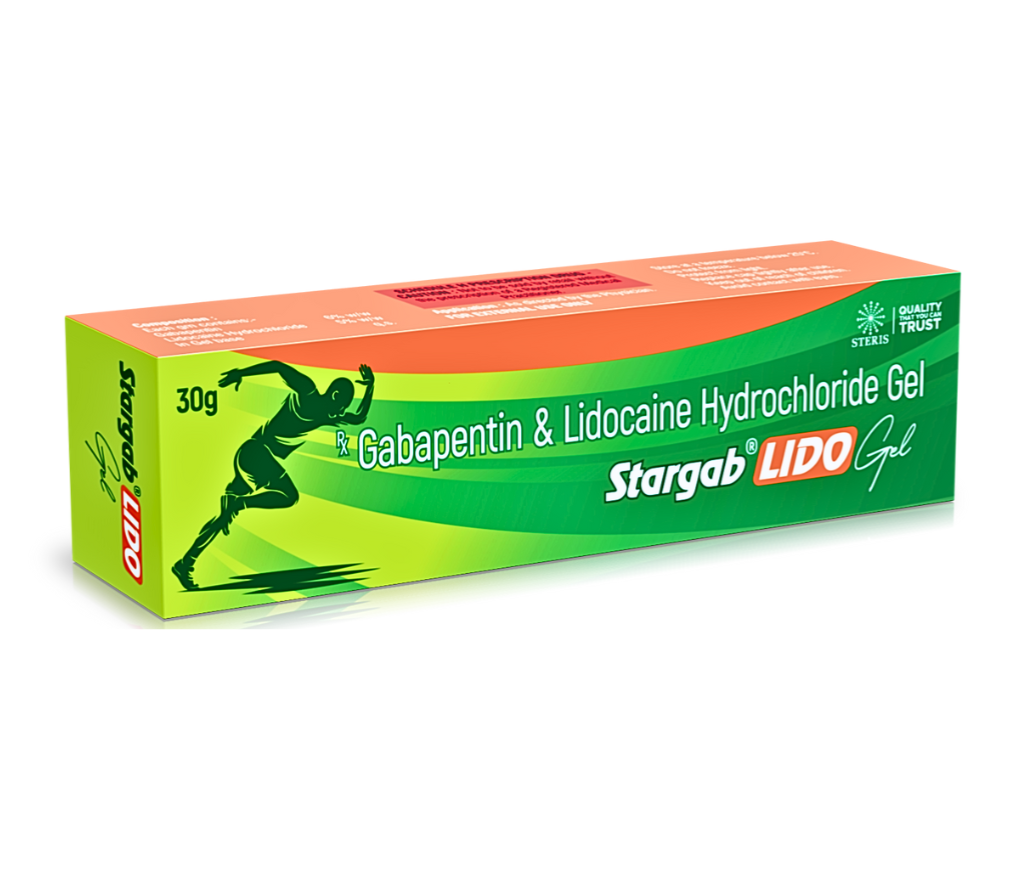
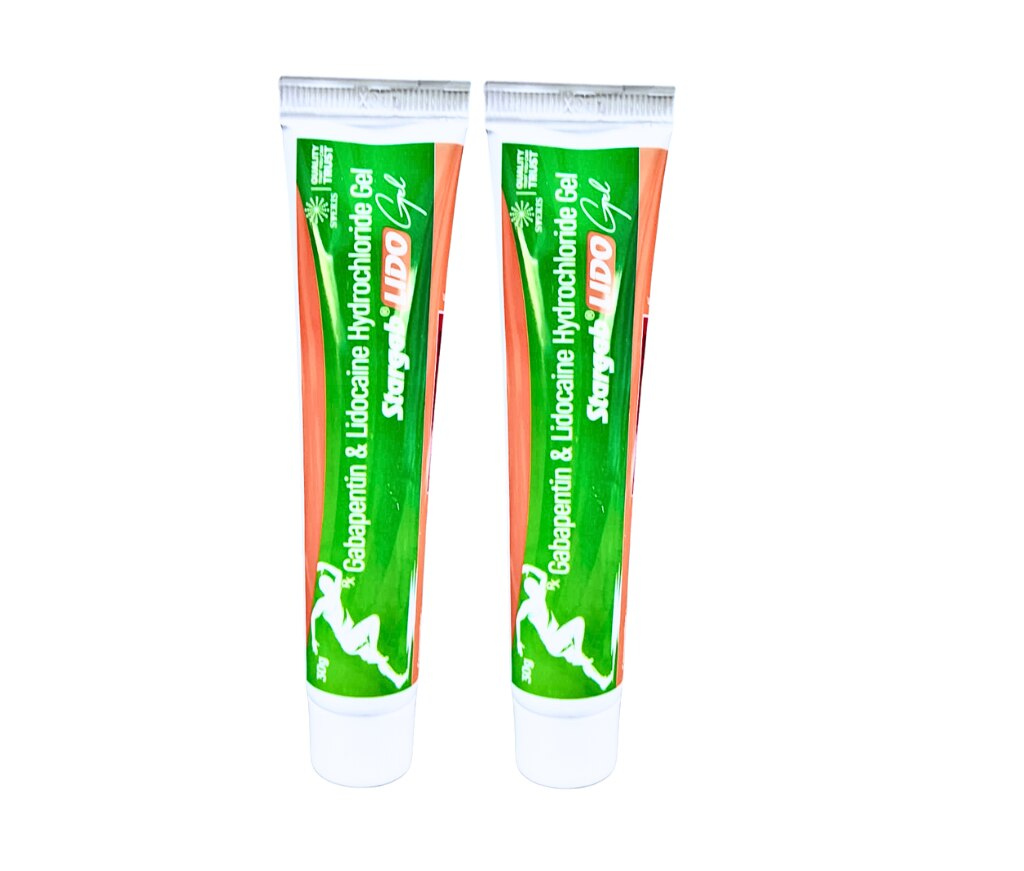
STARGAB LIDO
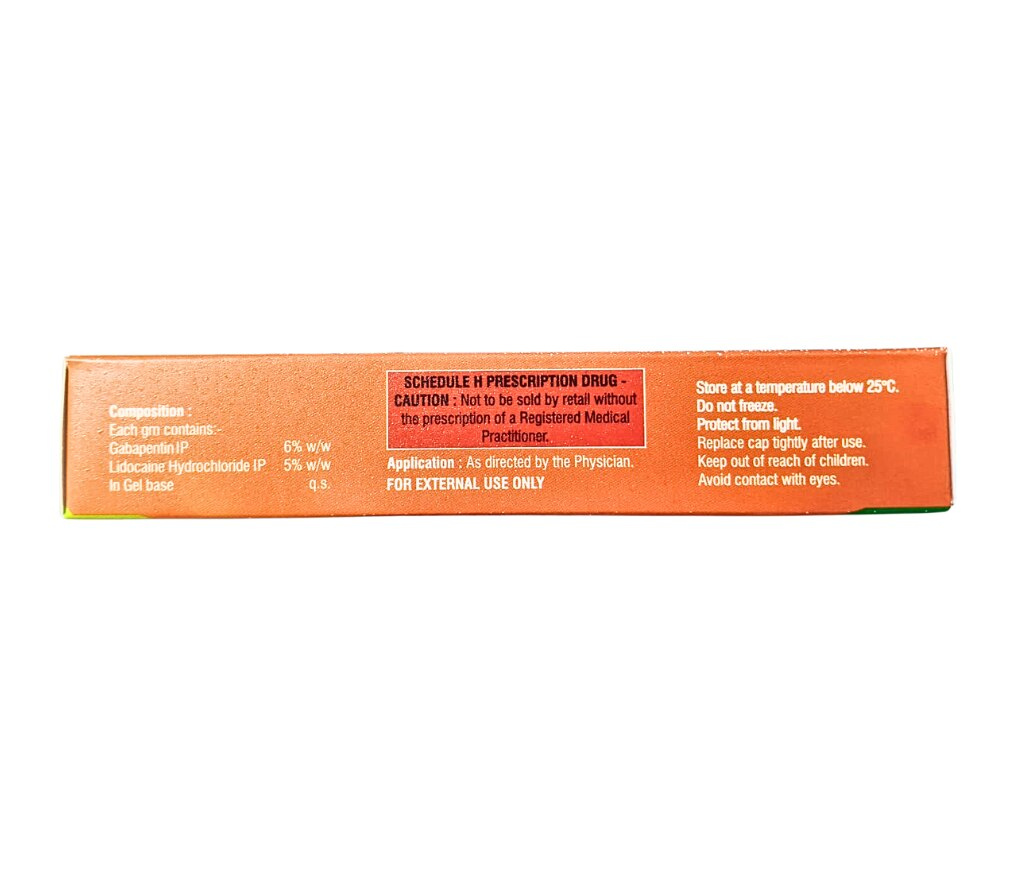
 Item requires a valid prescription
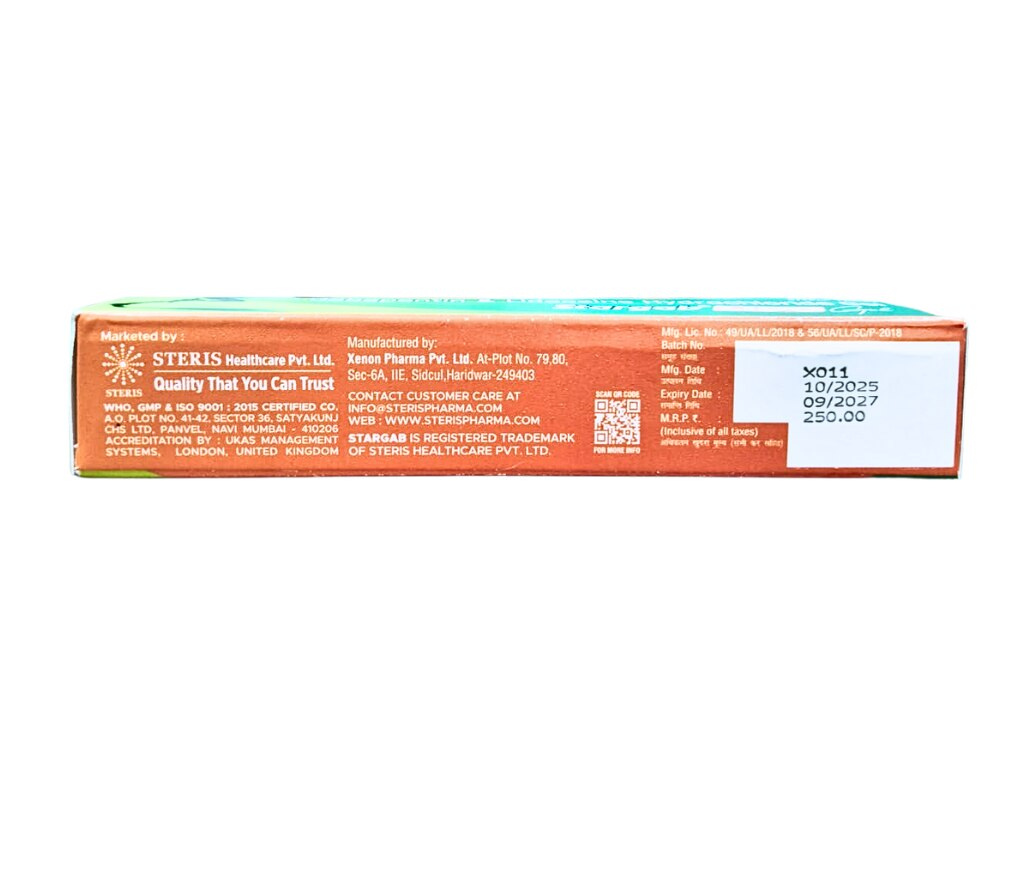
Manufactured By Steris Healthcare Pvt. Ltd.
Composition Gabapentin and Lidocaine Hydrochloride
Rs 175.00
MRP Rs 250.00
(30% OFF)
Includes all taxes
Package SIZE
( 30 g )

100% Authentic
Products

Free
Shipping*

Products
Return Policy
Description:
If you are searching for gabapentin and lidocaine hydrochloride gel, you are likely looking for a topical medicine for localized nerve-related pain, burning, tingling, or other neuropathic pain symptoms. This type of gel combines two active ingredients with different mechanisms: gabapentin, which is used to modulate abnormal nerve signaling, and lidocaine hydrochloride, a local anesthetic that reduces pain signals in the area where it is applied.
In India, several topical products containing gabapentin and lidocaine are currently marketed. Their strengths are not necessarily identical. For example, Gabaneuron Gel from Aristo Pharma is listed with lidocaine hydrochloride 5% w/w and gabapentin 6% w/w in a 30-g pack, while Gabapax L Gel is currently listed with gabapentin 6% w/w and lidocaine 5% w/w.
The exact product, strength, approved indication, directions for use, price, and prescription status can differ between manufacturers. Therefore, consumers should always check the medicine pack and follow their healthcare professional's instructions.
What Is Gabapentin and Lidocaine Hydrochloride Gel?
Gabapentin and lidocaine hydrochloride gel is a topical formulation intended for application to the skin over a painful area.
The two ingredients have different roles:
- Gabapentin: acts on mechanisms involved in abnormal nerve excitability and pain signaling. Oral gabapentin is an established medicine for certain neuropathic pain conditions, while evidence for topical gabapentin is considerably more limited.
- Lidocaine hydrochloride: is a local anesthetic that blocks sodium channels in nerves and can reduce localized pain sensations.
Recent expert evidence reviews support topical lidocaine for certain forms of localized neuropathic pain, particularly postherpetic neuralgia, whereas evidence for topical gabapentin remains limited and condition-specific.
This distinction is important: the presence of gabapentin in a topical product does not mean that topical gabapentin has the same level of clinical evidence as oral gabapentin.
Gabapentin and Lidocaine Hydrochloride Gel Uses
The primary gabapentin and lidocaine hydrochloride gel uses relate to localized pain with a neuropathic component.
Depending on the particular product and a clinician's recommendation, topical combinations may be used for conditions involving symptoms such as:
- Burning pain
- Tingling or pins-and-needles sensations
- Shooting or electric-like pain
- Localized nerve sensitivity
- Certain types of peripheral neuropathic pain
- Pain following nerve injury
- Some cases of postherpetic neuralgia
- Localized postsurgical or post-traumatic nerve pain
Indian product information describes gabapentin-lidocaine gels as topical neuropathic pain relievers. For example, Gabaneuron Gel is listed for topical neuropathic pain, while current pharmacy information for Gabapax L describes its use for pain associated with nerve damage.
However, not every type of back pain, muscle pain, arthritis pain, or ordinary injury pain is neuropathic. Correct identification of the pain type is important before choosing a topical nerve-pain medicine.
How Does Gabapentin and Lidocaine Gel Work?
Gabapentin's role
Gabapentin interacts with the alpha-2-delta subunit of voltage-gated calcium channels, which can influence neurotransmitter release and neuronal excitability. The biological rationale for topical gabapentin is that modulation of peripheral nerve signaling could potentially reduce localized neuropathic symptoms.
However, the clinical evidence for topical gabapentin is still developing. A recent evidence-informed review found limited clinical evidence for topical gabapentin, with some evidence suggesting potential benefit in specific conditions such as vulvodynia.
A 2020 randomized study of 6% topical gabapentin for chronic kidney disease-associated itching reported improvement in itching scores over two weeks, but this was a small study of 30 participants and investigated itching rather than general neuropathic pain.
Lidocaine's role
Lidocaine works differently. It blocks voltage-gated sodium channels in peripheral nerves, reducing the transmission of pain signals from the treated area.
The strongest clinical evidence among topical analgesics is for certain lidocaine preparations, especially in localized neuropathic pain such as postherpetic neuralgia. A recent expert review found strong evidence and high consensus for lidocaine in postherpetic neuralgia
Key Benefits of Gabapentin and Lidocaine Hydrochloride Gel
1. Localized application
A topical gel can be applied directly to the painful area. This can be useful when the pain is concentrated in a relatively small region.
2. Two different pain-modulating approaches
The formulation combines gabapentin's nerve-modulating properties with lidocaine's local anesthetic action. The intention is to address localized neuropathic discomfort through complementary mechanisms.
3. Useful for nerve-related pain symptoms
Burning, tingling, shooting, and hypersensitive skin sensations can be characteristic of neuropathic pain. Topical lidocaine has established usefulness for some localized neuropathic pain conditions.
4. Convenient topical dosage form
Patients who have difficulty swallowing tablets or who require treatment directed toward a localized area may find a topical preparation convenient.
5. Potentially lower systemic exposure
Topical treatment can potentially reduce systemic exposure compared with an oral medicine, but this should not be interpreted as meaning that every topical gabapentin-lidocaine product has negligible systemic absorption or cannot cause systemic adverse effects. Absorption depends on the formulation, amount applied, skin condition, application area, and other factors.
Gabapentin and Lidocaine Gel Side Effects
Understanding gabapentin and lidocaine hydrochloride gel side effects is important before purchasing or using the product.
Possible local effects include:
- Redness
- Itching
- Skin irritation
- Burning or stinging
- Dryness
- Rash
- Increased sensitivity at the application site
For example, current pharmacy information for Gabapax L lists irritation, redness, rash, and itching among possible side effects.
Topical gabapentin studies have generally reported relatively few local adverse effects, but available evidence remains limited. A review of topical gabapentin in vulvodynia reported local irritation among treatment discontinuation reasons in a subset of patients.
Lidocaine can also cause systemic toxicity if excessive amounts are absorbed, particularly when used over large areas, damaged skin, or under conditions that increase absorption. Therefore, more gel is not necessarily better.
How to Use Gabapentin and Lidocaine Hydrochloride Gel
The correct application schedule depends on the specific product and the healthcare professional's instructions.
As a general topical-medicine principle:
- Clean and dry the affected area.
- Apply only the amount recommended by your doctor or product information.
- Spread a thin layer over the affected area.
- Avoid contact with the eyes, mouth, and other mucous membranes.
- Wash your hands after application unless the hands are the treatment area.
- Do not cover the treated area with an occlusive dressing unless specifically instructed.
- Do not apply the gel to open wounds or severely damaged skin unless a healthcare professional specifically recommends it.
One currently marketed Indian product advises applying a thin layer to clean, dry skin and using it according to the doctor's directions.
Do not use the frequency of another brand as your own dosage instruction. Different products can contain different concentrations and excipients.
Can Gabapentin and Lidocaine Gel Be Used on Open Wounds?
Generally, do not apply a topical medicine to open, broken, infected, or severely irritated skin unless your doctor specifically tells you to do so.
Damaged skin may change medicine absorption and can increase irritation. Lidocaine absorption can also be greater through damaged skin than intact skin.
If the painful area contains an ulcer, wound, blistering rash, infection, or significant skin breakdown, obtain professional advice before applying a topical pain medicine.
Who Should Use Extra Caution?
Tell your doctor or pharmacist if you:
- Have an allergy to gabapentin, lidocaine, or any ingredient in the product.
- Have extensive skin damage at the application site.
- Have significant liver or kidney disease.
- Are pregnant or breastfeeding.
- Are using other medicines that contain lidocaine.
- Are applying the product over a large area.
- Have experienced unusual reactions to local anesthetics previously.
Children should not use a particular gabapentin-lidocaine gel unless its labeling specifically permits pediatric use and a healthcare professional recommends it. For example, current information for Gabapax L states that the product should not be used in children younger than 18 years.
Gabapentin and Lidocaine Hydrochloride Gel Price in India
If your search intent is “gabapentin and lidocaine hydrochloride gel price”, remember that the price depends on brand, pack size, concentration, pharmacy, discounts, and location.
For example, a current PharmEasy listing updated in August 2026 shows Gabapax L 30-g gel with an MRP of ₹285.50 and a listed selling price of ₹228.40 at the time checked.
Another Indian manufacturer listing shows topical gabapentin-lidocaine formulations available in 15-g and 30-g tubes, demonstrating why price comparisons should always be made using the same pack size and strength.
Prices are dynamic and can change without notice. Buyers should verify the current price, expiry date, manufacturer, batch information, and pharmacy authenticity before purchasing.
What to Check Before Buying Gabapentin and Lidocaine Gel
For buyers comparing products online, price should not be the only factor.
Check:
- Exact composition: Confirm gabapentin and lidocaine concentrations.
- Pack size: Compare 15-g with 30-g packs on a per-gram basis.
- Manufacturer: Verify the manufacturer printed on the original packaging.
- Expiry date: Avoid expired or near-expiry products unless appropriate for your intended use.
- Packaging: Do not purchase products with damaged or suspicious packaging.
- Storage requirements: Follow the manufacturer's storage instructions.
- Prescription status: Follow applicable pharmacy and prescription requirements.
- Product authenticity: Purchase from a reputable pharmacy or authorized source.
For example, current Indian listings show meaningful differences in formulations: Gabaneuron Gel is listed at 5% lidocaine + 6% gabapentin, whereas another listed formulation contains the same broad ingredient combination but may have different product-specific details.
Is Topical Gabapentin Proven to Work?
This is one of the most important questions for medically accurate content.
Evidence for topical gabapentin is currently much less established than evidence for oral gabapentin or topical lidocaine.
A recent evidence review concluded that evidence for topical gabapentin is limited and that more high-quality clinical research is required. A separate 2026 review stated that topical gabapentin should currently be regarded as an investigational/preclinical approach rather than automatically considered an evidence-based superior alternative for neuropathic pain.
Therefore, marketing language claiming that every gabapentin-lidocaine gel provides “guaranteed,” “instant,” or “long-lasting” nerve-pain relief would go beyond the available evidence.
The appropriate treatment depends on the diagnosis, pain location, severity, duration, and individual medical history.
E-E-A-T: Why Medical Evidence Matters
For health-related SEO, E-E-A-T—Experience, Expertise, Authoritativeness, and Trustworthiness—should be demonstrated through accurate medical information rather than keyword repetition alone.
This article distinguishes between:
- Current Indian product listings and commercial information.
- Evidence for topical lidocaine.
- Emerging and limited evidence for topical gabapentin.
- Product-specific composition and pricing.
- Potential topical adverse effects and application precautions.
Current Indian product information confirms that gabapentin-lidocaine gels are commercially available, while recent clinical reviews emphasize that the evidence base for topical gabapentin remains limited.
For a commercial healthcare website, the final article should ideally be medically reviewed by a qualified physician, pharmacist, or other appropriately credentialed healthcare professional.
Conclusion
Gabapentin and lidocaine hydrochloride gel is a topical combination used in India for localized neuropathic pain and nerve-related discomfort. Lidocaine provides local anesthetic action, while gabapentin is intended to influence abnormal nerve signaling.
The potential advantages include localized application, convenient topical administration, and the combination of two different pain-modulating mechanisms. However, the evidence supporting topical gabapentin is still limited compared with the stronger evidence available for some topical lidocaine preparations.
Before buying, compare the active ingredients, concentration, pack size, manufacturer, expiry date, price, and pharmacy source. Current Indian listings demonstrate that both formulations and prices can differ between products.
Use the product only as directed, avoid applying it to inappropriate skin surfaces, and seek medical advice if pain persists, worsens, or is associated with unexplained weakness, significant numbness, infection, or other concerning symptoms.
Frequently Asked Questions
1. What are gabapentin and lidocaine hydrochloride gel used for?
Gabapentin and lidocaine hydrochloride gel are generally used for localized nerve-related or neuropathic pain. It may be considered for symptoms such as burning, tingling, shooting pain, or localized nerve sensitivity. Specific approved uses depend on the individual product and medical advice.
2. Is gabapentin and lidocaine gel good for nerve pain?
It may help some forms of localized nerve pain, particularly because lidocaine has evidence for certain localized neuropathic pain conditions. However, the evidence for topical gabapentin itself is limited, so it should not automatically be considered effective for every type of neuropathic pain.
3. What are the side effects of gabapentin and lidocaine hydrochloride gel?
Possible side effects include redness, itching, irritation, burning, stinging, dryness, or rash at the application site. More serious reactions to products may have less systemic exposure than oral medicines, but it is not correct to assume that systemic effects are impossible. Excessive use or absorption through damaged skin can increase risk. Follow the recommended amount, and application is uncommon but requires medical attention if severe symptoms develop.
4. Can I apply gabapentin and lidocaine gel to an open wound?
You should generally not apply it to open or severely damaged skin unless specifically instructed by a healthcare professional. Damaged skin can alter absorption and increase irritation or other risks.
5. How often should gabapentin and lidocaine gel be applied?
The application frequency depends on the specific brand, strength, condition being treated, and doctor's instructions. Do not copy the dosage schedule from another brand or online listing because formulations can differ.
6. Does gabapentin and lidocaine gel cause sleepiness?
Topical products may have less systemic exposure than oral medicines, but it is not correct to assume that systemic effects are impossible. Excessive use or absorption through damaged skin can increase risk. Follow the recommended amount and application instructions.
7. What is the price of gabapentin and lidocaine hydrochloride gel in India?
The price varies according to brand, concentration, pack size, pharmacy, and discounts. For example, a Gabapax L 30-g listing checked in August 2026 showed an MRP of ₹285.50 and a discounted price of ₹228.40.
8. Can gabapentin and lidocaine gel be used for diabetic nerve pain?
Some products are marketed for neuropathic pain, including pain associated with nerve damage, but treatment should be based on an individual diagnosis. Evidence for topical gabapentin remains limited, while topical lidocaine has better evidence for certain localized neuropathic pain conditions.
9. Is topical gabapentin as effective as oral gabapentin?
Not necessarily. Oral gabapentin has an established role in selected neuropathic pain conditions, whereas evidence supporting topical gabapentin remains limited and formulation-dependent. The two routes should not be treated as interchangeable.
10. Where can I buy gabapentin and lidocaine hydrochloride gel?
These products are available through various Indian pharmaceutical and online pharmacy channels. Before purchasing, verify the composition, strength, manufacturer, expiry date, pack size, authenticity, and prescription requirements rather than selecting solely on price. Current Indian listings include products such as Gabaneuron Gel and Gabapax

