


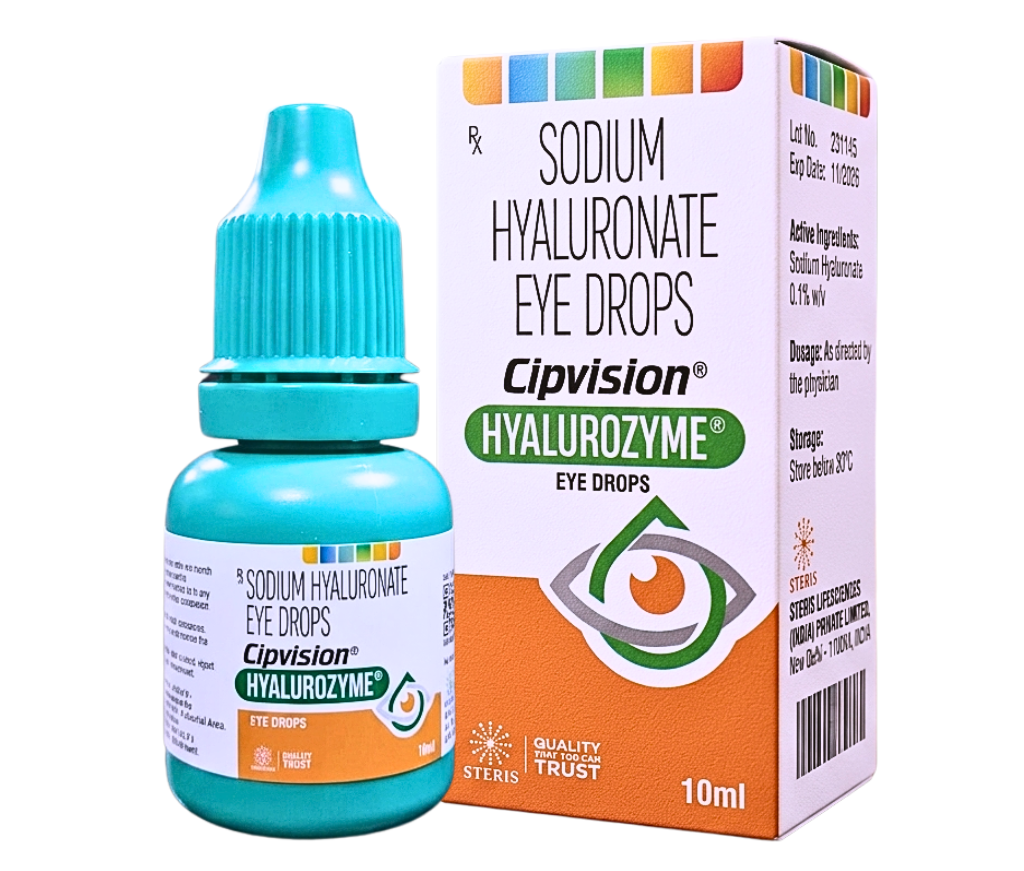
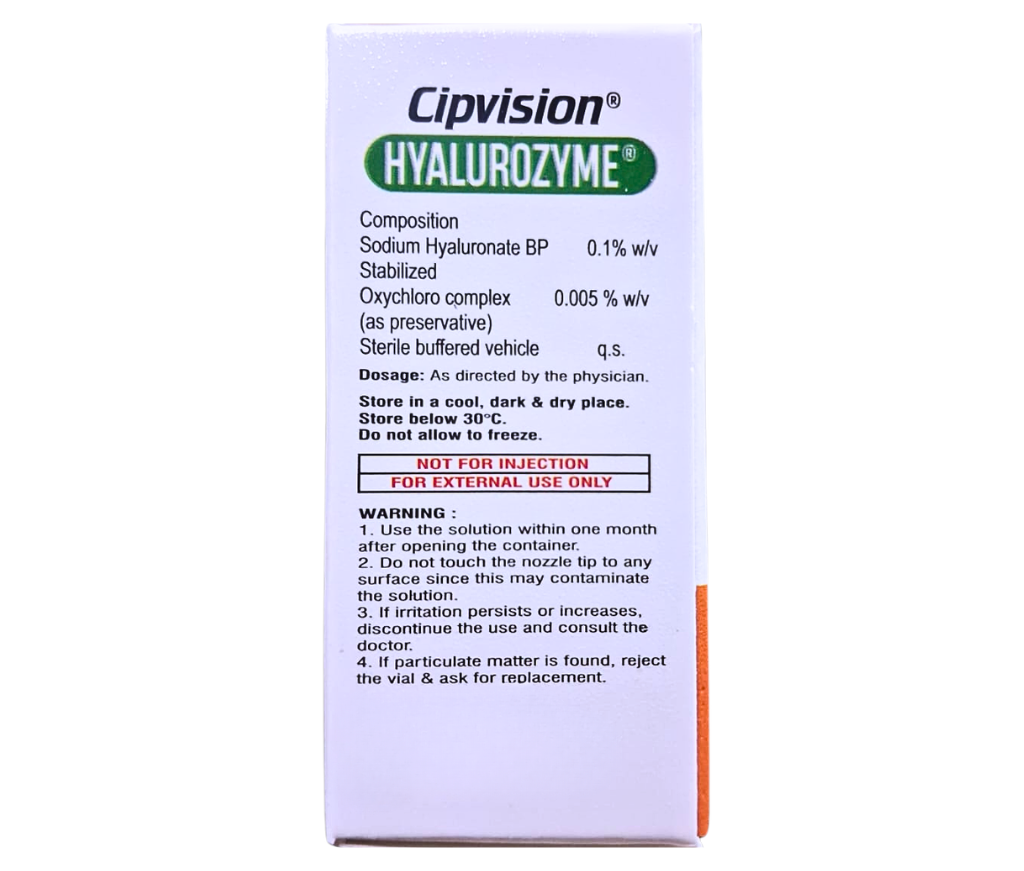
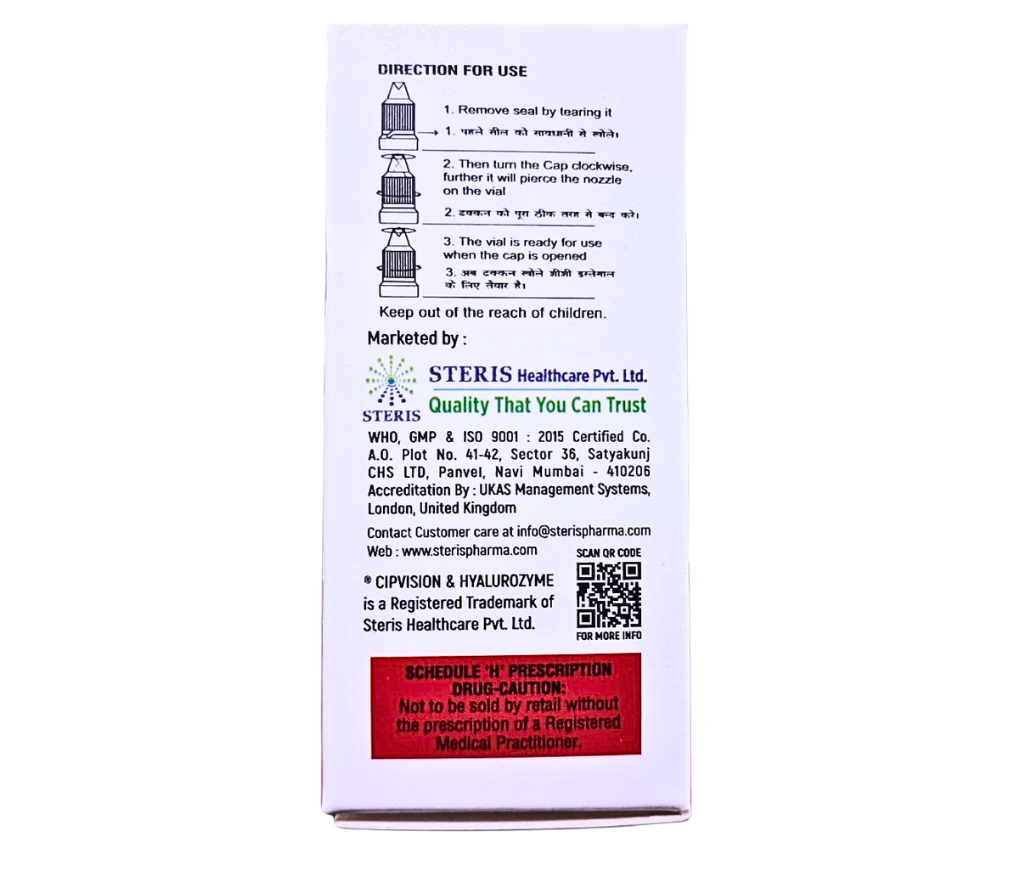
Cipvision Hylurozyme
 Item requires a valid prescription
Manufactured By Steris Healthcare Pvt Ltd
Composition Sodium Hyaluronate Eye Drops for Dry Eyes
Rs 269.50
MRP Rs 385.00
(30% OFF)
Includes all taxes
Package SIZE
( For 10 ml )

100% Authentic
Products

Free
Shipping*

Products
Return Policy
Description:
Sodium hyaluronate eye drops for dry eyes are lubricating artificial tears designed to moisturize the ocular surface and provide relief from common dry-eye symptoms such as burning, irritation, grittiness, dryness, and intermittent discomfort. Sodium hyaluronate is a form of hyaluronic acid that can help retain water and support a more stable tear film.
For people looking to buy an eye lubricant for everyday dry-eye symptoms, sodium hyaluronate eye drops are an option worth considering. Clinical research has found that sodium hyaluronate formulations can improve dry-eye symptoms and certain objective measures of tear-film performance, although the results can vary according to concentration and formulation.
What Are Sodium Hyaluronate Eye Drops?
Sodium hyaluronate is the sodium salt of hyaluronic acid, a naturally occurring substance found in the body, including ocular tissues. In eye drops, it works primarily as a lubricating and water-retaining ingredient.
When the natural tear film becomes unstable, the exposed surface of the eye may become irritated. Dry eye can cause burning, stinging, itching, redness, foreign-body sensation, excessive tearing, and fluctuating or blurred vision.
Sodium hyaluronate eye drops can supplement the tear film by adding moisture and lubrication to the eye's surface. This makes them particularly relevant for people experiencing occasional or persistent symptoms associated with dry-eye disease.
How Do Sodium Hyaluronate Eye Drops Work for Dry Eyes?
The key benefit of sodium hyaluronate is its ability to interact with and retain water. When used as an ophthalmic lubricant, it helps create a moist, lubricated environment over the ocular surface.
This can help:
- Reduce the uncomfortable sensation of dryness.
- Lubricate the cornea and conjunctival surface.
- Relieve burning, stinging, and irritation associated with dryness.
- Reduce the gritty or “something in my eye” sensation.
- Improve comfort during prolonged screen use or visually demanding activities.
- Support a more stable tear film between blinks.
Research comparing sodium hyaluronate with non-hyaluronate artificial tears has generally found improvements in symptoms and ocular-surface measures, although not every formulation performs identically.
A 2026 meta-analysis reported that hyaluronic-acid eye drops, particularly formulations in the 0.15%–0.18% range, were associated with meaningful improvements in patient-reported dry-eye symptoms and were generally well tolerated. The researchers also emphasized that formulations differ, so concentration alone should not be treated as the only factor when choosing a product.
Key Benefits of Sodium Hyaluronate Eye Drops for Dry Eyes
1. Moisturizes Dry Eyes
The primary reason consumers choose sodium hyaluronate eye drops is moisture. The ingredient helps retain water on the ocular surface, which can make dry eyes feel more comfortable.
2. Provides Lubricating Relief
Sodium hyaluronate can act as a lubricant, helping reduce friction and discomfort caused by an unstable or insufficient tear film.
3. Helps Relieve Common Dry-Eye Symptoms
Depending on the underlying cause of dryness, users may experience relief from symptoms such as
- Dryness
- Burning
- Stinging
- Grittiness
- Irritation
- Foreign-body sensation
- Mild discomfort
- Fluctuating vision associated with tear-film instability
Dry-eye disease is multifactorial, meaning that symptoms can result from problems involving tear-film instability, inflammation, ocular-surface damage, and other mechanisms.
4. Available in Different Concentrations
Sodium hyaluronate eye drops are sold in different concentrations and formulations. Clinical studies have evaluated concentrations including 0.1%, 0.15%, and 0.3%, with evidence of improvement in both subjective symptoms and objective signs of dry eye.
The best concentration is not necessarily the highest one. A higher-viscosity formulation may provide longer-lasting lubrication for some users but can temporarily affect visual clarity.
5. Useful for Everyday Environmental Dryness
Dry-eye symptoms can become more noticeable with prolonged screen exposure, air conditioning, low humidity, wind, and reduced blinking. Lubricating eye drops may help manage symptoms, although they do not necessarily address the underlying cause.
Sodium Hyaluronate Eye Drops: How to Choose the Right Product
If you are buying sodium hyaluronate eye drops for dry eyes, do not select a product based only on the ingredient name.
Check the product label for:
- Sodium hyaluronate concentration: Common formulations vary, so compare the percentage or strength.
- Preservatives: If you need frequent applications, ask an eye-care professional whether a preservative-free formulation would be more appropriate.
- Single-dose vs. multidose packaging: Single-use containers can be convenient when preservative-free lubrication is desired.
- Viscosity: Thicker drops may provide longer lubrication but can cause temporary blurred vision.
- Contact-lens compatibility: Not every eye drop is suitable for use while wearing contact lenses. Follow the specific product instructions.
- Expiration and storage: Always follow the manufacturer's storage requirements and do not use contaminated or expired drops.
- Intended use: Choose an ophthalmic product specifically labeled for use in the eyes.
Because formulations differ, consumers should read the package insert rather than assuming that every sodium hyaluronate product has identical ingredients, dosing instructions, or preservative systems.
How to Use Sodium Hyaluronate Eye Drops
Use the product exactly according to its label or your eye-care professional's instructions.
In general, wash your hands before applying eye drops. Avoid touching the dropper tip against your eye, eyelid, or another surface because contamination can occur. After application, temporary blurred vision may occur with some lubricating formulations, particularly more viscous products. Wait until your vision is clear before driving or performing activities requiring sharp vision.
If you use several ophthalmic products, ask a pharmacist or eye-care professional about the appropriate order and interval between products.
Possible Side Effects of Sodium Hyaluronate Eye Drops
Sodium hyaluronate eye drops are generally well tolerated in clinical studies, but side effects are possible and can depend on the complete formulation rather than sodium hyaluronate alone. Recent evidence describes hyaluronic-acid eye drops as generally well tolerated, while individual products can have different safety profiles.
Possible temporary effects may include:
- Mild eye irritation
- Stinging or burning immediately after application
- Temporary blurred vision
- Foreign-body sensation
- Increased tearing
- Redness or discomfort
Stop using the product and seek medical advice if you experience significant or persistent eye pain, marked redness, swelling, vision changes, light sensitivity, discharge, or symptoms that become worse rather than better.
A particularly important point for buyers is that not every eye problem is simple dry eye. Persistent symptoms may require an eye examination to determine whether the problem involves inflammation, infection, corneal disease, eyelid problems, meibomian gland dysfunction, or another ocular condition.
Are Sodium Hyaluronate Eye Drops Safe for Long-Term Use?
Sodium hyaluronate-based lubricants are widely studied for dry-eye management and have demonstrated good tolerability in clinical research. However, “safe for long-term use” depends on the specific product, frequency of use, preservatives, other ingredients, and the individual's eye condition.
If you find that you need lubricating drops very frequently for an extended period, it is sensible to discuss the situation with an optometrist or ophthalmologist rather than simply increasing usage indefinitely. Frequent dependence on artificial tears can indicate that the underlying dry-eye condition needs further assessment or treatment.
Who May Benefit From Sodium Hyaluronate Eye Drops?
They may be useful for adults experiencing mild-to-moderate symptoms of dry eye, particularly when lubrication is the main treatment goal.
They may be considered by people who experience dryness related to:
- Prolonged computer or smartphone use
- Air conditioning or dry environments
- Wind exposure
- Reduced blinking
- Contact-lens-related discomfort, when the particular product is compatible
- Age-related changes in tear-film function
- General ocular-surface dryness
However, people with persistent, severe, or unexplained symptoms should seek professional evaluation rather than relying solely on over-the-counter lubricating drops.
Sodium Hyaluronate Eye Drops vs. Regular Artificial Tears
Sodium hyaluronate is itself used as an artificial-tear ingredient, so it is more accurate to view these products as a type of lubricating artificial tear rather than as a completely separate category.
The practical difference is the formulation. Sodium hyaluronate can provide water retention and lubrication, while other artificial tears may use ingredients such as carboxymethylcellulose, hypromellose, polyethylene glycol, or other polymers.
There is no single “best eye drop” for everyone. The right product depends on symptom severity, frequency of use, tear-film problems, contact lens use, preservatives, and individual tolerance.
Buyer’s Checklist: What to Look for Before Purchasing
Before purchasing sodium hyaluronate eye drops for dry eyes, consider these five questions:
- What concentration of sodium hyaluronate does the product contain?
- Is the formulation preservative-free?
- Can it be used with contact lenses?
- How frequently does the label recommend using it?
- Is the product appropriate for your particular symptoms?
A reputable product should have clear labeling, an intact package, an appropriate expiry date, and transparent information about its active and inactive ingredients.
Conclusion
Sodium hyaluronate eye drops for dry eyes are a clinically studied lubricating option that can help moisturize the ocular surface and relieve common symptoms of dryness and irritation. Evidence supports the effectiveness of sodium hyaluronate formulations for improving dry-eye symptoms, while newer research continues to examine how concentration and formulation influence results.
For buyers, the best choice is not simply the product with the highest sodium hyaluronate concentration. Consider formulation, preservatives, viscosity, intended frequency of use, contact-lens compatibility, and your individual symptoms. If dry-eye symptoms are persistent, severe, painful, or associated with vision changes, professional eye evaluation is more appropriate than continued self-treatment.
Frequently Asked Questions About
1. What are sodium hyaluronate eye drops used for?
Sodium hyaluronate eye drops are primarily used as lubricating artificial tears to relieve symptoms associated with dry eyes, including dryness, burning, irritation, grittiness, and ocular discomfort.
2. Are sodium hyaluronate eye drops good for dry eyes?
Yes. Clinical studies and reviews indicate that sodium hyaluronate eye drops can improve dry-eye symptoms and certain measures of ocular-surface health. Effectiveness can vary according to concentration and the complete formulation.
3. What concentration of sodium hyaluronate is best for dry eyes?
There is no single concentration that is best for everyone. Research has evaluated concentrations such as 0.1%, 0.15%, and 0.3%, while a 2026 meta-analysis found particularly favorable symptom outcomes with formulations around 0.15%–0.18%. Your ideal formulation depends on symptom severity, viscosity, and individual tolerance
4. What are the side effects of sodium hyaluronate eye drops?
Possible effects include temporary stinging, irritation, redness, increased tearing, foreign-body sensation, or temporary blurred vision. The exact side effects depend on the complete product formulation. Persistent pain, significant redness, discharge, or vision changes should be medically assessed.
5. Can I use sodium hyaluronate eye drops every day?
Some sodium hyaluronate lubricants are intended for regular use, but the correct frequency depends on the specific product. Follow the label or advice of your eye-care professional. If you need drops very frequently over a long period, an eye examination can help identify the underlying cause.
6. Can I use sodium hyaluronate eye drops with contact lenses?
It depends on the specific product. Check the label for contact-lens compatibility and follow its instructions. Some formulations may require lenses to be removed before application.
7. How long do sodium hyaluronate eye drops take to work?
Lubricating eye drops can provide symptomatic relief soon after application, although the duration and degree of relief vary by formulation and the severity and cause of dry eye.
8. Are sodium hyaluronate eye drops better than regular artificial tears?
Not necessarily. Sodium hyaluronate is one type of artificial-tear ingredient. Some people may prefer it because of its lubricating and water-retaining properties, while another formulation may work better for someone else.
9. Can sodium hyaluronate eye drops cure dry eye?
They can relieve symptoms and lubricate the ocular surface, but they should not automatically be considered a cure for chronic dry-eye disease. Dry eye is a multifactorial ocular-surface disorder that may require treatment of underlying causes as well as lubrication.
10. When should I see an eye doctor for dry eyes?
Seek professional advice if symptoms are persistent, severe, worsening, associated with significant pain, pronounced redness, light sensitivity, discharge, or changes in vision; or if lubricating drops are not providing adequate relief.