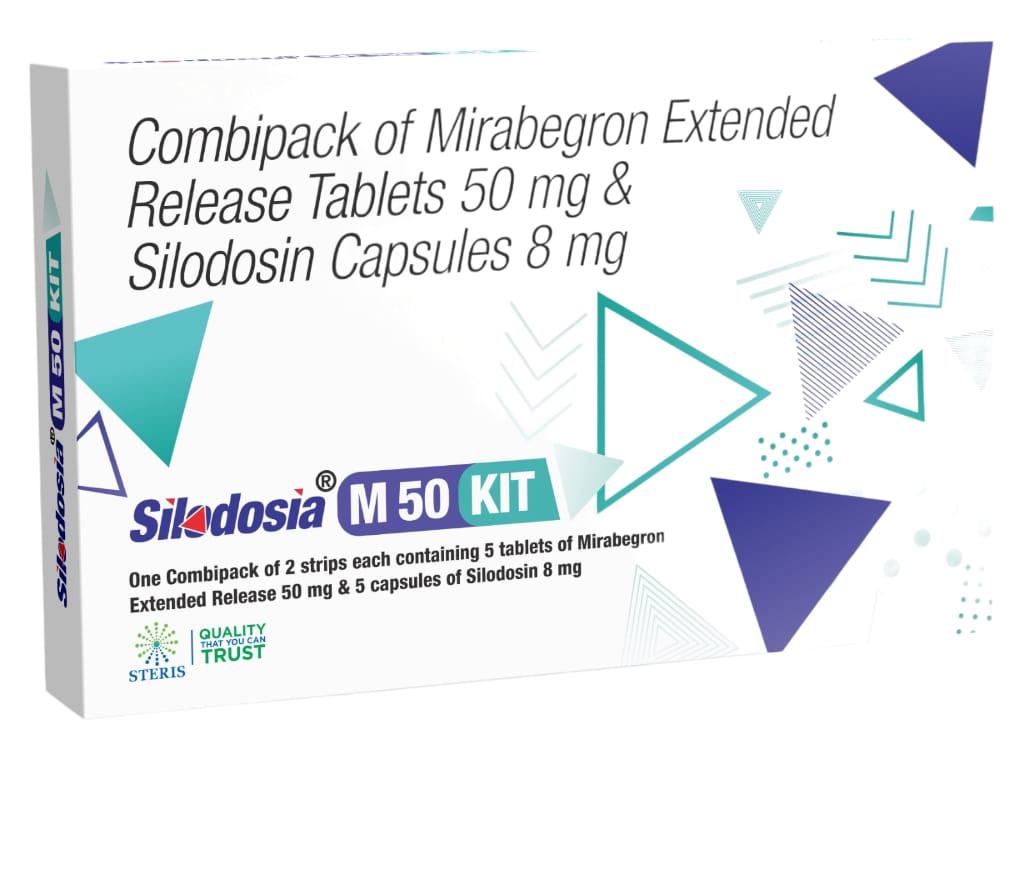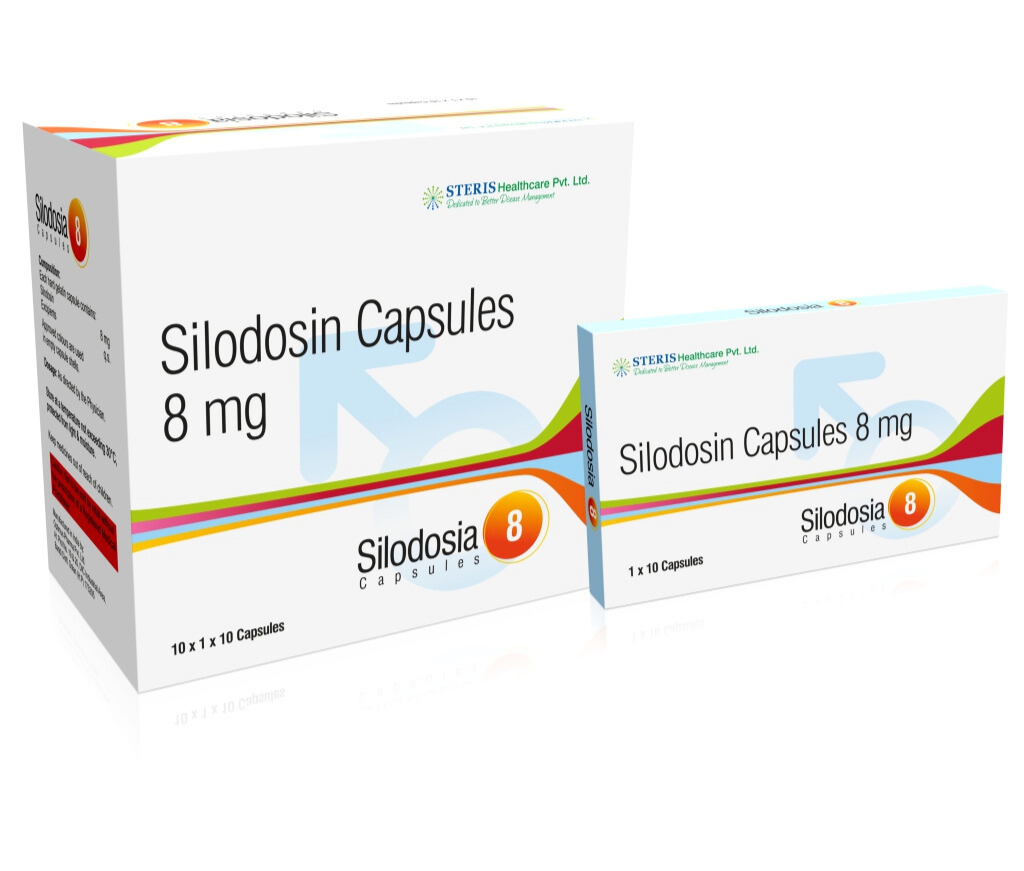
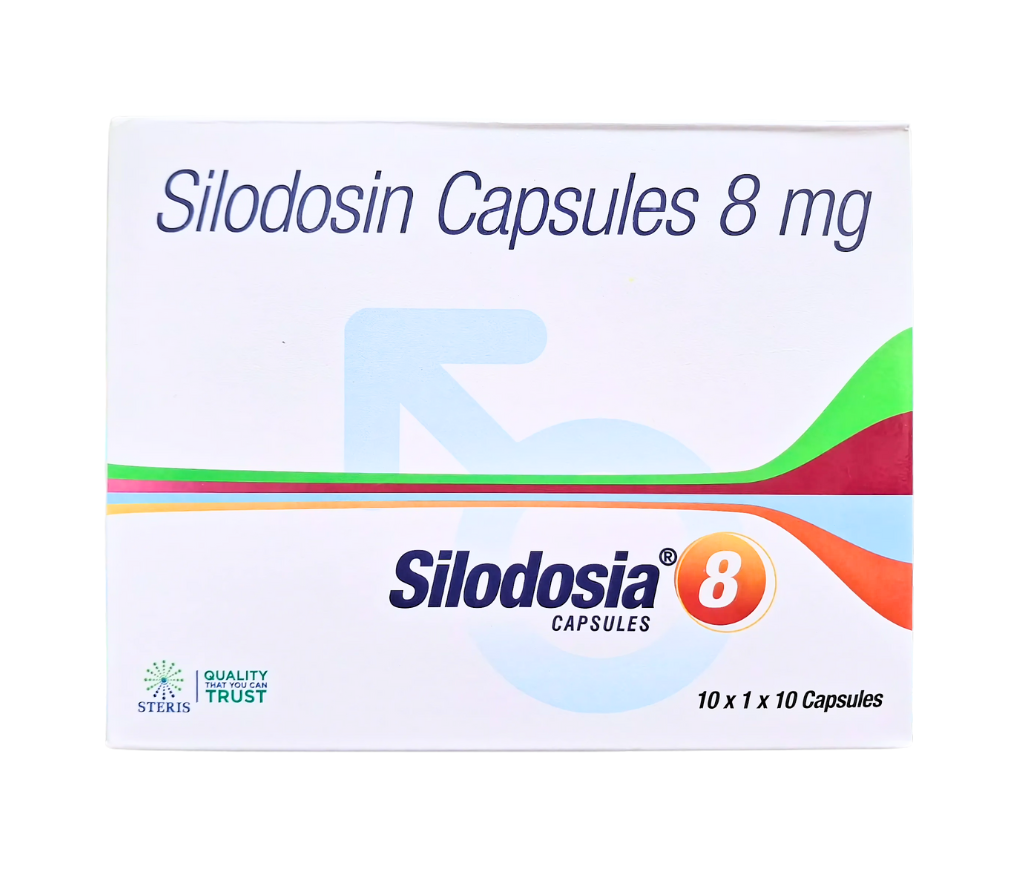
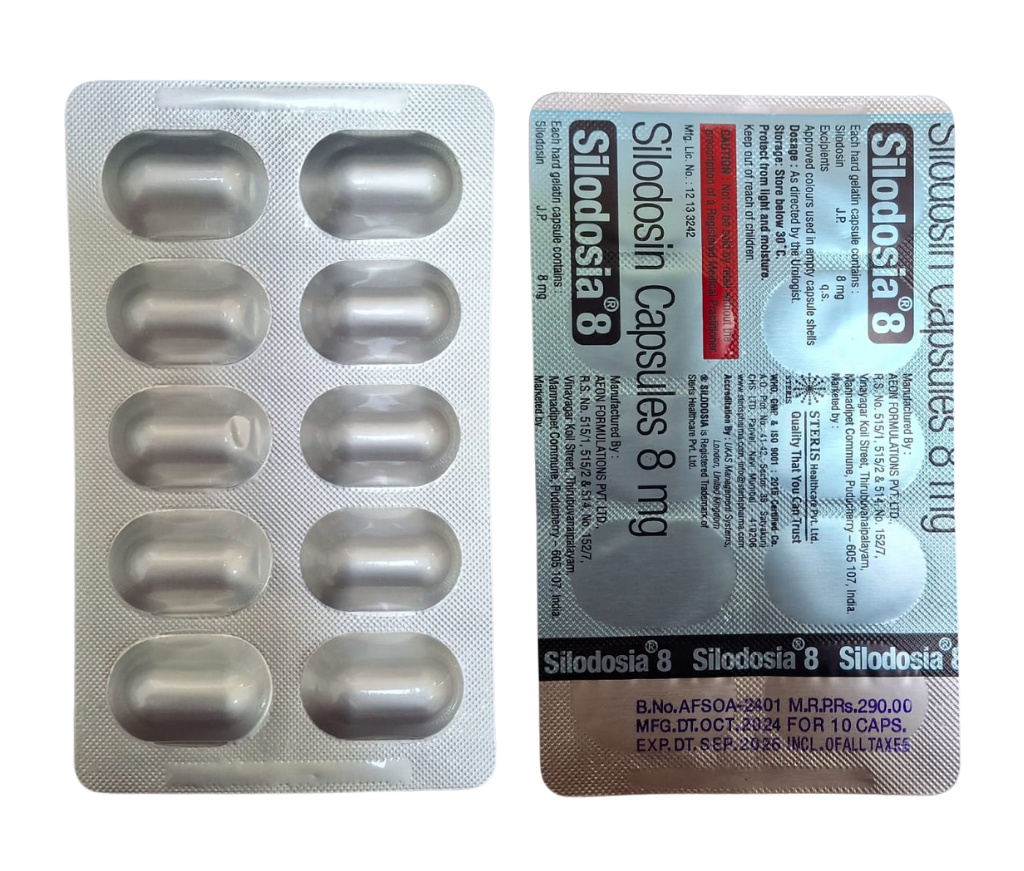
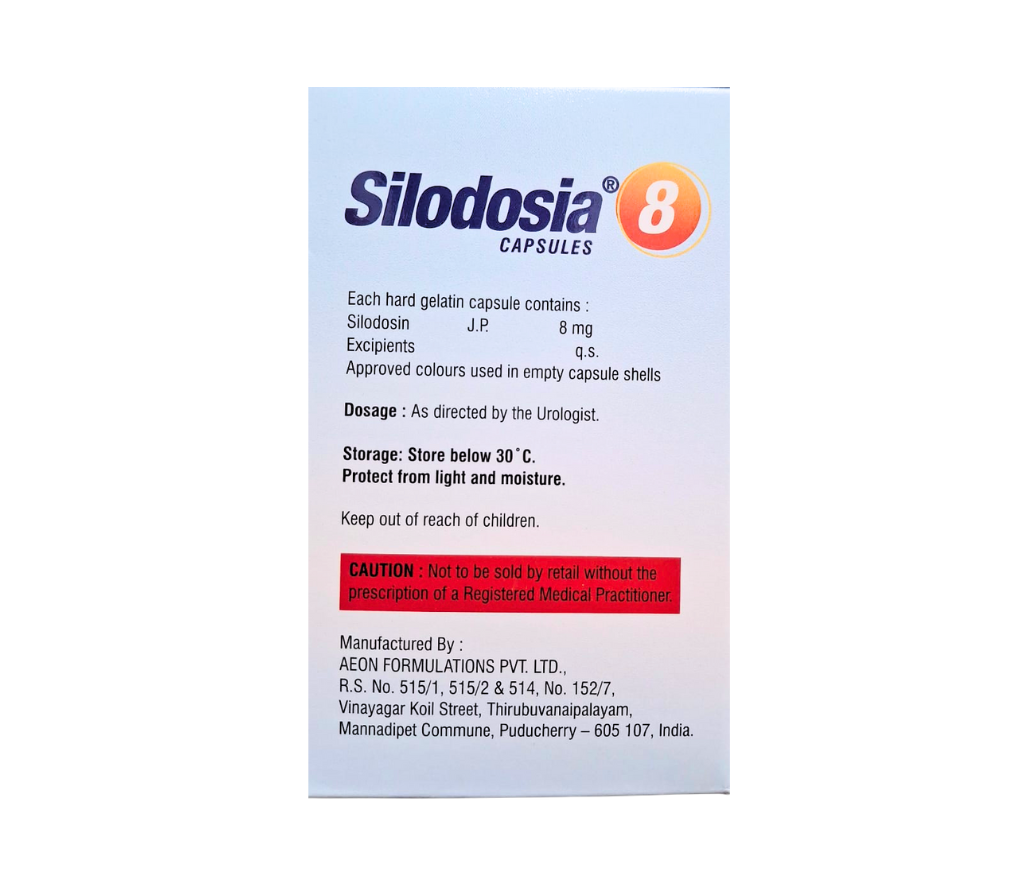
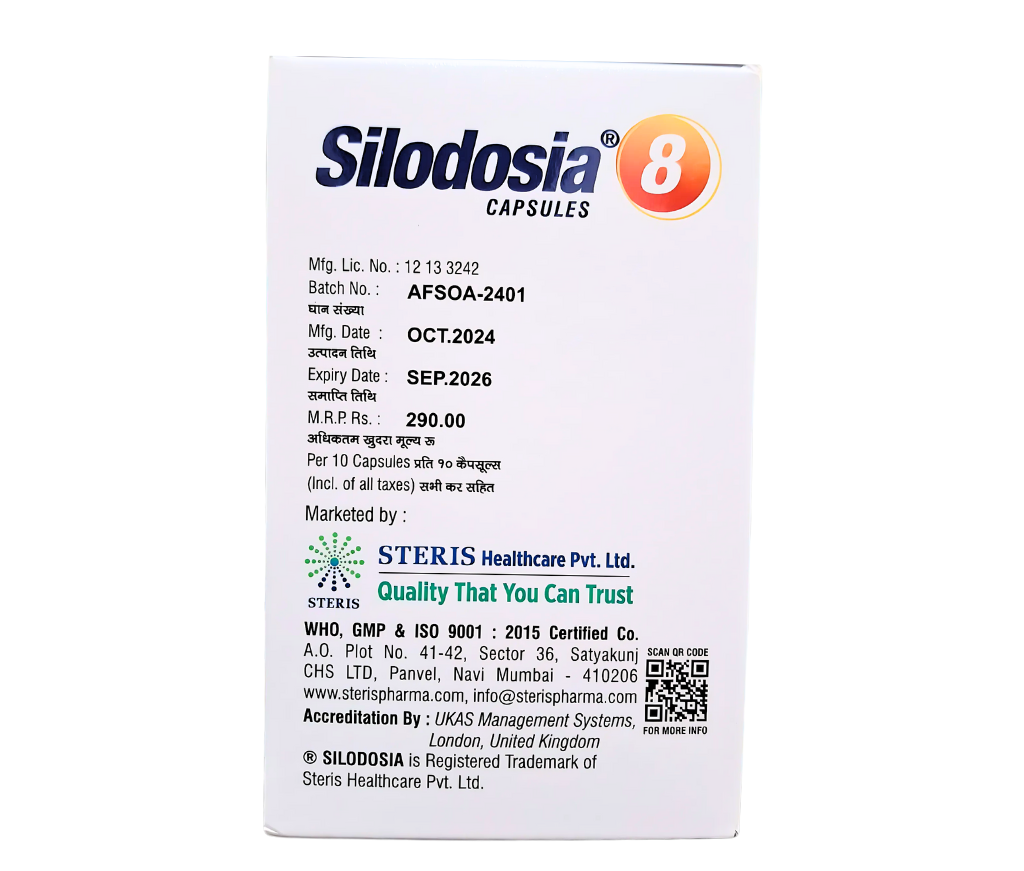
SILODOSIA 8
 Item requires a valid prescription
Manufactured By Steris Healthcare Pvt Ltd
Composition silodosin 8 mg
Rs 153.65
MRP Rs 219.50
(30% OFF)
Includes all taxes
Package SIZE
( Forb 10 Capsules )

100% Authentic
Products

Free
Shipping*

Products
Return Policy
Description:
Silodosin 8 mg is a prescription alpha-blocker medicine used to help relieve urinary symptoms caused by an enlarged prostate. It relaxes the smooth muscle in the prostate and bladder neck , making it easier to urinate while having only a small impact on blood pressure . You normally take it once a day with food, usually with a meal at the same time each day. Common benefits include improved urine flow, less nighttime urination, relief of urgency and incomplete emptying. Side effects are common and include retrograde ejaculation, dizziness and headache. It does not shrink the prostate itself, but relieves the muscular tightness that causes urinary blockage. Caution should be exercised when using it in patients with liver or severe renal impairment and those on certain interacting drugs.
What Is Silodosin 8 mg?
Silodosin 8 mg belongs to a class of medicines called alpha-1 adrenergic receptor antagonists (alpha blockers), specifically designed with high selectivity for the alpha-1A receptor subtype, which is densely concentrated in the prostate and bladder neck. This selectivity is what distinguishes silodosin from older, less selective alpha blockers — it targets the muscles causing urinary obstruction more precisely, while having a comparatively lower likelihood of causing blood-pressure-related side effects like dizziness upon standing.
Silodosin is prescribed for the signs and symptoms of benign prostatic hyperplasia (BPH)—a common, non-cancerous condition in aging men where the prostate gland enlarges and presses on the urethra, causing difficulty urinating.
| Indication | Silodosin Suitability | Notes |
|---|---|---|
| BPH — urinary symptom relief | ✅ Approved primary use | Improves flow, urgency, nighttime urination |
| Difficulty starting urination (hesitancy) | ✅ Effective | Relaxes bladder neck muscles. |
| Incomplete bladder emptying | ✅ Effective | Reduces residual urine sensation |
| Prostate cancer treatment | ❌ Not indicated | Symptom relief only, not a cancer therapy |
| Hypertension | ❌ Not used for this purpose | Selective action limits BP-lowering effect |
| Women with urinary symptoms | ❌ Not approved for use in women | Approved only for men with BPH |
How Silodosin 8 mg Works
The prostate and bladder neck contain a high density of alpha-1A adrenergic receptors, which, when stimulated, cause the smooth muscle in these areas to contract and tighten — narrowing the urinary channel and making urination difficult. Silodosin selectively blocks these alpha-1A receptors, causing the muscle to relax. This widens the urethral opening at the bladder neck and prostate, allowing urine to flow more freely.
Because silodosin is highly selective for the alpha-1A subtype (versus the alpha-1B subtype found more in blood vessels), it produces effective urinary symptom relief with a comparatively lower risk of blood pressure drops or dizziness than less selective alpha blockers—an important distinction for older patients who are more prone to orthostatic hypotension.
Key Benefits of Silodosin 8 mg
- Fast Onset of Urinary Relief – Many patients notice improved urine flow and reduced straining within the first few days of treatment.
- High Receptor Selectivity – Targets prostate/bladder neck muscle specifically, minimizing systemic blood pressure effects common with older alpha blockers.
- Reduces Nighttime Urination (Nocturia) – Helps patients experience fewer disruptive nighttime bathroom trips, improving sleep quality indirectly.
- Improves Bladder Emptying – Reduces the sensation of incomplete emptying, a common and frustrating BPH symptom.
- Once-Daily Dosing Convenience—Simple once-a-day regimen supports better long-term treatment adherence.
- Well-Studied Safety Profile – Extensive clinical trial history and years of real-world prescribing experience support its established efficacy and safety.
- Non-Hormonal Mechanism – Works purely on smooth muscle relaxation, without altering hormone levels, unlike some other BPH medication classes.
Dosage & Administration
| Use Case | Typical Adult Dosage | Timing |
|---|---|---|
| BPH symptom management | 8 mg, once daily | Same time each day, with a meal |
| Moderate renal impairment | Dose adjustment may be required | As advised by physician |
| Severe renal/hepatic impairment | Generally not recommended | Physician evaluation required |
Administration tips:
- Take with food, ideally with the same meal each day, to maintain consistent absorption.
- Swallow the tablet whole; do not crush or chew.
- Do not double the dose if a dose is missed — simply resume the next scheduled dose.
- Continue treatment as prescribed even if symptoms improve, unless your doctor advises otherwise.
Side Effects of Silodosin 8 mg
Common Side Effects
- Retrograde ejaculation (semen entering the bladder instead of exiting normally — harmless but notable)
- Dizziness
- Headache
- Diarrhea
- Nasal congestion (rhinitis)
Less Common but Notable
- Low blood pressure symptoms (lightheadedness on standing)
- Nausea
- Fatigue
Serious Side Effects (Seek Medical Attention)
- Intraoperative floppy iris syndrome (IFIS): A condition affecting cataract surgery if silodosin is used around the time of the procedure — always inform your eye surgeon if you take or have taken silodosin.
- Signs of severe allergic reaction: swelling of face/throat, difficulty breathing, severe rash
- Prolonged or painful erection (priapism) — rare but requires urgent medical attention
- Fainting or severe dizziness suggesting significant blood pressure drop
Silodosin vs Other Alpha Blockers for BPH
| Parameter | Silodosin | Tamsulosin | Alfuzosin |
|---|---|---|---|
| Receptor selectivity | Highly selective (alpha-1A) | Moderately selective | Less selective |
| Blood pressure effect | Minimal | Mild | Moderate |
| Ejaculatory dysfunction risk | Higher | Moderate | Lower |
| Onset of symptom relief | Fast | Fast | Fast |
| Dosing frequency | Once daily | Once daily | Once daily |
| IFIS risk (cataract surgery) | Present — inform surgeon | Present — inform surgeon | Lower relative risk |
Precautions & Who Should Avoid Silodosin
- Liver impairment: Use with caution in mild-to-moderate impairment; generally avoided in severe hepatic impairment.
- Kidney impairment: Dose adjustment may be needed in moderate renal impairment; avoided in severe renal impairment.
- Cataract/eye surgery: Inform your ophthalmologist if you are taking or have previously taken silodosin, due to the risk of intraoperative floppy iris syndrome.
- Blood pressure medications: Use cautiously with other antihypertensives or PDE-5 inhibitors (e.g., for erectile dysfunction), as combined use may increase the risk of low blood pressure.
- Not approved for women or children: Silodosin is indicated only for adult men with BPH.
- Drug interactions: Strong CYP3A4 inhibitors (certain antifungal or antiviral medications) may increase silodosin levels — always share your full medication list with your doctor.
Conclusion
Silodosin 8 mg offers a highly targeted, well-tolerated approach to managing the bothersome urinary symptoms of benign prostatic hyperplasia, thanks to its selective action on prostate and bladder neck muscle. Its once-daily dosing, fast symptom relief, and comparatively low impact on blood pressure make it a preferred choice for many patients and prescribing physicians. That said, it is not without precautions — particularly regarding eye surgery, liver/kidney function, and interactions with other medications — so professional medical guidance is essential. If you're experiencing symptoms of an enlarged prostate such as weak urine flow, frequent nighttime urination, or difficulty starting urination, consult your doctor to see if silodosin is right for you.
Frequently Asked Questions
1. What should I avoid when taking silodosin?
Avoid alcohol and grapefruit juice, as they may worsen dizziness. Also avoid combining silodosin with other blood-pressure-lowering medications or erectile dysfunction drugs without your doctor's guidance, and inform any eye surgeon before cataract surgery.
2. What is the best time of day to take silodosin?
Silodosin is usually taken once daily with a meal, at the same time each day—many patients prefer taking it after breakfast or dinner for consistency, but your doctor's specific instructions should be followed.
3. Does silodosin affect sleep?
Silodosin does not directly cause sleep disturbances, but by reducing nighttime urination (nocturia) associated with BPH, many patients actually experience improved sleep continuity.
4. What does silodosin do for the prostate?
Silodosin relaxes the smooth muscle in the prostate and bladder neck by blocking alpha-1A receptors, which eases pressure on the urethra and improves urine flow — it does not shrink the prostate itself.
5. Can silodosin damage kidneys?
Silodosin is not typically known to cause kidney damage, but it should be used cautiously and may require dose adjustment in patients with existing moderate kidney impairment, and is generally avoided in severe renal impairment.
6. Can silodosin reduce prostate size?
No, silodosin relieves symptoms by relaxing prostate and bladder neck muscle tissue; it does not reduce the physical size of the prostate gland. Medications like 5-alpha reductase inhibitors are used for that purpose.
7. Which one is better, silodosin or tamsulosin?
Neither is universally ""better"—silodosin offers higher receptor selectivity with a lower blood pressure effect but a higher chance of ejaculatory changes, while tamsulosin has a longer track record and slightly different side effect balance. The right choice depends on individual patient tolerance and your doctor's assessment.
8. How long does it take for silodosin to start working?
Many patients notice improvement in urinary symptoms within a few days, though full benefit is often assessed after 2–4 weeks of consistent use.
9. Can silodosin be taken with food?
Yes, it should be taken with food, ideally the same meal each day, to help maintain consistent drug absorption.
10. What happens if I miss a dose of silodosin?
Skip the missed dose and take your next dose at the regular scheduled time. Do not take a double dose to make up for the missed one.
11. Is silodosin safe for long-term use?
Silodosin is generally considered safe for long-term use in appropriate patients under regular medical follow-up, given its extensive clinical trial history and real-world prescribing experience.
12. Can silodosin cause low blood pressure?
It can occasionally cause mild dizziness or lightheadedness, particularly when standing up quickly, though its high receptor selectivity generally results in a lower blood-pressure impact than older alpha blockers.
13. Does silodosin affect fertility?
Silodosin can cause retrograde ejaculation, where semen enters the bladder instead of exiting the body—this is harmless but may affect fertility in men trying to conceive and should be discussed with your doctor if relevant.
14. Can women take silodosin?
No, silodosin is approved only for adult men with symptomatic benign prostatic hyperplasia and is not indicated for use in women.
15. Is silodosin the same as a prostate cancer treatment?
No, silodosin only relieves urinary symptoms caused by prostate enlargement (BPH); it is not a treatment for prostate cancer and does not affect cancer cells or PSA-related cancer risk.
16. Can silodosin be stopped suddenly?
It's best to consult your doctor before stopping silodosin, as symptoms of BPH may return; your doctor can advise on the safest way to adjust or discontinue treatment if needed.
17. Does silodosin interact with other medications?
Yes, it can interact with strong CYP3A4 inhibitors, other alpha blockers, blood pressure medications, and PDE-5 inhibitors—always share your complete medication list with your doctor before starting silodosin.
Available Substitutes