


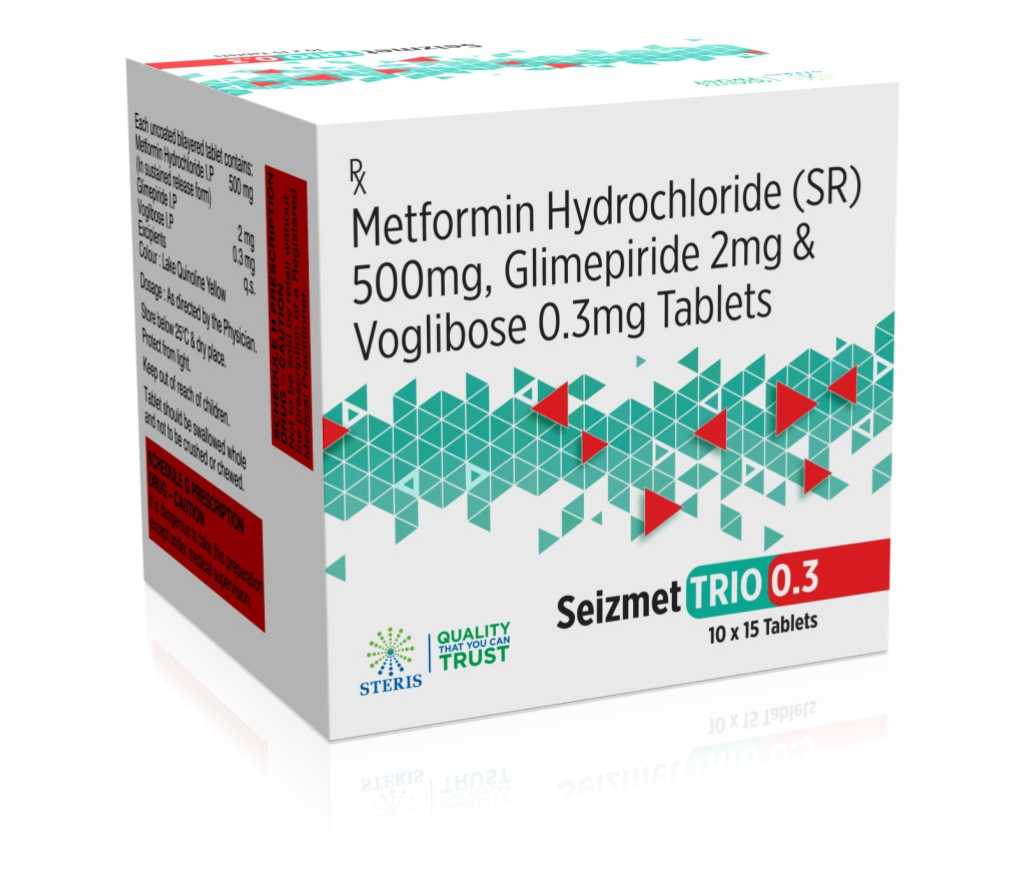
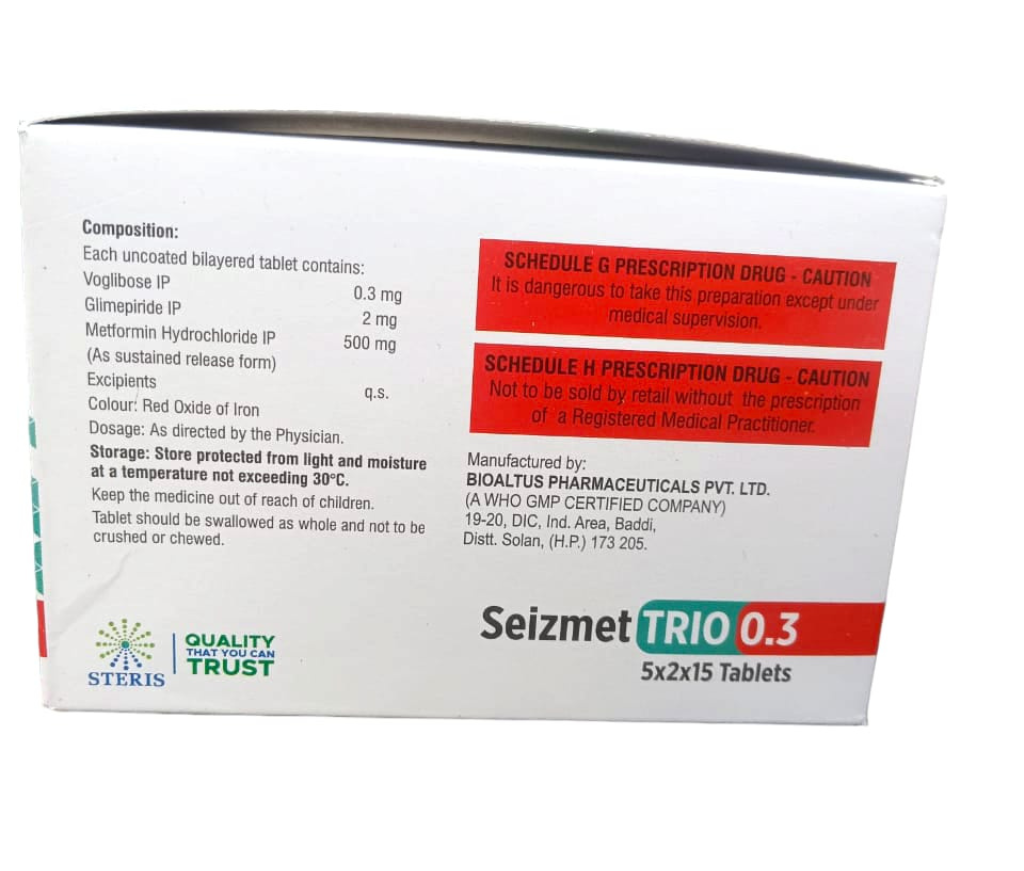
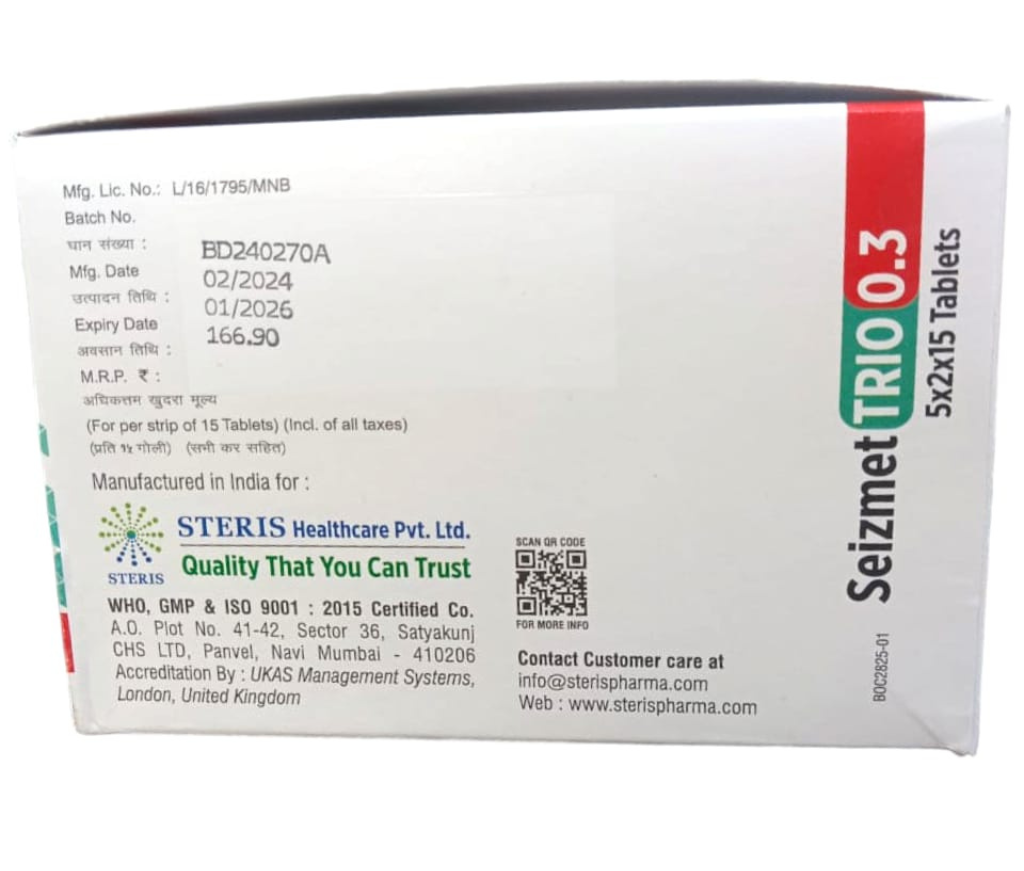
SEIZMET TRIO 0.3
 Item requires a valid prescription
Manufactured By Steris Healthcare Pvt Ltd
Composition Glimepiride (2mg), Metformin SR (500mg), Voglibose (0.3mg)
Rs 151.78
MRP Rs 156.47
(3% OFF)
Includes all taxes
Package SIZE
( For 15 Tablets )

100% Authentic
Products

Free
Shipping*

Products
Return Policy
Description:
Type 2 diabetes rarely stays static. What controls blood sugar well in year one often stops being enough by year five, which is why so many patients eventually move from a single tablet to a combination therapy. Glimepiride, voglibose, and metformin hydrochloride tablets—available as Glimiteris Trio from Steris Healthcare—are one of the most commonly prescribed triple combinations in modern diabetes care, bringing together three distinct, complementary mechanisms in one daily dose.
This guide walks through exactly what this combination is, how each ingredient works, who it's typically prescribed for, its key benefits, possible side effects, and answers to the most commonly asked questions people search for—whether typed into Google or asked out loud to a voice assistant.
What Are Glimepiride, Voglibose, and Metformin Hydrochloride Tablets?
This is a fixed-dose combination tablet built from three separately well-established antidiabetic medicines:
-
Glimepiride—a sulfonylurea that helps the pancreas release more insulin
-
Voglibose—an alpha-glucosidase inhibitor that slows carbohydrate digestion and blunts post-meal sugar spikes
-
Metformin Hydrochloride—a biguanide that reduces glucose production in the liver and improves how the body's cells respond to insulin
Rather than taking three separate tablets throughout the day, this combination consolidates all three actions into a single dose, which is one reason doctors often turn to it once metformin alone stops delivering adequate blood sugar control.
It's important to note upfront: this is a prescription medicine. It's meant for adults with a confirmed diagnosis of type 2 diabetes mellitus, prescribed and monitored by a physician—not something to start, stop, or self-adjust without medical guidance.
Why This Combination Is Commonly Prescribed
Doctors reach for a triple combination like this when a patient's blood sugar isn't adequately controlled on metformin by itself or after progressing through a two-drug regimen without hitting their target HbA1c. Rather than adding a completely separate medication class, combining three well-known, well-tolerated agents in a single tablet offers a practical middle ground—meaningful glycemic improvement without the complexity of managing multiple prescriptions and dosing schedules.
There's also a clinical logic behind combining these three specific drug classes rather than any random three. Type 2 diabetes involves several overlapping problems at once: the liver produces too much glucose, the body's cells resist insulin's effects, the pancreas may not release enough insulin at the right times, and carbohydrates from meals get absorbed too quickly. A single medicine typically only addresses one of these. Glimepiride, voglibose, and metformin hydrochloride tablets were combined specifically because each ingredient tackles a different piece of that puzzle, which is why the combination often achieves better overall control than extending the dose of a single agent ever could.
Mechanism of Action
Understanding why this combination works requires looking at each component separately:
Glimepiride binds to receptors on the pancreas's insulin-producing beta cells. This triggers a chain reaction—potassium channels close, calcium flows into the cell, and insulin already stored in the cell gets released into the bloodstream. In short: it pushes the pancreas to release more insulin than it otherwise would on its own.
Voglibose takes a completely different approach—it doesn't touch insulin at all. Instead, it works in the small intestine, blocking the enzymes that break down starches and complex carbohydrates into the simple sugars your body absorbs. Less sugar gets absorbed quickly after a meal, so the usual post-meal blood sugar spike is noticeably blunted.
Metformin hydrochloride works mainly in the liver, cutting down the excess glucose the liver normally releases into the bloodstream (a process called gluconeogenesis), while also making muscle and fat cells more responsive to the insulin that is available—improving how efficiently the body actually uses glucose for energy.
Put together: less sugar comes in too fast from meals (voglibose), more insulin is available to manage it (glimepiride), and the liver stops dumping extra glucose into the mix (metformin). It's a three-front approach to a problem that usually has more than one cause.
Key Benefits
1. Comprehensive blood sugar control across the day. Because each ingredient acts differently, the combination helps manage both fasting glucose and the post-meal spikes that single agents often miss.
2. Fewer, more manageable post-meal glucose surges. Voglibose specifically targets the after-meal spike, which is one of the harder aspects of diabetes to control and one that's increasingly linked to long-term cardiovascular risk.
3. Better treatment adherence. One tablet covering three mechanisms is simply easier to remember and stick with than three separate prescriptions, which matters enormously for a condition that requires lifelong management.
4. A well-understood, long-standing safety profile. All three ingredients have been used individually in diabetes care for decades, so their effects, interactions, and side effects are well documented—this isn't a combination built on unproven or experimental ingredients.
5. Weight-neutral foundation. Metformin doesn't typically cause the weight gain sometimes seen with sulfonylurea-only regimens, helping keep the overall metabolic picture more balanced.
6. Reduced risk of long-term complications when used consistently. Sustained, well-managed blood glucose control is directly linked to lower rates of diabetes-related complications affecting the eyes, kidneys, nerves, and heart over time.
7. Flexibility across dose strengths. This combination is available in multiple dose strengths (varying glimepiride and voglibose amounts), allowing physicians to tailor therapy intensity to each patient's individual needs and hypoglycemia risk profile.
Side Effects
Most people tolerate this combination reasonably well, but side effects are possible and worth knowing about.
Commonly reported side effects:
-
Nausea or an upset stomach, especially in the first few weeks
-
Diarrhea or loose motions
-
Gas and bloating (often linked to voglibose slowing carbohydrate breakdown)
-
Mild headache
-
A metallic taste in the mouth
-
Occasional dizziness
-
Mild low blood sugar (hypoglycemia) if a meal is skipped after dosing
Who Should Be Cautious With This Medication
-
People with significant kidney or liver impairment
-
Those with a history of frequent low blood sugar episodes
-
Pregnant or breastfeeding women (insulin is usually preferred instead)
-
People scheduled for surgery or a contrast-dye imaging scan (metformin often needs to be paused beforehand)
-
Anyone with a known allergy to sulfonylureas or related medications
-
People who drink alcohol regularly, due to increased hypoglycemia and lactic acidosis risk
None of this replaces a conversation with your prescribing doctor—these are simply the situations where extra caution and closer monitoring typically apply.
Frequently Asked Questions
1. What are glimepiride, voglibose, and metformin hydrochloride tablets used for?
They're used to manage blood sugar in adults with type 2 diabetes, typically when a single medication or a two-drug combination hasn't achieved adequate control.
2. How do these tablets lower blood sugar?
Glimepiride boosts insulin release from the pancreas, voglibose slows carbohydrate absorption after meals, and metformin reduces the liver's glucose output while improving insulin sensitivity.
3. Can this medication be taken once a day?
Dosing frequency depends on the specific prescription and dose strength; many formulations are taken once daily with the main meal, but always follow your doctor's exact instructions.
4. Should this medication be taken before or after food?
It's typically taken with or just before the first bite of a meal, since voglibose needs to be present alongside carbohydrates to work effectively.
5. What happens if I take this medicine without eating?
Taking it without food increases the risk of low blood sugar (hypoglycemia), particularly because of the glimepiride component—don't skip meals after dosing.
6. What are the most common side effects?
Nausea, bloating, gas, mild stomach upset, and occasional low blood sugar are the most frequently reported side effects, especially when starting treatment.
7. Is weight gain a side effect of this combination?
Metformin is generally weight-neutral, which helps offset the modest weight gain sometimes associated with sulfonylureas like glimepiride alone.
8. Can this medication cause low blood sugar?
Yes—this is one of the main risks, mainly linked to glimepiride, and is why consistent meal timing while on this medication matters.
9. Is this medicine safe for people with kidney problems?
Metformin needs caution or dose adjustment in reduced kidney function due to a rare risk of lactic acidosis, so kidney function is usually checked before and during treatment.
10. Can I drink alcohol while taking this medication?
It's best to avoid or strictly limit alcohol, since it raises the risk of both low blood sugar and the rare but serious complication of lactic acidosis.
11. Is this combination safe during pregnancy?
It's generally not recommended during pregnancy; insulin is usually the preferred treatment for blood sugar control in pregnant women, so speak with your doctor.
12. What is lactic acidosis, and should I be worried about it?
It's a rare but serious complication linked to metformin, more likely in people with kidney or liver issues; symptoms include severe muscle pain and breathing trouble, and it requires emergency treatment—but it's uncommon in people with normal kidney function.
13. Can this medication be stopped suddenly?
It shouldn't be stopped abruptly without talking to your doctor first, since blood sugar control needs to be managed and transitioned carefully if treatment changes.
14. What should I do if I forget a dose?
Take it as soon as you remember, unless it's almost time for your next dose—don't double up, and check with your doctor about your specific missed-dose plan.
15. Does this medicine interact with other drugs?
Yes, it can interact with certain diuretics, steroids, and other diabetes or kidney-affecting medications—always tell your doctor about everything else you're taking.
Conclusion
Glimepiride, voglibose, and metformin hydrochloride tablets bring together three of the most established tools in type 2 diabetes management into a single, convenient dose. By tackling insulin secretion, carbohydrate absorption, and liver glucose output all at once, this combination offers a more rounded approach to blood sugar control than any one of these medicines could achieve alone—which is exactly why it's become such a common next step for patients whose diabetes has outgrown simpler treatment.
That said, no combination therapy works in isolation from good habits. Consistent meal timing, regular blood sugar checks, periodic lab monitoring, and honest conversations with your doctor about side effects—especially anything resembling low blood sugar—all play a role in getting the most out of this medication safely. If your current diabetes treatment isn't hitting your target numbers, this is a combination worth asking your doctor about.