


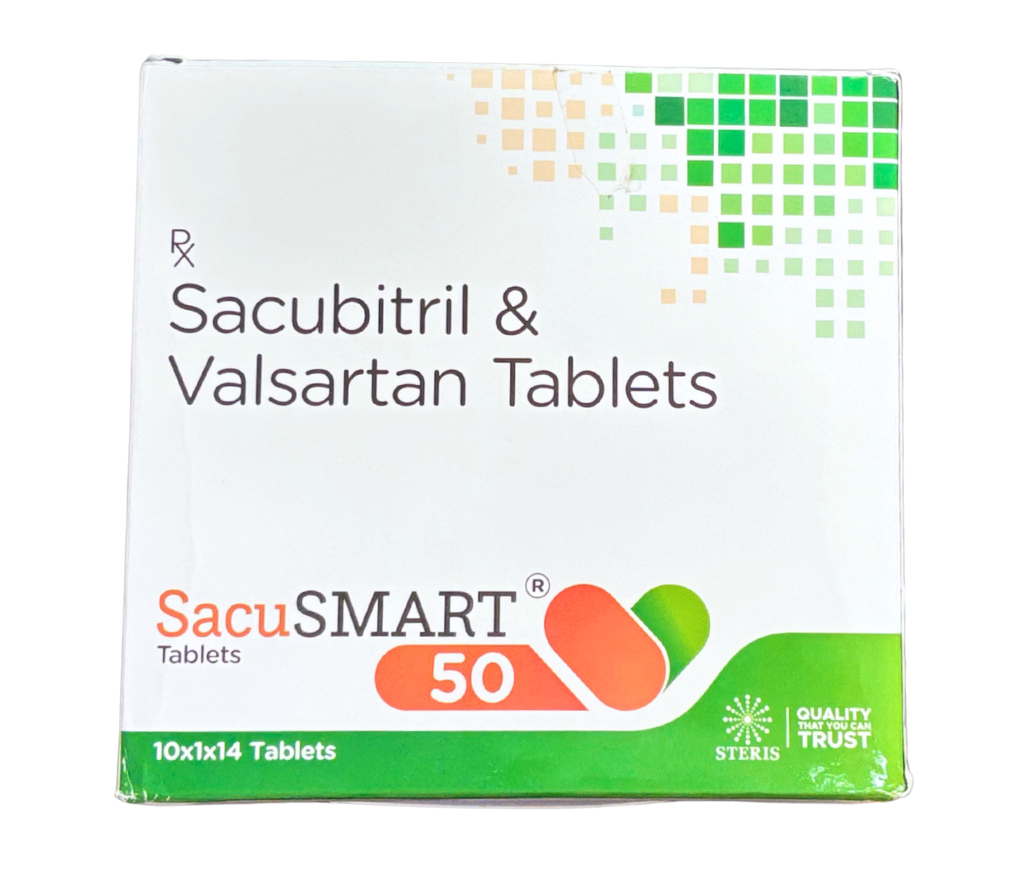
Sacubitril valsartan tablets | SACUSMART 50
 Item requires a valid prescription
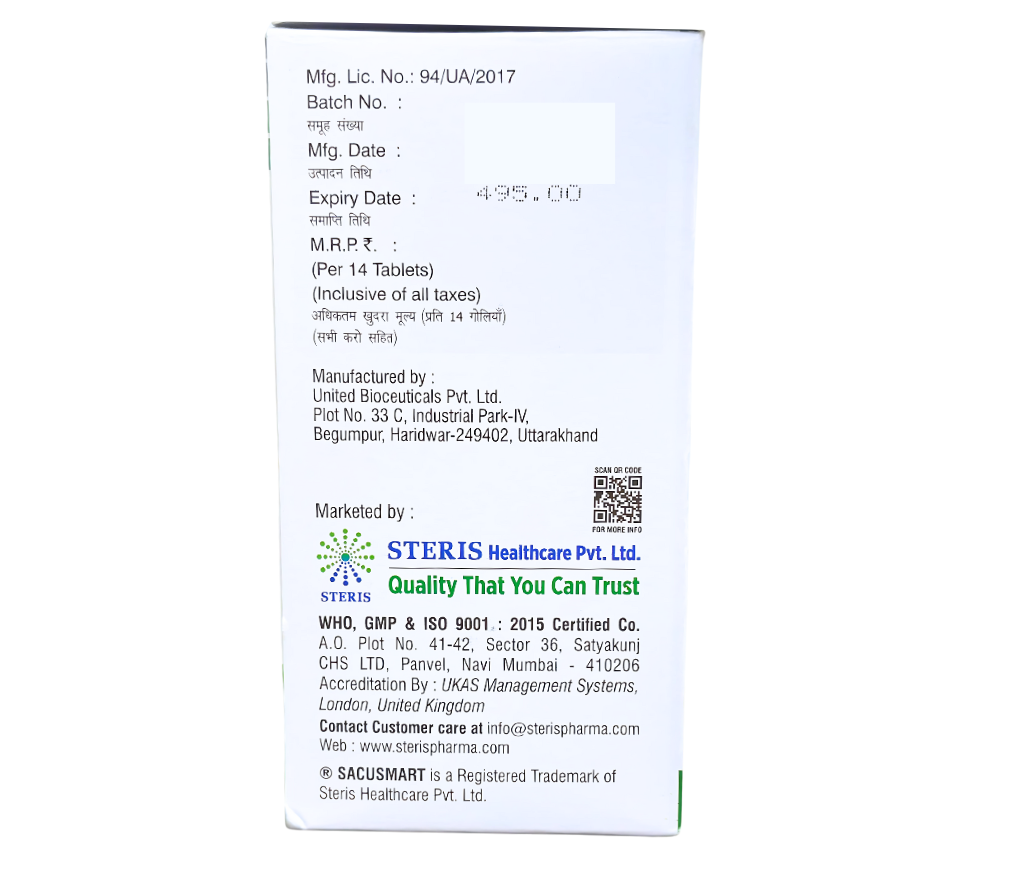
Manufactured By Steris Healthcare Pvt Ltd
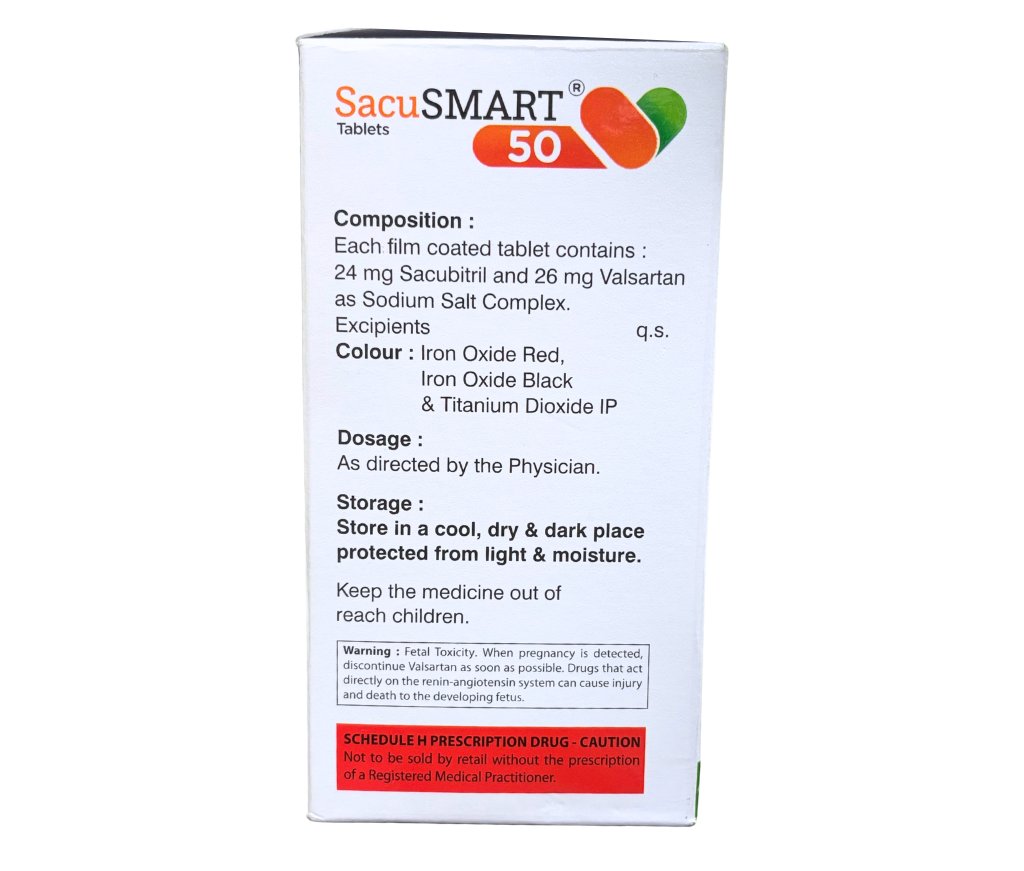
Composition sacubitril valsartan tablets
Rs 324.80
MRP Rs 464.00
(30% OFF)
Includes all taxes
Package SIZE
( For 14 Tablet )

100% Authentic
Products

Free
Shipping*

Products
Return Policy
Description:
SACUSMART 50 is manufactured and marketed by Steris Healthcare Pvt. Ltd. It's a fixed-dose combination tablet containing sacubitril and valsartan, belonging to a drug class called ARNIs (angiotensin receptor-neprilysin inhibitors). This class is most commonly prescribed as part of managing chronic heart failure. Below, you'll find complete product information, an explanation of why the 50mg strength is so often where treatment begins, how the medicine actually works, safety information that genuinely matters here, and a clear path to ordering it.
| Field | Details |
|---|---|
| Brand name | SACUSMART 50 |
| Composition | Sacubitril + Valsartan (fixed-dose combination) |
| Drug class | Angiotensin Receptor-Neprilysin Inhibitor (ARNI) |
| Product form | Tablet (oral, film-coated) |
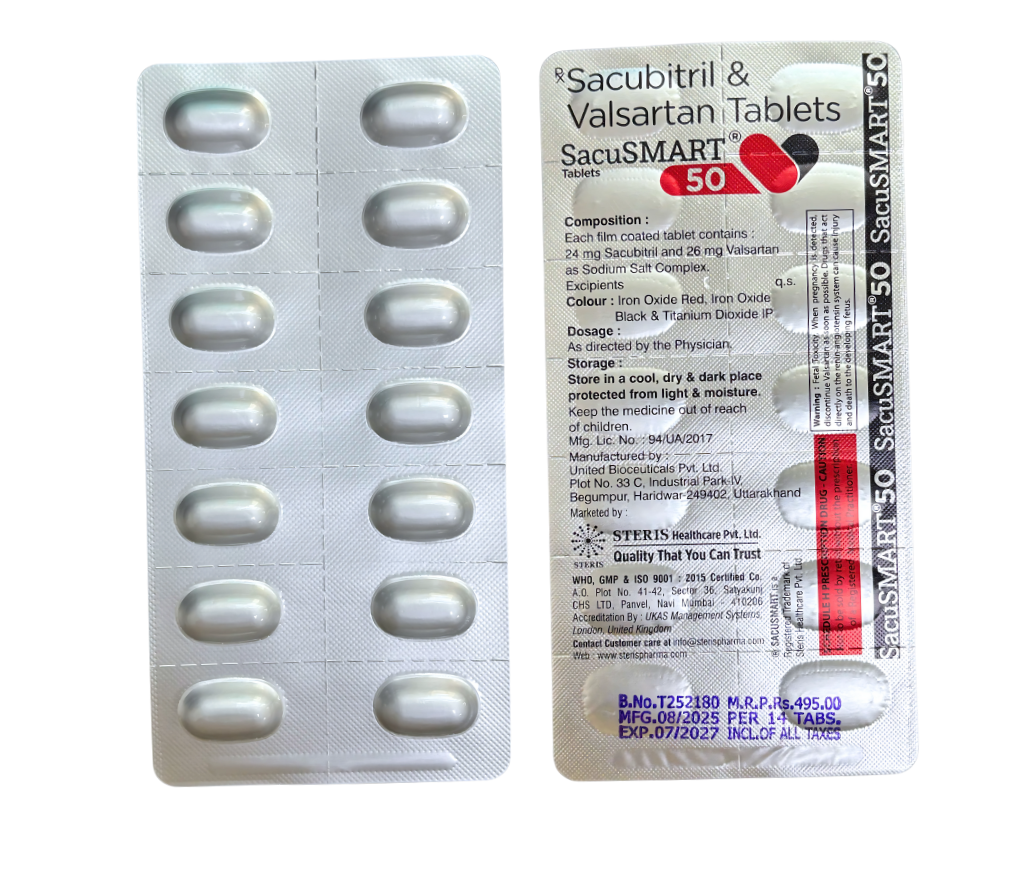
| Pack size | 14 tablets (strip pack) |
| Manufacturer / Marketer | Steris Healthcare Pvt. Ltd. |
| Country of origin | India |
| Therapeutic category | Cardiovascular — heart failure management |
| Primary use | Management of chronic heart failure with reduced ejection fraction, as part of a broader treatment plan directed by a cardiologist or physician |
| Route of administration | Oral |
| Typical dosing | As individually determined and titrated by your treating doctor — do not self-adjust |
| Prescription status | Schedule H — prescription required |
| Storage | Store below 30°C in a dry place, protected from light and moisture |
| Keep away from | Children and direct sunlight |
| Shelf life | As printed on the pack — do not use beyond the expiry date |
Why This Is Usually Where Treatment Starts
Sacubitril valsartan is typically available at more than one strength, and doctors don't usually start a patient at the highest one. The 50mg strength — the one in SACUSMART 50 — is the standard entry point for a large proportion of patients beginning ARNI therapy, and there are specific, well-established reasons for that.
If you haven't previously been on an ACE inhibitor or a standalone ARB at a meaningful dose, your doctor is likely to start you here rather than at a higher strength, simply because your cardiovascular system hasn't been "primed" by an equivalent medicine before. Starting lower reduces the risk of your blood pressure dropping too much in the first days of treatment.
If you have moderate kidney or liver impairment, this lower strength is also the typical recommended starting point, since both organs are involved in how this medicine is processed and cleared from the body.
If you're being switched from a lower dose of a different heart failure medicine, or your doctor wants to assess tolerability carefully before considering an increase, 50mg is often the deliberate, cautious choice.
From here, many patients are gradually moved up to a higher strength over a period of weeks, provided their blood pressure, kidney function, and potassium levels allow it. Others remain on this strength long-term if it's achieving what their doctor is looking for. Either way, being on the 50mg strength doesn't mean you're on a "starter" or incomplete treatment — for a meaningful number of patients, it's exactly the right long-term dose.
How SACUSMART 50 Works
Sacubitril is a prodrug, converted in the body into its active form, which then inhibits an enzyme called neprilysin. Neprilysin's normal role is to break down natriuretic peptides — hormones your body produces that relax blood vessels, help the kidneys clear excess sodium and water, and ease the workload on a struggling heart. By blocking neprilysin, sacubitril lets these protective hormones remain active for longer, strengthening their beneficial effects.
Valsartan is an angiotensin receptor blocker (ARB). It blocks the receptor that angiotensin II — a hormone that narrows blood vessels and raises blood pressure — binds to, preventing it from tightening blood vessels further. In this combination, valsartan also plays a specific balancing role: because neprilysin also normally breaks down angiotensin II, blocking neprilysin alone would allow angiotensin II to build up unchecked. Pairing sacubitril with valsartan keeps this balance in check.
Together, this combination works on two fronts simultaneously — reducing the harmful hormonal signals that strain a weakened heart, while enhancing the body's own protective hormonal response. It's a genuinely different strategy from a single-mechanism blood pressure tablet, which is why it plays a specific role in heart failure care rather than routine hypertension management.
Who Is SACUSMART 50 Typically Prescribed For?
This medicine is prescribed and titrated individually by a cardiologist or treating physician — it isn't a self-selected or first-line blood pressure treatment. The 50mg strength specifically is commonly used for adults who:
- Are starting ARNI therapy for chronic heart failure with reduced ejection fraction for the first time
- Haven't previously been on an ACE inhibitor or ARB at an equivalent dose
- Have moderate kidney or liver impairment, where a lower starting dose is the standard precaution
- Are being carefully monitored during the early phase of treatment, before any decision to increase the dose
- Have reached this strength as their stable, long-term maintenance dose after titration
If you're unsure whether your dose is expected to increase over time or stay where it is, that's a reasonable and useful question to raise directly with your treating doctor at your next review.
How to Take SACUSMART 50
Dosing and titration for this medicine are individualized more precisely than with typical blood pressure tablets. The points below are general guidance only — your doctor's specific instructions always take priority.
- Take it exactly as prescribed, at consistent times each day, usually twice daily unless your doctor has specified otherwise, since this is a common dosing pattern for ARNI therapy.
- It can generally be taken with or without food, unless your doctor specifies otherwise. Swallow the tablet whole with a glass of water.
- If you miss a dose, take it as soon as you remember, unless it's close to your next scheduled dose — in that case, skip the missed one rather than doubling up.
- Attend every scheduled follow-up and blood test. Your doctor will monitor kidney function, potassium levels, and blood pressure closely, particularly during the early weeks, since these results often guide whether your dose is increased.
- Report symptoms of low blood pressure promptly — dizziness, light-headedness, or fainting, especially when standing — since this is one of the more common reasons a planned dose increase gets paused or adjusted.
- Never increase your own dose, even if you feel your symptoms are still troublesome. Dose changes need to be based on your doctor's assessment of your blood pressure, kidney function, and how you're tolerating treatment overall — not on how you feel day to day alone.
The One Rule That Matters Most: Never Combine with an ACE Inhibitor
This is worth repeating clearly, because it's the single most important safety instruction with this medicine. Sacubitril valsartan must never be taken at the same time as an ACE inhibitor (an older class of blood pressure medicine — common examples include ramipril, enalapril, and lisinopril). Taking both together significantly raises the risk of angioedema, a serious and potentially life-threatening swelling reaction affecting the face, lips, tongue, or throat.
If you're switching from an ACE inhibitor to sacubitril valsartan, your doctor will build in a washout period — typically at least 36 hours with no ACE inhibitor in your system — before you start this medicine. Always tell your doctor and pharmacist about every medicine you're currently taking, including anything over-the-counter, so this rule is followed correctly.
Possible Side Effects and Precautions
This is a general overview, not a complete list. Because this medicine is usually part of a broader heart failure treatment plan, your doctor will discuss precautions specific to your overall health picture — read the pack insert as well.
Commonly reported effects can include:
- Low blood pressure (hypotension), particularly light-headedness or dizziness, especially during the early weeks or after a dose increase
- Elevated potassium levels (hyperkalemia), monitored through routine blood tests
- Changes in kidney function values, also monitored through routine blood tests
- Cough, generally reported less often than with ACE inhibitors
- Fatigue
Tell your doctor before starting if you:
- Are pregnant, planning pregnancy, or breastfeeding — this medicine is not recommended during pregnancy
- Have a history of angioedema with any previous medicine, including ACE inhibitors or ARBs
- Are currently taking, or have recently stopped, an ACE inhibitor
- Have significant kidney or liver impairment
- Have a history of low blood pressure
- Take potassium supplements or potassium-sparing diuretics
- Have diabetes and are taking other medicines that affect the same hormonal system, since these combinations need individual review
How to Identify a Genuine Pack of SACUSMART 50
Because this is a specialized cardiac medicine with individualized dosing, buying from a verifiable, licensed source matters more here than with routine medicines:
- Clear manufacturer details. SACUSMART 50 is manufactured and marketed by Steris Healthcare Pvt. Ltd. A genuine strip carries a visible batch number, manufacturing date, and expiry date printed directly on the foil.
- The correct strength printed on the strip. Sacubitril valsartan is available in multiple strengths, and taking the wrong one isn't something to guess your way around — always match your prescription precisely.
- An intact, sealed blister strip, with tablets uniform in size, shape, and colour.
- A complete pack insert, covering dosage, precautions — including the ACE inhibitor warning — and storage.
- A prescription check before dispensing. This is a Schedule H medicine under Indian drug regulations, and given how carefully its dosing is individualized, prescription verification at the point of sale is especially important here.
Buy SACUSMART 50 — 14 Tablet Pack
SACUSMART 50 (sacubitril valsartan tablets) is supplied in a 14-tablet strip pack, matched to a standard twice-daily dosing schedule over roughly a week, aligned with how closely this medicine is typically monitored during the early stages of treatment.
Before you place your order:
- Keep your prescription handy. A clear photo or scan is generally sufficient for verification at checkout, since this medicine cannot legally be dispensed in India without a valid prescription from a registered medical practitioner.
- Confirm the exact strength. Make sure your prescription specifically calls for the 50mg tablet, since sacubitril valsartan comes in other strengths that are used at different stages of treatment and aren't interchangeable without your doctor's direction.
- Reorder a few days ahead of your last tablet. With a twice-daily dosing schedule and close monitoring typical of this medicine, avoiding any unplanned gap matters more here than with most other cardiovascular medicines.
- Buy only from licensed pharmacies that verify prescriptions properly and can confirm batch authenticity if asked.
Ready to order? Add your 14-tablet pack to cart, upload your prescription at checkout, and a licensed pharmacist will verify it before your order is dispatched. Still confirming details with your cardiologist? Bookmark this page and make sure SACUSMART 50 matches your current prescription before you buy.
Frequently Asked Questions
Where can I buy Sacubitril Valsartan Tablets online?
Sacubitril Valsartan Tablets may be available through licensed online pharmacies and authorized pharmaceutical suppliers. Availability can vary depending on the brand, strength, manufacturer, location, and current stock.
What is the price of Sacubitril Valsartan Tablets?
The price depends on the brand, strength, pack size, manufacturer, and supplier. Check the current product listing or contact the pharmacy for the latest price.
Can I order Sacubitril Valsartan Tablets online?
Yes, Sacubitril Valsartan Tablets may be ordered online through a licensed pharmacy, subject to prescription requirements and applicable local regulations.
Is Sacubitril Valsartan Tablets available from Steris Healthcare?
Availability depends on Steris Healthcare’s current product portfolio and stock. Contact Steris Healthcare or check its official product listings for current availability.
What are Sacubitril Valsartan Tablets used for?
Sacubitril Valsartan Tablets are primarily used to treat certain types of heart failure. Sacubitril and valsartan work through complementary mechanisms to reduce strain on the heart and support cardiovascular function in appropriate patients.
What is the composition of Sacubitril Valsartan Tablets?
Sacubitril Valsartan Tablets contain sacubitril and valsartan as the active ingredients. Available strengths and inactive ingredients can vary by manufacturer, so check the specific product label for complete composition details.
Is a prescription required?
Yes, Sacubitril Valsartan is a prescription medicine and should be used under the supervision of a qualified healthcare professional.
How should Sacubitril Valsartan Tablets be taken?
Take the tablets exactly as prescribed by your doctor. They are generally taken twice daily and can usually be taken with or without food. Swallow the tablet with water. Do not change the dose or stop treatment without medical advice.
If switching from an ACE inhibitor, a 36-hour interval is generally required before starting sacubitril/valsartan because taking them too close together can increase the risk of angioedema.
What should I know before buying Sacubitril Valsartan Tablets?
Purchase the medicine only from a licensed pharmacy or authorized supplier. Check the medicine name, strength, manufacturer, packaging, batch information, and expiry date. Tell your doctor about other medicines you take and any history of low blood pressure, kidney or liver problems, high potassium levels, or angioedema.
How can I order Sacubitril Valsartan Tablets online?
Choose a licensed online pharmacy or authorized pharmaceutical supplier, select the prescribed strength, provide a valid prescription if required, and follow the supplier’s ordering and delivery process. Avoid purchasing prescription medicines from unverified websites or sellers.
The Bottom Line
SACUSMART 50 delivers sacubitril valsartan at the strength most patients start ARNI therapy on, manufactured by Steris Healthcare Pvt. Ltd. and supplied in a 14-tablet pack. It reflects the careful, individualized approach that defines this class of medicine — a deliberate starting point on a path your doctor will actively manage based on how your heart failure treatment progresses.
If your cardiologist or physician has prescribed sacubitril valsartan tablets at this specific strength, SACUSMART 50 delivers exactly that. Keep your prescription on hand, never combine it with an ACE inhibitor, attend every scheduled blood test and follow-up, buy only from a licensed pharmacy, and never adjust your dose without your doctor's direction. That structured, closely monitored approach is what makes ARNI therapy genuinely work for heart failure management.

