


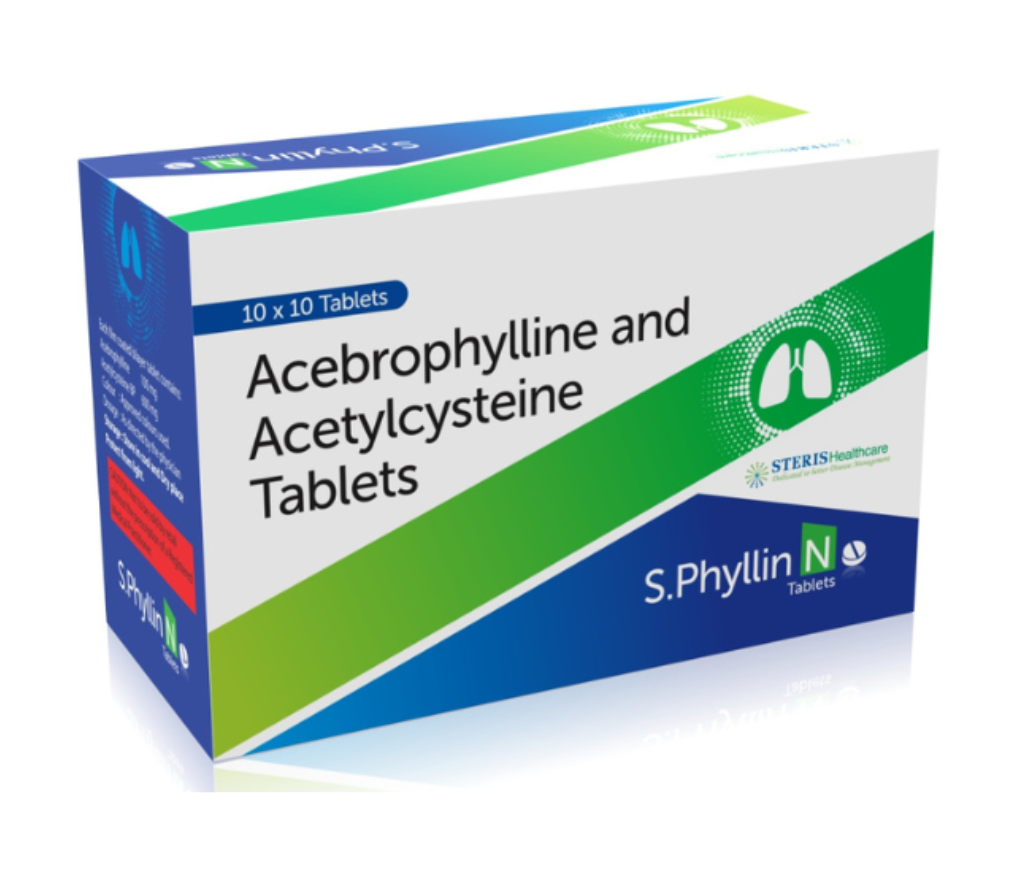
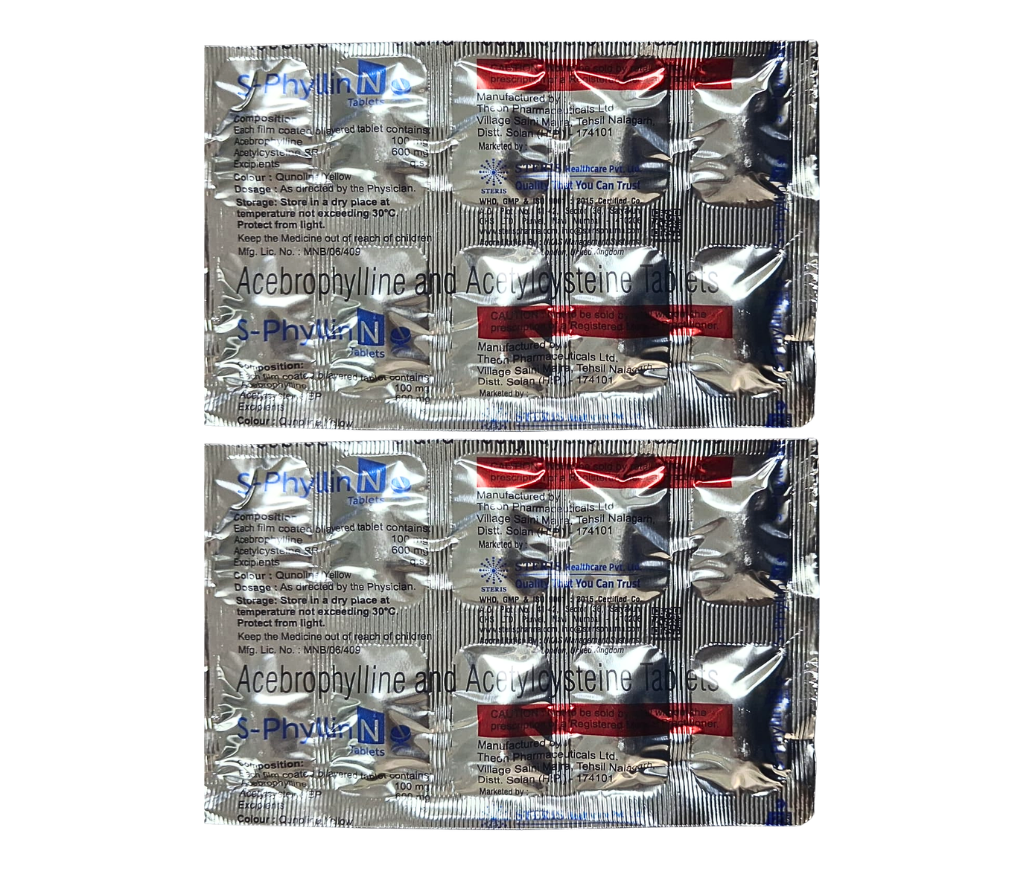
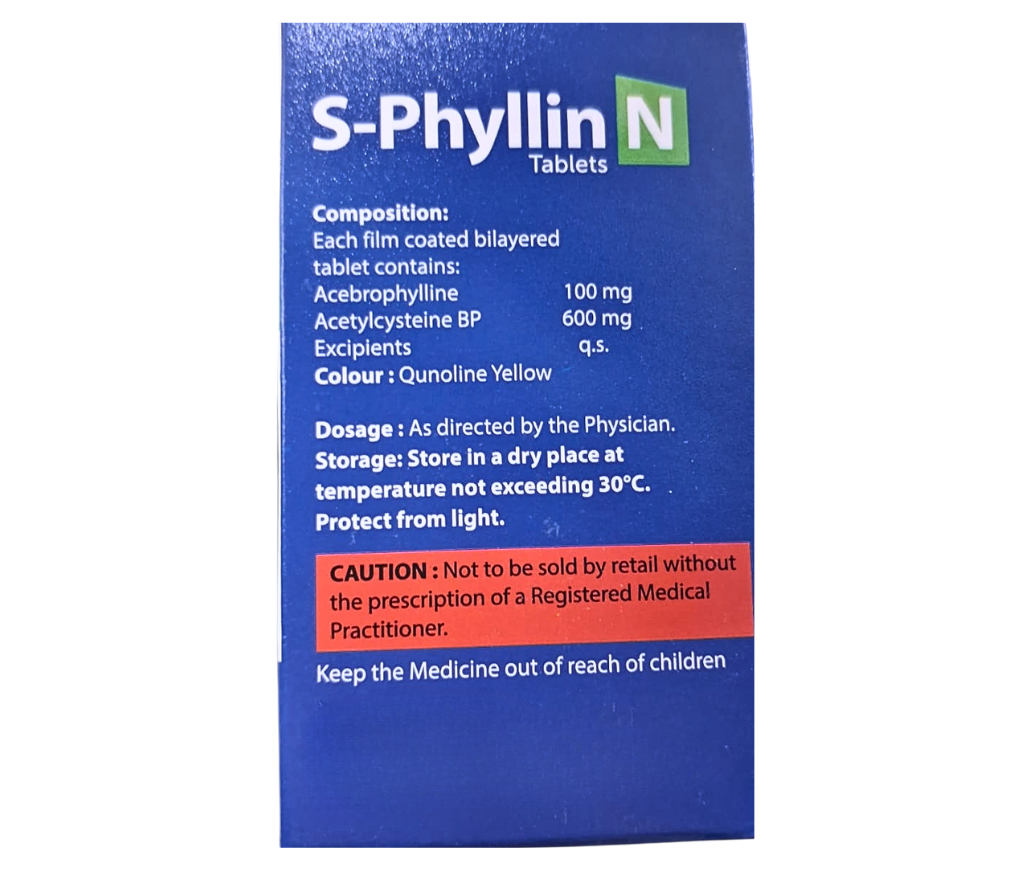
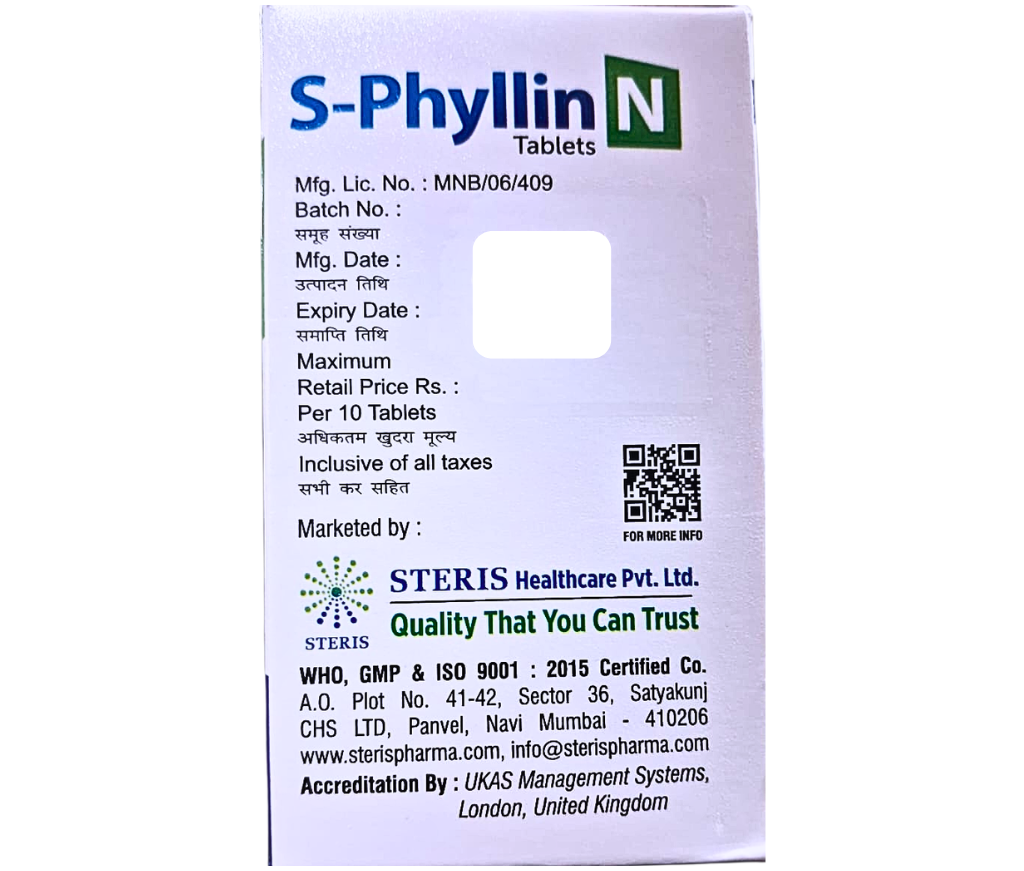
S PHYLLIN N
 Item requires a valid prescription
Manufactured By Steris Healthcare Pvt Ltd
Composition Acebrophylline (100mg), Acetylcysteine (600mg)
Rs 140.70
MRP Rs 201.00
(30% OFF)
Includes all taxes
Package SIZE
( For 10 Tablets )

100% Authentic
Products

Free
Shipping*

Products
Return Policy
Description:
What Are Acebrophylline and Acetylcysteine Tablets?
Acebrophylline and acetylcysteine tablets combine two medicines that address different aspects of respiratory symptoms.
Acebrophylline is a bronchodilator with additional mucus-modifying properties. It can help relax airway muscles and improve airflow. Acetylcysteine is a mucolytic: it helps reduce the thickness and stickiness of mucus, making phlegm easier to clear from the respiratory tract.
This combination may therefore be particularly relevant when a patient has respiratory symptoms accompanied by excessive or difficult-to-clear mucus.
One currently listed Indian product, Broclear Tablet, contains acebrophylline 100 mg + acetylcysteine 600 mg and is marketed for COPD in adults.
Acebrophylline and Acetylcysteine Tablets Uses
The primary use of this combination is respiratory disease management, particularly COPD with symptoms such as breathing difficulty, cough and mucus production.
Depending on the specific product and physician's assessment, acebrophylline-containing combinations may also be prescribed for other respiratory conditions. However, consumers should not assume that every brand has identical approved indications.
1. COPD symptom management
COPD can cause persistent cough, wheezing, breathlessness and excess mucus. Acebrophylline may help improve airway opening, while acetylcysteine helps loosen mucus. This combination can therefore be prescribed as part of an individualized COPD treatment plan.
2. Thick or excessive mucus
Acetylcysteine is particularly useful for its mucolytic action. It modifies mucus so that it becomes less viscous and easier to expectorate. This can make coughing up phlegm easier for appropriately selected patients.
3. Breathing difficulty associated with airway disease
Acebrophylline's bronchodilator action can help relax airway muscles, potentially making airflow easier. It should nevertheless be viewed as part of an overall treatment plan rather than a replacement for every inhaled medicine prescribed for COPD or asthma.
Key Benefits of Acebrophylline and Acetylcysteine Tablets
The combination is designed to address both airway narrowing and problematic mucus.
Potential benefits include:
- Helps open the airways: Acebrophylline has bronchodilator activity that can help improve airflow.
- Helps loosen thick mucus: Acetylcysteine reduces mucus viscosity, making sputum easier to clear.
- May make breathing more comfortable: Improved airway opening and mucus clearance can help reduce respiratory difficulty in suitable patients.
- Supports mucus clearance: Less-viscous sputum can be easier to cough out.
- Combination approach: The two ingredients work through different mechanisms, targeting airway obstruction and mucus simultaneously.
However, benefits vary by patient. This medicine should not be promoted as a cure for COPD or as a guaranteed way to prevent respiratory exacerbations.
How Does Acebrophylline + Acetylcysteine Work?
The two components perform complementary roles.
Acebrophylline: It acts as a bronchodilator and can relax airway smooth muscle, helping improve airflow. It also has mucus-modifying effects.
Acetylcysteine: It is a mucolytic that helps break down components contributing to mucus thickness, making respiratory secretions less viscous and easier to expel. NAC also has antioxidant activity through its role as a precursor to glutathione.
This dual action is why the combination can be considered when both airway obstruction and troublesome mucus are part of the clinical picture.
Acebrophylline and Acetylcysteine Tablets Side Effects
Like other prescription medicines, this combination can cause adverse effects.
Reported side effects include:
- Nausea
- Vomiting
- Diarrhoea
- Stomach discomfort or abdominal pain
- Heartburn
- Dizziness
- Headache
- Drowsiness
- Runny nose
- Skin rash or itching
Many mild gastrointestinal symptoms may settle during treatment, but persistent, severe or worsening symptoms should be discussed with a healthcare professional.
Seek prompt medical attention for symptoms suggesting a serious allergic reaction, severe breathing difficulty, significant palpitations or other unusual or severe reactions.
Who Should Take Extra Care With This Medicine?
Before taking acebrophylline and acetylcysteine tablets, tell your doctor if you have a history of:
- Heart disease or irregular heartbeat
- High blood pressure
- Hyperthyroidism
- Seizures
- Gastric or duodenal ulcers
- Liver or kidney impairment
- Asthma or other significant respiratory conditions
- Previous drug allergies
Pregnant or breastfeeding patients should consult their doctor before taking the medicine. Current Indian pharmacy guidance specifically advises patients to disclose pregnancy, breastfeeding and relevant medical history before treatment.
How to Take Acebrophylline and Acetylcysteine Tablets
Take the medicine exactly according to your doctor's prescription. Current product guidance states that tablets should generally be swallowed whole with water rather than chewed, crushed or broken.
Some product information indicates that the combination may be taken with or without food, while taking it with food may help reduce stomach discomfort. Follow the instructions supplied with your particular prescription because formulations and directions can vary.
Do not increase the dose if you feel that the medicine is not working quickly enough.
What Should You Check Before Buying?
If you are buying this medicine online or from a pharmacy, verify:
- The active ingredients are acebrophylline + acetylcysteine.
- The prescribed strength matches the product.
- The manufacturer and brand match your prescription or pharmacist-approved substitute.
- The pack size is correct.
- The product is from a legitimate pharmacy.
- The packaging, batch number and expiry date are intact.
- The medicine is marked as prescription-required where applicable.
Do not switch to another brand merely because it is cheaper. A pharmacist or doctor can confirm whether a substitute has the same active ingredients and strength.
Is Acetylcysteine Useful for COPD?
Acetylcysteine's role in COPD is more nuanced than simply saying that it “prevents COPD attacks.”
Clinical guidance differs depending on the patient population and treatment context. NICE recommends considering mucolytic therapy for people with COPD who have a chronic productive cough, continuing it when there is symptomatic improvement, while advising against routine use solely to prevent exacerbations in stable COPD.
An ERS/ATS guideline found evidence suggesting that oral mucolytics can reduce hospitalizations and, particularly at higher doses, COPD exacerbations in selected patients with moderate or severe airflow obstruction, but characterized the evidence as low quality and made a conditional recommendation for patients who continue to experience exacerbations despite optimal inhaled therapy.
This distinction is important for responsible health content: acetylcysteine may be useful for selected patients, but it should not be presented as universally necessary for every person with COPD.
Is This Medicine a Substitute for an Inhaler?
Not automatically.
COPD treatment is individualized, and inhaled bronchodilators remain an important part of management for many patients. An oral acebrophylline/acetylcysteine combination should only be used as directed by the prescribing clinician.
Patients should not stop a prescribed inhaler simply because they have started this tablet. If you are unsure whether the tablet is intended to be an add-on treatment or an alternative, ask your doctor or pharmacist.
Frequently Asked Questions: Acebrophylline and Acetylcysteine Tablets
1. What are acebrophylline and acetylcysteine tablets used for?
They are prescription respiratory medicines primarily used to help manage COPD symptoms, particularly when airway narrowing and excessive or thick mucus are present. Acebrophylline helps relax the airways, while acetylcysteine helps thin mucus.
2. What are the main benefits of acebrophylline and acetylcysteine tablets?
The main potential benefits are improved airway opening and easier mucus clearance. Acebrophylline provides bronchodilator activity, while acetylcysteine acts as a mucolytic to reduce mucus thickness.
3. What are the side effects of acebrophylline and acetylcysteine tablets?
Commonly reported effects include nausea, vomiting, diarrhoea, abdominal discomfort, heartburn, dizziness, headache and drowsiness. Skin reactions can also occur. Severe or persistent reactions require medical advice.
4. Can acebrophylline and acetylcysteine tablets be taken daily?
They may be prescribed on a regular schedule for appropriate patients, but the exact dose and duration depend on the individual prescription. Do not establish a daily regimen yourself.
5. Can I take acebrophylline and acetylcysteine for a cough?
It depends on the cause of the cough. The combination is not a general-purpose cough medicine. It is mainly used when a respiratory condition such as COPD and associated airway/mucus problems warrants treatment. A persistent or unexplained cough should be evaluated by a healthcare professional.
6. Is acebrophylline a steroid?
No. Acebrophylline is a bronchodilator/mucus-modifying medicine; acetylcysteine is a mucolytic. Neither ingredient is an inhaled corticosteroid.
7. What is the usual strength of acebrophylline and acetylcysteine tablets?
A commonly marketed Indian combination is acebrophylline 100 mg + acetylcysteine 600 mg, although patients should always check the exact strength on their prescription and medicine pack.
8. Can I buy acebrophylline and acetylcysteine tablets without a prescription?
These products are commonly listed as prescription medicines by Indian online pharmacies. A valid prescription and professional guidance should be followed when purchasing and using them.
9. Is acetylcysteine good for everyone with COPD?
No. The usefulness of mucolytic treatment depends on the patient's symptoms and clinical situation. NICE recommends considering mucolytics particularly for COPD patients with chronic productive cough and continuing treatment when there is symptomatic benefit.
10. Acebrophylline and acetylcysteine tablets is antibiotic?
No. Acebrophylline + acetylcysteine tablets are not antibiotics. They are used to help manage respiratory conditions by relaxing airways and thinning mucus.
Conclusion: Should You Buy Acebrophylline and Acetylcysteine Tablets?
Acebrophylline and acetylcysteine tablets can be a useful prescription option for selected patients with respiratory disease, particularly when airway narrowing and thick or excessive mucus occur together. Acebrophylline helps with airway relaxation, while acetylcysteine helps loosen mucus, giving the combination a dual respiratory-support role.

