


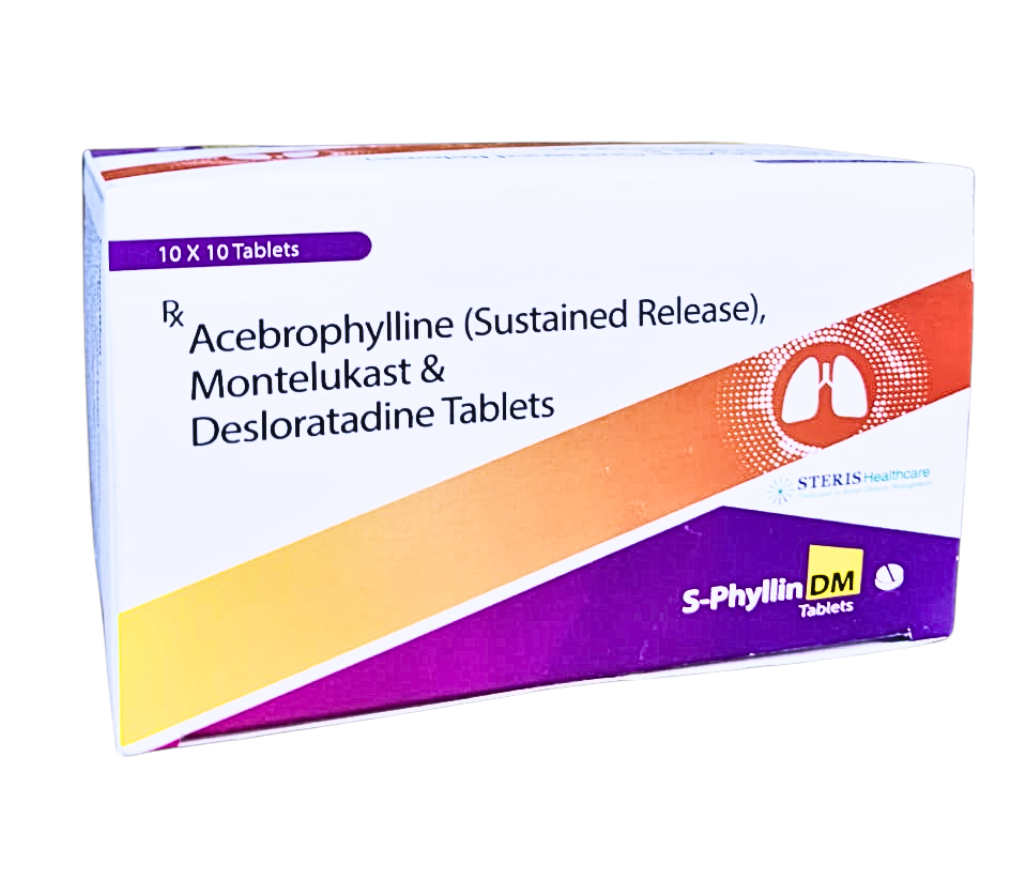
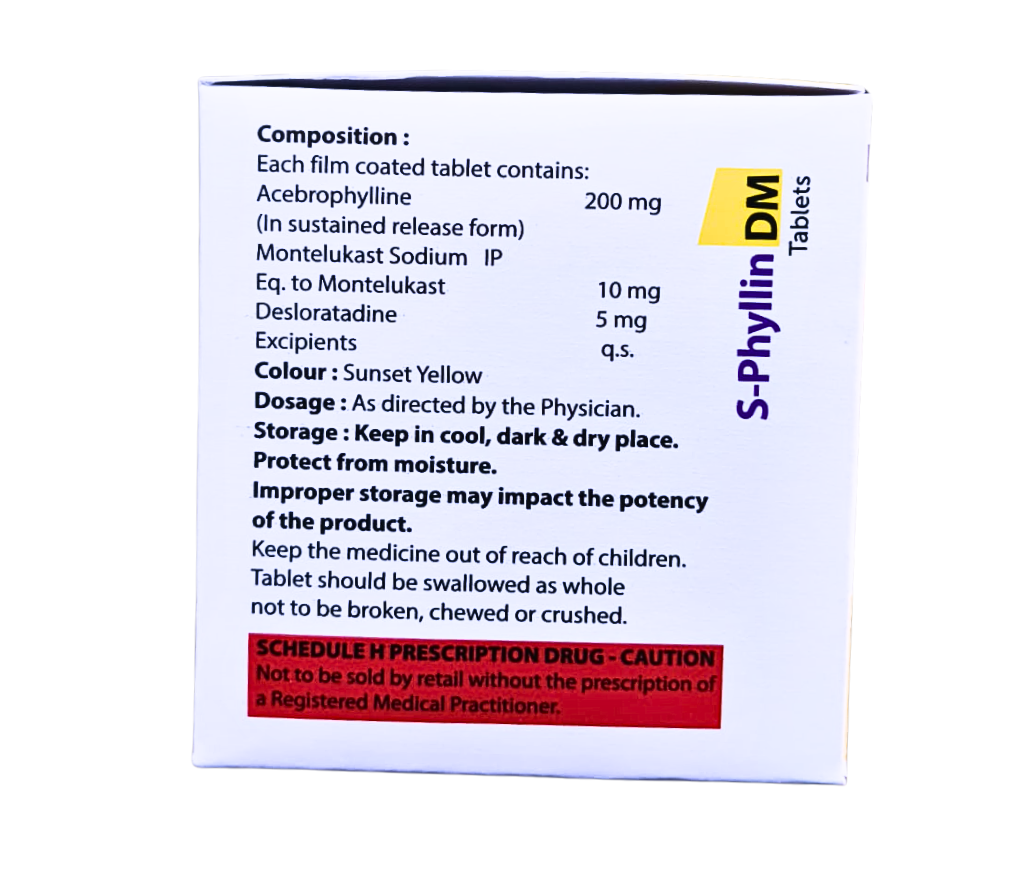
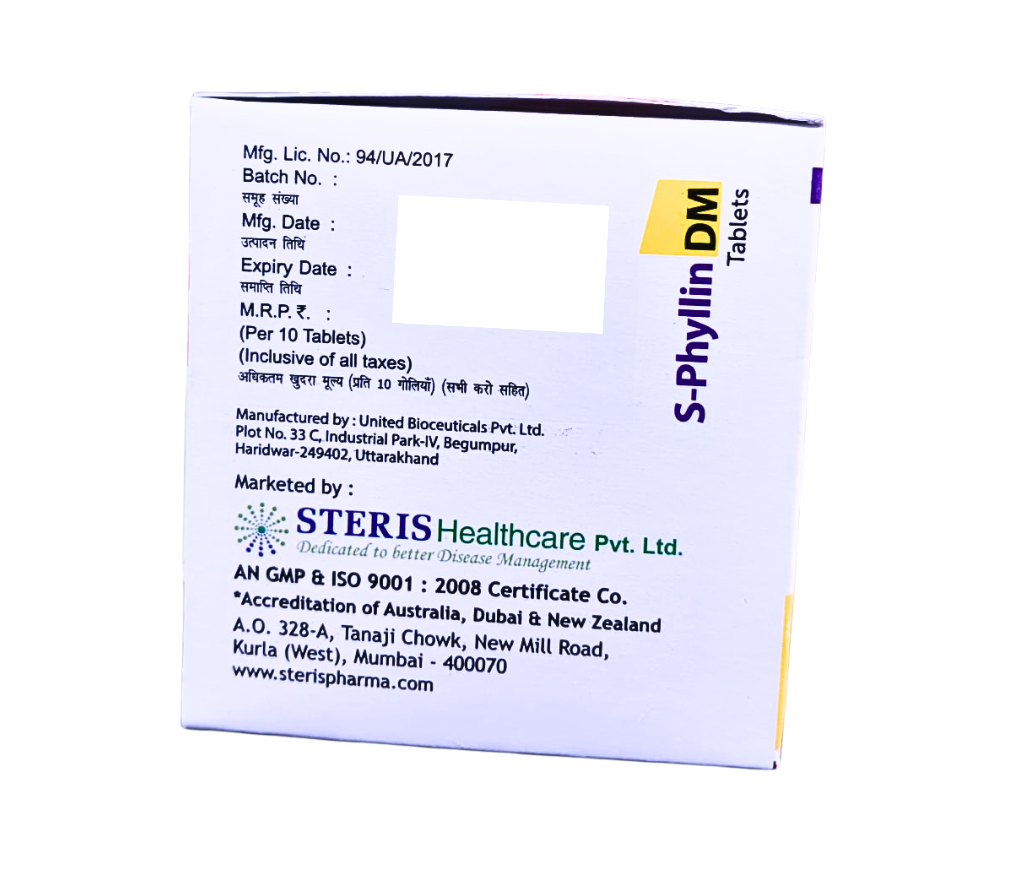
S PHYLLIN DM
 Item requires a valid prescription
Manufactured By Steris Healthcare Pvt Ltd
Composition Acebrophylline (200mg SR), Desloratadine (5mg), Montelukast (10mg)
Rs 163.41
MRP Rs 233.44
(30% OFF)
Includes all taxes
Package SIZE
( For 10 Tablets )

100% Authentic
Products

Free
Shipping*

Products
Return Policy
Description:
Acebrophylline and Acetylcysteine tablets A combination medicine that helps manage chronic respiratory conditions such as COPD, asthma, and chronic bronchitis. Acebrophylline works as a mucoregulator and mild bronchodilator, while Acetylcysteine is a mucolytic that thins and breaks down thick mucus so it clears more easily from the airways. Together, they help patients breathe easier, cough up phlegm with less effort, and recover faster from chest infections when taken exactly as prescribed. This combination is a Schedule H prescription medicine in India — it should only be used under a doctor's guidance, particularly by people with asthma, peptic ulcer disease, liver or kidney conditions, or those who are pregnant or breastfeeding.
What Are Acebrophylline and Acetylcysteine Tablets?
If you've been searching for acebrophylline and acetylcysteine tablets uses, chances are you or someone you care for is dealing with a nagging, mucus-filled cough that just won't quit — the kind that gets worse at night, feels tight in the chest, and leaves you short of breath after a flight of stairs. This tablet combination is specifically formulated for that exact problem.
It brings together two respiratory-active ingredients that work through different but complementary mechanisms:
- Acebrophylline – a derivative that combines the mucus-regulating action of ambroxol with the mild bronchodilating effect of theophylline, helping open airways while also reducing the stickiness of mucus.
- Acetylcysteine (NAC) – a well-established mucolytic agent that breaks the chemical bonds in mucus (mucopolysaccharides), making thick, sticky phlegm thinner and easier to cough out.
Because chest congestion is rarely just "too much mucus" — it's usually a combination of narrowed airways and thick secretions—pairing a bronchodilator-mucoregulator with a mucolytic gives more complete relief than either ingredient alone.
Clinical Indications
| Condition | How This Combination Helps |
|---|---|
| Chronic bronchitis | Reduces mucus viscosity and supports easier expectoration |
| Acute exacerbation of COPD | Eases breathlessness and chest tightness linked to mucus buildup |
| Asthma with excess mucus production | Complements bronchodilator therapy by thinning secretions |
| Productive (wet) cough | Helps clear phlegm that feels "stuck" in the chest |
| Bronchiectasis-related mucus retention | Assists in mobilizing retained secretions |
| Post-viral or post-infective chest congestion | Supports recovery of normal airway clearance |
How It Works (Mechanism of Action)
Understanding the "why" behind acebrophylline and acetylcysteine tablets uses helps patients use the medicine more confidently:
- Acebrophylline increases the fluid content of respiratory secretions and modestly relaxes bronchial smooth muscle, so airways stay more open while mucus becomes less viscous.
- Acetylcysteine breaks disulfide bonds within mucus glycoproteins, converting thick, gel-like phlegm into a thinner, more liquid form that cilia (the tiny hair-like structures in airways) can move out more efficiently.
- Together, the two ingredients reduce airway resistance and support the body's natural mucus-clearing mechanism — which is why many patients notice cough becomes more productive (mucus comes out more easily) within the first few days.
Key Benefits
- Eases chest congestion by thinning thick, sticky mucus so it clears more easily
- Supports easier breathing through mild bronchodilator action
- Reduces the effort of coughing by making phlegm less viscous
- Complements existing respiratory treatment for chronic bronchitis, COPD, and asthma
- May shorten recovery time from chest infections when combined with appropriate medical care
- Convenient oral tablet form compared to nebulized or inhaled mucolytics for many patients
- Well-suited for adults with recurrent productive cough, particularly smokers or those with chronic airway disease
Who Typically Needs This Medicine?
- Adults with chronic bronchitis or COPD experiencing frequent mucus-filled cough
- Patients recovering from respiratory tract infections with residual chest congestion
- Individuals with asthma who also struggle with thick mucus production
- People advised by a pulmonologist or physician to support airway clearance alongside other respiratory therapy
Dosage and How to Take It
Dosage must always be determined by a qualified physician based on age, severity of symptoms, kidney/liver function, and other medicines being taken. General points patients should keep in mind:
- Typically taken as a tablet, usually once or twice daily, as directed by the prescribing doctor
- Best taken after food to reduce the chance of stomach upset
- Should be swallowed whole with a glass of water — do not crush unless your doctor specifically advises it
- Stay well-hydrated while taking this medicine, as adequate fluid intake supports the mucolytic effect
- Do not stop the course early even if symptoms improve, unless your doctor tells you to — stopping too soon can allow mucus and congestion to return
- If a dose is missed, take it as soon as remembered unless it's almost time for the next dose; never double the dose to "catch up"
Side Effects
Like all medicines, acebrophylline and acetylcysteine tablets can cause side effects in some people, though not everyone experiences them.
Common Side Effects
- Mild nausea or stomach discomfort
- Heartburn or acid reflux sensation
- Headache
- Mild dizziness
- Loose stools or mild diarrhea
- Dry mouth
Serious Side Effects (Seek Medical Attention)
- Signs of an allergic reaction — skin rash, itching, swelling of the face/lips/tongue, or difficulty breathing
- Severe or persistent vomiting
- Signs of gastrointestinal bleeding (black stools, blood in vomit) — particularly relevant for patients with a history of peptic ulcer
- Irregular or fast heartbeat
- Unusual tremors, restlessness, or seizures (associated with the theophylline-related component at high doses)
- Severe skin reactions (blistering, peeling skin)
Precautions and Who Should Avoid It
- Peptic ulcer disease: Use with caution; acetylcysteine and acebrophylline may increase gastric irritation in susceptible individuals
- Liver or kidney impairment: Dose adjustment or avoidance may be necessary — always inform your doctor of existing conditions
- Pregnancy and breastfeeding: Should only be used if clearly advised by a doctor, after weighing benefits against potential risks
- Known hypersensitivity: Avoid if you have a known allergy to acebrophylline, acetylcysteine, ambroxol, theophylline, or related compounds
- Cardiac conditions or arrhythmias: Use caution due to the mild stimulant/bronchodilator effect
- Children and elderly patients: Dosing should be individualized and closely supervised
- Drug interactions: Inform your doctor about other medicines, especially theophylline-containing drugs, certain antibiotics, and nitroglycerin, as interactions are possible
Many patients search for practical, day-to-day guidance rather than just clinical facts. Here's how to approach some common concerns:
- If mild nausea occurs, taking the tablet with food (rather than on an empty stomach) often helps.
- Staying hydrated supports the mucolytic action and can reduce the intensity of mild stomach-related side effects.
- Avoiding alcohol and smoking while on treatment supports faster respiratory recovery and reduces additional airway irritation.
- Never combine this medicine with other cough suppressants (antitussives) that stop coughing altogether — this can trap loosened mucus in the airways and worsen congestion. Always check with your pharmacist or doctor before combining respiratory medicines.
Substitutes and Comparison
| Aspect | Acebrophylline + Acetylcysteine | Ambroxol Alone | Acetylcysteine Alone |
|---|---|---|---|
| Mucolytic action | Yes | Moderate | Strong |
| Bronchodilator effect | Mild (via acebrophylline) | No | No |
| Best suited for | Chronic bronchitis/COPD with tight chest + mucus | Simple productive cough | Thick mucus without airway narrowing |
| Prescription status | Rx (Schedule H) | Often OTC | Often OTC/Rx depending on formulation |
Conclusion
Having a stubborn cough with a lot of mucus and having trouble breathing, knowing acebrophylline and acetylcysteine tablet uses helps you understand why this medicine is widely used in patients suffering from chronic bronchitis, COPD and other related diseases. This tablet combines a potent mucolytic with a mucoregulator-bronchodilator to target both the tightness in the chest and the thick mucus causing it – enabling patients to breathe more comfortably and cough more productively. That said, this is a prescription medicine and its true value is in using it correctly. The right dose. The right duration. Under a doctor’s supervision. With attention to precautions for people with ulcers, liver/kidney issues, or pregnancy. If you or someone you love suffer from chronic chest congestion ask your doctor if this combination is part of your treatment plan.
Frequently Asked Questions
1. Is acebrophylline good for cough?
Yes, acebrophylline is commonly used for productive (mucus-producing) cough. It helps thin mucus and mildly opens the airways, making cough more effective at clearing phlegm, especially in chronic bronchitis and COPD.
2. How many days should I take acebrophylline?
Duration depends on the condition being treated and your doctor's advice — commonly a few days to a few weeks for acute exacerbations, or longer for chronic maintenance. Never adjust the duration yourself; always complete the course your doctor prescribes.
3. Who should avoid taking acebrophylline?
People with a known allergy to acebrophylline or related compounds, active peptic ulcer disease, uncontrolled heart rhythm problems, or severe liver/kidney impairment should avoid it unless specifically advised and monitored by a doctor. Pregnant or breastfeeding women should use it only under medical supervision.
4. Is it safe to take acetylcysteine daily?
When prescribed by a doctor for an appropriate condition and duration, daily use is generally considered safe for most adults. However, long-term daily use should always be monitored medically, particularly in patients with a history of stomach ulcers or respiratory allergies.
5. What are three common side effects?
The three most commonly reported side effects are mild nausea, heartburn/acid reflux, and headache. These are usually mild and often reduce when the tablet is taken after food.
6. What are the most serious side effects?
The most serious side effects include severe allergic reactions (swelling, breathing difficulty), signs of gastrointestinal bleeding, irregular heartbeat, and severe skin reactions. Any of these require immediate medical attention.
7. How to remove side effects of medicine naturally?
Mild side effects like nausea or stomach discomfort can often be eased by taking the tablet with food, staying well-hydrated, avoiding alcohol, and eating light, non-spicy meals. However, natural measures are only for mild discomfort — serious side effects need prompt medical care, not home remedies.
8. Are there harmful side effects?
Most people tolerate this combination well, but in rare cases it can cause harmful effects such as allergic reactions, gastrointestinal bleeding, or heart rhythm disturbances — particularly in people with pre-existing conditions. This is why medical supervision and disclosure of your full health history matters.
9. What is a serious side effect?
A serious side effect is one that requires urgent medical attention, such as difficulty breathing, facial swelling, severe vomiting, blood in stool or vomit, or an irregular heartbeat. These differ from common mild effects like nausea or headache.
10. What are the long-term side effects?
With appropriate medical supervision, long-term use is generally well tolerated. However, prolonged use in susceptible individuals may increase the risk of gastric irritation or ulcer aggravation, so periodic doctor review is recommended for extended courses.
11. Can acebrophylline and acetylcysteine tablets be taken with antibiotics?
Yes, this combination is often prescribed alongside antibiotics during a chest infection, since it addresses mucus and airway symptoms while the antibiotic treats the underlying infection. Always confirm combined use with your doctor or pharmacist.
12. Does this medicine make you drowsy?
Drowsiness is not a commonly reported effect, though mild dizziness has been noted in some patients. If you feel drowsy or dizzy, avoid driving or operating machinery until you know how the medicine affects you.
13. Can this tablet be taken on an empty stomach?
It's generally recommended to take it after food to minimize the risk of stomach irritation or nausea, rather than on a completely empty stomach.
14. Is this medicine suitable for children?
Use in children should only be based on a pediatrician's specific advice and appropriate dosing — it is not a general-purpose cough medicine for pediatric self-use.
15. How quickly does it start working?
Many patients notice easier mucus clearance and reduced chest tightness within a few days of consistent use, though the exact timeline varies with the underlying condition and severity.
16. Can I take this medicine if I have asthma?
It may be used in asthma patients with excess mucus production, but only as directed by a doctor, since it should complement — not replace — your regular asthma (bronchodilator/inhaler) treatment.
17. What should I do if I miss a dose?
Take the missed dose as soon as you remember, unless it is nearly time for your next dose — in that case, skip the missed one and continue your normal schedule. Do not double up doses.
If You Need More Information About Click here