


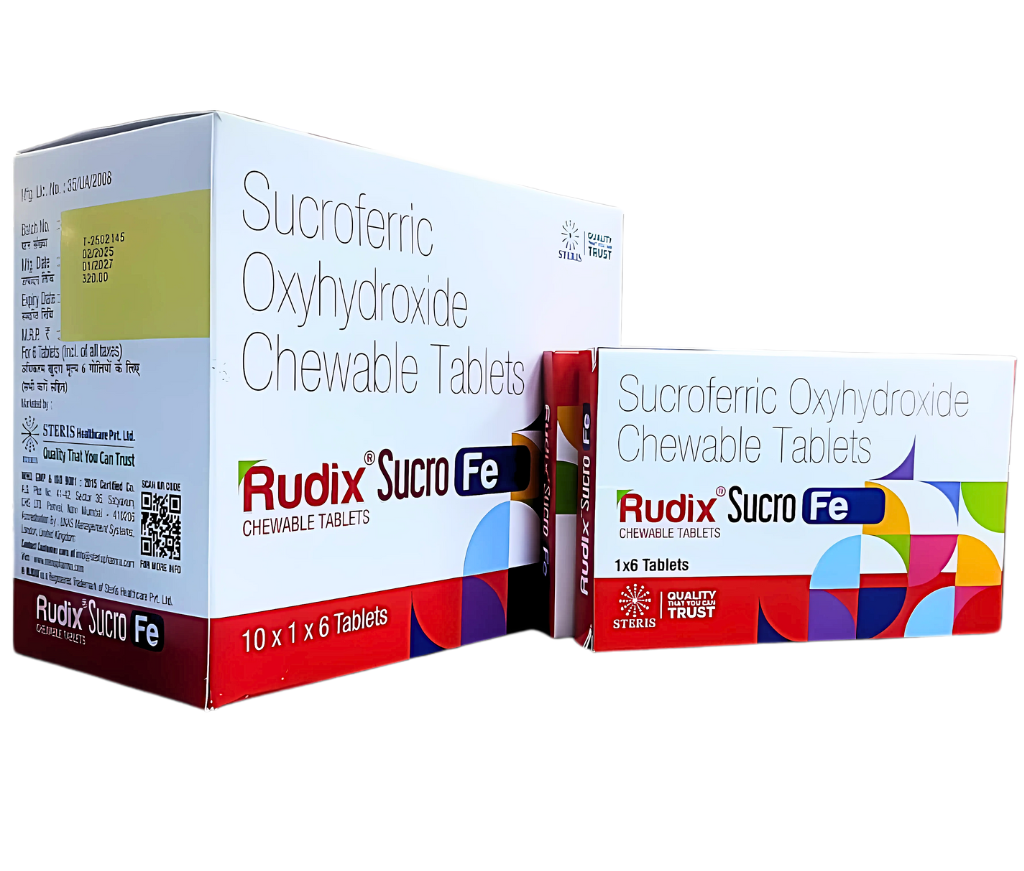
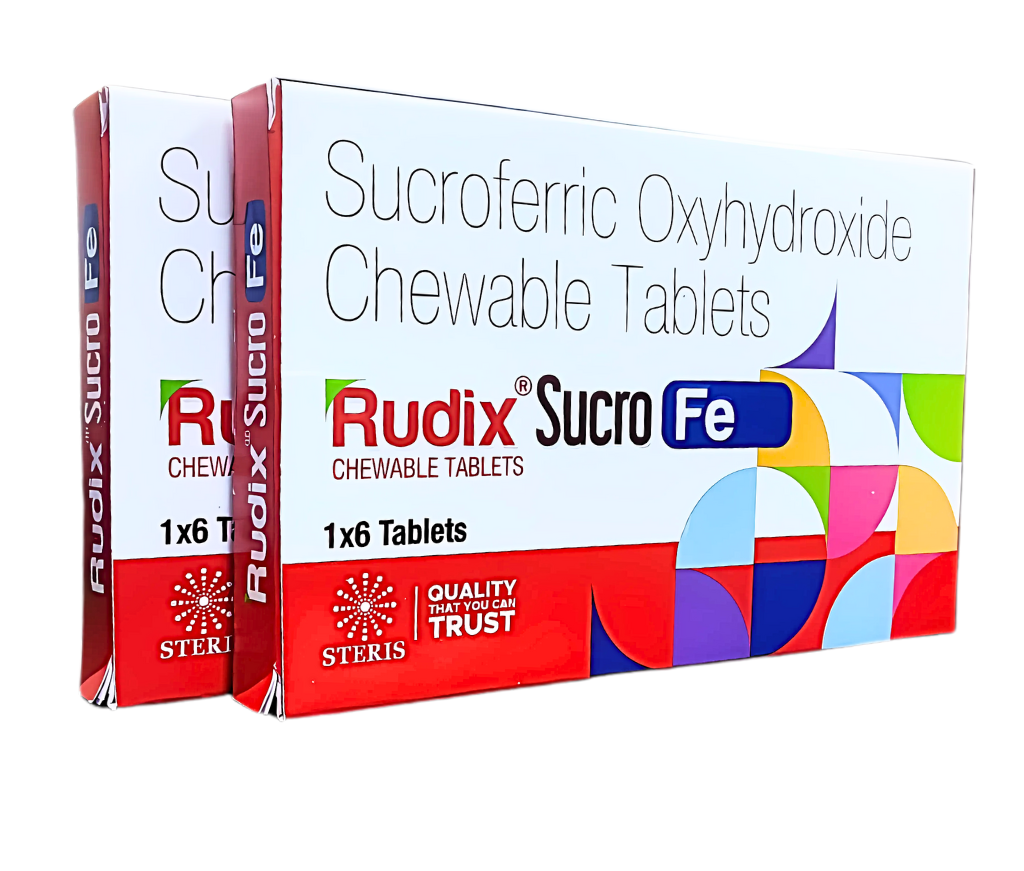
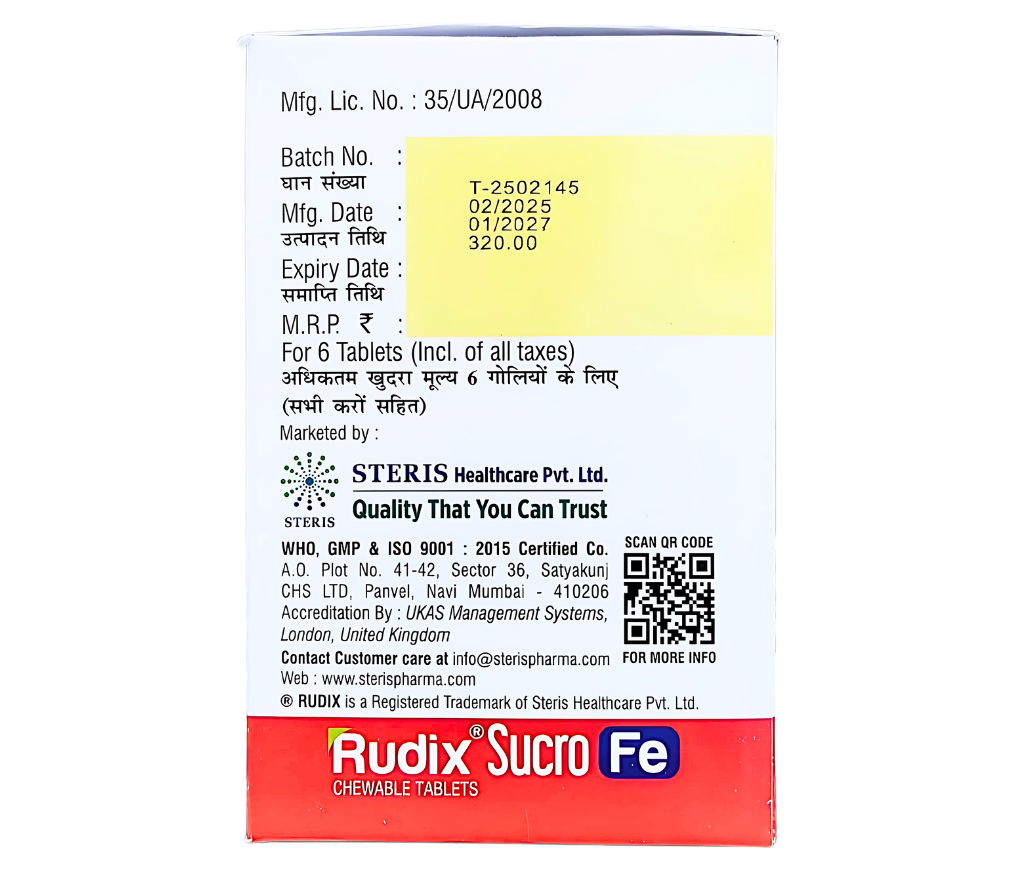
Sucroferric Oxyhydroxide Chewable Tablets | Rudix Sucro Fee
 Item requires a valid prescription
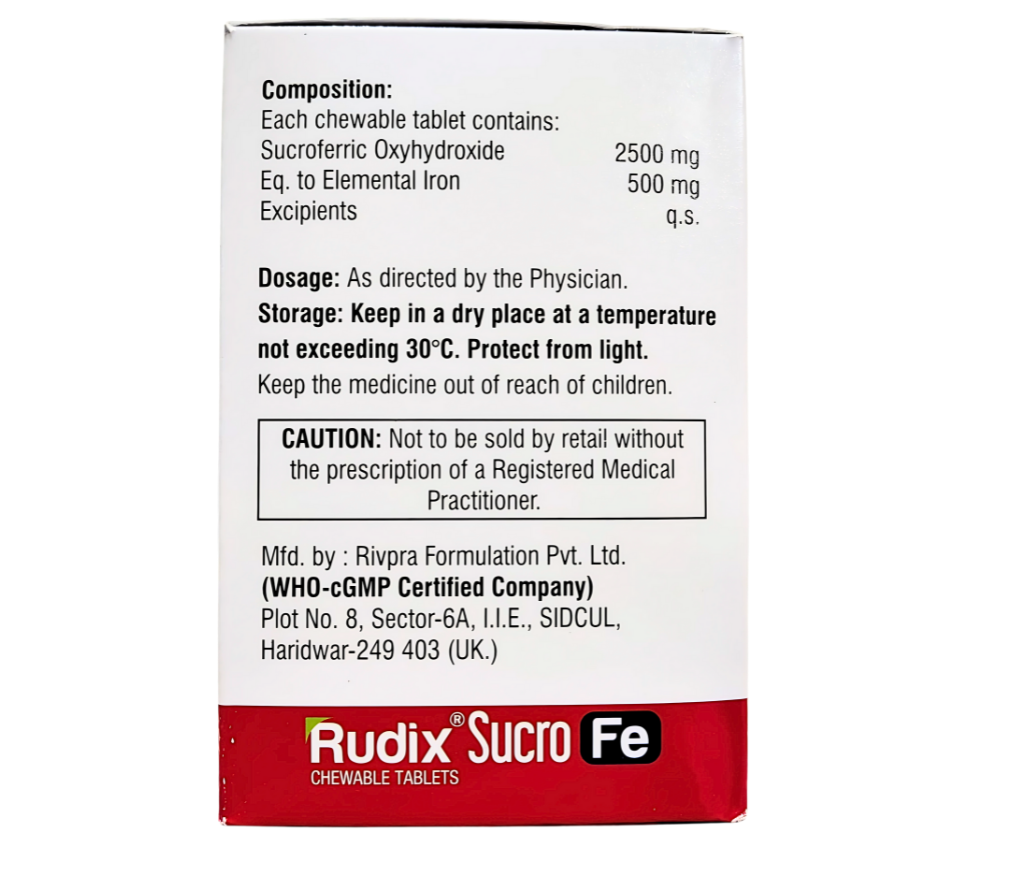
Manufactured By Steris Healthcare Pvt Ltd
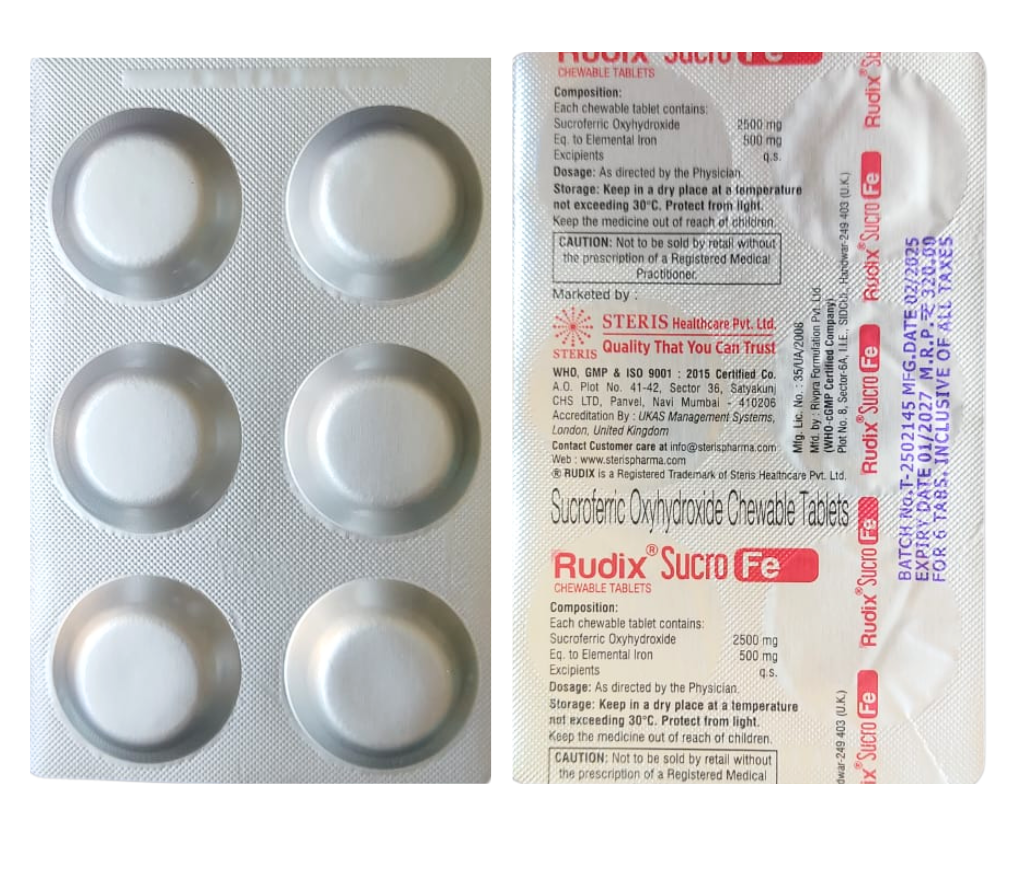
Composition Sucroferric Oxyhydroxide Chewable Tablets 2500 mg
Rs 210.06
MRP Rs 300.08
(30% OFF)
Includes all taxes
Package SIZE
( FOR 6 TABLETS )

100% Authentic
Products

Free
Shipping*

Products
Return Policy
Description:
Sucroferric Oxyhydroxide Chewable Tablets are a clinically proven, iron-based phosphate binder prescribed for the management of hyperphosphatemia — a condition where dangerously high levels of phosphate accumulate in the blood — in adult patients with chronic kidney disease (CKD) who are on dialysis. When the kidneys lose their ability to filter and excrete excess phosphate from the body, phosphate builds up in the blood and binds with calcium, leading to serious complications including calcification of blood vessels and soft tissues, weakened and brittle bones, cardiovascular disease, and significantly increased risk of death in dialysis-dependent patients. Sucroferric Oxyhydroxide Chewable Tablets work by binding dietary phosphate directly inside the gastrointestinal tract — before it ever enters the bloodstream — and eliminating it from the body through the stool. Each tablet contains a polynuclear iron(III)-oxyhydroxide core that acts as a powerful phosphate-trapping agent, delivering effective phosphate control with a lower daily pill burden compared to older calcium-based binders. It is a prescription-only medication intended for use strictly under the supervision of a qualified nephrologist or physician managing chronic kidney disease.
What Are Sucroferric Oxyhydroxide Chewable Tablets?
Sucroferric Oxyhydroxide Chewable Tablets are an oral, non-calcium, iron-based phosphate binder formulated specifically for adult patients with end-stage renal disease (ESRD) or advanced chronic kidney disease who are receiving haemodialysis or peritoneal dialysis. The active pharmaceutical ingredient — sucroferric oxyhydroxide — is a polynuclear iron(III)-oxyhydroxide complex stabilised with sucrose and starches, which gives the tablet both its phosphate-binding power and its chewable, palatable formulation.
Each tablet contains 500 mg of sucroferric oxyhydroxide, equivalent to 500 mg of iron as the active phosphate-binding moiety. The tablet is brown in colour, chewable, and is taken with meals — a deliberate design choice, because dietary phosphate is only present in the gut during and after food consumption, and that is precisely when the phosphate binder needs to be active.
What sets Sucroferric Oxyhydroxide apart from older calcium-based phosphate binders like calcium carbonate or calcium acetate is that it does not contribute to the calcium load in the body. Excess calcium from calcium-based binders is a well-documented concern in dialysis patients — it can accelerate vascular calcification and increase cardiovascular risk. Sucroferric Oxyhydroxide eliminates that risk entirely, making it a safer and increasingly preferred choice in modern nephrology practice.
How Does Sucroferric Oxyhydroxide Chewable Tablet Work?
Understanding the mechanism of action helps explain why this tablet is so effective at controlling phosphate levels in dialysis patients.
Step 1 — Chewing and Release of Active Iron Complex When the tablet is chewed during a meal, the sucroferric oxyhydroxide complex is released and dispersed throughout the stomach contents. Chewing is essential — it increases the surface area of the active compound, maximising the number of phosphate-binding sites available in the gastrointestinal tract. Swallowing the tablet whole significantly reduces its efficacy.
Step 2 — Phosphate Binding in the Gut As food is digested, phosphate is released from dietary sources — meat, dairy, processed foods, nuts, and grains are all high in phosphate. The polynuclear iron(III)-oxyhydroxide complex binds to this free phosphate in the intestinal lumen through a ligand exchange mechanism, forming a stable, insoluble iron-phosphate complex that the body cannot absorb.
Step 3 — Elimination Through the Stool The iron-phosphate complex formed in the gut is completely insoluble in intestinal fluids. It cannot be absorbed through the intestinal wall and is therefore excreted harmlessly in the stool. This means the phosphate never enters the bloodstream — it is intercepted and eliminated at the gut level entirely.
Step 4 — Reduction of Serum Phosphate Levels By consistently binding dietary phosphate at every meal, Sucroferric Oxyhydroxide progressively lowers serum phosphate levels toward the target range recommended for dialysis patients (typically below 1.78 mmol/L or 5.5 mg/dL). Lower phosphate levels reduce the risk of vascular calcification, secondary hyperparathyroidism, renal osteodystrophy, and cardiovascular events — all major causes of morbidity and mortality in dialysis-dependent patients.
Sucroferric Oxyhydroxide Chewable Tablets Uses
Sucroferric Oxyhydroxide Chewable Tablets are prescribed for the following clinically approved indications:
1. Hyperphosphatemia in Chronic Kidney Disease (CKD) Patients on Dialysis
This is the primary and only approved indication. In patients with CKD Stage 5 receiving haemodialysis or peritoneal dialysis, the kidneys can no longer excrete phosphate. Sucroferric Oxyhydroxide controls serum phosphate levels by binding dietary phosphate in the gut, preventing its absorption into the bloodstream. Clinical trials — including the pivotal Phase III study — demonstrated that Sucroferric Oxyhydroxide reduced serum phosphate levels as effectively as sevelamer carbonate but with significantly fewer tablets required per day, substantially improving patient compliance and quality of life.
2. Reducing Pill Burden in Dialysis Patients
Dialysis patients typically take a large number of medications daily — and pill fatigue is a real clinical problem that leads to non-compliance. Because Sucroferric Oxyhydroxide is highly potent per tablet, patients typically require only 1–3 tablets per meal compared to 3–5 tablets of older binders like sevelamer. This reduced pill burden directly improves adherence and, consequently, phosphate control outcomes.
3. Avoiding Calcium Overload in At-Risk Patients
For dialysis patients who are already hypercalcaemic, have evidence of vascular calcification, or are at elevated cardiovascular risk, calcium-based phosphate binders are contraindicated or undesirable. Sucroferric Oxyhydroxide provides effective phosphate binding without any contribution to calcium load — making it the preferred alternative in these patients.
Dosage and Administration
Sucroferric Oxyhydroxide Chewable Tablets must always be taken exactly as prescribed by your nephrologist. The tablet should be chewed thoroughly with meals — never swallowed whole.
| Stage | Dose | Frequency |
|---|---|---|
| Starting dose | 500 mg (1 tablet) | 3 times daily with meals |
| Titration phase | Adjust by 500 mg every 2–4 weeks | Based on serum phosphate levels |
| Maintenance dose | 1000–2000 mg (2–4 tablets) | Per day, divided across meals |
| Maximum daily dose | 3000 mg (6 tablets) | As directed by nephrologist |
Important administration instructions:
- Always chew thoroughly before swallowing — do not crush and dissolve
- Take with or immediately after the start of each main meal
- Doses should be divided evenly across meals to match phosphate intake throughout the day
- If a meal is skipped, skip the corresponding dose of the tablet
- Regular serum phosphate monitoring is required to guide dose titration
Sucroferric Oxyhydroxide Chewable Tablets Side Effects
Sucroferric Oxyhydroxide is generally well tolerated in most dialysis patients. Since it is minimally absorbed from the gut, systemic side effects are uncommon. Most side effects are gastrointestinal and mild in nature.
Commonly Reported Side Effects:
- Discolouration of stools (dark or black stools) — extremely common, harmless, and directly caused by unabsorbed iron passing through the gut
- Diarrhoea — particularly in the early weeks of therapy
- Nausea — usually mild and reduces with continued use
- Constipation — less common but possible
- Vomiting — occasional, especially if tablets are not chewed properly
- Abdominal discomfort or bloating
Clinically Significant Side Effects (Inform Your Doctor):
- Severe or persistent diarrhoea causing dehydration
- Signs of iron overload — unusual fatigue, joint pain, or elevated serum ferritin on blood tests (rare, as systemic absorption of iron from this formulation is very low)
- Hypophosphatemia (excessively low phosphate) — if dose is too high relative to dietary phosphate intake
Important: Black or dark stools are expected and do not indicate gastrointestinal bleeding. However, if dark stools are accompanied by abdominal pain, dizziness, or weakness, consult your doctor to rule out other causes.
Important Precautions and Contraindications
Sucroferric Oxyhydroxide Chewable Tablets are contraindicated in patients with:
- Known hypersensitivity to sucroferric oxyhydroxide or any tablet excipient
- Iron accumulation disorders such as haemochromatosis or haemosiderosis
- Severe gastrointestinal conditions including peritonitis, bowel obstruction, or severe inflammatory bowel disease — use requires specialist evaluation
Special caution is needed in patients with hepatic impairment, as limited data exists in this population. Serum phosphate, serum ferritin, and transferrin saturation should be monitored regularly throughout therapy to ensure phosphate control without iron accumulation.
This tablet is not indicated for patients with CKD who are not on dialysis, and should not be used to treat iron-deficiency anaemia — it is a phosphate binder, not an iron supplement.
Choose Steris Healthcare for Sucroferric Oxyhydroxide Chewable Tablets
When it comes to nephrology-grade pharmaceutical quality, Steris Healthcare sets the standard. Our Sucroferric Oxyhydroxide Chewable Tablets are manufactured under GMP-certified conditions — with every batch rigorously tested for phosphate-binding capacity, active iron complex stability, and microbiological safety before release to market. With competitive pricing, a transparent formulation profile, and a reliable distribution network across India, Steris Healthcare is committed to making high-quality phosphate management therapy accessible to every dialysis patient who depends on it — because in chronic kidney disease, every meal matters and every tablet counts.
Frequently Asked Questions
Q1. What are Sucroferric Oxyhydroxide Chewable Tablets used for?
Ans. Sucroferric Oxyhydroxide Chewable Tablets are used to control high phosphate levels (hyperphosphatemia) in adult patients with chronic kidney disease who are on haemodialysis or peritoneal dialysis. They bind dietary phosphate in the gut and prevent it from entering the bloodstream.
Q2. How should Sucroferric Oxyhydroxide Chewable Tablets be taken?
Ans. The tablet must be chewed thoroughly during or immediately after a meal — never swallowed whole. The standard starting dose is one 500 mg tablet three times daily with meals, adjusted by your nephrologist based on your serum phosphate levels over time.
Q3. Why do stools turn black after taking Sucroferric Oxyhydroxide?
Ans. Black or dark stools are a completely normal and harmless effect caused by unabsorbed iron from the tablet passing through the digestive tract and being excreted in the stool. It does not indicate bleeding and requires no medical intervention unless accompanied by pain or dizziness.
Q4. Is Sucroferric Oxyhydroxide safe for patients who already have high calcium levels?
Ans. Yes — it is actually preferred in such patients. Unlike calcium-based phosphate binders, Sucroferric Oxyhydroxide contains no calcium and does not contribute to calcium overload, making it a safer option for dialysis patients with hypercalcaemia or vascular calcification concerns.
Q5. How is Sucroferric Oxyhydroxide different from Sevelamer?
Ans. Both are non-calcium phosphate binders, but Sucroferric Oxyhydroxide controls phosphate with fewer tablets per day compared to sevelamer carbonate — typically 1–3 tablets versus 6–12 tablets daily. This significantly reduces the pill burden for dialysis patients and improves treatment adherence and overall compliance.
Q6. Can Sucroferric Oxyhydroxide be used in CKD patients who are not on dialysis?
Ans. No — Sucroferric Oxyhydroxide Chewable Tablets are specifically approved only for adult dialysis-dependent CKD patients. They are not indicated for use in patients with chronic kidney disease who have not yet started dialysis. Always follow your nephrologist's prescription.

