


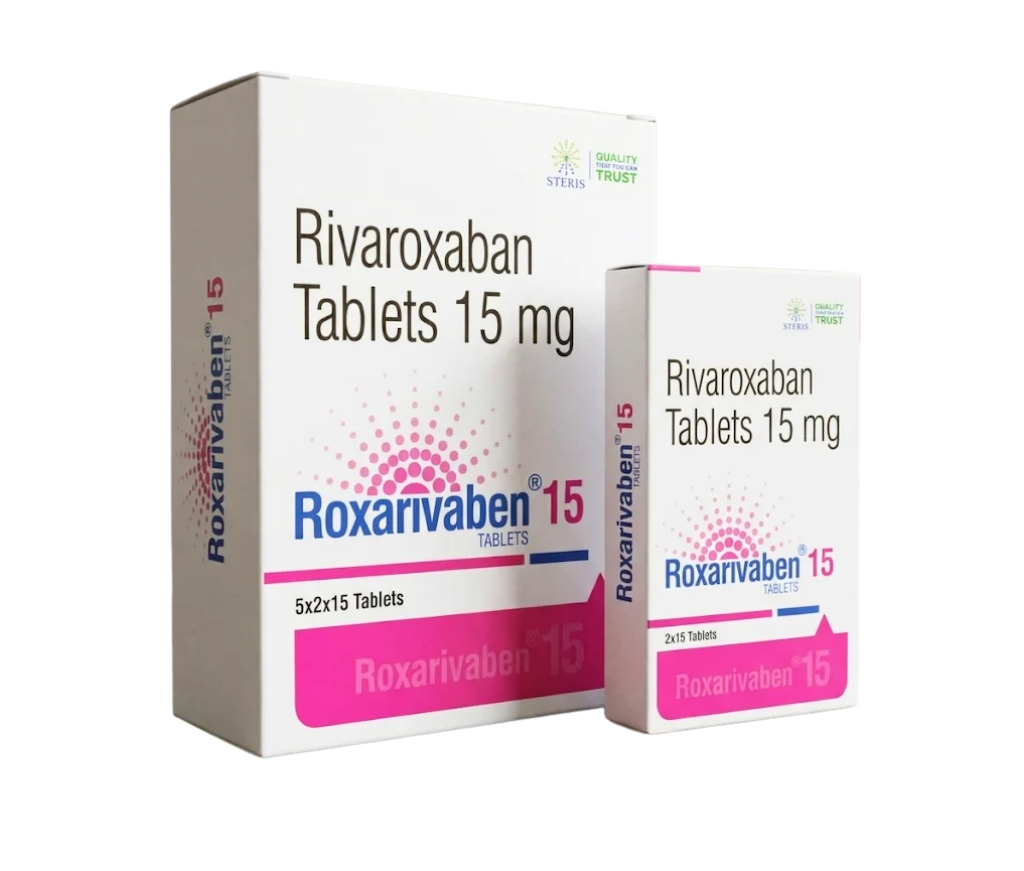
ROXARIVABEN 15
 Item requires a valid prescription
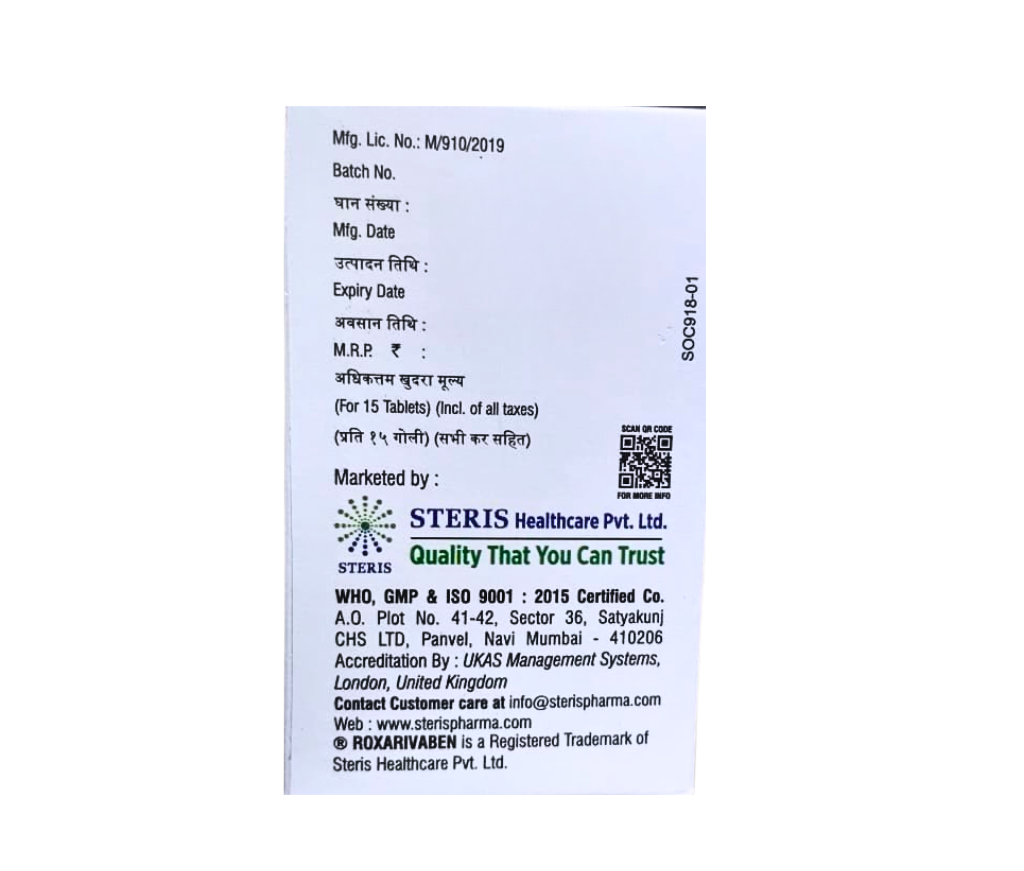
Manufactured By Steris Healthcare Pvt Ltd
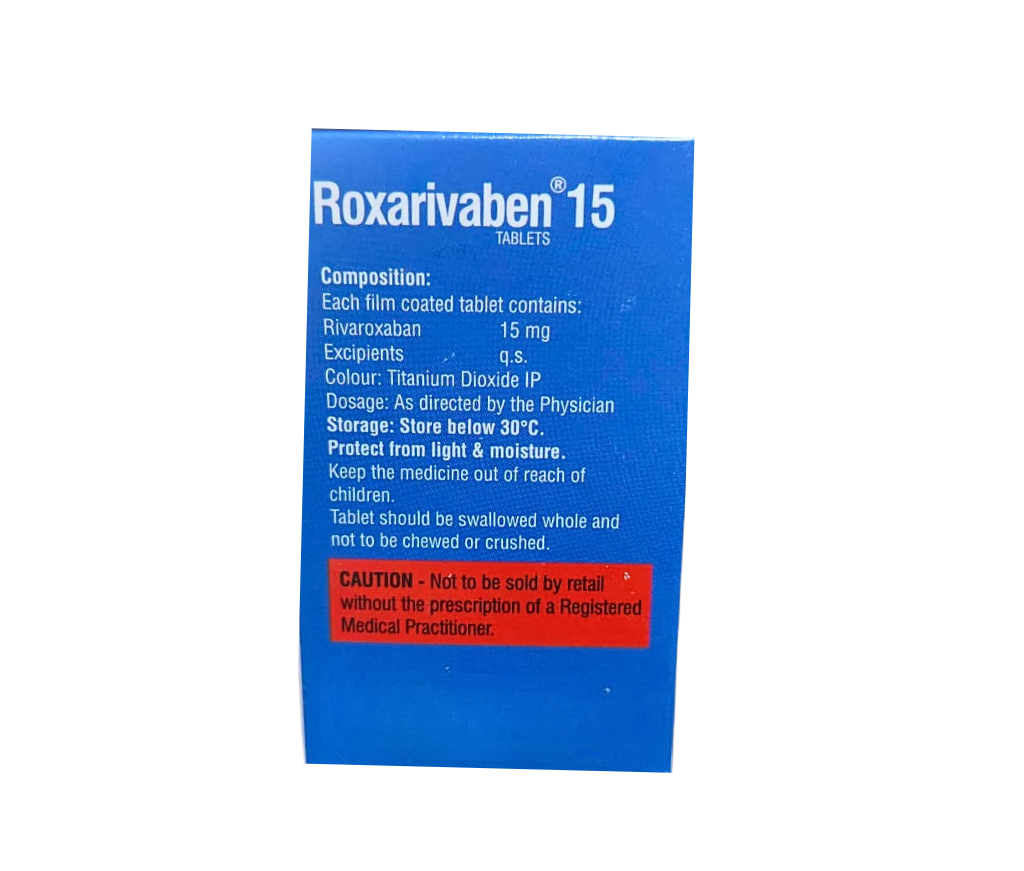
Composition Rivaroxaban (15mg)
Rs 229.60
MRP Rs 328.00
(30% OFF)
Includes all taxes
Package SIZE
( For 14 tablet )

100% Authentic
Products

Free
Shipping*

Products
Return Policy
Description:
Why do clots matter? Your blood is designed to clot when you are injured, which stops bleeding. Problems start when clots form inside blood vessels without a good reason:
- A clot in a deep leg vein is a deep vein thrombosis (DVT).
- If part of that clot travels to the lungs, it causes a pulmonary embolism (PE), which can be life-threatening.
- In atrial fibrillation (AF), the upper chambers of the heart quiver instead of beating firmly. Blood can pool and form clots that travel to the brain and cause a stroke.
How rivaroxaban works: Blood clotting is a chain reaction of proteins called clotting factors. Factor Xa sits at the centre of this chain, where it converts prothrombin into thrombin, which then builds the clot. Rivaroxaban blocks factor Xa directly, so less thrombin is made and clots form less easily and grow less.
Where does the 15 mg strength fit? Rivaroxaban comes in several strengths, each tied to a specific job. The 15 mg tablet is used in two main situations:
- The first 21 days of DVT/PE treatment, when the dose is 15 mg twice daily (an intensive starting phase).
- Stroke prevention in AF when kidney function is reduced, usually 15 mg once daily.
The tablet is manufactured by Steris Healthcare Pvt. Ltd., Jaipur, a WHO-GMP and ISO certified pharmaceutical company.
Product Information
| Product Information | Details |
|---|---|
| Brand name | Roxarivaben 15 |
| Generic composition | Rivaroxaban 15 mg |
| Drug class | Direct oral anticoagulant (factor Xa inhibitor) |
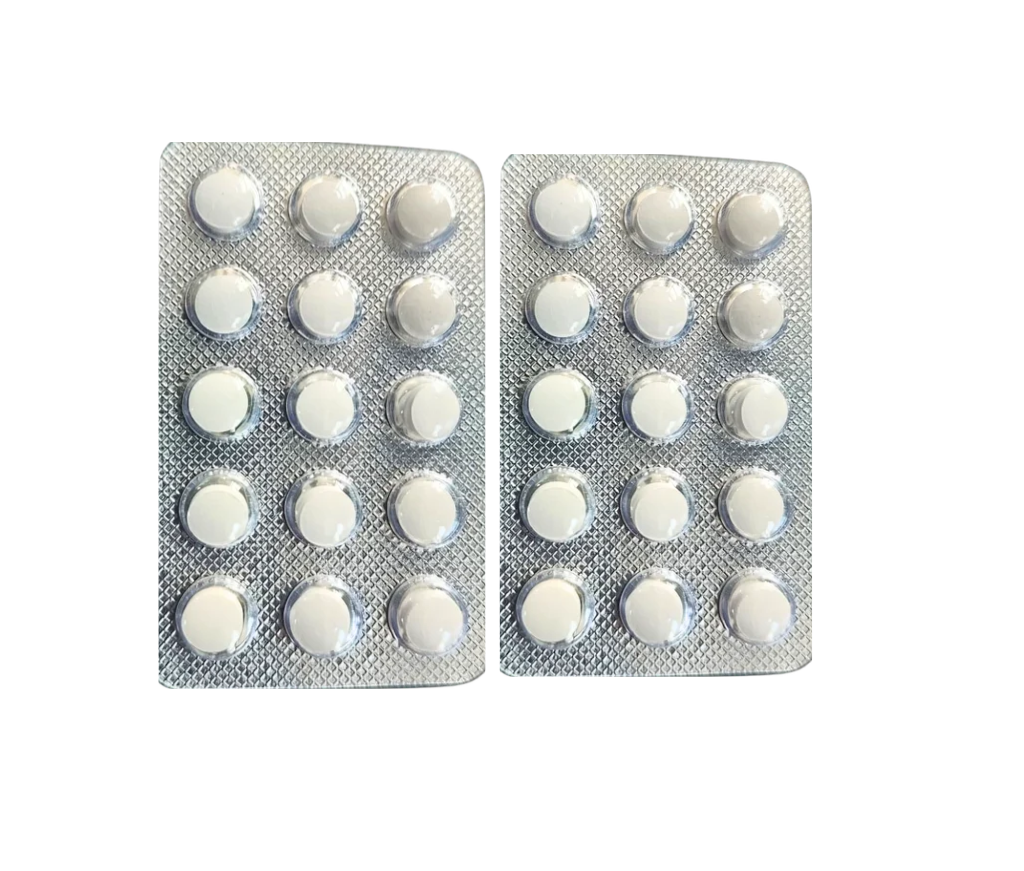
| Dosage form | Tablet |
| Pack size | Strip of 14 tablets |
| Manufacturer / Marketer | Steris Healthcare Pvt. Ltd., Jaipur, India |
| Quality standards | WHO-GMP and ISO certified manufacturer |
| Prescription status | Schedule H (valid prescription required) |
| Storage | Below 30°C, dry place, protected from light |
| Availability | Pan-India supply |
Why Is Roxarivaben 15 Important?
1. Clot-related diseases are serious and often silent. A DVT may begin as a swollen, painful leg, and a PE may begin as sudden breathlessness or chest pain. Without treatment, the risk of a repeat or fatal clot is high. Early, consistent anticoagulation is what lowers that risk.
2. Stroke from AF is largely preventable. AF raises stroke risk several-fold, and strokes linked to AF tend to be more severe. Anticoagulation is the main proven way to reduce that risk. Landmark trial data (the ROCKET AF study, NEJM, 2011) showed rivaroxaban was non-inferior to warfarin for stroke prevention in non-valvular AF, with fewer intracranial and fatal bleeds.
3. DOACs simplify treatment. For DVT and PE, trials such as EINSTEIN-DVT and EINSTEIN-PE showed that rivaroxaban was as effective as standard enoxaparin-then-warfarin treatment, without the need for injections or routine INR blood tests.
4. India has a real need. Atrial fibrillation, post-surgery clots, long-haul travel and immobility after illness all lead to clots, and many families struggle with the routine monitoring warfarin needs. A fixed-dose tablet without INR monitoring can improve adherence.
5. Correct use matters even more than usual. Anticoagulants protect only while they are in your system, and stopping early can raise the clot risk, while taking too much raises the bleeding risk. That is why dose, timing, food and follow-up are so important.
An important India-specific point: Rivaroxaban is meant for non-valvular AF. In patients with moderate-to-severe mitral stenosis (common in rheumatic heart disease) or a mechanical heart valve, warfarin remains the standard treatment. The INVICTUS trial (2022) in rheumatic heart disease with AF found that a vitamin K antagonist gave better outcomes than rivaroxaban. Your doctor will decide which anticoagulant suits your heart condition.
Key Benefits
- Treats existing clots. It helps stop DVT and PE from growing and lowers the risk of new clots forming.
- Prevents stroke in AF. It lowers the chance of clots forming in the heart and travelling to the brain, in patients for whom this strength is appropriate.
- No routine INR monitoring. Unlike warfarin, rivaroxaban generally does not require regular INR blood tests.
- Fixed dosing, few diet restrictions. There is no need to avoid green leafy vegetables, which matters for Indian diets rich in spinach, methi and other greens.
- Oral treatment from day one. It can replace injections in many DVT/PE patients, as the doctor decides.
- Predictable effect. Its action begins within hours of the dose.
- Reliable manufacturing. Produced by Steris Healthcare under WHO-GMP standards.
Uses of Roxarivaben 15
Your doctor may prescribe it for:
- Treatment of deep vein thrombosis (DVT) and pulmonary embolism (PE), during the first 21 days (15 mg twice daily)
- Prevention of stroke and systemic embolism in adults with non-valvular atrial fibrillation who have moderately reduced kidney function (15 mg once daily)
- Other uses as decided by the treating doctor and permitted by the approved labelling
Rivaroxaban is not used for mechanical heart valves, and is generally not recommended for patients with moderate-to-severe mitral stenosis or certain clotting disorders such as triple-positive antiphospholipid syndrome.
Precautions: What to Know Before Taking
Do not take this medicine if you:
- Have active, significant bleeding (for example, a bleeding stomach ulcer or bleeding in the brain)
- Have a lesion or condition with a high risk of major bleeding
- Have liver disease with a bleeding tendency (Child-Pugh B or C)
- Are pregnant or breastfeeding
- Are allergic to rivaroxaban or any ingredient in the tablet
- Have a mechanical heart valve
- Are taking medicines that strongly affect its levels (see interactions below)
Speak to your doctor first if you:
- Have kidney problems. Dose depends on kidney function, and rivaroxaban is generally avoided when kidney function is very low (CrCl below 15 mL/min).
- Have a history of stomach ulcers, gastritis or GI bleeding
- Have uncontrolled high blood pressure
- Have had a recent stroke, brain, eye or spinal surgery
- Are over 75 or have a low body weight, since bleeding risk is higher
- Have mitral stenosis or rheumatic heart disease
- Plan surgery, a dental procedure, a spinal tap or an epidural. The medicine usually needs to be paused beforehand, and only your doctor should decide when.
- Drink alcohol regularly
Side Effects
The most important side effect of any blood thinner is bleeding. Most bleeding is minor, but some can be serious.
Common:
- Easy bruising
- Nosebleeds
- Bleeding gums
- Heavier or longer menstrual periods
- Minor cuts that take longer to stop bleeding
- Nausea
- Dizziness or headache
- Itching or rash
Less common:
- Blood in urine (pink, red or brown)
- Anaemia (tiredness, paleness, breathlessness)
- Raised liver enzymes on a blood test
- Fainting or low blood pressure
- Pain in the arms or legs
- Fever or swelling
Frequently Asked Questions
Where can I buy Rivaroxaban 15 mg online?
Rivaroxaban 15 mg can be purchased through licensed pharmacies or authorized pharmaceutical suppliers. If required, a valid prescription should be provided when ordering.
What is the price of Rivaroxaban 15 mg?
The price of Rivaroxaban 15 mg may vary depending on the brand, pack size, seller, availability, and applicable charges. Check the current price before placing an order.
Can I order Rivaroxaban 15 mg online?
Yes, Rivaroxaban 15 mg can generally be ordered online through a licensed pharmacy or authorized supplier. Prescription requirements may apply.
Is Rivaroxaban 15 mg available from Steris Healthcare?
Availability of Rivaroxaban 15 mg from Steris Healthcare depends on the current product range and stock status. Contact Steris Healthcare to confirm availability before ordering.
What is Rivaroxaban 15 mg used for?
Rivaroxaban 15 mg is an anticoagulant used to help prevent and treat certain blood clots. It may be prescribed for conditions such as deep vein thrombosis, pulmonary embolism, and prevention of stroke or systemic embolism in certain patients with non-valvular atrial fibrillation.
What is the composition of Rivaroxaban 15 mg?
Rivaroxaban 15 mg contains rivaroxaban 15 mg as the active pharmaceutical ingredient. Check the product packaging for complete formulation and inactive ingredient details.
Is a prescription required?
Yes. Rivaroxaban 15 mg is a prescription anticoagulant and should be used only under the supervision of a qualified healthcare professional.
How should Rivaroxaban 15 mg be taken?
Take Rivaroxaban 15 mg exactly as prescribed by your doctor. The dose and timing depend on the condition being treated. For some indications, the 15 mg dose should be taken with food. Do not change the dose or stop treatment without medical advice.
What should I know before buying Rivaroxaban 15 mg?
Before buying, verify the strength, composition, dosage form, pack size, manufacturer, expiry date, and storage instructions. Tell your doctor about any history of bleeding, kidney or liver problems, recent surgery, pregnancy, or other medicines you take, especially medicines that affect blood clotting.
How can I order Rivaroxaban 15 mg online?
To order Rivaroxaban 15 mg online, use a licensed pharmacy or authorized pharmaceutical supplier. Confirm product availability, provide a valid prescription if required, review the product details, and follow the supplier’s ordering and payment process.

