


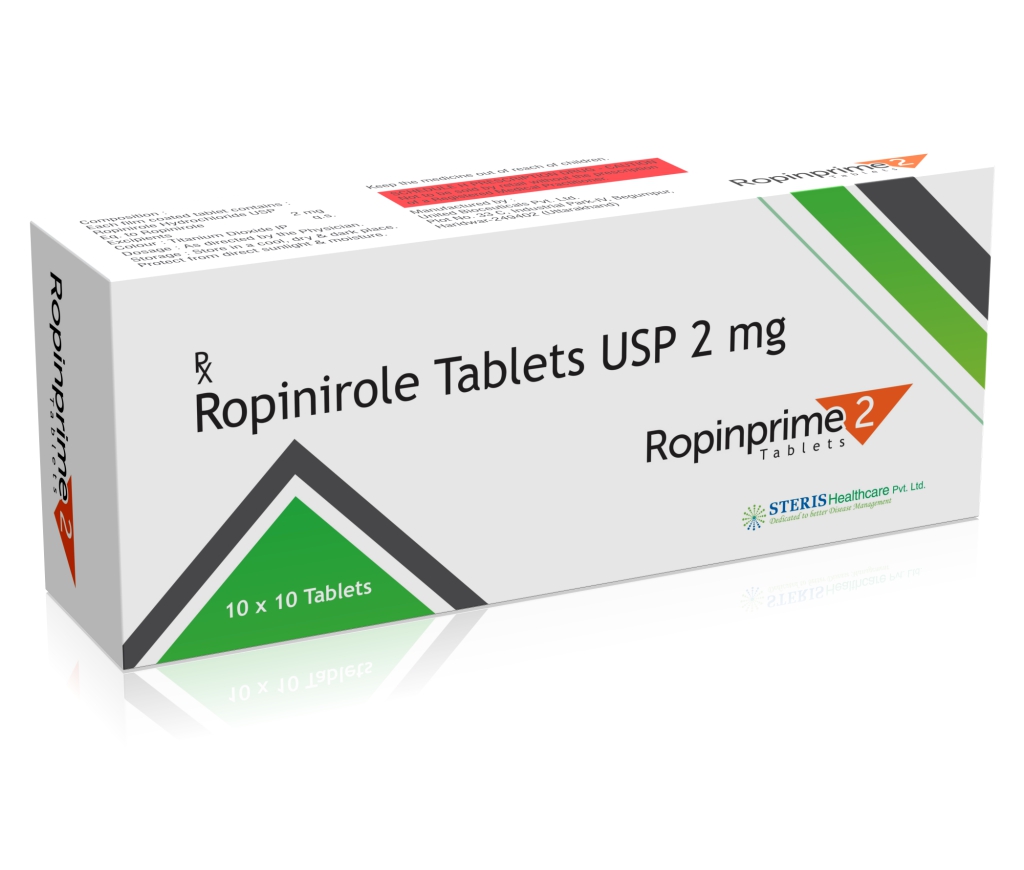
ROPINPRIME 2
 Item requires a valid prescription
Manufactured By Steris Healthcare Pvt Ltd
Composition Ropinirole (2mg)
Rs 88.59
MRP Rs 126.56
(30% OFF)
Includes all taxes
Package SIZE
( For 10 Tablets )

100% Authentic
Products

Free
Shipping*

Products
Return Policy
Description:
Ropinirole 2 mg is a prescription dopamine agonist used primarily to manage symptoms of Parkinson’s disease and moderate-to-severe primary Restless Legs Syndrome (RLS). It works by acting on dopamine receptors in the brain, helping compensate for some of the effects associated with reduced dopamine activity.
For people researching ropinirole 2mg uses, benefits, side effects, dosage, price, or how to buy ropinirole 2mg, it is important to understand that 2mg is a specific tablet strength, not a universally appropriate dose. The correct dose depends on the condition being treated, response to therapy, tolerability, other medicines, and factors such as kidney function.
Current U.S. prescribing information lists ropinirole tablets for Parkinson’s disease and moderate-to-severe primary RLS. Ropinirole tablets are available in several strengths, including 2 mg.
What Is Ropinirole 2mg?
Ropinirole 2 mg contains 2 milligrams of ropinirole, a non-ergoline dopamine agonist. Unlike levodopa, which is converted into dopamine, ropinirole directly stimulates dopamine receptors. This pharmacological action can help improve certain movement-related symptoms in Parkinson’s disease and symptoms of moderate-to-severe primary RLS.
The medicine is available as immediate-release tablets and, separately, as extended-release tablets. These formulations have different dosing instructions and should not be treated as interchangeable simply because they contain the same active ingredient.
If your prescription says ropinirole 2 mg, check the formulation and directions on the pharmacy label before taking it.
Ropinirole 2mg Uses
Ropinirole 2 mg for Parkinson’s Disease
One of the primary uses of ropinirole is the treatment of Parkinson’s disease, a neurological disorder associated with movement difficulties such as tremor, stiffness, slowed movement, and balance problems.
By stimulating dopamine receptors, ropinirole can help reduce some motor symptoms and improve movement control in appropriately selected patients. It may be used alone in some treatment plans or alongside other Parkinson’s medicines, depending on the patient's circumstances.
Importantly, ropinirole controls symptoms but does not cure Parkinson’s disease. Treatment is generally individualized and may be adjusted over time.
Ropinirole 2 mg for Restless Legs Syndrome
Ropinirole is also indicated for moderate-to-severe primary Restless Legs Syndrome (RLS).
RLS can cause uncomfortable sensations in the legs accompanied by a strong urge to move, particularly during periods of rest or at night. Ropinirole can help reduce these symptoms in patients for whom treatment is appropriate.
For immediate-release ropinirole used for RLS, the prescribing information recommends starting much lower than 2 mg and increasing gradually when clinically appropriate. The labeled maximum recommended dose for RLS is 4 mg once daily.
Therefore, ropinirole 2 mg should not be started independently simply because it is an available tablet strength.
Key Benefits of Ropinirole 2 mg
When prescribed appropriately, ropinirole may provide several clinically meaningful benefits.
Potential benefits include:
- Helping reduce certain movement symptoms associated with Parkinson’s disease.
- Supporting improved motor control in appropriately treated Parkinson’s patients.
- Reducing uncomfortable leg sensations and the urge to move the legs associated with primary RLS.
- Helping patients manage symptoms that interfere with daily activities or sleep.
- Providing a dopamine-receptor-based treatment option that can be incorporated into an individualized neurological treatment plan.
The extent of benefit varies considerably between individuals. Doctors generally begin with a low dose and gradually increase it according to symptom control and tolerability. It can take several weeks to reach a dose that provides the desired response.
Ropinirole 2 mg Dosage: Why the Indication Matters
A common search is “How should I take ropinirole 2 mg?" There is no single answer because dosing differs between Parkinson’s disease and RLS.
For immediate-release tablets, the labeled starting dose for Parkinson’s disease is 0.25 mg three times daily, followed by gradual titration based on response and tolerability. The maximum recommended daily dose for Parkinson’s disease is 24 mg.
For primary RLS, the recommended starting dose is 0.25 mg once daily, taken 1 to 3 hours before bedtime, with gradual increases when necessary. The maximum recommended dose is 4 mg once daily.
This means that 2 mg may be an appropriate prescribed dose for some patients but not for others.
Ropinirole can be taken with or without food. Extended-release tablets have different instructions and should be swallowed whole rather than crushed, chewed, or divided.
If treatment is interrupted for a significant period, retitration may be necessary rather than immediately returning to the previous dose.
Common Ropinirole 2mg Side Effects
Like other prescription medicines, ropinirole can cause side effects.
Commonly reported adverse effects include:
- Nausea
- Vomiting
- Drowsiness or sleepiness
- Dizziness
- Weakness or fatigue
- Headache
- Heartburn or indigestion
- Sweating or flushing
- Leg or ankle swelling
- Constipation or gastrointestinal discomfort
The adverse-effect profile can vary depending on whether ropinirole is being used for Parkinson’s disease or RLS. Clinical prescribing information lists nausea, somnolence, dizziness, syncope, edema, vomiting, and dyspepsia among adverse reactions reported in different patient groups.
Important Ropinirole 2mg Warnings
One of the most important safety concerns is sleepiness and sudden onset of sleep. Some patients may fall asleep during normal daily activities without recognizing significant warning symptoms beforehand. Patients should avoid driving, operating machinery, working at heights, or undertaking other hazardous activities until they know how ropinirole affects them.
Ropinirole can also cause:
- Low blood pressure
- Orthostatic hypotension, particularly when standing up
- Fainting
- Hallucinations or psychotic-like behavior
- Confusion
- Abnormal or involuntary movements
- Compulsive or impulse-control behaviors
Impulse-control problems may involve unusually strong urges such as gambling, excessive shopping, binge eating, or increased sexual behavior. These changes should be reported to a healthcare professional.
Alcohol can increase drowsiness, so discuss alcohol consumption with your doctor or pharmacist.
Ropinirole 2 mg and Withdrawal
Do not suddenly discontinue ropinirole without medical advice.
Stopping the medicine abruptly can cause withdrawal-related symptoms, including fever, muscle stiffness, sweating, confusion, anxiety, depression, tiredness, sleep difficulties, and other symptoms. If discontinuation is medically appropriate, the dose may need to be reduced gradually.
If you have stopped taking ropinirole for a significant period, do not simply restart your previous dose. Your healthcare professional may need to restart treatment at a lower dose and gradually increase it again.
Who Should Tell Their Doctor Before Taking Ropinirole?
Before starting ropinirole, tell your doctor about your complete medical history.
Particular attention may be required if you have:
- Low or high blood pressure
- Heart disease
- Kidney disease
- Liver disease
- A history of fainting
- Sleep disorders or unexpected daytime sleepiness
- A psychotic disorder
- A history of compulsive gambling or other impulse-control problems
- Pregnancy or plans to become pregnant
- Breastfeeding
Also provide a complete list of prescription medicines, over-the-counter products, vitamins, supplements, and herbal medicines you take.
Buying Ropinirole 2mg Online: What Buyers Should Check
If your search intent is “buy ropinirole 2mg," the safest approach is to purchase through a legitimate, appropriately regulated pharmacy and use the medicine only with a valid prescription where required.
Before completing a purchase, verify:
- The active ingredient is ropinirole.
- The strength is 2 mg.
- The formulation matches your prescription.
- The packaging is sealed and properly labeled.
- The manufacturer information is present.
- The batch number and expiry date are visible.
- The pharmacy is licensed or appropriately regulated.
- Prescription requirements are followed.
- The product comes from a traceable pharmaceutical supply chain.
Avoid online sellers that promise ropinirole without a prescription or make claims that the medicine is suitable for everyone. Prescription medicines should not be selected solely according to price.
A lower online price does not compensate for uncertainty about authenticity, storage conditions, formulation, or dosage.
Ropinirole 2 mg vs. Other Strengths
Ropinirole is supplied in multiple strengths, including 0.25 mg, 0.5 mg, 1 mg, 2 mg, 3 mg, 4 mg, and 5 mg for certain tablet products.
The availability of multiple strengths allows healthcare professionals to tailor treatment and gradually increase or decrease the dose when appropriate.
However, a higher strength is not automatically better or more effective. The goal is to use the lowest appropriate dose that provides adequate symptom control while maintaining tolerability.
Frequently Asked Questions
1. What is ropinirole 2 mg used for?
Ropinirole 2 mg is a prescription strength of ropinirole, a dopamine agonist used for Parkinson’s disease and moderate-to-severe primary restless legs syndrome. The appropriate dose depends on the condition and individual treatment plan.
2. Is ropinirole 2 mg a high dose?
Not necessarily. Whether 2 mg is considered an appropriate dose depends on the condition, formulation, treatment stage, and individual response. For immediate-release tablets, treatment is generally started at a much lower dose and gradually increased.
3. Can ropinirole 2 mg be used for restless legs syndrome?
Yes. Ropinirole is indicated for moderate-to-severe primary RLS. However, the labeled starting dose is 0.25 mg once daily, taken 1 to 3 hours before bedtime, with gradual titration when necessary.
4. Does ropinirole 2 mg make you sleepy?
Yes, drowsiness and somnolence are recognized adverse effects. Ropinirole can also cause sudden sleep episodes in some patients, making driving and hazardous activities potentially dangerous until the individual's response is known.
5. What are the most common side effects of ropinirole 2 mg?
Common adverse effects can include nausea, vomiting, dizziness, sleepiness, weakness, headache, indigestion, sweating, and swelling of the legs or ankles. The exact frequency varies according to the indication and formulation.
6. Can I stop taking ropinirole 2 mg suddenly?
No. Stopping ropinirole abruptly can cause withdrawal symptoms and worsening of the underlying condition. A healthcare professional may gradually reduce the dose when discontinuation is appropriate.
7. Can ropinirole 2 mg cause unusual behavior?
Yes. Ropinirole and similar dopamine agonists can be associated with impulse-control problems, including compulsive gambling, excessive shopping, binge eating, or increased sexual urges. Report new or difficult-to-control behaviors to your doctor.
8. Can I drive after taking ropinirole 2 mg?
Use caution. Ropinirole may cause significant sleepiness or sudden sleep episodes. Do not drive or operate machinery until you know how the medicine affects you and your healthcare professional has advised that such activities are appropriate.
9. Can I buy ropinirole 2 mg without a prescription?
Ropinirole is a prescription medicine in markets where the cited labeling applies. Purchase it through a legitimate pharmacy and follow the prescription requirements applicable in your country.
10. How long does ropinirole 2 mg take to work?
The response varies by patient and condition. Doctors generally start with a low dose and gradually increase it, and it can take several weeks to reach a dose that provides adequate symptom control.
Conclusion
Ropinirole 2 mg is an established prescription dopamine agonist used primarily for Parkinson’s disease and moderate-to-severe primary restless legs syndrome. Its potential benefits include improved control of certain Parkinson’s movement symptoms and reduction of uncomfortable RLS symptoms when it is appropriately prescribed.
The 2 mg strength should not be viewed as a standard dose for everyone. Ropinirole treatment is normally individualized and titrated according to the patient's condition, response, and tolerability. Important risks include drowsiness, sudden sleep episodes, dizziness, low blood pressure, hallucinations, and impulse-control problems.