


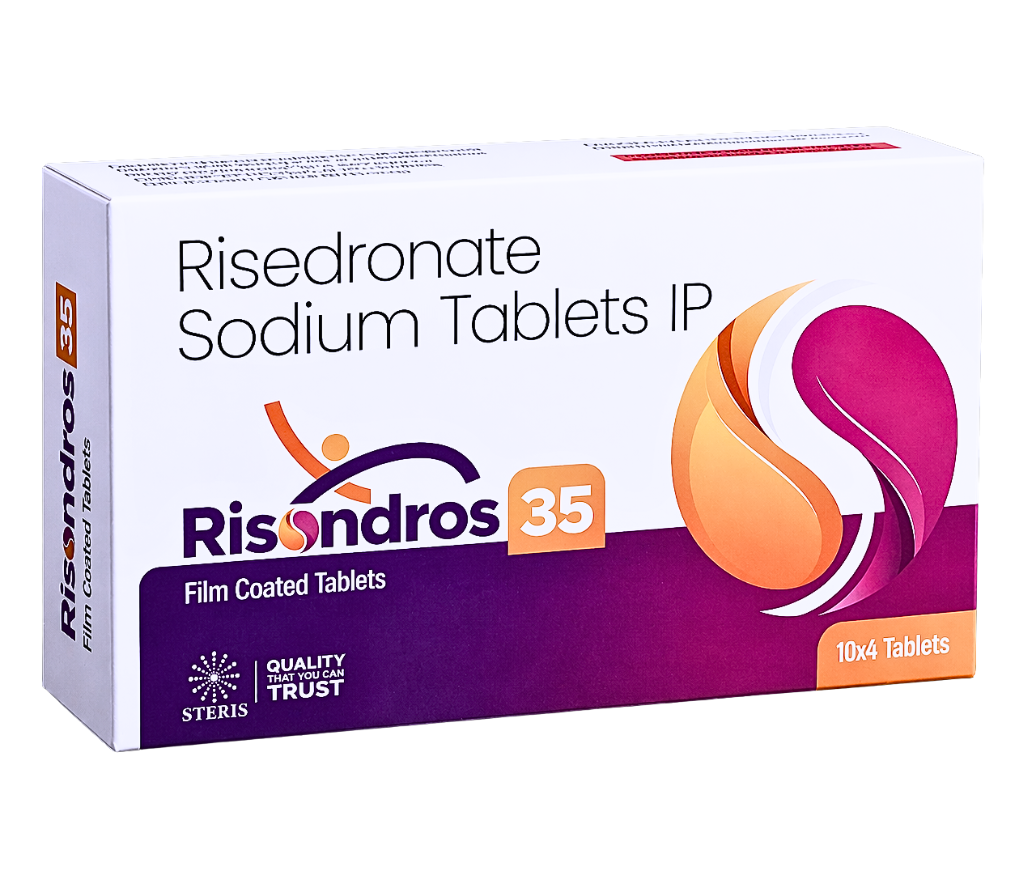
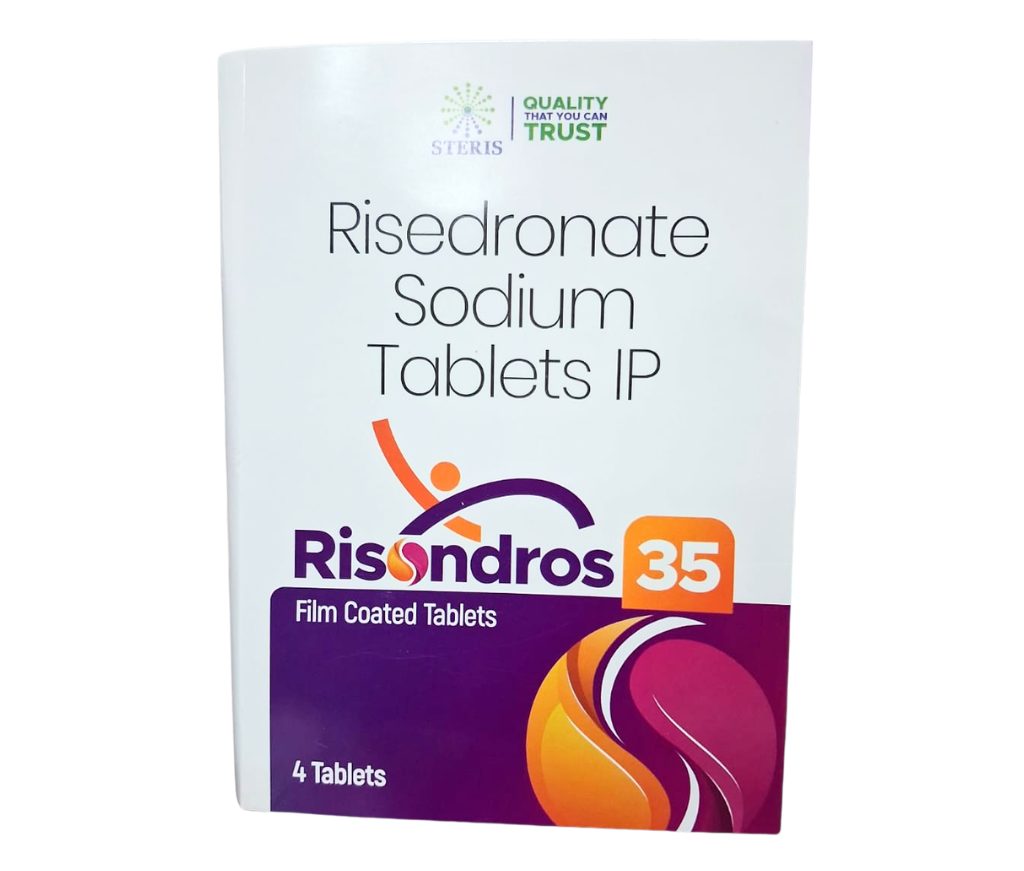
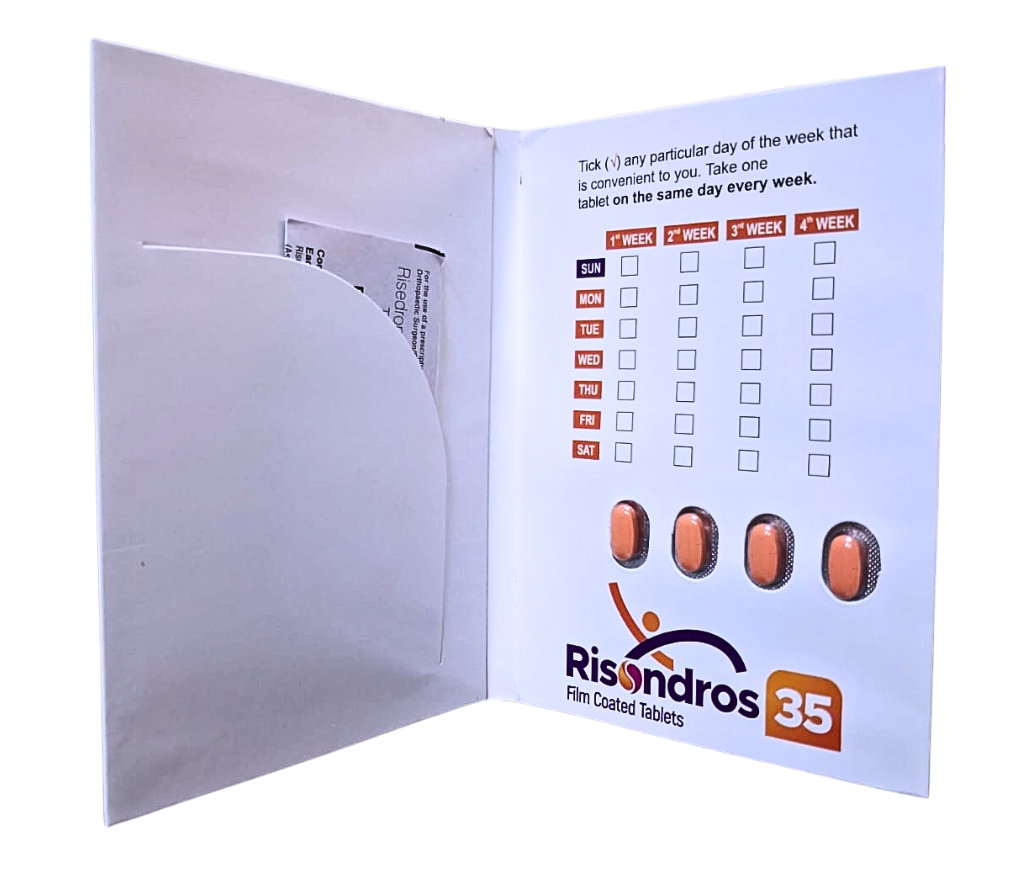
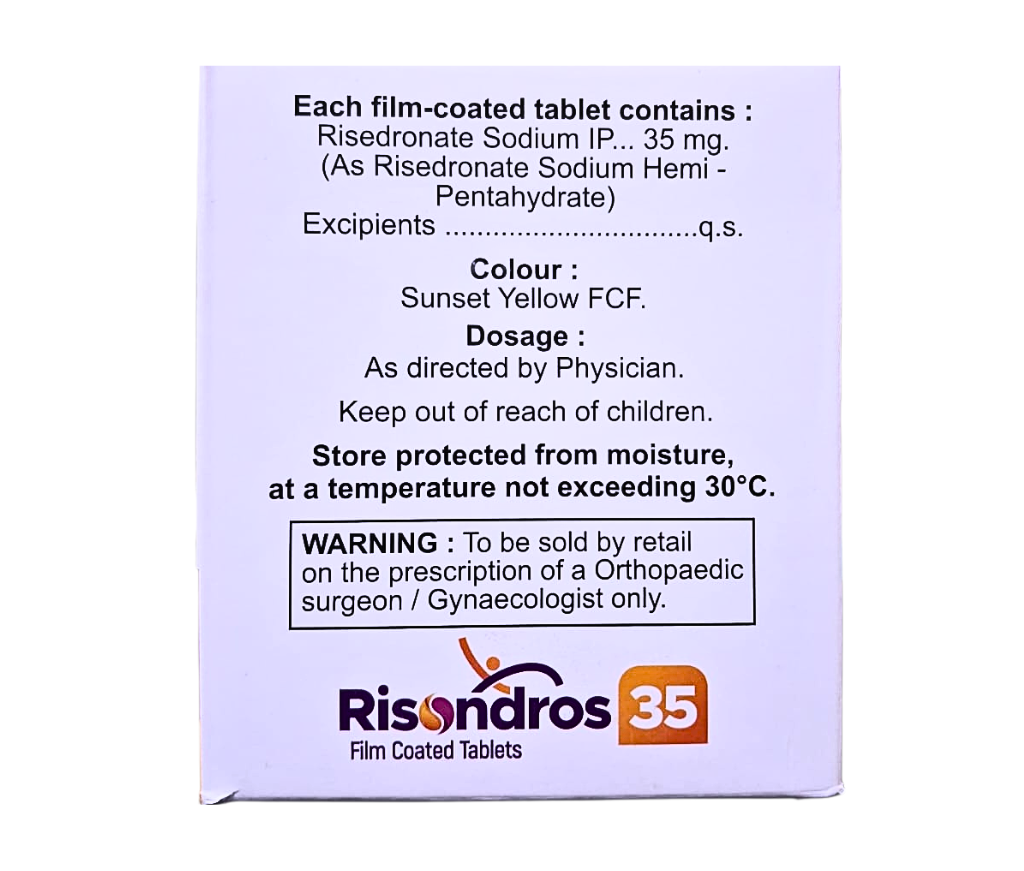
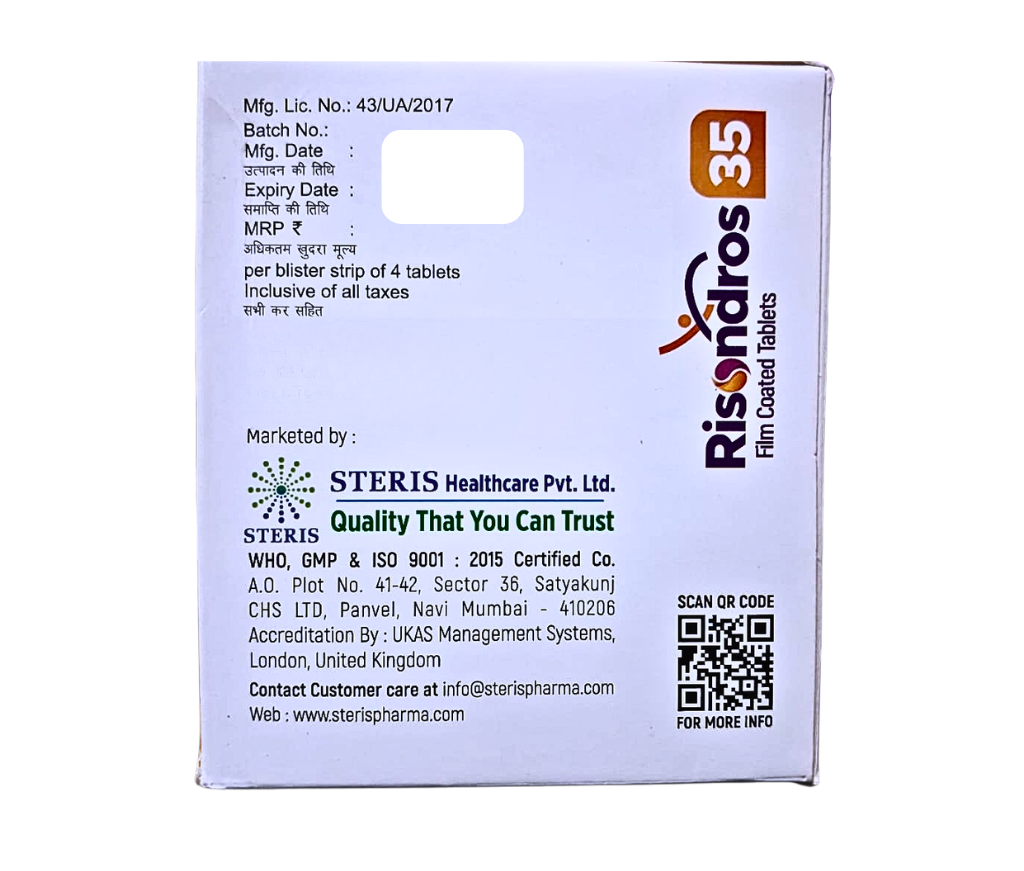
RISONDROS 35
 Item requires a valid prescription
Manufactured By Steris Healthcare Pvt Ltd
Composition Risedronate Sodium Tablets IP 35 mg
Rs 294.70
MRP Rs 421.00
(30% OFF)
Includes all taxes
Package SIZE
( For 4 Tablets )

100% Authentic
Products

Free
Shipping*

Products
Return Policy
Description:
Risedronate sodium is a prescription bisphosphonate medication for treating and preventing osteoporosis and managing Paget's disease of bone. It works by slowing down bone breakdown (resorption), helping bones stay denser and stronger, which lowers the risk of fractures—especially in the hip, spine, and wrist. It is typically taken on an empty stomach, first thing in the morning, with a full glass of plain water, followed by at least 30 minutes upright before eating. Common side effects include stomach upset, heartburn, and joint pain; rare but serious risks include esophageal irritation, atypical femur fractures, and osteonecrosis of the jaw.
Product Information
Brand name: RISONDROS 35 (STERIS HEALTHCARE PVT LTD)
Composition Name: Risedronate Sodium Formulation:
Film Coated Tablets Pack size: 10x4 Tablets
Marketed By: Steris Healthcare Pvt Ltd Regulatory standard: IP (Indian Pharmacopoeia)
Schedule: Valid Prescription Required (prescription only)
What Is Risedronate Sodium?
Risedronate Sodium belongs to a class of drugs called bisphosphonates, which are the most widely prescribed medicines worldwide for managing bone-density loss. It is available in oral tablet form, commonly in 5 mg (daily), 35 mg (weekly), and 150 mg (monthly) strengths, depending on the treatment protocol your physician selects.
Doctors prescribe Risedronate Sodium primarily to people whose bones have become fragile due to aging, menopause, or steroid medication use. As bones lose density, everyday activities like walking, bending, or even coughing can lead to fractures. Risedronate Sodium helps interrupt this cycle by targeting the specific cells responsible for breaking down old bone tissue.
Clinical Indications
| Condition | Who It's Prescribed For | Treatment Goal |
|---|---|---|
| Postmenopausal Osteoporosis | Women after menopause with low bone mineral density | Reduce risk of spinal & hip fractures |
| Osteoporosis in Men | Men diagnosed with primary osteoporosis | Increase bone mass, prevent fractures |
| Glucocorticoid-Induced Osteoporosis | Patients on long-term steroid therapy (e.g., for asthma, arthritis, autoimmune disease) | Prevent steroid-related bone loss |
| Paget's Disease of Bone | Patients with abnormal bone remodeling | Normalize bone turnover, reduce pain and deformity |
How Risedronate Sodium Works
Risedronate sodium binds to hydroxyapatite crystals in bone tissue and is selectively taken up by osteoclasts—the cells responsible for breaking down old bone. Once absorbed, it inhibits osteoclast activity and induces their programmed cell death (apoptosis), which
- Slows the rate of bone resorption (breakdown)
- Allows bone-building cells (osteoblasts) to work more effectively
- Gradually increases bone mineral density (BMD) over months of consistent use
- Reduces the structural "microdamage" that leads to fractures
Key Benefits of Risedronate Sodium
- Reduces Fracture Risk — Particularly effective at lowering the risk of vertebral (spinal) and hip fractures in high-risk patients.
- Improves Bone Mineral Density (BMD) — Consistent use over 6–12 months typically shows measurable BMD gains on DEXA scans.
- Convenient Dosing Options — Available in daily, weekly, and monthly regimens to suit patient lifestyle and adherence needs.
- Manages Paget's Disease Symptoms — Helps normalize abnormal bone turnover and can reduce associated bone pain.
- Steroid-Related Bone Loss Protection — A preferred option for patients who must remain on long-term corticosteroids.
- Well-Studied Safety Profile — One of the most extensively studied bisphosphonates in long-term osteoporosis management.
Dosage & Administration Guidelines
- Timing: Take first thing in the morning, at least 30 minutes before the first food, drink (other than plain water), or other medication of the day.
- With Water Only: Swallow the tablet whole with a full glass (180–240 ml) of plain water — not mineral water, coffee, tea, juice, or milk, as these reduce absorption.
- Stay Upright: Remain in an upright position (sitting or standing) for at least 30 minutes after taking the tablet, and do not lie down, to reduce esophageal irritation risk.
- Missed Dose (Weekly/Monthly regimens): Take the missed dose the next morning you remember, then resume the original schedule — never double up.
- Calcium & Vitamin D: Your doctor may recommend calcium and vitamin D supplementation alongside Risedronate Sodium, but these should be taken at a different time of day, not together with the tablet.
Side Effects of Risedronate Sodium
Like all medications, Risedronate Sodium can cause side effects. Most are mild and manageable, but some require immediate medical attention.
Common Side Effects
- Stomach upset, nausea, or abdominal pain
- Heartburn or acid reflux
- Joint, muscle, or bone pain
- Headache
- Diarrhea or constipation
Serious Side Effects
- Difficulty or pain when swallowing, new or worsening heartburn, chest pain (signs of esophageal irritation)
- Severe or persistent bone, joint, or muscle pain
- Jaw pain, swelling, or numbness (rare — associated with osteonecrosis of the jaw, especially after dental surgery)
- Unusual thigh or groin pain (possible early sign of atypical femur fracture)
- Signs of an allergic reaction: rash, itching, swelling of the face/tongue/throat, severe dizziness, trouble breathing
- Low calcium levels (numbness, muscle cramps, tingling in fingers/toes)
Risedronate Sodium vs. Other Bisphosphonates
| Feature | Risedronate Sodium | Alendronate Sodium | Ibandronate Sodium | Zoledronic Acid |
|---|---|---|---|---|
| Dosing Frequency | Daily / Weekly / Monthly | Daily / Weekly | Monthly (oral) | Once yearly (IV infusion) |
| Administration | Oral tablet | Oral tablet | Oral tablet | IV infusion |
| GI Tolerability | Generally well tolerated | Higher GI irritation risk | Moderate | Not applicable (IV) |
| Best Suited For | Flexible dosing needs, Paget's disease | Standard first-line osteoporosis therapy | Patients preferring less frequent oral dosing | Patients needing infusion-based compliance |
Precautions & Warnings
- Not recommended for patients with severe kidney impairment (low creatinine clearance) — dose adjustment or alternative therapy may be needed.
- Not suitable for patients with esophageal abnormalities (e.g., stricture, achalasia) that delay esophageal emptying.
- Should not be taken by patients who are unable to stand or sit upright for at least 30 minutes.
- Dental precautions: Inform your dentist you are on Risedronate Sodium before any invasive dental procedure.
- Pregnancy & breastfeeding: Not recommended unless specifically advised by a physician — bisphosphonates are generally avoided in pregnancy.
- Calcium/Vitamin D deficiency should be corrected before starting therapy.
- Long-term use (beyond 3–5 years) should be periodically reassessed by your doctor to weigh continued benefit versus rare long-term risks.
Frequently Asked Questions
1. What are the side effects of taking risedronate?
Common side effects include stomach upset, heartburn, and joint or muscle pain. Less commonly, it can cause esophageal irritation, jaw problems, or unusual thigh pain — these require prompt medical attention.
2. What foods should you avoid while taking risedronate?
Avoid taking the tablet with milk, coffee, tea, juice, or mineral water, as these reduce absorption. Also avoid calcium-rich foods or supplements within 30 minutes of your dose, since calcium binds with the drug and lowers its effectiveness.
3. When is the best time to take risedronate sodium?
The best time is first thing in the morning, on an empty stomach, at least 30 minutes before any food, drink, or other medication.
4. Does risedronate improve bone density?
Yes. With consistent use, Risedronate Sodium is designed to slow bone breakdown and support gradual improvement in bone mineral density, typically monitored through periodic DEXA scans.
5. How long is it safe to take risedronate?
Many patients take it for 3–5 years under medical supervision, after which doctors often reassess whether to continue, pause ("drug holiday"), or switch therapy based on individual fracture risk.
6. What are three common side effects?
The three most commonly reported side effects are stomach upset/nausea, heartburn, and joint or muscle pain.
7. What are the most serious side effects?
The most serious, though rare, side effects include severe esophageal irritation, osteonecrosis of the jaw, and atypical femur fractures — all of which need immediate medical evaluation.
8. Are there harmful side effects? Most side effects are mild and manageable, but in rare cases, harmful effects such as esophageal damage, jaw bone problems, or unusual fractures can occur, especially with improper administration or long-term use without monitoring.
9. What are the two types of side effects?
Side effects are generally grouped into common/mild effects (like stomach upset and joint pain) and rare/serious effects (like esophageal irritation, jaw osteonecrosis, and atypical fractures).
10. Is side effects safe?
Common side effects are generally mild and considered a normal part of tolerability for most patients. However, any new, severe, or persistent symptom should be reported to your doctor immediately rather than self-managed.
11. What are the long-term side effects?
With extended use, rare long-term risks include atypical femur fractures, osteonecrosis of the jaw, and, in some cases, over-suppression of bone turnover. This is why doctors periodically review the need for continued therapy.
12. Can Risedronate Sodium be taken with calcium supplements?
Yes, but not at the same time. Calcium supplements should be taken at least 30 minutes after the Risedronate dose, or at a different time of day entirely.
13. What happens if I miss a dose of Risedronate Sodium?
For weekly or monthly regimens, take the missed dose the next morning you remember, then continue your normal schedule. Never take two doses on the same day.
14. Can Risedronate Sodium be taken by men?
Yes, it is approved for use in men diagnosed with osteoporosis, in addition to postmenopausal women and patients on long-term steroid therapy.
15. Does Risedronate Sodium interact with other medications?
It may interact with antacids, calcium, iron, and magnesium supplements if taken too close together, as these reduce absorption. Always inform your doctor of all medications and supplements you're taking.