



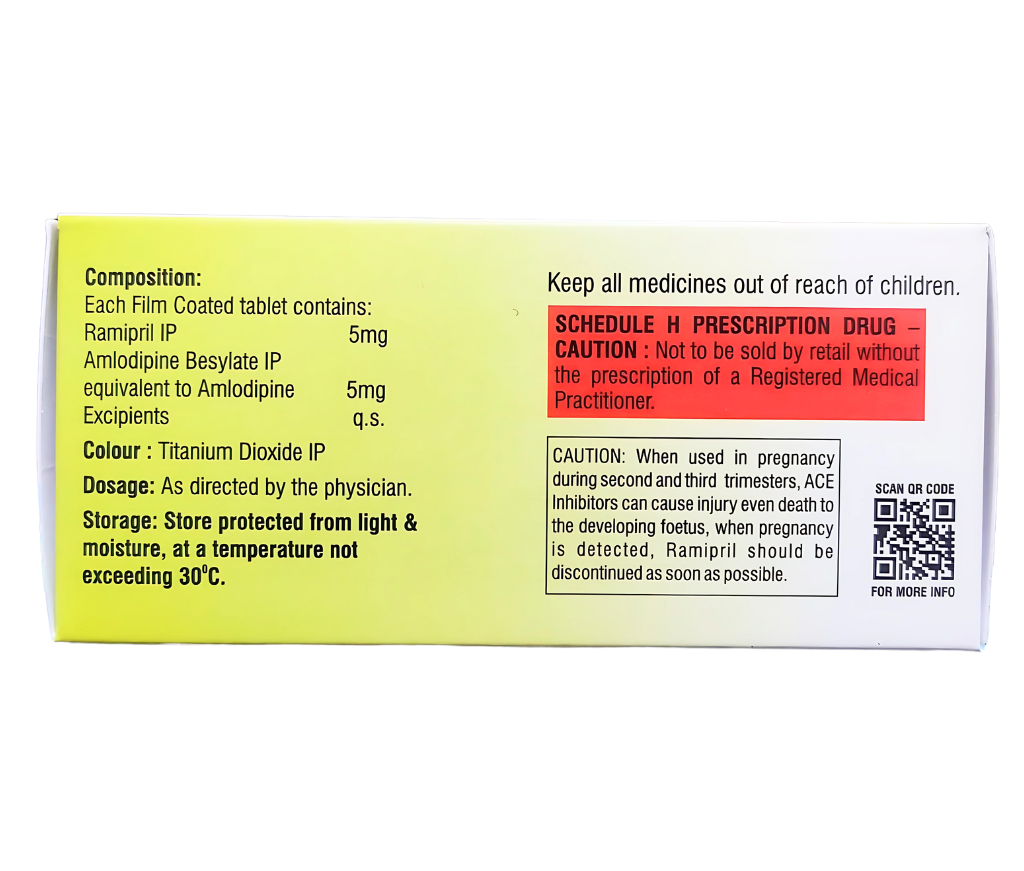
REMINIL AM 5/5
 Item requires a valid prescription
Manufactured By Steris Healthcare Pvt Ltd
Composition Ramipril (5mg) , Amlodipine (5mg)
Rs 95.41
MRP Rs 136.30
(30% OFF)
Includes all taxes
Package SIZE
( for 10 tablets )

100% Authentic
Products

Free
Shipping*

Products
Return Policy
Description:
If your doctor has prescribed ramipril-amlodipine, you may be looking for clear information about what this combination medicine is used for, how it works, its potential benefits, side effects, and what to consider before purchasing it. Ramipril and amlodipine are two established blood-pressure medicines that work through different mechanisms. When prescribed together, they can provide complementary blood-pressure control for appropriate patients with hypertension.
Ramipril is an ACE inhibitor, while amlodipine is a calcium-channel blocker (CCB). Ramipril helps relax blood vessels by reducing the effects of angiotensin II, whereas amlodipine relaxes the blood-vessel walls directly. The combination can therefore target blood pressure through two different pathways.
Importantly, ramipril/amlodipine is a prescription treatment and is not appropriate for everyone. The correct strength and whether you should use the medicines together should be decided by a qualified healthcare professional.
What Is Ramipril Amlodipine Used For?
The main use of ramipril-amlodipine is the treatment of high blood pressure (hypertension) when a doctor considers both medicines appropriate.
Ramipril is widely used for hypertension and is also prescribed for certain heart-related conditions. Amlodipine is used to lower blood pressure and can also be used for certain types of angina.
Controlling high blood pressure is important because persistently elevated blood pressure increases the risk of cardiovascular complications, including stroke and heart disease. The objective of treatment is not simply to make a blood pressure reading lower on one particular day but to maintain appropriate control over the long term.
How Does the Combination Work?
The two active ingredients have different actions:
-
Ramipril: An ACE inhibitor that reduces the formation of angiotensin II, helping blood vessels relax and reducing the workload on the heart.
-
Amlodipine: A calcium-channel blocker that relaxes blood vessels, helping blood flow more easily and lowering blood pressure.
Because the medicines work differently, combining an ACE inhibitor with a calcium-channel blocker can provide complementary blood-pressure reduction. Clinical research has specifically evaluated ramipril/amlodipine fixed-dose combinations in people with hypertension.
Key Benefits of Ramipril Amlodipine
1. Helps Lower High Blood Pressure
The primary benefit is better blood-pressure control in patients for whom combination therapy is medically appropriate.
Consistent blood-pressure management can help reduce the long-term cardiovascular risks associated with uncontrolled hypertension. However, the actual response differs from person to person, so treatment should be guided by blood-pressure measurements and medical follow-up.
2. Two Blood-Pressure Mechanisms in One Treatment
Ramipril and amlodipine work differently. This makes the combination useful when a single medicine does not provide adequate control or when a clinician determines that combination treatment is appropriate.
3. Potential Convenience of a Fixed-Dose Combination
Some products combine ramipril and amlodipine in a single tablet. This can reduce the number of separate tablets a patient needs to remember.
Research involving prescription records has found greater one-year treatment persistence among patients using a fixed ramipril/amlodipine combination than among those using the medicines as separate treatments. In one large observational analysis, one-year persistence was 54% with the fixed combination compared with 34% with the free combination.
This does not mean every patient will benefit from a fixed-dose product, but it highlights why simplifying treatment can sometimes be valuable.
4. May Help Patients Maintain Long-Term Treatment
Hypertension often requires long-term treatment even when a person feels completely well. Ramipril guidance emphasizes continuing treatment as prescribed because stopping can allow blood pressure to rise again.
A simpler medication routine may make it easier for some patients to remain consistent.
Ramipril Amlodipine Side Effects
Like all prescription medicines, ramipril-amlodipine can cause side effects, although not everyone experiences them.
Because the combination contains two medicines, possible effects may reflect either ramipril, amlodipine, or both.
Common Side Effects Associated With Amlodipine
Amlodipine commonly may cause the following:
-
Swollen ankles, feet or legs
-
Headache
-
Dizziness
-
Flushing
-
Palpitations
-
Tiredness or weakness
-
Nausea or stomach discomfort
Many of these effects are mild, and some may improve as the body adjusts to treatment.
Common Side Effects Associated With Ramipril
Ramipril can cause:
-
A dry, persistent cough
-
Dizziness or light-headedness, particularly when starting treatment or increasing the dose
The NHS notes that a persistent dry cough is a recognized ramipril side effect and that a doctor may consider another medicine if it becomes troublesome.
Ramipril can also affect kidney function and potassium levels, which is why healthcare professionals may arrange blood tests before treatment and after dose changes.
Serious Side Effects: When to Seek Medical Help
Some reactions require urgent medical attention.
Ramipril can rarely cause angioedema, involving sudden swelling of the lips, mouth, tongue, or throat and potentially difficulty breathing. This is an emergency. Severe dizziness, fainting, chest symptoms, significant reduction in urination, or other severe reactions should also receive prompt medical assessment.
Do not attempt to manage a potentially serious reaction by simply changing the dose yourself.
Who Should Be Careful With Ramipril Amlodipine?
Before starting treatment, tell your doctor about your medical history and all medicines or supplements you use.
Particular caution may be required if you have:
-
Kidney disease
-
Liver or heart problems
-
Low blood pressure
-
Diabetes
-
Previous angioedema
-
Problems with potassium levels
-
A history of significant vomiting or diarrhoea
-
Other medicines that affect blood pressure, kidney function or potassium
Ramipril may not be suitable for certain people, including some patients who are pregnant or planning pregnancy.
Pregnancy Warning
Ramipril is not recommended during pregnancy because ACE inhibitors can harm fetal kidney development, particularly later in pregnancy. Anyone who is pregnant, planning pregnancy, or discovers they are pregnant while taking ramipril should contact their healthcare professional promptly.
Ramipril/Amlodipine: Dosage and How to Take It
There is no universally correct ramipril amlodipine dose for every patient.
The appropriate strength depends on factors such as your current blood pressure, previous treatment, kidney function, response to therapy, and whether you are already taking either ingredient separately.
Ramipril doses are commonly started low and adjusted gradually according to the patient's condition and blood pressure response. Kidney function and potassium may also be monitored.
Do not choose a strength solely because it is available online or because another person takes it.
If you miss a dose, follow the instructions supplied with your medicine or ask your pharmacist. Do not double the next dose unless a healthcare professional specifically instructs you to do so.
Buying Ramipril Amlodipine: What Should Buyers Check?
For people searching with transactional intent such as “buy ramipril amlodipine,” “ramipril amlodipine price,” “ramipril amlodipine tablets,” or “ramipril amlodipine online,” safety should come before price.
Before purchasing, verify:
-
The exact strength prescribed by your doctor.
-
The active ingredients and their amounts on the package.
-
The manufacturer and batch information.
-
The expiry date and packaging integrity.
-
Whether the seller is a legitimate, appropriately licensed pharmacy.
-
Whether the medicine requires a prescription in your location.
-
That you are not accidentally buying a different combination or strength.
India's Central Drugs Standard Control Organisation (CDSCO) maintains information concerning fixed-dose combinations and regulatory approvals. Its records include ramipril/amlodipine combinations among approved FDC information.
Do not substitute one brand or strength for another without confirming that the active ingredients and doses match your prescription.
Drug Interactions and Safety Considerations
Ramipril may interact with medicines that affect blood pressure, kidney function, or potassium. NHS guidance specifically recommends telling your doctor or pharmacist about prescription medicines, over-the-counter products, vitamins, and herbal supplements.
This is especially important if you take diuretics, medicines for diabetes, potassium-related products, lithium, or other medicines that can influence blood pressure or kidney function.
If you develop severe vomiting or diarrhea while taking ramipril, contact your healthcare professional because temporary treatment adjustments may sometimes be necessary.
Is Ramipril-Amlodipine Right for You?
It may be appropriate when your healthcare professional determines that both medicines are suitable for your blood-pressure treatment.
It may be particularly relevant when:
-
Blood pressure remains above target on one medicine.
-
Your doctor wants two complementary antihypertensive mechanisms.
-
You are already stable on ramipril and amlodipine separately, and a fixed-dose combination could simplify your regimen.
-
Your clinician believes the expected benefits outweigh the risks.
However, the combination should not be viewed as a universally “better” blood-pressure medicine. Treatment needs to be individualized.
Frequently Asked Questions
1. What is ramipril amlodipine used for?
Ramipril/amlodipine is primarily used to treat high blood pressure. Ramipril is an ACE inhibitor, and amlodipine is a calcium-channel blocker. Together, they lower blood pressure through different mechanisms.
2. What are the most common ramipril amlodipine side effects?
Common effects can include dizziness, headache, tiredness, ankle or leg swelling, flushing, and palpitations from amlodipine, while ramipril is particularly associated with dry cough and dizziness.
3. Can I buy ramipril/amlodipine without a prescription?
You should obtain this medicine through a legitimate pharmacy and use it only when it has been appropriately prescribed or recommended by a qualified healthcare professional. Do not self-select the strength based on online listings or another person's prescription.
4. Does ramipril/amlodipine lower blood pressure immediately?
Both medicines begin acting after administration, but achieving the appropriate long-term blood-pressure response can require dose adjustment and monitoring. Do not take extra tablets because your blood pressure has not changed as quickly as expected.
5. Can I take ramipril and amlodipine during pregnancy?
Ramipril is not recommended during pregnancy because it can harm the developing baby's kidneys. If you are pregnant or planning pregnancy while taking a ramipril-containing medicine, contact your healthcare professional promptly.
6. Can ramipril/amlodipine cause ankle swelling?
Yes. Ankle, foot, and leg swelling is a recognized side effect of amlodipine. If swelling is persistent, severe, or concerning, speak with your doctor rather than changing the dose yourself.
7. Does ramipril/amlodipine need kidney and potassium monitoring?
Ramipril can affect kidney function and potassium levels, so healthcare professionals commonly monitor these parameters when starting or adjusting treatment.
8. Is ramipril/amlodipine better than taking ramipril alone?
Not necessarily for everyone. Combination therapy can be useful when additional blood-pressure control is required, and research has found better treatment persistence with some fixed ramipril/amlodipine combinations. However, your clinician should determine whether combination treatment is appropriate for you.
Conclusion
Ramipril-amlodipine is a combination approach to blood-pressure treatment that pairs an ACE inhibitor with a calcium-channel blocker. Its main purpose is to improve blood pressure control when both medicines are appropriate. Key potential benefits include complementary blood-vessel effects and the convenience of a fixed-dose tablet for patients who have been prescribed both ingredients.
At the same time, it is important to understand potential side effects such as dizziness, dry cough, ankle swelling, headache, and tiredness, as well as important safety concerns involving pregnancy, kidney function, potassium, and drug interactions.
For buyers, the most important step is not simply finding the lowest ramipril-amlodipine price. Verify the prescribed strength, manufacturer, packaging, expiry date, and pharmacy legitimacy, and avoid self-medicating. If you experience severe swelling of the face or throat, breathing difficulty, fainting, severe chest symptoms, or another serious reaction, seek urgent medical care.

