



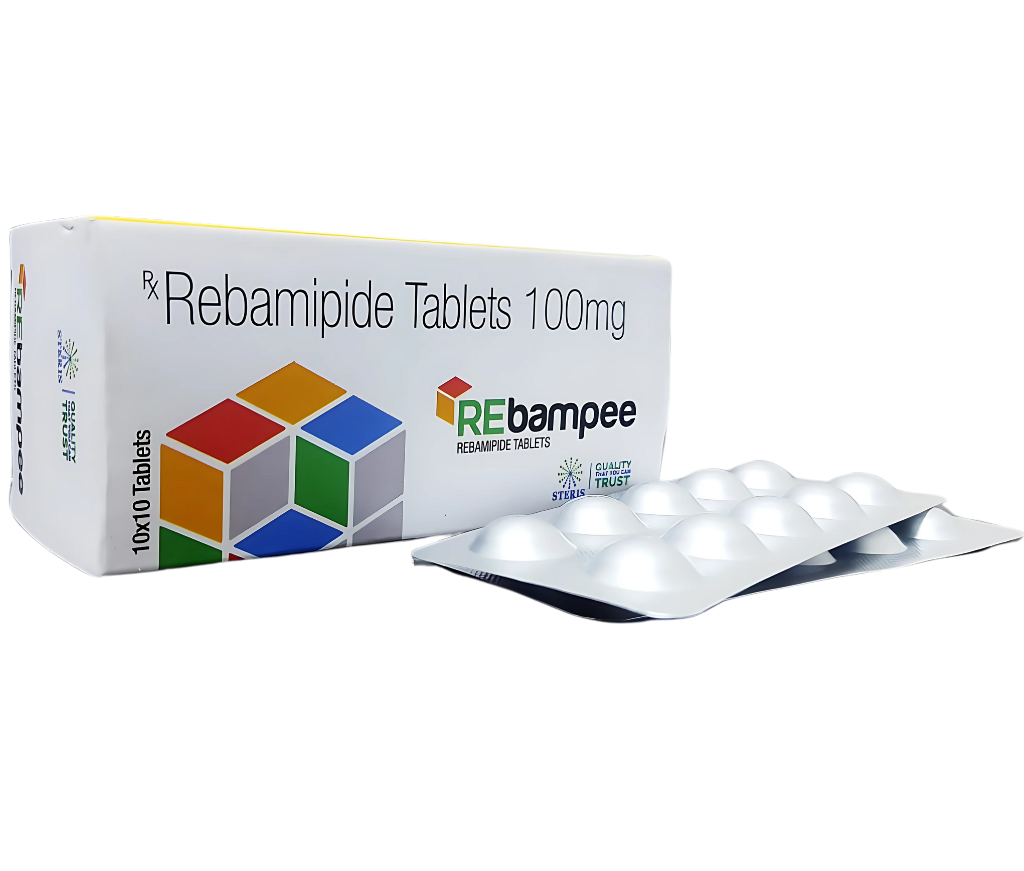
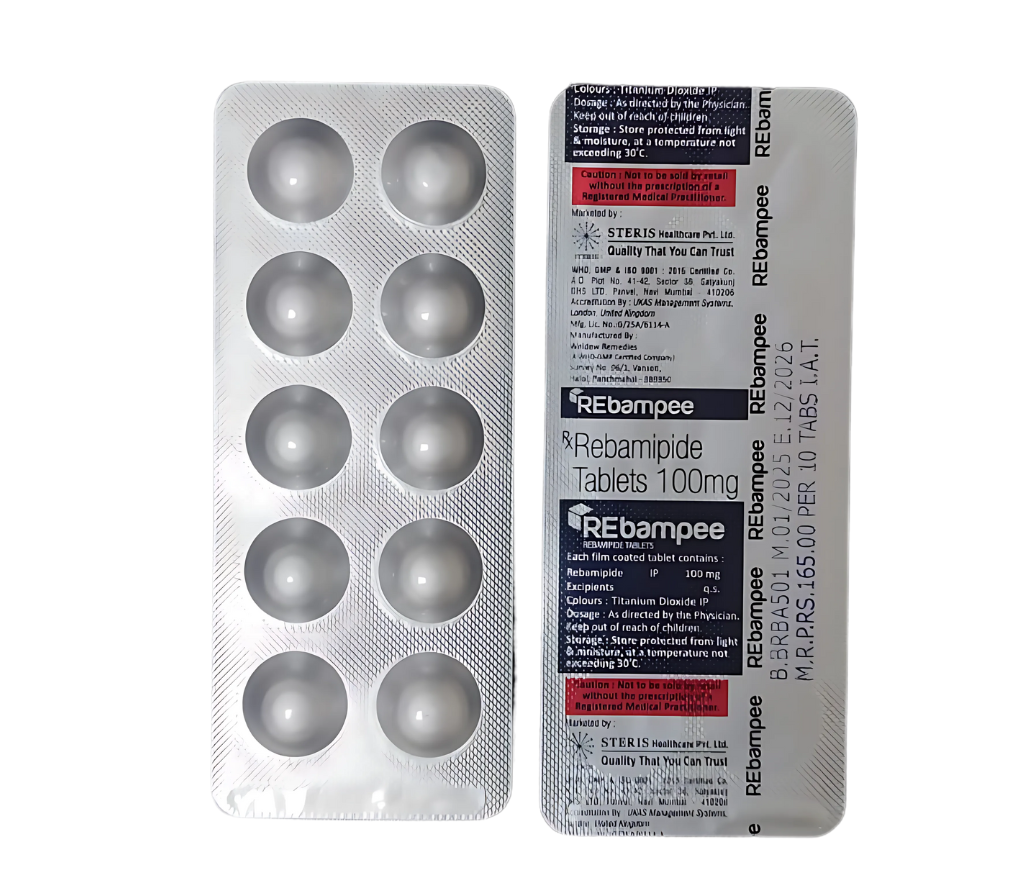

REBAMPEE TABLET
 Item requires a valid prescription
Manufactured By Steris Healthcare Pvt Ltd
Composition Rebamipide 100 mg
Rs 108.28
MRP Rs 154.69
(30% OFF)
Includes all taxes
Package SIZE
( for 10 tablets )

100% Authentic
Products

Free
Shipping*

Products
Return Policy
Description:
REBAMPEE is a tablet containing rebamipide (100 mg), marketed in India by Steris Healthcare Pvt. Ltd.
Rebamipide is a gastroprotective (mucosal protective) medicine. Unlike acid-suppressing drugs such as PPIs and H2 blockers, it does not mainly lower acid. Instead, it strengthens the stomach's own defences. Research shows it:
- Increases mucus production and improves the quality of the protective mucus layer
- Boosts prostaglandin levels in the stomach lining, which support blood flow and repair
- Acts as a free-radical scavenger, reducing oxidative damage to stomach cells
- Reduces inflammation, including inflammation triggered by H. pylori and NSAIDs
- Supports healing of damaged tissue
Doctors commonly prescribe it for gastritis, gastric ulcers and as part of care for people at risk of stomach injury from medicines such as NSAIDs. It is often prescribed alongside an acid-suppressing medicine, as decided by the doctor.
Product Information
| Detail | Information |
|---|---|
| Brand name | REBAMPEE Tablet |
| Composition | Rebamipide 100 mg |
| Drug class | Gastroprotective / mucosal protective agent |
| Dosage form | Tablet |
| Pack size | 10 tablets |
| Manufacturer/Marketer | Steris Healthcare Pvt. Ltd. |
| Primary uses | Gastritis, gastric ulcer, mucosal protection (including during NSAID use), as prescribed |
| Route | Oral |
| Prescription status | Prescription only (Rx), or as per the label; use under medical guidance |
| Storage | Below 25-30°C, in a cool, dry place away from sunlight and moisture; keep out of reach of children |
| Market | India |
Why Is Rebamipide Important?
1. It strengthens the stomach's natural defences: Acid is not the only factor in stomach damage. A thin or weakened mucus layer leaves tissue exposed. Rebamipide helps rebuild that barrier.
2. It supports ulcer and gastritis healing: By improving blood flow, mucus and tissue repair, rebamipide supports healing of the stomach lining, which can make recovery more complete.
3. It protects against NSAID-related damage: Painkillers such as diclofenac, ibuprofen and aspirin are widely used in India for joint pain, back pain and fever. They reduce protective prostaglandins and can injure the stomach lining. Rebamipide may help protect it when NSAID therapy is necessary, under medical guidance.
4. It complements acid-lowering therapy: Acid suppression and mucosal protection work in different ways. Used together, they can offer a more complete approach for many patients.
5. It helps with H. pylori-related inflammation: H. pylori infection is common in India and is a major cause of gastritis and ulcers. Rebamipide has shown anti-inflammatory activity on infected stomach tissue and may be used as an add-on to standard treatment, as prescribed.
Key Benefits
- Protects the stomach lining: Increases mucus and supports the mucosal barrier.
- Promotes ulcer healing: Supports repair of damaged stomach tissue.
- Reduces gastritis symptoms: Helps ease pain, burning, nausea and discomfort.
- Antioxidant and anti-inflammatory action: Reduces damage caused by free radicals and inflammation.
- Useful with NSAIDs: May reduce stomach injury in people who must take painkillers.
- Does not lower stomach acid: A different mechanism from PPIs, so it can be paired with them as advised.
- Generally well tolerated: Side effects are usually mild.
- Simple tablet schedule: Commonly taken three times daily, easy to link to meals or daily routine.
Precautions: What You Should Know Before Using It
Tell your doctor about your full medical history before starting this medicine.
Do not use if
- You are allergic to rebamipide or any ingredient in the tablet.
Use with caution and medical supervision if
- You have liver or kidney problems. Your doctor may need to monitor you.
- You are elderly, as organ function may be reduced.
- You are pregnant or breastfeeding. Discuss risks and benefits with your doctor first.
- You have a history of blood disorders or low white blood cell or platelet counts.
- You have allergies to medicines, including a past reaction to rebamipide.
- The patient is a child. Use only if prescribed by a paediatrician.
Possible Side Effects
Rebamipide is generally well tolerated, but like all medicines it can cause side effects in some people.
Common or mild side effects
- Constipation
- Bloating or gas
- Diarrhoea
- Nausea
- Abdominal discomfort
- Altered or bitter taste
- Headache
Less common effects
- Skin rash or itching
- Dizziness
- Dry mouth
- Mild changes in liver enzymes
- Menstrual changes or breast tenderness (rare)
Frequently Asked Questions
Where can I buy Rebamipide 100 mg online?
You can buy Rebamipide 100 mg online through a licensed pharmacy or authorized pharmaceutical supplier, subject to prescription requirements and product availability.
What is the price of Rebamipide 100 mg?
The price of Rebamipide 100 mg may vary depending on the brand, pack size, seller, and applicable charges. Check the current product listing for the latest price.
Can I order Rebamipide 100 mg online?
Yes, Rebamipide 100 mg can generally be ordered online through an authorized pharmacy or pharmaceutical supplier when available. A valid prescription may be required.
Is Rebamipide 100 mg available from Steris Healthcare?
Availability of Rebamipide 100 mg from Steris Healthcare depends on the current product range and stock. Check the relevant product listing or contact Steris Healthcare for current availability.
What is Rebamipide 100 mg used for?
Rebamipide 100 mg is a gastroprotective medicine used to help protect and support the stomach lining. It may be prescribed for conditions such as gastric ulcers and certain types of gastritis.
What is the composition of Rebamipide 100 mg?
Rebamipide 100 mg contains rebamipide 100 mg as the active pharmaceutical ingredient. The exact formulation and inactive ingredients should be checked on the product packaging.
Is a prescription required?
Rebamipide 100 mg should be used under the guidance of a qualified healthcare professional. Prescription requirements may vary depending on local regulations and the specific product.
How should Rebamipide 100 mg be taken?
Take Rebamipide 100 mg exactly as prescribed by your doctor. Follow the recommended dose and timing, and do not change the dose or duration of treatment without medical advice.
What should I know before buying Rebamipide 100 mg?
Before buying Rebamipide 100 mg, verify the strength, composition, dosage form, pack size, manufacturer or marketer, expiry date, and storage instructions. Inform your doctor about your medical history, allergies, pregnancy or breastfeeding status, and other medicines you are taking.
How can I order Rebamipide 100 mg online?
To order Rebamipide 100 mg online, select the required product and pack size from an authorized pharmacy or supplier, provide a prescription if required, and complete the applicable payment and delivery process.

