


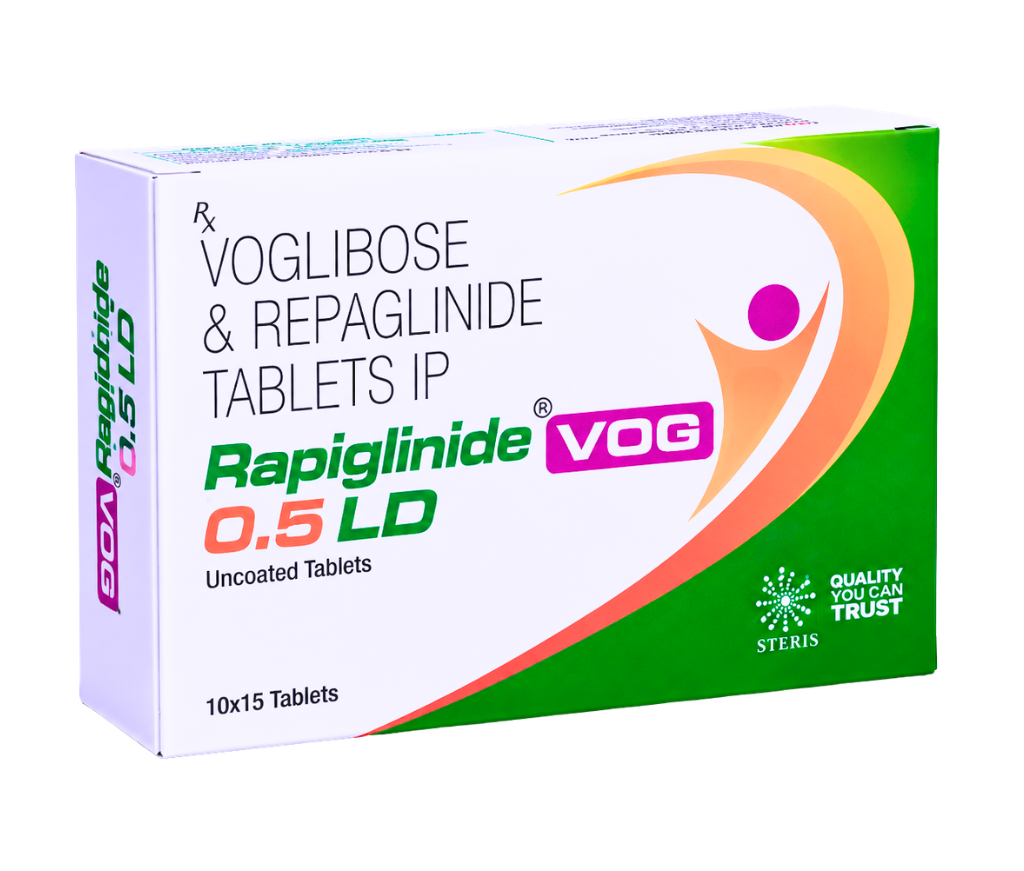
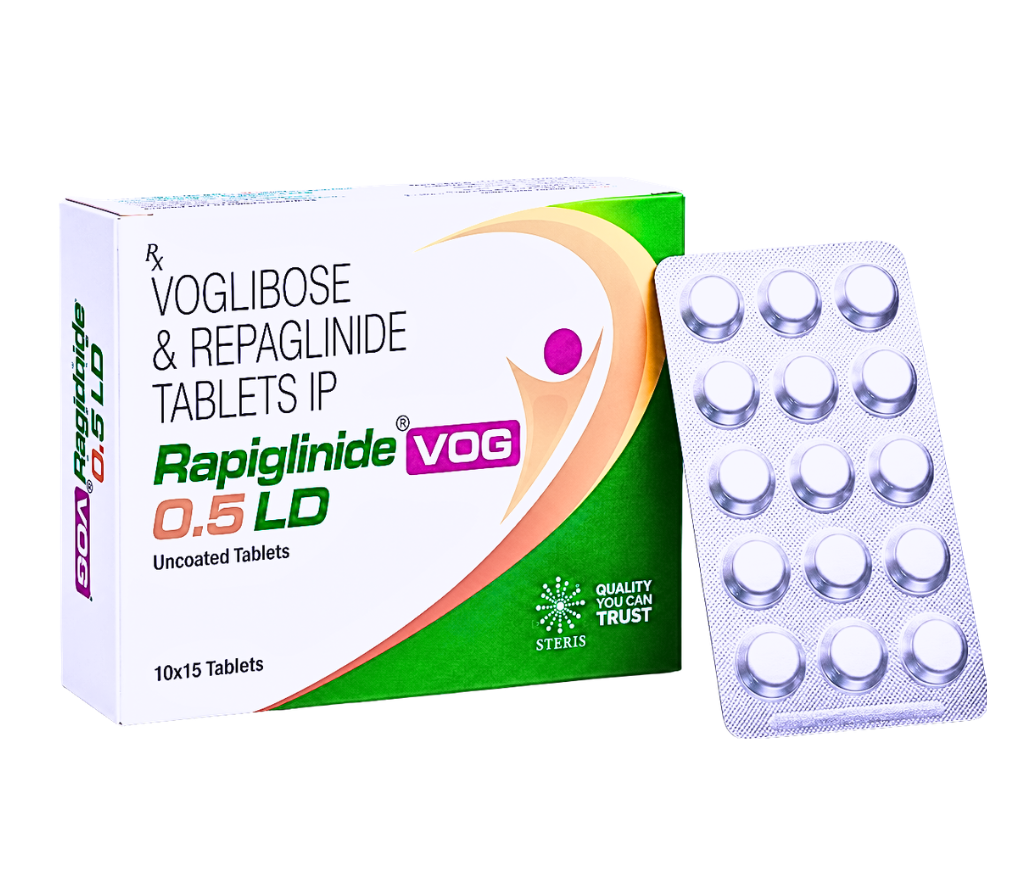
Rapiglinide VOG 0.5 LD
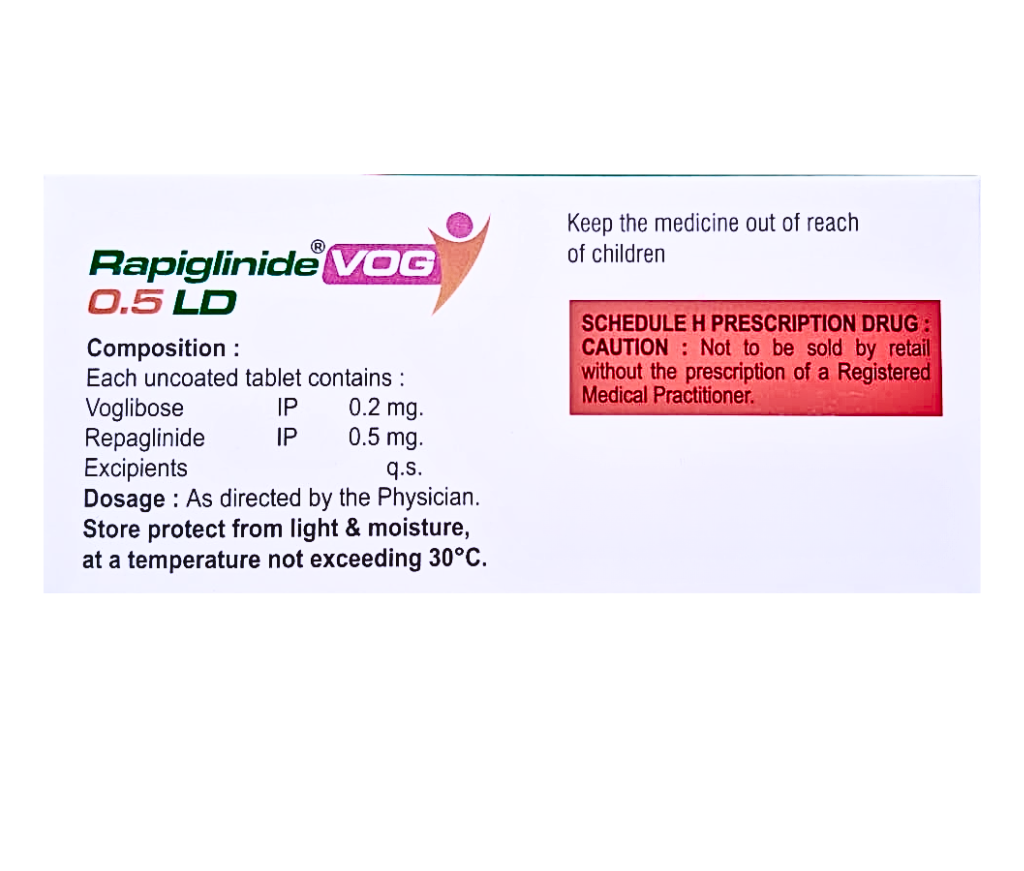
 Item requires a valid prescription
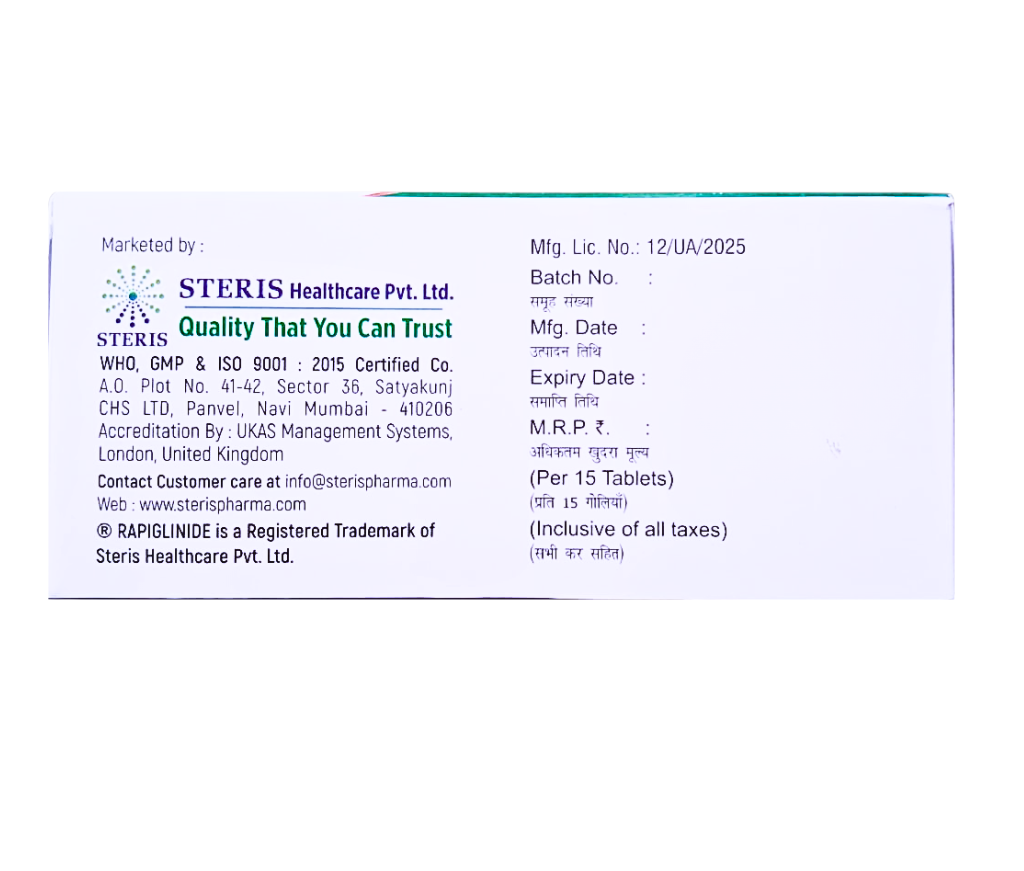
Manufactured By Steris Healthcare Pvt Ltd
Composition Voglibose and Repaglinide tablets
Rs 147.00
MRP Rs 210.00
(30% OFF)
Includes all taxes
Package SIZE
( For 15 Tablets )

100% Authentic
Products

Free
Shipping*

Products
Return Policy
Description:
Voglibose and Repaglinide tablets are a prescription anti-diabetic combination for adults with type 2 diabetes mellitus. Voglibose slows the digestion of carbohydrates, and Repaglinide prompts the pancreas to release insulin at mealtimes. Together they target the post-meal (postprandial) blood sugar rise. The tablets are usually taken just before main meals, and only on a doctor’s prescription.
What Are Voglibose and Repaglinide Tablets?
Voglibose and Repaglinide tablets are a fixed-dose combination (FDC) used in the management of type 2 diabetes. The combination pairs two drugs from different classes that act on different parts of the glucose pathway:
- Voglibose is an alpha-glucosidase inhibitor. It works in the intestine.
- Repaglinide is a meglitinide, a fast-acting insulin secretagogue. It works in the pancreas.
Because the two ingredients act on separate mechanisms, a single tablet can address both the sugar entering the blood after a meal and the insulin response needed to handle it. For people who struggle with high blood sugar spikes after eating, even when fasting sugar is reasonably controlled, this can be a useful option under medical supervision.
| Detail | Information |
|---|---|
| Product name | Voglibose and Repaglinide Tablets |
| Dosage form | Oral tablet |
| Drug class | Alpha-glucosidase inhibitor + Meglitinide |
| Therapeutic category | Anti-diabetic (Oral Antidiabetic Combination) |
| Condition | Type 2 diabetes mellitus |
| Product type | Prescription (Rx) only |
| Usual timing | Just before main meals |
How Do Voglibose and Repaglinide Work Together?
Understanding the mechanism helps patients see why timing matters.
How Voglibose works
After you eat, enzymes in the small intestine called alpha-glucosidases break complex carbohydrates into simple sugars such as glucose. Voglibose partially blocks these enzymes, so carbohydrate digestion and absorption are spread over a longer period. The result is a smaller and slower rise in blood glucose after meals. Voglibose does not directly stimulate insulin release, so on its own it carries a low risk of hypoglycemia.
How Repaglinide works
Repaglinide acts on the beta cells of the pancreas and prompts them to release insulin. Its action is quick and short-lived, which is why it is taken right before meals. This closely matches the body’s natural mealtime insulin response, and the effect fades between meals.
Why combine them?
- Voglibose reduces how fast glucose enters the blood.
- Repaglinide supplies insulin to handle the glucose that does arrive.
- Together they target the post-prandial peak from two angles.
Uses of Voglibose and Repaglinide Tablets
- To control post-meal blood sugar in adults with type 2 diabetes.
- When one drug alone is not enough to reach the target HbA1c.
- For people with irregular or variable meal patterns, since the dose is linked to meals rather than taken at a fixed clock time. A skipped meal means a skipped dose.
- As part of a complete diabetes plan that includes diet, physical activity, and regular glucose monitoring.
Key Benefits of Voglibose and Repaglinide Tablets
1. Targets post-meal glucose spikes
Post-meal hyperglycemia is a major contributor to overall glycemic burden. This combination is built to address it directly.
2. Dual-action, complementary mechanism
Slowing glucose absorption and boosting mealtime insulin work in tandem, which can improve control compared with some single-agent options.
3. Mealtime-linked dosing
Because both drugs are tied to meals, the regimen can be more flexible for people who do not eat at fixed hours.
4. Lower risk of hypoglycemia between meals
Repaglinide has a short duration of action and Voglibose does not stimulate insulin, so the risk of prolonged low blood sugar is generally lower than with long-acting insulin secretagogues. Hypoglycemia can still occur, particularly if a meal is delayed or skipped after taking the tablet.
5. Convenience of a single tablet
A fixed-dose combination can reduce the number of tablets a patient has to manage, which may support adherence.
6. Weight-neutral profile for many patients
Alpha-glucosidase inhibitors are generally weight-neutral, which can help offset the mild weight gain sometimes linked with insulin-release drugs.
How to Take Voglibose and Repaglinide Tablets
- Take the tablet immediately before a main meal, usually within about 15 minutes of eating, or exactly as your doctor advises.
- If you skip a meal, skip that dose. Do not take the tablet on an empty stomach.
- Swallow the tablet with water.
- Do not change the dose, split the tablet, or stop treatment without consulting your doctor.
- Continue your prescribed diet and exercise plan.
- Monitor blood glucose as advised and keep your scheduled HbA1c tests.
- If you miss a dose, do not double up at the next meal.
Side Effects of Voglibose and Repaglinide Tablets
Most people tolerate this combination well, but side effects can occur.
Common side effects
- Flatulence (gas) and abdominal bloating, mainly from Voglibose, because undigested carbohydrate is fermented in the gut
- Loose stools or diarrhea
- Nausea or abdominal discomfort
- Headache
- Mild weight gain in some patients
Hypoglycemia (low blood sugar)
Watch for sweating, shakiness, dizziness, palpitations, hunger, confusion, or blurred vision. Risk rises if you take the tablet and then delay or skip a meal, drink alcohol, exercise heavily, or combine it with other glucose-lowering drugs.
Uncommon or serious reactions (seek medical help)
- Severe or persistent abdominal pain or distension
- Yellowing of the skin or eyes, or dark urine (possible liver problems)
- Allergic reactions such as rash, itching, swelling of the face or throat, or breathing difficulty
- Repeated or severe hypoglycemia
This is not a complete list. Read the package insert and report any unusual symptoms to your doctor or pharmacist.
Precautions and Who Should Avoid It
Do not use if you have:
- Type 1 diabetes or diabetic ketoacidosis
- Known allergy to Voglibose, Repaglinide, or any ingredient in the tablet
- Severe liver impairment
- Intestinal obstruction, inflammatory bowel disease, or serious digestive disorders
- Chronic intestinal conditions with poor digestion or absorption
Use with caution or only under medical advice if you:
- Have kidney or liver disease
- Are pregnant, planning pregnancy, or breastfeeding
- Are elderly or frail, since hypoglycemia can be harder to recognize
- Have a history of frequent hypoglycemia
- Have an upcoming surgery or acute illness
Important drug interactions
- Gemfibrozil must not be combined with Repaglinide, because it can sharply raise Repaglinide levels and the risk of severe hypoglycemia.
- Some antifungals, antibiotics, and other enzyme-affecting medicines (for example, clarithromycin, ketoconazole, rifampicin) can change Repaglinide levels.
- Other diabetes medicines, including insulin, can increase the risk of low blood sugar.
- Alcohol can mask or worsen hypoglycemia.
Lifestyle Tips While Using This Combination
- Eat regular, balanced meals with controlled portions of refined carbohydrates.
- Keep a source of pure glucose with you.
- Keep a simple log of your blood glucose readings to share at follow-up visits.
- Stay physically active, and adjust meals as your doctor advises on exercise days.
- Limit alcohol.
- Attend routine checks for HbA1c, kidney function, and liver function.
Conclusion
Voglibose and Repaglinide tablets offer a targeted, dual-mechanism approach to controlling post-meal blood sugar in adults with type 2 diabetes. Voglibose slows glucose absorption from the gut, while Repaglinide delivers a quick, mealtime-linked insulin boost. When taken correctly, just before meals and as prescribed, and combined with a balanced diet, physical activity, and regular monitoring, the combination can help improve glycemic control with a generally manageable side-effect profile. Because it is a prescription medicine with important precautions and interactions, it should be started, adjusted, or stopped only under the guidance of a qualified doctor. Buy only from licensed sources and read the label carefully.
Frequently Asked Questions
1. What are Voglibose and Repaglinide tablets used for?
They are used to control blood sugar, especially after meals, in adults with type 2 diabetes mellitus, along with diet and exercise.
2. How do Voglibose and Repaglinide tablets work?
Voglibose slows carbohydrate digestion in the intestine, and Repaglinide stimulates the pancreas to release insulin at mealtimes. Together they reduce post-meal sugar spikes.
3. When should I take Voglibose and Repaglinide tablets?
Take them just before a main meal, usually within about 15 minutes of eating, or as your doctor directs.
4. What should I do if I skip a meal?
Skip the tablet for that meal. Taking it without food can cause low blood sugar.
5. What are the common side effects of Voglibose and Repaglinide tablets?
Common effects include gas, bloating, loose stools, nausea, headache, and sometimes low blood sugar or mild weight gain.
6. Can Voglibose and Repaglinide tablets cause low blood sugar?
Yes, they can, especially if a meal is delayed or skipped, if you drink alcohol, or if you take other glucose-lowering medicines.
7. How should I treat low blood sugar while taking this combination?
Use pure glucose, such as glucose tablets or dextrose, because Voglibose delays the absorption of regular sugar. Then seek medical advice.
8. Is a prescription required to buy Voglibose and Repaglinide tablets?
Yes. It is a prescription-only medicine and should be purchased from a licensed pharmacy.
9. Can I take Voglibose and Repaglinide tablets if I have type 1 diabetes?
No. This combination is meant for type 2 diabetes and is not suitable for type 1 diabetes or diabetic ketoacidosis.
10. Can these tablets be taken during pregnancy or breastfeeding?
They are generally not recommended unless your doctor decides the benefit outweighs the risk. Always consult your doctor first.
11. Which medicines should not be taken with Repaglinide?
Gemfibrozil should not be combined with Repaglinide. Some antifungals, antibiotics, and other drugs can also interact, so tell your doctor about all medicines you use.
12. Can I drink alcohol while on Voglibose and Repaglinide tablets?
Alcohol is best avoided or limited, as it can increase the risk of low blood sugar and hide its warning signs.
13. Do Voglibose and Repaglinide tablets cause weight gain?
Some people may gain a little weight. Voglibose is generally weight-neutral, while Repaglinide may cause mild gain in some patients.
14. How long does it take for Voglibose and Repaglinide tablets to work?
Repaglinide begins acting within about an hour, and the post-meal effect can be seen at the next meal. The long-term benefit is assessed through HbA1c tests over several weeks to months.
15. Is Voglibose and Repaglinide a good combination for post-meal sugar control?
It is designed for exactly that purpose, but whether it suits you depends on your overall health, kidney and liver function, and other treatments. Your doctor will decide.
16. Can I stop taking Voglibose and Repaglinide tablets once my sugar is normal?
No. Never stop or change the dose without your doctor’s advice, as blood sugar may rise again.
17. What is the difference between Voglibose and Repaglinide?
Voglibose reduces how quickly carbohydrates are absorbed from the gut, while Repaglinide increases insulin release from the pancreas. They work in different ways and complement each other.
18. Can elderly patients take Voglibose and Repaglinide tablets?
They can be used under medical supervision, but older adults may be more prone to low blood sugar, so close monitoring is important.
19. How should I store Voglibose and Repaglinide tablets?
Store in a cool, dry place away from direct sunlight and moisture, and keep out of reach of children.
20. How do I know I am buying genuine Voglibose and Repaglinide tablets?
Buy from a licensed pharmacy, check the manufacturer details, batch number, and expiry date on the pack, and be cautious of unverified sellers or unusually low prices.