


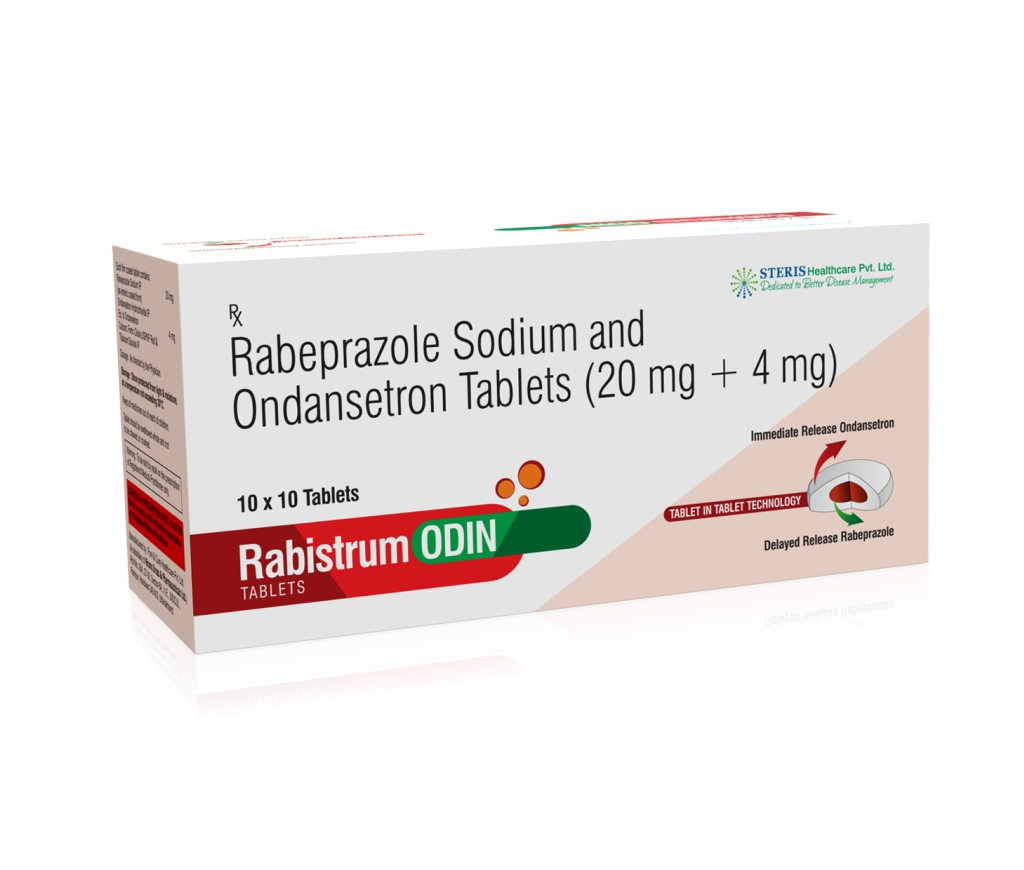


RABISTRUM ODIN
 Item requires a valid prescription
Manufactured By Steris Healthcare Pvt Ltd
Composition Rabeprazole Sodium (20mg) & Ondansetron (4mg)
Rs 78.09
MRP Rs 111.56
(30% OFF)
Includes all taxes
Package SIZE
( For 10 Tablet )

100% Authentic
Products

Free
Shipping*

Products
Return Policy
Description:
Ondansetron tablet is a prescription-only antiemetic (anti-nausea and anti-vomiting) medicine belonging to the 5-HT3 receptor antagonist class. It is primarily prescribed to prevent and treat nausea and vomiting caused by chemotherapy, radiotherapy, and post-surgical (postoperative) recovery, and is sometimes used off-label for severe vomiting linked to gastroenteritis under a doctor's supervision. It works by blocking serotonin (5-HT3) receptors in the gut and brain that trigger the vomiting reflex. Ondansetron is not a treatment for diarrhoea, anxiety, or "normal" everyday vomiting — it is a targeted prescription drug for specific medical situations. Common side effects include headache, constipation, and mild dizziness; it does not typically cause drowsiness the way sedating antihistamines do.
What Is Ondansetron Tablet?
Ondansetron tablet is a widely prescribed antiemetic medication used across hospitals and clinics to manage nausea and vomiting in specific, medically defined situations. It is one of the most established drugs in the 5-HT3 (serotonin type 3) receptor antagonist class, a group of medicines specifically designed to interrupt the biological signal pathway that causes the brain to trigger vomiting.
Unlike over-the-counter digestive remedies, ondansetron is a prescription-only (Schedule H) drug in India. This means it should only be taken on a doctor's advice, at the dose and duration the doctor prescribes, and is not meant for self-medication of routine stomach upset.
Clinical Indications: What Is Ondansetron Tablet Used For?
| Indication | Typical Clinical Setting | Prescription Requirement |
|---|---|---|
| Chemotherapy-induced nausea and vomiting (CINV) | Oncology / cancer treatment centres | Doctor-prescribed |
| Radiotherapy-induced nausea and vomiting | Radiation oncology | Doctor-prescribed |
| Postoperative nausea and vomiting (PONV) | Post-surgery recovery, hospital settings | Doctor-prescribed |
| Severe vomiting in acute gastroenteritis (select cases) | Emergency/OPD, short-term, mainly in children under supervision | Doctor-prescribed only |
| Hyperemesis in specific medical scenarios | Under strict specialist supervision | Doctor-prescribed only |
How Ondansetron Works
Ondansetron works by selectively blocking 5-HT3 (serotonin) receptors, which are found in two key locations:
- The gut (gastrointestinal tract): Chemotherapy, radiation, and surgery can damage cells lining the intestine, causing them to release serotonin. This serotonin activates 5-HT3 receptors on the vagus nerve, sending a "vomit" signal to the brain.
- The brain (chemoreceptor trigger zone): Ondansetron also blocks 5-HT3 receptors here, which is the brain's central "vomiting control center."
By blocking these receptors in both locations, ondansetron interrupts the nausea-vomiting signal before it can produce symptoms—making it effective at both preventing and treating vomiting episodes triggered by these specific causes.
Key Benefits of Ondansetron Tablet
- Targeted anti-vomiting action — directly blocks the biological pathway responsible for chemotherapy-, radiotherapy-, and surgery-related vomiting, rather than just masking symptoms.
- Fast-acting relief — tablets are generally absorbed quickly, offering relief within a short window after intake (exact onset time to be confirmed by your doctor based on formulation).
- Non-sedating profile — unlike many older anti-nausea medicines, ondansetron does not typically cause significant drowsiness, making it more suitable for patients who need to stay alert during treatment or recovery.
- Well-established safety record — one of the most extensively used antiemetics globally in oncology and post-surgical care, with decades of clinical use.
- Flexible formulations — available as standard tablets, orally disintegrating tablets (useful for patients who are already nauseous and struggle to swallow), and injectable forms for hospital settings.
- Improves treatment adherence — by controlling chemotherapy- and radiotherapy-related nausea, it helps patients tolerate and complete their prescribed cancer treatment cycles.
Dosage Guidance
Ondansetron dosage varies significantly based on:
- The reason it's being prescribed (chemotherapy vs. postoperative vs. other)
- Patient age and body weight (especially in children)
- Formulation (tablet, ODT, syrup, or injection)
- Whether it's a single preventive dose or a short course
Typical adult oral doses range from 4 mg to 8 mg, taken as directed — this may be a single dose before a triggering event (like chemotherapy or surgery) or divided doses over the following 24–48 hours. Never self-adjust the dose. Only your treating doctor can determine the correct dose, frequency, and duration for your specific condition.
Side Effects of Ondansetron Tablet
Like all medicines, ondansetron tablet can cause side effects in some patients. Most are mild and manageable, but you should always report new or worsening symptoms to your doctor.
Common side effects:
- Headache
- Constipation
- Mild dizziness
- Fatigue or general tiredness
- Dry mouth
Less common but important side effects:
- Changes in heart rhythm (QT interval changes) — more relevant at higher doses or with certain heart conditions; your doctor may monitor this
- Mild abdominal discomfort
- Flushing sensation
Seek immediate medical attention if you experience:
- Signs of an allergic reaction (rash, swelling of face/lips/tongue, difficulty breathing)
- Irregular heartbeat, chest pain, or severe dizziness
- Severe or persistent constipation
Substitutes & Comparison
| Medicine | Class | Common Use Case | Key Difference |
|---|---|---|---|
| Ondansetron | 5-HT3 antagonist | CINV, PONV, radiotherapy-induced vomiting | Non-sedating, targeted receptor blockade |
| Domperidone | Dopamine antagonist | General nausea, gastroparesis-related vomiting | Different mechanism; more OTC-adjacent use |
| Metoclopramide | Dopamine antagonist / prokinetic | Nausea with delayed gastric emptying | Can cause sedation/movement side effects |
| Promethazine | Antihistamine | Motion sickness, allergy-related nausea | More sedating than ondansetron |
Precautions Before Taking Ondansetron Tablet
- Inform your doctor if you have a history of heart rhythm problems (QT prolongation), liver disease, or electrolyte imbalances (low potassium/magnesium).
- Tell your doctor about all other medicines you're taking, as ondansetron can interact with certain drugs affecting serotonin levels or heart rhythm.
- Not recommended for use in pregnancy or breastfeeding without specific medical advice — discuss risks and benefits with your doctor.
- Use in children should always be dose-adjusted by a pediatrician based on body weight.
- This medicine is not intended for long-term or routine use in everyday digestive upset—it is designed for specific, medically supervised situations.
Conclusion
Ondansetron tablet remains one of the most trusted and widely prescribed antiemetics for managing nausea and vomiting linked to chemotherapy, radiotherapy, and surgery. Its targeted mechanism, non-sedating profile, and strong safety track record make it a first-line choice in oncology and post-surgical care worldwide. However, because it works on a specific biological pathway and carries important precautions — particularly around heart rhythm and interactions with other medicines — it should always be used strictly under a doctor's prescription and supervision, never as a self-medicated remedy for routine vomiting, diarrhoea, or anxiety. If you or a loved one has been prescribed ondansetron, follow the dosage and duration exactly as advised, and speak to your doctor about any side effects or concerns.
1. Can ondansetron be given for normal vomiting?
No. Ondansetron is meant for specific medical causes of vomiting—such as chemotherapy, radiotherapy, or post-surgery — and should not be used for everyday or "normal" vomiting without a doctor's prescription and diagnosis.
2. Does the ondansetron pill make you sleepy?
Ondansetron is generally non-sedating and does not typically cause significant drowsiness the way some older anti-nausea medicines do, though mild fatigue has been reported in some patients. Always check with your doctor if you notice unusual sleepiness.
3. What is the most common side effect of ondansetron?
Headache and constipation are among the most commonly reported side effects of ondansetron tablets. Most cases are mild and resolve on their own, but persistent symptoms should be discussed with your doctor.
4. Is ondansetron for loose motion?
No. Ondansetron treats vomiting and nausea, not diarrhea or loose motion. It does not address the underlying cause of loose motions and should not be used as a substitute for anti-diarrhoeal treatment.
5. How risky is ondansetron?
When taken exactly as prescribed, ondansetron is considered a well-established and generally safe antiemetic. However, it does carry risks such as effects on heart rhythm (QT prolongation) in certain patients, which is why it must be prescribed and monitored by a doctor, especially in those with existing heart conditions.
6. Should I take ondansetron before or after eating? Ondansetron can generally be taken with or without food, but timing often depends on why it's prescribed — for example, it may be given before chemotherapy or surgery. Always follow the specific timing instructions given by your doctor.
7. Who cannot take ondansetron?
People with certain heart rhythm disorders (such as congenital long QT syndrome), known hypersensitivity to ondansetron, or those on medicines that seriously interact with it may not be suitable candidates. Pregnant or breastfeeding women should also consult their doctor before use. Only a doctor can confirm suitability based on full medical history.
8. Can ondansetron calm anxiety?
No. Ondansetron is not an anti-anxiety medicine — it has no approved role in treating anxiety. It works exclusively on the serotonin receptors involved in nausea and vomiting, not on the pathways associated with anxiety disorders.
9. Can I take ondansetron if I have gastro?
In some cases, doctors may prescribe ondansetron short-term to control severe vomiting associated with gastroenteritis (gastro), particularly in children, but this must be a doctor's decision based on assessment — it is not a general self-treatment for gastro.
10. What is ondansetron tablet used for?
Ondansetron tablets are primarily used to prevent and treat nausea and vomiting caused by chemotherapy, radiotherapy, and surgery (postoperative nausea and vomiting), and in select cases, severe vomiting from other medical causes as directed by a doctor.
11. How does ondansetron work in the body?
Ondansetron blocks serotonin (5-HT3) receptors in the gut and brain that are responsible for triggering the vomiting reflex, effectively interrupting the nausea-vomiting signal at its source.
12. What is the normal dose of ondansetron tablet for adults? Adult oral doses commonly range between 4 mg and 8 mg, but the exact dose, frequency, and duration depend on the medical condition being treated and must be determined by a doctor.
13. Can ondansetron be taken during pregnancy?
Ondansetron should only be used during pregnancy if specifically advised by a doctor after weighing the potential benefits and risks, as its safety in pregnancy requires individualized medical assessment.
14. Can children take ondansetron tablets?
Yes, ondansetron can be prescribed for children in certain situations, such as chemotherapy or severe vomiting from gastroenteritis, but the dose must be carefully calculated by a pediatrician based on the child's body weight.
15. How fast does ondansetron start working?
Ondansetron is generally considered fast-acting after oral intake, though the exact onset can vary by individual and formulation. Your doctor can advise on expected timing based on your specific treatment plan.
16. Is ondansetron available without a prescription in India?
No. Ondansetron is a Schedule H prescription medicine in India and legally requires a valid doctor's prescription for purchase and use.
17. Can ondansetron cause constipation?
Yes, constipation is one of the more commonly reported side effects of ondansetron. Staying hydrated and maintaining fibre intake may help, but persistent constipation should be reported to your doctor.
18. What happens if I miss a dose of ondansetron?
If a dose is missed, take it as soon as you remember unless it's almost time for the next dose — in that case, skip the missed dose and continue as scheduled. Do not double up doses. Consult your doctor if you're unsure.
19. Can ondansetron be taken with other antiemetic or anti-nausea medicines?
Combining ondansetron with other antiemetics is sometimes done under medical supervision, particularly in chemotherapy protocols, but should never be self-directed due to the risk of drug interactions.
20. How long can I safely take ondansetron?
The duration of ondansetron use depends entirely on the medical reason it was prescribed — it may be a single dose or a short course of a few days. It is not intended for long-term, routine, or open-ended use without ongoing medical supervision.
If You Need More Information About RABISTRUM ODIN Click here

