


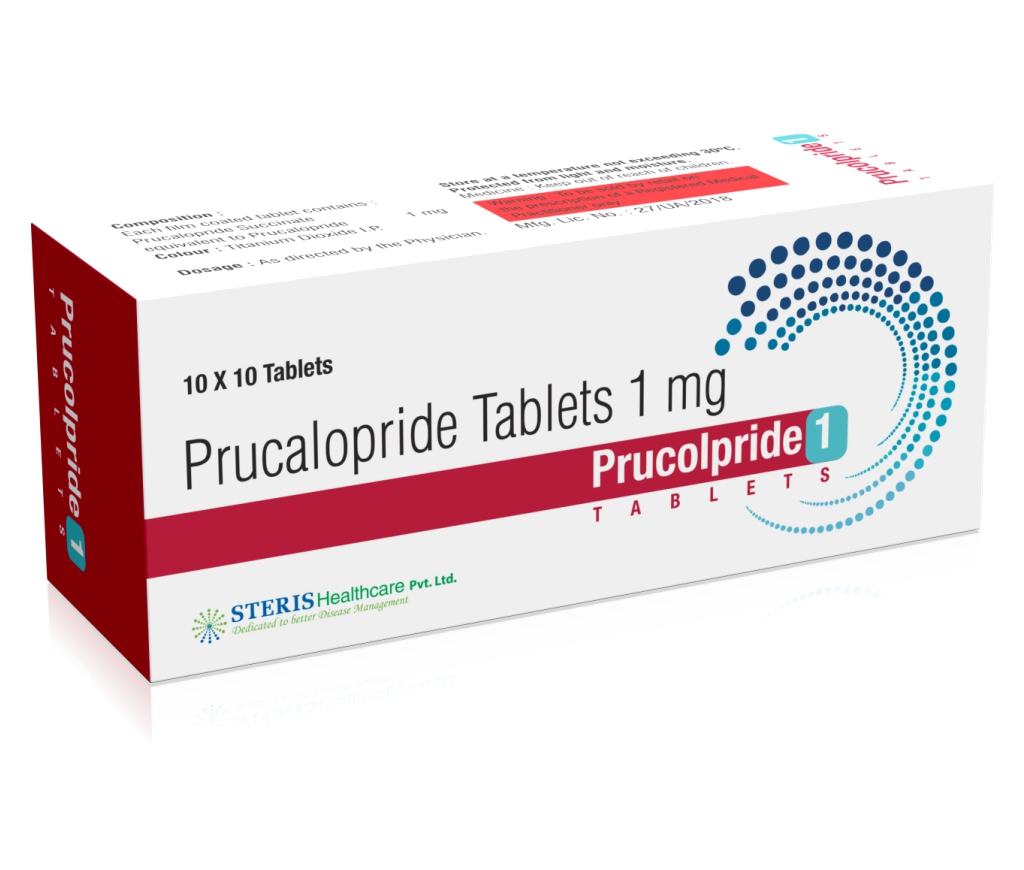
PRUCOLPRIDE 1
 Item requires a valid prescription
Manufactured By Steris Healthcare Pvt Ltd
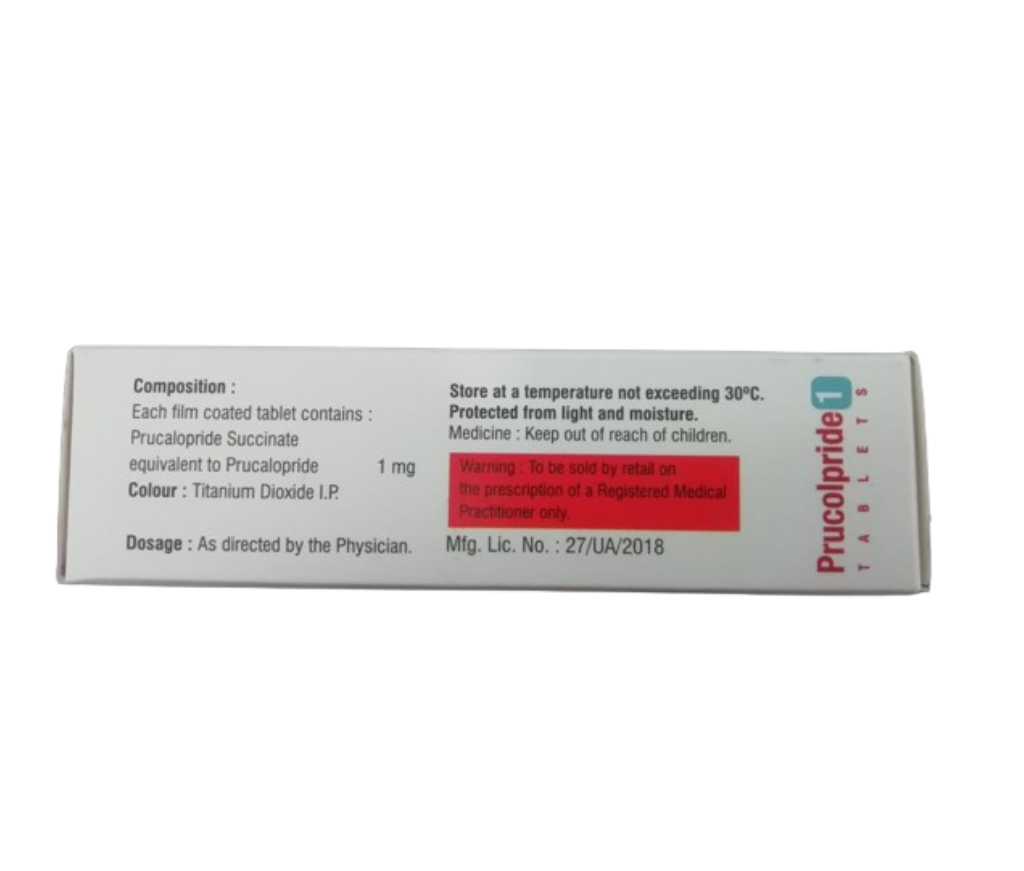
Composition Prucalopride (1mg)
Rs 106.97
MRP Rs 152.81
(30% OFF)
Includes all taxes
Package SIZE
( For 10 Tablet )

100% Authentic
Products

Free
Shipping*

Products
Return Policy
Description:
Prucalopride 1 mg is a prescription medicine used to treat chronic idiopathic constipation (CIC) in adults. It belongs to a class of medicines called selective serotonin-4 (5-HT4) receptor agonists and works by stimulating receptors involved in intestinal movement, helping promote bowel motility.
People searching for prucalopride 1 mg often want to know what it is used for, whether it is effective for constipation, how to take it, how quickly it works, what side effects it may cause, and whether 1 mg is the right dose. This guide provides an evidence-based overview for patients researching the medicine before discussing treatment or purchasing it from a legitimate pharmacy.
Product Information
| Product Information | Details |
|---|---|
| Brand Name | PRUCOLPRIDE 1 |
| Composition | Prucalopride 1 mg |
| Manufacturer/Marketer | Steris Healthcare Pvt. Ltd. |
| Target Market | India |
| Dosage Form | Tablet |
| Pack Size | 10 Tablets |
| Therapeutic Category | Gastroenterology |
| Drug Class | Serotonin (5-HT4) receptor agonist |
| Active Ingredient | Prucalopride 1 mg |
| Primary Use | Management of chronic constipation in adults when other treatments have not provided adequate relief |
| Prescription Requirement | Use under the supervision of a qualified healthcare professional |
| Route of Administration | Oral |
| Storage | Store according to the storage instructions provided on the product packaging |
| Manufacturer/Marketer | Steris Healthcare Pvt. Ltd. |
What Is Prucalopride 1 mg?
Prucalopride 1 mg is an oral tablet containing 1 milligram of prucalopride. Prucalopride is a selective 5-HT4 receptor agonist designed to improve gastrointestinal motility. It is specifically indicated for the treatment of chronic idiopathic constipation in adults.
Prucalopride tablets are available in 1 mg and 2 mg strengths. The appropriate strength depends on the patient's medical condition, kidney function, response to treatment, and prescribing guidance.
One important point for people researching the prucalopride 1 mg dosage is that 1 mg is not automatically the standard dose for every adult. Current U.S. prescribing information recommends 2 mg once daily for adults with chronic idiopathic constipation, while 1 mg once daily is recommended for patients with severe renal impairment, defined in the label as creatinine clearance below 30 mL/min.
What Is Prucalopride 1 mg Used For?
The primary approved use of prucalopride is chronic idiopathic constipation (CIC) in adults. This refers to persistent constipation without an identified structural or metabolic cause explaining the symptoms.
Constipation can involve:
-
Infrequent bowel movements
-
Difficult or incomplete bowel movements
-
Hard stools
-
Excessive straining
-
A sensation of incomplete evacuation
-
Abdominal discomfort or bloating
Prucalopride is intended for patients whose constipation requires prescription treatment. It is not simply a general-purpose laxative or a medicine intended for occasional constipation.
If constipation is new, severe, unexplained, or accompanied by symptoms such as blood in the stool, persistent vomiting, severe abdominal pain, or unexplained weight loss, medical evaluation is important before using a prescription bowel-motility medicine.
How Does Prucalopride 1 mg Work?
Prucalopride selectively stimulates 5-HT4 receptors in the gastrointestinal tract. Activation of these receptors promotes coordinated intestinal movement and helps stimulate colonic motility.
Unlike products that primarily soften stool or draw water into the intestine, prucalopride works mainly by influencing intestinal motility.
This mechanism makes prucalopride particularly relevant for chronic constipation when inadequate bowel movement is a major component of the problem.
The medicine does not work in exactly the same way as traditional bulk-forming, osmotic, or stimulant laxatives, so treatment selection should be based on the cause and characteristics of constipation.
Key Benefits of Prucalopride 1 mg
When prescribed appropriately, potential benefits of prucalopride treatment include the following:
-
Promoting intestinal and colonic motility
-
Helping increase bowel movement frequency
-
Helping improve constipation symptoms
-
Supporting more regular bowel function
-
Providing a prescription treatment option for chronic idiopathic constipation
-
Offering a lower 1 mg dose for adults with severe renal impairment when prescribed according to current labeling
Clinical studies supporting prucalopride's approval evaluated bowel-movement frequency and other constipation-related outcomes. The U.S. indication is specifically for chronic idiopathic constipation in adults.
It is important not to interpret these benefits as a guarantee. Individual responses vary, and a healthcare professional may need to reassess treatment if symptoms do not improve adequately.
Common Side Effects of Prucalopride 1 mg
Like all prescription medicines, prucalopride can cause side effects.
The current U.S. prescribing information identifies the following among the most common adverse reactions:
-
Headache
-
Abdominal pain
-
Nausea
-
Diarrhea
-
Abdominal distension or bloating
-
Dizziness
-
Vomiting
-
Flatulence
-
Fatigue
These reactions occurred in at least 2% of patients in clinical studies.
Gastrointestinal effects may be particularly noticeable when treatment begins. NICE materials also note that common adverse effects can occur early and may decrease after several days of continued treatment.
If side effects are severe, persistent, or interfere with normal activities, contact your doctor or pharmacist.
Frequently Asked Questions
1. What is prucalopride 1 mg used for?
Prucalopride 1 mg is used to treat chronic idiopathic constipation in adults when prescribed at that strength. In current U.S. labeling, 1 mg once daily is specifically recommended for adults with severe renal impairment.
2. Is prucalopride 1 mg a laxative?
Prucalopride is a prescription gastrointestinal motility medicine, specifically a selective 5-HT4 receptor agonist. It is not classified in the same way as conventional bulk-forming, osmotic, or stimulant laxatives.
3. How does prucalopride 1 mg work?
It stimulates 5-HT4 receptors and promotes intestinal motility, helping the colon move its contents through the digestive tract.
4. Is prucalopride 1 mg the standard adult dose?
No. The current U.S. recommended adult dose for chronic idiopathic constipation is 2 mg once daily. A 1 mg once-daily dose is recommended for adults with severe renal impairment.
5. Can prucalopride 1 mg help with chronic constipation?
Yes. Prucalopride is specifically indicated for chronic idiopathic constipation in adults. The appropriate dose depends on the patient's circumstances.
6. How quickly does prucalopride 1 mg work?
The response varies. Some people notice improved bowel function relatively early, while others require longer to assess the medicine's overall benefit.
7. Can prucalopride 1 mg cause diarrhea?
Yes. Diarrhea is one of the common adverse reactions reported with prucalopride.
8. What are the common side effects of prucalopride 1 mg?
Common side effects include headache, abdominal pain, nausea, diarrhea, abdominal distension, dizziness, vomiting, flatulence, and fatigue.
9. Can prucalopride 1 mg cause stomach pain?
Yes. Abdominal pain is among the common adverse reactions reported with prucalopride.
10. Can I take prucalopride 1 mg with food?
Yes. Current U.S. prescribing information states that prucalopride can be taken with or without food.
11. Can I take prucalopride 1 mg every day?
If it has been prescribed for you, prucalopride is generally taken once daily according to the prescribed dose. Do not change the frequency without medical advice.
12. Who should take prucalopride 1 mg instead of 2 mg?
In current U.S. labeling, adults with severe renal impairment are recommended to receive 1 mg once daily. Your doctor should determine the appropriate dose based on kidney function and other clinical factors.
13. Can I buy prucalopride 1 mg online?
Prucalopride is a prescription medicine. If purchasing online, use a legitimate pharmacy and follow applicable prescription requirements. Avoid unverified sellers.
14. Is prucalopride 1 mg safe for everyone?
No. It is contraindicated in certain gastrointestinal conditions, including intestinal obstruction and perforation, and it has important safety warnings.
15. Can prucalopride 1 mg cause suicidal thoughts?
The current U.S. prescribing information contains a warning about suicidal ideation and behavior. New or worsening depression or unusual changes in mood or behavior should be reported promptly to a healthcare professional.