


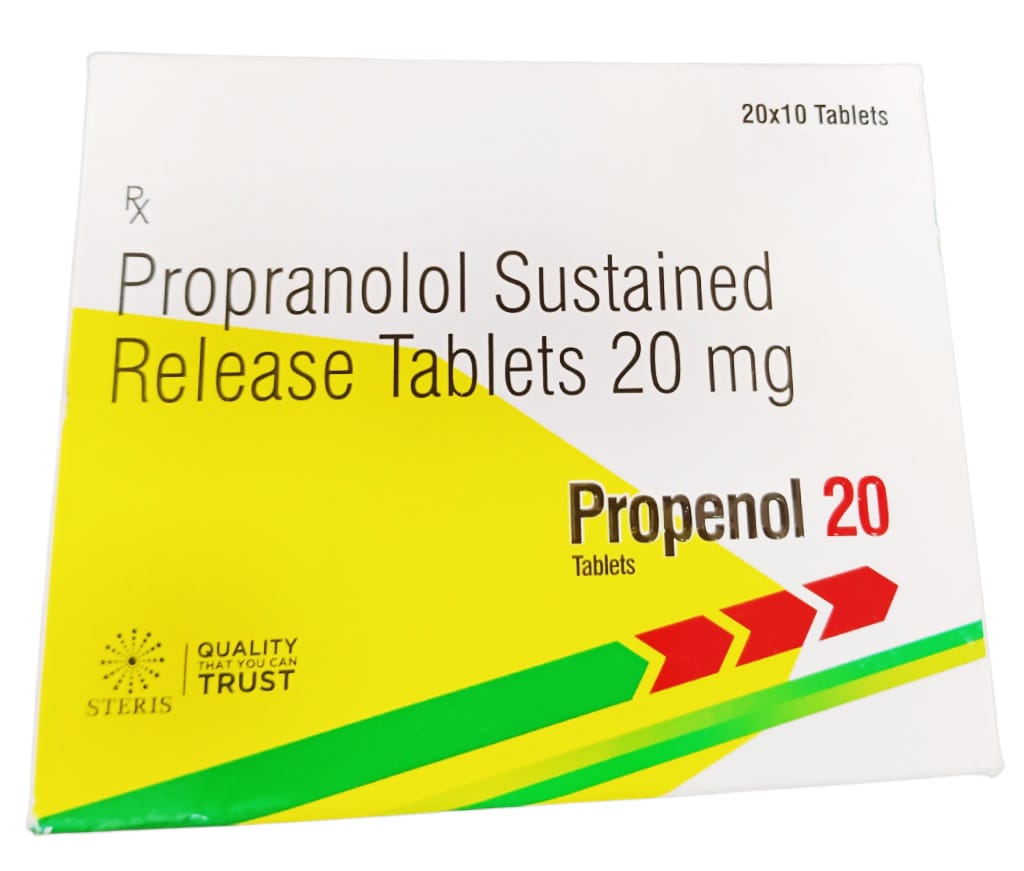
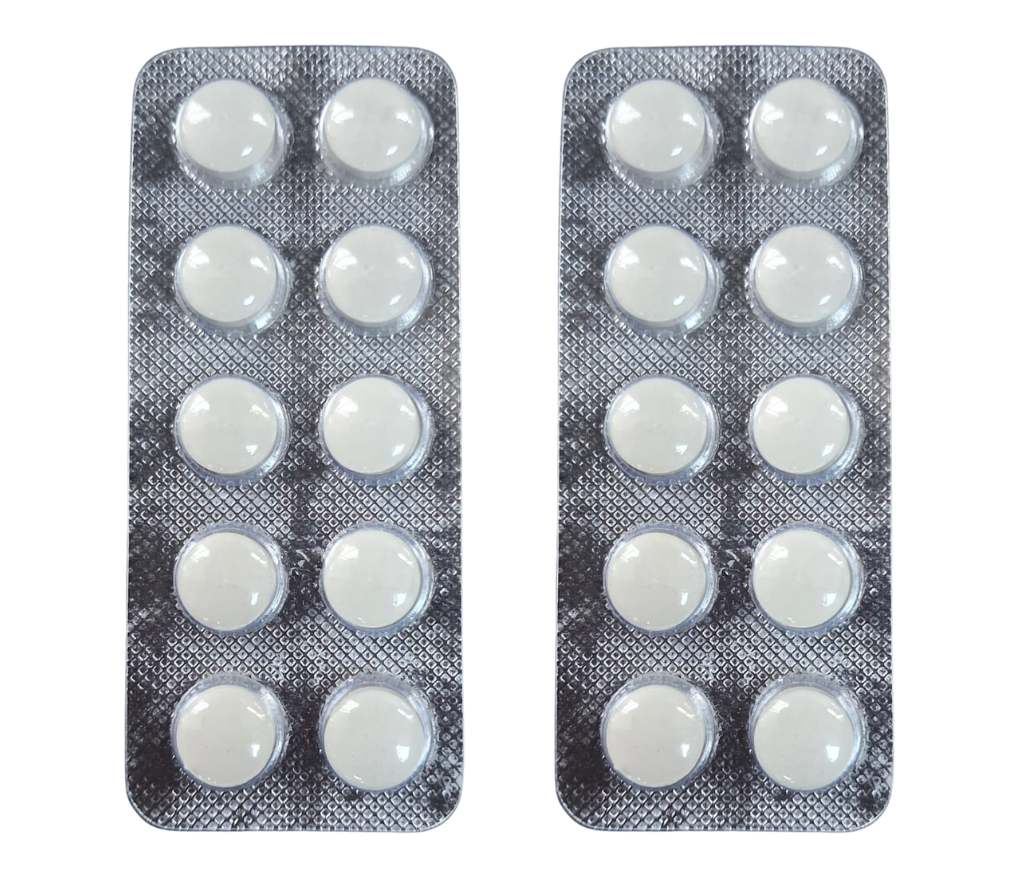

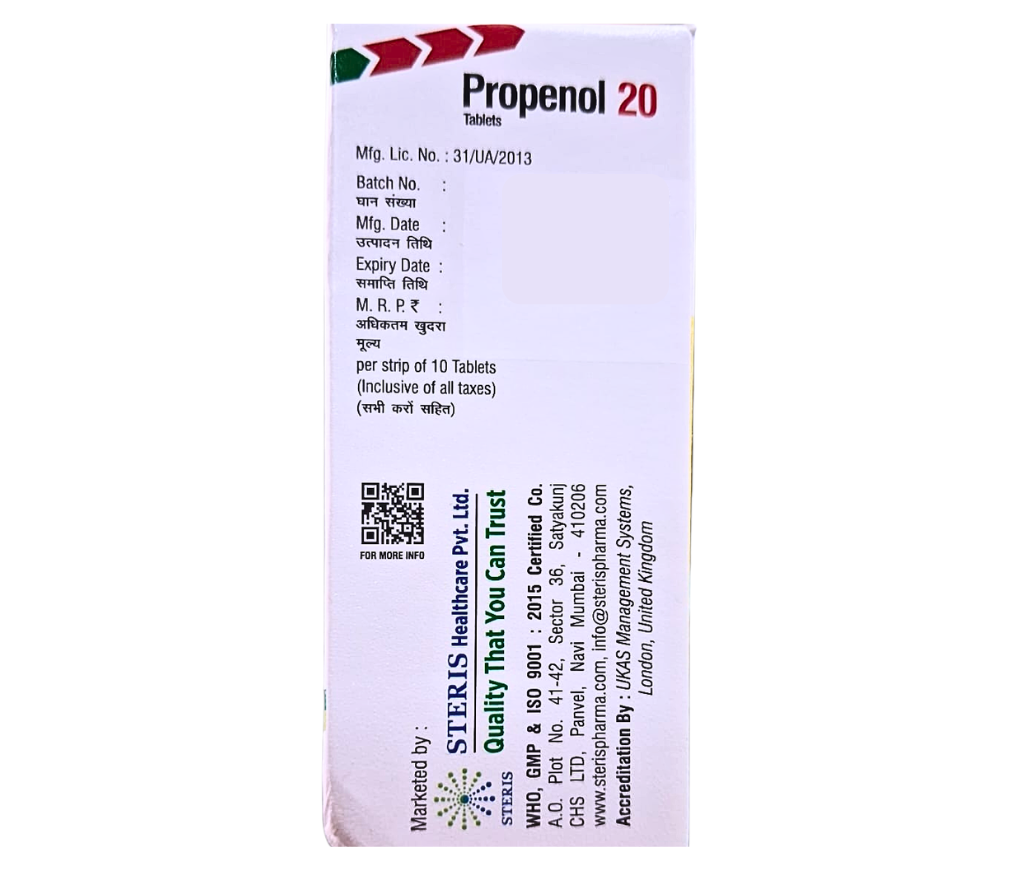
propranolol 20 mg | PROPENOL 20
 Item requires a valid prescription
Manufactured By Steris Healthcare Pvt Ltd
Composition propranolol 20 mg
Rs 21.34
MRP Rs 30.48
(30% OFF)
Includes all taxes
Package SIZE
( For 10 Tablet )

100% Authentic
Products

Free
Shipping*

Products
Return Policy
Description:
Propranolol 20 mg is a prescription an immediate-release beta-blocker tablet used to manage physical symptoms of anxiety, tremors, high blood pressure, and migraines.
What Is Propranolol 20 mg?
Propranolol 20 mg contains 20 mg of propranolol hydrochloride, a non-selective beta-adrenergic receptor blocker. It works mainly by blocking the effects of adrenaline and related stress hormones at beta receptors.
This can slow the heart rate, reduce the force with which the heart beats and lower some physical responses associated with adrenaline. In anxiety, for example, propranolol can reduce physical symptoms such as palpitations, shaking and sweating, although it does not directly treat the underlying thoughts or causes of anxiety.
Propranolol tablets are available in several strengths, including 20 mg, although the available strengths can vary by manufacturer and market. Official drug labeling lists 20 mg among the tablet strengths.
What Is Propranolol 20 mg Used For?
1. Heart Rate and Certain Heart Conditions
Propranolol can be prescribed for certain cardiovascular conditions because it slows the heart and decreases the workload on the heart. It may be used in conditions involving abnormal heart rhythms and angina, and it has specific indications in certain patients following myocardial infarction.
2. High Blood Pressure
Beta-blockers such as propranolol can be used to manage high blood pressure in selected patients. The appropriate medicine depends on the patient's overall health, cardiovascular risk, other medicines and treatment goals.
3. Migraine Prevention
Propranolol can be prescribed to help prevent migraine attacks. Importantly, it is generally used for prevention, not as a medicine intended to stop a migraine attack that has already started.
The benefit may take time to become noticeable, and patients should follow the prescribed schedule rather than taking additional tablets when a migraine begins.
4. Essential Tremor
Propranolol is also indicated for certain forms of essential tremor. It can reduce the amplitude or severity of tremor, particularly tremor affecting the hands, although it does not treat every cause of shaking.
5. Physical Symptoms of Anxiety
One of the most commonly searched uses of propranolol is anxiety. Propranolol may reduce physical manifestations of anxiety such as a racing heartbeat, shaking and sweating by reducing the effects of adrenaline.
How Does Propranolol 20 mg Work?
When the body experiences stress or anxiety, hormones such as adrenaline can increase heart rate, sweating and shaking. Propranolol blocks beta-adrenergic receptors, reducing some of these physical effects.
For heart-related conditions, this can result in a slower heart rate and reduced cardiac workload. For performance-related or situational anxiety, reducing the physical response may help a person feel less affected by symptoms such as trembling or a racing heartbeat.
After an oral dose, propranolol reaches peak plasma concentrations at approximately 1 to 4 hours, while its plasma half-life is generally 3 to 6 hours. Individual effects can vary.
Propranolol 20 mg Benefits
The potential benefits of propranolol depend on the condition being treated.
Key potential benefits include:
- Helps slow an excessively fast heart rate.
- Can reduce certain abnormal heart-rate responses.
- May reduce the physical symptoms of anxiety.
- Can help control certain forms of essential tremor.
- Can help prevent migraine attacks when prescribed for migraine prevention.
- May reduce cardiac workload in appropriate cardiovascular conditions.
- Can reduce some adrenaline-related physical symptoms.
The positive effect should be judged against the reason for treatment rather than assuming that a stronger effect is always better. Taking more propranolol than prescribed can cause excessive slowing of the heart, low blood pressure, dizziness and other potentially serious effects.
Propranolol 20 mg Dosage: Can It Be Taken Once a Day?
There is no universal answer to “Can I take propranolol 20 mg once a day?”
Some propranolol treatment schedules involve multiple doses per day, while certain formulations or treatment plans may use once-daily dosing. Standard immediate-release tablets can require dosing several times daily depending on the indication, whereas slow-release formulations are designed to release the medicine over a longer period.
Therefore, do not change propranolol 20 mg to once-daily use simply because the tablet strength is 20 mg. Follow the prescription and the instructions supplied with your particular formulation.
The dose may also need adjustment according to age, medical condition, response to treatment and kidney or liver function.
How Long Does Propranolol 20 mg Last?
A frequently searched question is “How many hours does 20 mg propranolol last?”
There is no single number of hours that applies to every person. Immediate-release propranolol reaches peak blood concentrations within roughly 1–4 hours and has a plasma half-life of about 3–6 hours.
However, half-life is not the same thing as the duration of noticeable symptom relief. The clinical effect can vary depending on the condition, formulation, dose, metabolism and individual response.
Common Propranolol 20 mg Side Effects
Many people have no significant side effects or experience only mild effects. Commonly reported effects include:
- Tiredness or fatigue
- Dizziness or light-headedness
- Weakness
- Cold fingers or toes
- Headache
- Sleep difficulties
- Nightmares
- Nausea in some patients
What Are the Bad Side Effects of Propranolol?
Most side effects are mild, but serious reactions can occur rarely.
Seek urgent medical assessment if propranolol causes symptoms such as:
- Significant difficulty breathing or wheezing
- Fainting or severe dizziness
- Very slow or irregular heartbeat
- New or worsening chest pain
- Signs of worsening heart failure, such as increasing breathlessness or swelling of the legs
- A serious allergic reaction
Who Should Not Take Propranolol?
Propranolol is not suitable for everyone. Particular caution is needed in people with:
- Asthma or certain other breathing disorders
- A very slow heart rate
- Low blood pressure
- Certain heart conduction problems
- Worsening heart failure
- Diabetes
- Liver or kidney problems
- Severe circulation problems affecting the limbs
- Certain adrenal-gland conditions
- Pregnancy or breastfeeding, where individual medical assessment is important
What Organ Is Propranolol Hard On?
The question “What organ is propranolol hard on?” is slightly misleading because propranolol is not generally described as routinely damaging one particular organ when appropriately prescribed.
However, propranolol is extensively metabolized by the liver, and the medicine can affect the cardiovascular system by lowering heart rate and blood pressure. It can also affect the lungs because it blocks beta receptors outside the heart.
People with liver disease, kidney disease, asthma or significant cardiovascular problems should tell their doctor before taking it.
Is Propranolol a High-Risk Medication?
Propranolol is an established prescription beta-blocker and is generally considered safe when appropriately prescribed and monitored. However, it is not a medicine that should be self-dosed.
Too much propranolol can significantly slow the heart rate, lower blood pressure, cause dizziness and breathing problems, and may cause seizures in severe overdose.
For this reason, keep propranolol away from children and never take another person's prescription.
What to Avoid While Taking Propranolol?
Patients should discuss their complete medication list with their doctor or pharmacist.
Particular caution may be required with:
- Alcohol, because it can increase the blood-pressure-lowering effect and dizziness.
- Certain cold or decongestant medicines.
- Some allergy medicines containing sympathomimetic ingredients.
- Some medicines for heart rhythm or blood pressure.
- NSAIDs such as ibuprofen, diclofenac or naproxen, which can affect blood pressure and may interact with treatment considerations.
- Certain migraine medicines such as rizatriptan.
- Herbal products and supplements, because interaction information may be limited.
Always tell your healthcare professional about prescription medicines, OTC medicines, vitamins and supplements.
Is It Safe to Take Propranolol Every Day?
Yes, propranolol can be taken every day when it has been prescribed for a condition requiring regular treatment. Long-term treatment is commonly used for certain heart conditions and migraine prevention. However, whether daily treatment is appropriate depends on the indication and the individual patient.
People taking propranolol for anxiety may use it for shorter periods, depending on their symptoms and medical advice.
Do Not Stop Propranolol Suddenly
One of the most important safety points is not to stop regular propranolol abruptly without medical advice.
Suddenly stopping long-term propranolol can worsen the underlying condition and may cause symptoms such as sweating, shaking or an irregular heartbeat. Doctors may gradually reduce the dose over time when discontinuation is appropriate.
Propranolol 20 mg:
Propranolol 20 mg is a prescription beta-blocker that reduces the effects of adrenaline. It may be used for certain heart conditions, high blood pressure, migraine prevention, essential tremor and physical symptoms of anxiety. It can cause dizziness, tiredness, slow heart rate and cold hands or feet, and it may be unsuitable for people with asthma, low blood pressure, bradycardia or certain heart conditions. The correct dose and frequency must be determined by a healthcare professional.
Frequently Asked Questions
1. What is propranolol 20 mg used for?
Propranolol 20 mg is a beta-blocker used in appropriate patients for certain heart conditions, blood-pressure management, migraine prevention, essential tremor and physical symptoms associated with anxiety. The exact indication depends on the prescription.
2. Can I take propranolol 20 mg once a day?
Only if once-daily treatment has been prescribed for you. Immediate-release propranolol may require multiple doses per day, while slow-release formulations can be designed for once-daily use. Do not change your dosing schedule without medical advice.
3. What are the bad side effects of propranolol?
Potential side effects include tiredness, dizziness, weakness, cold hands or feet, headache and sleep problems. Rare but serious reactions include breathing difficulties, severe heart-related symptoms, fainting and serious allergic reactions.
4. How many hours does 20 mg propranolol last?
There is no fixed duration for everyone. Immediate-release propranolol reaches peak blood concentrations in about 1–4 hours and has a plasma half-life of approximately 3–6 hours. The duration of symptom relief can differ from its half-life.
5. Is it safe to take propranolol every day?
It can be safe for many patients when prescribed and monitored appropriately. Daily treatment is used for some heart conditions and migraine prevention. The appropriate duration depends on the reason for treatment.
6. Is it safe to take propranolol every day?
Yes, daily use may be appropriate when specifically prescribed. However, you should not start daily treatment, increase the dose or stop long-term treatment without discussing it with your healthcare professional.
7. What is the main reason for taking propranolol?
The main reason depends on the patient. Propranolol is commonly used to reduce cardiovascular effects such as a fast heart rate and is also prescribed for conditions such as migraine prevention, essential tremor and physical symptoms of anxiety.
8. Who should not take propranolol?
People with bronchial asthma, significant bradycardia, certain heart conduction disorders, cardiogenic shock or a known hypersensitivity to propranolol should not take it unless specifically evaluated and managed by a healthcare professional. Other conditions may also require caution.
9. What are the positive effects of propranolol?
Depending on the condition, propranolol can slow an elevated heart rate, reduce some physical symptoms of anxiety, help prevent migraines and reduce the severity of certain essential tremors.
10. What organ is propranolol hard on?
Propranolol is primarily metabolized by the liver, but it is not generally described as routinely damaging a particular organ when used correctly. It can significantly affect heart rate and blood pressure and may cause bronchospasm in susceptible individuals.
11. Is propranolol a high-risk medication?
Propranolol is a well-established prescription medicine, but it can become dangerous when taken incorrectly or in excessive amounts. Overdose may cause severe bradycardia, low blood pressure, breathing problems, seizures or other serious effects.
12. What should I avoid while taking propranolol?
Avoid excessive alcohol and check with a doctor or pharmacist before using other medicines, particularly decongestants, some heart medicines, NSAIDs and certain migraine medicines. Always disclose supplements and herbal products.
13. Does propranolol 20 mg help anxiety?
It can reduce physical symptoms of anxiety, including a fast heartbeat, shaking and sweating. It does not directly treat all psychological symptoms of anxiety, so treatment should be individualized.
14. Does propranolol 20 mg make you sleepy?
Some people experience tiredness, dizziness or weakness while taking propranolol. If you feel dizzy or unusually tired, avoid driving or operating machinery until you know how the medicine affects you.
15. Can propranolol 20 mg be stopped suddenly?
Regular propranolol should not normally be stopped suddenly without medical advice. Abrupt discontinuation after long-term use can worsen the underlying condition and may cause symptoms such as sweating, shaking or irregular heartbeat.
16. Does propranolol 20 mg lower heart rate?
Yes. Propranolol blocks beta-adrenergic stimulation and can slow the heart rate. Excessive slowing can be dangerous, which is why the dose should be individualized by a healthcare professional.
17. Can propranolol 20 mg be used for migraine?
Yes. Propranolol is used for migraine prevention in appropriate patients. It is not intended to treat an acute migraine attack that has already started.
18. Can propranolol 20 mg be used for tremors?
Yes. Propranolol is indicated for certain essential tremors and can reduce tremor amplitude. The cause of tremor should be assessed before treatment.
19. How quickly does propranolol 20 mg start working?
Propranolol can begin producing effects within a few hours. However, the time required for the full therapeutic benefit depends on the condition; for some cardiovascular conditions, it may take 2–3 weeks to reach its full effect.
20. Is propranolol 20 mg available as a prescription tablet?
Yes. Propranolol hydrochloride is available as oral tablets, including 20 mg tablets in some marketed products. Availability and packaging vary by manufacturer and country.
Conclusion
Propranolol 20 mg is an established beta-blocker that works by reducing the effects of adrenaline on the heart and other tissues. Its medical uses include selected heart conditions, blood-pressure treatment, migraine prevention, essential tremor and physical symptoms of anxiety.
The medicine can provide meaningful benefits when the indication, formulation and dose are appropriate. At the same time, propranolol can cause dizziness, tiredness, cold extremities and slow heart rate, while people with asthma, bradycardia, low blood pressure or certain cardiovascular conditions may require particular caution or may be unable to use it.
| Feature | Information |
|---|---|
| Primary keyword | Propranolol 20 mg |
| Active ingredient | Propranolol hydrochloride |
| Medicine class | Beta-blocker |
| Typical form | Oral tablet |
| Prescription status | Prescription medicine |
| Common therapeutic areas | Heart conditions, migraine prevention, essential tremor and selected anxiety-related physical symptoms |
| Main action | Reduces the effects of adrenaline on beta receptors |
| Important caution | Not suitable for everyone, particularly some people with asthma, slow heart rate or certain heart conditions |
If You Need More Information About PROPENOL 20 Click here

