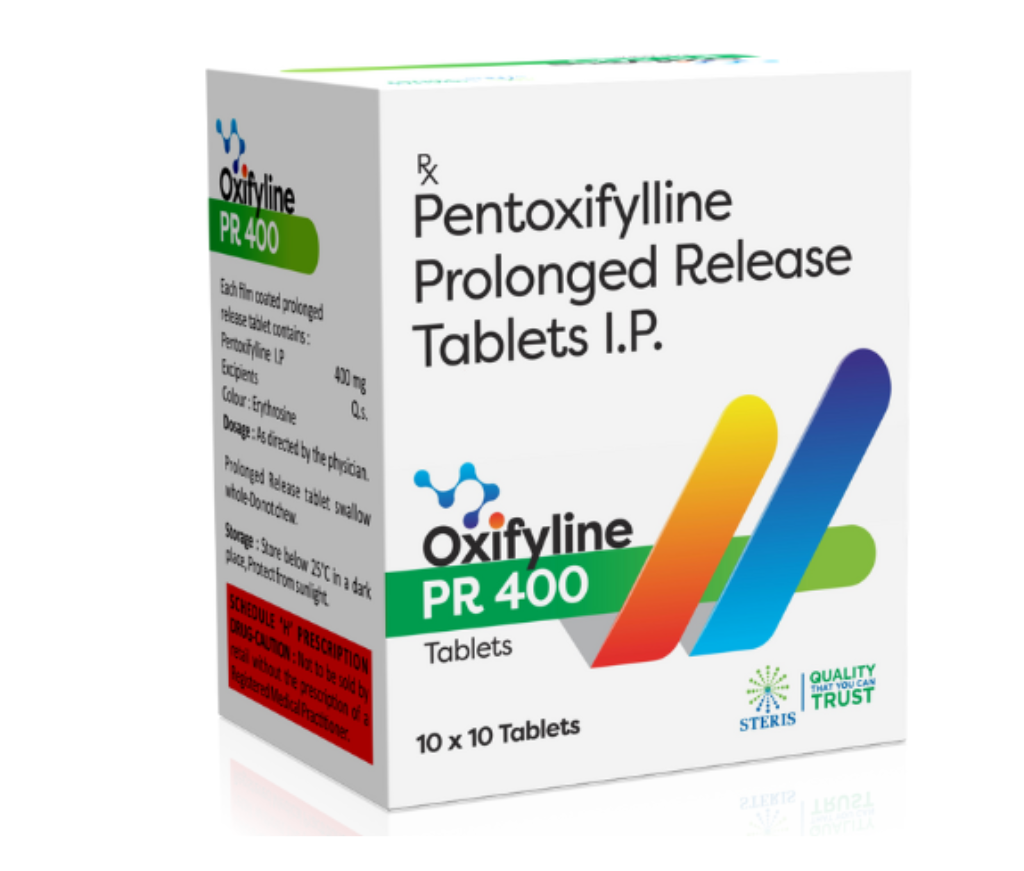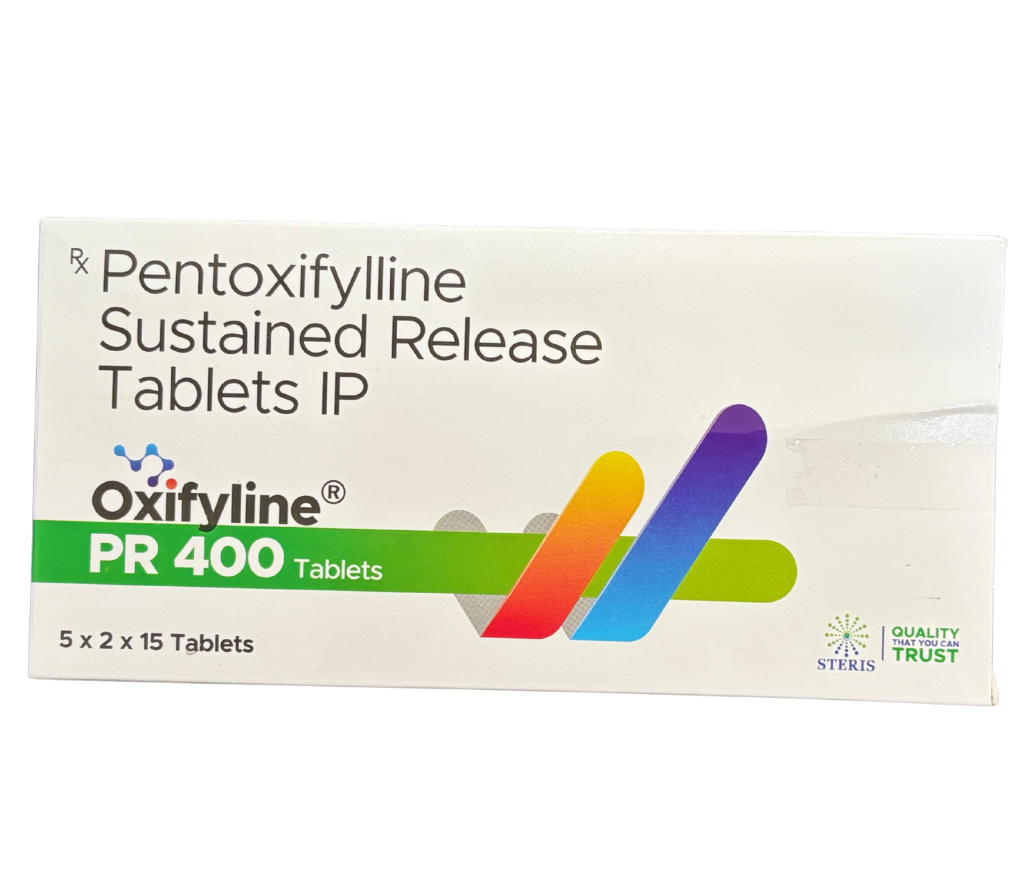
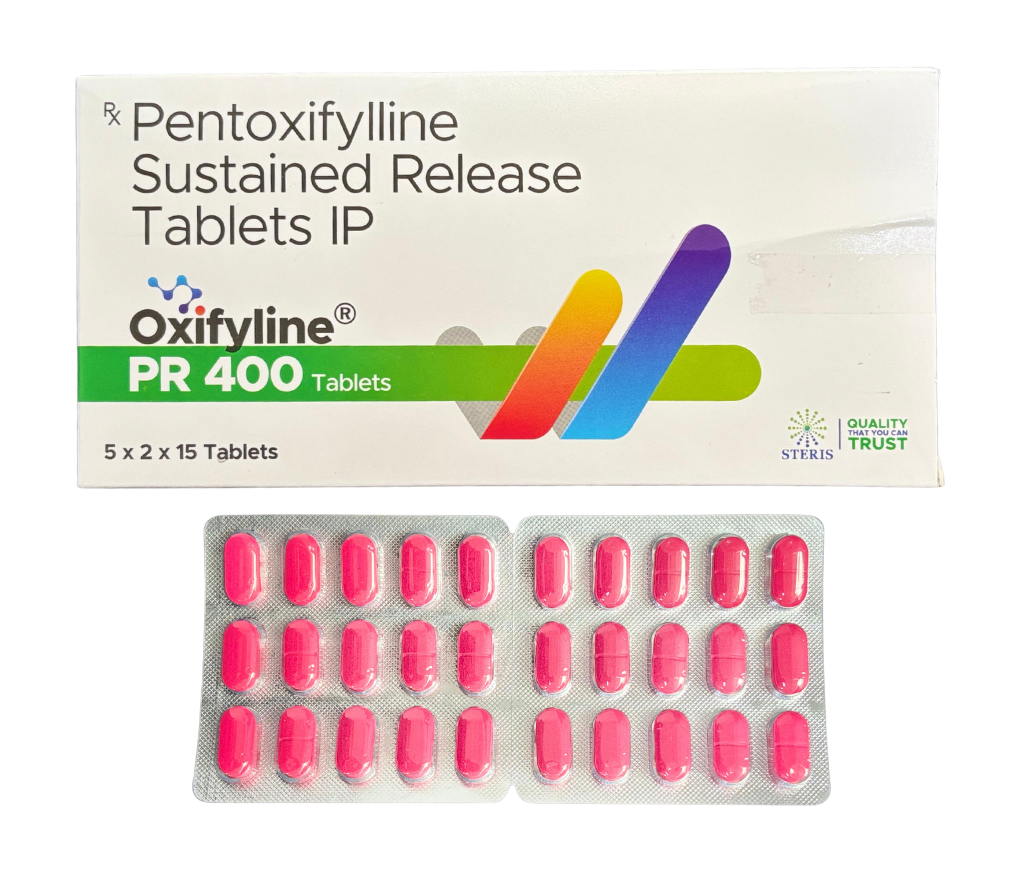
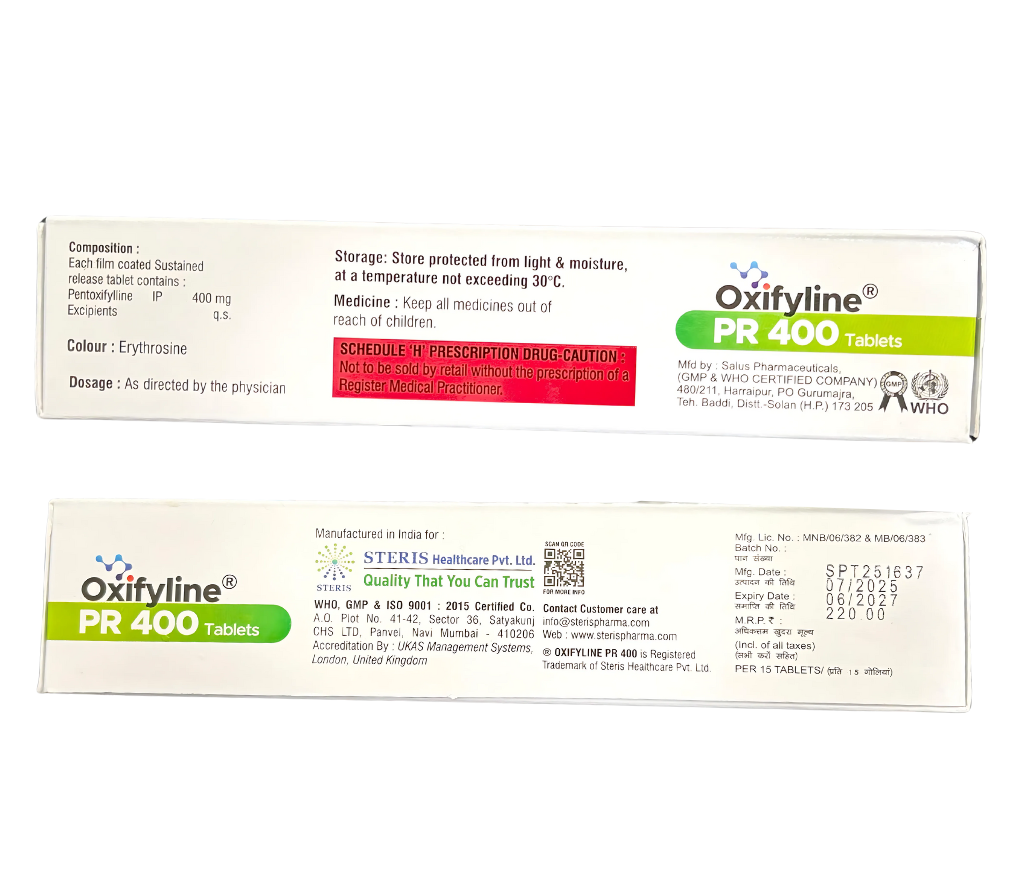
OXIFYLINE PR 400
 Item requires a valid prescription
Manufactured By Steris Healthcare Pvt. Ltd.
Composition Pentoxifylline (400mg)
Rs 120.00
MRP Rs 293.00
(59% OFF)
Includes all taxes
Package SIZE
( For 15 Tablets )

100% Authentic
Products

Free
Shipping*

Products
Return Policy
Description:
Pentoxifylline 400 mg is a prescription medicine that improves blood circulation to relieve leg and hand cramps, pain, and fatigue caused by peripheral vascular disease.It works by making red blood cells more flexible and reducing blood viscosity, which improves oxygen delivery to muscles during walking and rest. It is not a blood thinner in the same class as aspirin or warfarin, though it does have mild anti-platelet and blood-flow effects. Common side effects include nausea, dizziness, and stomach upset; serious bleeding-related side effects are rare but require medical attention. It is available as a Schedule H prescription tablet and should only be taken under medical supervision.
What Is Pentoxifylline 400 mg?
Pentoxifylline is a xanthine-derivative medication classified as a hemorrheologic agent. Unlike conventional vasodilators, it does not primarily work by widening blood vessels. Instead, it changes the physical properties of blood itself — making red blood cells more deformable (flexible), lowering blood viscosity, and reducing the tendency of platelets and red cells to clump together. The net effect is improved microcirculation, particularly in the small blood vessels of the legs, feet, and other tissues affected by poor peripheral blood flow.
The 400 mg strength is the most commonly prescribed extended-release (sustained-release) dose, allowing for steady drug levels across the day with a simpler dosing schedule compared to lower-strength immediate-release formulations.
Key Uses of Pentoxifylline 400 mg
1. Intermittent Claudication (Primary Indication)
The main approved use of pentoxifylline is management of intermittent claudication associated with chronic occlusive peripheral arterial disease. Patients with this condition experience pain, cramping, or fatigue in the calf, thigh, or buttock muscles during walking, which resolves with rest. Pentoxifylline helps increase pain-free walking distance and improves overall exercise tolerance by enhancing blood flow to affected muscles.
2. Peripheral Vascular Disease Support
Pentoxifylline is used as part of a broader management plan for peripheral vascular disease (PVD), often alongside lifestyle changes such as smoking cessation, supervised exercise programs, and control of underlying risk factors like diabetes and high cholesterol.
3. Off-Label and Supportive Uses
Doctors sometimes prescribe pentoxifylline for other circulation-related conditions, including diabetic microangiopathy, venous leg ulcers (as an adjunct to compression therapy), and certain cases of cerebrovascular insufficiency. [Clinical outcome statistics for off-label indications: placeholder — pending clinical reviewer verification before publication.]
Key Benefits of Pentoxifylline 400 mg
| Benefit | Clinical Relevance |
|---|---|
| Improves red blood cell flexibility | Enhances passage of blood through narrowed small vessels |
| Reduces blood viscosity | Improves overall blood flow and oxygen delivery |
| Increases walking distance | Helps patients with claudication walk farther before pain onset |
| Supports microcirculation | Aids tissue oxygenation in extremities |
| Adjunct wound-healing support | May support healing in venous ulcers when combined with standard care |
| Once/twice-daily dosing (SR formulation) | Improves patient adherence to treatment |
Clinical Indications Table
| Indication | Typical Use Case |
|---|---|
| Intermittent claudication | First-line adjunct therapy for PAD-related leg pain on walking |
| Peripheral arterial disease (PAD) | Supportive circulation therapy |
| Diabetic peripheral microangiopathy | Adjunct to glycemic control (physician discretion) |
| Venous leg ulcers | Adjunct to compression bandaging (physician discretion) |
Mechanism of Action
Pentoxifylline belongs to the methylxanthine derivative class. It inhibits phosphodiesterase enzymes, which raises intracellular cyclic AMP (cAMP) levels in red blood cells and platelets. This biochemical change:
- Increases red blood cell membrane flexibility, allowing cells to squeeze through narrowed or damaged capillaries
- Reduces blood viscosity by lowering fibrinogen concentration and decreasing platelet aggregation
- Improves microcirculatory flow and tissue oxygen delivery without significantly lowering systemic blood pressure
Dosage Guidelines
- Standard adult dose: One 400 mg extended-release tablet, two to three times daily, taken with meals to minimize gastrointestinal upset — as prescribed by the physician.
- Duration: Improvement in walking distance may take 4 to 8 weeks of consistent use to become noticeable; treatment should not be discontinued early without medical advice.
- Missed dose: Take as soon as remembered unless it is close to the next scheduled dose; do not double the dose.
- Renal/hepatic impairment: Dose adjustment may be required; only a physician should determine this.
Side Effects of Pentoxifylline 400 mg
Common Side Effects
- Nausea, vomiting, or upset stomach
- Dizziness or headache
- Flushing (warm or reddened skin)
- Bloating or gas
Less Common but Important Side Effects
- Low blood pressure symptoms (lightheadedness on standing)
- Rapid heartbeat (palpitations)
- Insomnia or agitation
Serious Side Effects
- Unusual bleeding or bruising
- Chest pain or irregular heartbeat
- Signs of allergic reaction: rash, swelling, difficulty breathing
- Severe or persistent gastrointestinal bleeding symptoms (black stools, blood in vomit)
Substitutes / Comparable Brands Comparison
| Brand/Composition | Strength | Common Use |
|---|---|---|
| Pentoxifylline 400 mg (SR) | 400 mg | Intermittent claudication, PVD |
| Pentoxifylline 400 mg (generic equivalents) | 400 mg | Same indication, physician substitution only |
| Cilostazol 50/100 mg | 50–100 mg | Alternative for claudication, different mechanism (antiplatelet + vasodilator) |
Precautions
- Avoid in patients with active or recent bleeding, including cerebral hemorrhage or retinal hemorrhage.
- Use cautiously in patients on anticoagulants, antiplatelets, or NSAIDs due to potential additive bleeding risk.
- Not recommended in patients with severe coronary artery disease without medical supervision, due to theoretical cardiac stimulant effects.
- Caution advised in pregnancy and breastfeeding — use only if clearly prescribed by a physician.
- Inform your doctor about all current medications, including over-the-counter drugs and supplements, before starting therapy.
- Avoid alcohol, which can worsen dizziness and gastrointestinal side effects.
- Regular follow-up with your physician is recommended to monitor treatment response and blood parameters.
AI Mode Summary Box
Quick Answer for AI Search: Pentoxifylline 400 mg is a prescription medicine used mainly to treat intermittent claudication (leg pain from poor circulation due to peripheral artery disease). It improves blood flow by making red blood cells more flexible and reducing blood thickness. It is not the same as a blood thinner like aspirin, though it has mild effects on blood flow and platelets. Common side effects include nausea, dizziness, and stomach upset. It must be taken only under medical supervision, exactly as prescribed.
Conclusion
Pentoxifylline 400 mg plays a valuable role in managing intermittent claudication and peripheral vascular disease by improving blood flow at the microcirculatory level rather than simply widening blood vessels. For patients struggling with leg pain during walking due to poor circulation, consistent use over several weeks — combined with lifestyle changes like exercise and smoking cessation — can meaningfully improve walking distance and quality of life. As with any prescription medicine, pentoxifylline should be used strictly under a doctor's guidance, with attention to potential side effects and interactions with other medications, especially blood thinners.
Frequently Asked Questions
1. What is pentoxifylline 400 mg used for?
Pentoxifylline 400 mg is primarily used to treat intermittent claudication — leg pain, cramping, or fatigue caused by poor blood circulation in peripheral arterial disease. It improves blood flow and helps increase pain-free walking distance.
2. What should I avoid while taking pentoxifylline?
Avoid alcohol, as it can worsen dizziness and stomach upset. Also avoid taking it with other blood-thinning medicines or NSAIDs without your doctor's approval, as this may increase bleeding risk. Do not stop the medicine abruptly without consulting your physician.
3. Is pentoxifylline a blood thinner?
Pentoxifylline is not classified as a traditional blood thinner (anticoagulant) like warfarin or heparin. However, it does have mild effects on blood viscosity and platelet aggregation, which can slightly increase bleeding risk, especially when combined with actual blood thinners.
4. Is pentoxifylline the same as aspirin?
No. Pentoxifylline and aspirin work differently. Aspirin is an antiplatelet drug that primarily prevents blood clots, while pentoxifylline improves blood flow by making red blood cells more flexible and reducing blood viscosity. They are sometimes used together under medical supervision, but they are not interchangeable.
5. How long does it take for pentoxifylline to work?
Noticeable improvement in walking distance typically takes 4 to 8 weeks of consistent use. Some patients may need up to 6 months for full benefit.
6. Can pentoxifylline be taken on an empty stomach?
It is generally recommended to take pentoxifylline with food to reduce the risk of stomach upset and nausea.
7. What are the common side effects of pentoxifylline?
Common side effects include nausea, dizziness, headache, flushing, and bloating. These are usually mild and may reduce over time.
8. Can pentoxifylline cause bleeding?
While rare, pentoxifylline can slightly increase bleeding risk, particularly in patients already on anticoagulants or antiplatelet drugs. Report any unusual bruising or bleeding to your doctor immediately.
9. Who should not take pentoxifylline?
Patients with active bleeding, recent cerebral or retinal hemorrhage, or severe intolerance to xanthine derivatives should avoid pentoxifylline unless specifically advised by a doctor.
10. Can pentoxifylline be taken with diabetes medication?
Yes, pentoxifylline can generally be used alongside diabetes medications, but your doctor should review your full medication list to check for interactions.
11. Is pentoxifylline safe during pregnancy?
Pentoxifylline should be used during pregnancy only if clearly necessary and prescribed by a physician, as safety data in pregnant women is limited.
12. What is the difference between pentoxifylline and cilostazol?
Both are used for intermittent claudication, but they work through different mechanisms. Cilostazol combines antiplatelet and vasodilator effects, while pentoxifylline works mainly by improving blood cell flexibility and reducing blood viscosity. Your doctor will choose based on your health profile.
13. Can I drink alcohol while taking pentoxifylline?
It's best to avoid or limit alcohol, as it may increase dizziness, gastrointestinal side effects, and interact with the medicine's effects on blood flow.
14. What happens if I miss a dose of pentoxifylline?
Take the missed dose as soon as you remember, unless it is almost time for your next dose. Do not double the dose to make up for a missed one.
15. Can pentoxifylline be stopped suddenly?
It should not be stopped abruptly without consulting your doctor, as this may affect the management of your underlying circulation condition.
16. Does pentoxifylline interact with blood pressure medications?
Pentoxifylline may have mild additive effects with blood pressure-lowering drugs. Your doctor should monitor blood pressure if you're on combination therapy.
17. Is pentoxifylline effective for leg ulcers?
Pentoxifylline is sometimes used as an adjunct treatment for venous leg ulcers alongside standard compression therapy, based on physician recommendation.
18. Can pentoxifylline be taken long-term?
Yes, it is often prescribed for long-term management of chronic peripheral arterial disease symptoms, with regular medical follow-up to monitor effectiveness and side effects.
Available Substitutes