


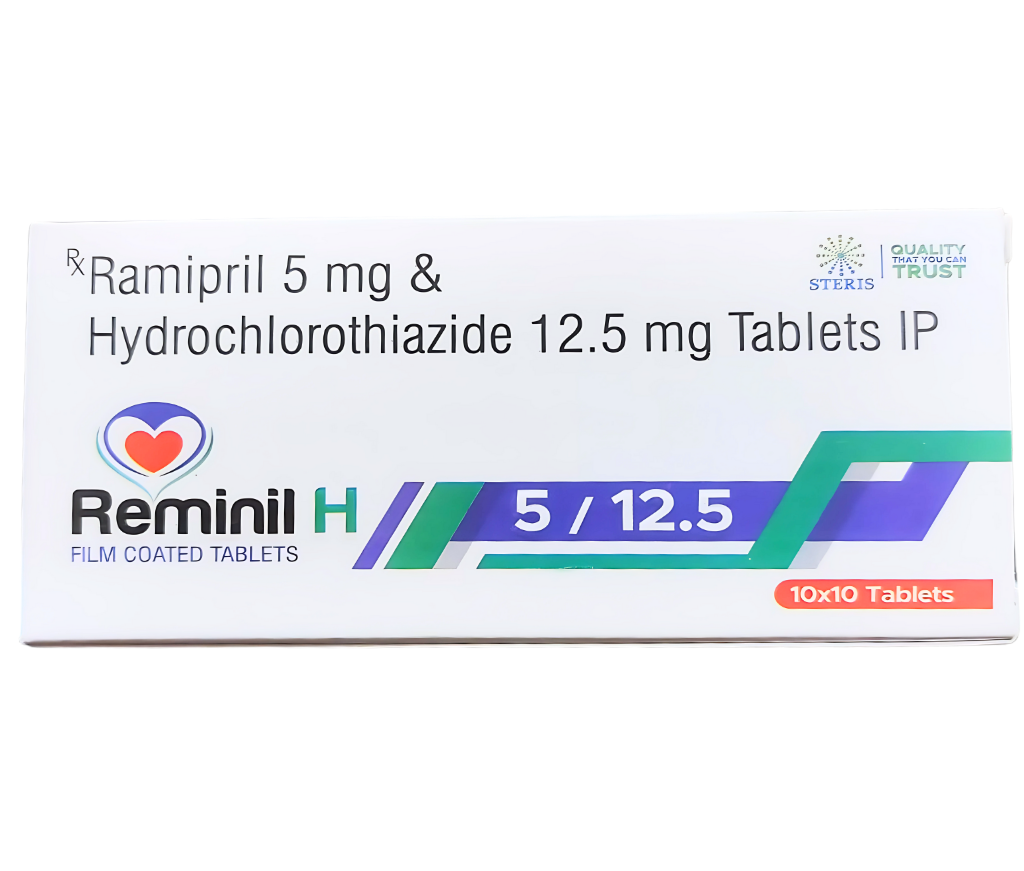
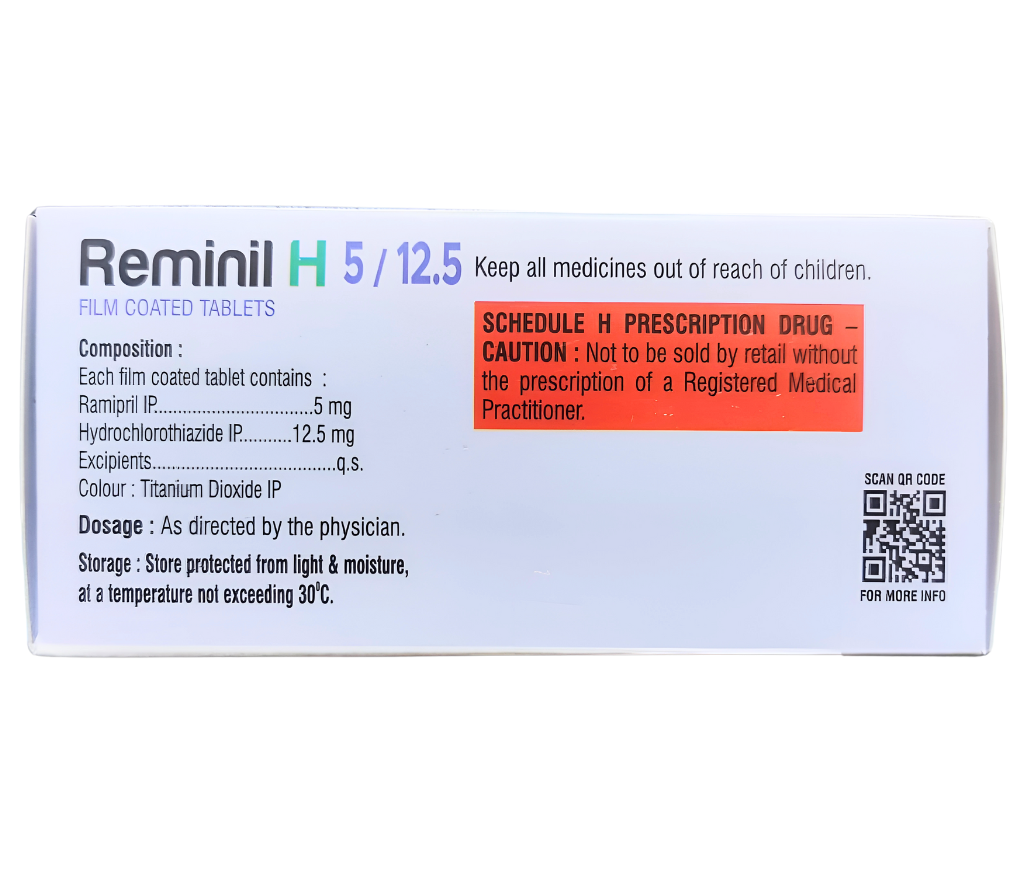
REMINIL H 5 / 12.5
 Item requires a valid prescription
Manufactured By Steris Healthcare Pvt Ltd
Composition Ramipril (5mg), Hydrochlorothiazide (12.5mg)
Rs 143.56
MRP Rs 148.00
(3% OFF)
Includes all taxes
Package SIZE
( for 10 tablets )

100% Authentic
Products

Free
Shipping*

Products
Return Policy
Description:
Ramipril/hydrochlorothiazide is a blood-pressure treatment that combines two medicines with complementary actions: ramipril, an angiotensin-converting enzyme (ACE) inhibitor, and hydrochlorothiazide (HCTZ), a thiazide diuretic or “water pill.” The combination is primarily used to help control high blood pressure (hypertension) when treatment with more than one medicine is appropriate.
Ramipril reduces the activity of hormones that narrow blood vessels, helping blood vessels relax. Hydrochlorothiazide helps the kidneys remove excess sodium and water through urine. Together, these effects can reduce blood pressure through two different pathways. Current hypertension guidance supports combining a renin-angiotensin-system blocker such as an ACE inhibitor with a thiazide-type diuretic when clinically appropriate.
If you are researching ramipril hydrochlorothiazide tablets, ramipril hydrochlorothiazide uses, benefits, side effects, dosage, or price, this guide explains the important points to consider before purchasing or using the medicine.
What Is Ramipril Hydrochlorothiazide Used For?
The principal use of ramipril hydrochlorothiazide is the treatment of hypertension (high blood pressure).
Ramipril is an ACE inhibitor that lowers blood pressure by reducing substances that cause blood vessels to tighten. Hydrochlorothiazide works as a diuretic, increasing the elimination of salt and water through the kidneys.
Lowering persistently high blood pressure is important because uncontrolled hypertension can damage the heart, brain, blood vessels, and kidneys and increase the risk of cardiovascular events.
The U.S. prescribing information for ramipril states that ramipril can be used alone or in combination with thiazide diuretics for hypertension.
How Does Ramipril Hydrochlorothiazide Work?
The two ingredients approach blood-pressure control differently:
-
Ramipril: Blocks the ACE pathway, reducing production of angiotensin II, a substance that constricts blood vessels.
-
Hydrochlorothiazide: Helps the kidneys remove sodium and water, reducing fluid volume and contributing to lower blood pressure.
This complementary action is one reason an ACE inhibitor and thiazide-type diuretic may be used together.
The 2025 AHA/ACC hypertension guideline recognizes a renin-angiotensin-system blocker plus a thiazide-type diuretic as an evidence-supported combination. For adults who require two medicines, single-pill combinations can also improve convenience and adherence when an appropriate combination and dose are available.
Key Benefits of Ramipril Hydrochlorothiazide
1. Effective Blood-Pressure Control
The main benefit is helping bring elevated blood pressure toward the target selected by your healthcare professional.
Using two medicines with different mechanisms may provide greater blood-pressure reduction than relying on one medicine when monotherapy is insufficient.
2. Complementary Mechanisms
Ramipril works on the renin-angiotensin system, while hydrochlorothiazide promotes sodium and water excretion. Their different mechanisms make the combination clinically useful for appropriate patients.
3. May Simplify Treatment
When available as an appropriately prescribed fixed-dose product, combining two active ingredients in one tablet can reduce the number of separate tablets a patient needs to remember.
The 2025 AHA/ACC guideline notes that single-pill combination treatment can improve adherence and blood-pressure control in patients who need multiple agents.
4. May Be Useful When One Medicine Is Not Enough
Some patients do not achieve adequate blood-pressure control with a single antihypertensive. In such cases, adding a second class can be a logical next step under medical supervision.
Current guidance emphasizes that many patients require two or more antihypertensive medications to achieve appropriate blood-pressure control.
Ramipril Hydrochlorothiazide Side Effects
Like every prescription medicine, ramipril hydrochlorothiazide can cause side effects.
Because the product contains two active medicines, adverse effects can be associated with either ramipril or hydrochlorothiazide.
Common Ramipril-Related Side Effects
Ramipril may cause:
-
Dizziness
-
Headache
-
Dry cough
-
Upset stomach
-
Vomiting
-
Weakness or tiredness
MedlinePlus also warns that swelling involving the face, lips, tongue, throat, or other areas and difficulty breathing can indicate a serious reaction requiring immediate medical attention.
Hydrochlorothiazide-Related Side Effects
Hydrochlorothiazide may cause:
-
Increased urination
-
Dizziness or light-headedness
-
Weakness
-
Electrolyte changes
-
Dehydration
-
Increased sensitivity to sunlight
Hydrochlorothiazide can affect electrolyte levels and may require monitoring in certain patients. It can also increase uric acid, which is particularly relevant for people with a history of gout.
Serious Side Effects and Warning Signs
Some symptoms should not be ignored.
Seek urgent medical attention if you develop sudden swelling of the face, lips, tongue, or throat; difficulty breathing or swallowing; severe fainting; or another potentially serious allergic reaction.
Ramipril carries an important pregnancy warning. Current U.S. prescribing information states that drugs acting directly on the renin-angiotensin system can cause fetal injury or death and that ramipril should be discontinued when pregnancy is detected.
Hydrochlorothiazide also requires caution in pregnancy and in people with certain kidney, liver, electrolyte, or metabolic conditions.
Who Should Avoid or Use Ramipril Hydrochlorothiazide With Caution?
Tell your doctor before using this medicine if you have:
-
Kidney disease
-
Liver disease
-
Diabetes
-
Gout or high uric acid
-
Low sodium or potassium levels
-
Previous angioedema
-
Low blood pressure
-
Heart problems
-
A history of significant dehydration
-
Pregnancy or plans to become pregnant
Your healthcare professional should also know about every prescription medicine, over-the-counter product, vitamin, and supplement you take.
Because ramipril can affect kidney function and potassium, laboratory monitoring may be appropriate. Hydrochlorothiazide can produce changes in sodium, potassium, and other electrolytes, so monitoring may also be required depending on your health and treatment. The current hypertension guideline specifically recommends monitoring for electrolyte abnormalities and metabolic effects associated with hydrochlorothiazide.
Ramipril Hydrochlorothiazide Dosage
There is no single correct ramipril hydrochlorothiazide dosage for everyone.
Your doctor may determine the dose based on the following:
-
Current blood-pressure readings
-
Previous antihypertensive treatment
-
Kidney function
-
Age and overall health
-
Electrolyte levels
-
Response to treatment
-
Other medicines you take
Ramipril prescribing information emphasizes individualized dosing and monitoring, and the medicine should be taken exactly as prescribed.
Do not increase the dose because your blood pressure remains high, and do not stop treatment suddenly without professional advice.
If you forget a dose, follow the instructions provided with your specific product or ask your pharmacist. Never take an extra dose simply to compensate unless your healthcare professional specifically tells you to do so.
Ramipril, Hydrochlorothiazide, and Drug Interactions
Interactions can be particularly important with medicines that affect blood pressure, kidney function, potassium, or fluid balance.
Tell your healthcare professional if you take medicines such as:
-
Other blood-pressure medicines
-
Potassium supplements
-
Potassium-sparing diuretics
-
Certain pain medicines, including some NSAIDs
-
Lithium
-
Diabetes medicines
-
Other diuretics
-
Medicines affecting the renin-angiotensin system
Combining ACE inhibitors with ARBs or direct renin inhibitors is generally not recommended because of increased risks including kidney problems and abnormal potassium levels. The 2025 AHA/ACC guideline specifically advises against simultaneous use of an ACE inhibitor with an ARB or direct renin inhibitor.
Buying Ramipril Hydrochlorothiazide: What Should You Check?
If your search is transactional—for example, “buy ramipril hydrochlorothiazide,” “ramipril hydrochlorothiazide price,” “ramipril hydrochlorothiazide tablets online,” or “ramipril HCTZ available near me”—do not make price the only purchasing factor.
Before buying, check:
-
Prescription and strength: Confirm that the product matches the strength prescribed for you.
-
Active ingredients: Verify that the medicine contains the correct ramipril and hydrochlorothiazide amounts.
-
Manufacturer: Check the manufacturer and packaging details.
-
Expiry date: Never purchase or use an expired product.
-
Packaging: Avoid products with damaged, altered, or suspicious packaging.
-
Pharmacy legitimacy: Use a properly authorized pharmacy rather than an unknown online seller.
-
Storage: Follow the product's storage requirements.
-
Product registration: For purchases in India, verify relevant regulatory information where applicable.
India's Central Drugs Standard Control Organisation (CDSCO) maintains information on fixed-dose combinations and their regulatory framework, including current regulatory notices and lists. Its official database should be consulted when regulatory status is important.
Do not assume that every website advertising a “ramipril hydrochlorothiazide” product is selling a product with the same strength, formulation, or regulatory status.
Ramipril/Hydrochlorothiazide vs Taking the Medicines Separately
A fixed-dose combination can offer convenience, but it is not automatically the best choice for every patient.
Taking the medicines separately can allow a clinician to adjust the ramipril and hydrochlorothiazide doses independently. A fixed-dose product may be convenient when the patient is already stable on the corresponding doses.
The right choice depends on blood-pressure response, tolerability, availability, and the specific strengths required.
Current hypertension guidance supports combination therapy when clinically indicated but also emphasizes individualized treatment and appropriate monitoring.
Expert Takeaway for Buyers
For someone searching for ramipril hydrochlorothiazide, the most important purchasing decision is not simply finding the cheapest listing. The better approach is to confirm the exact prescribed strength, legitimate pharmacy source, manufacturer, expiry date, and active ingredients.
From an evidence-based perspective, ramipril and hydrochlorothiazide are established antihypertensive agents with complementary mechanisms. Ramipril reduces activity within the renin-angiotensin system, while hydrochlorothiazide promotes sodium and water excretion.
Because the combination can influence blood pressure, kidney function, and electrolytes, medical supervision remains important.
Frequently Asked Questions
1. What is ramipril hydrochlorothiazide used for?
Ramipril/hydrochlorothiazide is used primarily to treat high blood pressure. Ramipril is an ACE inhibitor, while hydrochlorothiazide is a thiazide diuretic. Their complementary effects can help lower blood pressure when combination therapy is appropriate.
2. What are the main benefits of ramipril hydrochlorothiazide?
The main benefit is improved blood-pressure control through two different mechanisms. Ramipril relaxes blood vessels by inhibiting ACE, while hydrochlorothiazide helps the body eliminate sodium and water through the kidneys.
3. What are the common side effects of ramipril hydrochlorothiazide?
Possible side effects include dizziness, headache, dry cough, weakness, increased urination, dehydration, and electrolyte changes. The exact effects and severity vary between patients.
4. Can ramipril hydrochlorothiazide cause low potassium?
Hydrochlorothiazide can lower potassium, while ACE inhibitors such as ramipril can increase potassium in some patients. The overall effect varies, which is why healthcare professionals may monitor potassium and kidney function during treatment.
5. Can I take ramipril hydrochlorothiazide during pregnancy?
Ramipril should not be used during pregnancy. If you become pregnant while taking a ramipril-containing medicine, contact your healthcare professional promptly. Ramipril carries a fetal-toxicity warning.
6. Does ramipril hydrochlorothiazide make you urinate more?
It can. Hydrochlorothiazide is a diuretic, meaning it causes the kidneys to remove additional sodium and water into the urine.
7. Can I buy ramipril hydrochlorothiazide online?
Availability and prescription requirements vary by country. If buying online, use a legitimate pharmacy and verify the exact prescribed strength, active ingredients, manufacturer, and expiry date. Avoid websites that offer prescription medicines without appropriate safeguards.
8. Is ramipril hydrochlorothiazide better than ramipril alone?
Not necessarily for every patient. Combination treatment can provide additional blood-pressure reduction when one medicine is insufficient, but whether it is preferable depends on the individual's blood pressure, medical history, kidney function, electrolyte levels, and tolerance.
Conclusion
Ramipril hydrochlorothiazide combines an ACE inhibitor with a thiazide diuretic to provide complementary blood-pressure-lowering effects. Its primary use is hypertension, and its potential advantages include stronger blood-pressure control when one medicine alone is insufficient and the convenience of combination treatment when an appropriate fixed-dose product is prescribed.
The most important ramipril-hydrochlorothiazide side effects to understand include dizziness, cough, weakness, increased urination, dehydration, and electrolyte abnormalities. Serious symptoms such as facial or throat swelling or difficulty breathing require urgent medical attention. Pregnancy is an especially important safety consideration because ramipril can cause fetal harm.
For buyers, prioritize prescription accuracy, product authenticity, pharmacy legitimacy, and correct strength over the lowest advertised price. Current hypertension guidance supports the use of complementary antihypertensive classes, including an ACE inhibitor with a thiazide-type diuretic, for appropriate patients.