


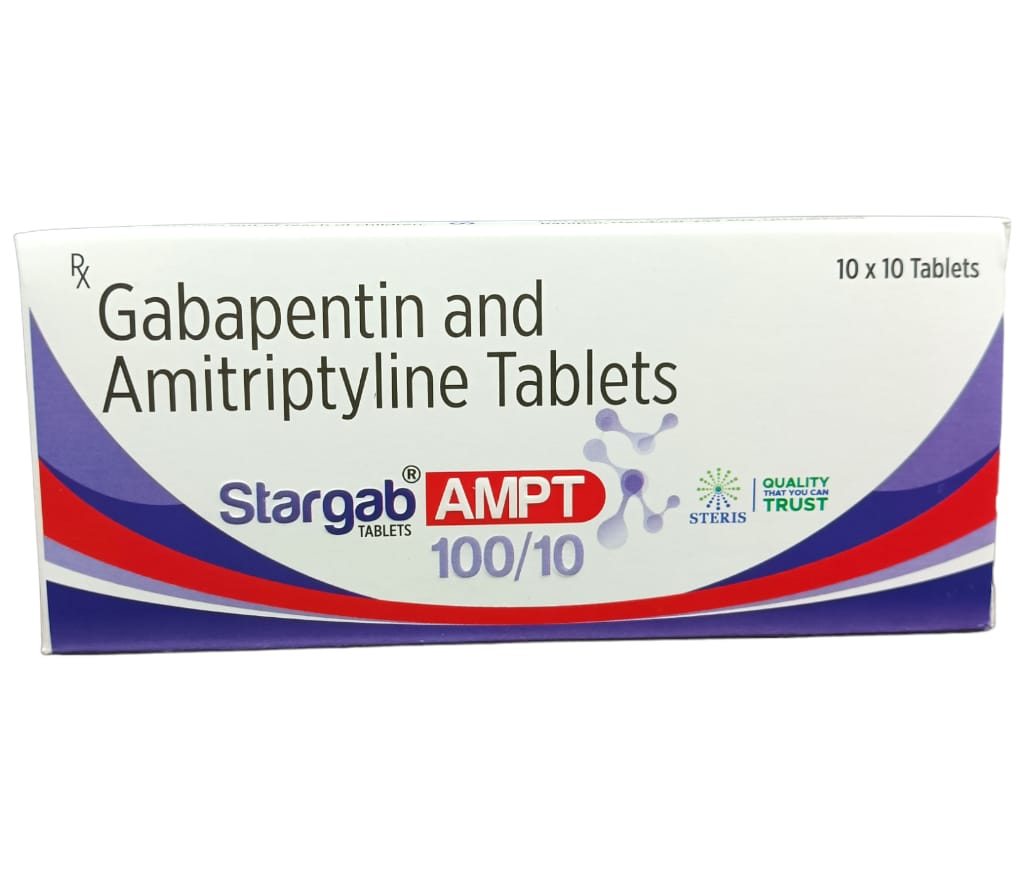
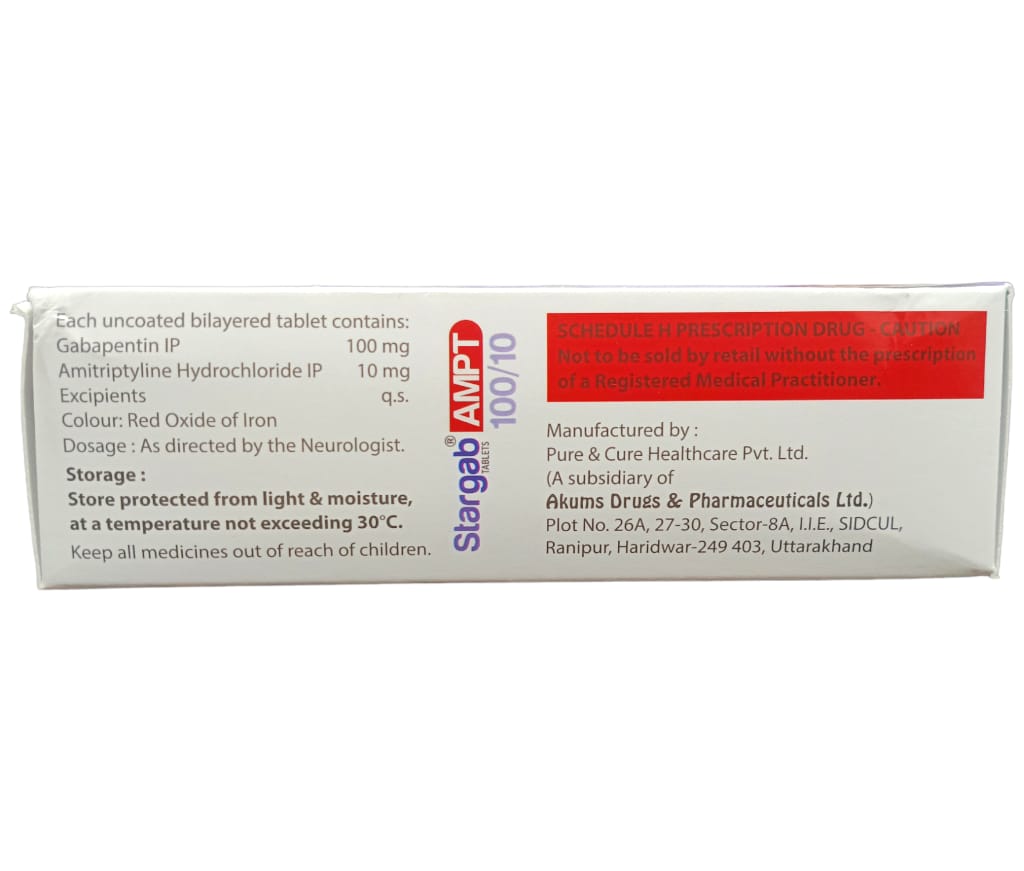
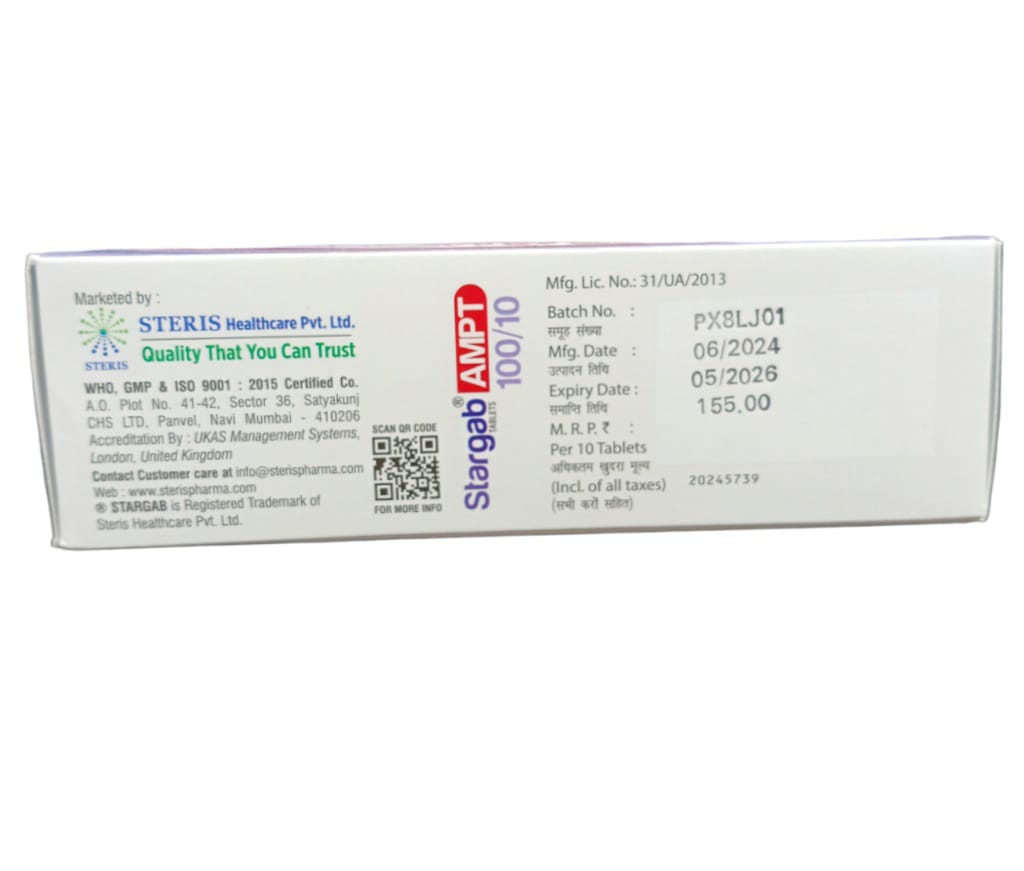
STARGAB AMPT 100/10
 Item requires a valid prescription
Manufactured By Steris Healthcare Pvt Ltd
Composition Gabapentine (100mg) & Amitriptyline Hydrochloride (10mg)
Rs 101.71
MRP Rs 145.30
(30% OFF)
Includes all taxes
Package SIZE
( For 10 Tablet )

100% Authentic
Products

Free
Shipping*

Products
Return Policy
Description:
Gabapentin 100mg & Amitriptyline Hydrochloride 10 mg is a prescription combination used in some markets and clinical settings for managing certain types of neuropathic (nerve) pain. The two medicines work through different mechanisms, which can make the combination useful when nerve pain is persistent or when treatment with a single medicine does not provide adequate relief.
Neuropathic pain can feel different from ordinary muscle or inflammatory pain. Patients may describe it as burning, shooting, electric-shock-like, tingling, stabbing, or painful sensitivity to touch. Conditions associated with nerve pain can include diabetic peripheral neuropathy, post-herpetic neuralgia, and other nerve-related pain disorders. Treatment should be selected according to the underlying diagnosis and an individual's medical history.
NICE guidance recommends amitriptyline, gabapentin, duloxetine, or pregabalin as initial pharmacological options for many adults with neuropathic pain, with treatment choice based on effectiveness, tolerability, comorbidities, concurrent medications, and patient preference
What Are Gabapentin 100 mg & Amitriptyline Hydrochloride 10 mg?
This combination contains two active pharmaceutical ingredients:
- Gabapentin 100mg – a medicine that affects calcium-channel-related signaling in the central nervous system and is used for certain neuropathic pain conditions.
- Amitriptyline Hydrochloride 10 mg – a tricyclic antidepressant that is also commonly used at lower doses for neuropathic pain.
Although amitriptyline is widely recognized as an antidepressant, healthcare professionals may prescribe it for neuropathic pain. NICE specifically notes that some medicines used for neuropathic pain may be prescribed off-label depending on the indication and jurisdiction. NICE
Importantly, the availability, formulation, approved indication, and prescription status of a fixed-dose Gabapentin 100mg & Amitriptyline The hydrochloride 10 mg product can vary by country and manufacturer. Patients should check the product label and follow the prescription provided by their healthcare professional.
How Do Gabapentin 100 mg & Amitriptyline Hydrochloride 10 mg Work?
The combination brings together two different approaches to nerve-pain management.
Gabapentin influences neuronal signaling and can reduce abnormal nerve excitability associated with neuropathic pain. Amitriptyline influences neurotransmitter signaling, including pathways involved in the processing and modulation of pain.
Using medicines with different mechanisms may be considered when neuropathic pain is not adequately controlled with one medicine alone. Evidence and guidelines support the use of gabapentin and amitriptyline as established options for neuropathic pain, although the best treatment varies between individuals.
A clinical trial evaluating combination approaches for neuropathic pain found that combination treatment could provide additional pain relief for some patients whose pain was inadequately controlled with monotherapy, although treatment selection and tolerability remain important. PubMed
Gabapentin 100mg & Amitriptyline Hydrochloride 10mg Uses
The primary clinical interest in this combination is neuropathic pain management.
Depending on the patient's diagnosis and local prescribing practices, a healthcare professional may consider treatment for conditions involving nerve-related pain, such as
- Diabetic peripheral neuropathic pain
- Post-herpetic neuralgia
- Other forms of peripheral neuropathic pain
- Burning, shooting, tingling, or electric-type nerve pain
However, this does not mean the combination is appropriate for every type of pain. Ordinary headaches, simple muscle soreness, acute injuries, or nonspecific back pain may require entirely different treatment.
The cause of pain should be established before treatment. NICE recommends assessing pain severity, its effect on daily activities and sleep, underlying disease, concurrent medicines, expected benefits, and possible adverse effects when selecting pharmacological therapy. NICE
Key Benefits of Gabapentin 100mg & Amitriptyline Hydrochloride 10mg
Potential benefits depend on the underlying condition and individual response.
1. Targets neuropathic pain
The combination is designed around medicines commonly used for nerve pain rather than conventional inflammatory pain.
2. Uses two different mechanisms
Gabapentin and amitriptyline affect nerve signaling differently. A clinician may consider this approach when one medicine alone does not provide satisfactory pain control.
3. May help improve sleep affected by nerve pain
Neuropathic pain can interfere with sleep. Amitriptyline can be sedating, and reducing nighttime pain may indirectly improve sleep for some patients. This benefit must be balanced against daytime drowsiness and other adverse effects.
4. May improve day-to-day functioning when pain is controlled
Effective management of neuropathic pain can potentially make routine activities, movement, and sleep easier. NICE recommends reviewing not only pain intensity but also lifestyle, daily activities, sleep, well-being, adverse effects, and continued treatment needs. NICE
5. Low-dose formulation may be used during individualized treatment
A 100mg gabapentin and 10mg amitriptyline formulation represents relatively low strengths of the individual ingredients. Nevertheless, the appropriate dose and dosing schedule must be determined by a healthcare professional, because patient factors such as age, kidney function, other medicines, diagnosis, and treatment response can affect prescribing.
Gabapentin 100mg & Amitriptyline Hydrochloride 10mg Side Effects
Like all prescription medicines, this combination can cause side effects. Because it contains two active ingredients, side effects associated with either medicine may occur.
Common or potentially troublesome effects can include:
- Drowsiness or sleepiness
- Dizziness
- Fatigue or weakness
- Dry mouth
- Constipation
- Blurred vision
- Nausea
- Difficulty concentrating
- Changes in coordination or balance
- Increased appetite or weight changes
Current DailyMed information for amitriptyline lists adverse reactions, including drowsiness, dizziness, fatigue, dry mouth, constipation, blurred vision, orthostatic hypotension, tachycardia, and other cardiovascular and nervous-system effects.
Gabapentin is also associated with dizziness and somnolence. FDA safety information warns that gabapentin can contribute to serious respiratory depression, particularly when combined with central nervous system depressants such as opioids or in people with underlying respiratory impairment. U.S. Food and Drug Administration +1
Important Safety Precautions
Because both medicines can affect the central nervous system, extra caution is appropriate when starting or changing treatment.
Avoid driving or operating machinery until you know how the medicine affects you. Drowsiness, dizziness, blurred vision, impaired concentration, or reduced coordination can make driving unsafe.
Tell your healthcare professional about all prescription medicines, over-the-counter medicines, supplements, and alcohol use. Combining gabapentin with other sedating medicines can increase central nervous system depression. FDA safety information specifically identifies opioids and other CNS depressants as important respiratory-depression risk factors. U.S. Food and Drug Administration
People with kidney impairment may require particular attention because gabapentin is eliminated through the kidneys and dosing may need adjustment. FDA Access Data
Do not abruptly discontinue gabapentin without medical advice. Gabapentin-containing treatments generally need gradual withdrawal when discontinuation is appropriate because abrupt changes can cause problems, including withdrawal symptoms or increased seizure risk in susceptible patients. FDA Access Data
Amitriptyline also requires individualized consideration in people with cardiovascular disease, glaucoma, urinary-retention problems, seizure disorders, or certain psychiatric conditions.
Who Should Avoid or Use Extra Caution With This Combination?
A doctor or pharmacist should review the complete medical history before prescribing. Particular caution may be necessary for people who:
- Have significant kidney disease
- Have breathing problems
- Take opioids, benzodiazepines, sleeping medications, or other sedatives
- Have heart rhythm or cardiovascular conditions
- Have glaucoma or urinary-retention problems
- Are older and more susceptible to dizziness or falls
- Have a history of medication misuse or dependence
- Are pregnant, planning pregnancy, or breastfeeding
- Take multiple medicines that affect the nervous system
This is particularly important because the overall sedative effect can increase when medicines with central nervous system effects are combined.
How Should Gabapentin 100mg & Amitriptyline Hydrochloride 10mg Be Taken?
Take this medicine exactly as prescribed. Do not increase, decrease, or change the frequency without professional advice.
The correct schedule depends on the specific product, indication, patient characteristics, and prescriber's instructions. Do not assume that the dose of one gabapentin formulation can automatically be substituted for another because different formulations may have different pharmacokinetic characteristics. FDA Access Data
If a dose is missed, follow the instructions supplied with the product or ask a pharmacist rather than automatically taking an additional dose.
Are Gabapentin 100 mg & Amitriptyline Hydrochloride 10 mg Suitable for Everyone?
No. Neuropathic pain has multiple causes, and there is no single medicine that works equally well for every patient.
NICE recommends regular review after treatment begins or changes, including evaluation of pain control, adverse effects, daily functioning, sleep, well-being, and continued need for treatment. NICE
A combination treatment may be considered when the expected benefit outweighs the potential risks. The decision should be based on diagnosis, previous treatments, treatment response, other medical conditions, and concurrent medicines.
Buying and Prescription Considerations
Because Gabapentin 100 mg & Amitriptyline Hydrochloride 10 mg contain prescription medicines, purchase and dispensing requirements depend on the country in which the medicine is supplied.
Consumers should verify the product's
- Exact active ingredients and strengths
- Manufacturer and packaging
- Batch and expiry information
- Regulatory status in their country
- Prescription requirements
- Pharmacy or supplier credentials
Avoid relying solely on product descriptions or claims such as “strongest,” “fastest,” or “best nerve-pain medicine.” A trustworthy product page should provide transparent ingredient information, appropriate safety warnings, and access to qualified medical or pharmacy advice.
E-E-A-T and Medical Information Note
For health-related product content, accuracy and transparency are more important than making exaggerated ranking claims. Product information should distinguish between established medical uses, guideline-supported treatment options, and individual clinical decisions.
NICE recognizes gabapentin and amitriptyline as treatment options for neuropathic pain, while current FDA and DailyMed information provides important safety information about adverse effects, drug interactions, respiratory depression, and discontinuation.
This content is educational and is not a substitute for diagnosis or individualized medical advice. A healthcare professional should determine whether this combination is appropriate for a particular patient.
Conclusion
Gabapentin 100mg & Amitriptyline Hydrochloride 10 mg combines two medicines that are used in the management of neuropathic pain. Its potential advantages come from the different ways gabapentin and amitriptyline influence pain signaling, and combination treatment may be considered for patients who do not achieve adequate relief from one medicine alone.
At the same time, this is not a risk-free pain medicine. Drowsiness, dizziness, dry mouth, constipation, blurred vision, impaired concentration, and other adverse effects can occur. Gabapentin also carries an important warning concerning respiratory depression when used with opioids or other CNS depressants or in people with respiratory risk factors. U.S. Food and Drug Administration +1
The safest approach is to use Gabapentin 100 mg & Amitriptyline Hydrochloride 10 mg only when prescribed or recommended by an appropriate healthcare professional, follow the prescribed dosage, disclose other medicines and health conditions, and attend follow-up reviews to assess effectiveness and tolerability.
Frequently Asked Questions
1. What are Gabapentin 100 mg & Amitriptyline Hydrochloride 10 mg used for?
It is used in some clinical settings for neuropathic or nerve-related pain. Gabapentin and amitriptyline are both established treatment options for neuropathic pain, although whether this particular combination and strength are appropriate depends on the patient's diagnosis and local prescribing information. NICE
2. Are Gabapentin 100 mg & Amitriptyline Hydrochloride 10 mg good for nerve pain?
It may help some people with neuropathic pain. The two medicines work through different mechanisms, and a healthcare professional may consider combination therapy when pain is inadequately controlled with a single medicine. Individual response varies, so treatment should be reviewed for both effectiveness and side effects.
3. What are the common side effects of Gabapentin 100 mg & Amitriptyline Hydrochloride 10 mg?
Possible side effects include sleepiness, dizziness, fatigue, dry mouth, constipation, blurred vision, nausea, impaired concentration, and coordination problems. Amitriptyline's prescribing information also lists cardiovascular and anticholinergic adverse effects.
4. Can Gabapentin 100 mg & Amitriptyline Hydrochloride 10 mg make you sleepy?
Yes. Both ingredients can contribute to drowsiness or reduced alertness. Until you know how the medicine affects you, avoid driving, operating machinery, or performing activities requiring full mental alertness.
5. Can I take Gabapentin 100 mg & Amitriptyline Hydrochloride 10 mg with other medicines?
It depends on the medicines involved. Particular caution is needed with opioids, benzodiazepines, sleeping medicines, alcohol, and other central nervous system depressants because combined effects can increase sedation and, in some circumstances, respiratory-depression risk. U.S. Food and Drug Administration
6. Can I stop Gabapentin 100 mg & Amitriptyline Hydrochloride 10 mg suddenly?
Do not stop it suddenly without medical advice. Gabapentin-containing treatment generally requires gradual withdrawal when discontinuation is appropriate. Your prescriber can determine the safest tapering plan based on your dose and medical circumstances. FDA Access Data
7. Do Gabapentin 100 mg & Amitriptyline Hydrochloride 10 mg treat all types of pain?
No. It is primarily relevant to neuropathic pain, not every form of acute or chronic pain. The underlying cause of pain should be assessed before choosing treatment.
8. How long does Gabapentin 100mg & Amitriptyline Take hydrochloride 10 mg to work?
The response varies by person, condition, dose, and treatment schedule. Some people may notice changes relatively early, while others require gradual dose adjustment and clinical review. Treatment should not be increased simply because immediate relief is not experienced.
9. Are Gabapentin 100 mg & Amitriptyline Hydrochloride 10 mg available without a prescription?
Prescription and dispensing requirements vary by country. Because this combination contains prescription medicines, consumers should follow the regulations applicable where they live and obtain it through a legitimate, appropriately regulated healthcare or pharmacy channel.
10. Who should I talk to before taking Gabapentin 100 mg & Amitriptyline Hydrochloride 10 mg?
Speak with a doctor or pharmacist before starting treatment, particularly if you have kidney disease, breathing problems, heart conditions, glaucoma, or urinary-retention problems; take sedating medicines or opioids; or are pregnant or breastfeeding. A professional can determine whether the combination is appropriate and how it should be used.