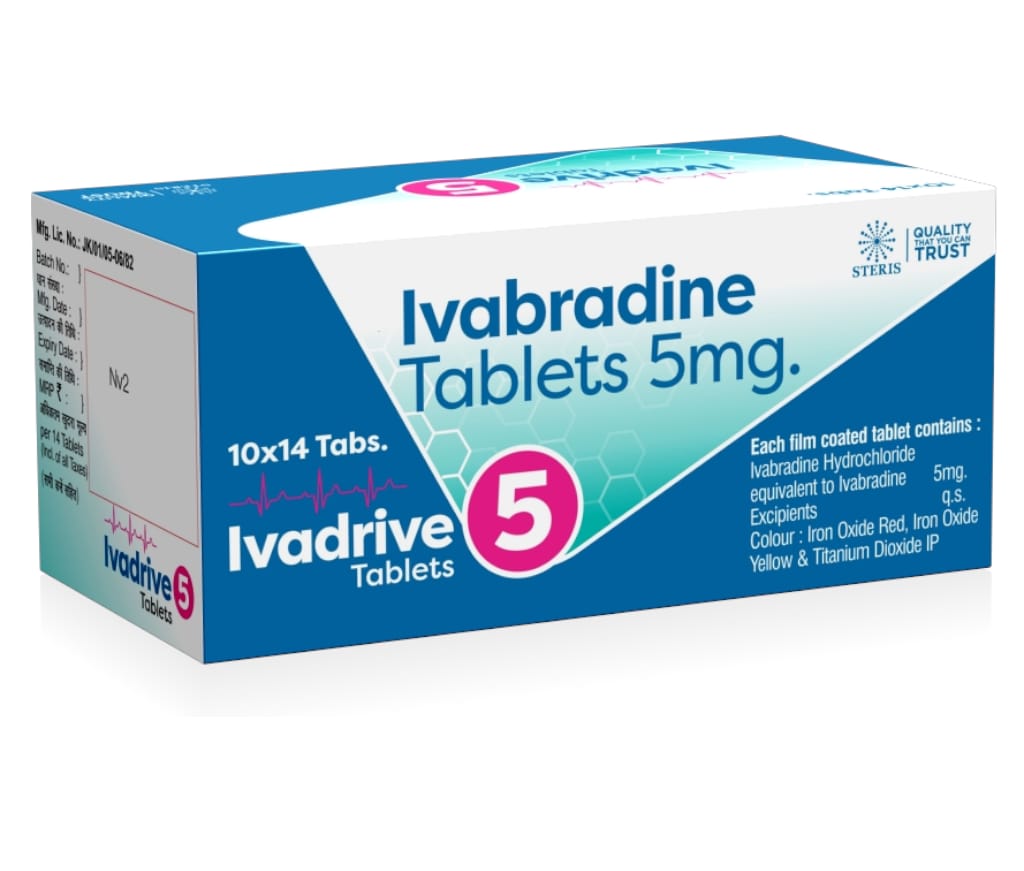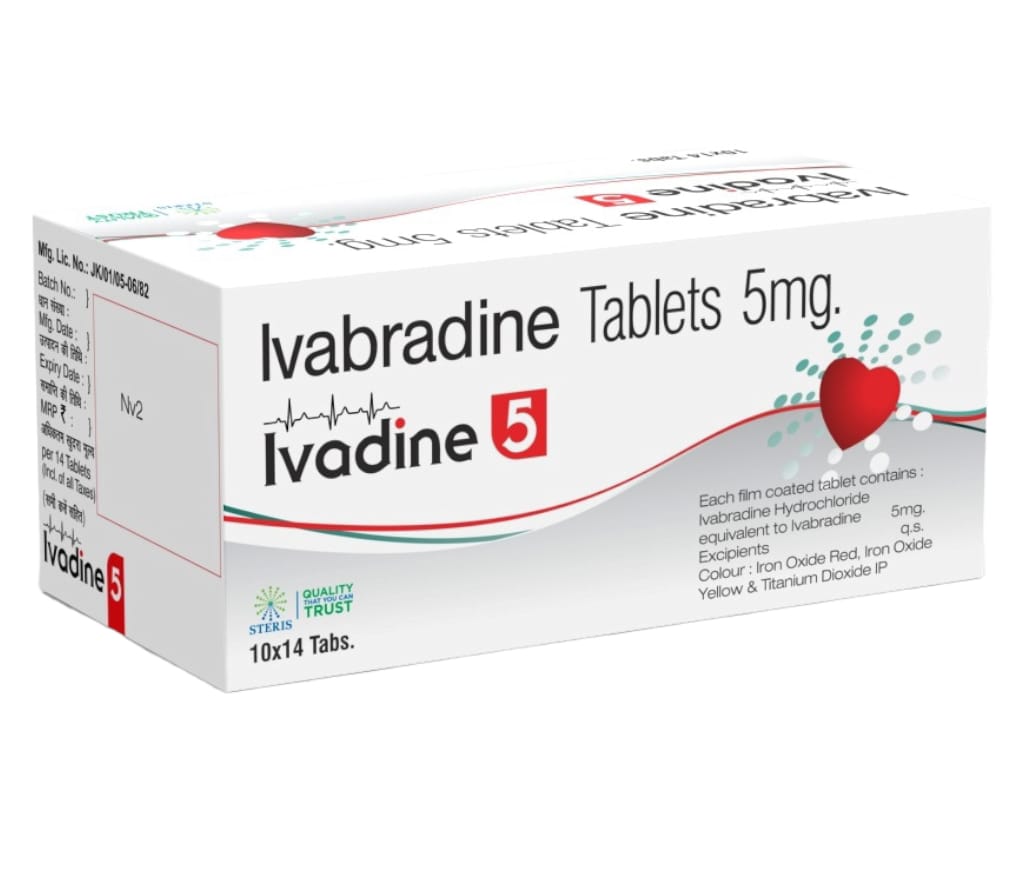
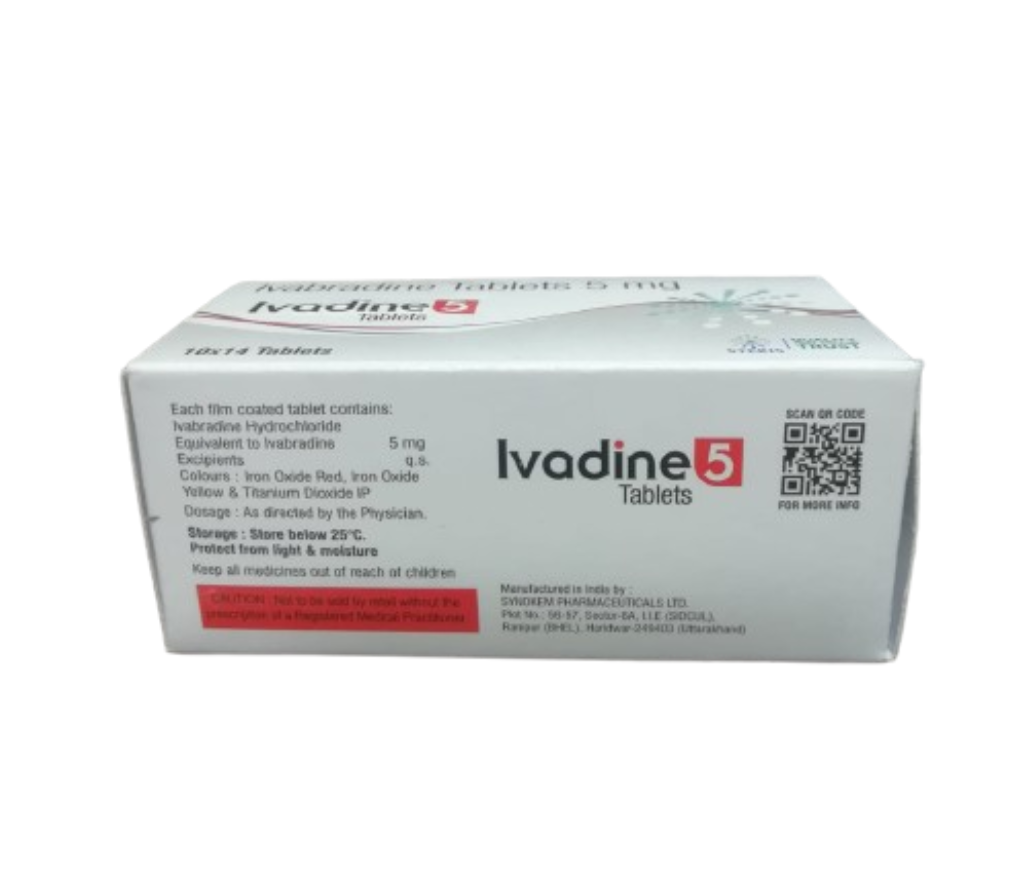
IVADINE 5
Item requires a valid prescription
Manufactured By Steris Healthcare Pvt Ltd
Composition Ivabradine (5mg)
Rs 174.57
MRP Rs 249.38
(30% OFF)
Includes all taxes
Package SIZE
( For 10 Tablet )
100% Authentic
Products
Free
Shipping*
Products
Return Policy
Description:
Ivabradine 5mg is a prescription heart medicine primarily used to reduce an elevated heart rate in selected patients with heart failure or chronic stable angina, depending on the country's approved indications and the patient's clinical condition. Unlike beta-blockers, ivabradine works mainly on the heart's sinus node, slowing the heart rate without directly reducing the force of heart contraction.
For patients, caregivers, and buyers researching ivabradine 5mg uses, benefits, dosage, side effects, precautions, interactions, and safe purchasing, understanding the exact indication is important. Ivabradine is not a general-purpose blood-pressure medicine, and the 5mg tablet should be taken only according to a healthcare professional's prescription.
What Is Ivabradine 5mg?
Ivabradine 5mg contains 5 milligrams of ivabradine, a medicine classified as an HCN-channel blocker. Its principal action is to slow the heart rate by selectively inhibiting the “funny” current (If) in the sinoatrial node, the part of the heart that normally controls the heartbeat.
Because it primarily targets heart-rate generation, ivabradine is different from medicines such as beta-blockers, which can affect heart rate, blood pressure, and cardiac contractility.
In the United States, ivabradine is approved for certain adults with stable symptomatic heart failure and a reduced ejection fraction to reduce the risk of hospitalization for worsening heart failure. It is also approved for certain pediatric patients with stable heart failure due to dilated cardiomyopathy.
In other countries, including some European and other international markets, ivabradine may also be prescribed for chronic stable angina in appropriately selected patients. Therefore, the exact indication for an ivabradine 5mg product can vary according to local regulatory approval.
Ivabradine 5mg Uses
1. Heart Failure
One of the major uses of ivabradine 5mg is the management of selected patients with chronic heart failure.
In the U.S., ivabradine is used for certain adults with stable symptomatic heart failure and a left ventricular ejection fraction of 35% or less, who are in sinus rhythm and have an elevated resting heart rate despite appropriate therapy or have limitations with beta-blocker treatment. The goal is to reduce the risk of hospitalization from worsening heart failure.
Ivabradine does not cure heart failure. Instead, by reducing the heart rate, it can give the heart more time to fill between beats and decrease the workload associated with a persistently elevated heart rate.
2. Chronic Stable Angina
In countries where this indication is approved, ivabradine can be used for symptomatic chronic stable angina in selected patients who are in sinus rhythm and require heart-rate reduction, particularly when beta-blockers or certain calcium-channel blockers are unsuitable or not tolerated.
Angina occurs when the heart muscle does not receive enough oxygen-rich blood for its needs. A persistently fast heart rate increases the heart's oxygen demand. By slowing the heart rate, ivabradine may help reduce symptoms in appropriate patients.
3. Selected Pediatric Heart Failure
U.S. prescribing information also includes use in certain children aged 6 months and older who have stable heart failure caused by dilated cardiomyopathy. Pediatric dosing is weight-based and should be determined by a specialist; an adult 5mg tablet should never be substituted based simply on age.
Key Benefits of Ivabradine 5mg
When prescribed for the appropriate patient, potential benefits of ivabradine include the following.
Helps lower an elevated heart rate
The central benefit of ivabradine is heart-rate reduction. It acts at the sinus node, slowing the rate at which electrical impulses are generated.
This makes it particularly useful when controlling heart rate is clinically important but reducing myocardial contractility is undesirable.
May reduce heart-failure hospitalizations
In appropriate patients with stable heart failure and reduced ejection fraction, ivabradine can reduce the risk of hospitalization for worsening heart failure. This is an important treatment goal because recurrent hospitalization can significantly affect quality of life and long-term cardiovascular health.
Can help control angina symptoms
Where approved for chronic stable angina, slowing the heart rate can reduce myocardial oxygen demand and may improve exercise-related symptoms in appropriately selected patients.
Works differently from beta-blockers
Ivabradine's selective action on the sinus node means it has a different pharmacological profile from beta-blockers. This can be useful for certain patients when a clinician wants to reduce heart rate without relying exclusively on beta-adrenergic blockade.
However, ivabradine is not automatically a replacement for a beta-blocker. The correct treatment depends on the patient's diagnosis, heart rhythm, blood pressure, heart function, and tolerance of other medicines.
How Does Ivabradine 5mg Work?
Ivabradine selectively inhibits the If current in the sinoatrial node.
Think of the sinus node as the heart's natural pacemaker. It generates electrical signals that determine how quickly the heart beats. Ivabradine slows this pacemaker activity, resulting in a lower resting and exertional heart rate.
The important distinction is that ivabradine's principal effect is on heart-rate generation rather than directly weakening the heart's pumping contraction.
This mechanism makes the medicine particularly relevant when a patient has an elevated sinus heart rate and requires heart-rate reduction.
How to Take Ivabradine 5mg
Take ivabradine 5mg exactly as prescribed.
For adult heart-failure treatment, dosing is individualized and may be adjusted according to resting heart rate and tolerance. U.S. prescribing information commonly starts selected adults at 5mg twice daily with food, while some patients may require a lower starting dose. The dose may then be adjusted by the treating physician.
For some other indications and patient groups, dosing recommendations differ.
Ivabradine is generally taken with food, and doses should be taken around the same times each day. MedlinePlus advises taking the medicine with food twice daily when prescribed under its standard regimen.
Do not increase the dose because your heart rate remains high unless your doctor instructs you to do so.
What if you miss a dose?
If you forget an ivabradine dose, standard patient guidance is to skip the missed dose and take the next dose at the regular scheduled time. Do not take a double dose to compensate.
If you vomit after taking a dose, MedlinePlus advises not taking an additional replacement dose and instead continuing with the normal schedule.
Ivabradine 5mg Side Effects
Like all prescription medicines, ivabradine 5mg can cause side effects, although not everyone experiences them.
Common or clinically recognized adverse effects can include:
-
Temporary visual brightness or flashes
-
Blurred or unusual vision
-
Slow heart rate
-
Dizziness
-
Headache
-
Fatigue
-
Changes in blood pressure
-
Palpitations
-
Atrial fibrillation
-
Gastrointestinal symptoms in some patients
One of the characteristic effects of ivabradine is phosphenes, sometimes described as brief episodes of increased brightness, halos, colored flashes, or unusual visual sensations. These effects are particularly associated with changes in light intensity and often occur during the early part of treatment.
Slow heart rate
Because ivabradine intentionally lowers heart rate, it can sometimes reduce the pulse too much. Excessive bradycardia may cause:
-
Dizziness
-
Weakness
-
Fatigue
-
Low blood pressure
-
Fainting
Heart rate should therefore be monitored during treatment. Some clinical guidance recommends reviewing treatment if the resting heart rate falls below 50 beats per minute or if symptoms of bradycardia occur.
Atrial fibrillation
Ivabradine has been associated with atrial fibrillation, an irregular heart rhythm. Patients should be monitored for symptoms such as a rapid or irregular heartbeat, palpitations, breathlessness, or unusual fatigue.
Serious allergic reactions
Seek urgent medical attention for swelling of the face, lips, tongue, or throat, difficulty breathing or swallowing, or other symptoms suggesting a severe allergic reaction.
Who Should Avoid or Use Caution With Ivabradine 5mg?
Ivabradine is not suitable for everyone.
Your doctor needs to know if you have:
-
A very slow resting heart rate
-
Low blood pressure
-
An irregular heart rhythm
-
A pacemaker
-
Certain conduction disorders
-
Recently worsened or acute heart failure
-
Significant liver disease
-
A history of atrial fibrillation
-
Certain retinal disorders
-
Pregnancy or plans to become pregnant
U.S. patient information specifically warns against use in people with certain very low heart rates, significant hypotension, particular heart conditions, or recently worsened heart failure.
Ivabradine 5mg Drug Interactions
Medication interactions are particularly important with ivabradine because several medicines can alter its concentration or excessively slow the heart.
Strong CYP3A4 inhibitors
Certain medicines that strongly inhibit the CYP3A4 enzyme can substantially increase ivabradine exposure and may be contraindicated.
Verapamil and diltiazem
These medicines can both affect heart rate and ivabradine metabolism. Their combination with ivabradine is generally contraindicated in relevant prescribing information.
Other heart-rate-lowering medicines
Combining ivabradine with other medicines that slow the heart can increase the risk of excessive bradycardia.
Your doctor should review your complete medication list before prescribing ivabradine.
Grapefruit and grapefruit juice
Patients taking ivabradine are advised to avoid grapefruit and grapefruit juice, as they can affect the medicine's metabolism.
Do not begin herbal products or supplements such as St. John's wort without discussing them with your healthcare professional.
Ivabradine 5mg and Pregnancy
Ivabradine is generally not recommended during pregnancy. Women who could become pregnant should discuss appropriate contraception and pregnancy planning with their healthcare professional before treatment.
If pregnancy occurs while taking ivabradine, contact your doctor promptly rather than stopping or continuing the medicine on your own.
Can You Drive After Taking Ivabradine 5mg?
Use caution when driving, particularly at night or when moving between different lighting conditions.
Visual phenomena associated with ivabradine can include temporary increased brightness, flashes, or other changes in visual perception. These effects are particularly relevant during the first part of treatment. Patients should understand how the medicine affects their vision before driving or operating machinery.
Ivabradine 5mg vs Beta-Blockers
Ivabradine and beta-blockers can both reduce heart rate, but they work differently.
Beta-blockers block beta-adrenergic stimulation and can affect heart rate, blood pressure, and cardiac contractility.
Ivabradine selectively slows sinus-node activity.
In some patients, physicians may use ivabradine alongside standard heart-failure therapy. In others, treatment selection depends on whether beta-blockers are tolerated, the patient's heart rhythm, blood pressure, heart rate, ejection fraction, and overall treatment plan.
The two medicines should not be considered interchangeable without medical guidance.
Monitoring During Ivabradine 5mg Treatment
Regular follow-up is an important part of safe treatment.
Your healthcare professional may monitor:
-
Resting heart rate
-
Blood pressure
-
Heart rhythm
-
Symptoms of dizziness or fainting
-
Signs of atrial fibrillation
-
Visual symptoms
-
Overall heart-failure or angina response
MedlinePlus notes that clinicians may periodically check heart rate and blood pressure to assess the body's response to ivabradine.
If treatment is being used for chronic stable angina, some clinical guidance recommends reassessing symptom improvement after several months rather than continuing indefinitely without evaluating benefit.
Buying Ivabradine 5mg Safely
If you are looking to buy ivabradine 5mg, purchase it through a legitimate pharmacy and follow the prescription requirements in your country.
Before purchasing, verify:
-
The active ingredient is ivabradine.
-
The strength is 5mg.
-
The manufacturer's name is clearly stated.
-
The package is sealed and undamaged.
-
The batch or lot number is present.
-
The expiry date is valid.
-
The product matches the formulation prescribed by your doctor.
-
The pharmacy is appropriately licensed.
Avoid purchasing prescription heart medicines from websites that make unrealistic promises, sell without appropriate safeguards, or do not provide verifiable product information.
For cardiovascular medicines, authenticity and correct dosing are more important than choosing a product based solely on price.
Frequently Asked Questions
1. What is ivabradine 5mg used for?
Ivabradine 5mg is used in selected patients with heart failure to reduce heart rate and the risk of hospitalization for worsening heart failure. In some countries, it is also used for chronic stable angina.
2. Is ivabradine 5mg a heart medicine?
Yes. Ivabradine is a prescription cardiovascular medicine that primarily works by slowing the heart's sinus-node rate.
3. Does ivabradine 5mg lower heart rate?
Yes. Lowering an elevated heart rate is the primary pharmacological effect of ivabradine.
4. Does ivabradine 5mg lower blood pressure?
Ivabradine is not primarily a blood-pressure medicine. Its principal effect is to slow the heart rate. Blood-pressure changes can occur, but it should not be used as a substitute for an antihypertensive unless specifically prescribed for an appropriate indication.
5. How does ivabradine 5mg work?
It selectively inhibits the If current in the sinus node, slowing the rate at which the heart generates electrical impulses.
6. What are the common side effects of ivabradine 5mg?
Commonly reported effects include temporary visual brightness or flashes, slow heart rate, dizziness, headache, and other cardiovascular or gastrointestinal symptoms.
7. Can ivabradine 5mg cause blurred vision?
Yes. Ivabradine can cause visual disturbances, including temporary brightness, halos, flashes, or blurred vision. These effects are often more noticeable when lighting conditions change.
8. Is ivabradine 5mg safe for long-term use?
It can be used long term when prescribed and monitored appropriately. Regular evaluation of heart rate, rhythm, symptoms, and overall treatment benefit is important.
9. Can ivabradine 5mg cause a slow heartbeat?
Yes. Excessive slowing of the heart rate is a recognized adverse effect and may cause dizziness, fatigue, weakness, or fainting.
10. Can I take ivabradine 5mg twice a day?
Some adult treatment regimens use ivabradine twice daily, but the exact dose and frequency depend on the indication and individual patient factors. Do not take 5mg twice daily unless that is the regimen prescribed for you.
11. Should ivabradine 5mg be taken with food?
Yes, standard patient guidance recommends taking ivabradine with food, usually at approximately the same times each day.
12. Can I take ivabradine 5mg with grapefruit juice?
No. Patient information recommends avoiding grapefruit and grapefruit juice while taking ivabradine.
13. Can ivabradine 5mg be taken with beta-blockers?
In selected patients, doctors may prescribe both medicines, particularly in heart-failure treatment. However, combining heart-rate-lowering medicines can increase the risk of bradycardia, so it requires professional supervision.
14. Can I take ivabradine 5mg with verapamil or diltiazem?
These combinations can create clinically important interactions and are contraindicated in relevant prescribing information. Do not combine them unless your specialist specifically confirms the treatment plan.
15. Does ivabradine 5mg cure heart failure?
No. Ivabradine helps manage certain patients with heart failure and can reduce the risk of hospitalization for worsening disease, but it does not cure heart failure.
16. How quickly does ivabradine 5mg work?
Ivabradine begins affecting heart rate after administration, but the appropriate treatment response should be assessed over time by the prescribing clinician. Dose adjustments may be made according to heart rate and tolerance.
17. What happens if I miss an ivabradine 5mg dose?
Skip the missed dose and take your next dose at the normal time. Do not double the next dose to compensate.
18. Can I stop ivabradine 5mg suddenly?
Do not stop prescribed ivabradine without speaking with your healthcare professional. The medicine is being used to control an underlying cardiovascular condition, so treatment changes should be medically supervised.
19. Can ivabradine 5mg cause atrial fibrillation?
Yes. Atrial fibrillation is a recognized cardiovascular adverse effect. New or persistent irregular or rapid heartbeat should be reported to a healthcare professional.
20. Can I drive while taking ivabradine 5mg?
You should first determine whether ivabradine causes visual disturbances or dizziness. Temporary brightness and other visual effects can affect driving, particularly at night or when lighting changes suddenly.
21. Is ivabradine 5mg suitable during pregnancy?
Ivabradine is generally not recommended during pregnancy. Discuss pregnancy planning and contraception with your doctor before treatment.
22. Can ivabradine 5mg be used for chest pain?
In countries where the indication is approved, ivabradine may be prescribed for chronic stable angina in selected patients. New, severe, or rapidly worsening chest pain requires urgent medical assessment rather than self-treatment with ivabradine.
23. What should I do if my heart rate becomes very low while taking ivabradine 5mg?
Contact your healthcare professional, particularly if a low heart rate is accompanied by dizziness, weakness, fatigue, fainting, or shortness of breath. Do not independently increase or decrease the dose.
24. Is ivabradine 5mg the same as a beta-blocker?
No. Ivabradine and beta-blockers both can reduce heart rate, but they act through different mechanisms. Ivabradine primarily affects the sinus node's If current, while beta-blockers block beta-adrenergic stimulation.