
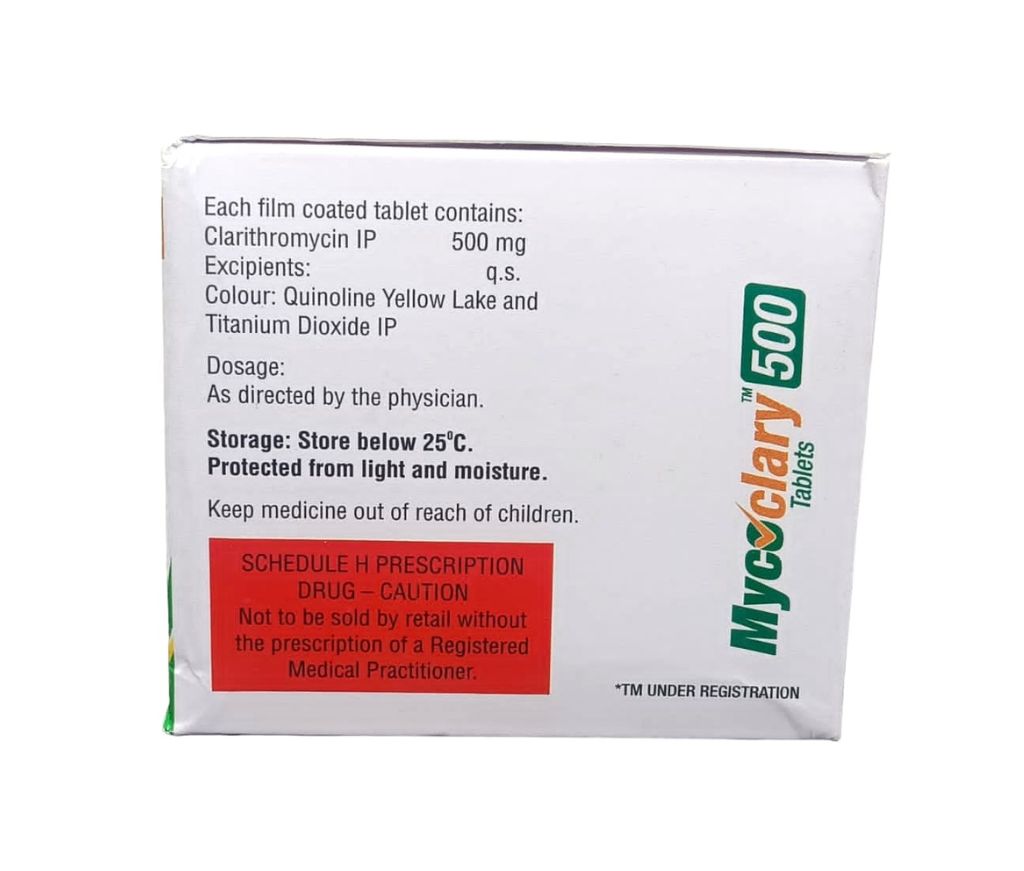
MYCOCLARY 500
 Item requires a valid prescription
Manufactured By Steris Healthcare Pvt Ltd
Composition Clarithromycin 500 mg
Rs 288.09
MRP Rs 411.56
(30% OFF)
Includes all taxes
Package SIZE
( For 10 Tablets )

100% Authentic
Products

Free
Shipping*

Products
Return Policy
Description:
Clarithromycin 500 mg is a prescription antibiotic medicine belonging to the macrolide class of antibiotics. It is commonly used to treat various bacterial infections affecting the respiratory system, skin, soft tissues, and certain other areas of the body. Clarithromycin works by stopping the growth and multiplication of bacteria, helping the immune system clear the infection.
Patients searching for clarithromycin 500 mg uses, benefits, dosage, price, and side effects often want reliable information before discussing treatment with a healthcare professional. This detailed guide explains how clarithromycin 500 mg works, its common uses, precautions, and important safety considerations.
This information is designed to support informed conversations with healthcare providers. Clarithromycin should be used only when prescribed because unnecessary antibiotic use can contribute to antibiotic resistance.
Clarithromycin 500 mg Uses and Medical Applications
The primary use of clarithromycin 500 mg is treating bacterial infections caused by susceptible bacteria. Doctors prescribe it after considering the type of infection, patient history, and bacterial sensitivity.
Common uses of clarithromycin 500 mg may include:
1. Respiratory Tract Infections
Clarithromycin is frequently prescribed for bacterial infections involving the respiratory system, including:
-
Throat infections
-
Tonsillitis
-
Sinus infections
-
Bronchitis
-
Certain cases of pneumonia
It helps reduce bacterial growth and supports recovery when the infection is caused by bacteria sensitive to this antibiotic.
2. Ear and Nose Infections
Doctors may prescribe clarithromycin for some ear, nose, and throat infections when appropriate.
3. Skin and Soft Tissue Infections
Clarithromycin may be used for certain bacterial infections affecting the skin and soft tissues.
4. Helicobacter pylori (H. pylori) Infection
Clarithromycin is sometimes included in combination therapy to help treat H. pylori infection, a bacteria associated with stomach ulcers. It is usually combined with other medicines as part of a doctor-recommended treatment plan.
How Does Clarithromycin 500 mg Work?
Clarithromycin 500 mg works by interfering with bacterial protein production. Bacteria need proteins to grow and survive. By blocking this process, clarithromycin prevents bacteria from multiplying and helps control the infection.
Unlike medicines that only relieve symptoms, antibiotics target bacterial causes of infection. However, clarithromycin does not work against viral infections such as common cold or flu.
Key Benefits of Clarithromycin 500 mg
1. Effective Bacterial Infection Treatment
One of the main benefits of clarithromycin 500 mg is its ability to treat various bacterial infections when the bacteria are susceptible to this antibiotic.
2. Broad Antibacterial Activity
Clarithromycin can work against several types of bacteria, making it useful for different infection categories under medical supervision.
3. Convenient Dosage Strength
The 500 mg strength is commonly prescribed for adults depending on the severity and type of infection.
4. Supports Faster Recovery
By reducing bacterial growth, clarithromycin may help improve infection-related symptoms such as throat discomfort, fever, coughing, and inflammation when the infection responds to treatment.
Clarithromycin 500 mg Dosage Information
The correct clarithromycin 500 mg dosage depends on:
-
Type and severity of infection
-
Patient age
-
Kidney and liver function
-
Medical history
-
Other medicines being used
A healthcare professional determines the appropriate dose and duration.
General safety guidance:
-
Take clarithromycin exactly as prescribed.
-
Complete the full course even if symptoms improve.
-
Do not share antibiotics with others.
-
Do not use leftover antibiotics from previous treatments.
Stopping antibiotics early may allow bacteria to survive and increase the risk of treatment failure or resistance.
How to Take Clarithromycin 500 mg Tablet
Follow your doctor’s instructions when taking clarithromycin 500 mg.
Important points:
-
Take the tablet at the recommended time.
-
Swallow with water.
-
It may be taken with or without food depending on the formulation and medical advice.
-
Maintain the prescribed schedule for the best effect.
If you miss a dose, follow your healthcare provider’s instructions. Avoid taking extra doses unless advised.
Possible Side Effects of Clarithromycin 500 mg
Like all medicines, clarithromycin 500 mg side effects may occur. Many people tolerate it well, but some may experience unwanted effects.
Common side effects include:
-
Nausea
-
Vomiting
-
Stomach discomfort
-
Diarrhea
-
Changes in taste
-
Headache
These effects are often temporary, but medical advice should be sought if they become severe or persistent.
Serious Side Effects That Require Medical Attention
Seek medical help if you experience:
-
Severe allergic reactions
-
Difficulty breathing
-
Swelling of face, lips, or throat
-
Severe skin reactions
-
Irregular heartbeat symptoms
-
Yellowing of skin or eyes
-
Severe or persistent diarrhea
Precautions Before Using Clarithromycin 500 mg
Before taking clarithromycin 500 mg, inform your doctor if you have:
-
Liver disease
-
Kidney problems
-
Heart rhythm problems
-
Low potassium or magnesium levels
-
History of antibiotic-related diarrhea
Tell your healthcare provider about all medicines you take, including:
-
Prescription medicines
-
Vitamins
-
Supplements
-
Herbal products
Some medicines may interact with clarithromycin and affect safety or effectiveness.
Clarithromycin 500 mg Drug Interactions
Clarithromycin may interact with certain medicines, including some:
-
Blood-thinning medicines
-
Heart-related medicines
-
Cholesterol-lowering medicines
-
Anti-seizure medicines
-
Other antibiotics
Always provide your complete medication history to your doctor before starting treatment.
Who Should Avoid Clarithromycin 500 mg?
Clarithromycin may not be suitable for everyone. Doctors may avoid prescribing it in certain situations, such as:
-
Serious allergy to clarithromycin or similar antibiotics
-
Certain heart rhythm conditions
-
Specific medication combinations that may cause harmful interactions
A healthcare professional evaluates whether clarithromycin is appropriate based on individual health factors.
Buying Clarithromycin 500 mg Online: Safety Tips
If purchasing clarithromycin 500 mg, choose a reliable pharmacy and follow prescription requirements.
Before buying:
-
Verify medicine authenticity.
-
Check expiry date and packaging.
-
Purchase from trusted sources.
-
Avoid unverified sellers.
Using genuine medication from reliable sources helps ensure quality and patient safety.
Conclusion
Clarithromycin 500 mg is a widely used macrolide antibiotic prescribed for various bacterial infections, including respiratory infections, skin infections, and certain stomach-related bacterial infections. Its major benefits include effective bacterial control, convenient dosing options, and broad antibacterial activity.
However, clarithromycin should only be used when prescribed by a qualified healthcare professional. Correct diagnosis, proper dosage, and completing the recommended treatment course are important for safe and effective results.
Understanding clarithromycin 500 mg uses, benefits, dosage, and side effects helps patients make informed decisions and communicate better with healthcare providers.
Frequently Asked Questions
1. What is clarithromycin 500 mg used for?
Clarithromycin 500 mg is used to treat bacterial infections such as respiratory infections, throat infections, skin infections, and certain H. pylori infections when prescribed by a doctor.
2. Is clarithromycin 500 mg an antibiotic?
Yes, clarithromycin 500 mg is a macrolide antibiotic that works by stopping bacterial growth.
3. Can clarithromycin 500 mg treat viral infections?
No, clarithromycin does not treat viral infections such as cold or flu because antibiotics work against bacteria, not viruses.
4. How does clarithromycin 500 mg work?
It blocks bacterial protein production, preventing bacteria from growing and spreading.
5. How should I take clarithromycin 500 mg?
Take clarithromycin exactly as prescribed by your doctor and complete the full treatment course.
6. What are the common side effects of clarithromycin 500 mg?
Common side effects include nausea, stomach discomfort, diarrhea, vomiting, headache, and taste changes.
7. Can clarithromycin 500 mg cause diarrhea?
Yes, diarrhea can occur during antibiotic treatment. Severe or persistent diarrhea should be discussed with a doctor.
8. Is clarithromycin 500 mg safe during pregnancy?
Pregnant individuals should consult a healthcare provider before using clarithromycin.
9. Can children take clarithromycin 500 mg?
Children may require different strengths or formulations. A doctor decides the appropriate treatment based on age and weight.
10. Can I stop clarithromycin 500 mg when I feel better?
No. Complete the prescribed course unless your doctor advises otherwise.
11. Can clarithromycin 500 mg be taken with food?
Some formulations may be taken with food, while others have specific instructions. Follow your prescription label.
12. What should I avoid while taking clarithromycin 500 mg?
Avoid self-adjusting doses and inform your doctor about all medicines you are taking.
13. How long does clarithromycin 500 mg take to work?
Improvement depends on the infection type and individual response. Many people begin feeling better after starting effective treatment.
14. Is clarithromycin 500 mg strong for infections?
Clarithromycin is an effective antibiotic for certain bacterial infections when the bacteria are sensitive to it.
15. Can clarithromycin 500 mg affect the heart?
In some people, clarithromycin may affect heart rhythm. Inform your doctor about any heart-related conditions.
16. Can I buy clarithromycin 500 mg without a prescription?
Clarithromycin is generally a prescription antibiotic and should be used under medical guidance.
17. What happens if I miss a dose of clarithromycin 500 mg?
Take the missed dose according to your doctor’s instructions. Do not double the dose unless advised.
18. Is clarithromycin 500 mg effective for throat infection?
Clarithromycin may help treat certain bacterial throat infections when prescribed after proper evaluation.
19. What medicines should not be taken with clarithromycin?
Some medicines can interact with clarithromycin, so always inform your doctor about your current medications.
20. Where can I get reliable information about clarithromycin 500 mg?
Reliable information should come from healthcare professionals, trusted medical resources, and approved pharmacy sources.
Available Substitutes