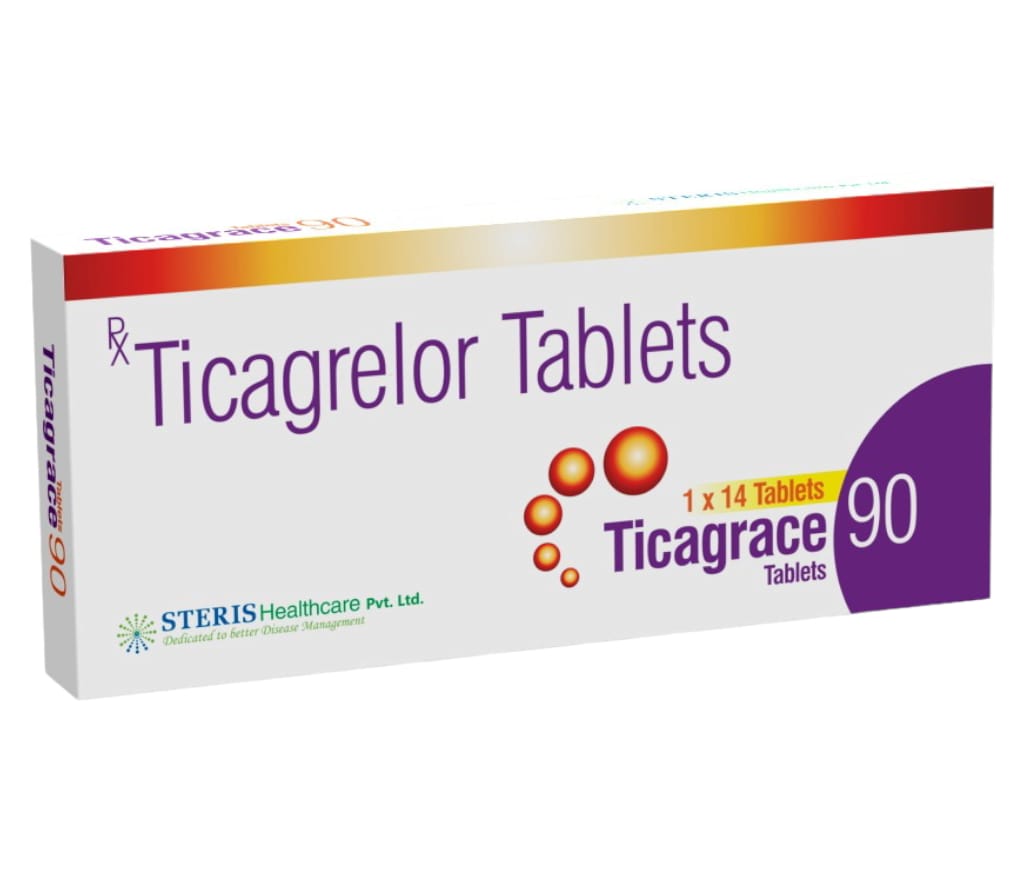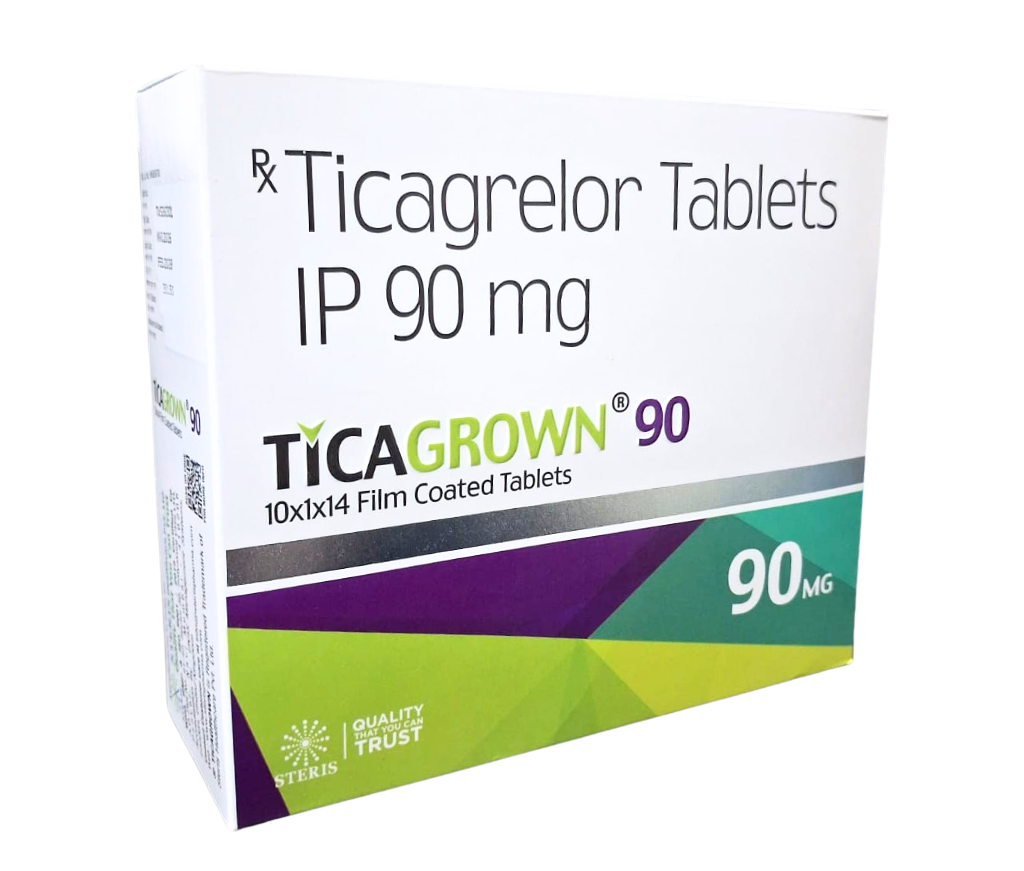
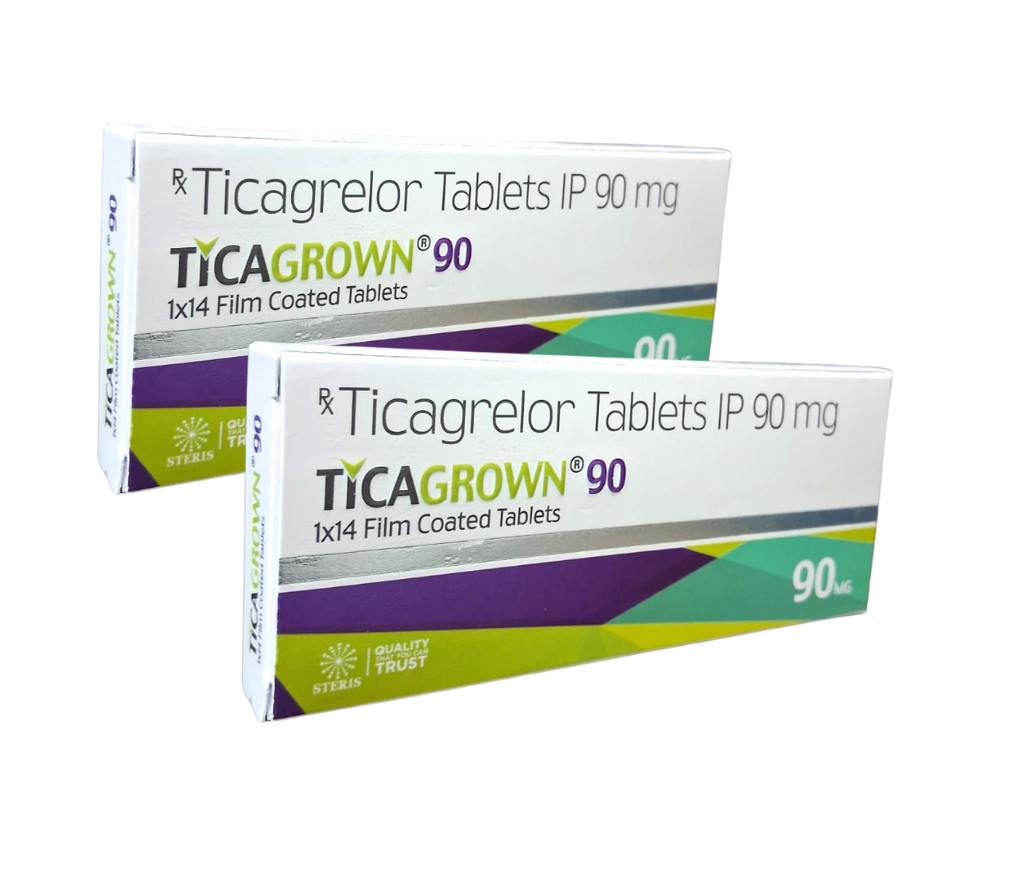
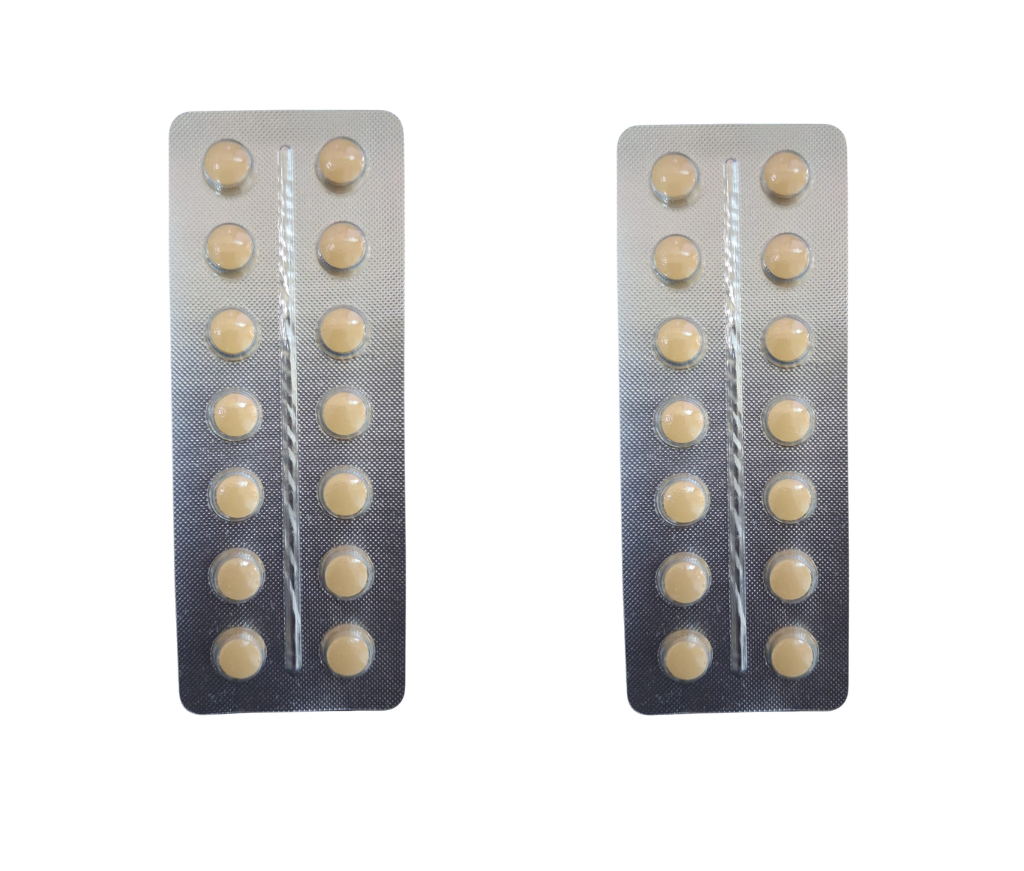
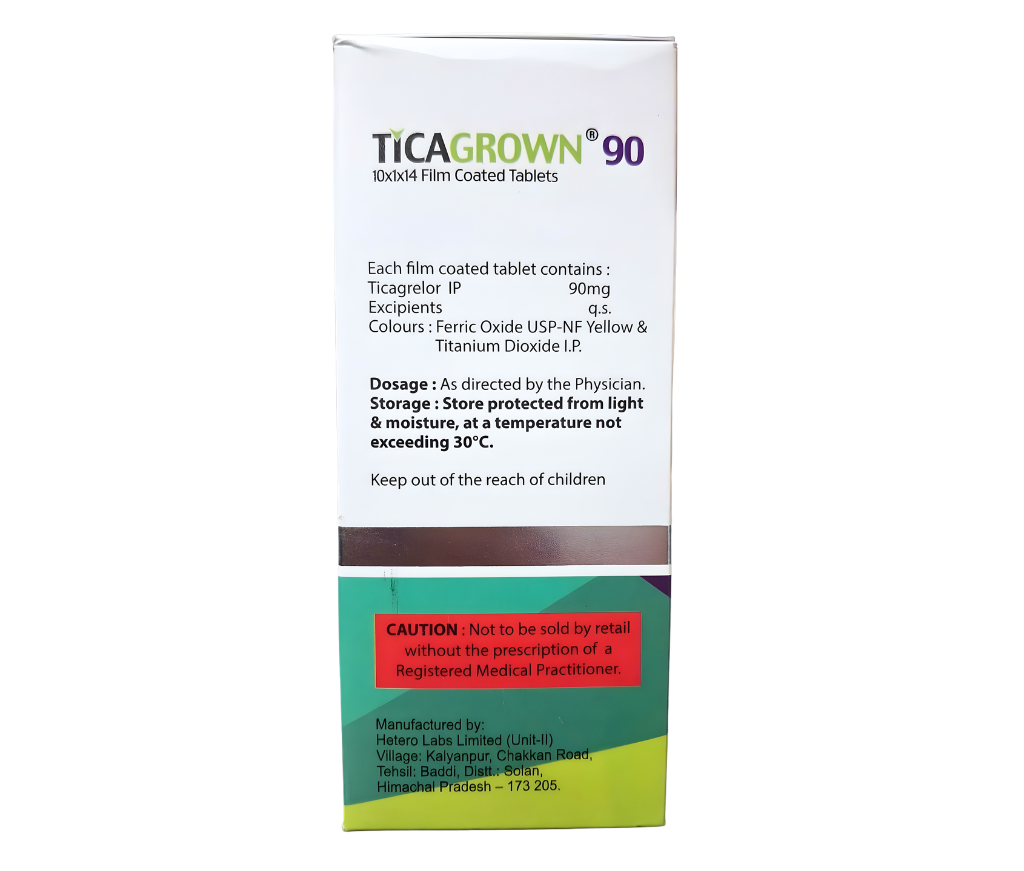
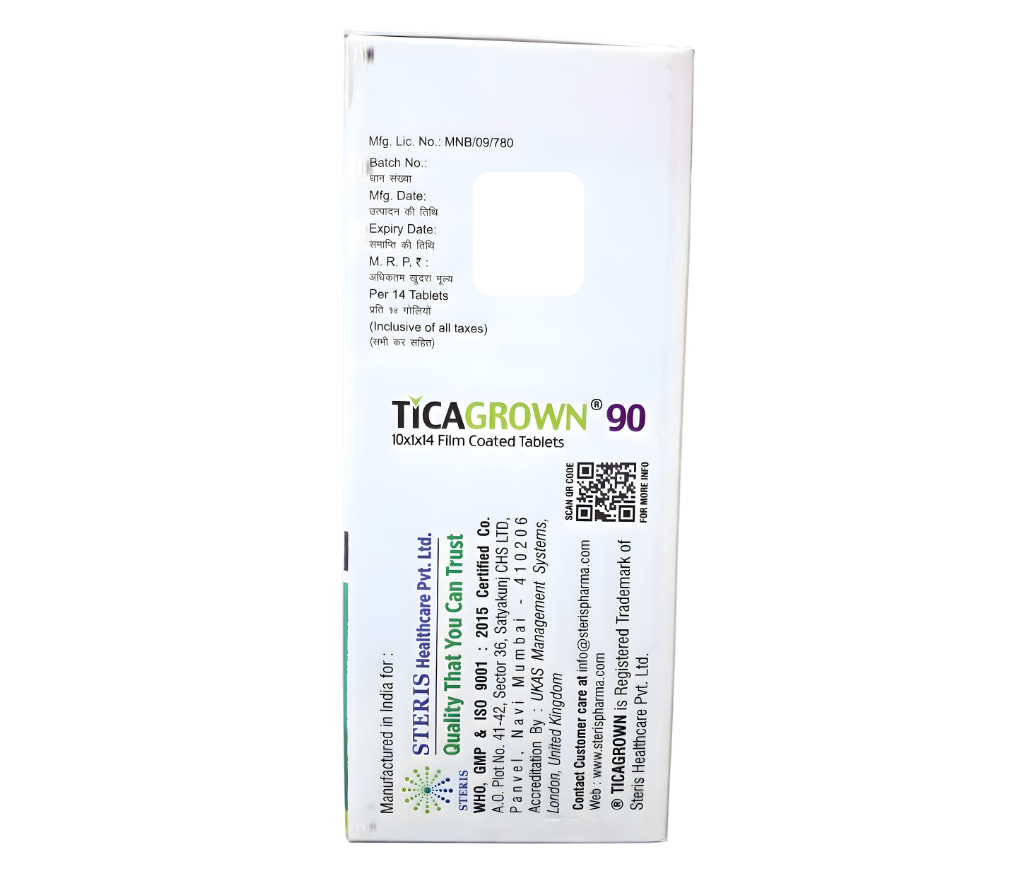
Ticagrelor 90 mg | TICAGROWN 90
 Item requires a valid prescription
Manufactured By Steris Healthcare Pvt Ltd
Composition ticagrelor 90 mg
Rs 341.01
MRP Rs 351.56
(3% OFF)
Includes all taxes
Package SIZE
( For 14 tablet )

100% Authentic
Products

Free
Shipping*

Products
Return Policy
Description:
Ticagrelor 90 mg Tablet antiplatelet drug which reduces the risk of dangerous blood clotting. Ticagrelor works faster than clopidogrel because it does not need to be activated in the liver and its effects are reversible, meaning it wears off sooner after stopping. It is almost always given with low dose aspirin as part of Dual Anti-Platelet Therapy (DAPT). The most common side effect is shortness of breath (dyspnea). The most serious risk is bleeding.
What Is Ticagrelor 90 mg?
Ticagrelor 90 mg is an oral P2Y12 platelet inhibitor, a class of antiplatelet drugs that stop blood platelets from clumping together and forming dangerous clots inside coronary arteries. It belongs to the cyclopentyltriazolopyrimidine (CPTP) chemical class, which is structurally different from thienopyridines like clopidogrel and prasugrel—this is why ticagrelor acts directly on the platelet receptor without needing metabolic activation by the liver.
Clinical Indications
| Indication | Typical Patient Profile | Therapy Duration |
|---|---|---|
| Acute Coronary Syndrome (ACS) | Unstable angina, NSTEMI, STEMI patients | Usually 12 months (as advised) |
| Post-Percutaneous Coronary Intervention (PCI) / Stent Placement | Patients who received a coronary stent | 6–12 months, sometimes longer for high-risk cases |
| History of Myocardial Infarction (MI) | Long-term secondary prevention (60 mg dose variant) | Extended duration per cardiologist |
| High-risk patients with peripheral artery disease (select cases) | As directed by specialist | Per treating physician |
Mechanism of Action
Ticagrelor binds reversibly to the P2Y12 ADP receptor on the surface of platelets. By blocking this receptor, it prevents adenosine diphosphate (ADP) from triggering platelet activation and aggregation — the biological process that causes blood cells to stick together and form a clot. Because the binding is reversible and the drug does not require liver enzyme conversion (unlike clopidogrel, which needs CYP2C19 activation), ticagrelor:
- Achieves platelet inhibition faster
- Produces a more predictable and consistent antiplatelet effect
- Wears off more quickly once the tablet is stopped, which matters for patients needing surgery
Key Benefits of Ticagrelor 90 mg
- Reduces recurrent heart attack risk — By keeping platelets from clumping, it lowers the chance of a repeat cardiovascular event after ACS.
- Protects stents from clot blockage — Stent thrombosis is a serious, sometimes fatal complication; ticagrelor combined with aspirin significantly reduces this risk.
- Faster onset of action compared to clopidogrel, useful in emergency cardiac care.
- No genetic resistance issue — Since it doesn't rely on CYP2C19 liver activation, it works consistently even in patients who are "poor metabolizers" of clopidogrel.
- Reversible antiplatelet effect — Offers more flexibility if urgent surgery is required.
- Backed by large cardiovascular outcome trials demonstrating reduced cardiovascular death, MI, and stroke versus clopidogrel in ACS populations. [Reviewer note: insert specific trial name, sample size, and percentage risk-reduction figures with citation.]
Dosage Guidelines
- Standard loading dose: Often initiated with a higher first dose in hospital settings for ACS.
- Maintenance dose: 90 mg twice daily, usually taken with aspirin (75–150 mg once daily, as advised).
- Administration: Can be taken with or without food, at roughly the same times each day to maintain steady blood levels.
- Missed dose: Take as soon as remembered unless close to the next dose; never double the dose.
- Duration: Typically continued for 12 months post-ACS/stent unless the cardiologist advises a shorter or extended course based on bleeding risk versus clotting risk.
- Discontinuation before surgery: Usually stopped 5 days prior to elective surgery, only under medical supervision.
Side Effects of Ticagrelor 90 mg
Common Side Effects
- Breathlessness or shortness of breath (dyspnea) — the most frequently reported side effect
- Minor bruising or nosebleeds
- Headache
- Dizziness
- Gastrointestinal discomfort (nausea, diarrhea)
Serious Side Effects (Seek Immediate Medical Attention)
- Signs of major bleeding: blood in urine or stool, black/tarry stools, coughing up blood, unusual or prolonged bleeding from cuts
- Severe or sudden breathlessness unrelated to exertion
- Signs of stroke: sudden weakness, slurred speech, facial drooping
- Very slow heart rate (bradycardia) — dizziness, fainting
- Signs of allergic reaction: swelling of face/lips/tongue, rash, difficulty breathing
Substitutes & Alternatives Comparison
| Drug | Class | Key Difference from Ticagrelor |
|---|---|---|
| Clopidogrel | Thienopyridine (P2Y12 inhibitor) | Needs liver activation; slower onset; once-daily dosing |
| Prasugrel | Thienopyridine (P2Y12 inhibitor) | Stronger platelet inhibition; higher bleeding risk; not for prior stroke patients |
| Aspirin | COX inhibitor (antiplatelet) | Different mechanism; almost always combined with, not substituted for, ticagrelor |
Precautions & Warnings
- Never stop ticagrelor abruptly without medical advice — doing so sharply raises stent thrombosis and heart attack risk.
- Inform your doctor about any history of bleeding disorders, peptic ulcers, or recent surgery.
- Use caution with liver impairment — dose adjustment or avoidance may be needed in moderate-to-severe hepatic disease.
- Avoid grapefruit juice, which can raise ticagrelor levels in the blood.
- Inform your dentist/surgeon about ticagrelor use before any procedure, including dental work.
- Not recommended during active pathological bleeding, history of intracranial hemorrhage, or severe liver disease.
- Use in pregnancy and breastfeeding only if clearly advised by a physician, as safety data is limited.
- Regular follow-up and blood monitoring may be advised, especially in the first few weeks of therapy.
Conclusion
Ticagrelor 90 mg is a fast-acting, reliable antiplatelet medication that plays a critical role in preventing heart attacks, strokes, and stent-related complications in patients with acute coronary syndrome or a recent coronary stent. Its reversible action and independence from liver enzyme activation make it a preferred choice in many high-risk cardiac situations, typically prescribed alongside aspirin as part of dual antiplatelet therapy. While highly effective, it carries a real risk of bleeding and must be used strictly under cardiologist supervision, with careful attention to dosage, duration, and any planned surgical procedures. Patients should never start, stop, or switch this medication without medical guidance.
Frequently Asked Questions
1. How long do you take ticagrelor after a stent?
Most patients take ticagrelor for about 12 months after a stent, as part of dual antiplatelet therapy with aspirin. Your cardiologist may shorten or extend this period based on your bleeding risk and the type of stent used.
2. What foods should I avoid when taking ticagrelor?
Grapefruit and grapefruit juice should generally be avoided, as they can increase ticagrelor levels in the blood and raise bleeding risk. Always confirm dietary restrictions with your doctor.
3. What is the most common side effect of ticagrelor?
Breathlessness or shortness of breath (dyspnea) is the most commonly reported side effect, followed by minor bruising and nosebleeds.
4. What are the benefits of taking ticagrelor?
Ticagrelor lowers the risk of heart attack, stroke, and stent blockage by preventing platelets from clumping together, and it works faster and more predictably than some older antiplatelet drugs.
5. Is ticagrelor a high-risk medication?
Ticagrelor carries a notable bleeding risk, which is why it is classified as a prescription-only medication requiring close medical supervision, especially around surgeries or invasive procedures.
6. How long should you take ticagrelor?
Duration depends on your diagnosis—commonly around 12 months after ACS or stenting—but only your cardiologist can determine the right length of therapy for your specific case.
7. Is ticagrelor a blood thinner?
Ticagrelor is technically an antiplatelet agent, not a traditional anticoagulant "blood thinner," but it works in a similar broader sense by reducing the blood's ability to clot through platelet inhibition.
8. What happens if I stop taking ticagrelor?
Stopping ticagrelor suddenly, especially soon after a stent, significantly increases the risk of stent thrombosis, heart attack, or stroke. Never discontinue without your doctor's guidance.
9. Can you take ticagrelor and aspirin at the same time?
Yes, ticagrelor is usually prescribed together with low-dose aspirin as standard dual antiplatelet therapy following ACS or stent placement, unless your doctor advises otherwise.
10. Is ticagrelor better than aspirin?
They work differently and are not interchangeable — aspirin alone is a milder antiplatelet, while ticagrelor provides stronger platelet inhibition and is generally used in combination with, not instead of, aspirin for higher-risk cardiac patients.
11. What drugs should not be taken with ticagrelor?
Strong CYP3A4 inhibitors (like certain antifungals and HIV protease inhibitors) and strong CYP3A4 inducers (like rifampicin) can dangerously alter ticagrelor levels. Other blood thinners, NSAIDs, and certain antiplatelet drugs should also be discussed with your doctor before combining.
12. Can ticagrelor be taken on an empty stomach?
Yes, ticagrelor can generally be taken with or without food, though taking it at consistent times each day helps maintain steady drug levels.
13. Does ticagrelor cause weight gain?
Weight gain is not a commonly reported side effect of ticagrelor; breathlessness, bruising, and gastrointestinal upset are more typical.
14. Can I drink alcohol while taking ticagrelor?
Alcohol can increase bleeding risk and irritate the stomach lining, so it's best to limit or avoid alcohol and discuss safe limits with your doctor.
15. Is ticagrelor safe for elderly patients?
Ticagrelor can be used in elderly patients, but they often have a higher baseline bleeding risk, so dosing and monitoring may need closer attention from the treating physician.
16. Can ticagrelor be stopped before surgery?
Yes, it is typically paused around 5 days before elective surgery to reduce bleeding risk, but this must only be done under medical supervision and coordinated with your cardiologist.
17. Does ticagrelor interact with antacids or PPIs?
Proton pump inhibitors (PPIs) are commonly co-prescribed to protect the stomach lining and generally do not significantly reduce ticagrelor's effectiveness, unlike with some other antiplatelet drugs, but this should be confirmed by your doctor.
Available Substitutes